A good printable backyard bird guide gives you a fast, repeatable system: you note the bird's size and shape first, narrow by habitat and behavior, then confirm with color and fine field marks. That order matters more than having a perfect guide. Print a simple checklist, keep it near your window or feeder, and you'll go from 'no idea what that is' to a confident ID in under two minutes for most common backyard visitors.
Printable Backyard Bird Guide for Beginners and First IDs

Marcus Chen
22 May 2026
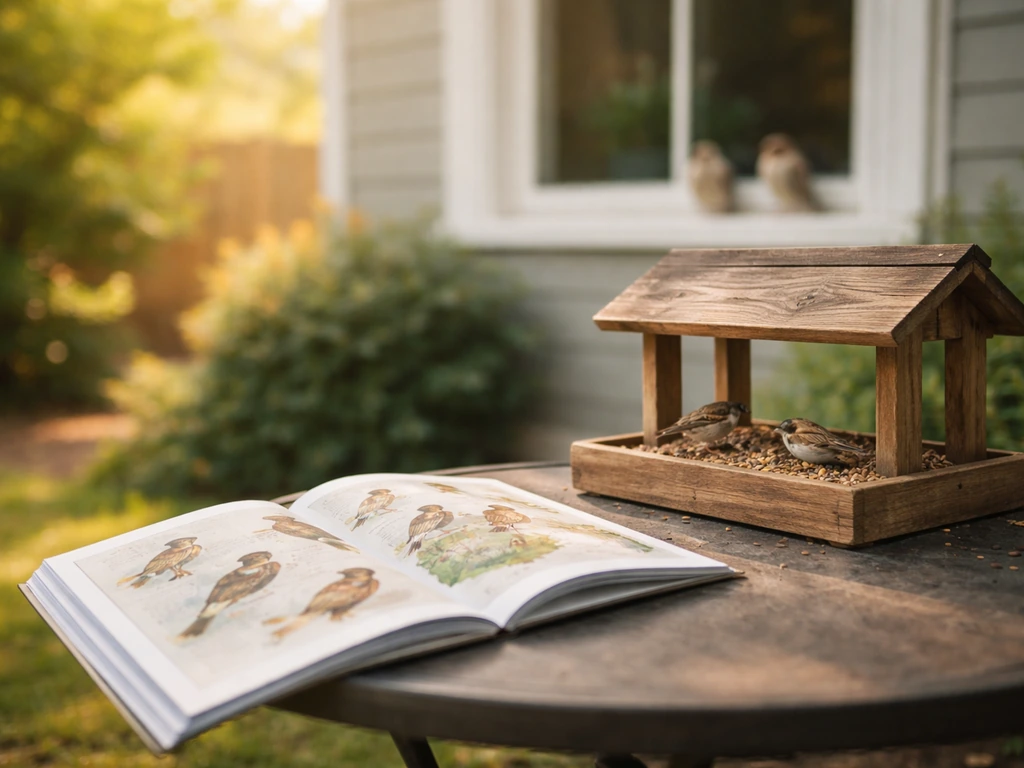
What to look for in a printable backyard bird guide
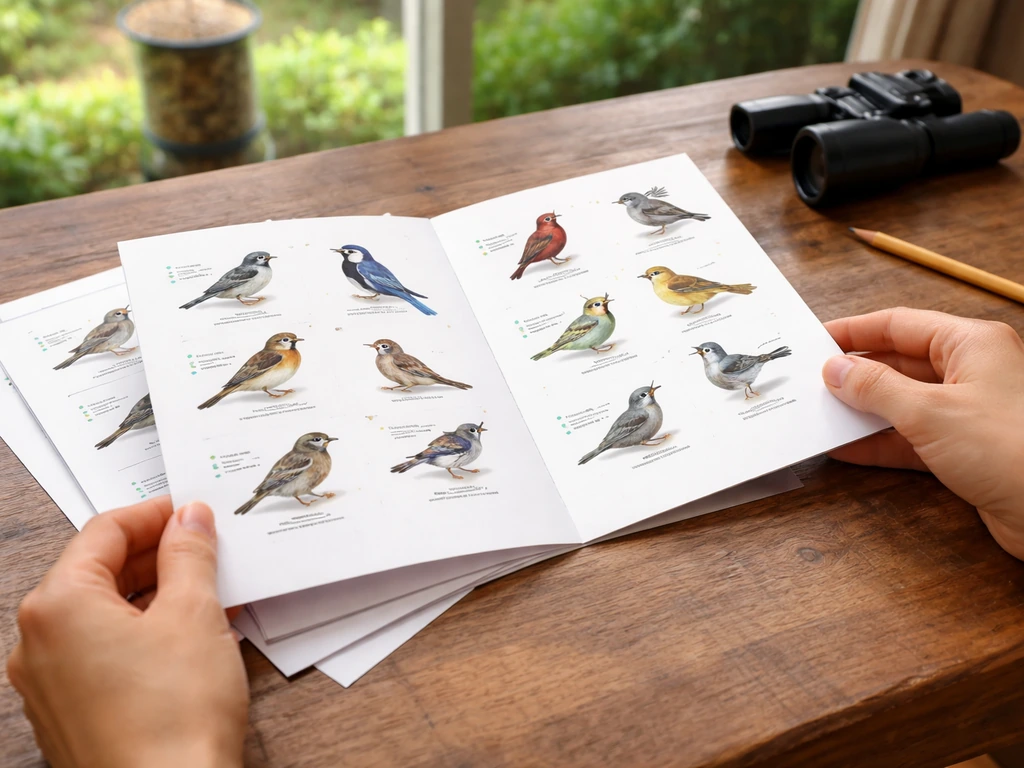
Most beginners grab a thick field guide covering every bird on the continent and immediately feel overwhelmed. That's backwards. A practical printable guide for backyard use should be a focused, one-to-three page reference covering the 20 to 30 species most likely to appear at your feeders and in your yard, not an encyclopedia. Here's what the format actually needs to work well.
- A clear illustration or photo for each species, ideally showing the bird in a natural perching posture so silhouette is obvious
- Quick ID cues in plain language: size (compare to a sparrow, robin, or crow), bill shape, one or two standout markings, and posture
- A 'look-alike alert' for confusing pairs like Downy vs. Hairy Woodpecker or House Finch vs. Purple Finch
- Habitat and behavior notes (does it hop on the ground? Cling to bark? Visit sunflower feeders?)
- A blank notes column or checkbox so you can mark sightings as you go
- Seasonal tags showing which species are year-round residents versus winter or summer visitors in your region
What most printable guides skip is the workflow. Cornell Lab's All About Birds framework lays it out clearly: start with Size and Shape, move to Color Pattern, then Behavior, then Habitat. Beginners almost always do this in reverse, getting distracted by a bright red patch before they've even noted whether the bird is sparrow-sized or jay-sized. A good printable guide should prompt you through that sequence, not just dump species photos on a page.
How to identify common backyard birds at a glance
The fastest ID skill you can build is reading silhouettes. Before color registers, your brain can process shape and posture. A bird clinging vertically to tree bark is almost certainly a woodpecker or nuthatch before you see a single field mark. A chunky bird with a big round head, thick neck, and short crest at your feeder is almost certainly a Tufted Titmouse. These gross-shape cues rule out dozens of species in seconds.
The beginner ID key: work through these steps in order
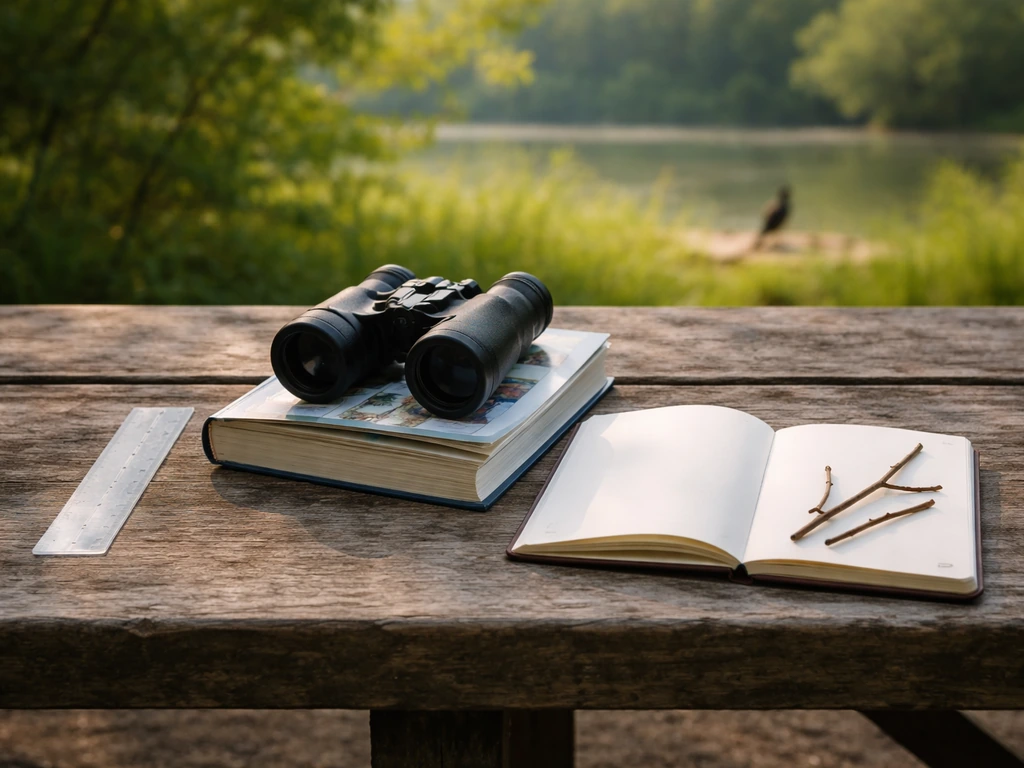
- Size: Is it smaller than a sparrow, sparrow-sized, robin-sized, or crow-sized? This single cut eliminates half the field guide immediately.
- Shape and posture: Body shape (round vs. sleek), tail length (short, medium, or long and fanned), and how the bird holds itself (upright, horizontal, clinging) narrow the group further.
- Bill type: Thick, seed-cracking bill (finch/sparrow group); thin, insect-probing bill (warbler/wren); dagger-like bill (kingfisher/heron); chisel bill (woodpecker); hooked tip (hawk/shrike). This is your fastest single clue to bird family.
- Behavior: Does it hop or walk? Cling to bark? Hang upside down? Visit the ground under feeders? Hawk insects from a perch? Behavior is a powerful ID shortcut and Audubon explicitly flags it as one of the eight key clues beginners should use.
- Habitat: Where exactly is the bird? Dense shrubs, open lawn, tree canopy, or right at the feeder? A House Finch, for example, actively avoids unbroken forest—seeing it at your suburban feeder is a strong confirmation cue, not just a lucky guess.
- Color pattern: Only now look at colors, wing bars, eye rings, streaking, and cap color. These are 'field marks' and they confirm an ID you've already largely made through shape and behavior.
- Sound: If the bird calls or sings, note it—a descending 'fee-bee' points to Black-capped Chickadee, a harsh 'jay-jay' is obvious. Free apps like Merlin can ID from sound in real time if you're stuck.
The look-alike pairs that trip up beginners most
| Species Pair | Key Difference | Quick Rule |
|---|---|---|
| Downy vs. Hairy Woodpecker | Bill size relative to head | Downy's bill is roughly one-third the length of its head—dainty and short. Hairy's bill is nearly as long as its head is wide. If the bill looks 'stubby,' it's a Downy. |
| House Finch vs. Purple Finch | Color intensity and head shape | House Finch has streaky brown on the belly with raspberry-red limited to the head and chest. Purple Finch male looks like it was 'dipped in raspberry juice'—richer color, rounder head. |
| House Sparrow vs. Song Sparrow | Breast markings and tail behavior | Song Sparrow has a bold central breast spot and pumps its rounded tail in flight. House Sparrow has a plain or lightly streaked breast and a flat tail. |
| European Starling vs. Common Grackle | Bill shape and iridescence | Starling has a yellow (winter) or yellow-tinged bill and short tail. Grackle has a long keel-shaped tail and an entirely dark bill. |
Printable field-guide style bird checklist for your yard

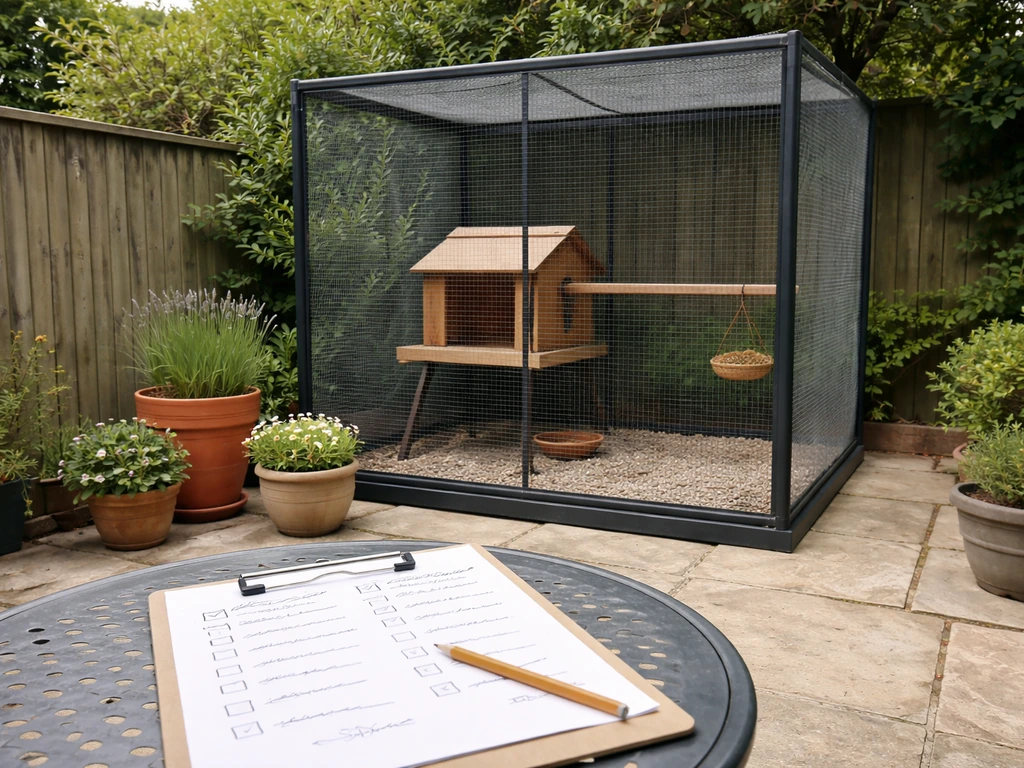
The best checklist is the one you actually use. I keep mine on a clipboard near the kitchen window, nothing fancy. Here's a format you can copy onto paper or format in any word processor and print. Fill in one row per sighting session, not per individual bird.
| Field | What to Record | Example |
|---|---|---|
| Date & Time | Date, start and end time of observation | May 22, 2026 / 7:15–7:45 AM |
| Location | Specific spot in yard (back feeder, front birdbath, hedgerow) | Back deck sunflower tube feeder |
| Weather & Season | Temp range, cloud cover, wind, precipitation | 65°F, overcast, light breeze, late spring |
| Feeder / Water Used | Which feeder type and seed, or water source | Tube feeder with black-oil sunflower; ceramic birdbath |
| Species Seen | Common name, plus a ? if unsure | House Finch, Dark-eyed Junco, American Goldfinch (bright yellow—male), ? small brown bird with streaks |
| Count | Rough number of individuals per species | 3 finches, 1 junco, 2 goldfinches |
| Behavior Notes | What was the bird doing? Feeding, singing, chasing, bathing? | Male goldfinch singing from nearby wire; finches jostling at feeder ports |
| ID Confirmation | What features locked the ID? Any look-alike ruled out? | Goldfinch confirmed: bright yellow + black wing bars + black forehead cap (breeding male) |
| New or Unusual | First sighting this season? Unexpected species? | First goldfinch in breeding plumage this year |
If you're also keeping a garden bird checklist for longer-term tracking across your whole property, that's a great companion document. The session log above is for real-time observation. A cumulative species list kept separately helps you notice patterns month over month, especially when seasonal visitors arrive or depart. If you track what you see with a simple garden bird checklist, you will spot those seasonal patterns faster and more accurately. Both tools together give you a much clearer picture than memory alone.
At-home birding setup for accurate sightings
The right setup dramatically increases both the number of species you see and the quality of your sightings. It also affects bird health and your own safety, especially if you have pet birds indoors. Here's how to think through each element.
Feeders: placement, type, and cleaning
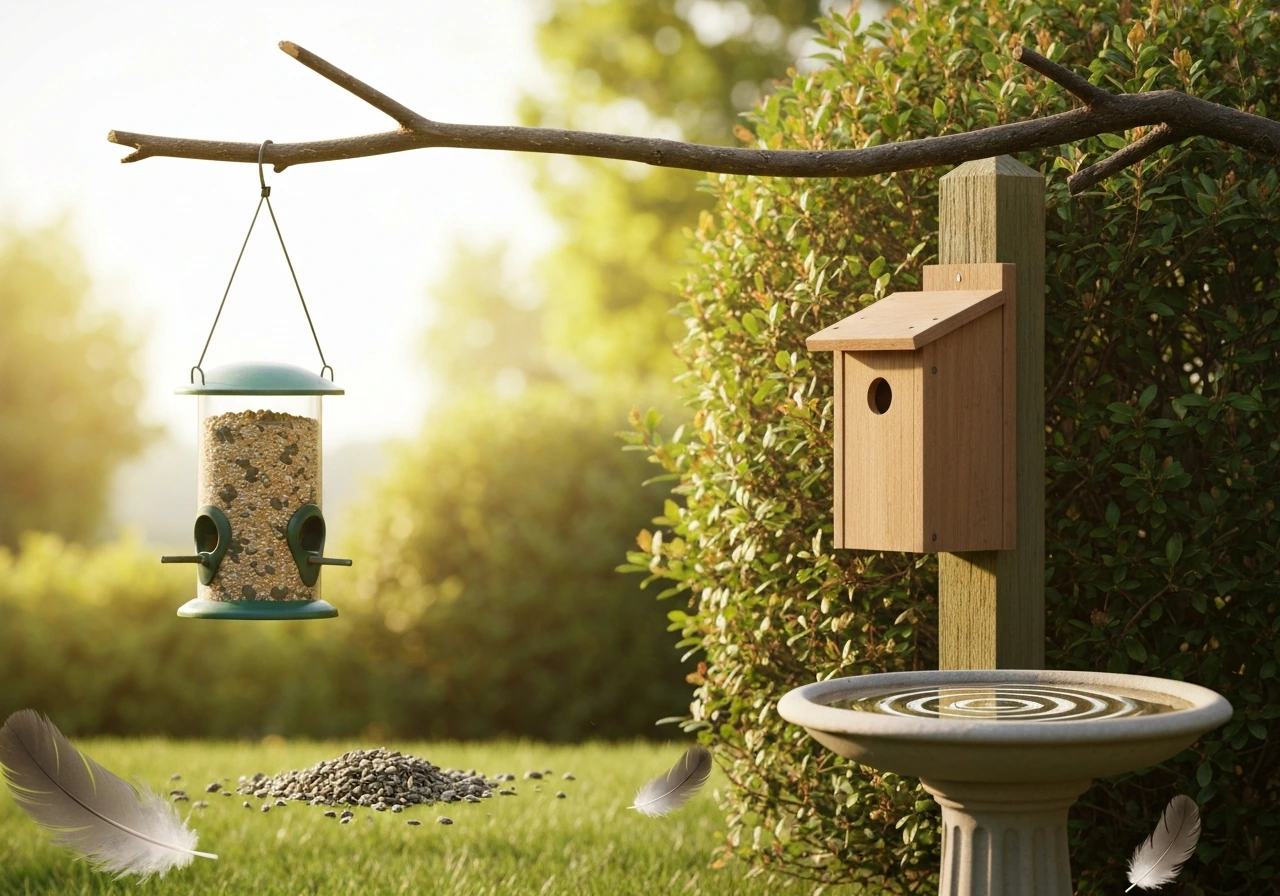
Feeder placement is a balance between good viewing angles for you and window-collision safety for the birds. You can also use these tiny bird garden tips to fine-tune feeder placement and habitat details for the small species that visit most often. The safest distance is either within 3 feet of a window (so a bird that flushes can't build up lethal momentum) or more than 30 feet away. The 5 to 30 foot range is the danger zone. Birds don't perceive glass as a barrier, and window collisions are one of the largest human-caused bird mortality risks we know of.
For seed feeders, clean them every two weeks as a baseline. In hot, humid weather or during heavy use, clean more often and always discard seed that looks clumped, discolored, or moldy. Completely dry the feeder before refilling, moisture is what allows mold like aspergillus to colonize seed. Rake up seed hulls and waste under the feeder regularly, because accumulated droppings under feeders are a direct disease vector for salmonellosis and other illnesses.
Water: birdbaths and hygiene
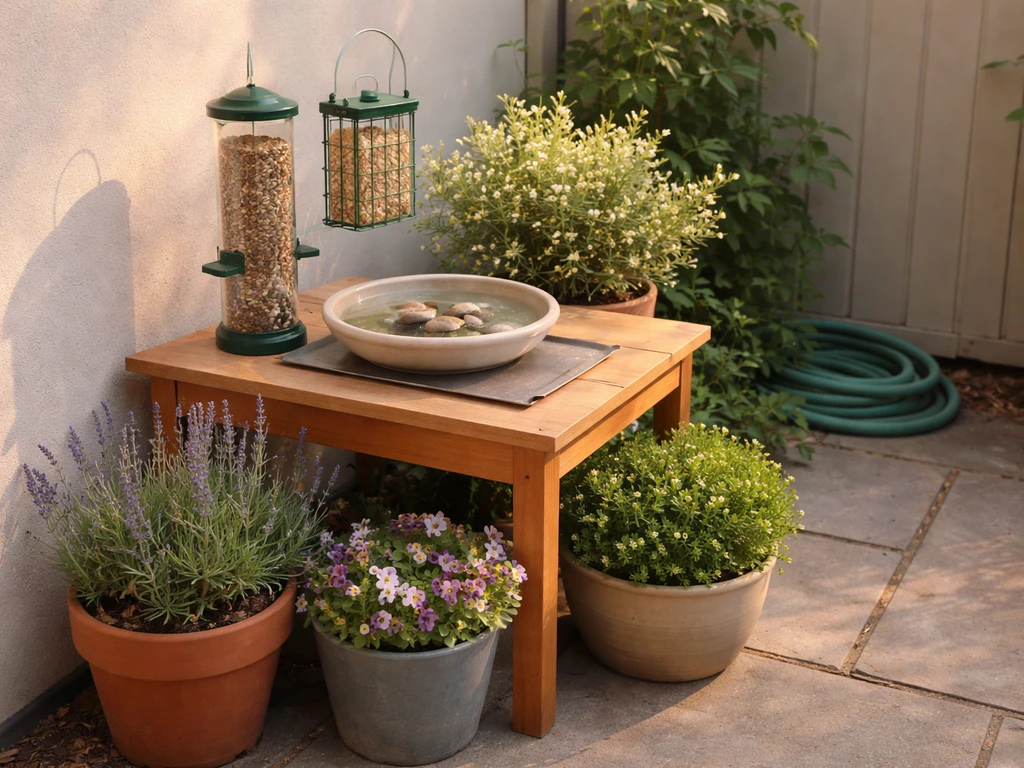
A shallow birdbath (1 to 2 inches deep, with a rough surface for grip) will attract more species than almost any feeder. A backyard bird lover's guide is especially helpful for attracting nesting and feeding activity with the right food, placement, and habitat choices the backyard bird lover's guide attracting nesting feeding. Refresh the water daily or every other day to prevent algae growth, bacterial buildup, and mosquito breeding. This isn't fussiness, stagnant water is how diseases cycle through a local bird population and potentially back to your hands when you clean.
Air quality: a factor most backyard birders ignore
If you live in an area that gets wildfire smoke, poor air quality days aren't just a human health issue. Wildfire smoke contains fine particulate matter (PM2.5) that affects both people and birds through respiratory impact. On high AQI days (check AirNow.gov for real-time readings), limit time spent outdoors at the feeder and keep windows closed. This matters doubly if you have pet birds inside: birds have extremely sensitive respiratory systems, and smoke particles that drift indoors can be dangerous to them. The Oregon Veterinary Medical Association specifically advises keeping pet birds indoors with windows shut during wildfire smoke events, and Audubon has documented respiratory impacts of smoke on wild birds too. On heavy smoke days, skip the outdoor birding session and watch from inside with windows closed.
Habitat features that attract more species
- Native shrubs and brush piles give ground-feeding sparrows and wrens the cover they need to feel safe
- A mix of feeder heights (ground tray, mid-height hopper, elevated tube) covers more species guilds
- Leaving a small area of leaf litter invites thrushes, towhees, and some sparrows that rarely visit feeders
- A suet cage attached to a tree trunk will bring woodpeckers, nuthatches, and chickadees that don't compete for seed ports
Bird behavior, seasons, and what to expect month by month
One of the biggest beginner frustrations is not understanding why the birds 'disappeared.' They didn't disappear, your yard's role in their life cycle just changed. Here's a practical seasonal frame to set expectations.
| Season | What's Happening | What You'll Notice at the Feeder |
|---|---|---|
| Late Winter (Jan–Feb) | Resident birds are stressed by cold; food competition peaks; first signs of song increase | Highest feeder activity of the year; Dark-eyed Juncos, White-throated Sparrows, and winter finches peak |
| Spring Migration (Mar–May) | Migratory species pass through; breeding residents begin pairing up and singing | New arrivals appear briefly; feeder traffic may drop as natural food increases; lots of territorial singing nearby |
| Breeding Season (May–Jul) | Resident birds are nesting and feeding young; some become secretive | Feeder visits may drop sharply—this is normal, not a problem. You may see adults carrying food away rather than eating at the feeder. NestWatch research confirms birds can seem to 'vanish' during active nest phases. |
| Late Summer (Aug–Sep) | Fledglings appear; adults molting; some early migrants moving south | Lots of scruffy-looking juveniles that can confuse ID; feeder activity picks up again |
| Fall Migration (Sep–Nov) | Peak migration; irruptive species begin moving if boreal food crops are poor | Unexpected visitors possible; White-crowned Sparrows, Yellow-rumped Warblers; watch for winter finch irruptions |
| Early Winter (Nov–Dec) | Winter residents settle in; irruptive species like Pine Siskins or Common Redpolls may appear if northern food is scarce | Feeder activity climbs; irruptive years can bring entirely new species you've never seen before |
Winter finch irruptions are one of the most exciting parts of backyard birding. Audubon tracks these annually through a Winter Finch Forecast, when conifer seed crops fail in the boreal forest, species like Pine Siskins and Evening Grosbeaks push south in large numbers. In a good irruption year, your feeder might host species you'd normally need to travel hours north to find. Keep your checklist going through winter specifically for this reason.
Using your guide to improve care and enrichment for pet birds
Here's where backyard birding connects directly to owning a pet bird: watching wild birds teaches you an enormous amount about natural behavior, foraging styles, and social dynamics that should be informing how you set up your pet bird's environment. A pet parrot that watches a wild nuthatch creep down a tree trunk and probe bark crevices is seeing a relative engaging in the same foraging instincts your bird has. That visual stimulation is real enrichment.
But the line between 'use wild birds as enrichment inspiration' and 'let wild birds near your pet' is firm, and it matters for biosecurity. Wild birds can carry salmonella, avian influenza, and other pathogens without appearing sick at all. The CDC notes that bird flu can be present in wild birds with no visible symptoms, and Cornell Lab's Audubon research documents the feeder-to-hand disease pathway through salmonellosis outbreaks linked to wild songbirds. The protocol is: observe from inside, wash hands after handling feeders or baths even when wearing gloves, and never bring wild bird droppings, feathers, or feeder materials into the same space as your pet bird's equipment.
Practical enrichment ideas inspired by backyard watching
- Watch how wild finches manipulate seeds and replicate that foraging challenge with your pet bird using foraging toys and wrapped treats
- Note the natural light cycles and activity bursts of wild birds in your yard (dawn activity peak, mid-day rest, late afternoon feeding) and use that to time your pet's enrichment sessions
- Observe bath behavior in wild birds at the birdbath—if your pet bird seems uninterested in its water dish, try a wider, shallower container that better mimics what wild birds prefer
- Use recordings of wild bird calls (played at low volume) as auditory enrichment for pet birds, especially for species like cockatiels and canaries who respond strongly to conspecific song
- Let your pet bird watch backyard birds through a window—visual stimulation from live movement is more engaging than any toy, and the glass barrier keeps biosecurity intact
Common beginner mistakes to avoid
- Assuming a wild bird in the yard could become a pet: wild songbirds are federally protected and keeping one is illegal in the US. If a bird is injured, contact a licensed wildlife rehabilitator.
- Misidentifying a look-alike and then reinforcing that wrong ID over multiple sessions—use your confirmation column in the checklist and genuinely rule out the closest look-alike every time
- Using the wrong feeder seed for the species you want to attract (millet on the ground for sparrows and juncos, black-oil sunflower in tubes for finches and chickadees, suet for woodpeckers—don't use just one feeder type and expect all species)
- Letting feeders go weeks without cleaning, especially in warm weather, then wondering why birds stopped coming or look sick
- Skipping hand washing after outdoor feeder maintenance and then handling your pet bird's food, cage, or equipment
The bigger picture is this: your printable backyard bird guide isn't just a hobbyist checklist. It's a log of your local bird community, a teaching tool for better pet bird enrichment, and a way to build pattern recognition that makes you a better observer over time. Start simple, print the checklist in this article, and commit to filling it in for two weeks. You'll know more about the birds outside your window than most people learn in years of casual watching, and that knowledge transfers directly into how you think about your pet bird's needs.
FAQ
What should I write down if I can only get a 10 to 20 second look at a bird?
Use one quick sketch plus three prompts: approximate size (sparrow, robin, jay), posture (perched, clinging, hopping), and notable behavior (hovering, tail flicking, ground feeding). This reduces the need to remember details perfectly and gives you something to verify later when you compare the bird to your guide.
What do I do when the bird I’m seeing isn’t one of the species in my printable backyard bird guide?
If a bird doesn’t fit your one-to-three page guide, do not force an ID. Instead, circle the closest habitat and behavior category, note the mismatch (for example, “too long tail,” “bill shape doesn’t fit”), then check a second reference. For beginners, recording “unknown” with the key clues is still a useful data point for your seasonal log.
Should I take photos first or use the checklist workflow first when I’m trying to identify a bird?
Take the photo or observation from the most stable view you can, but prioritize what your brain does first. If you are using the guide’s workflow, your “Size and Shape” notes should come before you zoom in on color patches. If you photograph first, you can still lose the workflow, so write one line about size and posture before you start comparing colors.
How can I narrow down look-alike birds when their colors overlap?
Track movement cues separately from appearance. For example, note whether the bird feeds by gleaning from leaves, clings vertically to bark, or hops on the ground. Many backyard species look similar in color, but their feeding method usually separates them quickly.
Will bad lighting or weather (shade, rain, sunset) ruin my backyard bird IDs?
Yes, but treat lighting as a variable. Shade can wash out reds and make browns look gray, and low-angle sunlight can deepen patterns. Your checklist can handle this by adding a small note like “bright sun” or “overcast/shade” alongside the field marks you observe.
How should I log birds if several show up at the same time or one bird comes back repeatedly?
Avoid counting every visit as a new individual. In your session log, use “sightings” rather than “individuals,” and when possible, group birds that look identical arriving together. If you want better counts later, watch for repeated return visits over a short window (like 15 to 30 minutes) instead of treating each arrival as a separate bird.
What if a bird seems injured or behaves strangely at the feeder, should I still identify it?
If you see a bird behaving oddly, use safety-first troubleshooting. Common causes include recent disturbance (cats, lawn work), territorial disputes, or illness. Do not handle birds. If you find a grounded or injured bird, contact local wildlife rescue, and keep your feeder area calm until it resolves.
How do I identify birds when they look different because of molt or juvenile plumage?
During molt or when young birds are present, field marks can be incomplete or unusually patterned. Your printable guide can still work if you treat age cues as a separate column, for example “juvenile-like,” “molting,” or “fresh plumage,” and you compare behavior and posture, not just color.
My feeder only brings a few species, how can I increase variety without starting over?
If your feeder attracts mostly one or two species, it can still be a strong learning tool. First, adjust one variable at a time (food type, feeder height, nearby cover) rather than changing everything. Also consider adding habitat rather than only new feeders, a shallow bath and nearby shrubs often increase diversity more reliably than switching seed brands constantly.
Is feeder-to-window distance enough, or are there other window-collision risks I should watch for?
For backyard safety, keep windows and reflective surfaces in mind. Even when you follow the distance guidance, glass near viewing areas can still cause collisions. If you notice repeated “near misses,” add a window visual barrier or rearrange the viewing angle so birds have fewer straight-line approaches.
What’s the safest way to manage wild bird activities around an indoor pet bird?
If you keep pet birds, the key biosecurity rule is separation of equipment and airflow. Keep wild-bird feeders and baths away from the pet bird’s room, don’t clean or handle wild-bird items in the same area you handle pet supplies, and store pet feed separately. After any feeder or bath maintenance, wash hands thoroughly even if you used gloves.
How can I avoid building bad habits if I’m unsure of an ID?
To prevent false confidence, add one “confidence rating” to each row (for example high, medium, low). When you review later, you can compare only the high-confidence entries for totals, and treat medium or low entries as leads to confirm on another day.
Should I keep the checklist year-round even if it feels repetitive in summer?
Make your printout workflow seasonal. Keep the guide consistent, but run separate entries for the same months each year, then compare patterns using your cumulative species list. Irruptions and migration shifts can be sudden, so if you stop your checklist during winter you may miss the best signal.