Budgie care for beginners comes down to a few non-negotiable basics: a cage that's big enough and safely positioned, a diet that isn't just seeds, fresh water changed twice a day, and daily observation so you catch problems early. Get those four things right from day one and you're already ahead of most first-time budgie owners. This guide walks you through every step in practical order, from choosing your bird to what to monitor at the end of week one.
Budgie Bird Care for Beginners: Setup, Routine, and Tips
Marcus Chen
4 May 2026
Getting ready to adopt: choosing a healthy budgie and your setup timeline
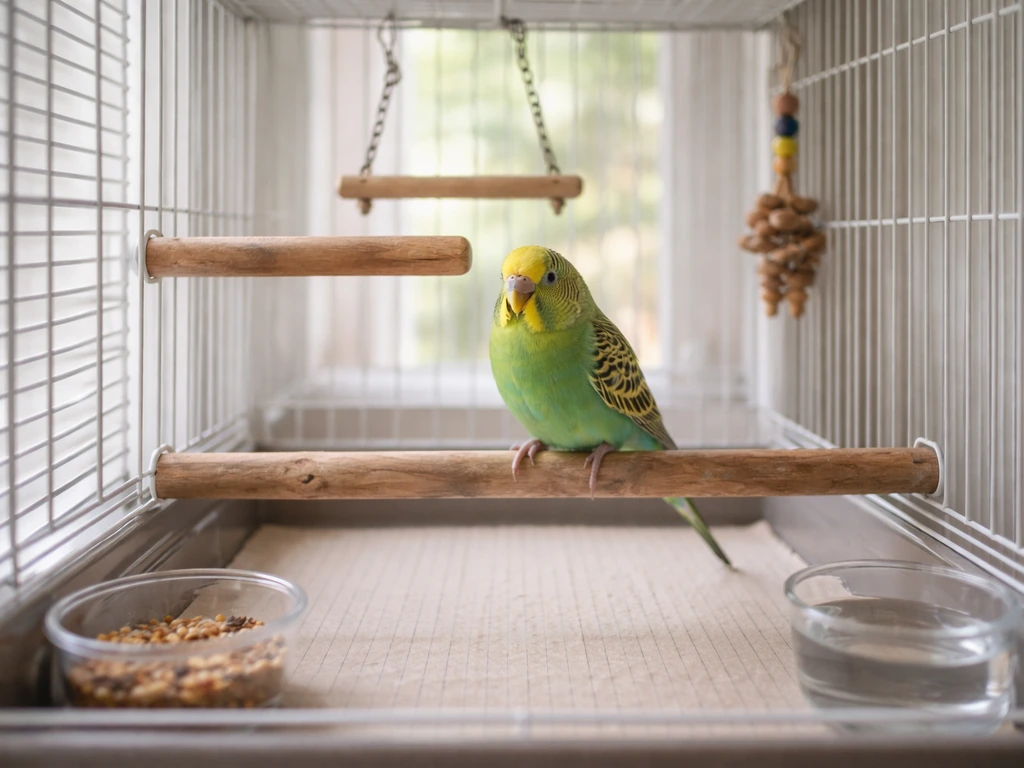
Before you bring a budgie home, spend a few minutes actually watching the birds at the breeder or pet store. A healthy budgie is alert, active, and perching confidently. Walk away from any bird that's sitting on the cage floor for an extended period, has fluffed feathers when it isn't sleeping, or shows any wet or crusty feathers around its face. These are the same red flags vets look for, and they're visible to you before you spend a single dollar.
Young budgies (typically under 12 weeks, identifiable by the barring pattern extending all the way to the cere) tend to tame more easily, which matters a lot for a first-time owner who wants a bird they can actually interact with. Hand-raised birds are even better if you can find them. If you already have other birds at home, plan for a 30 to 45-day quarantine in a completely separate room before any introductions. Birds can pass infections even when they look perfectly healthy, so this isn't optional.
Your setup timeline should look like this: buy and arrange the cage at least two to three days before pickup so everything is stable and you're not scrambling. Schedule a first vet visit with an avian vet within the first week of bringing your budgie home. Finding an avian vet before you have an emergency is one of those things that seems unnecessary until it absolutely isn't.
Essential supplies checklist and budget-friendly buying tips
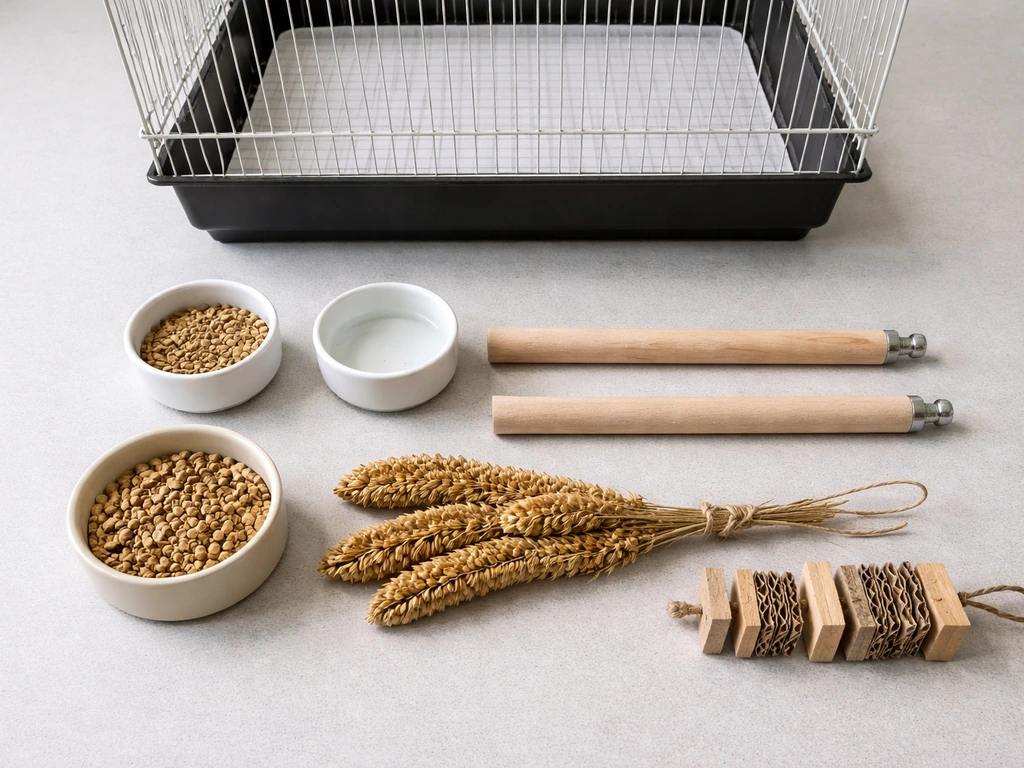
You don't need to spend a fortune to give a budgie a great home. Here's what you actually need before your bird arrives:
- Cage: minimum 20 × 20 × 30 inches (length × width × height) per Merck Veterinary Manual guidelines, with bar spacing no wider than 0.5 to 1.2 cm so your budgie can't get its head stuck
- Perches: at least two, each at least 4 inches long and 3/8 inch in diameter — natural wood perches of varying diameters are better for foot health than identical dowel perches
- Food dishes: at least three separate dishes for dry food, fresh food, and water
- Cage liner: plain unprinted paper or commercial cage liner paper — skip scented or printed newspaper
- Pellet food: a small-bird pellet formulated for budgerigars or parakeets
- Seed mix: a quality small-bird seed mix as a supplement, not the main diet
- Fresh produce: leafy greens, carrot, and other bird-safe vegetables for variety from day one
- A few toys: foraging toys and at least one chewable toy — more on this in the enrichment section
- Travel carrier: a small, secure carrier for vet visits — buy this before you need it
- Pet-safe disinfectant: a 3% bleach solution or a non-aerosolized pet-safe habitat cleaner for weekly cage disinfection
Budget tip: the cage is where you should spend the most, because upgrading later is a hassle. Merck Veterinary Manual’s spacing recommendations for budgerigars include a minimum cage size of 20 × 20 × 30 inches and a minimum bar spacing of 0.5 inches (about 1.2 cm) Table. Buy the largest cage your space and budget allow, bigger is always better. For everything else, mid-range is fine. Skip the elaborate starter kits sold at chain pet stores; they often include tiny cages, low-quality food, and accessories you'll replace within a month. Buy the cage separately, and shop bird-specific retailers for food and toys.
Cage placement, habitat setup, and your day-one plan
Where to put the cage
Placement is one of those things beginners underestimate. A few hard rules: keep the cage out of the kitchen entirely (more on fume hazards later), away from exterior doors that let in cold drafts, and away from direct sunlight unless there's always a shaded corner the bird can retreat to. Drafts are a genuine husbandry problem, even light air movement with a temperature drop can stress a small bird. A living room or bedroom wall that's away from windows and vents is usually the best spot. Budgies are social, so placing the cage where the household is active during the day helps them feel included.
Setting up the inside of the cage
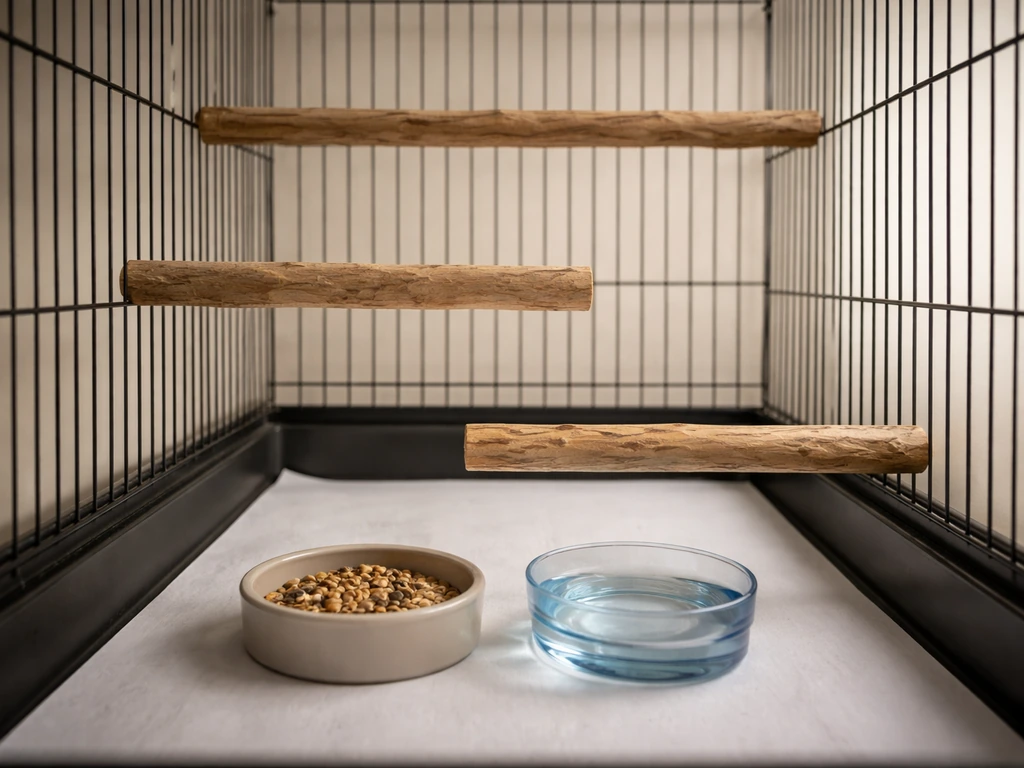
Place perches at different heights, but never position one directly above a food or water dish. Droppings landing in the food or water is a constant contamination problem in beginner setups, and it's completely avoidable with a little planning. Put the food and water dishes low and to the side, with perches positioned so the bird can reach them without standing over the dishes.
Line the cage tray with plain paper, you can check droppings daily this way, which is one of the easiest early health indicators you have. Add two or three toys spaced out so the bird has room to move freely. Don't overcrowd the cage; a budgie needs flight space inside the cage, not just perching spots.
On day one, resist the urge to handle your bird immediately. Let it sit quietly in its new space for at least a few hours, ideally the whole first day. Keep voices calm and movement around the cage slow. Your budgie is mapping its new environment and deciding whether to trust you, and that process starts from the moment it arrives.
Daily care routine: feeding, water, cleaning, and health checks
What to feed and how much
The single biggest diet mistake beginners make is feeding seeds exclusively. A seed-only diet is not recommended for budgerigars, it leads to nutritional deficiencies over time. The target breakdown is roughly 40 to 50% pellets, 30 to 40% seed mix, 10 to 15% vegetables, and 5 to 10% fresh fruit. In practice, offer pellets and a small amount of seed mix in the dry food dish daily, and rotate fresh vegetables and small amounts of fruit in the second dish. Keep portions of fresh food small enough that the bird finishes them within a few hours so nothing rots in the cage. Foods to avoid entirely include avocado and chocolate, both of which are toxic to budgies.
If your bird is used to seeds only and won't touch pellets at first, that's normal. Transition slowly by mixing a small amount of pellets into the seed mix and gradually increasing the ratio over a few weeks. Don't starve the bird into eating pellets, just be patient and consistent.
Water
Change the water at least twice a day and clean the water dish each time. Budgies will bathe in their water dish if it's large enough, which is fine and actually healthy behavior. If the dish is used for bathing, clean it more frequently. Standing water in a soiled dish is one of the fastest routes to bacterial infections in small birds.
Cleaning schedule
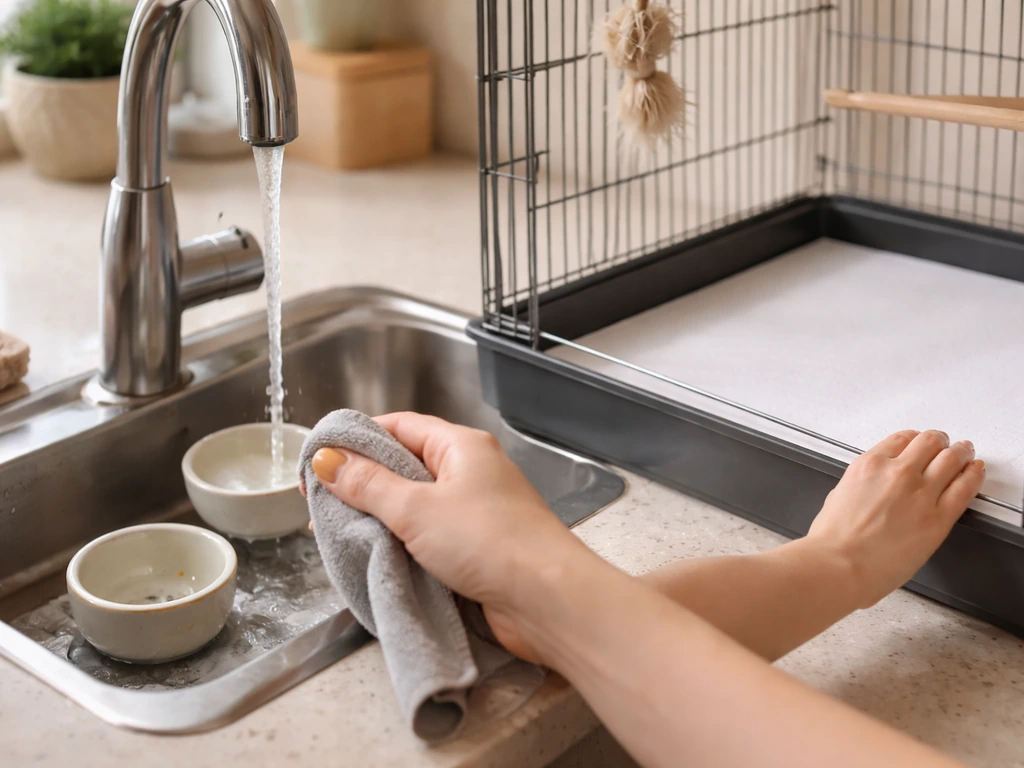
| Task | Frequency | What to use |
|---|---|---|
| Replace cage liner paper | Daily | Plain unprinted paper |
| Wipe food/water dishes | Daily (after each use) | Hot water, then rinse thoroughly |
| Full water dish wash and change | Twice daily | Hot water, mild soap, rinse well |
| Spot-clean perches and cage bars | Every 2–3 days | Damp cloth, no aerosol sprays |
| Full cage disinfection | Weekly | 3% bleach solution or non-aerosolized pet-safe habitat cleaner — rinse and dry completely before returning bird |
Daily health checks
Every day, take 60 seconds to look at your bird. You're checking four things: behavior and activity (is it moving around, vocalizing, interested in its environment?), posture (is it perching on both feet, or is it hunched, on the floor, or shifting weight constantly?), breathing (is it quiet and unlabored, or is the tail bobbing with each breath?), and feather condition (smooth and clean around the face, or wet/matted?). Checking droppings is part of this too, look at the paper liner for any dramatic change in color, consistency, or quantity. It sounds like a lot but after a week it takes about 30 seconds and it becomes automatic.
Enrichment and interaction: taming, training, and keeping boredom away
Building trust first
Taming a budgie is a process of small steps, not a single breakthrough moment. Start by simply sitting near the cage and talking quietly. After a few days, begin offering millet spray through the cage bars, millet is like junk food to a budgie, and the bird approaching your hand to eat it is a significant trust signal. From there, progress to resting your hand inside the cage without forcing contact, then gradually to step-up training where you encourage the bird to step onto your finger by pressing gently against its lower chest. Keep sessions short, under five minutes, and always end on a positive note.
Budgies are social birds and genuinely need daily interaction, either with you or with another budgie. If you're keeping a single bird, plan for at least 30 to 60 minutes of out-of-cage supervised time every day once the bird is comfortable with its environment. An unstimulated budgie will become bored, and boredom in birds often shows up as feather-destructive behavior or excessive screaming.
Toys and mental stimulation
Rotate toys every week or two so the cage doesn't become boring. Foraging toys that hide food inside are excellent because they tap into natural behavior. Chewable toys made from bird-safe wood or vegetable-tanned leather give the beak something productive to do. Mirrors are popular but use them cautiously with single birds, a bird that becomes obsessed with its mirror reflection can start regurgitating food for it and stop interacting with people. One mirror, not three.
Common beginner mistakes and how to avoid them
- Buying a cage that's too small: the minimum size often sold in pet stores is not actually adequate — aim for at least 20 × 20 × 30 inches and go bigger if you can
- Seed-only diet: seeds are a supplement, not a complete diet — introduce pellets from day one so the bird doesn't become seed-addicted
- Skipping the avian vet: budgies mask illness extremely well; a baseline health check in the first week gives you a reference point and establishes care before an emergency
- Ignoring quarantine: if you have other birds, 30 to 45 days of separation for a new bird is not excessive, it's standard
- Using aerosol sprays near the cage: air fresheners, scented candles, cooking sprays, and perfumes can all cause respiratory distress in birds — more on this below
- Placing the cage in the kitchen: fumes from overheated non-stick cookware are potentially lethal to budgies — the kitchen is never a safe location
- Handling too early: give the bird at least a full day to settle before attempting any contact
- Perches directly above food and water: this is an easy fix that prevents constant contamination
- Using only identical dowel perches: varied perch diameters reduce the risk of foot problems over time
Air quality, household hazards, and when to call the vet
Why budgies are especially sensitive to air quality
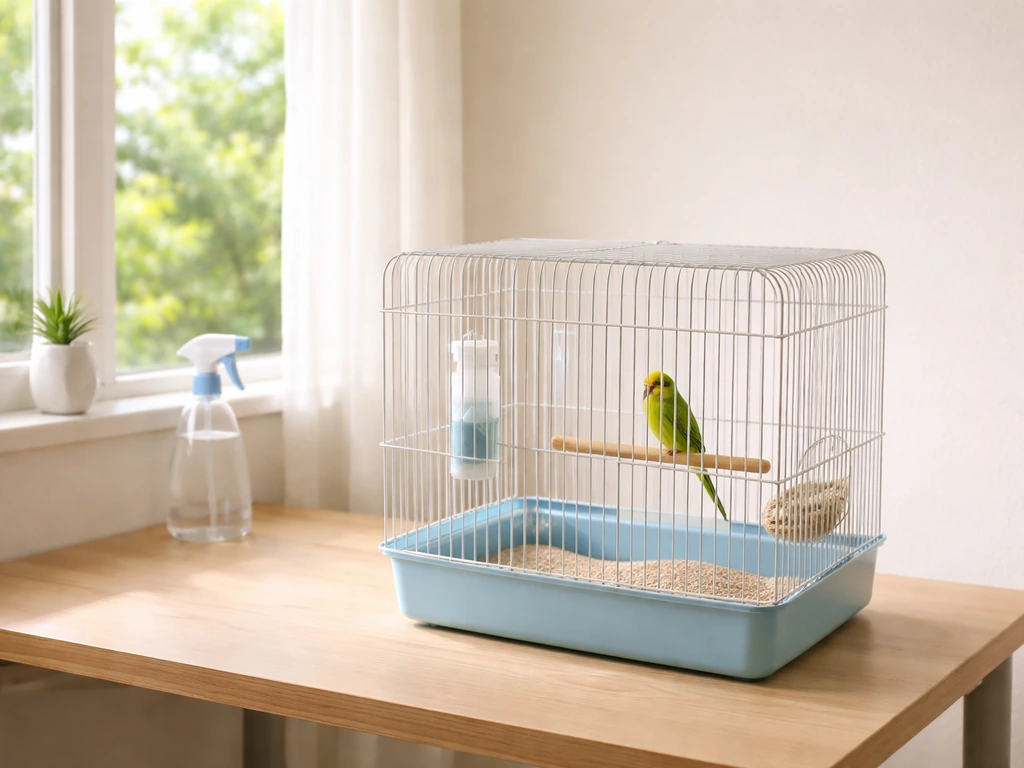
Birds have highly efficient respiratory systems that make them exceptional at extracting oxygen, and exceptional at absorbing airborne toxins. PTFE (the coating used on non-stick cookware, including Teflon-branded products) can release fumes when overheated that cause wheezing, gasping, weakness, and can kill a bird rapidly. Self-cleaning ovens present the same risk. This isn't a rare fringe scenario; it's a documented, recurring cause of bird death in households. The answer is simple: never use non-stick cookware in a home with a budgie, or at a minimum, keep the bird in a room completely separated from cooking fumes with strong ventilation.
Beyond non-stick fumes, birds are sensitive to aerosol sprays (air fresheners, cleaning sprays, dry shampoo, hairspray), cigarette and vaping smoke, paint fumes, bleach and ammonia vapors, and strong perfumes. If you ever notice a strange smell in the house, move your bird to a well-ventilated room immediately and investigate the source before returning it. This is not an overreaction, it's the appropriate response.
When to contact an avian vet
The frustrating thing about budgies is that they hide illness instinctively. By the time obvious symptoms appear, the bird is often already significantly unwell. This is why daily observation matters so much, and why you shouldn't wait to see if things improve on their own. Contact an avian vet promptly if you observe any of the following:
- Tail bobbing with each breath, or any labored, open-mouth breathing
- Wheezing, clicking, or other unusual respiratory sounds
- Sitting on the cage floor for an extended period
- Consistently fluffed feathers outside of normal sleeping
- Wet or matted feathers around the face or head
- Sudden change in droppings (color, consistency, or dramatic reduction in quantity)
- Refusal to eat or drink for more than 24 hours
- Any suspected exposure to toxic fumes — this is a same-day emergency, not a wait-and-see situation
Birds mask illness and owners should seek veterinary care promptly when warning signs are present. Don't apply the 'wait a day and see' approach you might use for a dog or cat. Find your avian vet before you need one, and when in doubt, call.
Your next steps: today, this week, and ongoing
Here's how to apply everything above in order. If you haven't adopted yet, use this as your pre-adoption checklist. If your budgie is already home, start from wherever you are.
- Today: source the cage (minimum 20 × 20 × 30 inches, bar spacing under 1.2 cm), set it up with varied perches, paper liner, and separate dishes — keep it out of the kitchen
- Before pickup: locate an avian vet and book a first appointment for within the first week of bringing your bird home
- Day one with the bird: let it settle quietly, keep interactions calm, resist handling — just observe and let it adjust
- Days two through seven: begin the daily routine of twice-daily water changes, fresh food in the morning, and your 60-second health check every evening while reviewing the cage liner
- Week one: start trust-building by sitting near the cage and offering millet through the bars; attend the avian vet visit for a baseline checkup
- Week two onward: begin step-up training once the bird is comfortable approaching your hand; introduce toy rotation and supervised out-of-cage time as confidence grows
- Ongoing: weekly cage disinfection, monthly evaluation of perch and toy condition, and consistent daily observation — you'll know your bird's normal quickly, and that's your best early-warning system
Budgie care isn't complicated, but it does require consistency. The owners whose birds thrive long-term aren't doing anything exotic, they're just showing up every day, keeping the habitat clean, feeding a varied diet, and paying attention. That's genuinely all it takes to give a budgie a great life. Start with the basics, build the habits in week one, and the rest follows naturally.
If you want to go deeper on general bird keeping principles or troubleshoot specific problems as they come up, the broader topics of bird care for beginners and bird problems and solutions are worth exploring alongside this guide. If you want to go deeper, a bird care guide can help you troubleshoot common problems and refine your daily routine. For more detailed guidance and troubleshooting, see our bird care for beginners guide next.
If you run into bird problems, the next step is matching the likely cause to the right solution so your budgie stays healthy and comfortable bird problems and solutions. If you want more structured guidance beyond budgie-specific tips, bird keeping for beginners covers the core setup, routines, and troubleshooting basics bird care for beginners.
FAQ
Can I place my budgie cage near a window if I keep it out of direct sunlight?
You can, as long as you also avoid cold drafts and fast temperature swings. Check the area at morning and evening, use a thermometer if needed, and make sure the bird always has a shaded corner away from any glass that gets hot or cold. If the window area is near a vent or frequently opened/closed, it can still stress the bird.
How many pellets and how much seed should I give daily for budgie bird care for beginners?
Use the adult ratios as a guide, but base portions on leftovers and body condition. A common beginner approach is to offer pellets as the main measured food, then add a small seed portion that the bird can finish quickly. If you consistently see food left over after a few hours, reduce the amount rather than increasing over time.
What should I do if my budgie refuses vegetables and fruit?
Offer vegetables in small pieces in the same dish each day, and rotate what you offer. Some birds prefer finely chopped items (like grated carrot or romaine) or specific colors, and they may take weeks to accept. Remove uneaten fresh food promptly, and do not rely on fruit as a primary substitute because it can throw off nutrition.
Is it okay to use a lined paper liner for the whole cage, and what kind of paper is safe?
Plain paper is the right choice for easy droppings checks. Avoid scented paper, printer paper with heavy ink coverage, or anything treated with chemicals. Replace the liner regularly so it stays dry and you can spot changes in droppings quickly.
My budgie is sleeping a lot during the first week. Is that normal?
Some extra sleeping is normal after moving, but it should not come with low responsiveness, puffed feathers outside true rest, or poor appetite. Watch breathing, posture, and droppings daily. If the bird looks inactive for most of the day, gets worse, or shows any respiratory signs, contact an avian vet promptly.
How do I handle “first-time bird stress” like pacing, loud calling, or hiding?
Give quiet adjustment time, keep interactions calm, and avoid sudden handling for the first day or two. Daily routine matters, place the cage where household noise is consistent but not chaotic, and use short, predictable taming sessions. If the behavior escalates into repeated frantic flitting, persistent open-mouth breathing, or refusal to eat, treat it as a health check issue, not just stress.
Can I use millet spray as a regular treat, or is it only for taming?
Millet is useful for trust building, but keep it limited because it is “treat-like.” Use millet to create positive association, then gradually shift to other foraging options and vegetable acceptance. If you notice your budgie relying on millet and ignoring pellets, reduce millet and offer alternative enrichment.
What temperature range should I aim for in my home for budgie bird care for beginners?
Budgies do best in stable indoor temperatures without drafts. Avoid placing the cage near exterior doors, HVAC vents, or windows that swing cold at night. If you notice the bird huddling on the floor, constantly puffing, or seeking only one spot, reassess temperature stability and drafts first.
Should I bathe my budgie or let it bathe only in its water dish?
For beginners, allowing bathing in an appropriate dish is usually the simplest and least stressful. If you later introduce misting, use a gentle approach with a bird-safe sprayer and warm, draft-free conditions. If the bird gets chilled or starts having respiratory symptoms, stop and stick to dish bathing.
Is it safe to let my budgie free-fly during training, and how can I prevent accidents?
Supervised only. Before any out-of-cage time, close doors and windows, remove hazards like ceiling fans, and avoid rooms with open toilets or standing water. Start with a familiar perch near the cage so the bird can easily return, and use a calm, consistent routine to reduce panic.
How often should I clean the cage, and what’s the safest cleaning routine?
Spot-clean daily as needed, and do full tray and dish cleaning more frequently based on droppings and water use. Clean the water dish each time you change water, and wash food dishes after each serving of fresh food. Avoid strong fumes from cleaners, and rinse well so no residue remains.
What are common beginner mistakes that lead to sickness in budgies?
The big ones are seed-only feeding, neglecting fresh food rotation, leaving standing water in dishes, placing the cage near kitchen fumes or aerosol exposures, and delaying avian vet care when symptoms show. Also avoid overcrowding perches directly above food or water, since contamination happens fast in beginner setups.
If I suspect illness, what immediate steps should I take before I can see the avian vet?
Move the cage to a quiet, well-ventilated room with stable temperature, and remove any potential toxin sources (sprays, non-stick cookware area, strong scents). Do not change the diet aggressively during an acute concern, focus on monitoring breathing, posture, and appetite, and note when symptoms started so the vet can triage faster.
Next Articles
Garden Bird Checklist: Wild Species, IDs, and Tracking Tips
Ready-to-use wild garden bird checklist with IDs, field marks, tracking tips, and a bird station setup for beginners.
Printable Backyard Bird Guide for Beginners and First IDs
Printable backyard bird guide for beginners: simple ID key, look-alikes, and a ready-to-fill checklist for backyard sigh
The Backyard Bird Lover’s Guide to Nesting and Feeding
Step by step guide to attract nesting birds with the right feeders, foods, water, safe placement, and beginner tips.