The feathers you clip on a pet bird are the primary flight feathers, specifically the outermost five to six primaries on each wing. These are the long, stiff feathers at the very tip of the wing, and trimming them reduces the bird's ability to generate lift without removing flight entirely. You cut both wings symmetrically, trimming each primary about halfway between the base and the tip, just below the level of the protective covert feathers that sit on top. That's the core of it. Everything else, the secondaries, the coverts, any other feathers on the body, stays completely untouched.
What Feathers to Clip on a Bird for Wing Clipping
Marcus Chen
2 May 2026
What wing clipping actually is (and when it makes sense)
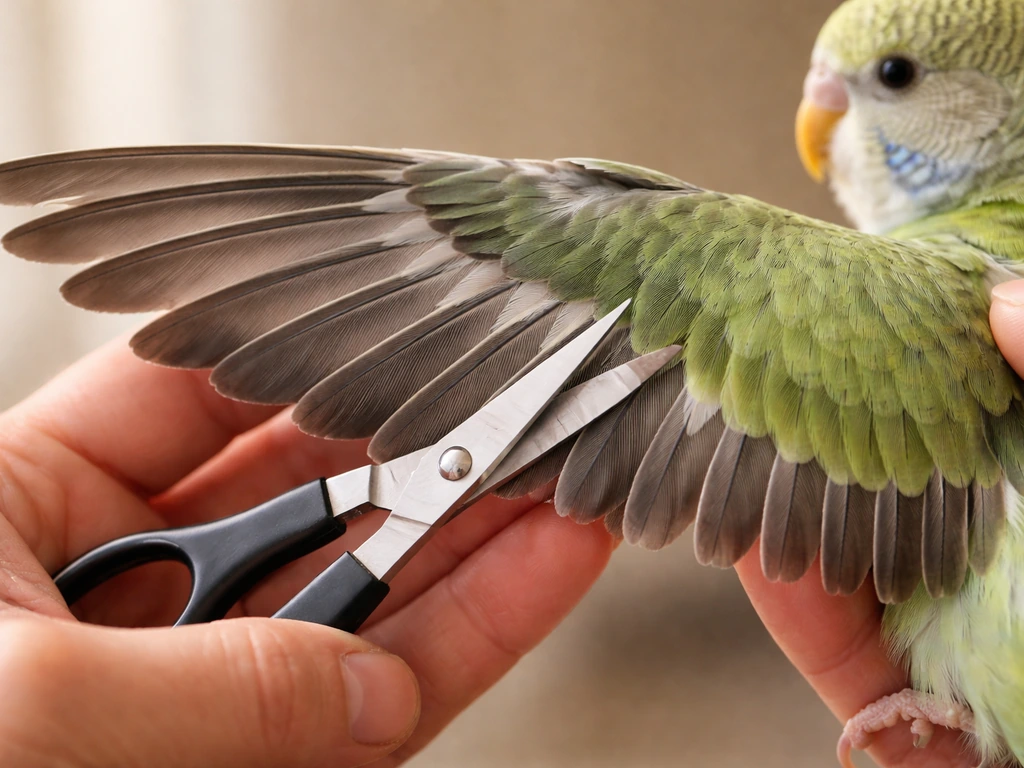
Wing clipping means trimming the flight feathers on a bird's wing, not cutting the wing itself. The feathers grow back during the next molt, so it's a temporary and reversible procedure. It's completely different from pinioning, which is a surgical amputation at the carpal joint and not something any pet owner should ever consider.
Most first-time bird owners consider clipping for a few practical reasons: training a new bird to stay put and build trust, preventing escapes through open windows or doors, and reducing the chaos of a fully flighted bird zooming around a home that hasn't been bird-proofed yet. It's also common during the early weeks with a new bird when you're still figuring out each other's routines. That said, clipping isn't mandatory, and plenty of owners skip it entirely in favor of safe-room setups and recall training. The right choice depends on your living situation, your bird's personality, and your comfort level.
Which feathers to clip and exactly where to cut
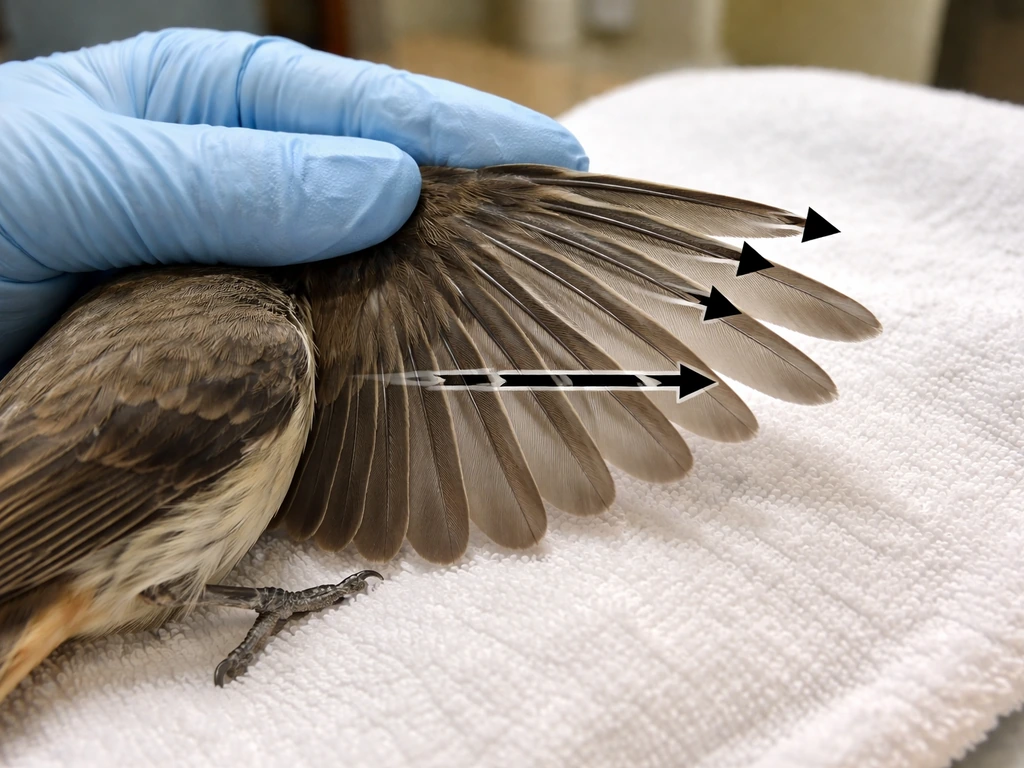
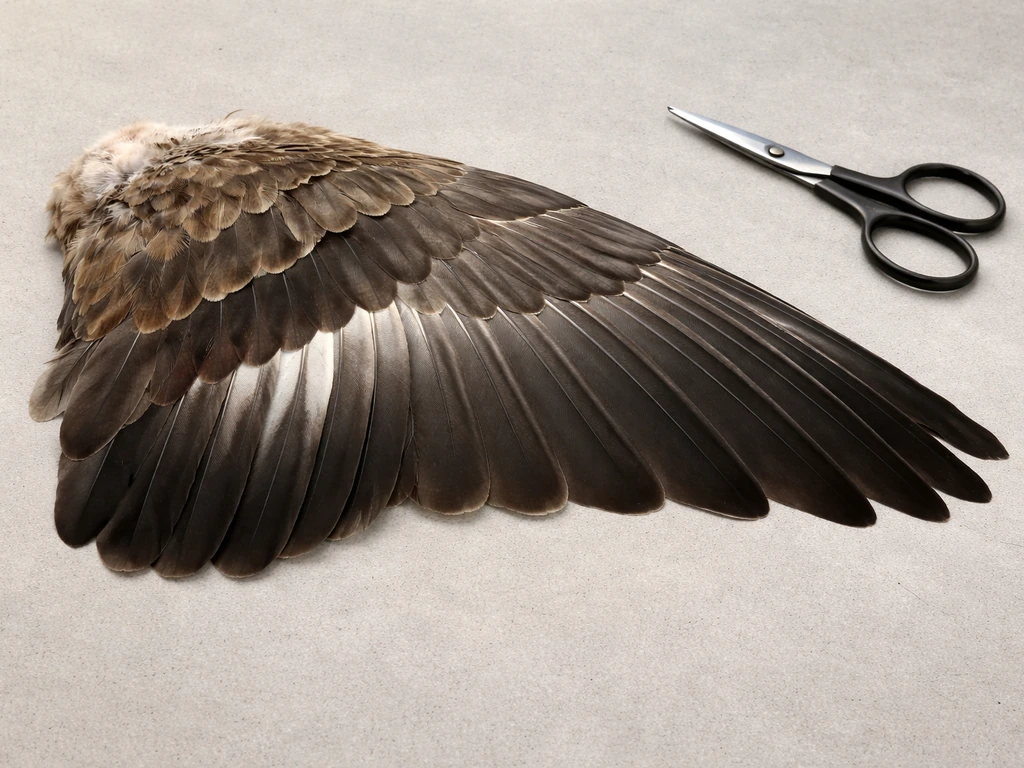
A bird's wing has two main groups of flight feathers: primaries and secondaries. The primaries are the long outer feathers at the tip of the wing, and the secondaries are the shorter feathers running along the inner part of the wing closer to the body. You only ever clip the primaries. The secondaries, primary coverts, and secondary coverts are never trimmed. Cutting secondary feathers or trimming too aggressively can cause a bird to drop like a stone instead of gliding down safely, which is dangerous and defeats the whole purpose.
The standard guidance from avian veterinarians and organizations like the Association of Avian Veterinarians is to trim the outermost five to six primary feathers. In ornithological terms, these are the distal primaries, the ones farthest from the body. When you extend the wing, you'll see the primary coverts layered on top of the primaries like a row of protective shields. Your cut goes just below (or about 5mm below) the lower edge of those coverts. Some sources say to trim to about a quarter inch longer than the end of the coverts; the exact number varies slightly by source, but the reference point is always the covert edge, not an arbitrary length from the tip.
The reason you use the coverts as your guide is practical: cutting too close to the base means you're cutting into the area where nerve and blood supply can still be present in newer feathers. Cutting too far toward the tip leaves too much feather length and the bird retains more lift than you want. Right below the coverts hits the sweet spot. At Best Friends Animal Society’s Parrot Garden, they clip about halfway up the first five primary feathers and check for ragged edges that could rub and irritate skin Right below the coverts hits the sweet spot..
One thing worth knowing: some owners leave the outermost one or two primaries intact for cosmetic reasons, so the clipped feathers are hidden when the wing is folded. This is fine, but it means you may need to trim six or seven feathers total instead of five to achieve the same reduction in lift. If you go this route, just make sure you're still trimming enough to actually reduce flight ability.
Left wing, right wing, and knowing when a feather is ready to cut
You clip both wings, always. Trimming only one wing creates an unbalanced descent. If the bird attempts to fly, it will spin or veer to one side and can seriously injure itself on landing. Symmetry is non-negotiable here. Match the feather count and cut length on both sides.
Before you cut anything, you need to check for blood feathers on both wings. Blood feathers (also called pin feathers) are new feathers still in the process of growing in. They have an active blood supply running through the shaft, which you can usually see as a dark or pinkish coloring along the quill base. Mature feathers are fully keratinized and have no blood supply, so they're safe to cut.
If you accidentally clip a blood feather, it will bleed heavily. The safest approach, as Purdue's veterinary college recommends, is to wait until all blood feathers on the wing have fully grown out before attempting a clip. Check the underside of the wing carefully under good lighting. If you see dark-shafted, waxy-looking pin feathers among the primaries you're planning to cut, postpone the trim.
How to actually do the clip, step by step
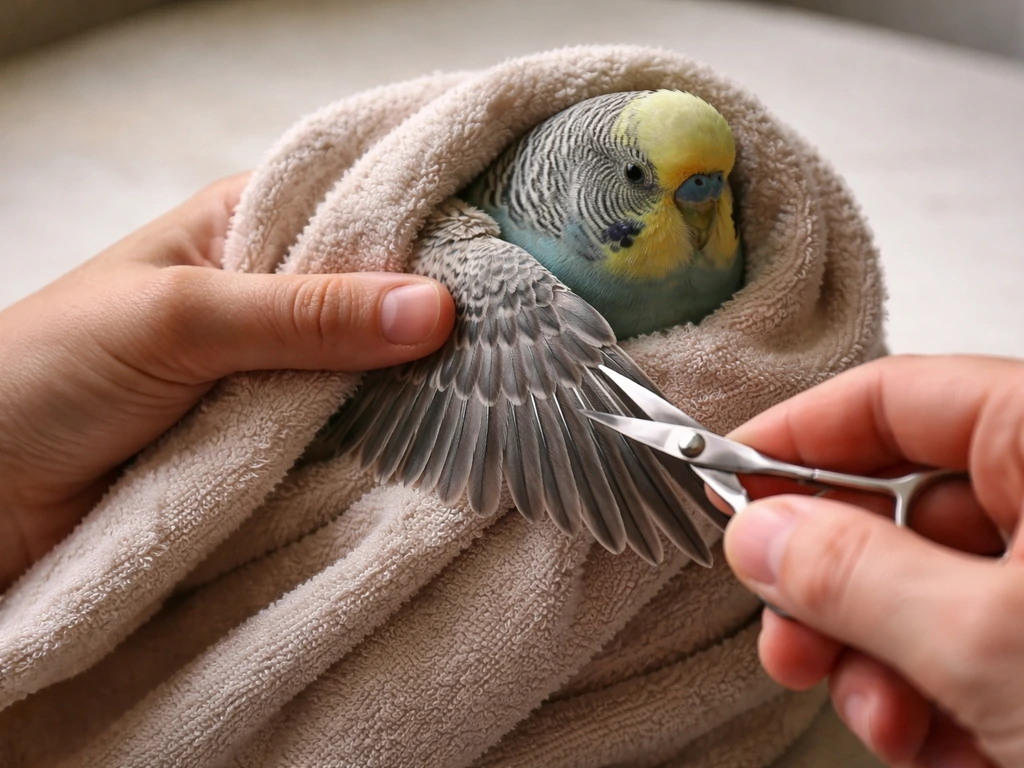
You'll need a second person for this. One person holds the bird, one does the cutting. Use sharp, clean scissors, ideally small scissors with blunt tips. Sharp scissors make a clean cut and reduce the chance of splitting or fraying the feather shaft.
- Wrap the bird gently but securely in a small towel so its wings are held close to its body. The towel wrap keeps the bird from thrashing and protects both you and the bird from accidental injury.
- Expose one wing at a time. Gently extend the wing by grasping at the carpus (the bend of the wing), not the tip. Grabbing the wingtip can apply torque that risks injuring the delicate wing bones.
- Identify the primary coverts. These are the shorter, overlapping feathers running along the top of the wing above the primaries. The lower edge of the coverts is your cut guide.
- Look at the underside of the extended wing and check the shafts of the outer five to six primaries for any dark coloring (blood feathers). If you spot one, stop and wait for it to mature.
- Starting with the outermost primary (the feather at the very tip of the wing), cut it at approximately halfway between the feather's base and its tip, or just below the edge of the primary covert above it. Work inward, feather by feather, cutting each one at a consistent level.
- Make straight, clean cuts. Avoid leaving jagged edges or cutting at angles that could cause the trimmed shaft to poke into the bird's side when the wing is folded, which can cause discomfort and may trigger feather-destructive behavior.
- Repeat on the other wing with the same number of feathers trimmed to the same length.
After both wings are done, let the bird step up onto your hand or a perch and watch how it moves. A properly clipped bird should still be able to glide gently downward rather than plummeting straight to the floor. If it drops like a stone, you've trimmed too many feathers or cut too short. If it's flying across the room with ease, the trim may be too conservative.
Safety basics: restraint, bleeding, and when DIY is a bad idea
Restraint is where most beginner mistakes happen. Birds breathe by expanding their chest, so you must never apply pressure to the chest or sternum. The towel wrap should be around the body and wings, with the head free and the chest uncompressed. If the bird is struggling hard, take a break rather than muscling through it. A stressed, thrashing bird is more likely to get hurt, and so are you.
If you do accidentally cut a blood feather and bleeding starts, apply direct, firm pressure to the area immediately. In most cases, clotting will occur within a few minutes. If bleeding is heavy or doesn't slow down, get the bird to an avian vet urgently. A cut blood feather can cause significant blood loss, and in small birds like budgies, that can become life-threatening quickly.
The honest truth: if you've never done this before, have your avian vet or an experienced bird groomer do the first clip and watch closely. VCA and Best Friends both recommend exactly this. Watching someone competent do it once is worth more than reading ten guides, including this one. You'll see how the bird is held, how the wing extends, and how little pressure is actually needed.
After that, doing it yourself at home becomes much less intimidating. If your vet's office doesn't offer grooming, it's worth asking whether they do or can refer you, and you can also look into what professional bird grooming services are available in your area. If you are wondering about retail grooming options, you can also check whether Petco does bird grooming in your area Petco bird grooming.
Situations where you should not attempt DIY clipping:
- The bird has multiple active blood feathers among the primaries
- The bird is already injured, ill, or showing signs of respiratory distress
- You don't have a second person to assist with restraint
- The bird is extremely stressed or aggressive during handling (risk of injury to both of you)
What happens after clipping, and how to keep up with it
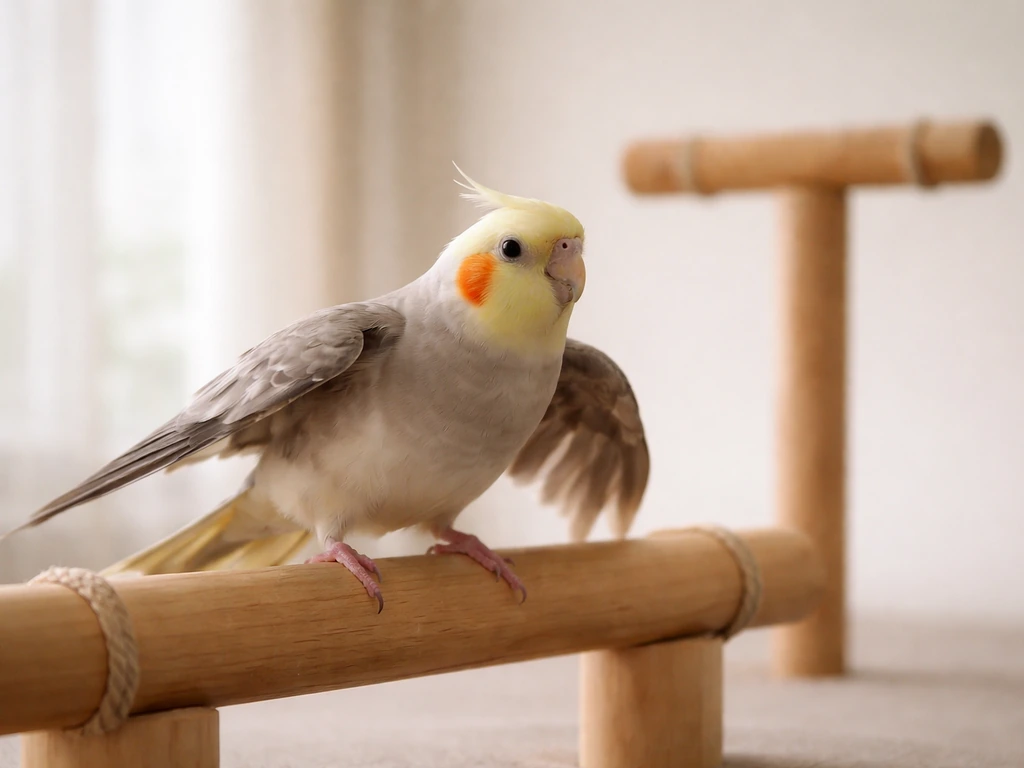
Right after the clip, your bird may seem confused or frustrated. It may attempt to fly and be surprised when it can't gain altitude. This usually settles within a day or two as the bird adjusts. Some birds become temporarily more dependent on you for movement around the house, which actually helps with bonding during training. Others are barely bothered by it.
Watch for these things in the first few days:
- The bird can glide gently down but can't gain altitude or fly horizontally with control
- The bird is perching normally and not holding a wing low or favoring one side
- There's no bleeding from any feather shaft
- The bird isn't crashing into walls or dropping straight to the floor
If the bird holds a wing in an abnormal position, can't perch, or you suspect a crash caused an injury, see an avian vet promptly.
As for how often you need to re-clip: typically every one to three months once the bird starts its molt cycle, as new primary feathers grow in to replace the trimmed ones. You don't re-clip on a fixed calendar schedule. You re-clip when you notice the bird is regaining significant flight ability, which you'll see when new full-length primaries have grown in. Monitor regularly and trim as needed.
One important caveat: clipped wings do not mean your bird is safe outside. A strong gust of wind can carry a clipped bird away before you can react. Keep your bird in a carrier or harness outdoors, always.
Alternatives worth knowing about
Wing clipping is one tool, not the only one. Birds use different calcium sources than snails, so you should stick to safe, snail-specific cuttlebone and mineral options instead of trying to substitute cuttlebone for snails. If you're on the fence, these approaches can work alongside a clip or instead of one:
- Recall training: teaching your bird to fly to you on command is genuinely useful for fully flighted birds and makes free-flight safer in a controlled indoor environment
- Bird-safe room setup: designating one room as the bird's free-flight space, with windows covered, ceiling fans off, and other hazards removed, can allow safe flight without clipping
- Flight harnesses: for outdoor time, a properly fitted harness is far safer than relying on a clip to prevent escape
- Gradual feather management: some owners trim one or two feathers at a time in older birds or birds new to clipping, to adjust flight ability incrementally
Grooming decisions like wing clipping don't exist in isolation. If you're also thinking about nail care for your bird, the approach to finding a qualified avian groomer or vet is the same. Whether it's a wing trim or a nail trim, getting shown the correct technique once by a professional makes the whole process safer and less stressful for everyone involved. If you also need to trim your bird's nails, knowing the cost beforehand can help you budget for a safe, stress-free session nail trim.
Quick reference: the clipping essentials
| What to clip | Where to cut | How many feathers | Both wings? | Blood feathers OK to cut? |
|---|---|---|---|---|
| Primary flight feathers only | Just below the primary covert edge, roughly halfway between base and tip | Outermost 5 to 6 primaries per wing | Yes, always both wings equally | Never, wait for full maturity |
| Secondary feathers | Do not clip | None | N/A | N/A |
| Covert feathers | Do not clip | None | N/A | N/A |
FAQ
Can I clip fewer than five to six primary feathers to make it gentler?
Yes, but it may be less effective. Many owners start by targeting the standard outer five to six primaries, then adjust after seeing the bird’s glide. If your bird is still able to gain altitude or launch easily, you likely need another primary or a slightly shorter trim, not trimming secondary feathers.
Should I clip the inner primaries closer to the body to “balance” the wing?
No. You clip the distal primaries only (the outermost flight feathers). Trimming closer to the body increases the risk of cutting into newer feather tissue and makes it harder to predict the descent, and it still does not fix balance issues that come from trimming one wing differently.
What if I can’t clearly tell blood feathers (pin feathers) from mature feathers?
Use “err on the safe side” timing, postpone the clip, and have an avian vet or experienced groomer verify. Blood feathers often look darker and can feel slightly different at the tip of the quill, but lighting and feather color can confuse the view, so a second person’s confirmation is worth it.
What should I do if the bird bleeds after a clip, even if it seems minor?
Apply direct, firm pressure immediately and keep the bird calm and still. Recheck after a few minutes. If bleeding continues, looks like it is soaking through quickly, or the bird seems weak, treat it as urgent and contact an avian vet right away.
Is it ever safe to clip one wing if the bird has trouble landing or has one wing that looks worse?
No. Wing clipping must be symmetrical. Uneven feather reduction can cause spinning or veering during descent and increases the risk of injury on landing, even if your goal is to “help” one side.
Can I clip only one side of the wing to stop a wing from “flipping” during flight?
That’s not recommended. As long as you choose to clip at all, you should match both wings and keep the trim level consistent relative to the covert edge. If you’re seeing odd flight posture, it could be a health or feather condition that needs an avian vet evaluation instead of an uneven trim.
How do I know if I trimmed too short or too long after the clip?
Look for the glide pattern. Too short usually means the bird drops with little forward glide (or behaves like it is falling). Too long means it can still fly across the room or regain altitude easily. If either happens, adjust by reducing or increasing the number of primaries on the next professional or guided session rather than rushing another DIY clip immediately.
If feathers grow back in, can I re-clip right away or should I wait for the next molt?
Don’t follow a fixed calendar. Wait until you observe the bird regaining significant flight ability from new full-length primaries. Re-clip schedules typically land around every one to three months for many birds once the molt starts, but the right timing is based on the bird’s regrowth.
What are signs that I should not attempt another home clip and book a professional?
If you’ve accidentally clipped a blood feather, the bird bleeds, the bird cannot perch after the clip, you see abnormal wing positioning, or you notice suspected injury from a crash, stop DIY clipping. An avian vet or experienced groomer can also confirm proper technique and trim selection for your species.
Do clipped wings mean my bird is safe around windows and outdoors?
No. Clipping reduces lift but does not eliminate the risk from wind, open doors, or strong takeoff attempts. Keep windows covered or secured and use a carrier or harness outdoors, especially in breezy conditions.
Do I clip the same number of feathers for every bird species and size?
The general target is five to six outer primaries, but the exact total can vary by feather layout and how the covert edge aligns for your bird. Species differences are one reason a first professional demonstration helps, and it’s also why you should verify results based on glide behavior.