A bird habitat, in the pet-bird world, is the complete physical and environmental setup your bird lives in every day. It is not just the cage. It is the cage plus its placement in your home, the air quality around it, the temperature, the light, the perches, the food and water stations, the toys, and the daily routines you build around it. Think of it less like a piece of furniture and more like a micro-ecosystem you are designing and maintaining on your bird's behalf. Get the whole system right and your bird thrives. Focus only on the cage and ignore everything else, and even a beautiful enclosure becomes a stressful place to live.
What Is a Bird Habitat? Setup Guide for Pet Birds

Marcus Chen
19 Apr 2026
What people mean when they say "bird habitat" (and the terms you'll see)
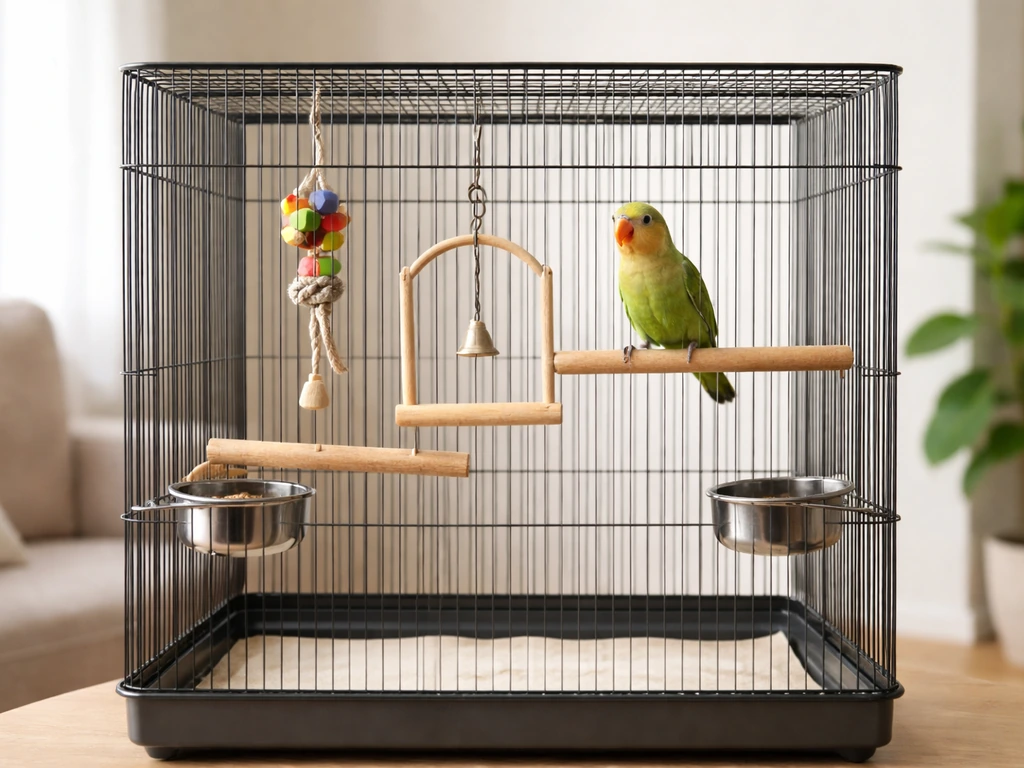
The word "habitat" in pet-bird care is shorthand for the engineered environment your bird occupies. You will hear several terms used almost interchangeably depending on who is writing. A cage is the most common indoor enclosure, a wire or bar structure sized to the species. People also use terms like aviary or cage, depending on the size and setup of the space. An aviary is a larger enclosure, often outdoors, designed to give birds more flight space. A vivarium refers more broadly to any enclosed space built to simulate an ecosystem, though this term is less common in bird-specific communities. Some people just say "setup" or "housing." The RSPCA frames it well: housing for pet birds is about the overall environment and safety features, not just the physical location. So when you see the phrase "bird habitat" in a care guide, it means all of those layers together, not just which cage you bought.
Why a pet bird's habitat is nothing like its wild habitat
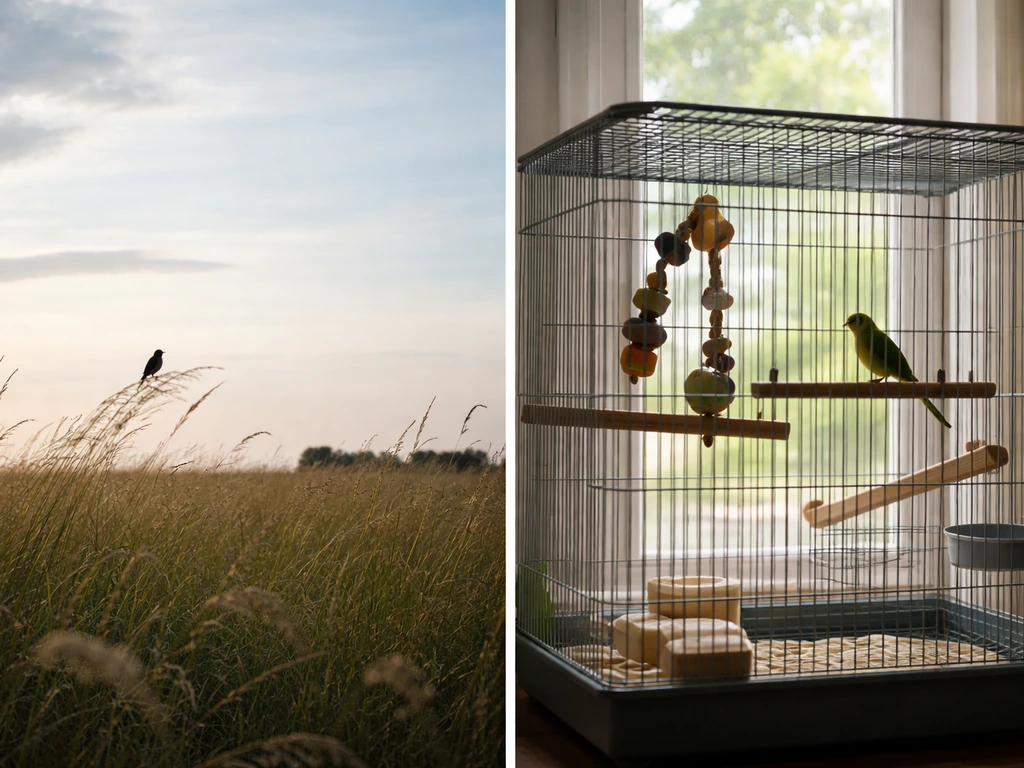
This is the part most beginners underestimate. Wild birds have nearly unlimited flight range, flock social structures, varied foraging across diverse food sources, and natural light cycles that shift with the seasons. A companion parrot in a living room has none of those by default. Research on companion parrots confirms that many natural behaviors, including flocking, regular sustained flight, and complex foraging, are constrained in captive settings to varying degrees. That is not a reason to feel guilty; it is a reason to design your bird's habitat deliberately so it compensates for what captivity cannot provide naturally.
The practical implication is this: you are not just recreating where birds live. You are building a substitute for everything the wild environment provides. A bigger enclosure directly increases freedom of movement. Enrichment items substitute for foraging. Social interaction from you or a companion bird substitutes for flock contact. Once you think about habitat that way, the whole setup process makes a lot more sense.
The core components every bird habitat needs
The enclosure
The enclosure is the structural foundation of the habitat, but the specific type matters enormously by species. Bar spacing is not a minor detail: it is a safety specification. A Reddit thread about buying a cage for budgies illustrates how bar spacing information can differ between the listing and the box instructions, leading to mismatched cage specs blank" rel="noopener noreferrer">Bar spacing is not a minor detail: it is a safety specification.. Lafeber provides client-facing caging guidance, including bar spacing guidance by bird type or group blank" rel="noopener noreferrer">bar spacing is not a minor detail: it is a safety specification.. Bars spaced too wide let a bird get its head stuck or escape entirely. For small birds like budgerigars, cockatiels, lovebirds, and parrotlets, the Merck Veterinary Manual recommends a minimum cage size of 20 by 20 by 30 inches with bar spacing of no more than 0.5 inches. Oregon Humane's cockatiel care sheet puts the minimum for a single cockatiel at 25 inches. Larger parrots need proportionally larger cages with wider bar spacing suited to their beak strength and body size. The shape also matters: wide is better than tall, because birds fly horizontally, not vertically. A tall narrow cage is one of the most common beginner mistakes.
Perches
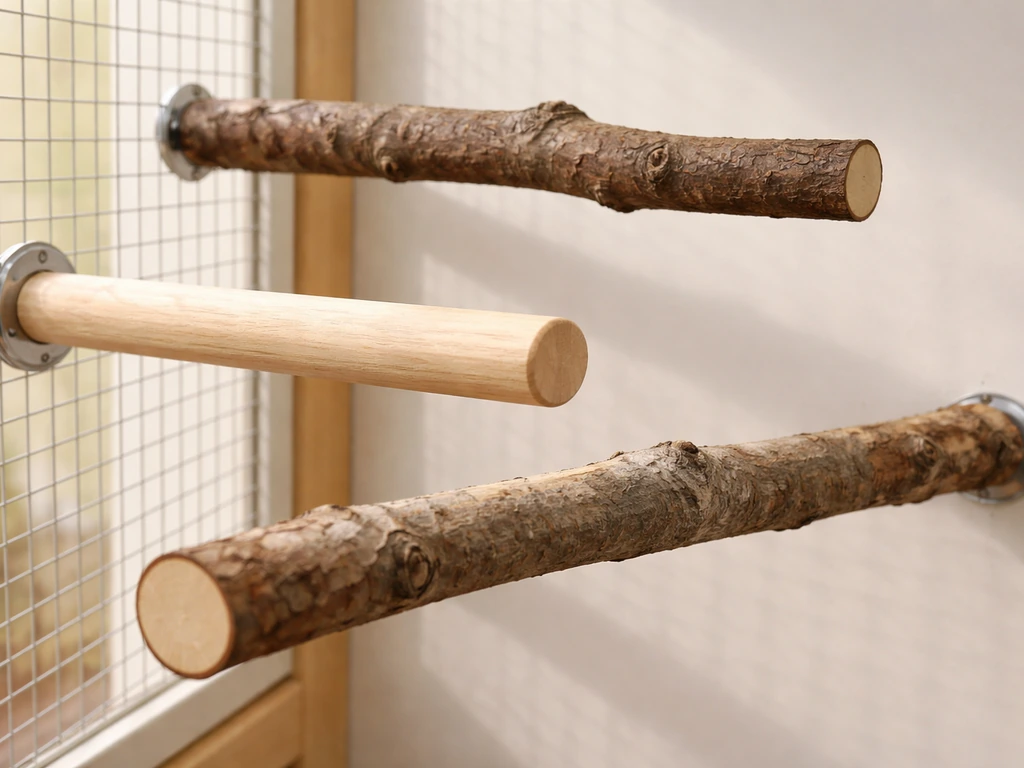
Perches are not just somewhere to stand. They are the primary surface your bird's feet contact all day, and the wrong diameter or texture causes foot problems over time. For cockatiels, LafeberVet recommends perch diameters between 5/8 inch and 1.5 inches (roughly 1.6 to 3.8 cm). Vary the diameter across different perches in the cage so the foot muscles do not fatigue from gripping the same position constantly. Natural wood branches, rope perches, and textured perches each offer different grip experiences. Avoid sandpaper perch covers entirely: they abrade the feet without providing any real benefit.
Food and water stations
Fresh food and water daily is the baseline, not a suggestion. Shelter and advocacy care sheets are consistent on this point: stale water and leftover perishable food sitting in the cage are hygiene hazards that degrade the habitat quality fast. Use at least two food stations if possible, one for pellets or seed mix and one for fresh food, so you can refresh them independently. Stainless steel dishes are easier to sanitize than plastic ones that develop scratches where bacteria collect. Position food and water stations away from perches directly above them to prevent contamination from droppings.
Toys and enrichment
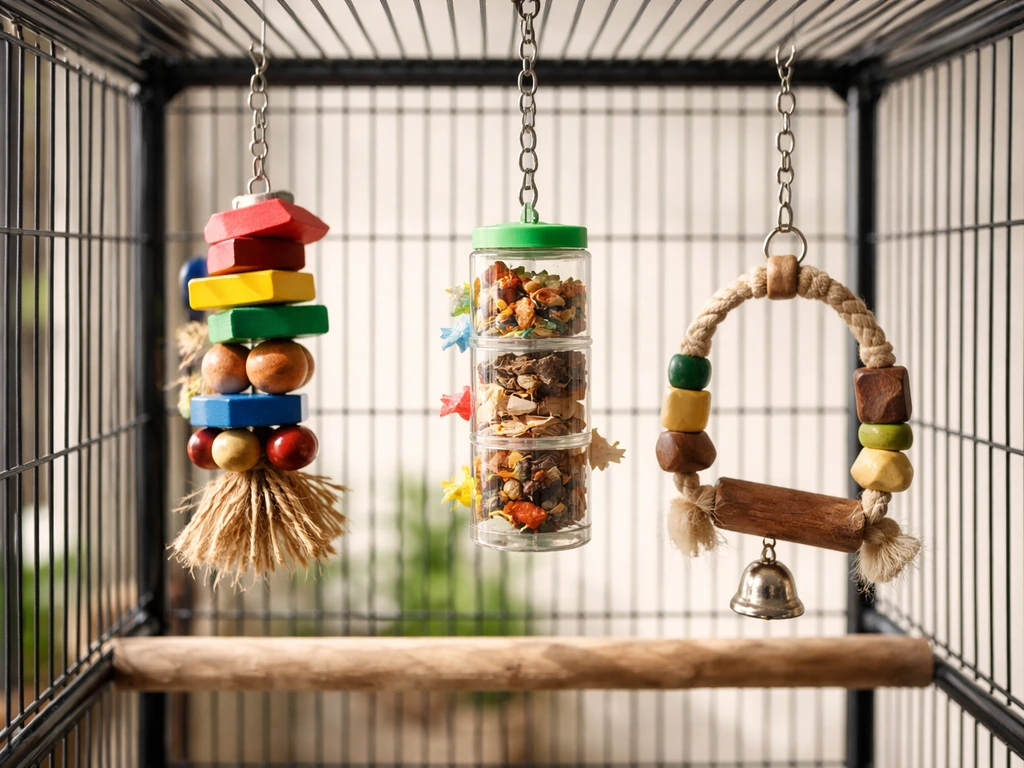
Toys serve the same function in a cage that foraging and environmental novelty serve in the wild. University of British Columbia enrichment guidance for companion parrots categorizes enrichment into feeding enrichment (foraging puzzles, food hidden in wrapping), social enrichment (interaction with you or other birds), and environmental enrichment (novel objects, varied textures, things to chew and manipulate). Do not overcrowd the cage with toys all at once. Rotate them so there is always something new, which keeps the environment mentally stimulating without becoming cluttered and stressful.
Placement, air quality, and the hazards most people miss
Where you put the cage inside your home has a bigger impact on safety than almost anything else. The single most important rule: do not put a bird cage in or immediately adjacent to a kitchen. The RSPCA explicitly flags kitchens as surprisingly dangerous for pet birds, listing cooking fumes, non-stick pan fumes, aerosol sprays, smoke, and self-cleaning oven emissions as serious risks. Teflon and non-stick cookware are particularly dangerous. Petco's guidance on PTFE toxicosis explains that fumes from overheated non-stick coatings are lethal to birds at exposure levels humans do not even notice. This is not an exaggeration: birds have highly efficient respiratory systems that make them far more vulnerable to airborne toxins than mammals.
Beyond the kitchen, avoid rooms where aerosols, perfumes, scented candles, incense, or cleaning sprays are used regularly. Keep the cage away from drafts, air conditioning vents, and direct heating registers. Birds do best in stable temperatures between roughly 65 and 80 degrees Fahrenheit for most common species, away from cold window drafts in winter and direct sun exposure in summer. Position the cage so one side is against a wall rather than exposed on all sides: this gives the bird a sense of security and a place to retreat when it feels overstimulated.
- Never place the cage in a kitchen or laundry room where fumes and aerosols are common
- Keep it away from cold drafts, heating vents, and direct air conditioning airflow
- Avoid rooms where scented candles, incense, or perfumes are used frequently
- Position one side of the cage against a wall for the bird's sense of security
- Keep it out of direct afternoon sunlight, which can overheat the cage quickly
Picking the right habitat for your specific species
There is no single universal cage setup. The right habitat depends almost entirely on the species you are keeping. A budgerigar and a macaw have almost nothing in common in terms of space, bar spacing, enrichment complexity, or noise tolerance from their environment. Use species-specific care sheets from reputable sources like avian vets, humane societies, or veterinary manuals as your baseline, not generic "small bird" or "large bird" categories.
| Species | Min. Cage Size | Bar Spacing | Perch Diameter |
|---|---|---|---|
| Budgerigar | 20 × 20 × 30 in | 0.5 in (1.3 cm) | 0.5–0.75 in (1.3–1.9 cm) |
| Cockatiel | 25 in minimum width | 0.5–0.75 in (1.3–1.9 cm) | 5/8–1.5 in (1.6–3.8 cm) |
| Lovebird / Parrotlet | 20 × 20 × 30 in | 0.5 in (1.3 cm) | 0.5–0.75 in (1.3–1.9 cm) |
| Larger parrots (e.g., Amazons, African Greys) | Species-specific, substantially larger | 0.75–1.5 in depending on species | 1–1.5 in or larger |
If you are deciding between housing styles, a standard indoor cage works well for most beginner species like cockatiels, budgies, and lovebirds. An aviary setup, which provides significantly more flight space, is better for highly active species or multiple birds kept together. Think of the aviary as the higher-effort, higher-welfare option: it requires more space in your home and more cleaning, but the birds get much more freedom of movement. The right answer depends on your space, your species, and how many birds you have.
How to actually set up the habitat, step by step
- Choose the species-appropriate enclosure first, verifying minimum dimensions and bar spacing before buying anything else. Getting this wrong is expensive to fix later.
- Pick a safe room placement away from the kitchen, away from drafts, and with one wall behind the cage. Do this before assembling the cage.
- Line the cage bottom with paper-based liner or newspaper for easy daily spot-cleaning. Avoid cedar or pine shavings, which release aromatic oils harmful to birds.
- Install perches at different heights and diameters. Put the main perch at mid-height where the bird will spend most of its time, not crammed against the top or bottom.
- Attach food and water dishes at a comfortable standing height, away from perches above them. Add at least two dish positions so you can refresh them independently.
- Add two to three toys to start, not ten. Overcrowding stresses birds. A foraging toy, something to chew, and a swing or rope perch is a solid starter set.
- Let the bird explore the cage at its own pace before trying to interact heavily. A new habitat is disorienting, and pushing interaction too soon makes the space feel unsafe.
Keeping the habitat healthy: cleaning and enrichment over time
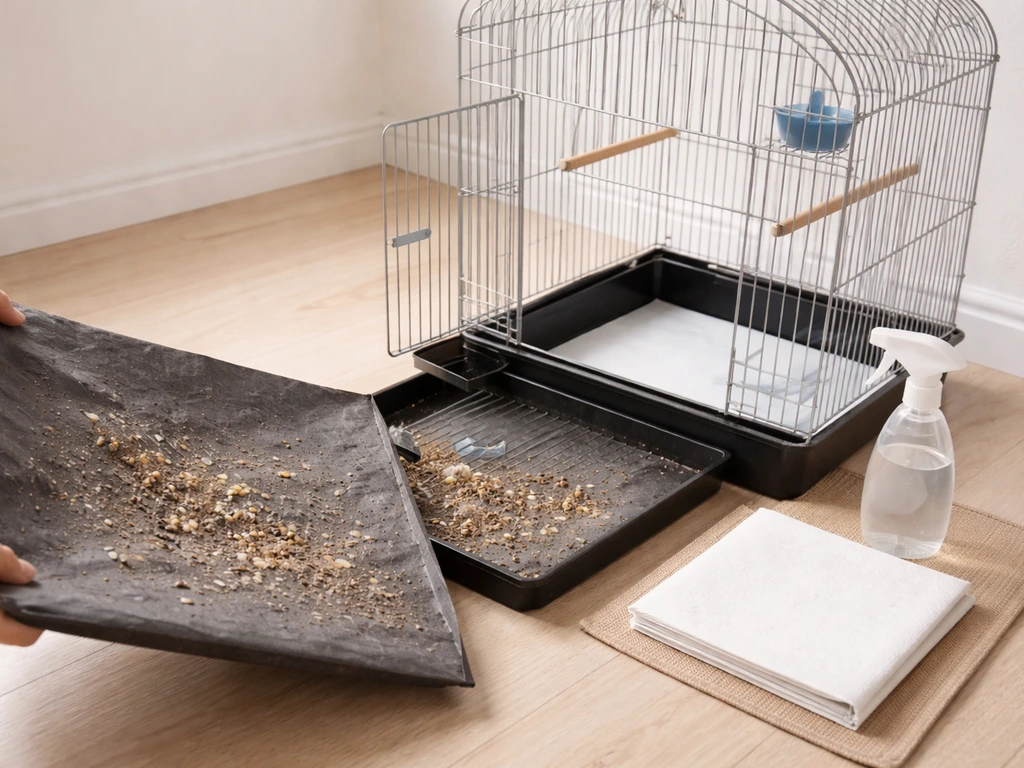
A habitat is only as good as how well you maintain it. Cleaning has two layers: daily spot cleaning and weekly deep cleaning. Daily means removing droppings, replacing soiled liner paper, refreshing food and water, and doing a quick visual check for anything broken or chewed through. Weekly means removing everything from the cage, scrubbing perches, washing dishes in hot soapy water, wiping down all cage surfaces, and replacing liner fully. Pet Advocacy's care standards state that enclosures must be spot cleaned daily to remove waste and perishable food, with bedding replaced at least twice weekly.
One critical cleaning rule: remove your bird to a safe, separate area before cleaning, and wait until all surfaces are fully dry and any cleaning product smell has cleared before returning the bird. This matters because even mild cleaning fumes can irritate a bird's respiratory system. Petco's cage cleaning guidance makes this point directly. Unscented, bird-safe disinfectants are the safest choice, and plain hot water with dish soap handles most routine cleaning without any fume risk.
On the enrichment side, rotation is the key habit to build. Swap out one or two toys every one to two weeks so the environment stays novel. Introduce foraging opportunities regularly: wrapping food in paper, hiding pellets in foraging toys, or varying what fresh foods appear and when. These small changes make a significant difference in keeping a bird mentally active and behaviorally healthy. Think of it as the habitat doing ongoing work for you, keeping the bird occupied and stimulated even when you are not directly interacting with it.
The beginner mistakes worth knowing now, not later
- Buying a cage that looks impressive but is too tall and narrow: wide beats tall for almost all species
- Placing the cage in or next to the kitchen without realizing the fume risk from cooking
- Using scented candles, air fresheners, or non-stick cookware in the same home without knowing the hazard to birds
- Overcrowding the cage with toys from day one and wondering why the bird is stressed
- Using sandpaper perch covers thinking they help: they damage feet without any benefit
- Skipping daily spot cleaning and letting waste and stale food sit, which degrades air quality inside the cage fast
- Assuming a bigger cage means less interaction is needed: space helps, but social and foraging enrichment still have to come from you
Setting up a proper bird habitat the first time takes more thought than most people expect, but it is not complicated once you know what you are actually solving for. A bird basket is essentially a type of enclosure people use for keeping small birds safe and contained while still supporting basic habitat needs like space, airflow, and comfort. If you are choosing a gift option, the details in what is a bird basket gift can help you pick something that supports safe, practical habitat needs alongside a basic enclosure like a bird basket. A what is a bird suet basket guide explains how suet-style feed holders provide an easy, bird-friendly enrichment option bird basket. If you are also wondering about tools like a bird hook knife, it helps to understand what it is used for and how people safely use it around birds what is a bird hook knife used for. If you are also shopping for a bird launcher, it helps to know what they are used for and how to use one safely around your bird what are bird launchers used for. You are building a substitute for everything the wild provides: space, safety, nutrition, mental stimulation, and social contact. Get those five things working together inside your home and you have a habitat that genuinely supports a healthy bird, not just a cage that keeps one contained. The liver bird building is designed for bird-friendly enclosure and care, so it is useful to understand how it supports habitat needs what is the liver bird building used for.
FAQ
How is a “bird habitat” different from just buying a cage?
A bird habitat includes the enclosure plus the surrounding air, light schedule, temperature stability, placement in your home, and the full daily routine for food, water, hygiene, and enrichment. Two cages of the same size can produce very different habitat quality if one sits near cooking fumes, drafts, or cleaning sprays.
Can I use a decorative stand, bird condo, or playpen instead of a proper cage habitat?
Sometimes you can add a stand or play area for supervised time, but those are usually supplemental spaces. A true habitat still needs a safe primary enclosure designed for appropriate bar spacing, perches, and daily feeding, with locations for water and food that are not contaminated by droppings.
What if my bird spends time outside the cage, do I still need a complete habitat inside?
Yes. Outside time does not replace the habitat baseline. You still need correct bar spacing, safe perches, fresh water and food stations, and scheduled enrichment within the enclosure, because many birds sleep and eat there.
What is the biggest bar-spacing mistake people make?
Using bars that are too wide for the bird’s head size or body. That can cause entrapment or allow escape. If you are between sizes, choose the tighter spacing rather than the larger cage and make sure the opening pattern matches the species (small birds and young birds are especially vulnerable).
Is a tall narrow cage really wrong, or is it just less ideal?
It is more than “less ideal” for most birds, because their natural movement is often horizontal flight and climbing patterns. A narrow tall cage can force constant vertical hopping and reduce meaningful flight and exploration, which can increase stress and discourage normal activity.
How do I know whether perches are causing foot problems?
Watch for uneven wear, sores, swelling, and changes in how the bird grips. Also rotate perch textures and diameters, because constant gripping on one surface can fatigue foot muscles and contribute to foot issues over time.
How often should I wash food and water dishes, and what about deep-clean frequency?
At minimum, replace water daily and wash dishes whenever they look cloudy or have residue. Deep cleaning is typically weekly, but if your bird eats messy fresh foods or the dish area gets frequent droppings, you may need to spot-clean more than once per day to keep hygiene consistent.
Can I leave leftover fresh food overnight?
No, not as a routine. Perishable foods spoil quickly and the leftovers can become a hygiene risk and attract microbes. Remove uneaten fresh items within a day, then refresh both water and fresh food on schedule.
What’s the safest way to clean the cage if my bird hates being moved?
Use a separate temporary area that is already bird-safe (warm, draft-free, and away from cleaning fumes). Move the bird before you start, clean only with bird-safe products, then wait until everything is fully dry and the smell is gone before returning the bird.
Are scented candles, air fresheners, or incense ever okay if the cage is in another room?
Treat them as unsafe, even if distance reduces exposure, because aerosols and fine particles can linger. If the bird’s room shares HVAC airflow with the scented source, the risk increases, so the safest option is to avoid them entirely around the bird.
Do birds need natural daylight, or can I use a regular lamp?
A consistent light-dark cycle matters more than “sunlight exposure” alone. If you use artificial lighting, avoid flickering bulbs and keep the schedule steady, because irregular light timing can disrupt resting and behavior even if temperature is stable.
What temperature should I aim for, and what’s the best way to prevent drafts?
Most common pet birds do best in a stable range (roughly 65 to 80°F). Avoid placing the cage in line with vents, windows that leak cold air in winter, or spaces that receive direct afternoon sun, and position the cage so it is protected on one side to help the bird retreat.
How do I choose enrichment if my bird is already calm and quiet?
Quiet does not always mean adequate stimulation. Add enrichment that targets foraging, chewing, and manipulation, and rotate items every one to two weeks. If your bird shows decreased interest, start with smaller changes (one new item or one new foraging method) rather than adding many toys at once.
How can I tell if the habitat is too stimulating or overwhelming?
Signs include frantic pacing, repeated avoidance of parts of the cage, over-preening to the point of irritation, or aggressive interactions when you approach. In that case, reduce novelty briefly, remove visual clutter, ensure one “retreat side” is available, and double-check that the room is not too noisy or drafty.
What if I have multiple birds, do they need separate habitats?
Sometimes yes, especially if species differ in size or if compatibility is uncertain. Even when birds share space, you should still ensure enough food and water access points and safe perching options so weaker birds can eat without being blocked.
Next Article
Garden Bird Checklist: Wild Species, IDs, and Tracking Tips
Ready-to-use wild garden bird checklist with IDs, field marks, tracking tips, and a bird station setup for beginners.