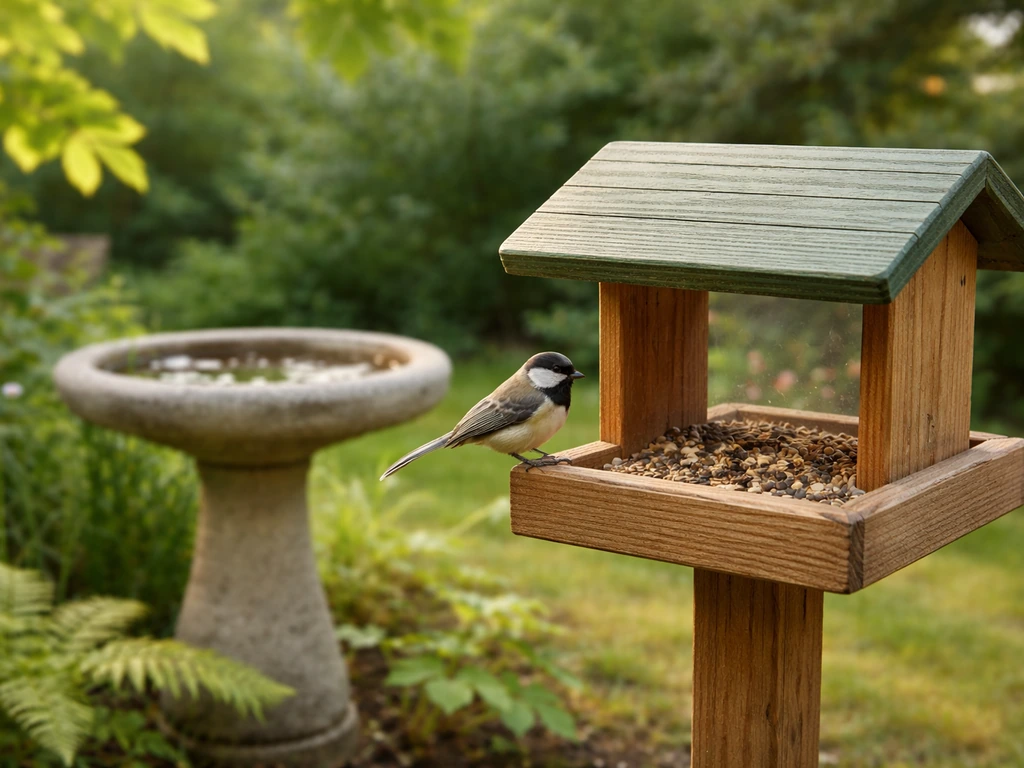
A bird table is a raised platform, usually mounted on a pole or post, that you put in your garden so wild birds can land on it and eat food you've left out. Think of it as an open-air dining surface for your local wildlife: no enclosed feeder tubes, no complicated mechanisms, just a flat tray where birds can perch, peck, and fly off again. The Cambridge Dictionary puts it simply as 'a small raised structure outside a building on which food for wild birds is put,' and that pretty much nails it.
What Is a Bird Table? Beginner Guide to Feeding Birds
Marcus Chen
24 Apr 2026
Bird table vs. 'table bird': clearing up the confusion
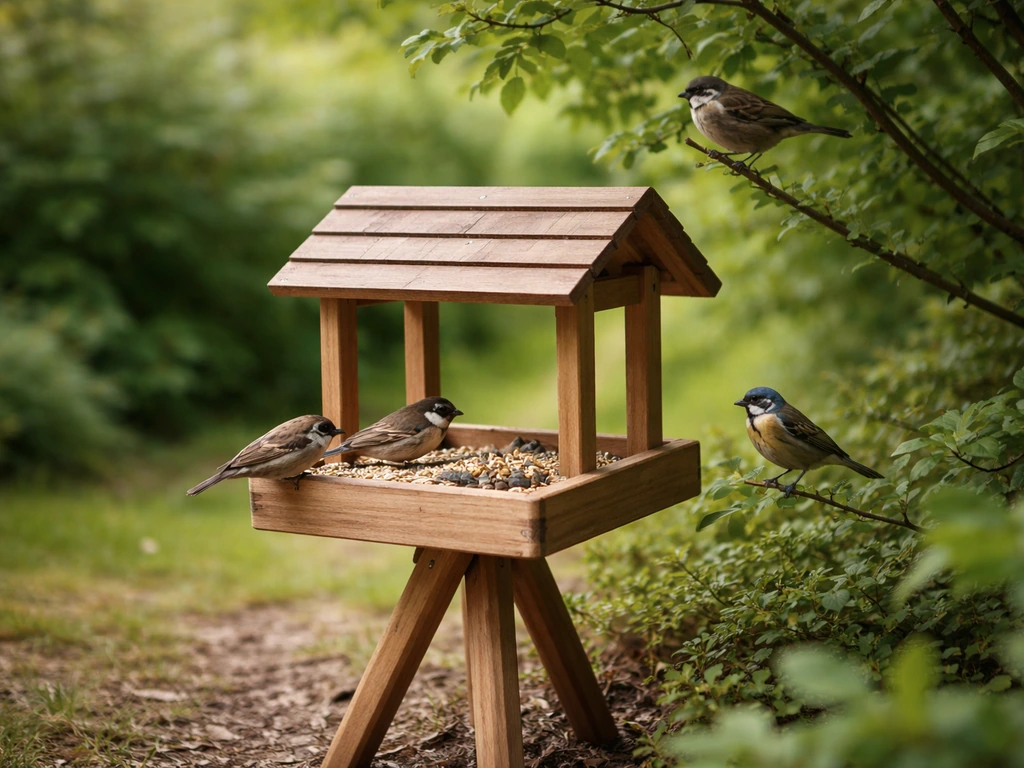
If you searched 'what is a table bird' and landed here, you're almost certainly looking for the same thing. The phrasing gets flipped around a lot, especially by people who aren't sure of the exact term. A bird table and a table bird refer to the same object in everyday British English: the garden feeding station described above. The only time 'table bird' means something completely different is in farming and cooking, where it refers to a chicken or other poultry bred for meat. This article is firmly about the garden feeding structure, not the kitchen.
What a bird table is actually used for
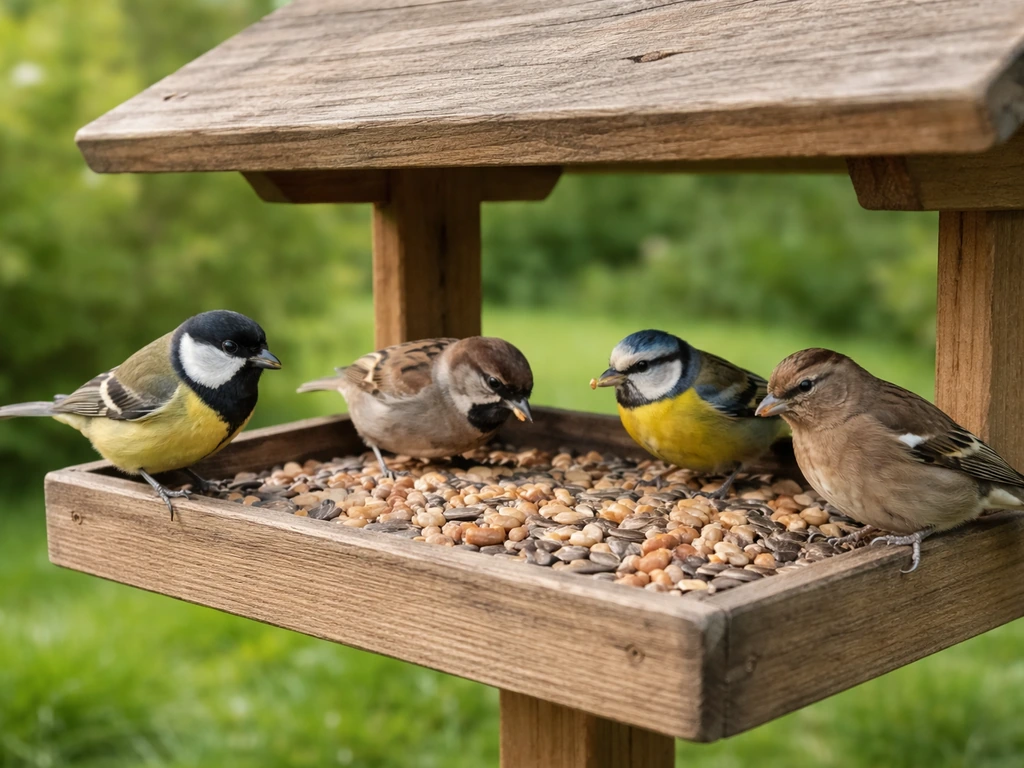
The main job of a bird table is to give wild garden birds a safe, accessible, elevated spot to eat. Putting food on bare ground works, but it exposes birds to predators and can quickly spread bacteria in the soil. The RSPB specifically recommends using a low-level table rather than placing food directly on the ground, even for ground-feeding species like robins and blackbirds, because it keeps the feeding area cleaner and the birds safer.
It's worth being clear about one thing if you've arrived here as a pet bird owner: a bird table is an outdoor, wild-bird feeding tool. It has nothing to do with feeding your budgie, parrot, or cockatiel indoors. Pet birds need species-specific diets served inside their enclosures, not an open tray outside. If you're setting up a habitat for a pet bird, the advice in this article doesn't apply to that situation. What you'll find here is specifically for attracting and feeding wild garden birds.
The main types and designs you'll come across
Bird tables come in a few standard forms, and knowing which is which helps you pick the right one for your garden and the birds you want to attract.
| Type | Description | Best for |
|---|---|---|
| Post-mounted table | A flat tray on a single pole, often with a low roof or lip around the edge | Most garden birds; easy to position and move |
| Hanging bird table | A tray suspended by chains or rope from a bracket or branch | Gardens with no space to sink a post; good squirrel deterrent |
| Ground-level table | A low platform raised just a few inches off the ground | Ground feeders like robins, dunnocks, and blackbirds |
| Roofed bird table | Post-mounted table with a pitched roof to shelter food from rain | Year-round feeding in wet climates; helps food last longer |
| Table with integrated feeders | A tray with hooks or clips for hanging seed feeders or suet holders underneath | Maximising variety without needing multiple poles |
The roofed wooden post-mounted design is the classic you'll see in most UK gardens, and it's the one Collins Dictionary describes as 'a small wooden platform on a pole.' If you want to control which birds can access it, look for a table with a low eave opening on the roof. A smaller gap limits access to smaller birds like blue tits and sparrows, and keeps larger birds such as wood pigeons from dominating the table.
Design matters more than it might seem. The best bird table for robins, for example, tends to be a low-level or open-sided design, because robins prefer feeding close to the ground and can feel hemmed in by enclosed structures. Heavy-duty wooden tables hold up better in exposed gardens and last longer without warping. If you're weighing up specific designs or materials, there's more detail worth reading on both the best bird table designs and the best wood for bird tables as separate deep-dives. If you're still comparing options, this guide to the best bird table design covers what to look for and how to match the design to your birds and garden best bird table designs. Choosing the right material matters too, so it helps to look at the best wood for bird tables before you buy.
How to choose the right bird table for your space
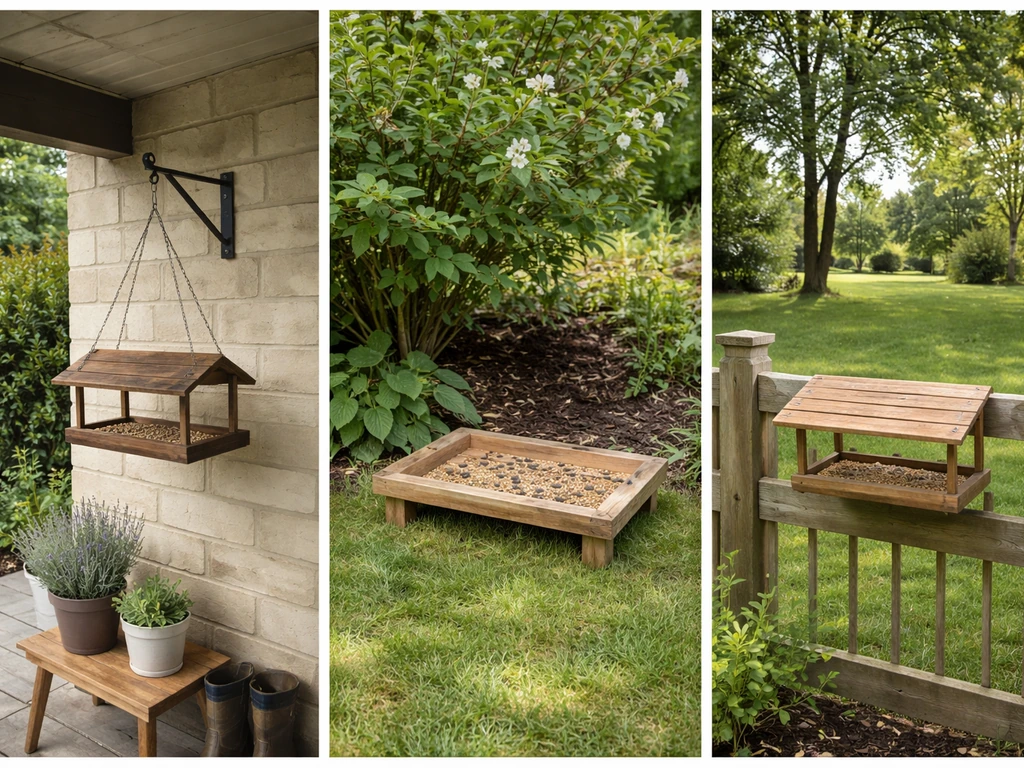
Before you buy anything, think about four things: your garden size, who else uses your garden (cats, squirrels), which birds you actually want to attract, and how much maintenance you're willing to do.
- Small garden or patio: A hanging bird table mounted on a wall bracket takes up almost no ground space and can be brought inside easily in bad weather.
- Cat-heavy neighbourhood: Choose a tall post-mounted table (ideally 1.5 to 2 metres high) and position it well away from fences, walls, and overhanging branches that a cat could use to jump from.
- Ground feeders as priority: A low-level table or tray feeder placed on a paved or decked area is easier to clean than one sunk into soil.
- Wanting a range of species: A roofed post-mounted table with hanging feeder hooks gives you the most flexibility in what you can offer and who can access it.
- Budget is tight: A basic flat tray on a stake is genuinely 'good enough' to start. You can always upgrade once you know which birds are visiting.
Material matters too. Untreated softwood rots quickly in a British winter. Pressure-treated or FSC-certified hardwood lasts significantly longer and doesn't need replacing every two years. If you're comparing timber options before buying, it's worth looking at a dedicated guide on the best wood for bird tables, since not all treated wood is bird-safe.
What to put on a bird table
The food you offer depends on the time of year. The RSPB currently advises pausing seeds and peanuts between 1 May and 31 October, because during the breeding season there's a risk of parent birds feeding whole peanuts or large seed pieces to young chicks who can choke on them. In spring and summer, stick to softbill-friendly foods like mealworms, waxworms, and small pieces of soft fruit.
In autumn and winter, the range opens up significantly. High-energy foods are the priority when temperatures drop, because birds burn through calories fast to stay warm.
- Suet balls and fat cakes: Popular and high-energy. Always remove the nylon mesh bag before putting them out, the mesh can trap and injure birds' feet and beaks.
- Peanuts: Only unsalted, fresh peanuts free from aflatoxin. Use a feeder with a mesh front rather than loose on the tray to prevent whole-nut access by young birds.
- Sunflower hearts: Easy for most species to eat, no shell to discard, and less mess on the table.
- Mixed seed: Fine for most garden species, but cheap mixes with lots of wheat and milo tend to get kicked aside. Opt for a quality mix heavy on sunflower and nyjer.
- Mealworms: Robins and thrushes love them. Live mealworms are ideal, but dried ones work too. Soak dried mealworms in warm water first to rehydrate them.
- Soft fruit: Apples and pears cut in half attract blackbirds and thrushes, especially in winter when natural berries are scarce.
What not to put out: salty or processed food (bread, crisps, crackers), cooking fat or meat drippings (they go rancid quickly and carry bacteria), whole peanuts during spring, and anything mouldy. There's a lot more detail on safe food choices, seasonal swaps, and portion sizes worth exploring in a dedicated piece on what to put on a bird table.
Where to put your bird table (placement and safety)
Placement is probably the single thing most beginners get wrong, and it's fixable without spending any money. There are two competing goals: birds need to feel safe enough to land and feed, but the table also needs to be positioned so it doesn't become a hunting trap or a window-collision hazard.
Distance from windows
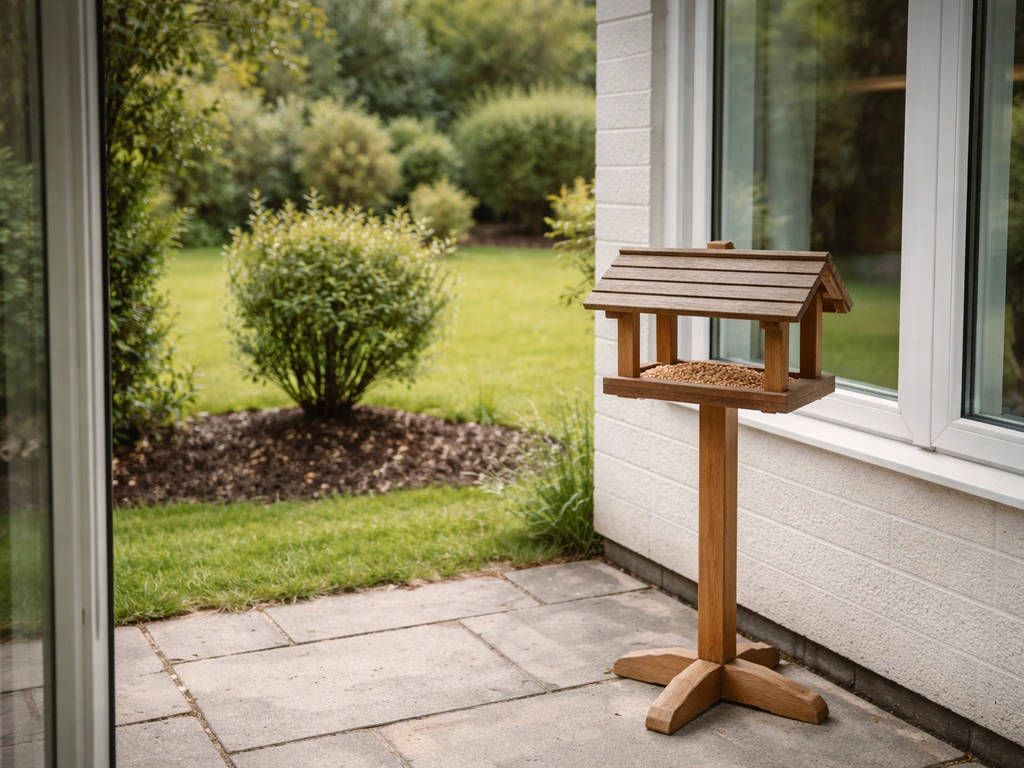
Either place your bird table within 3 feet (about 1 metre) of the nearest window, or more than 30 feet (about 9 metres) away. This isn't arbitrary: birds spooked off a nearby feeder don't build up enough speed to injure themselves on the glass. If the table is in the middle distance, say 5 to 20 feet from a window, a startled bird has exactly enough room to hit the glass at full speed. The 3-foot rule sounds counterintuitive but it works.
Distance from cover and predators
The RSPB recommends placing a small bush or tree about 2 metres from the table. Birds use this as a staging post: they perch in the bush, check for danger, then dart to the table. Without nearby cover, many birds won't use the table at all because they feel too exposed. At the same time, keep the table itself at least 2 metres away from any fence, wall, or branch that a cat could use as a launch point for an ambush. It's a balance, but 2 metres of open space around the table with cover a little further back is the sweet spot.
Shelter and weather
A roofed table keeps food dry and edible for longer, but if you're using an open tray, position it somewhere with natural shelter from prevailing wind and heavy rain. A table soaked in rainwater quickly becomes a petri dish. Wet seed goes mouldy fast and can harbour aspergillosis, a fungal lung disease dangerous to birds. Putting food out in smaller amounts more frequently is better than loading the table and leaving it.
Height
For most species, a height of around 1.5 to 2 metres is comfortable for feeding. This puts the table out of easy reach of cats while still being low enough for birds to feel settled. If you're primarily targeting ground feeders, a lower table or tray works better. There's more detail on the ideal mounting height in a separate guide on how high a bird table should be.
Keeping it clean: your weekly hygiene routine
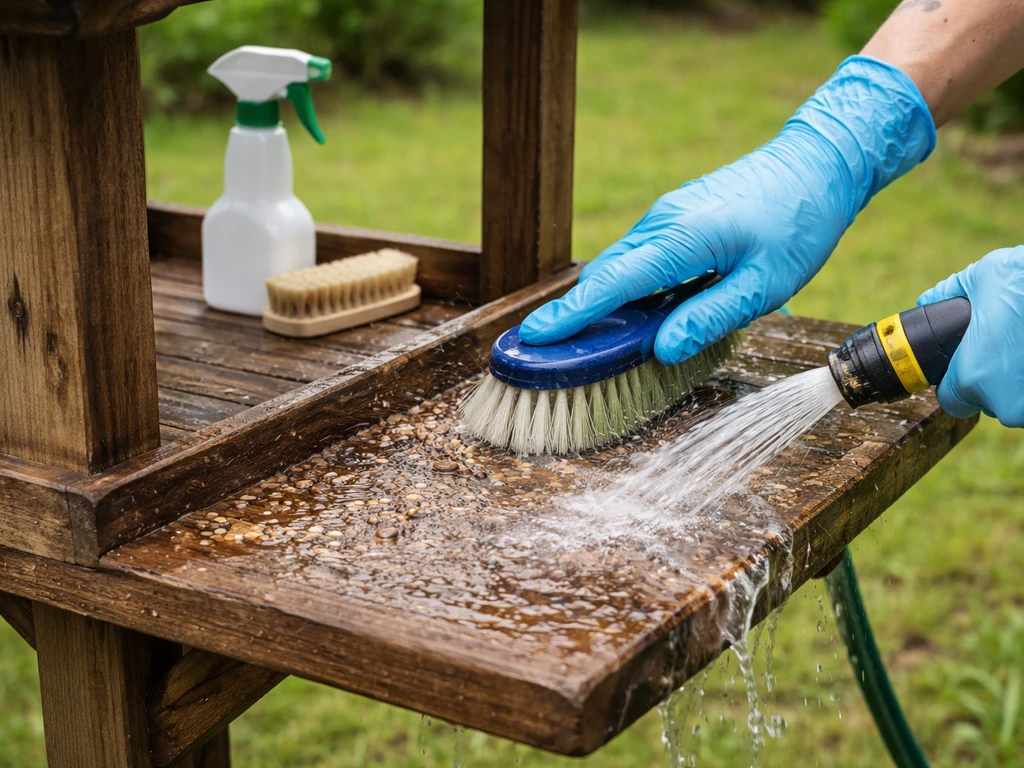
This is the part most beginner guides gloss over, and it's honestly the most important bit. A dirty bird table can spread salmonella, E. coli, avian pox, and a fungal disease called aspergillosis between birds. The U.S. Fish and Wildlife Service specifically flags that shared feeding surfaces are the main disease transmission route for garden birds. The good news is that a simple routine keeps the risk very low.
- Every time you add fresh food, brush off old debris, droppings, and uneaten food before adding the new batch. Don't just pile on top.
- Once a week, scrub the table surface with hot water and a stiff brush, then disinfect it with a dilute bleach solution of no more than 1 part bleach to 9 parts water. Rinse thoroughly and let it dry before refilling.
- Every two weeks at minimum, do a more thorough clean including any hanging feeders or hooks attached to the table. During wet weather or heavy use, move this to weekly.
- If you spot a sick bird at the table or notice multiple dead birds nearby, stop feeding immediately, clean and disinfect everything, and don't put food out again for at least two weeks.
- If you have a bird bath nearby, refill it with fresh water daily and disinfect it weekly using the same bleach solution.
One note on the RSPB's current guidance: as of early 2026, they advise against using flat-surface feeders including bird tables and window feeders for some foods, due to disease-spread concerns. It's worth checking the RSPB website periodically, because their recommendations do update as new disease outbreaks are reported. The hygiene routine above keeps risk as low as possible while still making the most of your table.
Your first-week plan: what to do today
You don't need to spend a lot of money or do everything perfectly on day one. Here's a realistic starting point that will get birds coming to your garden safely within a week.
- Day 1: Choose your table type based on your garden size and main concern (cats, squirrels, ground feeders). If budget is tight, a basic flat tray on a post is fine to start.
- Day 1: Identify your placement spot using the window and predator-distance rules above. Mark the spot before you buy, so you know whether you need a short or tall post.
- Day 2 or 3: Set up the table and add a small amount of food appropriate to the current season. Since it's late April, hold off on peanuts and seeds for now and start with mealworms or soft fruit.
- Day 3 onwards: Check the table daily. Remove uneaten food before adding fresh. Watch for which birds arrive and where they approach from.
- End of week 1: Do your first full clean, even if the table looks fine. This builds the habit before it becomes necessary.
- Ongoing: Adjust food type and quantity based on what's actually being eaten. Less waste means less mess and less disease risk.
The best bird tables in the UK range from under £20 for a simple post-and-tray design to over £100 for a heavy-duty roofed hardwood table with integrated feeders. For a first setup, somewhere in the £30 to £60 range gets you something solid that will last a few seasons and give you enough room to experiment with food and placement before committing to a permanent setup.
FAQ
How often should I refill a bird table to keep it clean and safe?
If you’re feeding multiple species, switch to smaller, flatter portions and refill more often rather than leaving large amounts. This reduces wet, sour food that birds keep stepping in, which is a common reason bird tables become disease hotspots and attracts rodents.
Can I use a bird table for ground-feeding birds like robins and blackbirds?
Yes, you can use a bird table even if you want ground-feeding species, but keep the table low and open. The key is elevation plus cleanliness, because it avoids contaminated soil splashing and makes it harder for predators to ambush from ground level.
What should I do if the bird table gets soaked or I notice mould?
During heavy rain or if you see mouldy food, pause feeding and thoroughly empty and scrub the tray. Once dry, start again with smaller amounts, and choose foods that don’t clump when wet (for example, smaller soft fruit pieces rather than large seed lumps).
My garden has cats, how do I position a bird table safely?
If you live near lots of cats, don’t just rely on height. Combine a table height around 1.5 to 2 metres with at least 2 metres of clear space around the base, and add cover a little farther back so birds can check safety before committing.
Can I put a bird table near a window if there are bushes or hedges nearby?
Don’t place it on a balcony railing or right next to dense hedges where birds can launch and hit the glass fast after being startled. Use the same window-distance rule, and ensure there is a realistic escape space, since “close but with bushes” can still create window-collision risk if birds can’t slow down.
Why did birds stop visiting after I set up the bird table?
If you notice fewer birds after introducing a new table, give it a short adjustment window and check placement and food type. Birds are often put off by sudden changes in location or by a surface that’s too exposed, too high, or too dirty, so clean it and keep food consistent for about a week.
Can I let my pet birds eat from a bird table?
Yes, but only if the enclosure diet matches the species and is served indoors. A bird table is designed for wild birds, so pet birds should not share the same surface or receive the same food schedule outdoors.
Do I need a roofed bird table, or is an open tray fine?
Use a roof or cover in climates with frequent rain, but never trap stale moisture underneath. For open trays, position where wind and rain don’t blast food onto the surface, and clear wet remains daily or every other day depending on how quickly it dries.
What’s a practical cleaning routine for a bird table?
Start by removing leftover food daily and washing the tray with hot soapy water, then rinse well, and let it fully dry before refilling. Deep-cleaning more thoroughly weekly helps, especially after rainy spells or when you see dark, crusty residue.
How do I stop squirrels from taking over the bird table?
If you get squirrels, use a table with a roof or limited access (smaller openings) and switch to foods squirrels can’t easily dominate. Also avoid overfilling, since spilled food under the table is the main “squirrel invitation.”
What changes should I make if larger birds keep pushing smaller birds away?
If your goal is to attract smaller birds, prioritize designs with low openings and controlled access, because big birds will monopolize wide, open platforms. You can also time offerings, using smaller soft foods in spring and switching to higher-energy foods in colder months.
Next Article
Garden Bird Checklist: Wild Species, IDs, and Tracking Tips
Ready-to-use wild garden bird checklist with IDs, field marks, tracking tips, and a bird station setup for beginners.