Let's clear something up right away: if you searched for the 'best flying bird cat toy' hoping to find enrichment ideas for your pet bird, you're not alone, and the confusion is completely understandable. What most people mean by this phrase is one of two things: either a cat toy shaped like a bird (with fluttering wings, feathers, and sometimes a chirping sound), or a toy that mimics a flying/bird-like motion to entertain a cat. The catch is that many of these products are designed exclusively with cats in mind and can be genuinely dangerous near pet birds. This guide will help you figure out which version you're after, whether it's appropriate for your specific bird, and how to use it safely if it is. If you are comparing related options, bird can fox kitten planter is another approach worth considering.
Best Flying Bird Cat Toy: Safe Enrichment Guide for Birds

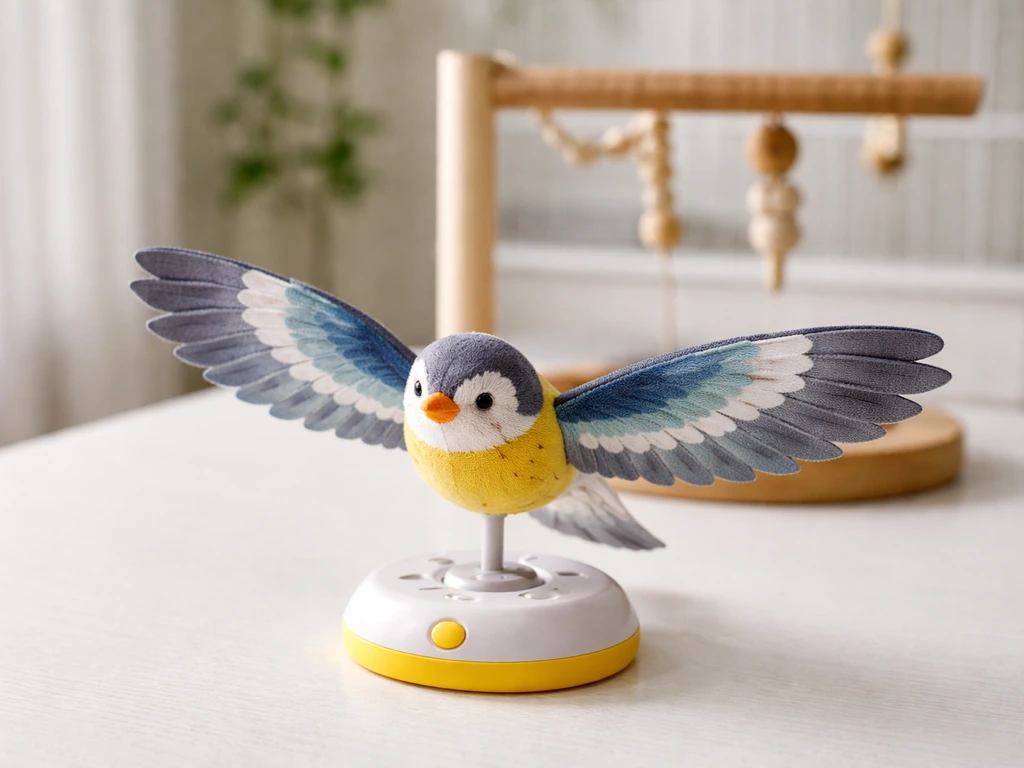
What 'flying bird cat toy' actually means (and why it matters for your bird)
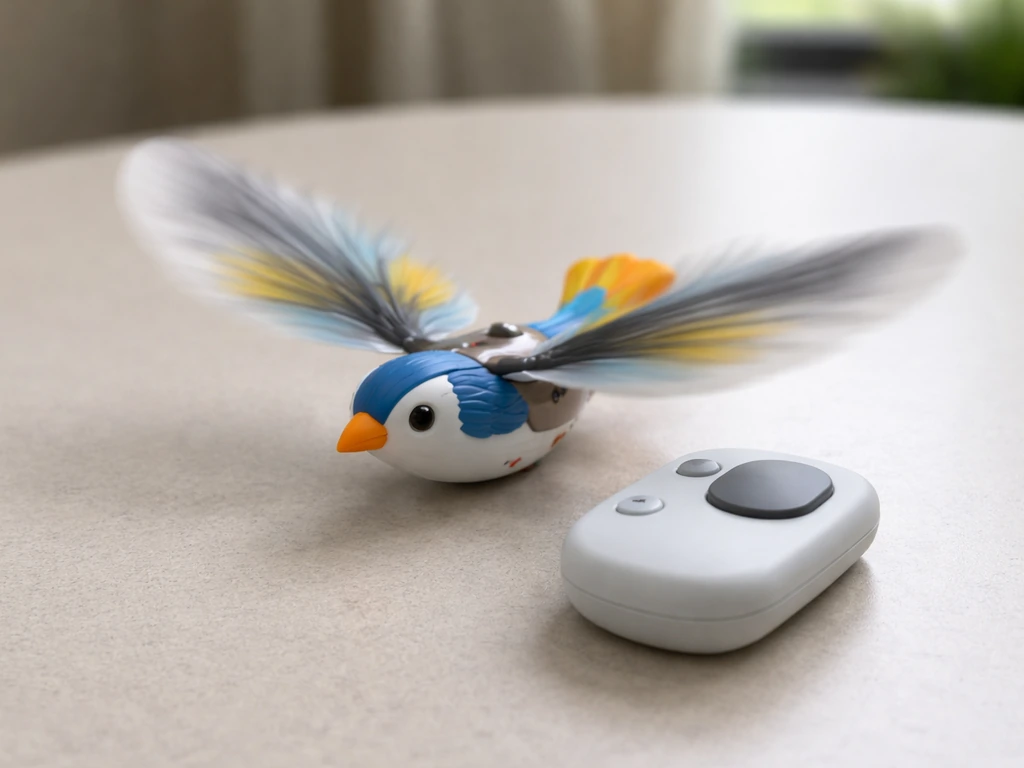
Most products sold under this label fall into a pretty specific category: remote-controlled or touch-activated toys with flapping wings that mimic bird flight. Think something like the ZzCityTK Lifelike Flapping Bird or the CuddlesMeow Flying Bird, which feature multiple wing-flapping modes (fast, intermittent, wild flutter), chirping sounds, and bird-like textures. Some have 'bite-proof' fabric covers and washable outer shells. These are made for cats to stalk, chase, and pounce on.
So what does that mean if you own a bird? A few things. First, if you're looking for a toy to hang inside your parrot's cage or entertain your finches, a cat toy is almost certainly the wrong starting point. Many of these products contain strings, loose feathers, small detachable parts, and electronic components that create real hazards for birds. Second, if you own both a cat and a bird and you're wondering whether you can use one of these toys as a 'shared' enrichment item, the answer is: almost never, and never unsupervised. Third, and this is where it gets interesting, some of the motion principles behind these toys (flutter, chase, unpredictable movement) can actually be adapted for bird enrichment, but only with the right materials and setup. That's what the rest of this guide covers.
Safety checklist before anything goes near your bird
This is the part I wish someone had handed me on day one. Bird toy safety is genuinely different from cat or dog toy safety, and the risks are not obvious until something goes wrong. Before you introduce any toy, cat-marketed or otherwise, run through this checklist.
- No loose threads or fraying fabric: Even a small thread wrapped around a bird's neck, wing, or foot can cause serious injury or death. Trim any fraying immediately, and if the toy sheds threads with regular use, discard it.
- No string, ribbon, or long rope: These are foreign-body emergencies waiting to happen. Hunting-instinct behavior (in cats and some parrots) can lead to ingestion, and long ropes create entanglement hazards. Supervised use only — and even then, weigh the risk.
- No jingle bells or slotted spherical bells: Spherical bells with slits can trap a bird's beak. Cowbell-style and metal jingle bells pose both entanglement and toxicity risks depending on the metal used. Skip them entirely.
- No small detachable parts: Buttons, beads, plastic caps, electronic sensor covers — if it can come off, it can be swallowed. Check every seam and attachment point before use.
- Non-toxic materials only: 'Bird toy' on the label does not guarantee safety. Verify that dyes, coatings, and fabrics are bird-safe. When in doubt, ask your vet.
- No sharp metal edges or poorly secured hardware: Check for any exposed wire ends, metal clips with gaps a foot or beak could slip into, or ring-and-loop configurations that increase entanglement risk.
- No excessively loud electronic sounds: Some flapping bird cat toys chirp continuously at high volume. This can be highly stressful for birds with sensitive hearing, particularly small species like canaries and finches.
- If there's any doubt, discard it: This is not being overcautious — it's the standard recommendation from multiple avian safety guides, and it's the right call.
Which toy types actually work for which birds
Not every bird is going to benefit from a flutter-motion toy, and matching the toy type to the species and temperament makes a real difference. Here's how to think about it.
Parrots (budgies, cockatiels, conures, African greys, amazons)
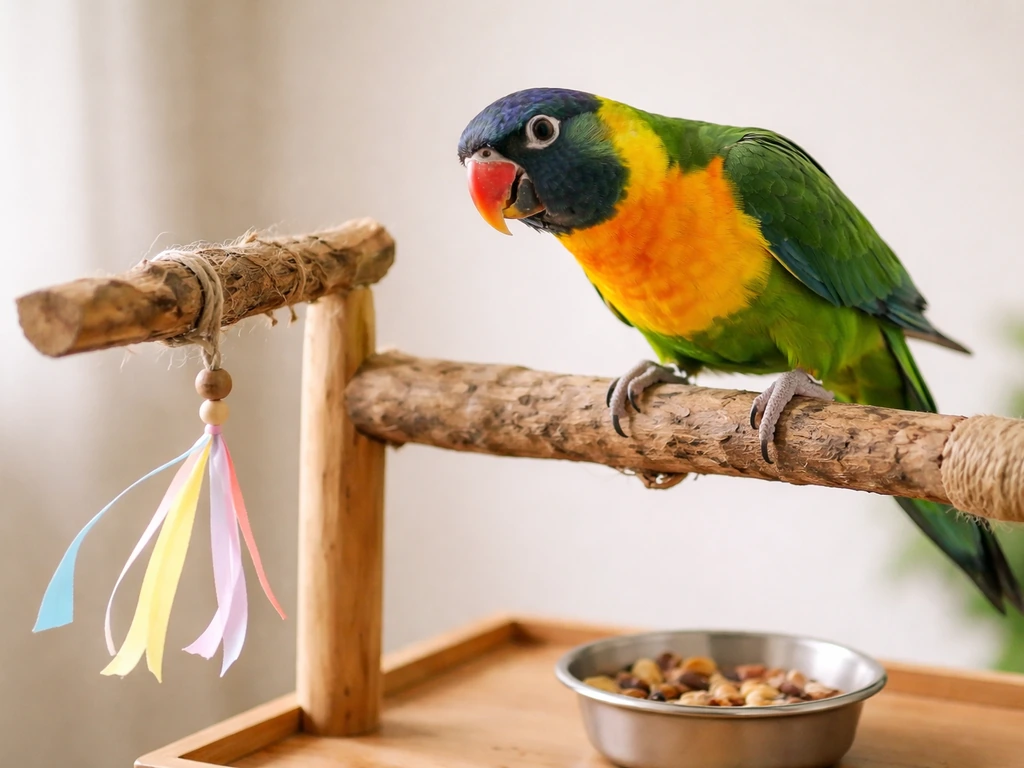
Parrots are curious, often bold, and many are enthusiastic chewers. A toy with flutter or movement can trigger natural foraging and chase behavior, which is genuinely enriching. The risk is that parrots will also try to dismantle anything they find interesting. For this group, toys with tough, chew-resistant bodies (think thick rope knots in safe materials, or solid wood blocks) paired with controlled motion (a wand-style toy you manually move) work better than anything with small electronics or detachable parts. Supervised wand-and-feather style play, where you control the motion and can remove the toy immediately, is usually the safest way to use a flutter/flight-style toy with a parrot.
Finches and canaries
Finches and canaries are much more skittish than parrots. Anything that produces sudden movement, electronic chirping, or fast wing-flapping is likely to terrify rather than entertain them. For these species, enrichment through visual interest, things they can observe from a safe distance, like bird videos on a screen, tends to be far more appropriate than any interactive motion toy placed inside or near the cage. Looking for the best bird videos for cats? Focus on clips that show safe, natural bird behavior and avoid anything too jumpy or loud bird videos on a screen. For finches and canaries, bird videos can be a good, low-risk way to provide enrichment without introducing the hazards of a toy. If you're curious about that angle, there's a lot to say about how bird videos and bird-watching setups benefit smaller, more timid species.
Curious vs. cautious temperaments
Within any species, individual temperament matters enormously. A bold conure who investigates everything immediately is a different case from a conure who retreats to the far perch whenever anything new enters the room. Gauge your bird's baseline curiosity before introducing any motion toy. If your bird is on the cautious end, flutter-style enrichment may not be worth the stress it causes, there are gentler enrichment options that will serve them better.
| Bird Type | Flutter/Motion Toy Suitability | Recommended Approach |
|---|---|---|
| Bold parrots (conures, budgies, amazons) | Moderate — good for supervised play | Wand-controlled motion; no loose parts or strings; supervise at all times |
| Timid or cautious parrots (some greys, cockatoos) | Low — easily overstimulated | Introduce very gradually; remove at first sign of stress; consider simpler foraging toys instead |
| Finches and canaries | Not recommended | Opt for visual enrichment (bird videos, window perches) rather than motion toys near the cage |
| Lovebirds | Moderate — bold but small beaks at risk | Check all parts are too large to swallow; avoid bells entirely; limit unsupervised access |
How to introduce the toy without stressing your bird
The biggest mistake I see people make is placing a new toy directly inside the cage and expecting the bird to love it immediately. That almost never works, and with a motion toy it can set back your bird's trust in the cage environment significantly. Here's a better approach.
- Start outside the cage: Place the new toy somewhere the bird can see it but doesn't have to interact with it. Leave it there for a day or two while the bird gets used to its presence.
- Sit with your bird during the first introduction: Your calm presence signals to the bird that the new object isn't a threat. If you're visibly relaxed and unbothered, that matters.
- Let the bird observe before activating any motion or sound: If the toy has flapping wings or chirping, don't turn it on right away. Let the bird approach and investigate the static object first.
- Use treats as a bridge: A small piece of millet or a favorite seed placed near the toy can help a hesitant bird associate the object with something positive.
- Activate motion gradually and briefly: Start with the slowest, gentlest motion mode if the toy has multiple settings. Watch your bird's body language closely. Fluffed feathers, cowering, or frantic movement away from the toy are clear signals to stop.
- Move to inside the cage only after the bird is comfortable: Don't rush this step. Some birds take a week. That's fine.
Using it for enrichment the right way
Once your bird is comfortable with the toy, the goal is to make it a genuinely enriching part of their routine rather than just a novelty that gets ignored after a week. A few principles that actually work:
Rotate toys regularly. Leaving the same toy in the same spot indefinitely kills novelty fast. A simple approach: move one familiar toy to a new location inside the cage, then introduce the motion toy outside the cage for a day or two before placing it inside. This keeps the environment feeling fresh without overwhelming the bird with constant change.
Vary the placement. Hanging a fluttery toy at a different perch height changes how the bird interacts with it. Some birds prefer to approach from above; others feel safer engaging with something at eye level. Try both and watch what your bird gravitates toward.
Use manual motion for chase games. If you're using a wand-style flying bird toy (the kind you control yourself), short sessions of active 'chase' play, where you move the toy and the bird follows or investigates, can function almost like foraging training. Keep sessions short (5 to 10 minutes) and always end while the bird is still engaged, not after they've lost interest. This leaves them wanting more.
Supervision is non-negotiable with any motion toy. Never leave a bird alone with a toy that has strings, fabric wings, electronic parts, or anything that could detach. Avoid toys or materials that could trap a bird's foot or neck, and steer clear of toxic or unsafe materials such as certain toxic metals or plastics blank" rel="noopener noreferrer">toys that have strings, fabric wings, electronic parts, or anything that could detach. Birdline Parrot Rescue also cautions that blank" rel="noopener noreferrer">bells can be hazardous, including a trap risk, and advises checking for bells that may contain zinc. This applies even to toys marketed specifically for birds.
Mistakes that are easy to make (and how to avoid them)
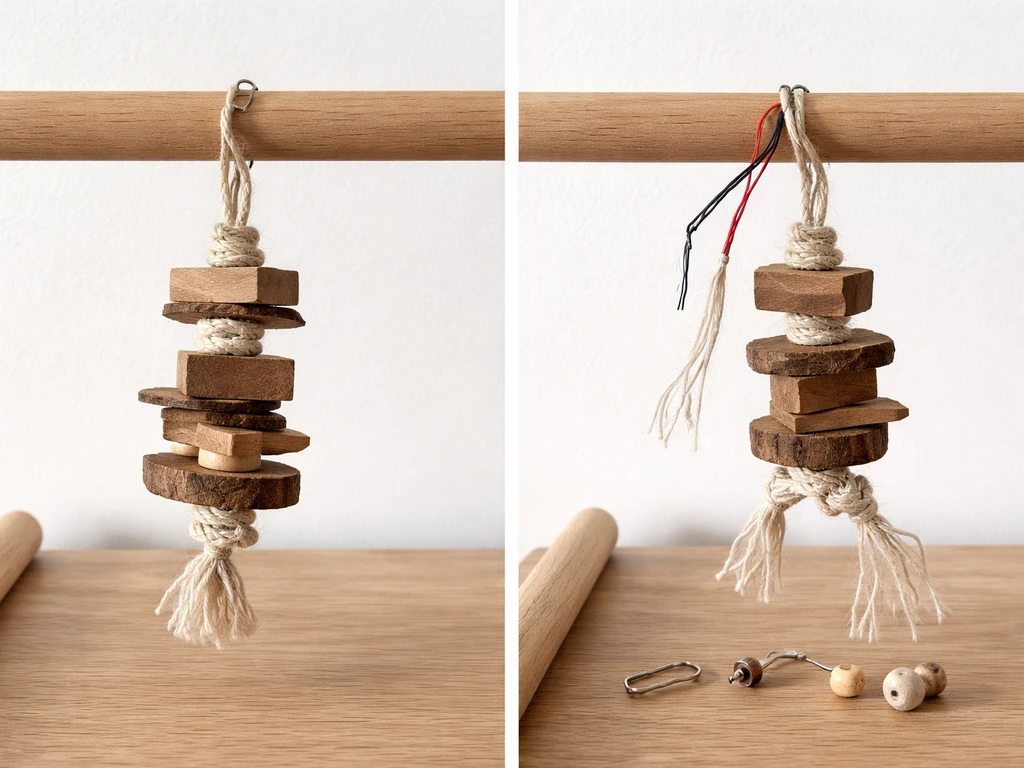
Most of the problems I've seen people run into with flying bird cat toys and pet birds come down to a handful of repeating errors. Here they are, directly. If you want a starting point that still keeps safety in mind, see the best flapping bird cat toy picks and what to look for before you buy.
- Assuming a cat toy is safe just because it's labeled 'natural' or 'feather': Real feathers on cat toys are often poorly secured and can be pulled loose and swallowed. 'Natural' materials are not inherently bird-safe.
- Leaving strings or ribbon in the cage unsupervised: String is one of the most common foreign-body emergencies in companion animals. Even a short piece of ribbon can wrap around toes or a neck with serious consequences.
- Using a loud electronic toy with small birds: Finches and canaries are easily stressed by sudden, loud, or repetitive sounds. A chirping electronic toy at full volume near their cage is not enrichment — it's a stressor.
- Skipping the gradual introduction: Dropping a new motion toy directly into the cage and walking away is the fastest way to stress your bird and make them distrust the cage as a safe space.
- Buying whatever's cheapest without checking materials: Inexpensive cat toys often use dyes, coatings, or metals that are toxic to birds. A toy that's fine for a cat to chew on may not be safe for a bird at all.
- Forgetting that 'bird toy safe' on the label isn't a guarantee: As multiple avian safety organizations point out, even products sold as bird toys can contain unsafe bells, metals, or parts. Always inspect before use.
- Not adjusting for your specific bird's personality: A toy that's perfect for a bold cockatiel may be genuinely frightening for a timid African grey. Know your bird.
Cleaning, inspection, and knowing when to retire a toy
This part gets skipped more than it should. Toys collect bacteria fast, especially if your bird dunks them in water or the toy gets wet from droppings or bath splashing. Any toy that gets soaked should either be thoroughly cleaned, completely dried, and inspected before going back in, or discarded. Damp toys left in a cage are a bacterial growth problem waiting to happen.
Daily inspection is the standard recommendation from most avian safety guides, and it's realistic if you build it into your regular morning check. Look for: loose threads or fraying fabric, detached or loosening parts, any part that now has a gap or hole large enough to trap a toe or beak, signs of chewing that have compromised the toy's structure, and rust or corrosion on any metal components.
Retirement is a judgment call, but the threshold should be: once a toy shows significant wear, don't wait for a failure. Replace it. The cost of a new toy is nothing compared to an avian vet emergency. If you're uncertain about whether a toy is still safe, the consistent advice from every credible bird safety source is the same: when in doubt, throw it out. That's not being wasteful, that's being a good bird owner.
For electronic flying bird cat toys specifically, check the battery compartment and any seams around electronic components regularly. These are common spots for small parts to loosen over time, and they're easy to miss if you're only doing a quick visual check.
When a cat toy just isn't the right fit
If you've worked through this guide and you're realizing that most flying bird cat toys don't actually suit your bird's species, size, or temperament, that's a completely valid conclusion. For many birds, especially finches, canaries, and timid individuals of any species, the enrichment value of a motion/flutter toy is much lower than other approaches. Visual enrichment (like bird-watching setups or bird videos) tends to be safer and often more genuinely engaging for smaller, more cautious birds. If you’re wondering whether bird watching is good for cats too, it’s worth looking at how cats respond to movement and interest-based play is bird watching good for cats. Foraging toys, puzzle feeders, and rotating familiar objects into new cage positions often provide more durable enrichment than any novelty motion toy. A flying bird cat toy is a tool that works well in specific, supervised situations, it's not a universal enrichment solution, and there's no shame in deciding it's not right for your bird.
FAQ
Can I use a flying bird cat toy as a “shared” plaything between my cat and bird, even if the bird is in a separate cage?
No, not as a shared enrichment item. Even when separated, movement and detachable parts can still create risk (for example, if the toy is brought close to the bird’s space, or if a component drops). If you ever allow proximity, keep the toy in the cat-only area, supervise both animals, and use a bird-safe substitute for the bird (manual wand play with you controlling the motion, or non-interactive visual enrichment).
My bird seems interested at first. How long should I test a flutter-style toy before deciding it’s not a good fit?
Run short, supervised sessions and watch for stress signs. If your bird starts avoiding perches, repeatedly panics at the flutter motion, or begins dismantling the toy aggressively, stop. A practical decision point is to trial it for a few brief sessions across different days, then retire it if it consistently causes fear or chewing beyond normal exploratory behavior.
What should I do if a part comes loose, even if the toy still looks “mostly intact”?
Remove it immediately and inspect for secondary hazards. Small loose pieces, fraying fabric, or gaps can trap a toe or beak, and electronic seams can open further under movement. Don’t “re-attach and continue” unless the manufacturer explicitly supports that repair method. When you’re unsure, retire the toy rather than risk a failure during play.
Are battery-powered versions safe if I keep them outside the cage and only move them near the bars?
It’s safer than placing electronics inside the cage, but it’s still not automatically safe. The main risks are dropped parts, battery door looseness, and any exposed seam near the bars. If you try it, keep the toy fully under supervision, keep distance so nothing can be reached, check the battery compartment before and after each session, and stop if your bird shows any interest in chewing at the bars.
How can I clean a flutter-motion toy without damaging the fabric or the motion mechanism?
Use a “wet-to-dry” routine: spot-clean first when possible, then rinse only if the outer shell is washable (not the electronics area). After cleaning, dry completely, and inspect for stiffness changes, fraying, or hidden looseness around seams. Never reintroduce a damp toy, and if the motion mechanism or seams get wet, allow extra drying time before use.
Is it okay to hang the toy in the cage all day so the bird can interact whenever they want?
Usually not. Leaving any motion toy running or available unattended increases the chance of stress, chewing damage, or accidental injury if parts detach. If you offer it, use timed sessions, monitor closely, then remove it when the bird is still engaged so it stays a controlled enrichment routine rather than an unattended hazard.
For parrots, what’s a safer alternative to electronic flapping wings?
Consider wand-style manual chase enrichment with bird-safe materials you can control and remove instantly. You can mimic “flutter” by varying your own motion speed and direction without letting fabric wings or small electronics remain within reach. This lets you end the session immediately if the bird escalates into destructive chewing.
Do finches and canaries need motion toys at all, or are they better with visual enrichment only?
Often visual enrichment works better, but you can still use movement carefully. For finches and canaries, avoid sudden flapping, loud chirps, and fast, erratic motion. If you experiment, use very gentle, predictable changes (short, distant screen-based bird behavior or supervised, low-intensity observation setups) and stop at the first sign of prolonged stress like freezing, frantic pacing, or refusal to approach normal areas.
What are the most common signs that the toy is causing stress rather than enrichment?
Watch for sustained fear or avoidance, frantic retreat to the farthest perch, repeated attempts to dismantle or bite the toy aggressively, and changes in normal feeding or resting routines during toy time. If those patterns appear consistently, the novelty is harming trust in the cage environment, and you should switch to lower-stimulation enrichment.