The bird dog is a genuinely great exercise, but it's not the only way to train core stability and coordinated limb control. Whether you're dealing with wrist pain from the quadruped position, a flare-up of low-back symptoms that makes floor work miserable, or you just want a fresh movement in your program, there are solid substitutes that hit the same goals. Here's what actually works, how to pick the right one, and how to plug it into your routine without guessing.
Bird Dog Exercise Alternative: Best Substitutes and How To

Marcus Chen
21 Apr 2026
Why you might need a bird-dog alternative
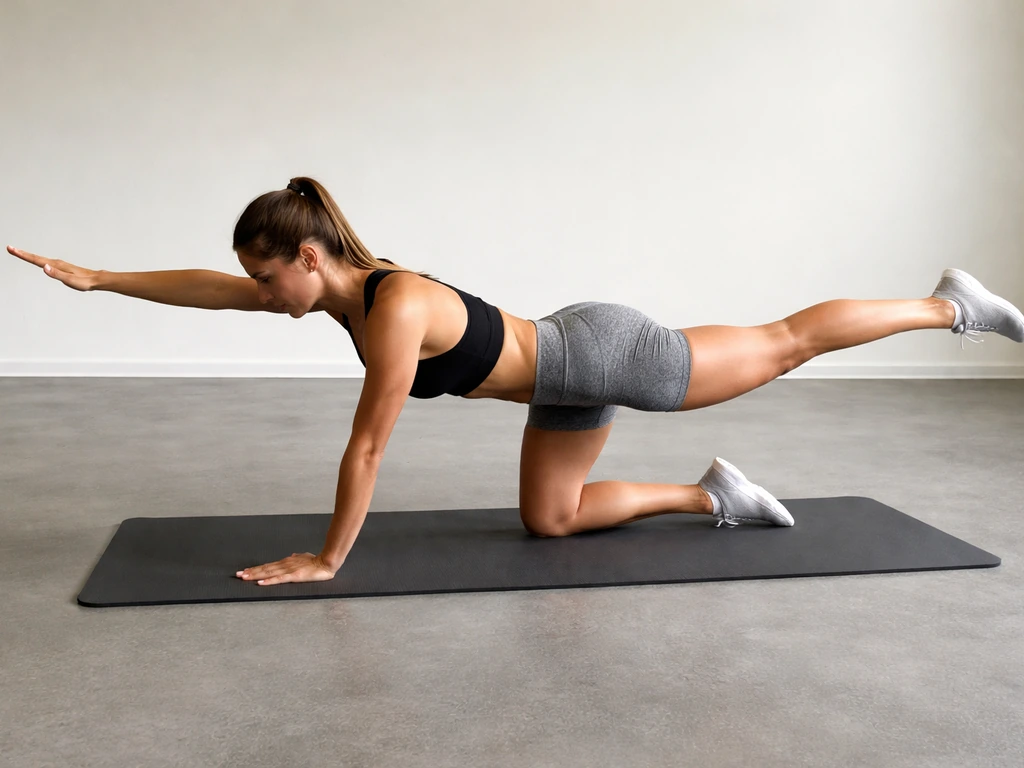
The bird dog's job, framed famously by spine researcher Stuart McGill, is to train spinal neutrality while the lower back contracts isometrically to resist movement during hip extension. It's part of his 'Big 3' spine-stabilization exercises for a reason. But several real-world situations make it impractical or even counterproductive.
- Wrist, elbow, or shoulder discomfort that makes weight-bearing on all fours painful
- Knee pain or sensitivity from kneeling on a hard floor
- Limited floor space or no access to a mat
- Early-stage rehab where quadruped positions aren't yet tolerated
- Difficulty maintaining neutral spine during the movement (the most common reason the drill stops working)
- Boredom, or needing variety to stay consistent in a long-term program
If you recognize any of those, you don't need to force the bird dog. The goal is training anti-extension and anti-rotation stability with coordinated limb movement, and several exercises do that just as well in different positions.
The best bird-dog substitute exercises
Each substitute below targets the same general purpose: bracing the trunk against motion while the limbs move. The differences are mainly position and loading style, which is exactly what makes them useful for different situations.
Dead bug
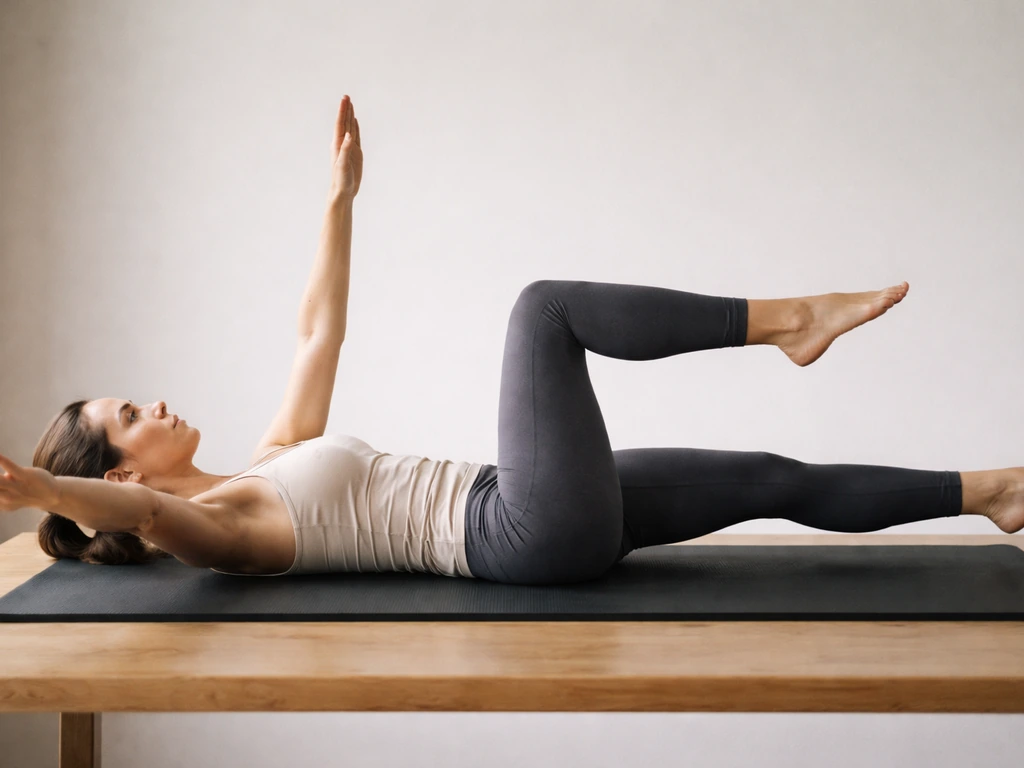
The dead bug is the single closest alternative to the bird dog. You're still extending opposite limbs away from the midline while resisting lumbar extension, but you're lying on your back instead of on all fours. That supine position makes it dramatically more accessible for people with back flare-ups, knee discomfort, or wrist issues. It's also genuinely beginner-friendly and has been used in postnatal recovery programs because of how well it controls load. The target muscles are the deep stabilizers (transverse abdominis, multifidus), the rectus abdominis in an anti-extension role, and the hip flexors.
Supine marching
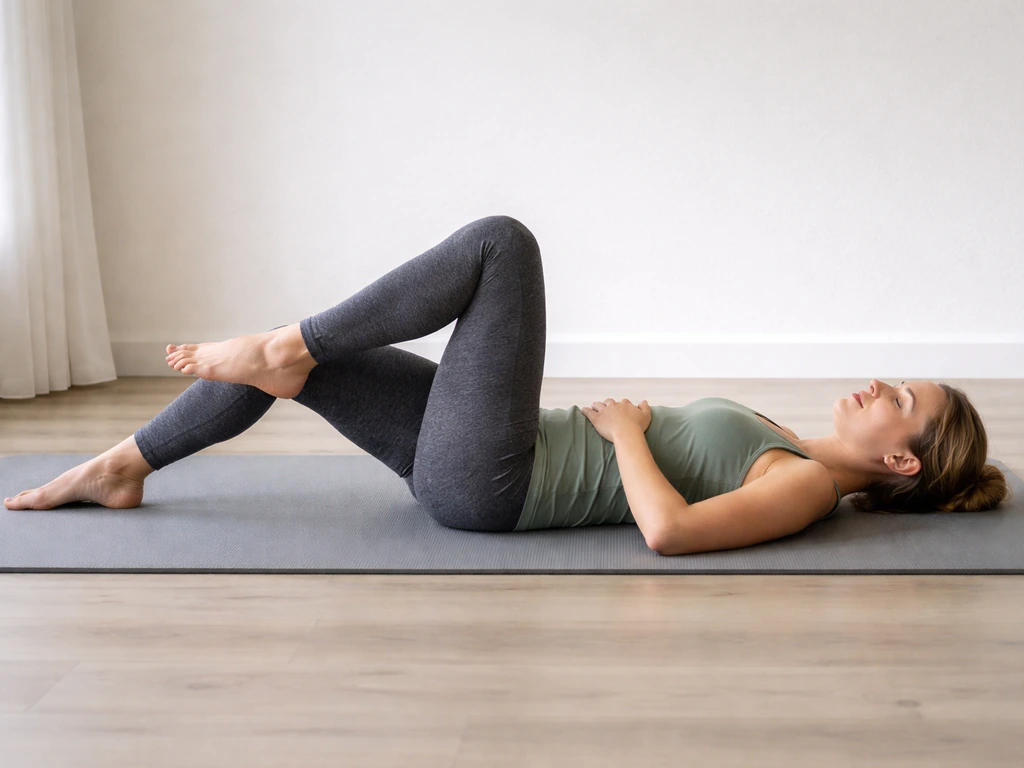
Supine marching is often used in PT settings as a regression step before the dead bug or bird dog, specifically for people who can't yet tolerate full limb extension. You lie on your back with knees bent, then slowly lift one foot off the floor at a time while maintaining pelvic stability. It directly trains the same pelvic-lumbar coordination the bird dog targets but with a fraction of the lever-arm demand. This is the right starting point if you've been told by a physio that your core can't yet hold position during the bird dog.
Pallof press
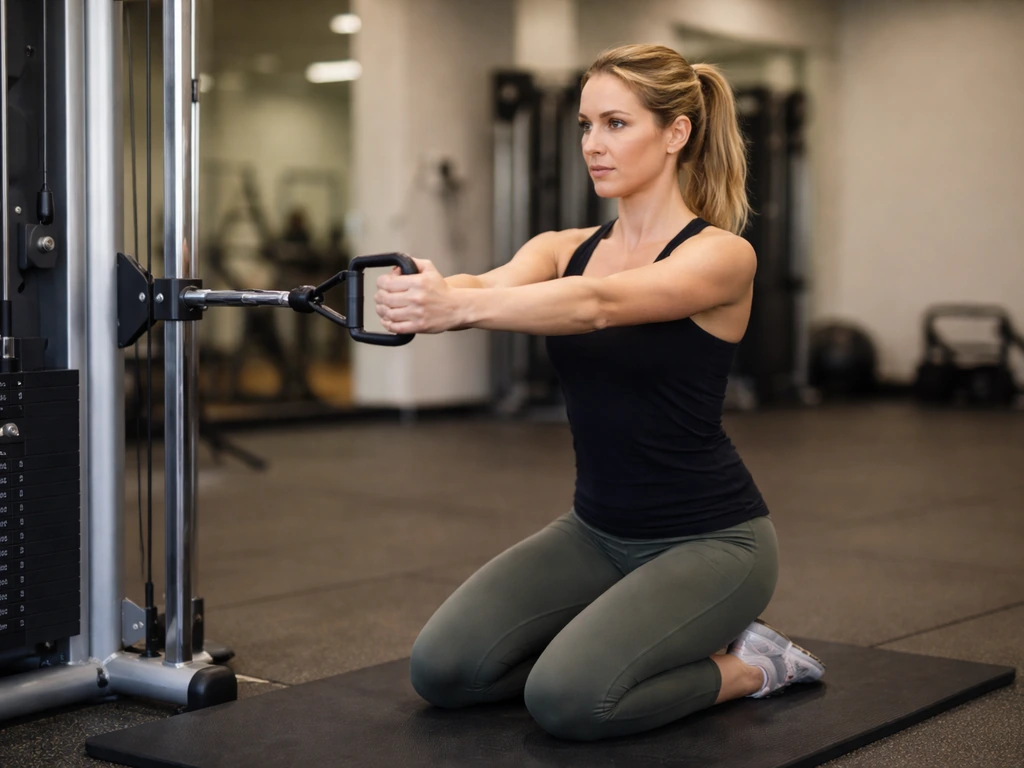
The Pallof press is a standing (or kneeling) anti-rotation drill that uses a cable machine or resistance band. You hold the handle at chest height, then press it straight out in front of you and return it, resisting the band's pull to rotate your torso. Where the bird dog trains anti-extension in a horizontal quadruped position, the Pallof press trains anti-rotation in an upright stance. It's a strong option if your goal is functional core stability for sport or daily life, and it's much easier on the back in early rehab because there's no spinal loading from being horizontal.
Supine bird dog (also called the 'tabletop bird dog' or 'reverse bird dog')
This one keeps the name but flips the position. You lie on your back, press your lower back gently into the floor, and extend opposite arm and leg without letting your spine arch off the ground. It directly mirrors the movement pattern of the bird dog but removes the quadruped position entirely, making it an ideal choice for anyone whose wrists, knees, or shoulders struggle with floor work. It appears in integrative medicine and clinical rehab exercise lists specifically for this reason.
Standing bird dog (table or wall-supported)
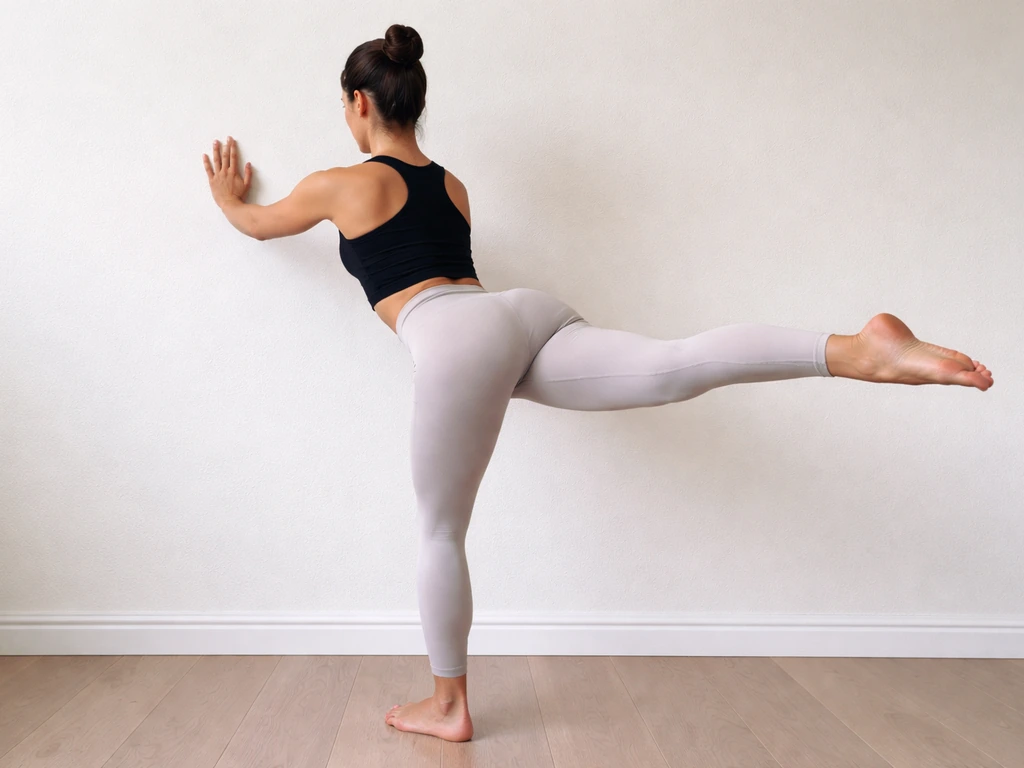
A standing variation involves holding a table edge or a wall with one hand for support, then extending the opposite leg behind you and optionally reaching the free arm forward. It trains single-leg balance, hip extension, and trunk stability in a vertical position, reducing the demand on wrists and knees while preserving the coordination challenge. If you need to replace a pie bird for similar reasons, look for bird-dog substitutes that match your anti-extension or anti-rotation goal single-leg balance. This works well for people who need to stay upright due to hip flexor tightness, breathing restrictions, or simply preference.
Picking the right substitute for your actual goal
The honest answer is that the best bird-dog alternative depends on why you're swapping it out and what you're trying to build. If you're comparing options, it's also worth looking at the bater bird benefits to see what you gain beyond just movement variety. Here's a direct comparison to help you decide quickly.
| Exercise | Best for | Position | Wrist-friendly | Back-friendly | Equipment needed |
|---|---|---|---|---|---|
| Dead bug | Core anti-extension, beginners, postnatal recovery | Supine | Yes | Yes | None (mat optional) |
| Supine marching | Early rehab, pelvic stability, regression step | Supine | Yes | Yes | None |
| Pallof press | Anti-rotation, functional/sport carryover, standing work | Standing or kneeling | Yes | Yes | Band or cable machine |
| Supine bird dog | Closest mirror to bird dog, floor-accessible, wrist/knee issues | Supine | Yes | Yes | None |
| Standing bird dog | Balance, upright preference, hip extension, shoulder issues | Standing | Yes | Moderate | Table or wall for support |
If you have low-back pain or are in early rehab, start with supine marching or the supine bird dog. If you're wondering what can i use instead of a pie bird, start by choosing the exercise position that matches your low-back comfort, like supine marching or the supine bird dog. If you're curious why use a pie bird, compare that bird-feeding setup to the bird-dog style substitute advice here so you pick the right option for your goal. If your issue is wrists or knees but your back is fine, the standing version or dead bug covers you. If you want a more athletic, functional challenge, the Pallof press is the move.
Step-by-step form cues and the mistakes that wreck these exercises
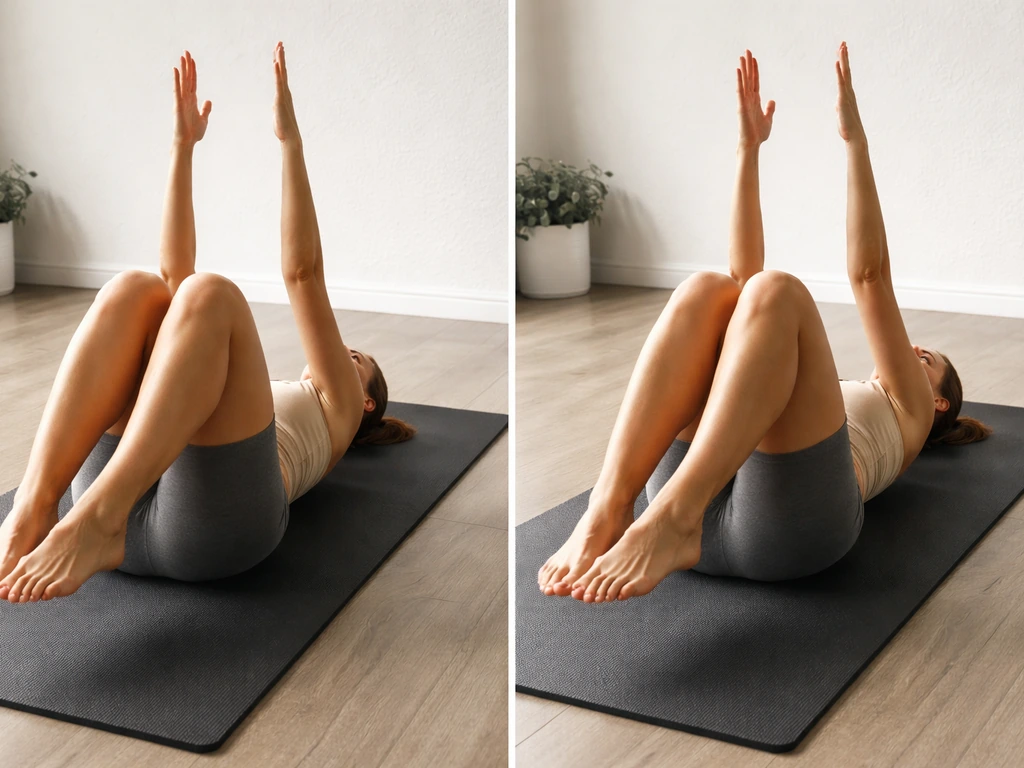
Dead bug: how to do it right
- Lie on your back with arms pointing straight up toward the ceiling and knees bent at 90 degrees (tabletop position).
- Press your lower back gently into the floor before you move anything. You should feel your deep abs engage.
- Slowly lower your right arm overhead and extend your left leg toward the floor at the same time, keeping both just above the surface.
- Return to start, then repeat on the other side. One rep = one full cycle.
- Keep your ribs down throughout. The cue 'rib cage toward the floor' is the single best fix if your back starts to arch.
The most common dead bug mistake is losing lumbar contact with the floor as the leg extends, which usually means the load is too much. Regress by only lowering the leg partway, or by doing arms only or legs only instead of the contralateral pattern. If you feel arching or lose deep core control at any point, that's your sign to regress, not to push through.
Supine marching: how to do it right
- Lie on your back with knees bent and feet flat on the floor.
- Find and hold a neutral pelvis, not a flat-back, not an arched back. Think of a small natural curve at your low back.
- Slowly lift one foot about two inches off the floor, hold for three to five seconds, then lower it.
- Alternate feet, maintaining pelvic position throughout. If your pelvis tilts or rocks, you've lost the point of the drill.
The mistake here is lifting the leg too high or too fast, which shifts the load away from stabilization and into hip flexor strength. Keep the movement small and controlled.
Pallof press: how to do it right
- Stand perpendicular to a cable stack or anchor point for a band, with feet shoulder-width apart.
- Hold the handle or band at chest height with both hands. Your ribs and hips should be stacked, shoulders down and back.
- Brace your core as if someone is about to push you sideways, then press your hands straight out from your chest.
- Hold for two to three seconds at full extension, then bring hands back to chest. That's one rep.
- Keep the torso completely still. If you rotate even slightly toward the cable on the way out, the resistance is too high.
The most common mistake is using too much resistance and letting the hips or torso twist. Start light. This is not a strength exercise in the traditional sense. The goal is zero movement in the torso, not maximum cable weight. Stop the set if you notice lumbar extension, anterior pelvic tilt, or you're holding your breath for more than two seconds.
Supine bird dog: how to do it right
- Lie on your back with knees bent and feet flat. Press your low back gently toward the floor.
- Extend your right arm straight overhead toward the floor while simultaneously extending your left leg straight out at about a 45-degree angle.
- Hold for five to six seconds, return to start, then switch sides.
- Keep the low back in contact with (or very close to) the floor throughout. Don't allow the lumbar spine to lift and arch.
Hip rotation is a common error here, just as it is in the standard bird dog. Watch that the extended leg doesn't rotate so the foot turns toward the ceiling. Keep the leg in neutral, toes pointing up.
How to actually program these in your workouts
A useful starting point for most people is two to three sets at the beginning of a workout, before any heavy loading. Core stability training works best when you're not fatigued, because the whole point is training control, not burning the muscle out.
| Exercise | Sets | Reps or time | Hold duration | Frequency |
|---|---|---|---|---|
| Dead bug | 2–3 | 5–10 reps per side | No hold needed | 3–4x per week |
| Supine marching | 2–3 | 8–12 reps per side | 3–5 seconds per rep | Daily if in rehab |
| Pallof press | 2–3 | 8–12 reps per side | 2–3 second hold at extension | 3x per week |
| Supine bird dog | 2–3 | 6–10 reps per side | 5–6 seconds per rep | 3–4x per week |
| Standing bird dog | 2–3 | 6–10 reps per side | 5–10 seconds per rep | 3–4x per week |
For hold durations, McGill's research suggests bird dog variations work best with short holds, generally seven to ten seconds and no more than ten. The same logic applies to these substitutes: six to eight second holds at a slow tempo are more effective for low-back stability than fast, swinging reps. That's the approach recommended specifically to reduce lumbar hyperextension risk.
Regressions and progressions
If any exercise feels unstable or you're losing neutral spine, regress first rather than grinding through bad form. Here's the general ladder from easiest to hardest:
- Supine marching (easiest, smallest lever arm)
- Supine bird dog with short holds
- Dead bug with partial range (half extension only)
- Dead bug with full extension
- Standing bird dog (table-supported)
- Pallof press standing
- Bird dog on the floor (original)
- Bird dog with band resistance or from a bench (advanced)
Progress only when you can complete all reps with a neutral spine and no breath-holding. If a regression feels too easy for two consecutive sessions, move up. If you're flaring symptoms, drop back down without ego.
Modifications and safety for pain, back, and shoulder concerns
If you have an existing low-back condition, the key clinical precaution is avoiding lumbar extension during any of these exercises. Willow House PT’s Bird Dog Progressions PDF similarly emphasizes keeping the spine neutral while lifting the opposite arm and leg parallel to the floor for about 6 to 8 seconds as part of the progression neutral spine. That means: no arching, no anterior pelvic tilt, no spine twisting. Spinal instability rehab protocols consistently emphasize keeping movement pain-free and within a braced, neutral range before adding load or range. If an exercise causes your symptoms to worsen during or within 24 hours after, stop that variation and step down to the easiest regression or rest that day.
- Back pain flare-up: stick to supine marching only until symptoms settle, then reintroduce supine bird dog with very short holds
- Shoulder discomfort: avoid the arm-reach component initially; do legs-only versions of dead bug or supine bird dog until shoulder symptoms resolve
- Knee pain: any supine option eliminates kneeling entirely; the standing bird dog with a table for support also avoids floor kneeling
- Hip impingement or hip flexor tightness: avoid high hip-flexion positions; the dead bug with legs extended low (rather than tabletop start) may aggravate this, so use the standing bird dog instead
- Postpartum or abdominal separation: supine marching and supine bird dog with gentle abdominal bracing are generally appropriate, but confirm with your physiotherapist before loading
One practical safety rule for all of these: if you're holding your breath for more than two seconds to maintain position, the load or range is too much. Controlled breathing is part of how the deep core stabilizes. Breath-holding is a compensation strategy that masks instability rather than fixing it.
When to see a professional and how to track your progress
Some symptoms are your cue to stop exercising and get evaluated, not just swap exercises. Seek medical attention promptly if you notice any of the following during or after these movements:
- Pain that radiates below the knee, especially with numbness, tingling, or a burning sensation (possible sciatic nerve involvement)
- Progressive leg weakness or bilateral leg weakness or numbness
- Any loss of bladder or bowel control (this is a medical emergency, go to the emergency department)
- Worsening symptoms despite weeks of gentle, progressive exercise
- Inability to perform even the simplest regression (supine marching) without significant pain
If you're managing a known disc issue, spinal stenosis, or recent surgery, a physiotherapist should clear you for these exercises specifically before you start, not after you aggravate something. The exercises listed here are generally low-risk, but 'generally' does a lot of work in that sentence when your spine is involved.
For tracking progress, a simple approach works better than overthinking it. Pick one or two exercises and log the hold duration and rep quality each session. A realistic goal is to add two to three seconds to your hold time or one to two reps per set over two to three weeks while maintaining perfect neutral spine. When you can do three sets of ten reps per side with a six-second hold and zero compensations, you're ready to progress. If after four to six weeks you're not improving at all, or symptoms haven't settled, that's the right time to book a physio or sports medicine consult, both to rule out anything structural and to get a program tailored to your specific situation.
The bottom line: you don't need the bird dog specifically to build what the bird dog builds. Pick the substitute that matches your position tolerance and goal, nail the form cues, program it consistently two to three times a week, and progress steadily. That's the whole plan. If you want the natural answer to what bird eats carpenter bees, look for species known for hunting insects in wood.
FAQ
How do I choose the right bird dog exercise alternative if my main issue is low-back pain but I do not know which pattern to avoid?
Start by selecting the position that keeps your spine neutral throughout the whole range. If any movement causes arching, anterior pelvic tilt, or torso twist, regress to a smaller range option like supine marching or supine dead bug, then only progress when you can exhale normally and maintain contact or alignment for the full set.
Can I use a bird dog alternative even if I do not have access to a cable machine or resistance band for the Pallof press?
Yes. Use a stable resistance method like a looped band anchored to a sturdy post at chest height, or swap the Pallof press for an isometric anti-rotation drill like “standing core bracing with slow reaches” while lightly resisting the pull (the key is resisting rotation, not the exact equipment).
Should I train these exercises when I feel better but symptoms tend to flare later the same day?
Avoid “testing” with max range. If symptoms worsen during the session or within 24 hours, stop that variation and step down immediately to the easiest regression that still allows bracing with normal breathing.
What if I can do the bird dog alternatives but I still get symptoms during extension, not during the setup?
That usually means the extension portion is too much. Reduce the lever arm by partially extending only to the point where neutral spine stays intact, or split the pattern into arms-only or legs-only so you can re-build control without provoking lumbar extension.
Is it okay to do bird dog alternatives as part of a warm-up, or should they only be done on separate days?
They work well in warm-ups because they are control-focused rather than fatigue-focused. Keep sets shorter and closer to perfect form, then avoid turning them into a long circuit. If you get form breakdown or breath-holding, stop and move on.
How should I progress these exercises week to week, without slipping into making them harder in the wrong way?
Progress only one variable at a time, either longer hold duration by about 1 to 2 seconds or one extra high-quality rep per set. If you notice arching, twisting, or breath-holding, that’s not progress, regress back to the previous range or easier version.
What are practical form checkpoints that tell me I am doing the alternative correctly?
For most of these, you should see steady pelvic control, no lumbar arch, no torso rotation, and continuous breathing without holding for more than a couple seconds. Also watch the hip and foot tracking, keep toes pointed neutral (not rotated toward the ceiling), and stop if you lose control before the set ends.
Can athletes who want a more performance-based challenge use these alternatives without losing their rehab-style intent?
Yes, but keep the core stabilizing quality first. After you can complete controlled reps with neutral spine, progress via slightly longer tempo or longer holds rather than adding aggressive resistance or swinging the limbs.
What should I do if a substitute feels “unstable” even though it does not cause pain?
Instability usually means motor control is not ready for that pattern length or stance. Regress to the easiest version that keeps alignment and breathing steady, then build from there. If the feeling persists or worsens over multiple sessions, consider getting evaluated.
How often should I train a bird dog exercise alternative to see results?
For most people, 2 to 3 sessions per week is a good target, using fresh (not fatigued) conditions so the exercise stays about control. Track hold time and rep quality, and if there is no improvement after several weeks or symptoms persist, consult a physio or sports medicine clinician.