The best toys for bird dogs are canvas or rubber training dummies for retrieving practice, durable rubber chew toys like the KONG Classic for downtime, tug toys for drive-building, puzzle or food-dispensing toys for mental work between sessions, and scent-based retrieve toys for nose work. Which one to prioritize depends on your dog's age, drive level, and where they are in their training. A high-drive Labrador puppy needs something different than a finished retriever couch companion, and buying the wrong toy is one of the most common (and fixable) mistakes first-time bird-dog owners make.
Best Toys for Bird Dogs: A Practical Buying Guide
Marcus Chen
3 May 2026
What a bird dog actually needs from toys
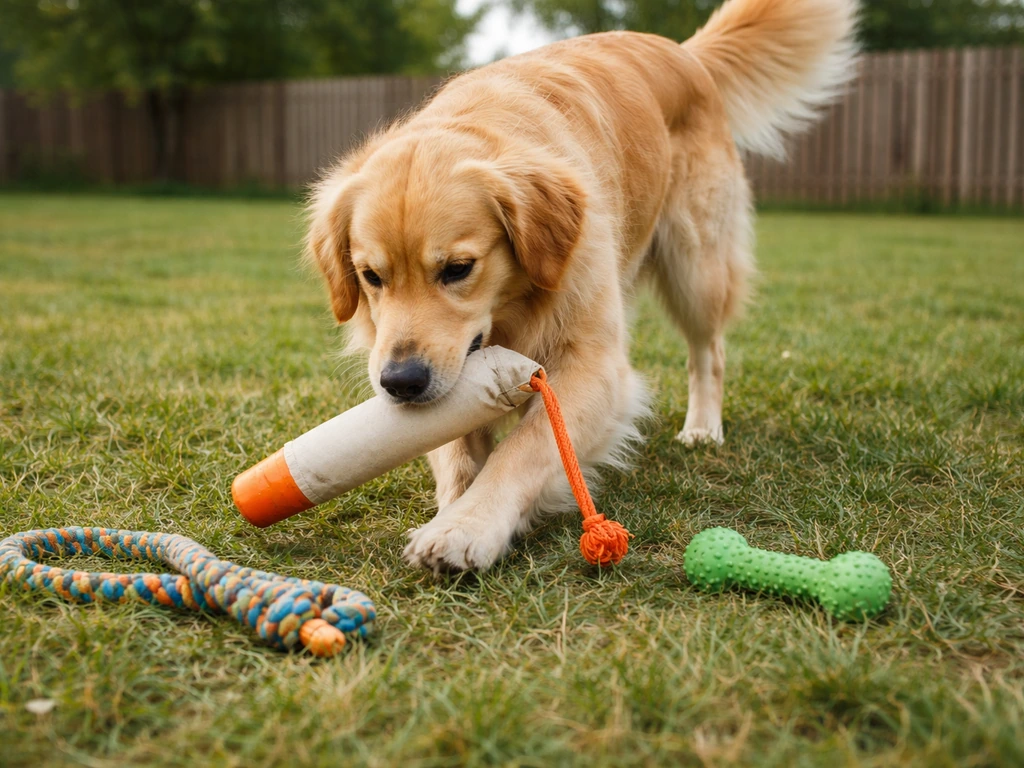
Bird dogs are built to work. Even if yours never sees a duck blind, the drives that make them great hunters, the need to chase, carry, sniff, solve, and engage with a handler, are always running in the background. Toys that ignore those drives just collect dust. The ones that tap into them become training tools whether you intend that or not.
There are three distinct jobs a toy can do for a bird dog, and the best ones often do more than one at a time. First is mental stimulation: keeping an intelligent, high-energy dog from turning your furniture into chewing material. Second is training support: using the toy as a motivator, a reward, or a prop in actual field-style drills like recall, steadiness, and retrieve-to-hand. Third is retrieving practice: building and maintaining the physical muscle memory of picking up, carrying, and delivering an object. Most toys sold for 'active dogs' only hit the first category. You want something that can hit all three.
The five toy types that actually work for bird dogs
Retrieving dummies and bumpers
This is the core tool. Training dummies come in canvas, rubber, and plastic. Canvas dummies hold game scent far better than plastic, which makes them the right choice when you want your dog making the mental connection between retrieving and bird odor. For puppies and adolescent dogs, the SportDOG Puppy Canvas Dummy (2 inches by 8 inches) is about the right starting size. Once reliable holding and returning is established, you can progress to a full-size canvas or plastic bumper. Plastic dummies are fine for water work and long throws because they float well and are easy to throw accurately. The honest answer is you eventually want both in your bag.
Chew toys
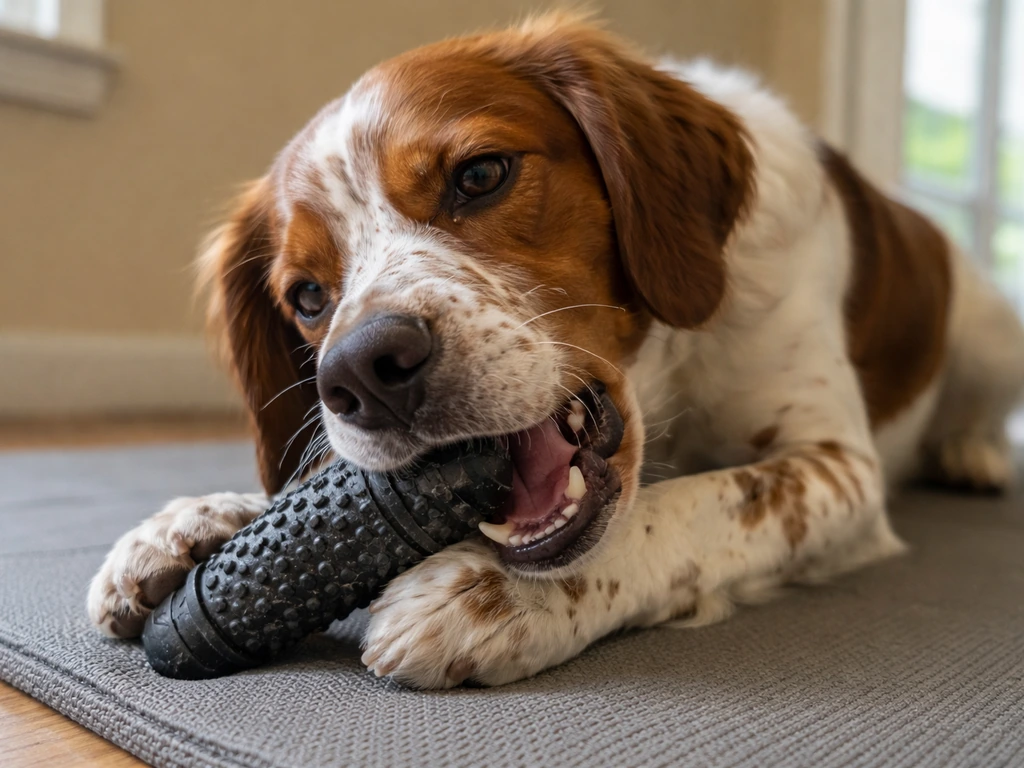
A bird dog that isn't working is often a dog that's chewing something it shouldn't. Very hard rubber toys are safer and last longer than soft plush or latex options, and the KONG Classic is the standard recommendation for a reason: it handles aggressive chewing, can be stuffed and frozen for extended engagement, and survives real-world use. Nylon chews from brands like Nylabone or Benebone are solid options for dogs that need sustained gnawing, but both manufacturers make this point clearly: match the toy to the dog's size and chew strength, and monitor for wear. A cracked or heavily worn nylon chew should be retired. Puppy teeth are easily damaged, so softer rubber options are better until adult teeth are fully in, typically around six months.
Tug toys
A good tug toy is one of the fastest ways to build drive and handler engagement. For bird dogs, a canvas or fleece tug that you can also throw short distances doubles as a retrieve motivator. The goal with tug for a bird dog isn't just burning energy, it's teaching the dog that engaging with you is the most rewarding thing in the environment. That pays dividends in field training when you need a reliable recall. Just keep sessions short and end them before the dog loses interest, so the toy stays high-value.
Puzzle and food-dispensing toys
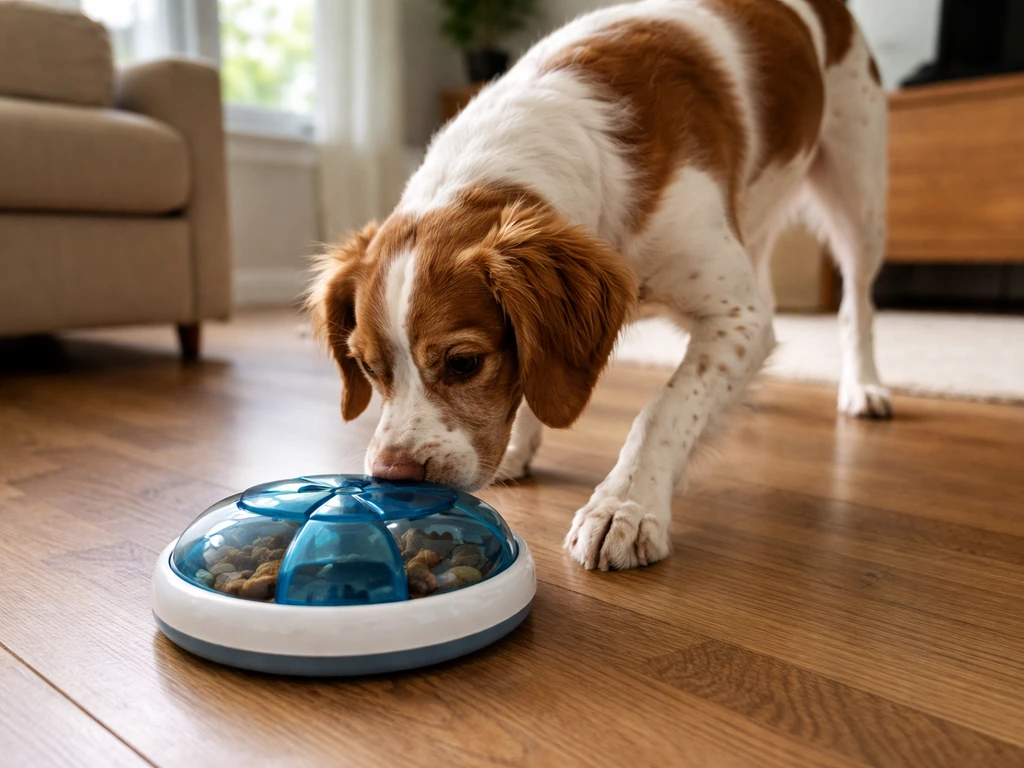
These are underused for bird dogs, and they shouldn't be. Interactive food toys require dogs to think, move, and solve a problem to get a reward, which is exactly the kind of engagement that keeps a smart working dog sane on rest days. A KONG stuffed with kibble and frozen, or a snuffle mat for scattering part of a meal, gives a dog something to problem-solve. This isn't a substitute for field work, but it's a meaningful outlet between training days.
Scent and 'find it' toys
Scent-keying is a skill that separates a trained bird dog from a dog that just chases. Scent injectors (like the Dokken scent injector sold by training supply retailers) let you add bird odor to any dummy, turning a standard retrieve into a nose-first exercise. Snuffle mats and scent work kits can also double as low-intensity mental work. If your dog is bred for upland hunting or waterfowl, nose work games will engage them more deeply than almost any other category of toy.
Matching toys to your dog's age and experience level
| Dog Type | Best Toy Categories | Notes |
|---|---|---|
| Puppy (under 6 months) | Soft rubber chews, small canvas dummy (2"x8"), snuffle mat | Avoid hard nylon and full-size dummies; puppy teeth damage easily |
| Adolescent (6-18 months) | Puppy-size dummy progressing to full-size, KONG, tug toy | Build retrieving habit before adding complexity or heavy chew toys |
| Adult working/high-drive dog | Full-size canvas and plastic dummies, scent dummies, tug, KONG | Rotate frequently; high-drive dogs get bored fast with the same toy |
| Adult companion/lower-drive dog | Puzzle toys, KONG, moderate tug | Focus more on mental engagement; fewer formal retrieves needed |
Puppies need more softness and less size. Puppy teeth are fragile, and an oversized dummy or a hard nylon chew can cause real damage. As the dog matures, you introduce more resistance, more weight, and more complexity. A finished retriever that's purely a companion dog still benefits from puzzle toys and occasional retrieve games, the drives don't disappear just because the dog isn't hunting. In general, plan for multiple toy types and rotate them so your bird dog does not get bored or over-fixate on one item how many toys should a bird have.
How to pick a safe toy: size, materials, and what to avoid
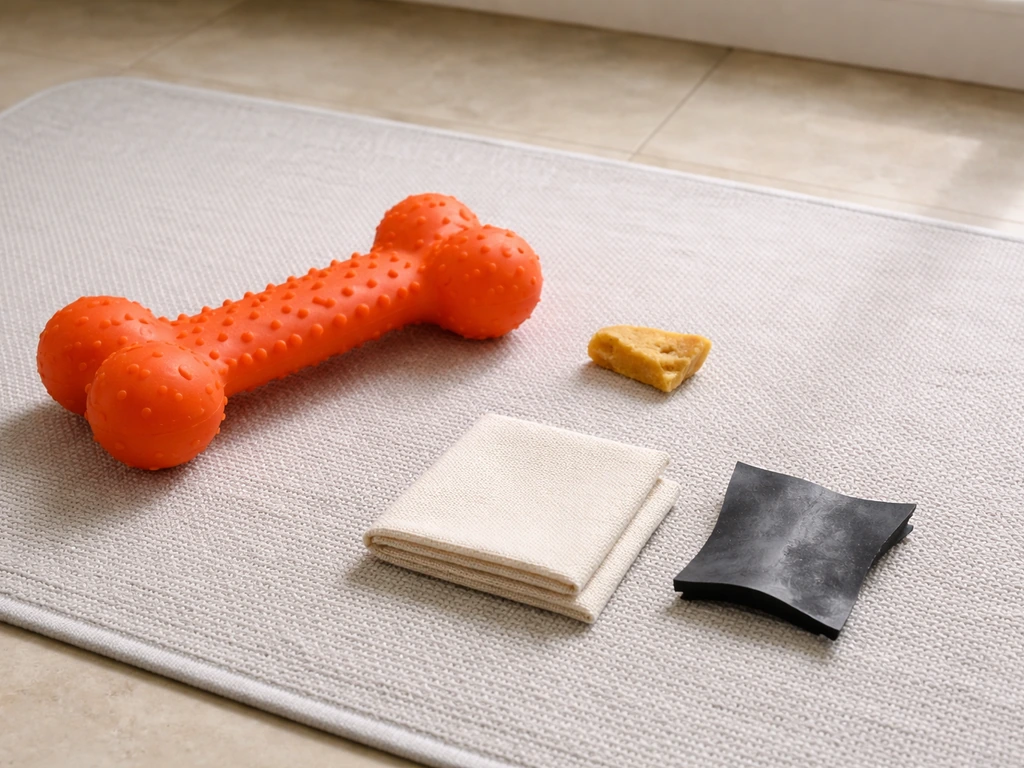
Safety selection comes down to four factors: size, material hardness, construction quality, and supervision. Getting any one of these wrong can turn a training tool into a veterinary emergency.
- Size: The toy should not be small enough to fit entirely in the dog's mouth. Inappropriately small chews can be swallowed whole, causing choking or intestinal blockage. Always size up if you're unsure.
- Material hardness: Very hard rubber outlasts soft rubber and is safer for aggressive chewers. Avoid toys that splinter, crack into sharp shards, or compress completely flat under pressure.
- Construction: Look for toys without small attached parts (squeakers, eyes, decorative elements) that can be chewed off and swallowed. Single-piece or stitched-closed designs are more durable.
- Labels and manufacturer guidance: Read the size and chew-strength recommendations from the manufacturer. Nylabone and Benebone both publish selection guides that match dog weight and chew behavior to specific products. These aren't marketing fluff — they're useful.
- Supervision: No toy is 100 percent safe unsupervised, especially for a determined chewer. If your dog is known to destroy toys, keep sessions supervised until you know how they interact with a new toy.
If your dog bites off and swallows a piece of any chew, contact your vet immediately. That's not an overreaction, intestinal blockages can become life-threatening fast.
Using toys as training tools: recall, steadiness, and fetch-to-hand
Building recall with a retrieve
One of the cleanest ways to build a reliable recall is to tie it to a retrieve. Throw a dummy or ball, and as your dog turns to run back to you, say 'Come' in a calm, positive tone. When they reach you, reward the complete return, meaning all four paws in, delivered to your hand, not dropped at your feet. The AKC is clear that the handler should be able to take the object directly, and that's the standard to train toward. If your dog is reluctant to give the toy back, switch it out for a second toy or a treat to keep the return pattern successful without a struggle. Avoid making the recall a chase or a game of keep-away, that pattern is very easy to accidentally condition and very hard to untrain later.
Teaching steadiness with a toy
Steadiness, the dog waiting calmly until released before going for the retrieve, should be woven into training from early on and built progressively throughout the dog's life, not introduced all at once as a correction. Start by asking your dog to hold a toy in their mouth without dropping it. Once they're consistently holding for a couple of seconds, add a verbal cue like 'Hold.' Build duration slowly. When introducing the release, use a clear release word that signals the dog is allowed to move, this creates a distinct on/off switch that matters enormously in the field. Avoid forceful restraints when conditioning steadiness on a retrieve. Physical force at this stage creates anxiety and resistance, not reliable behavior.
Progressing retrieve complexity
Once your dog has a reliable single-mark retrieve, meaning they go out, pick up the dummy cleanly, and return to hand, you can begin introducing more difficult scenarios: longer throws, angled retrieves, and eventually double marks. Don't rush this progression. A dog that's solid on short, simple retrieves before advancing will be more reliable than one pushed too fast into complex situations. The same principle applies to scent work: add scent dummies after the retrieve mechanics are clean, not before.
One thing worth noting: there's a common tendency to rely on food treats as the primary reward during retrieve and recall training. For a bird dog being developed for field work, this can create a pattern where the dog is working for the cookie rather than for the retrieve itself. The toy and the retrieve should be the reward whenever possible. Food has its place in early shaping, but the end goal is a dog that finds the retrieve intrinsically satisfying.
Cleaning, rotating, and knowing when to retire a toy
Toys for working dogs get dirty fast. A canvas dummy dragged through mud and water needs regular cleaning or it becomes a bacterial problem. For rubber toys like the KONG, blank" rel="noopener noreferrer">hand washing with warm soapy water and air drying is the standard approach. Avoid putting rubber toys through a drying heat cycle in a dryer or leaving them near a heat source, excess heat degrades the rubber and shortens the toy's life significantly. If you stuff and freeze KONGs in advance, you can have extras ready to rotate in while one is being cleaned.
Rotation is also a training strategy, not just a housekeeping habit. Rotating toys regularly keeps play sessions fresh and maintains the toy's value as a motivator. A dummy that's always available is less exciting than one that comes out only for training. The American Humane Society makes this point directly: rotating interactive toys is one of the simplest ways to sustain engagement over time.
For knowing when to retire a toy, look for these specific signs and act on them immediately rather than waiting:
- Chunks or pieces missing from the toy that the dog may have swallowed
- Deep cracks or splitting in rubber or nylon chews
- Canvas dummies with torn seams that expose the filling
- Tug toys with fraying that can shed loose fibers
- Any toy that has become small enough to fit fully in the dog's mouth due to wear
- Nylon or hard chews that are worn down to less than the dog can grip safely
The mistakes people make buying toys for bird dogs
Most of the problems I see come down to a short list of avoidable errors. These aren't corner cases, they're the standard first-purchase experience for a lot of bird-dog owners. If you want a quick baseline on how much are bird toys, budgeting for rotation is part of the same avoidable mistake list.
- Buying the wrong size: This is the most dangerous mistake. Too small means a choking hazard; too large means the dog can't retrieve comfortably and loses interest. Match the toy to the dog's current size, not their expected adult size.
- Choosing the wrong material for the dog's chew style: A soft plush toy given to a power chewer is destroyed in minutes and potentially ingested. Know whether your dog is a light chewer, moderate chewer, or destroyer, and buy accordingly.
- No rotation: Leaving the same toy out every day tanks its value as a training reward. Toy motivation is one of the most important tools you have, and it's easy to burn it out by overexposure.
- Skipping the dummy entirely: Some owners buy fetch balls and standard pet-store toys without ever getting a canvas or rubber training dummy. The retrieve habits you build with those toys don't transfer as cleanly to field work as habits built with proper dummies.
- Using toys that don't match the dog's drive: A low-drive companion dog won't find a hard canvas dummy exciting. A high-drive working dog will be bored by a gentle puzzle feeder in five minutes. Match the toy's challenge level and prey-like qualities to what actually engages your specific dog.
- Conditioning bad patterns early and correcting later: The toys and rewards you use in the first months of training set patterns that are either useful or need to be trained out. Introducing a retrieve toy poorly — letting the dog chase it without returning, for example — creates habits that require real work to fix.
If you're starting fresh with a puppy, the sibling topics on best bird dog puppy toys and how many toys a bird should have (adapted for dogs: how many toys to have in rotation) are worth reading alongside this guide. The cleaning and replacement schedule ties directly to what's covered here, and understanding toy cost over time helps budget for the rotation approach properly.
Start with a puppy-size canvas dummy, a KONG appropriate for your dog's weight, and one tug toy. If you're building your first set, focus on the best bird dog puppy toys for size, softness, and safe chew options. Add a scent dummy once retrieving mechanics are solid. Rotate what's available, clean after every muddy session, and retire toys the moment you see serious wear. That's the whole system. It's not complicated, but it does require paying attention, which, honestly, is the best thing you can do for a bird dog in any part of their training. If you are looking to make your own bird toys coupon code, check the retailer’s current promotions and coupon guidelines before you buy. For more specifics on selecting the right items, see our guide on what to give bird dogs at different stages.
FAQ
Can I use a tennis ball or any random dog toy for retrieving practice?
Yes, but only if it is supervised and not oversized. If you use a ball or bumper for retrieving practice, pick a size that the dog can carry comfortably without forcing a bigger, heavier item than their mouth can manage. For many puppies, a small canvas dummy is a safer first step than a hard plastic ball because it is easier to hold and control during early return-to-hand shaping.
What should I do if my bird dog ignores toys and starts chewing things they shouldn't?
If your dog is stealing and shredding household items, treat toys as proactive management, not a replacement for training. Start by offering a safe, matching chew or retrieve option before the dog gets bored or frustrated, then practice a short retrieve-to-hand session to make the toy the clear “win.” Once steadiness and return are established, you can taper free access and rely more on “retrieve is the reward” patterns.
How do I rotate toys without accidentally making my dog lose interest?
Rotate by “availability,” not by removing everything at once. A common mistake is cycling toys too aggressively so the dog loses motivation. Instead, keep 2 to 3 items per week in rotation, add one new or freshly cleaned item occasionally, and remove a toy only after it shows serious wear or damage.
What are the specific “replace now” signs for training dummies and chew toys?
Treat any chewed plastic pieces as a safety issue. Even if a toy still looks intact, small cracks, missing chunks, frayed edges, or looseness in seams mean it should be replaced. For training dummies, also check the stitching where handles attach, since that is where bird dogs often get leverage to start chewing.
My dog only responds to recall when food is in my hand. How do I shift reward back to the retrieve toy?
For a high-drive dog, a fast way to avoid failure is to match toy reward size to the stage of training. Use the toy for recall and retrieve when the dog is already capable of doing it cleanly, and use food only to help initial shaping. If your dog only works when treats are visible, reduce treat frequency gradually and let the toy be the primary payoff for correct return and delivery.
When should I add scent work or scent-keyed retrieves, and what if my dog gets distracted?
Don’t introduce scent injectors until the retrieve mechanics are consistent, because scent can distract a dog that is still learning “pick up, carry, deliver.” Once the dog returns to hand reliably on unscented dummies, start scent in small sessions and keep the throw distance modest so success is likely.
My dog grabs a tug toy and starts destroying it instead of playing. Is that normal?
You generally should not. If a toy is actively being destroyed, prolonging the session often teaches the dog that destruction is the “way to win.” Remove the toy when it starts being used for aggressive chewing, then redirect to a more appropriate hardness or size. For ongoing chewing needs, choose a tougher rubber or properly sized chew toy and supervise during use.
Is it okay to freeze a KONG for long-lasting downtime?
Yes, but keep it structured. Frozen stuffing is best treated like a short-duration engagement, with a clear start and end. Offer it when you want calm downtime, and stop the session when the dog is done rather than letting them guard or obsess over it for hours.
Can I use the best toys for bird dogs if I have more than one dog at home?
If you have multiple dogs, the biggest risk is competition over one high-value item. Use one-to-one sessions or provide separate items at the same time, sized appropriately for each dog. Don’t allow trading or guarding behavior during toy play, and separate dogs if you see resource-guarding around dummies or chews.