The best air purifiers for bird dander are true-HEPA machines sized correctly for your room, running continuously near the cage. That's the short answer. If you already own a purifier and still feel like your sinuses are staging a protest every morning, the problem is almost certainly one of three things: wrong filter type, wrong room size rating, or wrong placement. This guide walks through all of it so you can fix the issue today, not after another round of trial and error.
Best Air Purifiers for Bird Dander: 2026 Buyer Guide

Marcus Chen
21 Apr 2026
Why bird dander is so hard on indoor air

Bird dander isn't like cat or dog dander. It's finer, lighter, and stays airborne longer. Parrots, cockatiels, cockatoos, and African greys produce a powdery down called 'powder down' that coats feathers and breaks off constantly during preening. African greys and cockatoos are especially heavy producers. This dust is made up of particles that can easily fall below 1 micron in size, which means standard furnace filters and cheap air purifiers barely touch it.
The real problem is the physics. Lightweight particles like powder down and fine feather fragments don't settle quickly. They circulate in air currents for hours, land on surfaces, and get kicked back up every time your bird flaps, you walk by the cage, or a fan runs. Even birds that aren't heavy powder producers, like budgies or lovebirds, shed dander and feather particles that accumulate fast in a closed room. Owners with allergies or asthma notice this immediately, but even people without sensitivities end up with a dusty film on nearby surfaces within days.
One thing the EPA is clear about: air filtration is a supplement to source control and ventilation, not a replacement. You still need to clean the cage regularly, keep perches clear of dried droppings, and get fresh air moving when possible. A purifier running in a room where the cage hasn't been cleaned in a week is fighting a losing battle. But with good baseline hygiene, a properly sized true-HEPA purifier genuinely transforms air quality in a bird room.
What to look for: HEPA vs other filter types
True HEPA is non-negotiable for bird dander. By definition, a true HEPA filter must capture at least 99.97% of particles at 0.3 microns, which is actually the hardest particle size to trap (called the most penetrating particle size, or MPPS). Particles both larger and smaller than 0.3 microns are captured even more efficiently, so a true HEPA filter handles bird dander, fine feather fragments, and airborne allergens extremely well. ASHRAE notes the MPPS may be slightly smaller than 0.3 microns in some cases, but the 0.3-micron standard is used as the worst-case test point, so you're covered either way.
Watch out for marketing language. 'HEPA-type,' 'HEPA-style,' and 'HEPA-like' filters are not true HEPA. They typically capture far less than 99.97% efficiency and will leave fine dander circulating in your air. If the packaging doesn't say 'True HEPA' or cite 99.97% at 0.3 microns, keep looking.
A multi-stage filtration setup is the ideal configuration for a bird household. You want a pre-filter to catch large feathers and visible dander clumps (this also extends HEPA filter life significantly), a true HEPA layer for fine particles, and optionally an activated carbon layer if you're dealing with odors from cage droppings or bird food. Carbon filtration isn't essential for dander reduction specifically, but it's a nice extra if your bird room has any smell issues.
What you absolutely want to avoid are ionizers, ozone generators, and any purifier marketed as an 'air revitalizer' or 'plasma cluster' device as your primary filtration method. The EPA and California Air Resources Board have both flagged ozone-generating air cleaners as a health risk. The U.S. EPA explains that ozone generators sold as air cleaners intentionally produce ozone, which is a lung irritant, and that they are not appropriate for occupied indoor spaces ozone-generating air cleaners as a health risk. The Vermont Department of Health puts it plainly: ozone levels high enough to kill mold and bacteria are also high enough to harm the people and animals breathing the air. Birds have incredibly sensitive respiratory systems, far more sensitive than humans, so any ozone introduction in their space is genuinely dangerous. Stick to mechanical filtration only.
| Filter Type | Captures Bird Dander? | Safe for Birds? | Worth Buying? |
|---|---|---|---|
| True HEPA (99.97% @ 0.3µm) | Yes, highly effective | Yes | Absolutely |
| HEPA-type / HEPA-style | Partially, not reliable | Yes | No, skip it |
| Activated carbon only | No (handles odors, not particles) | Yes | Only as an add-on layer |
| Ionizer / Electrostatic | Partially, inconsistent | Risky (some produce ozone) | No |
| Ozone generator | No (not mechanical filtration) | Dangerous for birds | Never |
Best air purifiers for bird dander: top picks and how to choose
Rather than listing every model available, I'll break this down by room size and budget, because the 'best' purifier for a small bedroom with one cockatiel is completely different from what you need in a large living room housing a cockatoo. If you're trying to narrow it down to the best air filters for bird rooms, focus first on true HEPA filtration with the right CADR for your space. If you want the quickest way to pick the best air purifier for bird owners, start by matching CADR to your room size and choosing a true HEPA model with a pre-filter. If you want the best air purifier for bird dust, prioritize a true HEPA model with a properly sized CADR and an efficient pre-filter to capture the heaviest particles first best air purifier for bird owners. All recommendations below use true HEPA filtration with a pre-filter stage and have independently verified CADR ratings through AHAM or ENERGY STAR certification.
For small rooms (up to 200 sq ft)
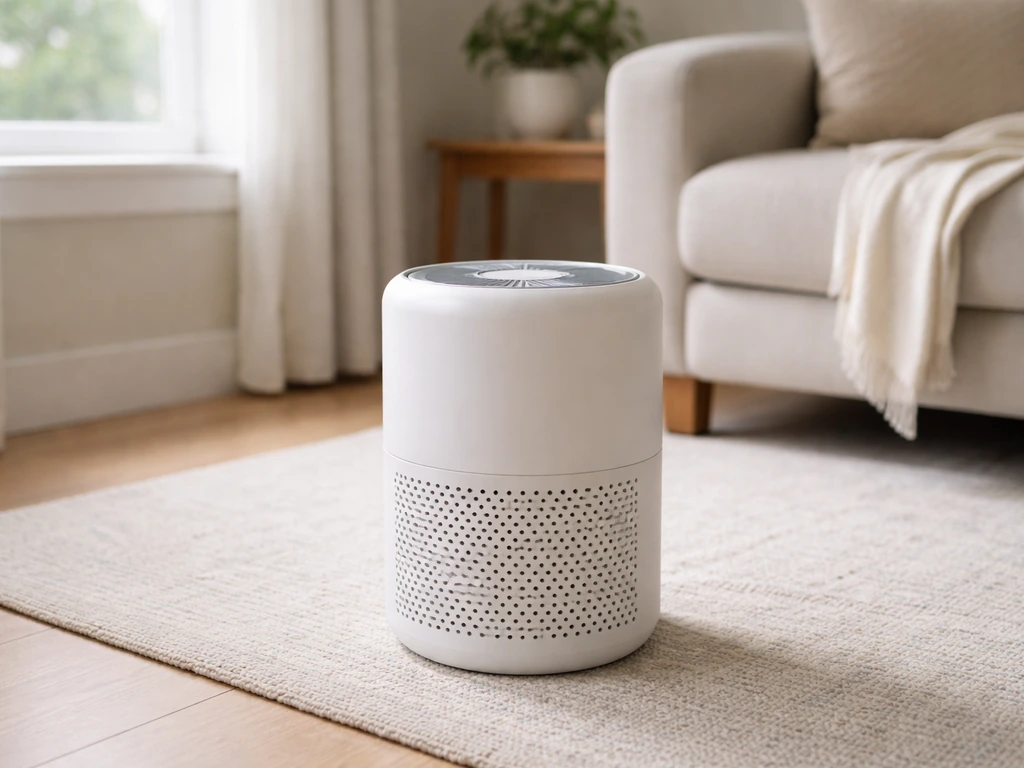
The Levoit Core 300S and the Winix 5500-2 (in smaller settings) are solid picks in this category. The Levoit Core 300S has a true HEPA filter, a pre-filter, and a compact footprint that fits easily near a cage without blocking traffic. It's quiet enough for a bedroom, which matters if your bird sleeps in the same room. For this room size, look for a dust CADR of at least 100-120 cfm.
For medium rooms (200 to 400 sq ft)
The Coway AP-1512HH (the 'Mighty') is a perennial recommendation for good reason: independently verified CADR, three-stage filtration including a washable pre-filter, and a low purchase price. The Winix 5500-2 also fits here well, adding a carbon layer for odor control. For this range, aim for a dust CADR of at least 180-200 cfm. Both units have been AHAM Verifide certified, which means an independent lab verified that the CADR claims on the box are accurate.
For large rooms (400 to 800 sq ft)
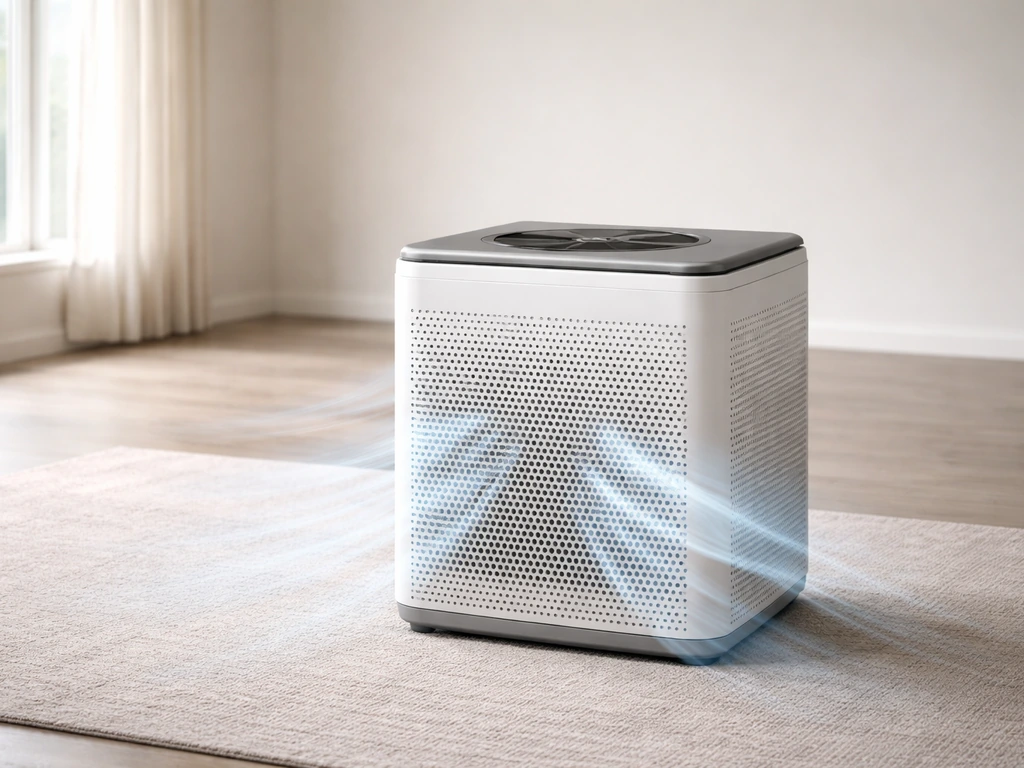
The Coway Airmega 400 is a strong choice here. It has a verified high dust CADR, dual-fan system, and a washable pre-filter that handles heavy feather loads well. The Blueair Blue Pure 211+ is another option with a high CADR and simple filter design, though its carbon layer is less robust than some alternatives. For rooms in this size range, look for dust CADR values of 250 cfm or higher, and seriously consider running two units rather than one oversized machine.
How to choose between them
Budget first: if you're under $100, the Coway Mighty is the answer for most medium rooms. Between $100 and $200, the Winix 5500-2 adds carbon filtration and is worth the step up if odor is also a concern. Above $200, the Airmega 400 handles larger spaces well and the higher-quality pre-filter makes a noticeable difference when you have a heavy powder-down bird like a cockatoo or African grey. If your primary bird is a budgie or small parakeet in a modest-sized room, the Core 300S does the job without the expense.
CADR, room size, and where to put the thing
CADR stands for Clean Air Delivery Rate, and it's the single most useful spec to look at when buying a purifier. It measures how quickly the unit delivers clean (filtered) air in cubic feet per minute, tested separately for dust, smoke, and pollen. For bird dander, focus on the dust CADR number. A common rule of thumb from EPA and AHAM guidance is to match the CADR to roughly two-thirds of your room's square footage, assuming standard 8-foot ceilings. So a 300 sq ft room needs a dust CADR of at least 200 cfm.
When you're shopping, look for AHAM Verifide certification or ENERGY STAR listing. AHAM's independent lab testing verifies that the CADR numbers on the box are real, not manufacturer claims from internal testing. An ENERGY STAR-certified unit also meets minimum efficiency-per-watt requirements, which helps with running costs over time.
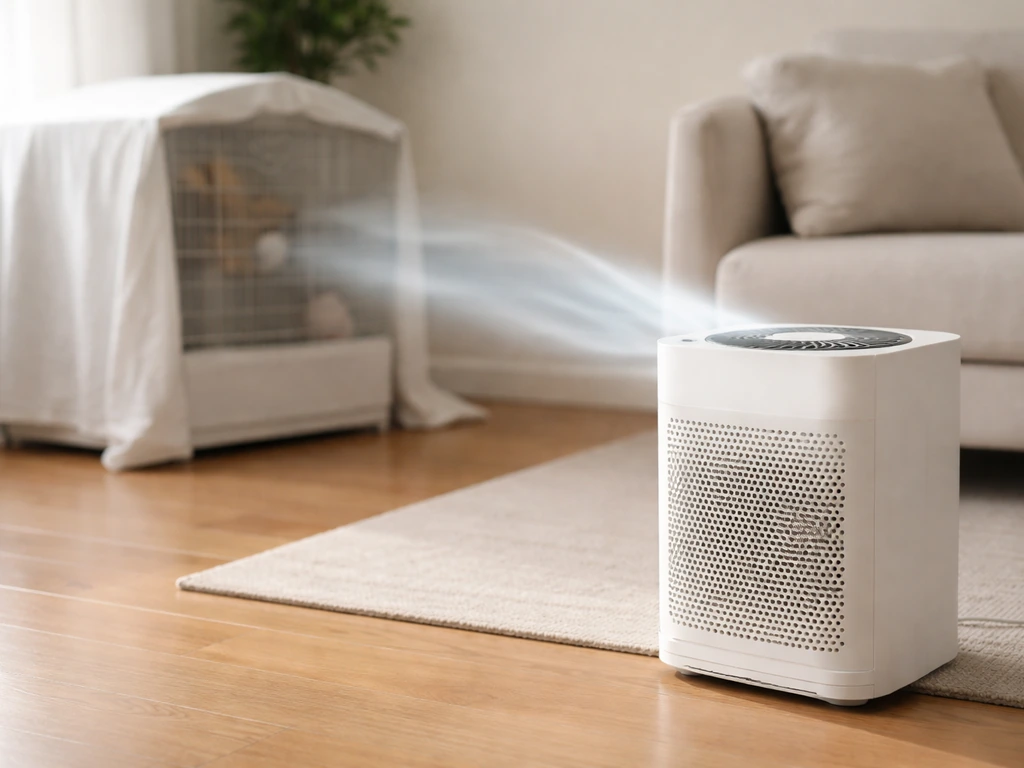
For bird rooms specifically, placement matters more than most guides let on. You want the purifier within about 6 to 10 feet of the cage, placed so that air flows across the main dander source rather than away from it. Keep it at least 12 inches from walls and furniture so intake and exhaust vents aren't restricted. Putting it in a corner facing a wall is one of the most common mistakes I see, and it cuts effective airflow significantly. If you have a large open-plan area with the cage in one zone, consider running two medium units rather than one large one, placing each near its own dander source.
Run the purifier on a continuous setting, not timed. Bird dander is produced around the clock during preening, movement, and even sleep. Turning the unit off at night, or running it only a few hours a day, lets particles accumulate faster than the purifier can catch up. Most units have a low/sleep mode that's quiet enough to run overnight without issue.
Maintenance costs and filter lifespan
This is where a lot of people get surprised. The upfront cost of the unit is just the beginning. In a bird household, you will replace filters faster than the manufacturer's general estimate because you're running the unit continuously and the air load is heavier than average.
Typical HEPA filter replacement for most mid-range units runs every 6 to 12 months in a normal household. In a bird room with a heavy powder-down species, plan for every 4 to 8 months. A replacement HEPA filter usually costs $20 to $60 depending on the unit. Pre-filters, if washable, should be cleaned every 2 to 4 weeks in a bird room. If they're disposable, budget for monthly replacement.
Before you buy a unit, look up the price of replacement filters and check they're readily available. Some budget purifiers have cheap upfront costs but use proprietary filters that are expensive or backordered. The Coway Mighty, Winix 5500-2, and Airmega 400 all have widely available, reasonably priced filters, which is part of why they're consistently recommended.
| Unit | Approx. HEPA Replacement Cost | Estimated Replacement Interval (Bird Room) | Washable Pre-Filter? |
|---|---|---|---|
| Levoit Core 300S | $15-$25 | Every 4-6 months | No (vacuum clean only) |
| Coway AP-1512HH (Mighty) | $20-$30 | Every 6-8 months | Yes |
| Winix 5500-2 | $30-$45 | Every 6-8 months | Yes |
| Coway Airmega 400 | $50-$65 | Every 6-12 months | Yes |
| Blueair Blue Pure 211+ | $40-$55 | Every 6-9 months | Yes (fabric pre-filter) |
Noise, power use, and keeping your bird safe
Noise is a real consideration, especially if your bird's cage is in the bedroom or a quiet area. Most true-HEPA units run between 25 and 55 decibels depending on fan speed. On sleep or low mode, the Coway Mighty and Levoit Core 300S sit around 24 to 26 dB, which is comparable to a whisper and won't disturb a sleeping bird or a light-sleeping owner. Higher-CADR units like the Airmega 400 are louder on high, around 43 to 52 dB, but perfectly manageable on medium.
Power consumption for most residential HEPA purifiers runs between 15 and 60 watts on normal settings. Running a 40-watt unit 24 hours a day costs roughly $3 to $4 per month at average US electricity rates, so continuous operation is affordable for most households. ENERGY STAR-certified units are tested for CADR-per-watt efficiency, so if energy cost is a concern, prioritize those. ENERGY STAR explains that room air cleaner energy efficiency is evaluated using an Integrated Energy Factor based on CADR-to-watt efficiency blank" rel="noopener noreferrer">ENERGY STAR-certified units are tested for CADR-per-watt efficiency.
Bird safety comes down to two firm rules. First, no ozone-generating technology anywhere near the bird. Second, avoid any purifier that uses significant UV-C or plasma ionization as its primary mechanism, as the byproducts are not worth the risk given how sensitive avian respiratory systems are. Stick to units that work entirely through mechanical HEPA filtration and pre-filtration, with optional passive carbon. On placement: don't position the exhaust directly blowing toward the cage. Airflow from the purifier itself is fine in the room, but a direct strong draft aimed at a bird for hours at a time can cause stress and chilling.
Still seeing dust after buying a purifier? Here's what's actually wrong
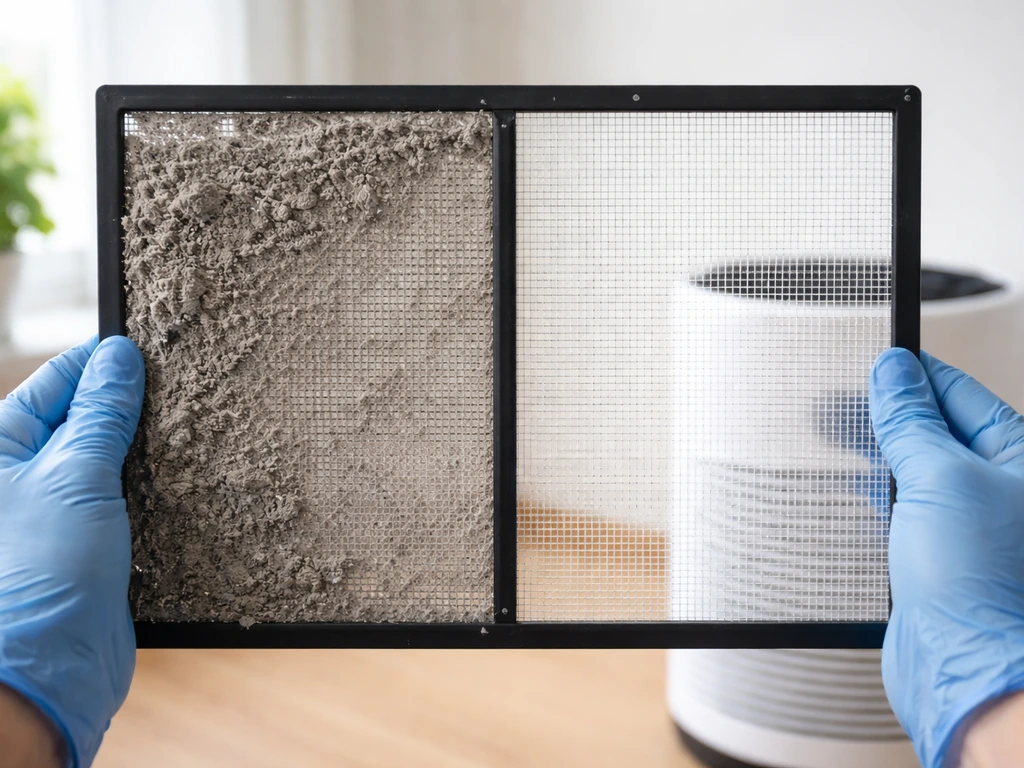
The most common reason a purifier doesn't seem to be working is that it's undersized for the space. A unit rated for 150 sq ft running in a 350 sq ft room is constantly overwhelmed. Check your CADR against your actual room dimensions, not the room you wish it were cleaning.
The second most common issue is a clogged pre-filter. When the pre-filter is saturated with feathers and dander, airflow through the HEPA layer drops dramatically and the unit moves much less air than its CADR rating implies. In a bird household you need to check and clean the pre-filter at least twice a month. If you're seeing a dusty film on surfaces near the cage within days of cleaning them, check the pre-filter first.
Third: placement. If the unit is in the corner of the room opposite the cage with a couch between them, it's not pulling dander-laden air efficiently. Move it closer to the source. The purifier needs to be in the same airflow zone as the cage to be effective.
Fourth: the purifier is running intermittently. Dander doesn't clock out. If you're running it on a 4-hours-on, 8-hours-off timer to save electricity, you're allowing hours of accumulation that the unit then has to fight through. Run it continuously on low or medium rather than periodically on high.
Finally, if you've addressed all of the above and still smell dusty air, it's worth checking whether your broader ventilation setup is working against you. A heavily sealed, poorly ventilated room recirculates particles even with a purifier running. Opening a window briefly to allow air exchange, vacuuming with a HEPA-equipped vacuum regularly, and wiping down cage bars and nearby surfaces are all part of the full picture. A purifier is one piece of a system, and it performs best when the rest of the environment is supporting it.
If you're also dealing with fine dust settling across floors and furniture in the bird room, a HEPA vacuum is a natural complement to your air purifier setup. If you're shopping for the best vacuum for bird owners, choose one with true HEPA filtration so you don't just stir the dander back into the air HEPA vacuum. And if you're optimizing the full environment for your bird, it's also worth thinking about airflow and temperature management alongside filtration, since bird rooms often need targeted heating solutions and humidity balancing, especially in winter months. If humidity is also part of the problem, consider pairing your air purifier setup with the best humidifier for a bird room best humidifier for bird room. Along with filtration, choosing the best bird heater can help keep your bird comfortable and maintain stable indoor conditions year-round.
Quick-reference checklist before you buy
- Filter type: must say 'True HEPA' or 99.97% at 0.3 microns. Reject anything labeled HEPA-type or HEPA-style.
- CADR: match dust CADR to at least two-thirds of your room's square footage. For a 300 sq ft room, that means 200+ cfm dust CADR.
- Certification: look for AHAM Verifide or ENERGY STAR certification to confirm CADR claims are independently tested.
- Pre-filter: washable is strongly preferred for bird households to manage filter replacement costs.
- No ozone or ionizer: avoid any unit that lists ozone generation, plasma ionization, or 'activated oxygen' as a feature.
- Replacement filter availability: check price and availability for the replacement HEPA filter before you buy the unit.
- Placement: position within 6-10 feet of the cage, at least 12 inches from walls, not aimed directly at the bird.
- Operation: run continuously on low or medium, not on a timer.
FAQ
How do I tell if the purifier is actually the right CADR for my bird room?
Use the dust CADR value (not smoke or pollen) and compare it to your room’s square footage using the two-thirds rule. If your room is unusually drafty or has a very large, high-shedding cage area, you may need closer to 1.0x of that guidance, or run two smaller units to avoid performance dips.
Should I run the purifier during cleaning and spraying disinfectants in the bird room?
Run it continuously, but avoid spraying aerosols or strong disinfectant mists into the air. If you must clean with sprays, let surfaces air out first, then run the purifier to recover lingering airborne particles, and keep cage birds away from any direct fumes.
Do I need activated carbon if my main issue is bird dander?
Not for the dander itself, since dander is handled by mechanical true-HEPA capture. Carbon can help with odors from droppings or foods, but if you choose between a stronger pre-filter and more carbon, prioritize the pre-filter and adequate dust CADR first.
What’s the best way to size a purifier for multiple birds or a bigger cage?
Think in terms of increased airborne load, not just room size. If you have heavy powder-down birds or multiple cages, upgrade dust CADR beyond the minimum guidance, or use two purifiers placed near separate dander sources to reduce how far particles must travel before filtration.
Is it okay to place the purifier farther than 6 to 10 feet from the cage?
Longer distances can still work, but you lose capture efficiency when air currents carry dander away from the intake. If you cannot place it closer, use a unit with higher dust CADR and avoid placing it behind doors or in areas where intake airflow is blocked by curtains, furniture, or clutter.
How often should I replace the HEPA filter if my pre-filter is clean?
Follow the tighter bird-room schedule, 4 to 8 months for heavy powder-down species, even if the pre-filter looks decent. HEPA layers can load with fine feather dust that does not become visible, so “looks clean” is not a reliable indicator in bird rooms.
Can a purifier reduce the dusty film on nearby surfaces, or is vacuuming still required?
A purifier reduces what stays airborne, but it cannot remove dust that has already settled. Use a true-HEPA vacuum for floors and upholstery and wipe cage-adjacent surfaces regularly, because the purifier cannot prevent re-entrainment when you walk past or when settled dust is disturbed.
Are there signs my purifier’s pre-filter is clogged besides lower performance?
Yes. Look for increased dust re-suspension (more dust kicks up when you move around the cage), reduced airflow noise from the fan (some units sound different when restricted), and faster-than-usual dust accumulation near the cage despite the purifier running continuously.
Can I use a purifier with UV-C or plasma as a “secondary” feature?
For bird rooms, it’s safer to avoid devices where UV-C or plasma is used as a primary mechanism or produces byproducts. If you cannot confirm it is fully mechanical HEPA-driven for filtration, choose a true-HEPA model with a pre-filter and optional carbon only.
Will a quieter low-speed mode still work, or do I need to run on high?
Low or sleep mode can work if it still provides enough dust CADR for your room. If you notice persistent dusty surfaces quickly, raise the fan speed and check CADR sizing, because the most common failure is undersizing or a restricted pre-filter, not fan speed alone.
What if I have an open-plan home, and the cage is in only one zone?
Avoid assuming a whole-home rating applies to the cage zone. Place the purifier near the cage and consider two medium units to match airflow zones. If the cage area is separated by curtains or partial walls, that separation can improve performance by limiting how quickly dander is dispersed.
Do I need to change my purifier placement if I rearrange furniture seasonally?
Yes. Seasonal changes can block intake or disrupt the airflow path across the cage area. After rearranging, confirm the purifier still has clear space around intake and exhaust, and if dust accumulation shifts, adjust the location back toward the dander source.
Next Article
Garden Bird Checklist: Wild Species, IDs, and Tracking Tips
Ready-to-use wild garden bird checklist with IDs, field marks, tracking tips, and a bird station setup for beginners.