You can build a genuinely useful tiny bird garden in a single weekend, even on a patio or balcony, as long as you get three things right: placement of food and water, a cleaning schedule you'll actually stick to, and a plan to keep birds safe from the hazards most beginners never think about. Whether you're trying to attract wild finches and sparrows or you want a compact outdoor setup for a small pet bird, the core principles are almost identical. Pick a spot, set up the right feeders and water source, add a little shelter, and stay on top of the maintenance. That's the whole game.
Tiny Bird Garden Tips: A Beginner Guide for Small Spaces
Marcus Chen
12 May 2026
Wild birds or pet birds: figure out which garden you're actually building
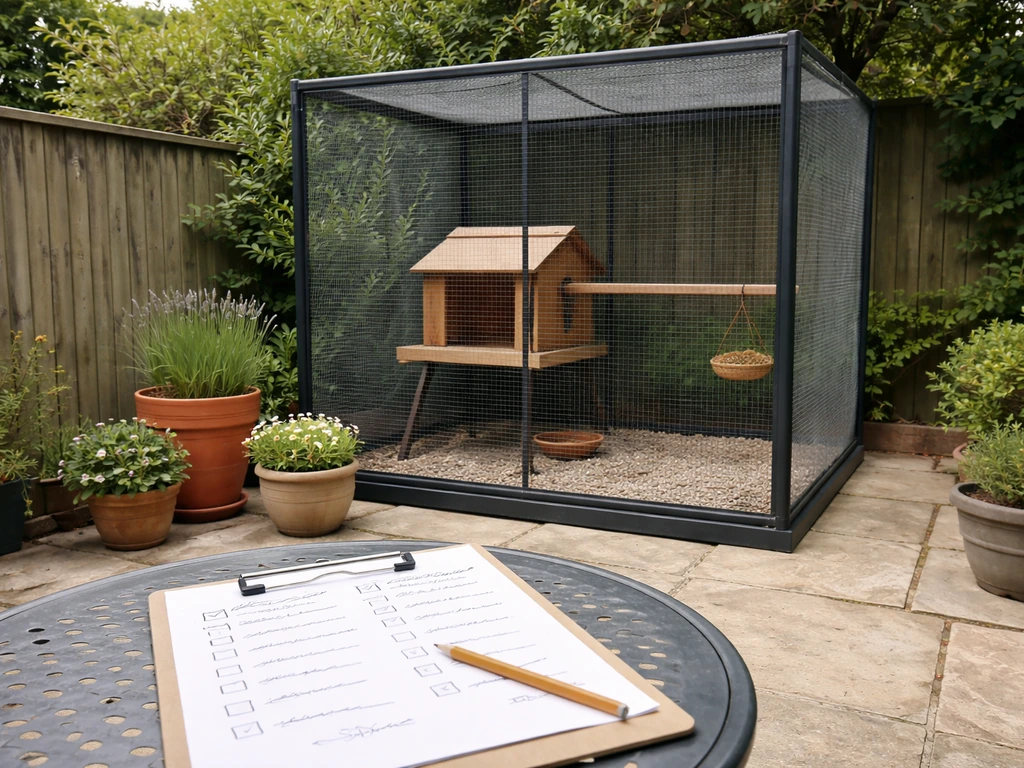
The phrase 'tiny bird garden' means genuinely different things depending on your situation, and getting this straight before you buy anything will save you money and frustration. If you're a first-time bird keeper setting up an outdoor enrichment space for a small pet bird like a budgie, canary, or finch, you need a controlled micro-environment: a secure aviary corner or screened patio area where your bird can get fresh air without escaping or being exposed to wild birds carrying disease. If you're a wild-bird enthusiast with a small yard or patio who wants to attract native species like hummingbirds, chickadees, and wrens, you're building a feeding and habitat station. Both are valid, both are rewarding, and the setups overlap a lot. But the safety rules differ in one key way: pet birds need to be physically separated from wild visitors because wild birds can carry pathogens your pet has no immunity to, and the CDC specifically flags that wild birds can spread disease to pets and people through shared spaces.
If you're in the pet-bird camp, your 'garden' is really a screened or netted outdoor zone where your bird gets sun and stimulation but has zero contact with wild birds or their droppings. If you're in the wild-bird-watching camp, you're setting up feeders, baths, and plantings to invite native birds in, and your job is to keep that space clean and safe for them. This article covers both, and most of the advice applies to either setup. I'll flag the spots where they diverge.
How to lay out a small space so it actually works
The biggest mistake beginners make in a tiny garden is cramming everything into one corner and then wondering why birds aren't using it. Tiny birds want clear sightlines, a quick exit route, and some separation between the 'eating zone' and the 'bathing zone.' Even in a 6x8 foot patio, you can create that sense of layers if you're intentional about placement.
Window distance: the rule that prevents injuries
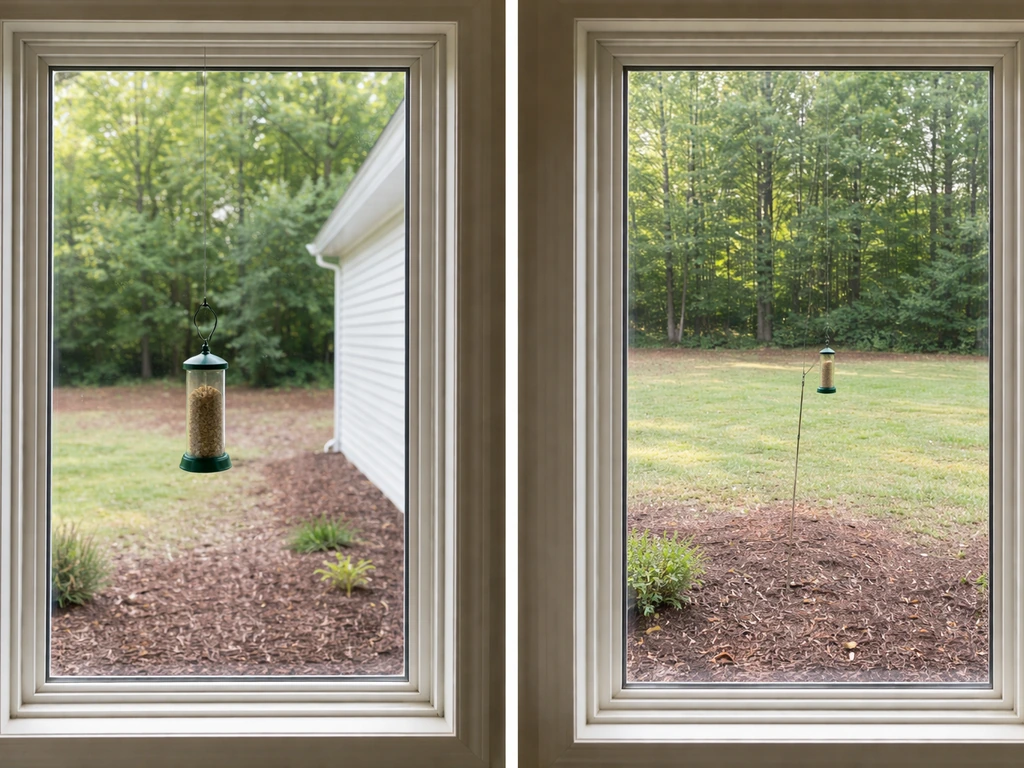
Place feeders either within 3 feet of a window or at least 30 feet away from one. This sounds counterintuitive but it's well-established guidance from the Washington Department of Fish and Wildlife and backed by US Fish and Wildlife Service data. A feeder placed 3 feet or less from a window doesn't give birds enough distance to build up dangerous momentum if they fly toward the glass. A feeder placed 30 feet or more away reduces the visual confusion that causes birds to mistake reflections for open sky. The dangerous zone is anywhere in between, roughly 5 to 25 feet from glass. On a small patio, 'within 3 feet of a window or sliding door' is usually the only realistic option, and that's perfectly fine.
Zoning your space: food, water, and shelter placement
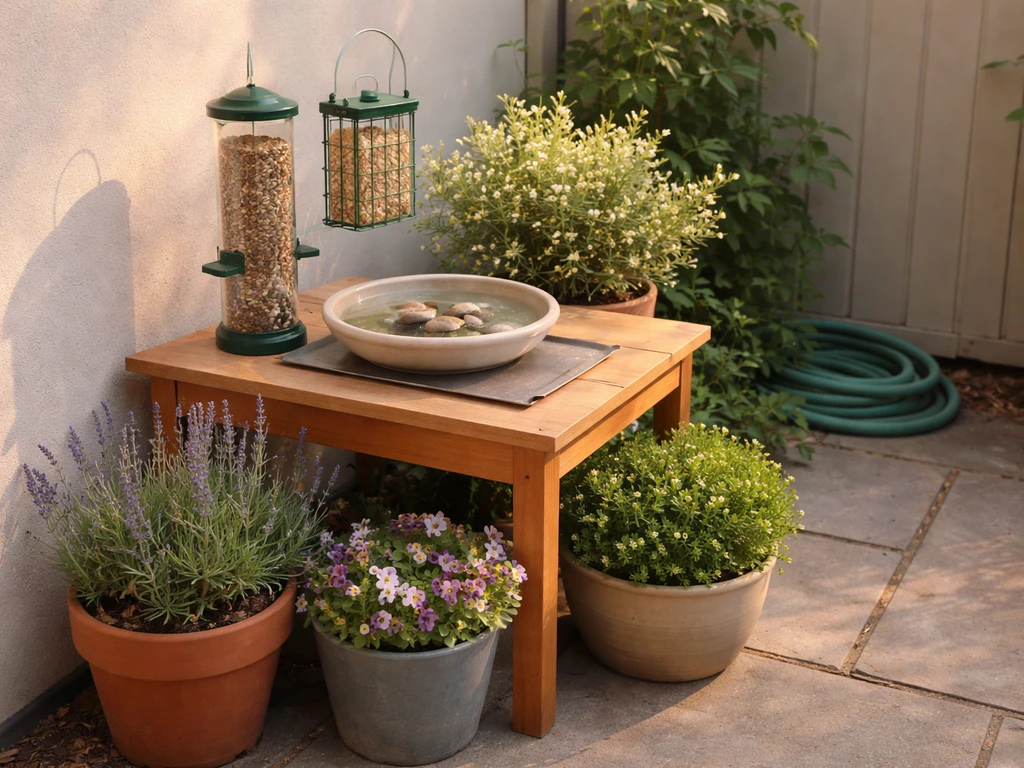
Set up your water source (birdbath or shallow dish) a few feet away from your feeders, not directly underneath them. Seed husks and droppings falling into water make it foul faster. Put your water in a slightly open spot where birds can see approaching threats. Shelter, whether that's a dense shrub, a hanging basket, or a small brush pile, should be within 10 feet of feeders so birds have somewhere to retreat quickly, but not so close that predators can use it as a launch pad. A perching spot, even just a simple dowel or branch section mounted on a post, gives birds a place to queue up and survey the feeder before landing.
| Element | Ideal Placement | Notes for Tiny Spaces |
|---|---|---|
| Seed feeder | Within 3 ft or 30+ ft from windows | Mount on a pole or hang from a bracket; tube feeders save horizontal space |
| Hummingbird feeder | Shaded spot, away from direct afternoon sun | Nectar spoils faster in heat; shade extends change intervals |
| Birdbath | Open area, a few feet from feeders | Shallow dish on a low stand works well on patios |
| Shelter/cover | Within 10 ft of feeder, denser planting or hanging basket | Dense plants or a brush bundle in a pot work for tiny yards |
| Perch/landing spot | Just beside or above feeder | A simple branch or dowel mounted nearby is enough |
Plants, feeders, and water sources that tiny birds actually use
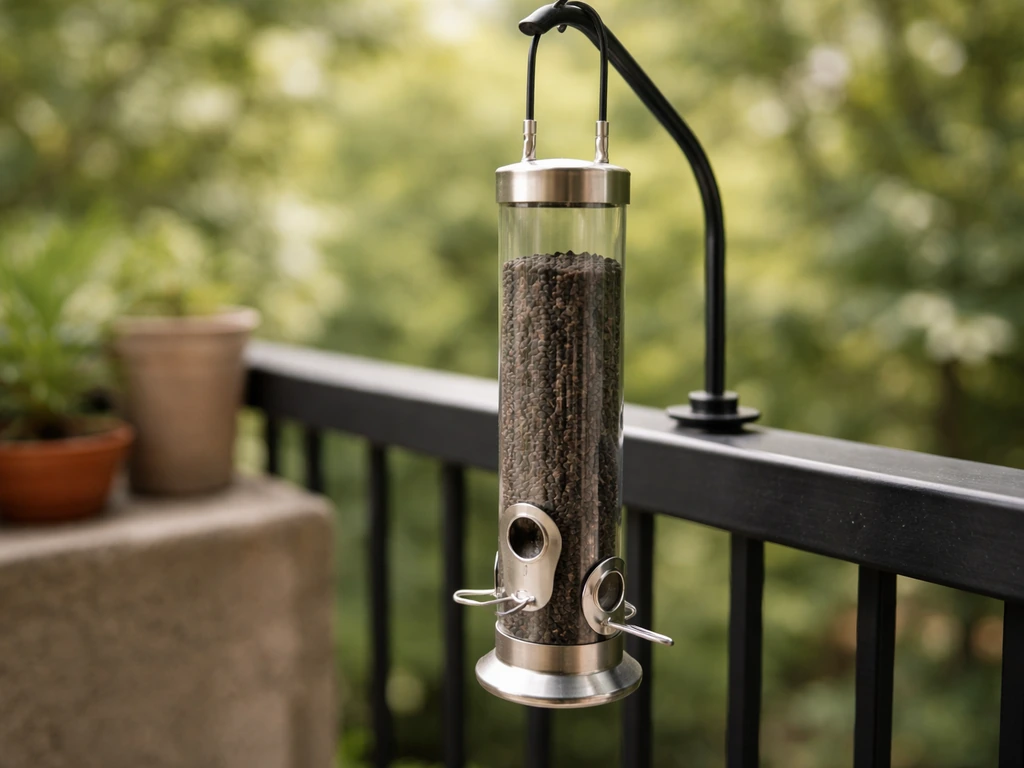
Feeder types worth your money
You don't need five feeders. For a tiny space, pick one or two that match the birds you're targeting. Tube feeders are ideal for small yards because they're compact, hold nyjer or mixed seed, and attract smaller birds like finches and chickadees while making it awkward for larger birds to hog. Hopper feeders have a roof and walls that protect seed from rain, which matters a lot in a small covered patio where you can't always monitor moisture. Platform feeders (a simple raised flat tray) are the easiest to clean and work well for a mix of ground-feeding species, but they need more frequent attention since seed sits exposed. If hummingbirds visit your area, a small red glass or plastic nectar feeder hung in partial shade is a must. Pick one with easily removable parts, because you'll be cleaning it every 3 to 5 days.
Water that tiny birds can actually use safely
Most birdbaths are too deep for tiny birds. Oklahoma Wildlife Conservation recommends a gradual slope with no more than 1 to 2 inches of depth at the center and a dry rim around the edge. A shallow terracotta plant saucer on a low stand is honestly perfect for small birds and costs almost nothing. Change the water daily if you can, and give the basin a proper scrub at least once a week. Stagnant water grows algae and mosquitoes fast in warm weather, and it's a disease vector you don't want near your feeders.
Container plants that pull double duty
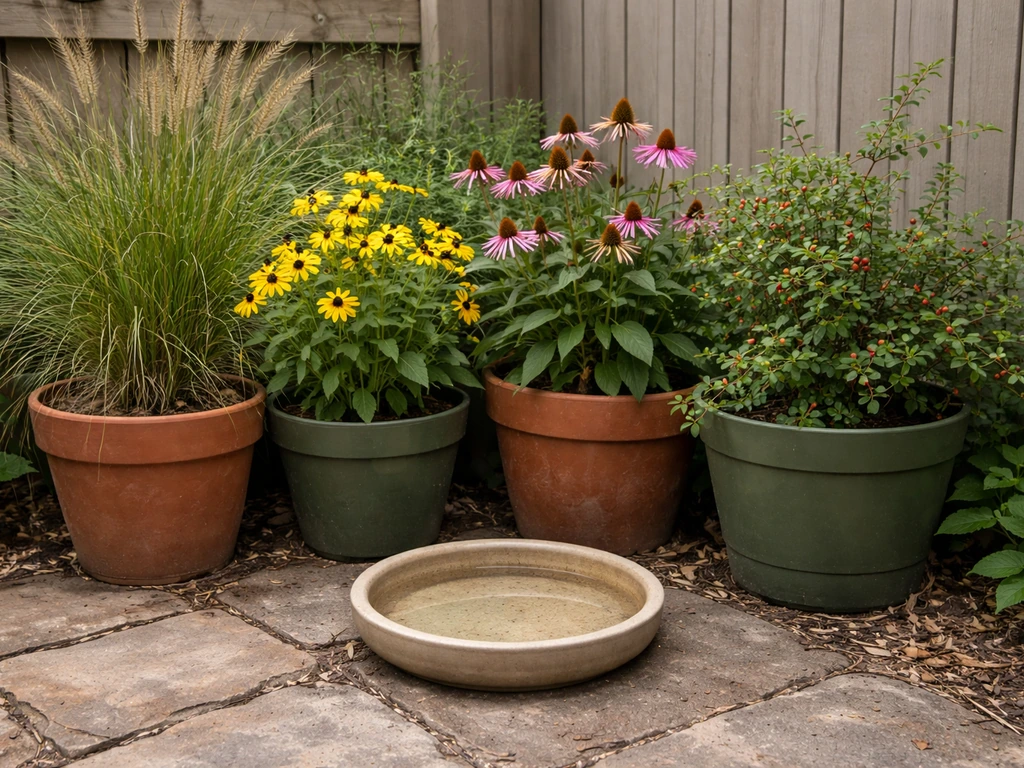
You don't need a big yard to use plants as habitat. In containers, native grasses, coneflowers, and black-eyed Susans provide seeds that small birds forage. Dense, thorny shrubs in pots (like a small rosebush or a compact barberry) give birds a quick-escape cover spot. Herbs like lavender and fennel attract insects, which many tiny birds rely on especially during nesting season. Avoid plants treated with systemic pesticides, since birds eating insects off treated foliage can be exposed to those chemicals. Check your plant labels before you buy.
The cleaning and monitoring routine that keeps everything healthy
This is the part most beginners underestimate. A dirty feeder doesn't just look bad. It spreads salmonella, aspergillus, and other pathogens that kill birds. Sticking to a schedule is far more important than buying premium equipment.
Your cleaning schedule by feeder type
| Feeder/Station Type | Cleaning Frequency | Method |
|---|---|---|
| Seed feeders (tube, hopper, platform) | Every 2 weeks minimum; more often in wet weather or if sick birds appear | Soak in diluted bleach solution (10%) for 10 minutes, rinse thoroughly, dry completely before refilling |
| Hummingbird feeders | Every 3–5 days (more often above 80°F) | Hot water and dish soap or 10% bleach solution; rinse extremely well; disassemble all parts |
| Birdbath | Fresh water daily; full scrub weekly | Scrub with a stiff brush; use diluted bleach or vinegar solution, rinse well |
| Ground beneath feeders | Weekly or more often | Rake up seed hulls, droppings, and wet seed waste to prevent mold and rodents |
A few things worth burning into memory: if you see cloudy water or black mold in a feeder, don't just top it off. Discard the contents, clean immediately, and let it dry fully before refilling. If you notice birds looking lethargic, fluffed up, or acting disoriented near your feeder, take the feeder down the same day and clean it before putting it back out. Project FeederWatch is clear on this: when disease is suspected, increase cleaning frequency right away, and consider pausing feeding entirely for a couple of weeks to let birds disperse.
What to watch for when you check on your birds
Daily monitoring doesn't take long. When you refill water and check feeders, spend a minute actually watching the birds. Healthy tiny birds are quick, alert, and constantly moving. Warning signs include sitting still on the ground, labored breathing, discharge around the eyes or beak, loss of feathers in patches, or unusual lethargy. If you keep pet birds outdoors, also watch for rapid breathing, tail-bobbing, or wheezing, which can signal air quality problems as much as illness. Keep a simple log if you want to track patterns over time, but even just paying attention daily will help you catch problems early.
Keeping birds busy and active in a small space
Tiny birds are active foragers. In the wild, they'd spend most of their waking hours searching for food, investigating textures, and interacting with their environment. A small garden can replicate that stimulation even with minimal space, but you have to be deliberate about it.
For wild birds, the best enrichment is variety in food presentation. Instead of one big feeder topped off every few days, try offering sunflower seeds in one location, nyjer in another, and a small platform with mealworms or crushed peanuts in a third. This creates a foraging circuit that keeps birds engaged and encourages multiple species. A dripper or small fountain in your birdbath adds sound and movement that attracts birds more reliably than a static water dish alone, and small solar-powered drippers are cheap and work well on a patio.
For pet birds using an outdoor space, foraging toys attached to the perch area, bundles of safe natural branches to chew and investigate, and rotating the arrangement of their space periodically all fight boredom. Finches and canaries especially benefit from having access to live grass, soft nesting material, and shallow bathing dishes since these are behaviors they'd express naturally. Don't underestimate the mental stimulation that just being outside in fresh air provides for pet birds. Even 30 to 60 minutes of supervised outdoor time in a secure screened area is genuinely enriching.
Safety: the hazards that catch beginners completely off guard
Air quality and chemical fumes are a bigger deal than most people realize
Birds have extremely sensitive respiratory systems. Non-stick cookware (Teflon and other PTFE-coated pans) releases toxic fluorinated gases when overheated or burned, and according to VCA Animal Hospitals and Texas A&M's veterinary lab, exposure causes difficult breathing, wheezing, gasping, weakness, and can be rapidly fatal in birds. If you ever cook with non-stick pans on a hot burner near an open window or door that connects to your bird's outdoor space, that's a serious risk. The same logic applies to aerosol sprays: air fresheners, hairspray, insecticides, cleaning sprays, and even scented candles can irritate or poison birds nearby. PetMD categorizes aerosol and fume poisoning as a genuine emergency for birds. Keep your bird's outdoor space well away from kitchen ventilation and never use sprays anywhere near them.
Predators, cats, and other outdoor threats
Cats are the single biggest threat to wild birds at garden feeders in most residential areas. Mounting feeders on baffled poles at least 5 feet off the ground and 10 feet from any structure a cat could jump from dramatically reduces predation risk. For pet birds in an outdoor enclosure, use hardware cloth (not chicken wire, which is too flimsy) and make sure the enclosure has a solid covered top. Hawks are opportunistic and will take small birds from open-top enclosures. Rodents are attracted by spilled seed under feeders, and they in turn attract snakes and larger predators, so keeping the ground beneath feeders clean is not just hygiene, it's a safety measure.
Disease risks: wild birds and pet birds don't mix
The CDC notes that bird hobbyists and enthusiasts may have elevated exposure risk to avian influenza compared to the general population, particularly through direct contact with infected birds. The US Fish and Wildlife Service is clear that standard backyard feeders are unlikely to meaningfully spread avian influenza among the species that typically visit them, but the core biosecurity principle still applies: keep pet birds physically separated from wild birds. Don't let your pet bird share any equipment, water, or perches with wild birds, and wash your hands after handling feeders, bird baths, or anything a wild bird has come into contact with before handling your pet bird.
Weather exposure in small outdoor spaces
Tiny birds overheat and chill faster than larger ones. If you're using an outdoor space for a pet bird, make sure at least half the enclosure is shaded during the hottest part of the afternoon, and bring birds inside if temperatures climb above 90°F or drop below the species-appropriate minimum. For wild bird gardens, providing shelter (dense plantings, a small brush pile, or a roosting box) gives birds somewhere to escape sudden rain or a cold snap. A covered feeder also protects seed from getting wet and spoiling quickly, which matters a lot in spring and fall.
Your first-week checklist and what to do next
Here's how to actually get started this week rather than spending another month reading and planning. Do the setup in order, and don't wait until you have everything perfect before you begin. If you want more structure, use these tiny bird garden codes as a quick checklist for placement, cleanliness, and safety.
- Day 1: Decide your primary goal (wild-bird garden or pet-bird outdoor space) and assess your available space, window positions, and sunlight patterns.
- Day 1–2: Buy one feeder appropriate to local birds (tube feeder for small wild birds, or a platform if you want variety), one shallow birdbath or terracotta saucer, and a bag of quality seed. If hummingbirds are in your area, add a small nectar feeder.
- Day 2–3: Mount or place your feeder at the correct distance from windows (within 3 feet or 30+ feet). Set up your water station a few feet away. Add one container plant with dense foliage for shelter.
- Day 3: Make your first batch of bleach cleaning solution (10% bleach and water) and store it safely. Put 'clean feeder' on a recurring 2-week calendar reminder. Put 'scrub bath' on a weekly reminder. Put 'change hummingbird nectar' on a 3–5 day reminder if applicable.
- Day 4–5: Spend 10 minutes observing your setup twice a day. Note which birds visit, what time of day, and whether anything looks wrong with the feeder or water.
- Day 6–7: Check ground beneath feeders for seed hull buildup and rake clean. Check water clarity. Refill seed if needed. If birds haven't appeared yet, give it another week before changing placement.
Beyond the first week, the main thing that makes a tiny bird garden work long-term is consistency, not complexity. A simple tube feeder cleaned on schedule and topped off regularly will outperform an elaborate multi-feeder setup that's neglected. Once you have the basics running smoothly, you can layer in more feeders, plants, or enrichment options. A backyard bird checklist or field guide can help you identify which species are visiting and tailor your setup to what they need. A printable backyard bird guide can make it easier to identify species and keep your notes organized as you maintain your setup field guide. If you're thinking bigger about attracting and supporting nesting birds beyond just feeding, that's a natural next step from a solid foundational garden like this one. To attract nesting birds, focus on safe habitat details like shelter, clean feeding zones, and nesting-friendly plants as you expand attracting and supporting nesting birds.
- Place feeders within 3 feet of windows or 30 feet away to prevent collision injuries
- Clean seed feeders every 2 weeks with 10% bleach solution; hummingbird feeders every 3–5 days
- Use a shallow birdbath (1–2 inch depth maximum) and scrub it weekly
- Keep wild birds and pet birds physically separated at all times
- Never use non-stick cookware or aerosol sprays near birds
- Rake seed hull waste from under feeders weekly to deter rodents
- Watch for sick-bird behavior and take feeders down immediately if you spot it
- Provide shade, shelter, and a perch close to feeders even in a tiny space
FAQ
If I suspect the feeders are spreading disease, when should I stop feeding and for how long?
Wait for active disease signs to clear before adding new food. If you suspect illness or see discharge, lethargy, cloudy water, or black growth, take feeders down the same day, clean and fully dry everything, then pause feeding for about 1 to 2 weeks while birds disperse. When you restart, use fresh water and a smaller amount of seed so you can more easily monitor changes.
How often should I refill birdbath water in a small patio garden if I cannot check it every day?
In a tiny setup, overwatering is still a risk because seed husks in water and warm, stagnant water become breeding sites for algae and mosquitoes. Aim to refill daily if possible, and if you cannot, use a larger shallow basin with better drainage and place it in partial shade. Also keep the basin a few feet from feeders so falling debris does not keep fouling it.
Can I put a birdbath under or right next to feeders on a balcony?
You can, but only if the bird can fully exit and dry out. Avoid placing a dish or bath where splashing water can run toward the feeder or where droppings can drop directly into it. A simple approach is one shallow bath area set slightly downhill from feeders and a regular scrub schedule, since damp seed and wet rims turn messy fast in confined spaces.
Is it okay to mix wild-bird feeders and a pet-bird outdoor area in the same small space?
Yes, but prioritize safety placement. For wild birds, keep feeders at the distance guidance from windows (either very close or far away) and choose one feeding type first, then add a second if you need variety. For pet birds, don’t share any items with wild visitors at all, even “just temporary” co-use like a bath dish, perches, or seed cups.
Why might birds stop visiting after I add a dripper or small fountain?
Most “noisy” changes are about comfort and access, not just sound. If visits drop after adding a fountain, check for height and flow level (too strong can discourage small birds), verify the water is shallow enough for tiny birds, and ensure shelter is within about 10 feet so birds can retreat quickly. Clean the dripper regularly, mineral buildup can change the spray pattern and reduce interest.
Which feeder type is easiest to maintain on a small patio, tube, hopper, or platform?
Tube and hopper feeders work best for small spaces, but the key deciding factor is your cleaning ability and local weather. If you have a covered patio and can monitor moisture, a hopper can resist rain. If you are trying to minimize exposure time for seed, a tube feeder with smaller seed capacity can be easier to keep fresh. Platform trays are simplest but usually demand more frequent cleaning in tiny gardens.
What should I do about seed that looks old or smells musty in warm weather?
Don’t use “leftover” seed containers from pet foods or unknown mixes. Use seeds intended for birds you are targeting, and avoid moldy, wet, or old blends, especially in humid or warm periods. If your goal is finches and chickadees, nyjer and fine seeds generally perform better than large mixes, but in any case only refill with clean, dry product you can store airtight.
How do I handle overheating or chilling for pet birds in an outdoor enclosure, and what temperature triggers indoor time?
Yes, but you need to manage the risks of both extremes. In heat, ensure at least half the pet-bird enclosure is shaded and bring birds inside if they exceed the species-appropriate upper limit, many keepers treat 90°F as an urgent threshold. In cold snaps, provide shelter close to the feeding area and bring the bird indoors when it drops below the species-appropriate minimum, since tiny birds chill quickly.
If bird activity drops suddenly, what is the best order to troubleshoot without making things worse?
For a tiny garden, change one thing at a time. If you’re seeing fewer birds, first verify feeder cleanliness, water availability, and that shelter and perching options are still within short reach. Then adjust food presentation, for example splitting nyjer and sunflower into separate locations to create a foraging circuit, rather than replacing everything overnight.
What are the most common household hazards near a bird garden that people forget about?
Do not treat it as optional, because birds can suffer respiratory issues from fumes even without direct contact. Keep cooking, aerosol sprays, scented candles, and any strong cleaners far from the outdoor enclosure, and avoid non-stick pan exposure when your bird’s area is downwind. If you suspect exposure, remove the bird to fresh air immediately and contact an avian-experienced veterinarian right away.
How can I reduce cat and rodent risk in a tiny bird garden?
If cats are a concern, placement matters as much as the feeder. Use baffled poles, keep feeders away from jumps paths like nearby ledges or furniture, and consider higher mounting so small birds cannot be grabbed at landing. For wild birds, clean spilled seed so rodents do not linger, which reduces the chance of attracting larger predators later.
What is a minimal tiny bird garden plan that still works well and is realistic to maintain?
You do not need to “over-format” the space, but you do need a consistent routine you can sustain. A practical setup is one main feeder plus one shallow water source, shelter within about 10 feet, and a daily check that includes quick observation for alertness and breathing. Add plants and a second feeder type only after you can maintain cleaning and water refills on schedule.
Next Article
Tiny Bird Garden Codes: How to Plan a Safe Outdoor Setup
Learn how tiny bird garden codes map to local rules and safe outdoor enclosure specs, with a beginner setup checklist.