Most bird problems in a home setting come down to four things: the wrong setup, inconsistent routine, not enough mental stimulation, or an underlying health issue that got missed early. The good news is that the majority of behavioral issues, noisy spells, and refusal-to-eat phases are fixable once you know what's driving them. This guide walks you through the most common problems first-time owners hit, what to do right now to make things safer, how to trace the real cause, and which signs mean it's time to call an avian vet instead of troubleshooting further.
Bird Problems and Solutions: Fix Common Issues Fast
Marcus Chen
11 May 2026
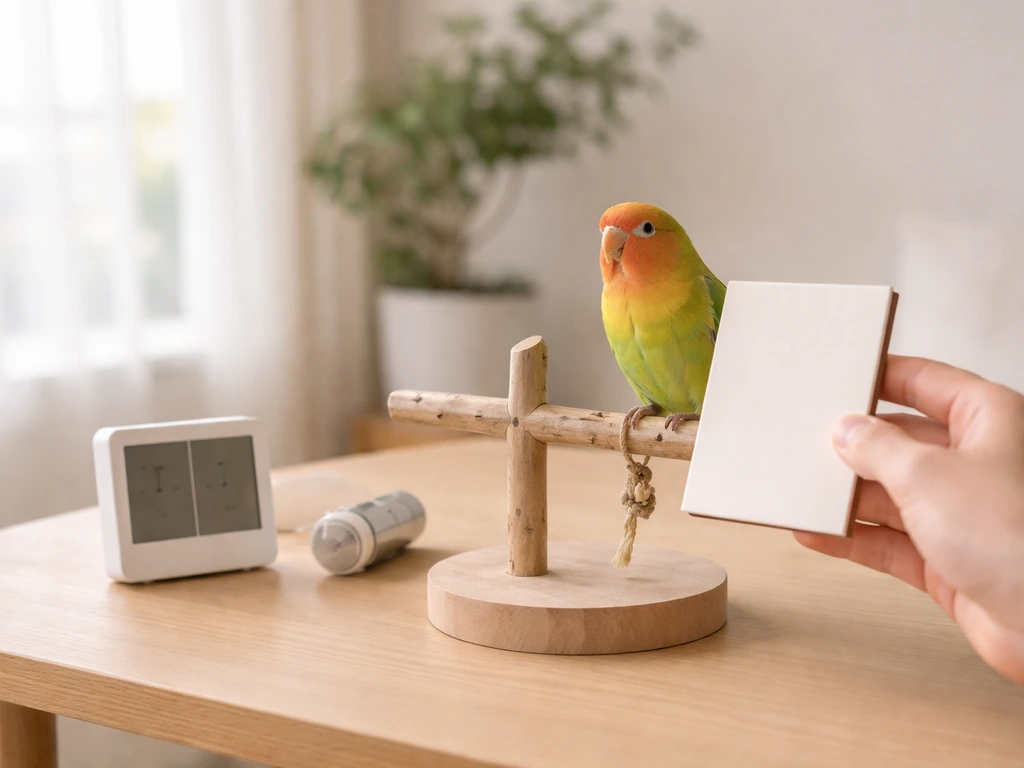
Common problems beginners actually run into
If you've landed here frustrated or worried, you're in good company. These are the problems that come up again and again in beginner and home settings, and most of them are predictable once you understand how birds think and communicate.
- Screaming or excessive vocalization, especially in the morning or when you leave the room
- Feather plucking or over-preening, sometimes leaving bare patches
- Biting or lunging during handling attempts
- Refusing to eat new foods or only eating one or two seed types
- Lethargy or sitting at the bottom of the cage
- Fluffed-up appearance that looks like the bird is cold or puffed all day
- Loose, discolored, or watery droppings
- Constant cage-bar chewing or repetitive pacing
- Nighttime thrashing or fear episodes (common in budgies and cockatiels)
- Not talking, singing, or playing after an initial settling-in period
Some of these are behavioral and environmental. Others are early medical signals. The tricky part is that they can look identical on the surface, which is why the triage process below matters.
Do these things today: safety-first triage

Before you change anything about your bird's routine or environment, run through this quick safety check. You want to rule out the most dangerous causes first.
- Check the air. Non-stick cookware (PTFE/Teflon) overheating is one of the fastest ways to kill a bird, and it's silent. If there's any chance a pan got too hot, move the bird to a different room with fresh air immediately and open windows. Also check for candles, air fresheners, aerosol sprays, or scented wax melts in the bird's environment.
- Look at the droppings. Healthy bird droppings have three parts: a dark solid center, a white urate portion, and a small amount of clear liquid. If the droppings are entirely watery, bright green, black, or bloody, do not wait. Call an avian vet today.
- Watch the breathing for 60 seconds. Open-mouth breathing, a tail that bobs up and down with every breath, or a clicking sound during breathing is a respiratory emergency. Get to a vet.
- Check the cage temperature. Most parrots and small hookbills do best between 65 and 80 degrees Fahrenheit. A bird near a drafty window, air vent, or cold exterior wall in winter can become hypothermic faster than you'd expect.
- Look for physical hazards. Loose threads in rope toys, zinc-coated hardware, lead-weighted toys, and small swallowable parts are all real dangers. Remove anything suspect right now.
- Note whether anything changed in the last 72 hours. New food, new cage location, new household member, different schedule, a change in cleaning products, or even rearranging furniture near the cage can trigger stress behaviors. Write it down before you forget.
Once you've cleared the immediate safety checklist and the bird doesn't show emergency breathing or dropping symptoms, you can move into diagnosing what's really going on.
Diagnosing the root cause: behavior meets environment
Most problems I see beginners dealing with have a clear environmental or routine cause once you map the behavior to the context. Here's how to read what your bird is telling you.
Screaming and contact calls
Birds are flock animals. When you leave the room, many species (especially budgies, cockatiels, and conures) will call out to locate you. That's a contact call, not a problem. It only becomes a problem when it's constant, escalating, or accompanied by panic. The root cause is almost always one of three things: the bird hasn't bonded with you yet and finds isolation terrifying, the cage is placed somewhere the bird feels cut off from household activity, or the bird has learned that screaming gets immediate attention.
Biting and lunging
A bird that bites is almost always communicating discomfort or fear, not aggression for its own sake. Common causes include handling before the bird is ready, forcing interaction, hormonal periods (spring is a big one for cockatiels and amazons), unfamiliar hands, and pain that makes touch feel threatening. If biting started suddenly in a previously handleable bird, pain or illness is near the top of the suspect list.
Feather plucking and over-preening
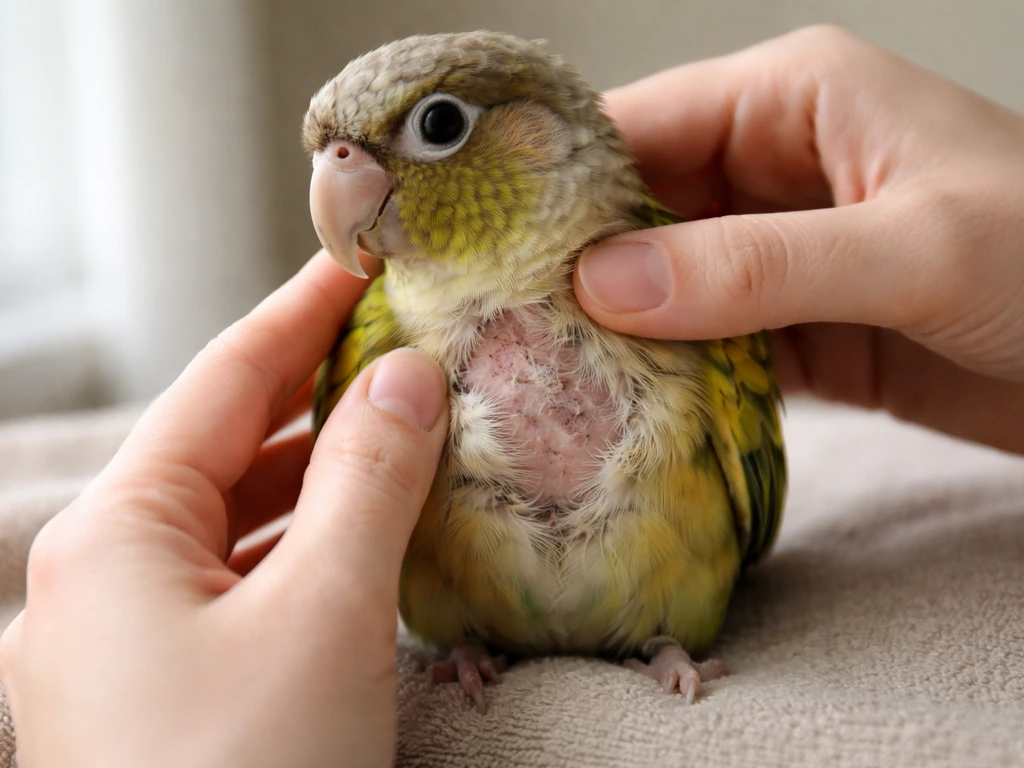
This one is serious and needs proper diagnosis. Feather destructive behavior can be driven by boredom, poor diet, dry air (humidity below 40% is too low for most tropical species), skin irritation, or genuine psychological distress. But it can also be caused by bacterial or fungal skin infections, internal parasites, or thyroid issues. Don't assume it's behavioral until a vet has cleared the medical possibilities.
Lethargy and fluffed feathers
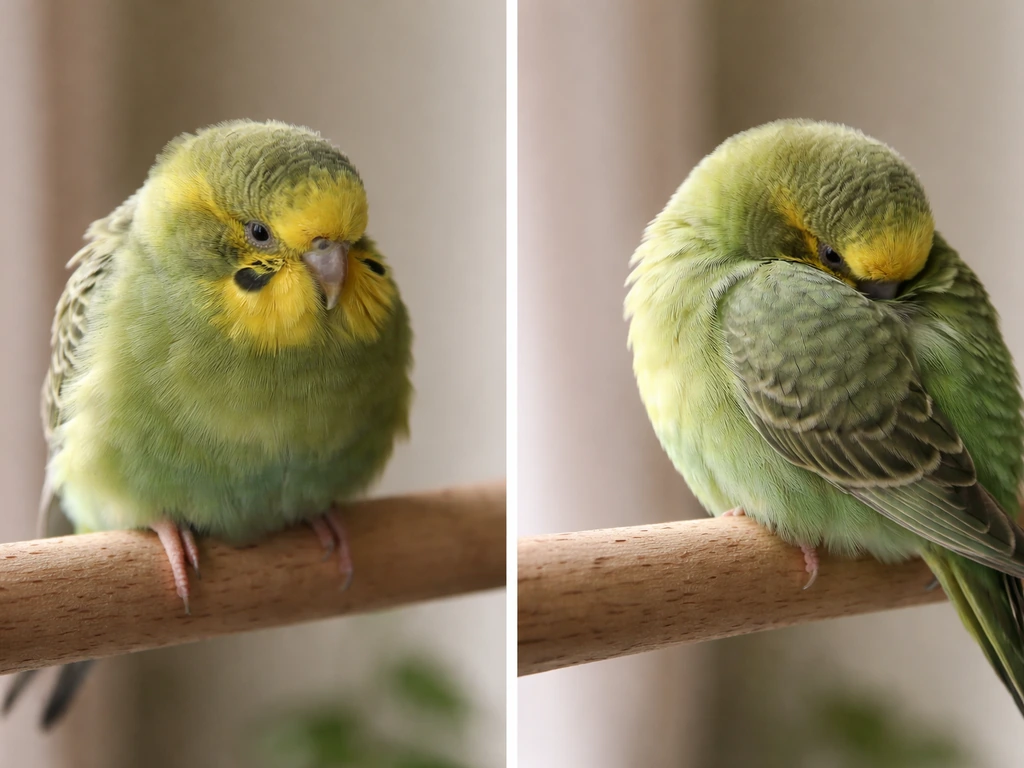
Here's where a lot of beginners get tripped up: a bird that's fluffed up and has its head tucked in during a nap is doing normal bird sleep. Birds naturally sleep in short bursts throughout the day and can look drowsy or ruffled when resting. However, a bird that's fluffed up, on the cage floor, not eating, and lethargic during its active hours is almost certainly sick. The difference is context and timing. Sick birds stay fluffed even when alert, don't engage with food or sound, and often shift to the lowest point of the cage because flying feels like too much effort.
Behavior-to-cause quick reference
| What you're seeing | Most likely cause | Urgency |
|---|---|---|
| Screaming when you leave | Contact call, boredom, or isolation anxiety | Low, behavioral fix |
| Biting during handling | Fear, hormones, or pain | Medium, check for illness if sudden |
| Feather plucking | Boredom, diet, dry air, or medical | Medium to high, vet check recommended |
| Fluffed and on cage floor | Illness, injury, or extreme cold | High, vet same day |
| Watery or discolored droppings | Diet change, stress, infection, or liver issue | High, vet today |
| Open-mouth or labored breathing | Respiratory emergency | Emergency, vet immediately |
| Refusing all food | Stress, illness, or wrong food type | Medium, monitor 24 hours then vet |
| Repetitive pacing or bar chewing | Boredom or inadequate cage size | Low, enrichment fix |
Long-term fixes: habitat, diet, and daily routine
Triage gets you through a crisis. If you're just getting started, use this bird care for beginners mindset to focus on prevention, consistency, and quick health triage. These changes are what actually prevent the problem from coming back.
Cage placement and size
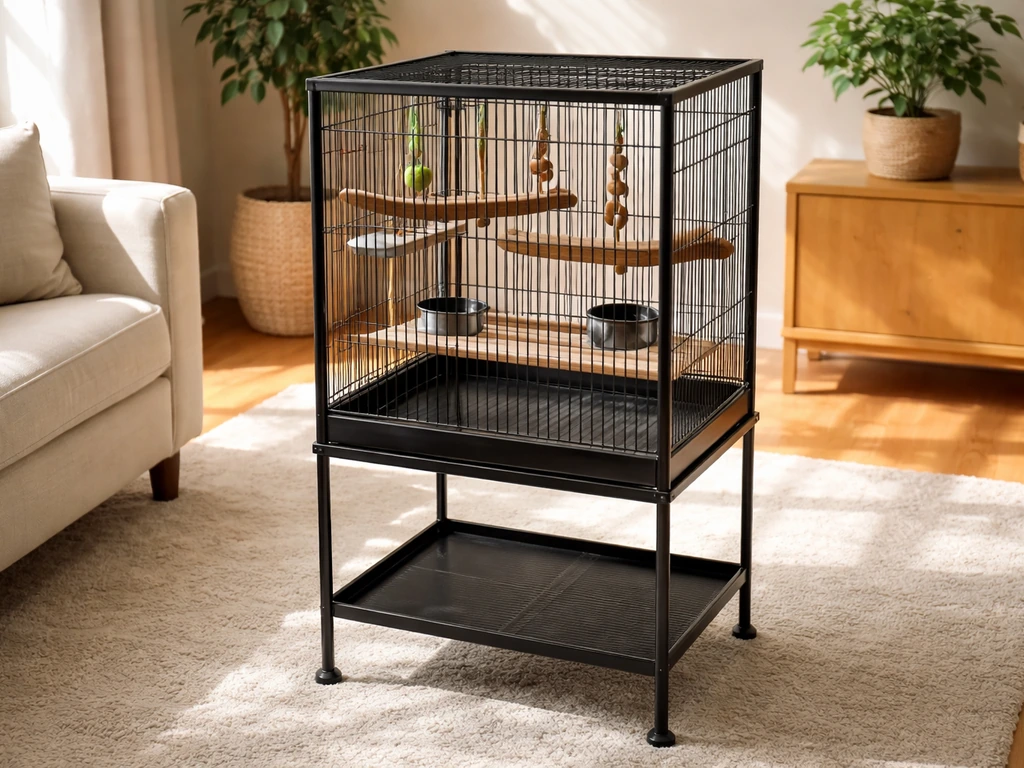
The cage should be at eye level or slightly below, in a room where the family spends time (the living room is ideal for most species), away from exterior drafts and windows that get intense direct afternoon sun. Avoid kitchens: cooking fumes, including from non-stick cookware and gas burners, are genuinely dangerous. The cage needs to be wide enough for the bird to fully extend both wings and flap without touching the sides.
For budgies, that means a minimum of 30 inches wide for a pair. For budgie bird care for beginners, make sure the cage also supports safe exercise like full-wing flaps and comfortable perching space For budgies. For cockatiels, go larger. Many starter cages sold in pet stores are too small.
Diet overhaul

A pure seed diet is one of the most common slow-burn problems in beginner bird keeping. Seeds are high in fat and low in vitamins A and D3, which causes deficiencies that show up as feather problems, poor immunity, and liver issues over months or years. The goal is to transition to a pellet-based diet (70 to 80 percent of daily food) supplemented with fresh vegetables, leafy greens, and occasional fruit. The transition takes time. Most birds resist pellets initially, so the standard approach is to offer pellets alongside familiar foods and gradually reduce the seed portion over several weeks. Never go cold turkey on seeds, especially with a bird that's already stressed.
Routine and sleep schedule
Birds are crepuscular and highly routine-oriented. Irregular sleep schedules, being covered too late at night, or being uncovered too early in the morning can cause chronic stress that shows up as irritability, screaming, and even hormonal issues. Most species need 10 to 12 hours of quiet, dark sleep. Put the cover on at the same time every night. Keep mornings predictable. Birds that know what's coming are calmer birds.
Air quality
This is one of the most overlooked factors in bird health. Scented candles, air fresheners, incense, cigarette smoke, and aerosol products can cause respiratory irritation and, at high concentrations, acute poisoning. Run an unscented HEPA air purifier near the bird's area if you can. Avoid cleaning the cage or nearby surfaces with bleach or ammonia-based cleaners while the bird is in the room.
Enrichment and training that actually reduces problem behaviors
A bored bird is a problem bird. The majority of screaming, bar-chewing, and feather-destructive behavior I've seen trace back to environments where the bird has nothing to do for eight or more hours while its owner is at work. Enrichment isn't just about stuffing toys in the cage, though.
What actually counts as enrichment
- Foraging opportunities: hiding food inside rolled paper, wooden blocks, or commercial foraging toys so the bird has to work for it
- Variety in perch textures and diameters (different wood types, rope, and natural branch perches exercise different foot muscles and relieve boredom)
- Shreddable items like palm fronds, paper, or soft wood toys that let the bird destroy things safely
- Rotating toys every week or two so the environment feels novel
- Supervised out-of-cage time in a bird-proofed room, ideally at least one to two hours per day for social species
- Background sound (radio or television at a low volume) when the household is empty
Basic training to fix specific behavior problems
Training sounds intimidating but it's really just communication. The step-up command (teaching the bird to step onto your finger on cue) is the single most practical skill you can teach first, because it makes every interaction safer and builds trust. Use positive reinforcement only: a small food reward immediately after the desired behavior. Keep sessions under five minutes. Ending on a success matters more than duration.
For screaming specifically, the most effective approach is to train an incompatible behavior. Teach the bird to whistle or say a phrase on cue, then reward quiet moments. Never rush back into the room in response to screaming, because that teaches the bird that screaming works. Instead, return to the room during quiet moments so the bird associates quiet with your attention.
For biting, the standard advice to 'just push through it' is actually backwards. Forcing contact with a bird that's clearly signaling discomfort makes it bite harder and more defensively over time. Step back, give the bird space, and rebuild trust through low-pressure interactions like talking softly near the cage, offering treats through the bars, and working up to hand contact gradually over days or weeks.
Health red flags and when to call an avian vet
Here's the part that matters most: birds hide illness instinctively. In the wild, a sick bird that acts sick gets picked off by predators. So by the time your bird is showing obvious symptoms, it has often been sick for days or even weeks. That's not a metaphor. It means you need to act fast when you do see signs, because the window for effective treatment is smaller than with mammals.
Go to an avian vet today if you see any of these
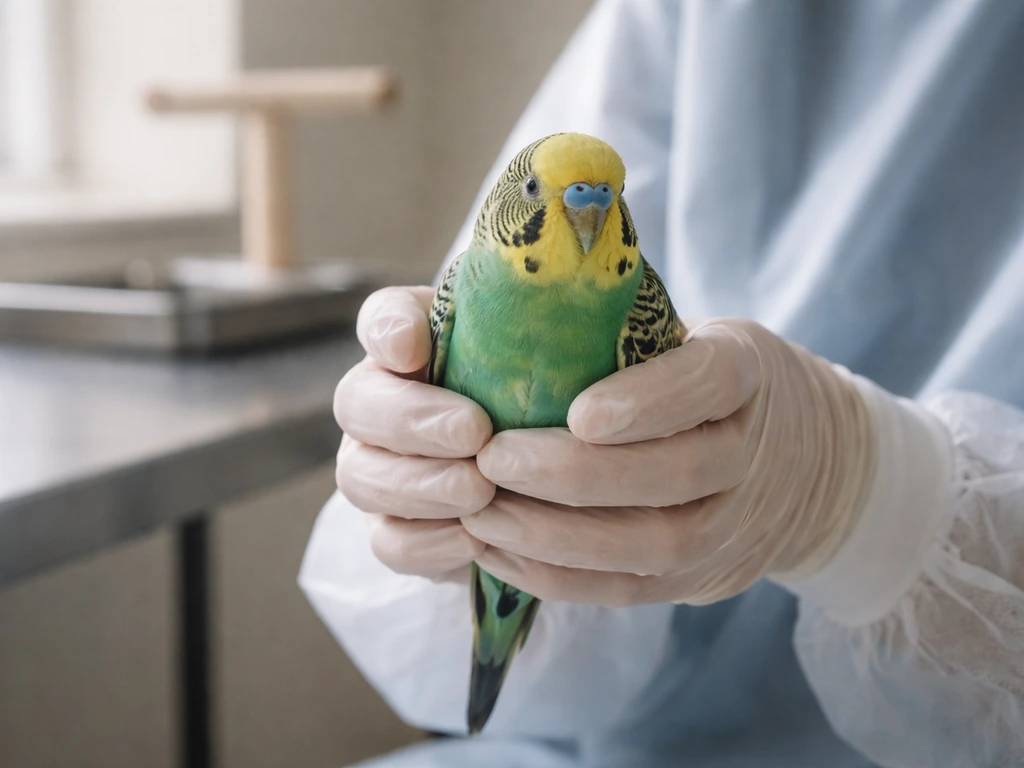
- Open-mouth breathing, labored breathing, or tail bobbing (the tail visibly pumping up and down with each breath)
- The bird is on the cage floor and can't or won't perch
- Bloody droppings, or completely black/tarry droppings
- Seizure, loss of balance, or uncontrolled head movements
- Discharge from the nostrils or eyes
- Severe bleeding that doesn't stop within a few minutes
- Suspected toxin exposure (inhaled fumes, ingested plant or chemical)
Schedule a vet visit within 48 to 72 hours for these
- Droppings that are consistently watery or discolored over more than one day (note: what looks like diarrhea is often just excess water in the urine portion, but it still needs evaluation)
- Fluffed feathers throughout active hours combined with reduced food intake
- Feather plucking that has started suddenly or is worsening
- A bird that has stopped vocalizing, playing, or eating for more than 24 hours
- Unexplained weight loss (you can feel the keel bone: if it's very prominent, that's a red flag)
When you call the vet, be ready to answer a few key questions: how many droppings the bird has passed in the last 12 to 24 hours, what the droppings look like, when the bird last ate normally, what changed in the last week (new food, new product, schedule change), and whether the bird has had any prior health issues. Bird droppings are commonly described as rounded piles with three distinct parts: feces, urates, and urine (clear watery component). Having this information ready helps the vet triage correctly over the phone and decide whether you need to come in immediately.
It's also worth finding an avian vet before there's a crisis. Regular avian vets are not the same as general small-animal vets. Search specifically for a vet with avian experience or board certification. A new-bird wellness exam in the first few weeks of ownership gives you a baseline and a relationship before something urgent comes up.
Your next steps, in order
If you're working through a bird problem right now, here's the short version of what to do and in what order.
- Run the safety triage above: check air quality, look at droppings, watch breathing for 60 seconds, check cage temperature
- If you see any emergency signs (labored breathing, bloody droppings, bird on floor), call an avian vet immediately
- If no emergency signs, write down what changed in the last 72 hours and map the behavior to the most likely cause using the table above
- Make one or two environmental fixes today (cage placement, removing a hazard, adjusting temperature)
- Start a diet review: if your bird is on all seeds, begin a gradual pellet transition this week
- Add one foraging toy or enrichment element and rotate toys on a weekly schedule going forward
- If the problem behavior persists after one to two weeks of environmental fixes, or if any health symptoms appear, book an avian vet appointment
Most bird problems are solvable with the right information and a bit of patience. The bigger picture, including species selection, habitat setup from scratch, and daily care routines, is covered in more depth in the beginner bird care and bird keeping guides on this site. If you are new to keeping a budgie, use this budgie bird care for beginners guide to set up care routines and spot common issues early. But if something feels wrong with your bird right now, start with the triage checklist and trust your instincts. You know your bird better than anyone.
FAQ
How can I tell if my bird’s calling out when I leave is normal contact behavior or separation anxiety?
Watch for escalation and context. Normal contact calls stay steady and your bird settles once you return, while problem behavior often includes frantic pacing, frantic wing flapping, distressed open-mouth breathing, or continued screaming even after you come back. Also note whether the calls start only after you changed routine or cage placement, since sudden changes are a common trigger.
My bird won’t eat during a “rough phase.” How do I know when it’s diet resistance versus an emergency?
Diet resistance usually looks like selective eating but the bird still takes at least some familiar food and remains alert. Refusal-to-eat combined with fluffed posture, staying on the lowest perch, reduced or abnormal droppings, or lethargy during active hours is an urgent triage situation. If a bird misses normal eating plus shows any illness signs, contact an avian vet right away rather than waiting out the transition.
Is it safe to use an air freshener or scented candle in the same room as my bird if I keep ventilation strong?
Even with ventilation, scented products can irritate a bird’s respiratory system because birds have sensitive airways and small breathing volumes. If you want odor control, switch to unscented methods only (for example, an unscented HEPA purifier). Avoid aerosols and strong cleaners while the bird is present, and never rely on “just open a window” for safety.
What humidity level should I target, and what can I do if my home is very dry?
If your indoor humidity drops below about 40%, many tropical species are at higher risk of dry skin and respiratory irritation. A practical approach is to monitor with a hygrometer near the cage, then raise humidity gradually using a humidifier placed safely away from direct misting. If you see skin irritation or feather damage, also consider medical causes before assuming dryness alone is the problem.
My bird is scratching or chewing at feathers. How do I avoid missing a skin or parasite problem?
If the behavior is sudden, intense, localized (same patch repeatedly), or comes with visible skin changes, odor, scaling, crusting, or increased itch (rapid preening followed by restlessness), treat it as possibly medical and get an avian exam. Also check for recent diet changes, new bedding, new sprays, or cleaning products used near the cage, because irritants can mimic medical issues.
Should I start pellet training by removing seeds immediately to make it work faster?
Avoid cold turkey, especially if your bird is already stressed. A safer approach is to offer pellets alongside familiar foods first, then reduce the seed portion gradually over weeks. If your bird refuses pellets entirely, increase acceptance using small pellet-based rewards and consistency, and do not keep changing pellet types daily, since that can create more rejection.
How late is “too late” to uncover my bird in the morning, and will one mistake really matter?
Birds do best with a consistent 10 to 12 hours of quiet dark sleep. One occasional late uncover usually does not cause lasting problems, but repeated timing drift can contribute to chronic stress and hormonal behavior. If you accidentally shift mornings, reset the schedule the same day and avoid additional changes so you return to predictability quickly.
What’s the safest way to practice step-up if my bird bites when I offer my finger?
Use a low-pressure method: pause, step back, and resume only during calm moments. Offer your finger briefly and reward any voluntary step onto your hand or near your finger, then end the session quickly. If biting escalates, reassess for pain, discomfort, or fear from handling, and consider switching to treat-through-the-bars cooperation before expecting full hand contact.
Does ignoring screaming really help, or will it make my bird worse?
It helps when done correctly. The key is not rushing back during loud episodes, because attention can reinforce screaming. Instead, return during quiet moments and reward calm, then gradually build the bird’s expectation that your attention arrives when it is quiet. If screaming is paired with breathing trouble, lethargy, or abnormal droppings, that is a medical or emergency triage situation, not a training issue.
If I’m not sure whether to call the vet immediately, what “data” should I collect first?
Before the call, note droppings frequency over the last 12 to 24 hours, any color or texture changes, when the bird last ate normally, energy level during active hours, and what changed in the last week (food, treats, cage location, cleaning products, new items). Also record whether breathing looks effortful or the bird stays fluffed at unusual times, since those details help an avian vet decide urgency.
How do I find an avian vet that matches my bird’s needs, not just any “small pet” clinic?
Confirm the clinic regularly treats birds and ask whether the clinician has avian experience or board credentials. If possible, schedule a baseline wellness exam early so you already have a relationship and instructions for urgent situations. When you call, be ready to describe species, age, diet, and current symptoms so they can triage appropriately.
Next Articles
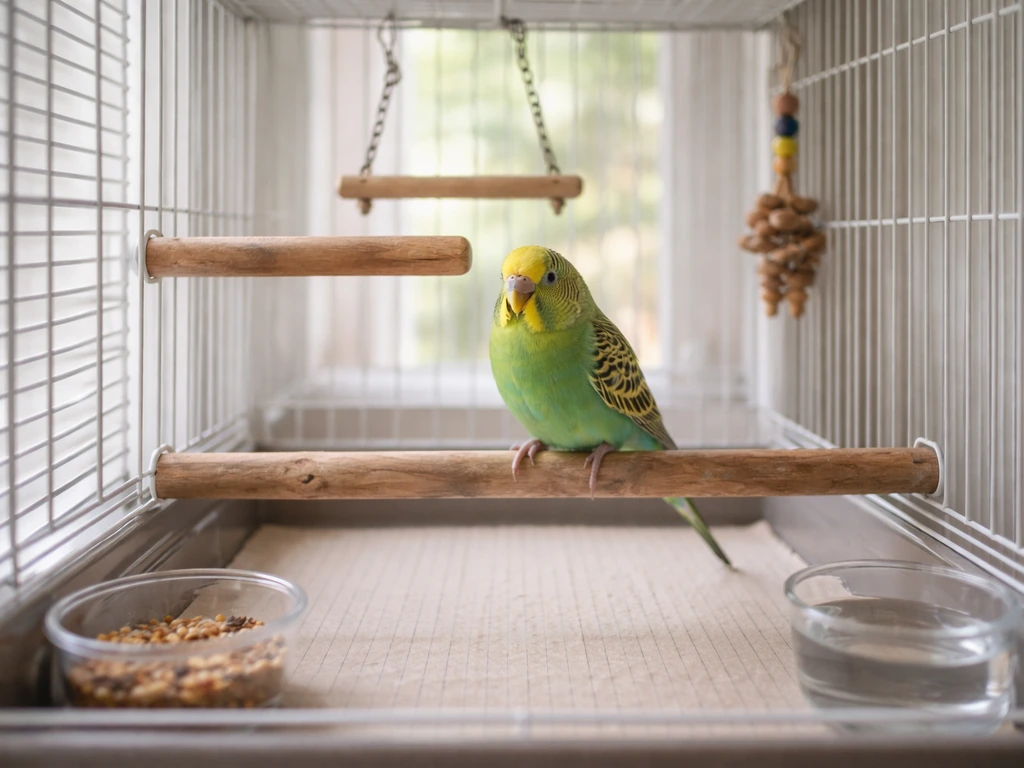
Budgie Bird Care for Beginners: Setup, Routine, and Tips
Beginner budgie care guide with setup checklist, daily feeding and cleaning routine, enrichment, safety tips, and common
Garden Bird Checklist: Wild Species, IDs, and Tracking Tips
Ready-to-use wild garden bird checklist with IDs, field marks, tracking tips, and a bird station setup for beginners.
Printable Backyard Bird Guide for Beginners and First IDs
Printable backyard bird guide for beginners: simple ID key, look-alikes, and a ready-to-fill checklist for backyard sigh