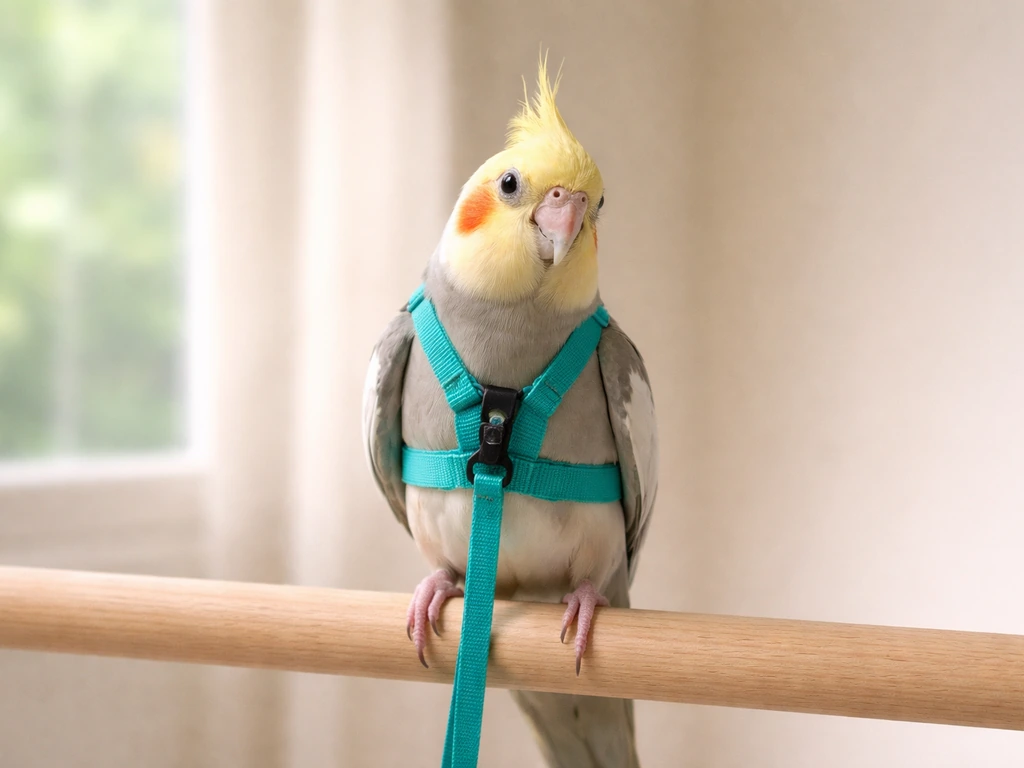
For most cockatiels, the Aviator Harness in Petite size (75–110g) is the safest, most reliable starting point. It's escape-resistant, adjustable, and has more real-world use behind it than almost any other option on the market for small parrots. That said, fit is everything with harnesses, and the "best" one is whichever fits your specific bird without pressing on the throat, restricting chest movement, or creating escape gaps. This guide walks you through picking the right style, measuring your bird, fitting it correctly, and training your cockatiel to actually tolerate wearing it outdoors.
Best Bird Harness for Cockatiel: Fit, Size, and Picks

Marcus Chen
22 May 2026
What to Look for in a Cockatiel Bird Harness
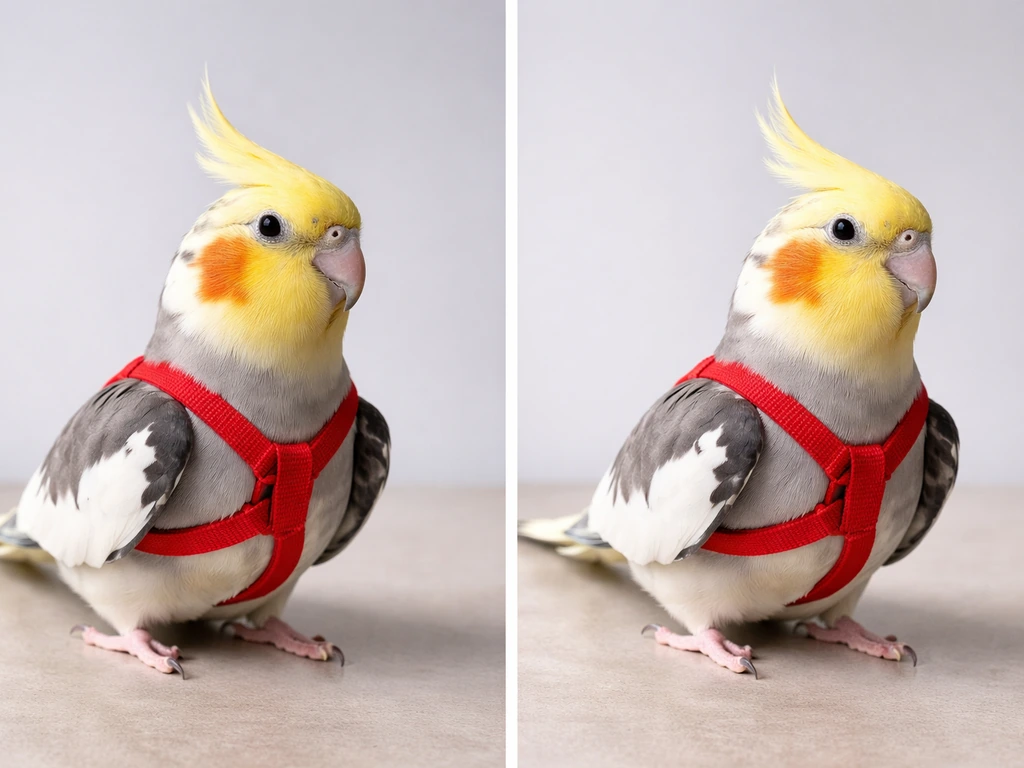
Cockatiels are lightweight birds, typically 75–110 grams, with narrow chests and delicate respiratory systems. Those physical facts should drive every harness decision you make. A harness that works beautifully on a conure can be dangerous on a cockatiel because the chest compression threshold is much lower. Before you even look at brand names or price points, here are the criteria that actually matter.
- Chest clearance: The harness must not compress or squeeze the sternum. Cockatiels breathe using their whole chest wall, so any restriction there is a real safety issue, not just a comfort one.
- Throat and neck clearance: Nothing should press on the crop or trachea. You should be able to slide a finger under the neck loop easily.
- Adjustability: Cockatiels vary in body shape even within the same weight range. Hook-and-loop (Velcro) straps or micro-adjustable sliders let you fine-tune fit rather than forcing you into a fixed size.
- Escape-proof design: Small parrots are Houdini-level escape artists. Look for harnesses with a design that prevents the bird from slipping a wing or leg free without the owner's help.
- Material: Soft, lightweight nylon or similar materials are preferable. Avoid stiff straps or anything that digs into feather shafts or skin.
- Leash attachment: A back-mounted D-ring or similar attachment keeps the leash off the bird's face and reduces tangling risk.
- Ease of putting on and taking off: If harnessing your bird takes a wrestling match every time, training will fall apart fast. Simpler = better, especially early on.
One thing I'd stress to anyone starting out: don't prioritize price here. A cheap harness that doesn't fit properly is worse than no harness at all. You're dealing with a bird that weighs less than a stick of butter, and ill-fitting gear can cause injury fast.
Best Harness Types for Cockatiels: Step-In vs Back-Clip vs Vest Style
There are three main harness styles you'll encounter when shopping for a small bird. Each has real trade-offs, and for cockatiels specifically, one style stands clearly above the others.
Step-In / Figure-8 Style
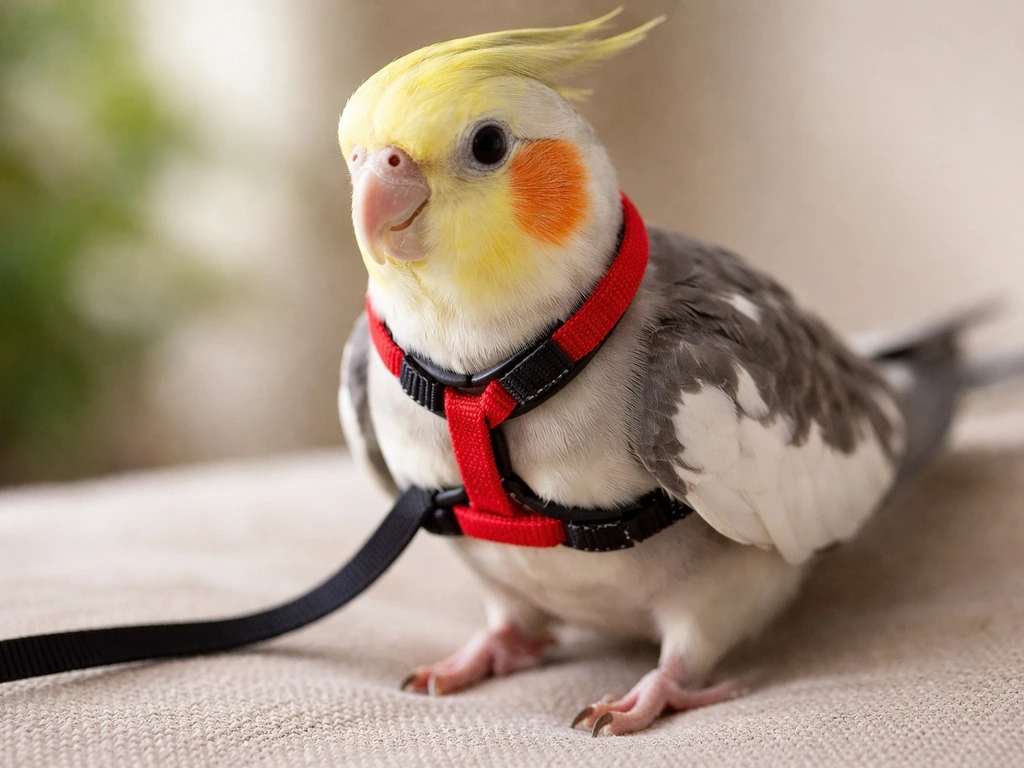
This is the style used by the Aviator Harness and is widely considered the gold standard for parrots. The bird steps into two loops that go around each wing base, with a connecting piece across the back where the leash attaches. It distributes pressure evenly around the body rather than concentrating it anywhere specific. The Aviator's figure-8 design is specifically engineered to prevent escape without relying on the bird being restrained, which makes it genuinely escape-resistant during normal movement. For cockatiels, this style works well because it avoids putting direct pressure on the chest when sized correctly.
Back-Clip / T-Bar Style
Some harnesses use a simple T-bar or loop-around-the-body approach with a clip on the back. These are often cheaper and easier to put on, but they can create escape gaps around the wings more easily on small birds. For a cockatiel with narrow shoulders, there's more risk of a bird slipping a wing free during a flap. They can work, but you need to be extra careful about fit, and you should always supervise closely outdoors.
Vest Style
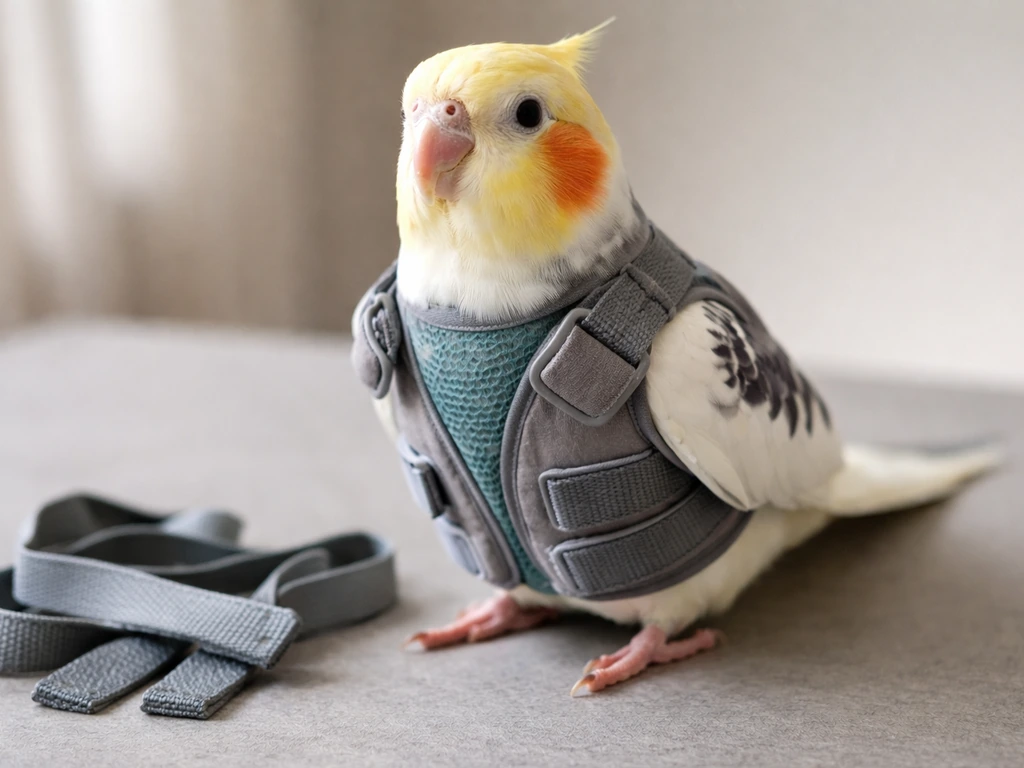
Vest-style harnesses, like those made by UnRuffledRx, wrap around the bird's torso more fully and use hook-and-loop closures for adjustment. If you’re specifically shopping for the best bird vest, focus on a size that fits your cockatiel under 110g and a secure closure style that won’t create escape gaps. The advantage is a more even distribution of the harness across the body and generous adjustability for minor size differences.
The downside for cockatiels is weight: cockatiels are at the very light end of what most vest products are sized for. UnRuffledRx, for example, lists a Small size for birds in the 200–300g range, which is already double a typical cockatiel's weight. You'd need to confirm the specific product has a size genuinely appropriate for a bird under 110g. Vest styles are also warmer and can cause overheating in direct sun, which matters if you're planning outdoor time in summer.
| Style | Best for | Escape resistance | Chest pressure risk | Ease of fitting | Cockatiel suitability |
|---|---|---|---|---|---|
| Step-in / Figure-8 (e.g., Aviator) | Most cockatiels | High | Low when sized correctly | Moderate learning curve | Excellent |
| Back-clip / T-bar | Calm, larger small parrots | Moderate | Low to moderate | Easy | Fair — watch escape gaps |
| Vest style (e.g., UnRuffledRx) | Birds who dislike loops, convalescent use | Moderate to high | Low if sized correctly | Easy once trained | Limited — verify size range carefully |
My recommendation: start with the Aviator Petite unless your bird has a specific reason not to suit the figure-8 style. The escape-resistance track record alone makes it worth the slight learning curve during initial fitting.
Top Harness Picks and Why They Work for Cockatiels
Aviator Harness (Petite)
The Aviator is the most widely recommended parrot harness for good reason. The manufacturer describes it as escape-proof while also being honest that it's not damage-proof, meaning it can tolerate normal bird behavior but isn't meant to be chewed through. For cockatiels, the Petite size (75–110g) is the right starting point. It blank" rel="noopener noreferrer">fits birds as small as 75 grams, which covers most cockatiels comfortably. The figure-8 design routes around each wing base and connects at the back, so the leash attachment point sits between the shoulders rather than near the face or neck. It comes with a stretchy elastic leash that has some give, which reduces the jerk force if a bird suddenly takes flight.
Fit notes: The neck loop should sit at the base of the neck, not high up near the head. You should be able to slide a finger under both the neck loop and each wing loop without forcing it. The leash clip should sit centered on the back. If your cockatiel is on the smaller end of 75g, the Petite may run slightly loose, in which case try the Mini size (35–75g) instead.
Feather Tether
The Feather Tether was developed with an avian veterinarian and is specifically designed to prevent fly-aways while eliminating the leg trace injury risk that some harness designs create. "Leg trace injuries" happen when a loose harness strand wraps around a leg during a flap or tumble, and it's a real concern with small, active birds. The Feather Tether's design sidesteps this by routing straps differently. It's a solid alternative to the Aviator, especially if your bird takes strongly to one style over the other during training. Check sizing carefully: the Medium size is listed for approximately 120–300g, so cockatiels at 75–100g may need the Small size, and availability can vary.
UnRuffledRx Vest (verify sizing)
The UnRuffledRx vest is worth mentioning for cockatiels that are highly resistant to the step-in style, or for birds in recovery who need a softer body wrap rather than individual straps. The hook-and-loop closure allows for fine-tuned adjustments. However, check the size chart against your bird's weight and girth measurements before buying, since the standard Small is designed for heavier birds. This style is less commonly used as a primary outdoor harness for cockatiels and more often used as a comfort or transitional garment.
Sizing and How to Measure a Cockatiel for a Harness
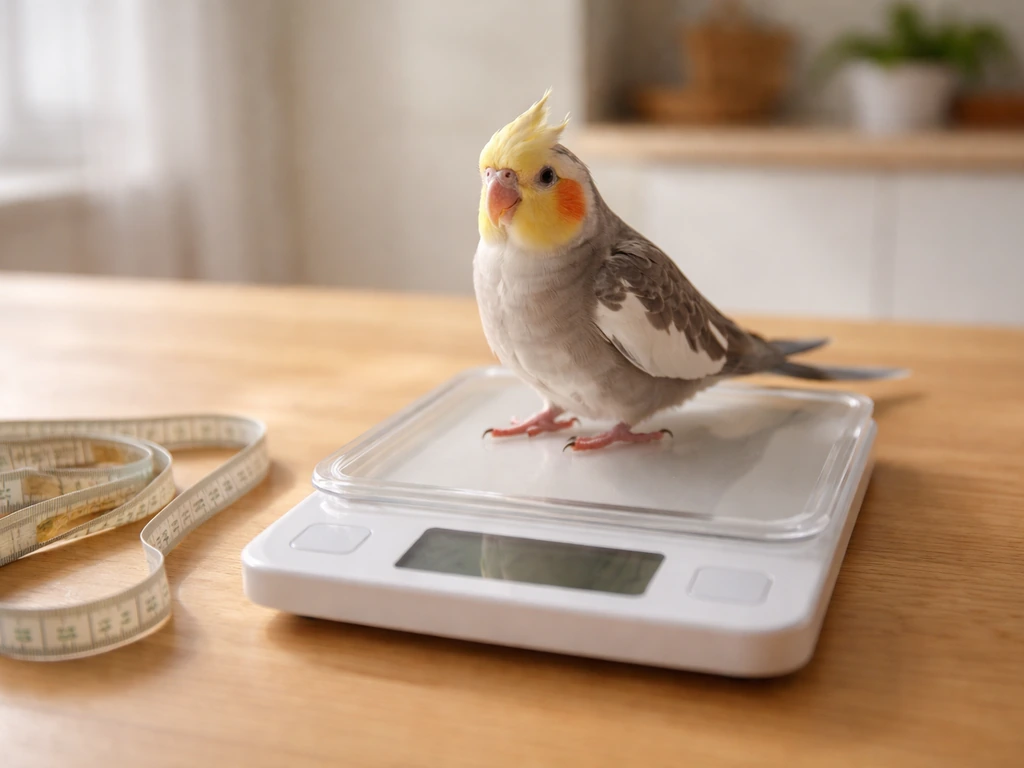
Most harness brands use weight as the primary sizing guide for small parrots, and for cockatiels, that typically puts you in the Petite range (75–110g) for the Aviator. But weight alone doesn't tell the whole story, especially for birds that are stockier or slimmer than average for their weight. Here's how to size accurately before you buy.
- Weigh your cockatiel on a kitchen scale (in grams). Do this in the morning before the first feeding for the most consistent reading. Most healthy cockatiels land between 80–110g.
- Measure the neck girth: use a soft tape measure or a strip of paper around the base of the neck where the neck meets the shoulders. This is where the neck loop will sit.
- Measure the chest girth: around the widest part of the chest, just below the wing joints. This tells you whether the body loops will be too tight or too loose.
- Cross-reference with the brand's size chart. For the Aviator, Petite (75–110g) covers most cockatiels. If your bird is under 75g, look at the Mini size.
- If possible, confirm the harness has adjustable straps before purchasing. Adjustability lets you dial in fit without needing to return and reorder.
When the harness is on, check all three contact points: the neck loop, the left wing loop, and the right wing loop. You should be able to slide one finger (not two, not zero) under each loop. The loops should not be able to slip over the wing or head without deliberate manipulation. The leash attachment point should sit centered on the back, not pulled to one side. If the harness twists or rotates on the body, it's either too large or one strap is adjusted unevenly.
"Too tight" looks like: feathers being pushed flat, the bird opening its mouth or tail-bobbing shortly after the harness goes on, any pinching of skin visible at the strap edges, or the bird breathing faster than normal. "Too loose" looks like: a wing or leg slipping through a loop, the harness rotating on the body, or the neck loop riding up toward the head. Both are problems. Too tight is a safety emergency; too loose is an escape risk.
How to Introduce the Harness Safely and Train for Wearing Time
This is where most people go wrong. They buy the harness, put it on the bird, the bird panics, and everyone gives up. The harness itself rarely fails; the training process does. Cockatiels need to be introduced to the harness gradually, using the same desensitization principles you'd use for anything new and potentially scary.
Before you even touch the harness, your cockatiel should reliably step up on command and be comfortable with you handling its wings gently. If your bird panics at basic handling, harness training is going to be very hard. It's worth spending a week or two on calm handling and target training before introducing the harness. Clicker training can genuinely speed this process, since you can mark and reward the exact moment the bird tolerates a new sensation rather than guessing at what it's responding to.
- Day 1–3: Place the harness near the bird's cage or play area without attempting to put it on. Let the bird investigate it, peck at it, and get used to its smell and appearance. Reward calm curiosity with treats.
- Day 4–6: Hold the harness near the bird's body while offering treats. Touch the harness gently to the bird's chest and back. Keep sessions under 5 minutes and end before any stress signals appear.
- Day 7–10: Practice the motion of putting the harness on without actually fastening it. Move slowly. Reward each small step: the neck loop going over the head, one wing loop positioned, etc.
- Day 11–15: Fasten the harness fully for the first time. Start with 2–3 minutes of indoor wear while supervising. Offer treats throughout. Remove the harness before any distress signs appear.
- Weeks 3–4 and beyond: Gradually extend indoor wear time in small increments, maybe 5 minutes longer each session. Once the bird is calm at 20–30 minutes of indoor wear, you can attempt a short supervised outdoor outing.
During outdoor outings, keep your first trips short, 10–15 minutes maximum, in a calm environment without loud traffic, dogs, or sudden noises. Hold the leash at all times. The Aviator's elastic leash provides some give if the bird takes a sudden hop or flight attempt, which reduces the whiplash risk. If you want to keep things secure and comfortable, choosing the best bird leash for your setup matters just as much as the harness itself. Keep the leash short enough that the bird can't reach the ground or tangle in anything, but long enough that normal movement feels natural.
Realistic expectations: most cockatiels take 3–6 weeks to fully accept the harness. Some take longer. A handful genuinely never become comfortable with it no matter what you do, and that's okay too. There are other ways to give your bird outdoor enrichment safely, including covered outdoor aviaries or well-secured carriers.
Common Mistakes, Fit Problems, and When to Stop or Switch
Most harness problems come down to rushing the process, choosing the wrong size, or missing early stress signals. Here are the mistakes I see most often and what to do about each one.
Rushing the Introduction
Forcing a harness onto an unprepared bird is the fastest way to make the harness permanently terrifying. One bad experience can set training back weeks. If your bird is thrashing, biting hard, or screaming, you've moved too fast. Back up a step in the desensitization process and slow down.
Ignoring Breathing Signs
Open-mouth breathing, tail bobbing with each breath, and increased sternal movement during or after harnessing are all signs that something is wrong. These can mean the harness is compressing the chest, the bird is overheated, or the bird is stressed to the point of physiological distress. Avian Welfare shelter guidance specifically warns against chest restriction, advising not to “restrict or squeeze a bird’s chest and thus compromise their breathing.”. Remove the harness immediately if you see any of these. If open-mouth breathing persists after removal, contact a vet. Do not attempt to harness a bird that is already showing respiratory symptoms of any kind.
Choosing the Wrong Size
Buying based on species name alone without checking weight is a common mistake. Not all cockatiels weigh the same, and a 70g cockatiel may need a Mini while a 105g cockatiel needs a Petite. Always weigh first and cross-reference the brand's chart.
Leaving the Bird Unsupervised
Never leave a harnessed bird alone, indoors or out. A bird can tangle in the leash, get a foot caught in a loop, or chew through a strap surprisingly quickly. The harness is an outdoor management tool, not a tether to leave a bird on while you step away.
When to Stop and Switch Harnesses
Sometimes the issue isn't training, it's the harness itself. Here's a checklist of situations where stopping and reassessing is the right call.
- The bird chews frantically and constantly at the harness during every session, even after weeks of training.
- You notice chafing, redness, or feather damage at any strap contact point after wear.
- The bird cannot perch normally while wearing the harness (the fit is interfering with balance or leg movement).
- Open-mouth breathing or tail bobbing occurs consistently during wear, even at appropriate room temperature.
- The harness rotates, twists, or the bird partially escapes a loop during normal activity.
- The bird has a history of severe panic responses to handling, feather-destructive behavior, obesity, arthritis, or recent illness (consult a vet before starting or resuming harness training in these cases).
- Multiple sizing adjustments haven't resolved a consistent fit problem — try a different harness style entirely.
If you hit several of these at once, don't keep pushing. Take a break, reassess the size and style, and consider consulting an avian vet or a certified parrot trainer who can watch your bird's response in person. Sometimes switching from an Aviator to a Feather Tether, or from a figure-8 to a vest style, makes the difference. And sometimes a particular bird just won't tolerate a harness, and that's a valid outcome too.
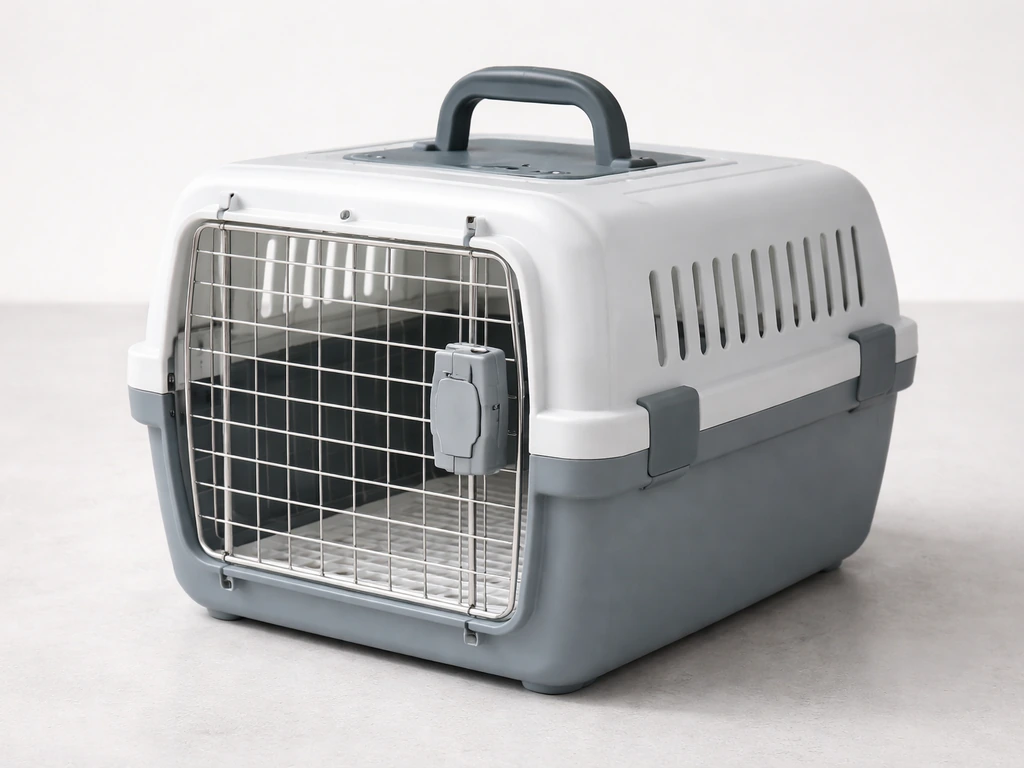
If you're also exploring other outdoor safety options for your cockatiel, it's worth looking at bird carriers and bird leash setups alongside harness training, since a good carrier can give your bird fresh-air time even before they're fully harness-trained. For smaller birds in general, the principles here overlap closely with guidance for small bird harnesses across other species, and if you have a conure alongside your cockatiel, harness sizing and training approaches differ meaningfully between the two species.
FAQ
Can my cockatiel wear the harness indoors before going outside?
Yes, but only if the harness fits correctly and the bird is calm. Start with short, indoor sessions where you can monitor breathing and body posture, then gradually move outdoors. Don’t leave it on unattended, and remove it immediately if you see tail bobbing, open-mouth breathing, or rapid sternal movement after putting it on.
What should I do if my cockatiel panics when I try to put the harness on?
If your cockatiel won’t tolerate stepping in, it usually means the desensitization step is too fast. Back up to handling and wing-touch tolerance, then reintroduce the harness with the bird relaxed and supported. Use small, frequent sessions and stop the moment you see rising panic, so the harness does not become a negative trigger.
How often should I re-check harness fit on my cockatiel?
Avoid “set-and-forget” sizing. Cockatiels can fluctuate in weight and chest shape, especially during illness, seasonal changes, or if you adjust diet. Re-check finger-fit under the neck loop and both wing loops every couple of weeks, and whenever your bird’s weight changes meaningfully.
Why does my cockatiel’s harness twist or the leash clip sit to one side?
A leash clip that sits off-center, or a harness that twists, often points to uneven strap adjustment. The fix is not tightening harder, it is correcting the harness position so it rotates less and keeps pressure distributed around the body. If you cannot get it centered with adjustments, size or style is probably wrong.
What does it mean if the neck loop rides up toward my cockatiel’s head?
If the neck loop rides up near the head, it can become both uncomfortable and less secure. First, confirm you are using the correct size range, then check that the loop sits at the base of the neck (not high on the throat). If it still creeps upward after correction, switch to the next size that matches your bird more closely.
Is it ever okay to leave the harness on if the feathers look flattened?
If you notice the bird’s feathers getting flattened against the skin or you see skin pinching at strap edges, that suggests excessive pressure, even if the bird seems okay at first. Remove the harness, let your bird rest, then reassess sizing and finger clearance. Persistent pressure signs are a reason to change fit, not to “break in” the harness.
How long should my first outdoor outings be, and when do I stop?
Not during the initial training stages. Start with calm conditions and short outings so you can observe how the bird responds. If your bird begins breathing faster, opens its mouth, or shows pronounced sternal movement, end the session and remove the harness. Training outdoors should be a progression, not a sudden long exposure.
How should I choose the leash length for a cockatiel harness?
For cockatiels that tend to tangle, chew, or spin fast, longer leash lengths increase risk. Keep the leash short enough that the bird cannot reach the ground or snag it on nearby objects, but long enough for natural movement. Use a consistent hold position and avoid letting slack form during flapping attempts.
What are the signs that my cockatiel is at risk for leg trace injuries?
Leg trace injury risk is one of the reasons tether-style routing can matter. If your cockatiel is extremely active, prone to sudden drops, or gets feet caught easily during early training, consider switching styles only after fit is verified. Also, review your routine, leash management, and nearby hazards, since tangle-free setup is part of injury prevention.
When is it time to stop harness training and get professional help?
Yes, but only with a clear plan. If your bird shows ongoing respiratory stress signals during or after harnessing, or never progresses beyond panic despite slowing down, reassess the situation with an avian vet or a qualified trainer. Sometimes switching from a figure-8 style to a tether-style or vest-style helps, but “no harness tolerance” can also be a valid outcome.
Next Article
Best Bird Carriers: Buyer Guide for Safe Travel and Vet Visits
Choose the best bird carriers for vet visits and travel: sizing, safety features, ventilation, cleaning, and avoiding co