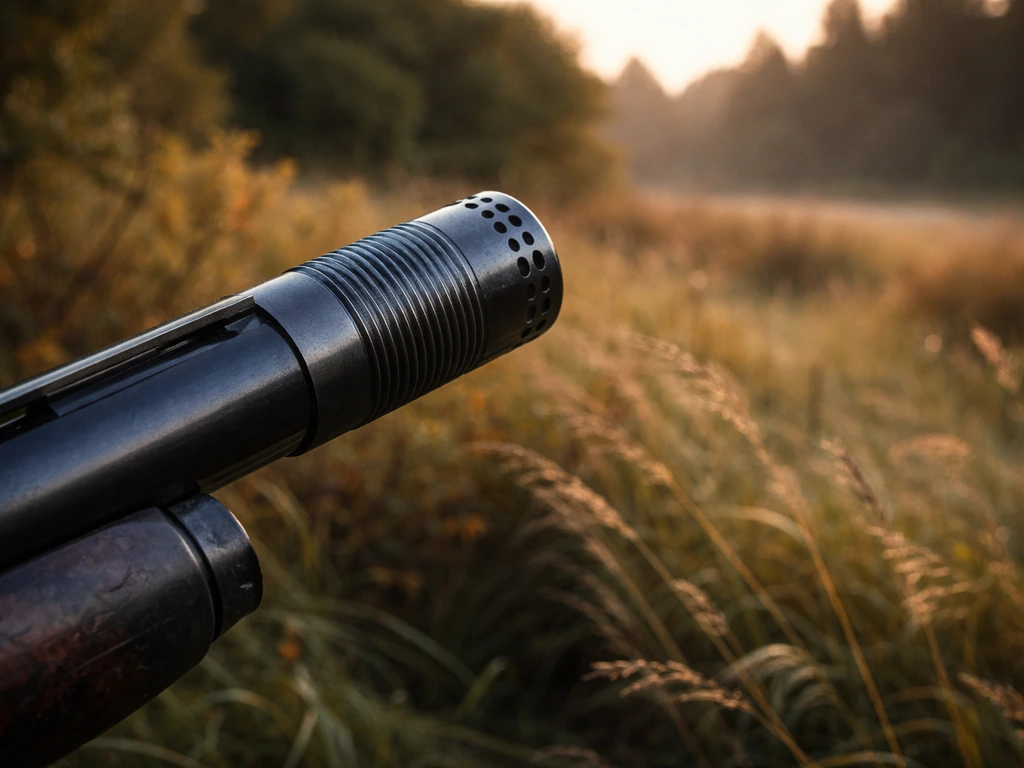
For most bird hunting, start with a modified choke. It hits the sweet spot for the majority of upland birds and many waterfowl situations, covering shots from about 35 to 40 yards with a dense enough pattern to drop birds cleanly. If you're hunting quail, grouse, or woodcock in heavy cover where shots are close and quick, drop down to an improved cylinder. If you're pass-shooting ducks or geese at longer ranges, tighten up to an improved modified. Full choke is rarely the right call unless you're shooting turkey or hunting birds at 45 yards or more with lead shot.
Best Choke for Bird Hunting: A Beginner Guide

Marcus Chen
25 Apr 2026
What a choke actually does (and why pattern matters more than range)
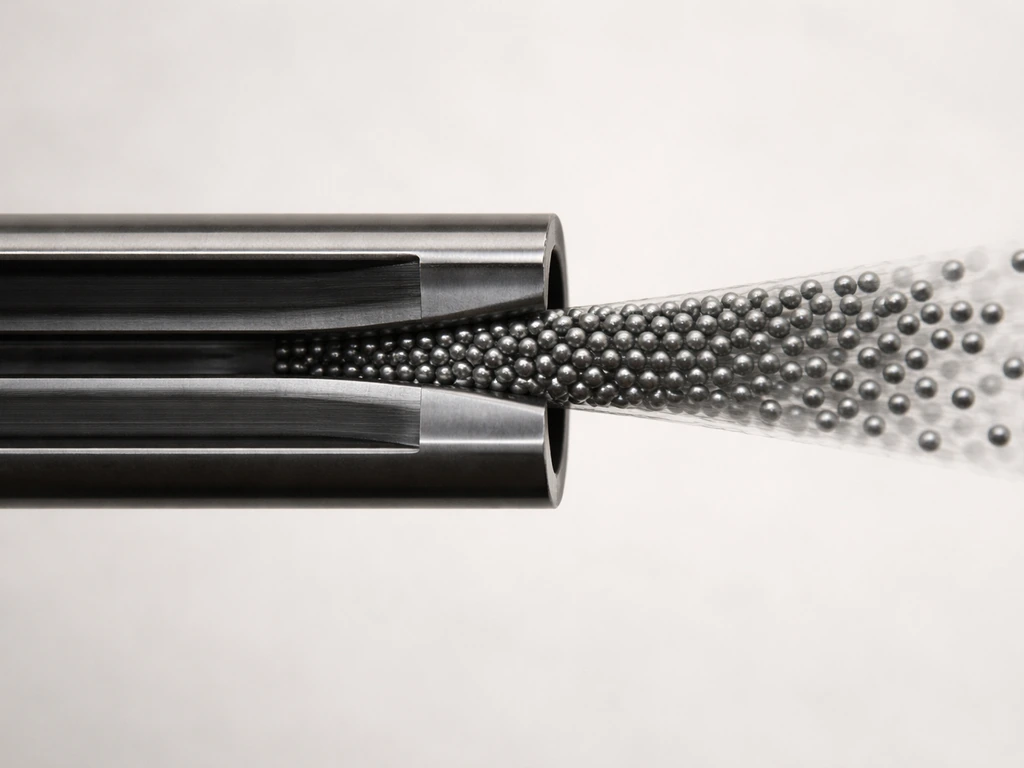
A choke is a constriction at the end of your shotgun barrel that squeezes the shot column as it exits the muzzle. Tighter constriction keeps the pellets grouped together longer, which gives you a narrower, denser pattern at distance. Looser constriction lets the shot spread faster, giving you a wider pattern at closer range. That's the whole mechanical idea, and it's simpler than most people make it sound.
The important mental shift is to stop thinking about choke as a range tool and start thinking about it as a pattern density tool. You want enough pellets in a 30-inch circle at your typical shooting distance to reliably hit and bring down a bird. [Browning's guidance puts it well: improved cylinder is optimized around 30 to 35 yards, modified around 35 to 40 yards](https://www. browning.
com/support/faq/shotgun-chokes. html), and tighter chokes like improved modified or full make sense when shots are consistently 40 yards or beyond. Texas Parks and Wildlife makes a point that's easy to miss: patterns can develop holes at extreme ranges, which means even a tight choke can fail you if you're trying to shoot beyond 40 yards. The pattern isn't just smaller out there, it's less consistent.
The standard way to measure pattern performance is to count how many pellets from a single shell land inside a 30-inch circle at 40 yards. A full choke should put roughly 75 percent of the shot charge in that circle at its optimum range. A modified choke will run closer to 60 percent, and improved cylinder closer to 50 percent. More percentage isn't automatically better because a super-dense pattern at 15 yards will just obliterate a bird rather than put clean pellets on target. Match the pattern density to where the birds actually are when you pull the trigger.
Picking the right choke for your bird and your hunting conditions
The single biggest factor is shot distance, which is mostly determined by the type of bird and the habitat. A quail flushed from dense brush at 15 yards is a completely different shot than a mallard cupped in at 35 yards, and using the same choke for both is one of the most common mistakes beginners make.
| Bird Type | Typical Shot Distance | Recommended Choke | Shot Type Notes |
|---|---|---|---|
| Quail | 15–25 yards | Improved Cylinder | Lead or bismuth fine; steel OK |
| Grouse / Woodcock | 15–30 yards | Improved Cylinder or Skeet | Close, fast flushes in timber |
| Pheasant | 25–40 yards | Modified | Classic upland choice |
| Dove | 25–40 yards | Modified or Improved Modified | Passing shots, variable distance |
| Ducks (decoys) | 20–35 yards | Modified or Improved Cylinder | Use steel; no tighter than modified |
| Ducks (pass shooting) | 35–45 yards | Improved Modified | Use steel; do not exceed modified restriction |
| Geese | 35–50 yards | Modified (steel-rated) | Heavy steel loads; watch choke limits |
| Turkey | 30–45 yards | Full or Extra Full | Dense pattern needed; lead or TSS typical |
If you hunt pheasant in open fields where birds flush long, modified is the right call and has been for decades for good reason. For quail in Texas brush or grouse in New England alder runs, improved cylinder wins because shots are fast and close. Waterfowl is where people get into trouble: the temptation is to go tighter to reach farther, but with steel shot you cannot safely use anything tighter than modified in most guns, and even that is a hard limit per Beretta and Benelli's own guidance. Steel is harder and less compressible than lead, and forcing it through a tight choke can damage the barrel or tube.
The main choke types and what they're actually best for
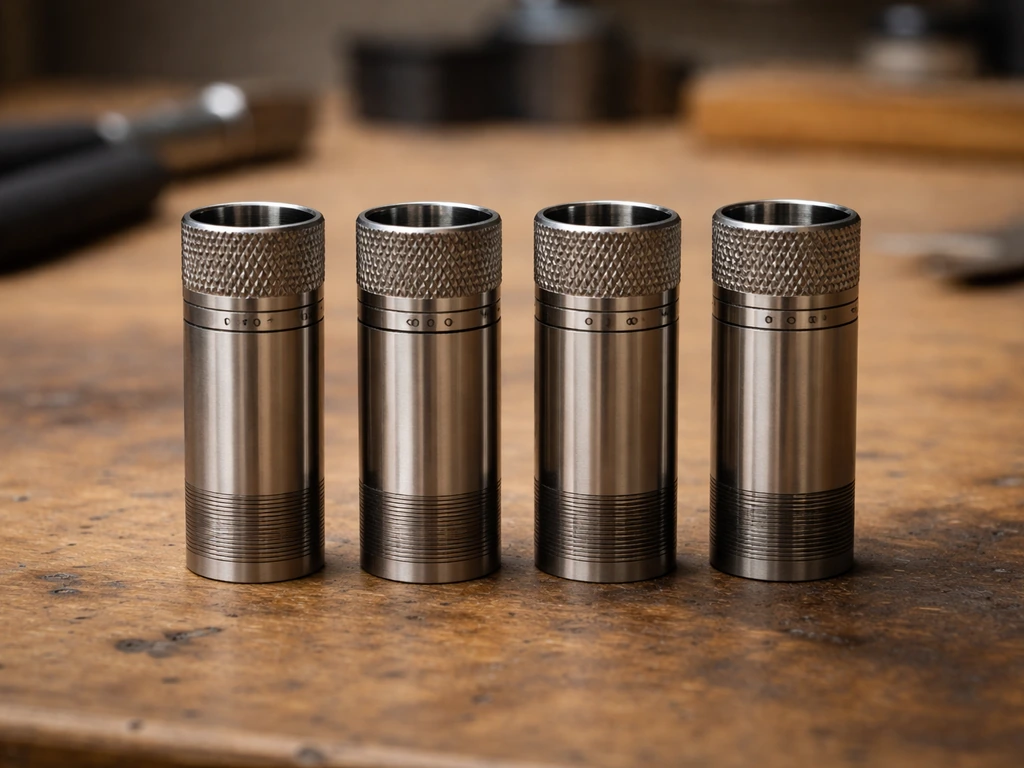
Choke names are mostly consistent across brands, but the actual constriction measurements can vary slightly. Carlson's publishes a constriction chart in thousandths of an inch that shows what each label means in measurable terms. The names are a starting point, not a guarantee of performance, which is exactly why patterning matters.
- Cylinder (no constriction): Widest pattern, shortest effective range. Good for home defense loads or extremely close flushes, but rarely the right pick for bird hunting.
- Skeet: Very light constriction, slightly tighter than cylinder. Designed for clay target angles, useful for timber grouse or woodcock where birds are nearly on top of you.
- Improved Cylinder (IC): The go-to for close upland birds. Best from 20 to 35 yards. Texas Parks and Wildlife specifically recommends IC for quail. Handles lead, bismuth, and steel shot well.
- Modified: The all-around workhorse. Covers pheasant, dove, decoying ducks, and most mixed-bag days. Effective from roughly 35 to 40 yards. Steel-shot safe in most guns.
- Improved Modified (IM): Good for longer shots on doves, pass-shooting ducks, or late-season pheasant that flush wild. Browning recommends IM or Full when game is consistently at 40 yards or more. Not recommended for steel shot.
- Full: Dense, tight pattern for 40-plus yard lead-shot scenarios. Turkey hunting is the prime use case. Do not run steel shot through a full choke.
- Extra Full / Turkey: Maximum constriction, designed specifically for turkey loads and sometimes buckshot. Rarely appropriate for typical bird hunting.
How to pattern your shotgun at home before season
Patterning is the one step most beginners skip, and it's also the one step that eliminates the most guesswork. The idea is simple: shoot at a large paper target, draw a 30-inch circle around the densest part of the pattern, and count the holes. That tells you what your specific gun, choke, and load combination actually delivers, because as the NRA's American Rifleman points out, choke tube markings don't guarantee real-world performance. Your barrel and your shells might perform differently than the label suggests.
- Set up a large paper target (at least 4 feet square) at 40 yards. Use the same choke and the exact load you plan to hunt with. Carlson's specifically advises using the same ammo you'll hunt with, not a substitute.
- Fire one shot aimed at the center of the target. Step up and find the densest cluster of holes.
- Draw a 30-inch circle centered on that cluster, not on where you aimed. This removes aiming error from the analysis.
- Count the pellet holes inside the circle, then count the total pellets in one shell (look up the shell's pellet count by shot size and load weight). Divide circle hits by total pellets to get your pattern percentage.
- Repeat this process three to five times with fresh paper for each shot. One shot is not statistically meaningful. NRA Family recommends multiple shots to get a reliable picture.
- If your pattern percentage is too low for your intended distance, try a tighter choke or a different load before going tighter. If the pattern has obvious holes, a different choke or shell combination may fix it.
- Test at 25 yards as well if you're hunting close-flushing birds. This shows you how wide and dense your pattern is at typical upland distances.
A good working result for most bird hunting is a reasonably even distribution of pellets through the 30-inch circle with no gaps large enough for a bird to fly through unhit. You're not chasing a perfect number; you're looking for even coverage at the distance where most of your shots will happen. Federal Premium makes the same point: pattern to confirm the pairing works, not just to see the number.
Mistakes that will cost you birds (and potentially your barrel)
The biggest myth in choke selection is that tighter is always better. It's not, and I've watched plenty of people miss close quail with a full choke because the pattern was so narrow at 20 yards that the bird flew right through the gap. Over-choking for close targets is just as bad as under-choking for long ones.
The safety issue that matters most is running steel shot through a choke that's too tight. Steel doesn't compress the way lead does, so forcing it through improved modified or full constriction can deform the choke tube or, in worst cases, damage the barrel. Beretta and Benelli both explicitly say not to use chokes tighter than modified with steel shot. Choke-Tube.
com also advises not using a choke tighter than modified constriction with steel shot unless the choke is specifically marked for use with steel shot.
If you're hunting waterfowl with steel (which is required in the US for migratory birds), your choke choice is modified or looser, period. Some manufacturers produce steel-specific or extended choke tubes rated for steel, and those are worth looking at if you're doing a lot of duck or goose hunting.
Another common mistake is assuming all choke labels mean the same thing across brands. They don't. An "improved cylinder" from one manufacturer might have slightly different constriction than another brand's IC. This is why patterning with your actual setup matters, and why the Wikipedia entry on shotgun chokes notes that manufacturer labeling isn't perfectly standardized. When you switch to a new brand of choke tube or a different shell, pattern it again before you go hunting.
Finally, confirm your shotgun's choke system before buying any aftermarket tube. Most modern shotguns use a proprietary thread system: Remington's RemChoke, Mossberg's Accu-Choke, Winchester's WinChoke, Beretta/Benelli's Optima-HP, and so on. An IC tube from Carlson's in a Mossberg thread won't fit a Beretta. Check your owner's manual or the manufacturer's website (Mossberg lists choke tubes by category and model) to get the right fit before ordering.
Your buying checklist and next steps for today
You don't need a different choke for every bird. A modified and an improved cylinder tube cover probably 80 percent of bird hunting situations. Buy those two first, pattern both with your hunting load, and then decide if you need anything else based on actual results. When you're looking for the best pole for Bird Buddy, start with the same idea and pick the one that matches your setup and targets buy those two first.
If you're shopping for the best monopod for bird photography, focus on height, stability, and smooth panning for your typical shooting distance best pole for Bird Buddy. For choosing the right pole size for a Bird Buddy setup, focus on matching your typical viewing distance and height so the camera aligns with where the birds are best pole for Bird Buddy.
- Identify your shotgun's choke thread system (check the owner's manual or call the manufacturer) before buying any tube.
- Buy a modified choke as your starting point if you hunt pheasant, dove, or mixed upland birds.
- Add an improved cylinder if you hunt quail, grouse, woodcock, or any close-flushing species in heavy cover.
- If you're hunting waterfowl, confirm any tube you buy is rated for steel shot. Do not use improved modified or full with steel.
- Pick up the exact shells you plan to hunt with before you go patterning. Don't pattern with one load and hunt with another.
- Set up a pattern session at 40 yards with a large paper target. Fire at least three shots per choke, draw a 30-inch circle on each, and evaluate pellet distribution.
- Also pattern at 25 yards for upland birds to see your close-range spread.
- If patterns look uneven or have gaps, try a different shell brand or shot size before switching chokes. Sometimes the load is the variable, not the constriction.
- Keep shots within 40 yards in the field. Texas Parks and Wildlife notes patterns develop holes beyond that range, making clean kills harder regardless of choke.
- Revisit your patterning any time you switch to a new load or a different choke tube, even from the same brand.
Once you've got your choke sorted and patterned, the rest of your field setup matters too. To choose the right pole length for a Bird Buddy, measure the mounting height you need and match it to the model and your viewing angle Bird Buddy pole length. Things like how you position yourself relative to birds, the decoys you use, and how you approach cover all affect how far and at what angle shots happen, which feeds right back into which choke performs best for your style. Getting your choke dialed in is a good foundation to build the rest of your setup around.
If you want more consistency, the right bird bait can make a huge difference by pulling birds in at the ranges your choke is patterned for. Using a good best bird decoy setup can also pull birds in at the ranges your choke is patterned for bird bait.
FAQ
Do I need a full choke for long shots at ducks and geese with lead shot?
Usually not. If you’re consistently shooting beyond your modified’s effective distance, consider improved modified as the next step, then verify with patterns. Full choke also risks over-dense patterns at closer ranges and can create “holes” at extreme distance due to pattern development issues, so it’s best treated as a last resort after patterning.
What’s the safest way to pattern a choke at home without guessing?
Pattern from a bench at the same distance you expect to shoot in the field (for many hunters, that’s 30 to 40 yards). Use one shell lot per test, measure pellets in a 30-inch circle, and repeat after changing either the choke or the ammunition. Avoid switching too many variables at once, because it becomes impossible to know what caused a bad or good pattern.
How much difference should I expect between two choke brands labeled “modified” or “improved cylinder”?
Enough that you should not assume equivalence. Even small constriction differences can shift where the pattern becomes tightest and where it starts showing gaps. The practical takeaway is to pattern after every choke change and after every change in shell type, including different shot sizes or shot materials.
Can I use the same choke for both lead and steel shot?
Only if that choke is explicitly approved for steel by the manufacturer. Steel requires more tolerance because it doesn’t compress like lead, so forcing steel through a choke that’s too tight can damage the tube or barrel. If you do a lot of waterfowl hunting, buy steel-rated (or extended) tubes and pattern them with your exact steel load.
Is it better to choose choke based on bird species or based on the actual shot distance I take?
Choose based on the distance you actually shoot, then confirm it matches the bird and habitat. Species is a useful starting clue, but habitat and how birds present drive distance more than the label on the choke chart. The best approach is to estimate your personal typical distance by reviewing past shots, then pattern chokes to that range.
How do I adjust choke choice if I’m shooting mostly in heavy cover where birds flush close?
Prioritize a looser choke like improved cylinder, then test for clean coverage at your close distances. A too-tight choke can produce a narrow pattern and miss birds that fly through the center gap between pellet clusters. If you occasionally get longer shots from openings, you can carry a second tube and swap, but avoid forcing one choke to do everything.
What’s wrong with thinking “more pellets is always better”?
More pellets in the 30-inch circle can still be counterproductive if the pattern is overly narrow at your typical close range, because birds can cross through areas with less coverage. Also, very dense patterns can increase the chance of over-penetration past the target in some situations. The goal is consistent pellet distribution at your realistic shot distance, not a maximum percentage number.
How far should I be willing to shoot when using a particular choke for bird hunting?
Use your pattern results, not the choke label or someone else’s yardage rule. A choke can perform well at its “optimum” range but become inconsistent farther out, with potential holes and reduced pellet count density. If your patterns show uneven coverage beyond your usual distance, back off rather than relying on the label’s reputation.
What should I check before buying an aftermarket choke tube?
First confirm choke-tube compatibility with your shotgun’s specific thread system. A tube that matches the choke name may still not fit due to proprietary threading (RemChoke, WinChoke, Beretta/Benelli Optima-HP, and others). Check your owner’s manual or the manufacturer’s tube-fit chart before ordering, because forcing a mismatched tube can damage threads.
Do I need to pattern every time I load a different box of shells?
You should pattern whenever you change a meaningful component, especially shot material (lead vs steel), shot size, wad design, or choke tube. Small lot-to-lot variations can happen, so if performance has mattered before (like when you’re trying to reliably hit birds at the edge of your range), re-check after a major ammunition change or if patterns look inconsistent.
Should I buy more than two chokes to start?
Most beginners are well-served by two tubes that cover the bulk of their hunting: typically improved cylinder for close, fast shots and modified for the middle distances. Add a tighter option only if your patterns and your field distances consistently justify it. This avoids buying a full set you never use and reduces the number of variables you’re patterning.
Next Article
Best Pole for Bird Buddy: How to Choose, Height, Setup
Choose the best pole for Bird Buddy with height, stability, placement, weatherproofing, and secure setup tips.