
A 'bird basket' can mean three completely different things depending on who's using the term, and getting them mixed up is one of those beginner mistakes that seems small until your bird is stressed, overheated, or chewing on something toxic. In the context of pet bird keeping, you're most likely looking at one of these: a foraging or enrichment basket (a toy-like accessory that holds food, shredding material, or other enrichment items inside the cage), a transport basket or carrier (a temporary enclosure for vet visits or travel), or occasionally a decorative basket-style cage cover or nest accessory. Each one has a specific job. Using the wrong type, or confusing one for another, is a real and common problem.
What Is a Bird Basket? Uses, Sizes, Safety, and Tips

Marcus Chen
21 Apr 2026
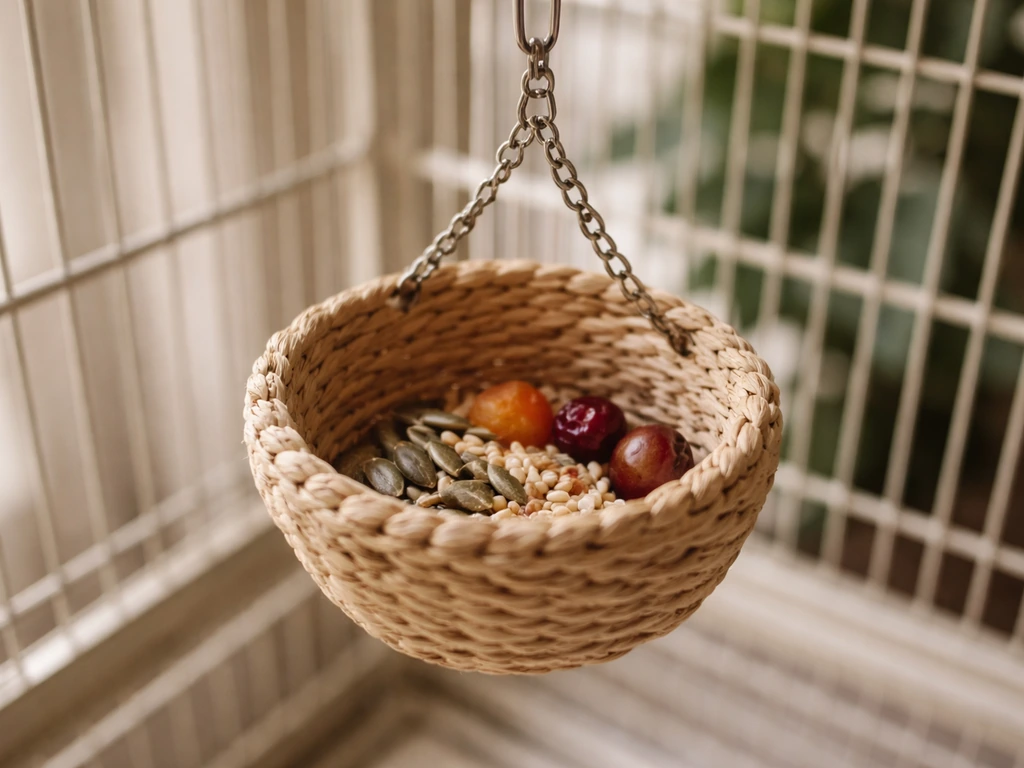
What 'bird basket' actually means: three different things
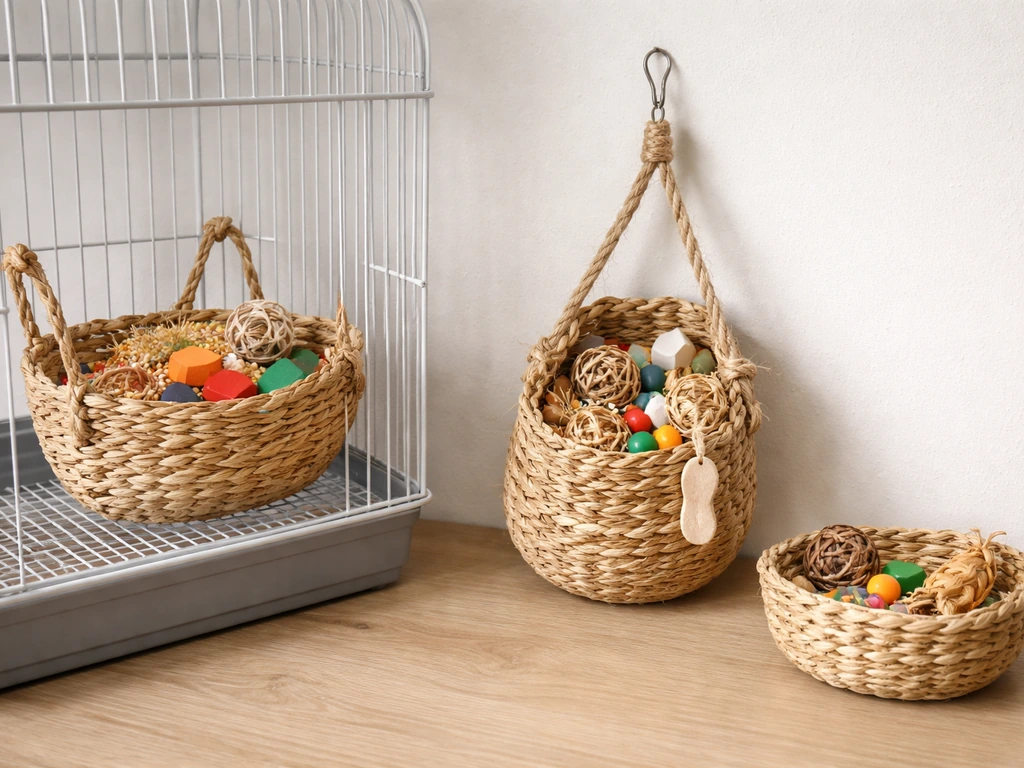
The most common meaning you'll run into when shopping online is the enrichment or foraging basket. Products like the Veggie Basket Bird Toy or BirdToyParts' Foraging Basket are marketed explicitly as interactive foraging toys that let birds 'explore, chew, and shred' materials. They're designed to hang inside a cage and be stuffed with foraging materials, treats, or shredding items. These are enrichment accessories, not enclosures.
The second meaning is a transport basket or carrier, sometimes called a travel crate or training basket. Pigeon keepers have used rattan training baskets for decades, and the concept carries over loosely to companion bird transport. The function here is short-term containment for travel, vet visits, or supervised training, not permanent housing. These need ventilation, secure latches, and enough headroom for the bird to sit normally.
The third and least common meaning in pet bird contexts is a nest basket or sleeping pod, sometimes woven from natural materials and mounted inside or on the outside of a cage. These are mostly used for finches, canaries, or doves, and they serve a resting or nesting function. If you have a parrot, you generally don't need or want a nest basket inside the cage, as it can trigger hormonal behavior.
| Type | Primary Use | Typical Materials | Who Needs It |
|---|---|---|---|
| Foraging/Enrichment Basket | Mental stimulation, food foraging inside cage | Natural seagrass, woven palm, untreated wood | Most companion birds, especially parrots |
| Transport Basket/Carrier | Vet visits, travel, temporary transport | Plastic, wire mesh, or wicker with ventilation | Any bird owner who travels or sees a vet |
| Nest/Sleeping Basket | Resting or nesting inside the cage | Natural woven fibers, soft materials | Finches, canaries, doves (rarely parrots) |
What each type is for and when you actually need one
If you have a conure, caique, quaker, or ringneck, a foraging basket is genuinely useful. Parrots are problem-solvers by nature, and sitting in a cage with nothing to do is one of the fastest routes to feather-destructive behavior and screaming. A foraging basket gives them something to rip apart, dig into, and work for their food. It's not a luxury. It's basic enrichment that most beginner setups are missing.
A transport basket or carrier becomes essential the moment you get a bird. Every bird needs vet checkups, and at some point you'll need to move your bird safely, whether that's across town or across the country. The [Association of Avian Veterinarians](https://www. aav.
org/) provides resources and a veterinarian directory that can help you find an avian veterinarian for checkups and care. Using your bird's main cage as a transport carrier works in a pinch for short local trips, as Purdue's veterinary guidance notes, but a dedicated carrier is safer, easier to handle, and less stressful for the bird.
blank" rel="noopener noreferrer">If you're flying, the Association of Avian Veterinarians is clear that birds must travel in secure, airline-approved carriers under owner supervision, and a foraging basket or wicker craft basket absolutely does not qualify.
A nest basket is a more specific purchase. For finches and canaries, a nest cup or woven nest is standard equipment and birds may genuinely use it for sleeping and nesting. For psittacines (parrots, conures, cockatiels), a nest box or basket inside the cage can overstimulate breeding hormones, especially in females, so most avian vets recommend skipping it unless you're deliberately breeding.
Picking the right bird basket for beginner birds
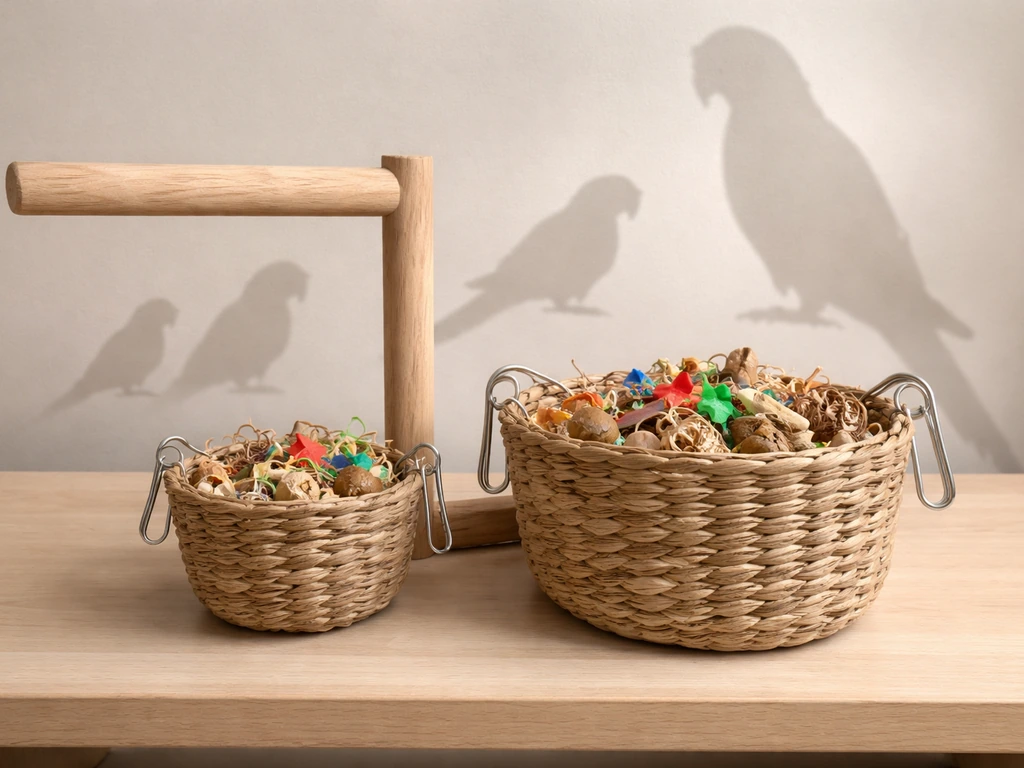
For foraging baskets, size really does matter. A medium foraging basket, marketed for species like caiques, small conures, quakers, and ringnecks, is too small for a cockatoo and too large for a budgie to interact with meaningfully. Revival Animal Health's Foraging Basket, for example, lists species categories explicitly: small conures and quakers fit a medium, while caiques and small cockatoos are listed for larger versions. Use those species guides as a starting point and match the basket to your bird's beak strength as much as its body size. A cockatiel can work a loosely woven seagrass basket easily. A green cheek conure needs something with a bit more resistance to stay interesting longer.
For blank" rel="noopener noreferrer">transport carriers, the key criteria are headroom, ventilation, and latch security. DOT notes that carrier and transport requirements, such as size and ventilation or leak-proof case requirements where applicable, vary by airline and must be followed headroom, ventilation, and latch security.
Your bird should be able to sit in a normal upright position without crouching. The carrier walls need ventilation holes or mesh panels on multiple sides, not just the door. CITES transport guidelines specifically require 'additional ventilation by means of holes of suitable size in the walls,' and that principle applies equally whether you're moving a pigeon or a lovebird. Front, top, and bottom ventilation is the ideal setup.
A closed plastic box with one small mesh window is not adequate.
Style-wise, hard-sided carriers with secure latches are generally better than soft-sided bags for most birds. Soft bags can be compressed in transit, have poor ventilation, and offer easy chewing access to the zipper or mesh. Hard carriers prevent tipping, which matters more than you'd think. A carrier that tips over in a car is terrifying for a bird. For smaller birds like budgies or cockatiels, a small hard carrier with a perch dowel across the center gives them something to grip during travel, which reduces stress considerably.
Quick size guide for foraging baskets by species
| Bird Size/Species | Recommended Basket Size | Notes |
|---|---|---|
| Budgies, parrotlets, small finches | Small (finger-trap or tiny woven cup) | Lightweight, loosely woven; easy shredding |
| Cockatiels, lovebirds, small conures | Small to medium | Medium seagrass or palm-leaf foraging basket works well |
| Caiques, quakers, ringnecks, green cheeks | Medium | Listed explicitly on most foraging basket product pages |
| Caiques (larger), small cockatoos, Amazons | Medium to large | Needs sturdier weave; these birds have strong beaks |
| Large cockatoos, macaws | Large or custom | Standard foraging baskets may last minutes; look for harder materials |
Safe materials and what you must avoid
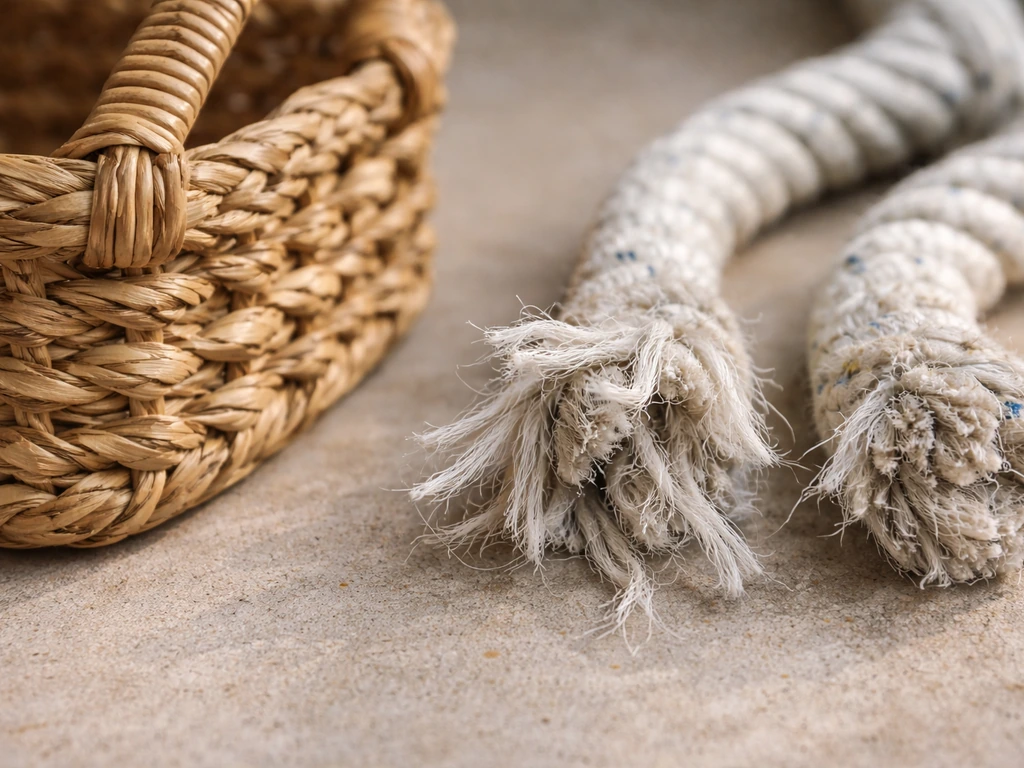
For foraging baskets, the safest materials are natural, untreated, and non-toxic. Think natural seagrass, untreated palm leaf, untreated sisal, and natural woven rattan. Untreated pine is also listed as safe by avian enrichment guides. The core rule, backed by avian care researchers like Dr. Jade Kingsley, is that any material your bird chews and potentially ingests must be non-toxic, free of chemical treatments, and free of dyes or glues. Treated wood can contain arsenic, and colored wood components may use dyes that are hazardous when ingested. If a basket is brightly dyed and the manufacturer can't confirm the dye is food-safe or bird-safe, skip it.
Fiber materials deserve special attention. Loose synthetic fibers, fraying rope made from synthetic materials, or tightly wound string can tangle around a bird's toes or be ingested and cause obstruction. The rule of thumb is: if you can pull a strand loose and it doesn't break cleanly, it's a tangling risk. Natural seagrass and palm leaf tend to shred into short pieces rather than long strands, which makes them safer for unsupervised use.
For transport carriers, avoid wicker or natural-fiber baskets not designed specifically for bird transport. A decorative wicker basket from a craft store has no secure latch, no guaranteed non-toxic finish, and gaps that can trap a bird's foot or beak. Stick to carriers made from BPA-free plastic with stainless steel or nickel-plated mesh. Avoid carriers with zinc-coated wire, as zinc toxicity is a real risk when birds chew on coated metal.
Cleaning practicality matters more than most beginners realize. A beautiful woven seagrass foraging basket is a one-time-use enrichment item, meaning when it's shredded and soiled, you toss it. A transport carrier, on the other hand, needs to be cleaned and disinfected repeatedly. A diluted bleach solution works well: one quarter cup of bleach per gallon of water, sprayed on surfaces and then fully rinsed. A veterinary resource recommends a 1:9 bleach-to-water ratio as an effective disinfectant. The critical step that beginners miss is ensuring the carrier is completely dry and fully aired out before the bird goes back in. Bleach and ammonia fumes are dangerous to birds even at low concentrations.
- Safe foraging basket materials: natural seagrass, untreated palm leaf, untreated sisal, untreated pine, natural rattan
- Safe carrier materials: BPA-free hard plastic, stainless steel or nickel-plated mesh, food-safe dyes only
- Avoid: treated or dyed wood with unknown coatings, synthetic fiber ropes that fray into long strands, zinc-coated wire, decorative craft baskets with unknown finishes
- Never use sand, gravel, or cat litter as liner material in a transport carrier
- Always dry carriers completely before reuse; fumes from cleaning products are toxic to birds
How to set up and use a bird basket safely
For a foraging basket inside the cage, the setup process is straightforward but the details matter.
- Inspect the basket before hanging it. Pull on the weave, check for loose strands, sharp edges, and any coatings that rub off on your fingers. If it smells strongly of chemicals or dye, air it out for 24 to 48 hours before use.
- Hang it at a height your bird can reach comfortably from a perch. Birds won't hop down to the cage floor to investigate something new. Mid-cage height, accessible from a horizontal perch, is the sweet spot.
- Stuff it loosely for the first introduction. Use a few pieces of your bird's regular food, a small piece of untreated wood, or a strip of plain paper. You're not trying to challenge them on day one. You want them to succeed and associate the basket with reward.
- Supervise the first interaction. Watch how your bird approaches it and whether anything seems like an ingestion or entanglement risk. After the first few supervised sessions, you'll have a realistic sense of how quickly and aggressively your bird engages.
- Inspect daily. The Gabriel Foundation and avian enrichment guides are consistent on this: check toys and enrichment items every day for fraying, breakage, and soiling. A shredded or heavily soiled basket should come out.
For a transport carrier, preparation before the trip matters as much as the trip itself.
- Clean and dry the carrier completely before use. Disinfect with diluted bleach solution (1/4 cup bleach per gallon of water), rinse thoroughly, and allow to air dry fully. Return the bird only once fumes are completely gone.
- Add a paper liner to the bottom. HARI recommends a paper liner to reduce slipping, though they note it can get soiled quickly. Plain unbleached paper towels work well. Avoid sand, gravel, or cat litter.
- Include a perch if the carrier accommodates one. A simple dowel perch across the center of the carrier gives the bird something to grip, which significantly reduces transport stress. Per FWS handling guidance, birds instinctively grasp during movement.
- Place the carrier away from direct airflow. Purdue's husbandry guidance specifically warns against placing bird enclosures directly beside or beneath HVAC vents. In a car, point the vents away from the carrier and avoid direct sun on it.
- Do not cover the carrier completely. Partial coverage to reduce visual stimulation is fine, but full coverage blocks airflow and raises the temperature inside. Overheating is a serious and fast-moving risk, especially in warm weather.
- Check ventilation before closing. Confirm that holes or mesh panels on multiple sides are unobstructed. A carrier tucked against a car seat or bag can lose ventilation on one side.
Common mistakes and what goes wrong
The biggest mistake I see with foraging baskets is buying one that's too large for the bird and then wondering why the bird ignores it. A budgie confronted with a large seagrass ball made for a macaw isn't going to engage with it. Scale matters. The second most common mistake is leaving a heavily shredded or fiber-heavy basket in the cage unsupervised for days. When a basket is half-destroyed, the fiber tangle risk increases dramatically. Daily inspection isn't optional.
For transport, the mistakes tend to be more serious. Using a decorative wicker basket, a cardboard box, or a soft tote bag as an impromptu carrier is genuinely risky. If you meant a different kind of tool, a what is a bird hook knife used for guide can help you confirm the exact purpose before buying or using anything. These don't prevent escape, don't provide reliable ventilation, and can't be secured properly in a vehicle. The AAV is clear that transport enclosures must prevent escape and meet specific travel standards. A bird that escapes inside a moving car is a danger to itself and the driver.
Covering the carrier entirely to 'calm' the bird is another common error. Partial draping with a breathable cloth is fine. Throwing a thick blanket over the whole carrier on a warm day is how overheating happens. Purdue is blunt on this point: overheating must be avoided at all costs, and it can happen faster than most owners expect.
One more issue worth flagging: using a nest basket inside a parrot's cage when the bird isn't intended for breeding. Many first-time conure or cockatiel owners add a woven nest basket because it looks cozy and natural. The result is often a bird that becomes territorial, cage-aggressive, and hormonally dysregulated. If you're not breeding your bird, skip the nest basket entirely and offer a cozy hut or tent toy instead as a non-reproductive sleep option.
Troubleshooting quick reference
| Problem | Likely Cause | Fix |
|---|---|---|
| Bird ignores the foraging basket | Wrong size, or introduced at wrong height | Resize to species, hang at perch level, introduce with familiar food inside |
| Bird chewing basket aggressively and swallowing pieces | Unsafe fiber material or too-fine weave | Switch to coarser natural seagrass or palm leaf; supervise closely |
| Bird stressed or screaming in transport carrier | Poor ventilation, no perch, too much visual stimulation | Add a perch, partially cover sides, check airflow on all sides |
| Bird overheating in carrier | Carrier in direct sun or covered completely | Move out of direct sun, remove full covering, ensure multiple ventilation points are open |
| Bird escaping from carrier or basket | Weak latch, gaps in weave, wrong product type | Replace with hard-sided carrier with secure latches; natural baskets are not secure carriers |
| Fiber tangling around toes | Fraying synthetic fibers or long-strand natural fiber | Remove immediately, inspect daily, switch to short-shred natural materials |
When a basket isn't the right tool, and what to use instead
A bird basket of any type is an accessory or a temporary solution, not a primary habitat. If you're trying to figure out where your bird will actually live, a foraging basket inside a cage supplements an already solid setup. If you're specifically asking what the What is the liver bird building used for topic is used for, it helps to look at how it functions in that context.
It doesn't replace a correctly sized, properly ventilated, safe-material cage with multiple perches. If you're still sorting out your bird's main enclosure, that comes first. The broader questions around what makes a good bird habitat, what an appropriate enclosure looks like for different species, and whether a full aviary setup might suit your situation are all worth exploring separately and they connect directly to how you'd then use a basket within that space.
The broader questions around what makes a good bird habitat, what an appropriate enclosure looks like for different species, and whether a full aviary setup might suit your situation are all worth exploring separately and they connect directly to how you'd then use a basket within that space what is a bird enclosure called.
If you're wondering whether you should move beyond a single cage and into something larger, you might also ask what is a bird aviary and when that setup makes sense.
For foraging and enrichment specifically, a basket is one tool in a larger enrichment rotation. Foot toys, shredding toys, puzzle feeders, and foraging boards all serve overlapping purposes. Rotating them prevents habituation, where your bird stops engaging because the same item has been in the cage for three weeks. A foraging basket works best as part of that rotation, not as the single enrichment solution.
For transport, if you're taking your bird to the vet regularly (which you should be, including an annual wellness exam), invest in a dedicated, hard-sided bird carrier. For transport, bird launchers are used to safely release or move birds in controlled setups where a bird needs to be carried or sent off as part of handling bird carrier. This is not a place to cut corners.
A proper carrier keeps your bird safe, makes vet visits less stressful, and is essential if you ever need to evacuate quickly. If you're ever unsure whether an item is safe for your bird's enrichment setup, checking with your avian vet is always the right call. Some enrichment risks are subtle, and a vet familiar with your bird's species will give you a straight answer.
It's also worth noting that baskets sometimes appear in gift contexts, such as curated gift sets marketed to bird owners. If someone gave you a 'bird basket' as a gift, open it carefully and evaluate each item inside against the material safety standards above before putting anything in the cage. The suet basket used in wild bird feeding is a completely different product and has no role in pet bird care. If what you mean is a suet basket for feeding wild birds, it works differently than the pet “bird basket” types covered in this guide.
The short version if you're in a hurry
- Most likely, 'bird basket' means a foraging/enrichment toy for inside the cage. Match the size to your species and use only natural, untreated, non-dyed materials.
- For travel, you need a proper hard-sided carrier with multiple ventilation points and a secure latch. Not a wicker basket, not a cardboard box.
- Nest baskets inside cages are only appropriate for finches, canaries, and doves. Keep them out of parrot cages unless you're actively breeding.
- Inspect foraging baskets daily. Remove and replace anything shredded, soiled, or showing loose long-fiber strands.
- Clean transport carriers with diluted bleach (1/4 cup per gallon of water), rinse thoroughly, and air out completely before the bird goes back in.
- A basket is an accessory, not a habitat. Get the main cage setup right first, then layer in enrichment.
FAQ
If I buy a “bird basket” online, how can I tell which type it is before I put it in my cage?
Check the product description for purpose words. Foraging baskets say “enrichment” or “foraging” and list hanging or stuffing instructions. Transport carriers mention “travel,” “carrier,” “airline,” “ventilation,” and latches. Nest baskets mention “nesting,” “egg,” “breeding,” or “sleep pod” and are often paired with finch or canary wording. If the listing is vague, treat it as non-qualified until you can confirm it meets bird-safe material and ventilation or latch requirements for the job you need.
Can a foraging basket be used as a permanent sleeping spot for my bird?
Usually no. A foraging basket is designed for chewing and food work, not as a resting enclosure, and it can become shredded faster than you expect. If you want a sleep option, use a purpose-made hut or tent toy that is stable, not easily tangled, and provides a consistent resting surface without creating breeding hormone triggers (especially for parrot species).
How do I know whether my bird’s beak is strong enough for the basket materials?
Start by matching basket toughness to beak strength. If your bird can rapidly shred everything into long fibers or consistently chew through woven seams, switch to materials known for safer shredding (like seagrass or untreated palm leaf) and inspect daily. Also watch for selective chewing, if your bird ignores a basket, it may be too small or too easy, which often leads to faster habituation and less engagement.
My foraging basket is getting shredded quickly. Should I wait longer between replacements?
No. When a basket is heavily shredded, the tangling and ingestion risk rises, especially with fibers and rope-like pieces. Plan on either tossing it when it reaches a visibly unsafe condition or rotating to fresh items more frequently, then inspect every day and remove immediately if you see fraying fibers or pieces collecting around toes.
Is it okay to cover a transport carrier with a cloth to keep my bird calm?
Partial coverage can help, use a breathable cloth and keep ventilation open on multiple sides. Avoid fully enclosing the carrier, especially in warm weather, because airflow reduction can quickly lead to overheating. If your bird pants, spreads its wings oddly, or seems lethargic, uncover immediately and focus on cooling and airflow.
Can I reuse the same transport carrier for multiple trips without disinfecting?
You should disinfect between trips or at minimum after any exposure to droppings, vomit, or heavy soiling. The article mentions a diluted bleach approach, the key is fully rinsing and letting the carrier dry and air out completely before the bird goes back in. Never combine bleach with other cleaners, and do not use scented disinfectants that leave residues your bird could inhale or chew.
What if my bird is always chewing the carrier while traveling, is that normal?
Some nibbling can happen, but persistent chewing can indicate the carrier materials are not ideal or the latch and ventilation are uncomfortable or accessible. For travel, choose designs that block easy access to zippers, seams, and coated metal. If you see chewing that could cause sharp fragments or coated-metal contact, switch carriers and consider a vet check for stress or respiratory issues.
Are soft-sided bags ever acceptable for transporting small birds?
They’re higher-risk for most situations because they can compress, reduce airflow, and give easier chewing access to zippers or mesh openings. If you must use a soft option, it should still provide strong ventilation on multiple sides and an escape-proof structure with secured closures, but in general a hard-sided, properly ventilated carrier is the safer default.
Should I include a foraging basket in the carrier on the way to the vet?
Often you should only include enrichment if it does not compromise safety or ventilation and if it does not create chewing or tangling hazards inside the carrier. If you use anything, keep it small, secure, and easy to remove, and never use items that could obstruct airflow. When in doubt, ask your avian vet what they prefer for your species and carrier type.
Do nest baskets work for every species of bird?
No. They are typically appropriate for finches and canaries, and they are often risky for many parrot species unless breeding is the goal. For psittacines, nest-like items can promote hormonal behavior that increases aggression or territoriality. If your bird is not breeding, choose non-reproductive sleep options designed to feel cozy without functioning like a nesting site.