A bird enclosure is most commonly called a cage, but depending on the size, purpose, and setup, you might also hear it called an aviary, a flight cage, a habitat, or even a coop. A bird habitat is the overall setup that supports the bird’s health, including the right space, airflow, safety, and day-to-day care. None of these terms are wrong exactly, but they do mean different things in practice, and picking the wrong one for your bird is one of the most common mistakes first-time owners make. Here's a plain-language breakdown of what each term actually means, how to match it to your bird, and what to look for once you start shopping.
What Is a Bird Enclosure Called? Cage, Aviary, Coop

Marcus Chen
22 Apr 2026
The most common names for a bird enclosure
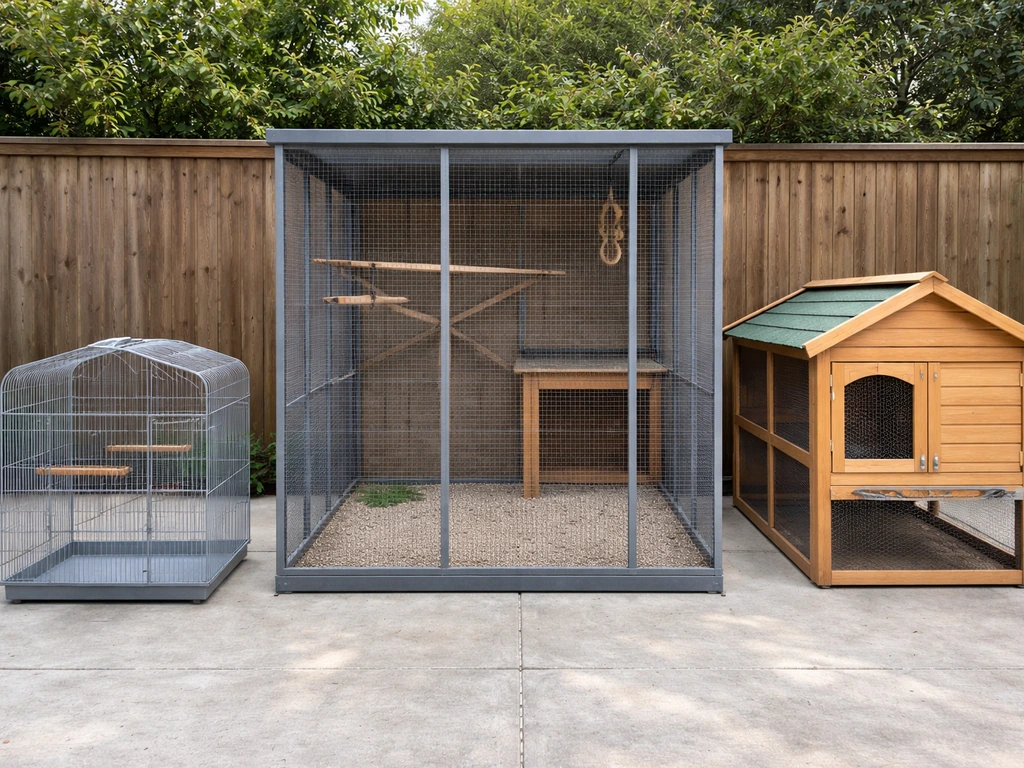
When people search for housing for a pet bird, they run into several different terms that are sometimes used interchangeably but shouldn't be. The most important ones to know are:
- Cage (or birdcage): The most widely used term for a wire or bar enclosure designed to house a pet bird indoors. It's the default word for parrot, budgie, cockatiel, and finch housing.
- Aviary: A larger enclosed space, often housing multiple birds, designed to allow real flight. Aviaries can be indoors or outdoors and are sometimes walk-in structures.
- Flight cage (or flight aviary): A specific type of aviary designed to give birds enough room to actually fly from perch to perch, not just move around. Common in aviculture and for active species like finches and canaries.
- Habitat: A general marketing term used on packaging and in pet stores, usually for smaller cages sold with starter accessories. It means the same thing as cage but sounds more complete.
- Coop: Primarily used for poultry and outdoor birds like chickens and ducks. If you're keeping pet parrots, budgies, or similar companion birds, the word coop doesn't really apply.
You might also see the word 'enclosure' used as a neutral umbrella term in veterinary and welfare guidance, covering anything from a small cage to a large outdoor aviary. It's the safest word to use when you're not sure which specific type you mean.
Cage vs aviary vs coop: which term actually fits your situation
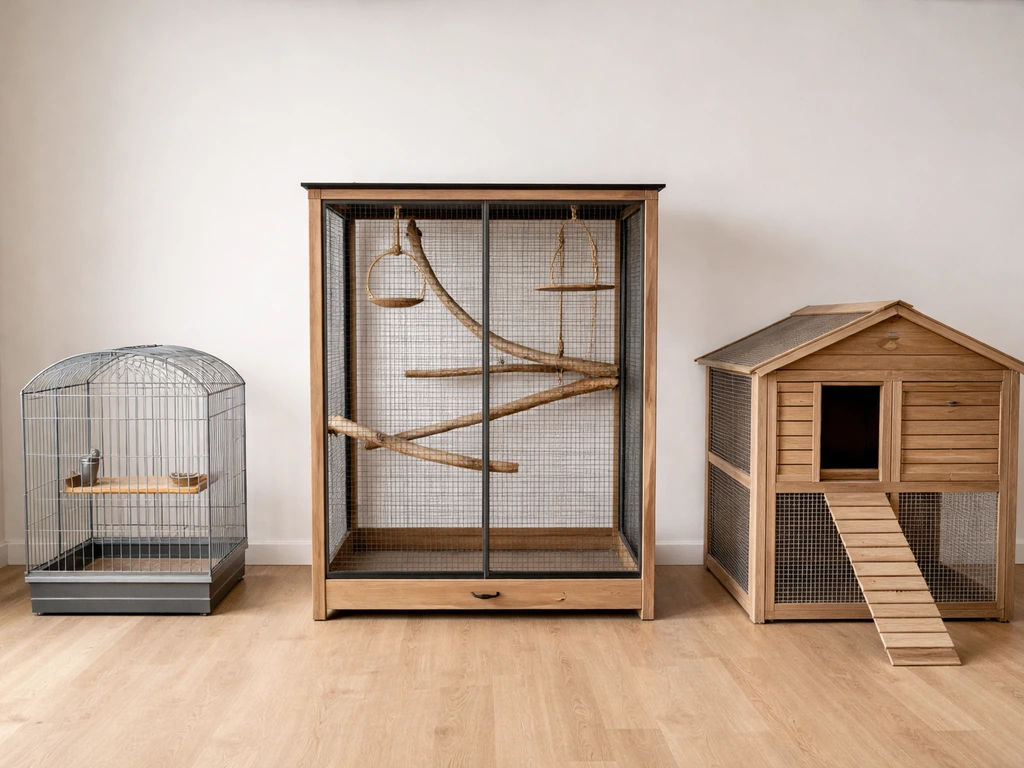
The simplest way to tell these apart is by thinking about size, location, and purpose. A cage is small to medium, typically sits on a stand or table indoors, and is meant as a home base for one or two birds. An aviary is large enough for birds to fly freely, may be indoor or outdoor, and is usually the right choice if you have multiple birds or an active species that needs real exercise. A coop is outdoor-focused and is associated with poultry, not companion birds.
| Term | Typical Size | Indoor/Outdoor | Best For | Flight Possible? |
|---|---|---|---|---|
| Cage (birdcage) | Small to medium | Indoor | 1-2 companion birds (parrot, budgie, cockatiel) | No, or very limited |
| Flight cage | Medium to large | Indoor or outdoor | Finches, canaries, active small birds | Yes, short flights |
| Aviary | Large to very large | Indoor or outdoor | Multiple birds, active species, long-term housing | Yes, sustained flight |
| Habitat | Small to medium | Indoor | Starter setup, small birds | No |
| Coop | Varies | Outdoor | Poultry, chickens, ducks | Rarely |
A critical point worth repeating: a standard cage is often not enough on its own. The RSPCA is clear that a cage should be treated as a baseline, and most pet birds also need regular supervised time outside it or access to a flight area for exercise. A bird basket gift can be a thoughtful way to offer safe enrichment items, but it should not replace a proper enclosure and daily out-of-cage time.
A what is a bird basket is a type of enrichment idea, but it should not replace a proper enclosure and daily out-of-cage time. A bird suet basket should be hung or placed inside the enclosure so it functions as enrichment without compromising safety or cleanliness. If you plan to keep your bird in the cage most of the day with no flight time, consider stepping up to a flight cage or adding an aviary setup.
This is something a lot of beginners don't realize until after they've bought a cage that's too small.
How the enclosure type changes your day-to-day bird care
The type of enclosure you choose isn't just a vocabulary decision, it shapes nearly everything about how you care for your bird. A small indoor cage means your bird depends entirely on you for exercise and enrichment outside the cage. You'll need to schedule out-of-cage time every day, rotate toys, and be very deliberate about where you put the cage to keep the bird mentally stimulated. That's a real time commitment.
A flight cage or full aviary changes the dynamic considerably. Your bird can move, exercise, and entertain itself more independently, which is healthier physically and mentally. The trade-off is that larger enclosures take more time and effort to clean, cost more upfront, and often require more planning around placement and ventilation. Outdoor aviaries add weather, predator protection, and wild-bird disease exposure to the list of things you have to manage. Neither setup is automatically better, but you need to go in with realistic expectations about what each one demands.
The species you choose drives this decision more than anything else. A budgie in a spacious flight cage with daily out-of-cage time is far better off than a cockatoo in a cage that's technically the 'right size' but offers no flight and no enrichment. Match the enclosure type to the activity level and social needs of the species, not just the size category on the label.
Getting the size right as a beginner
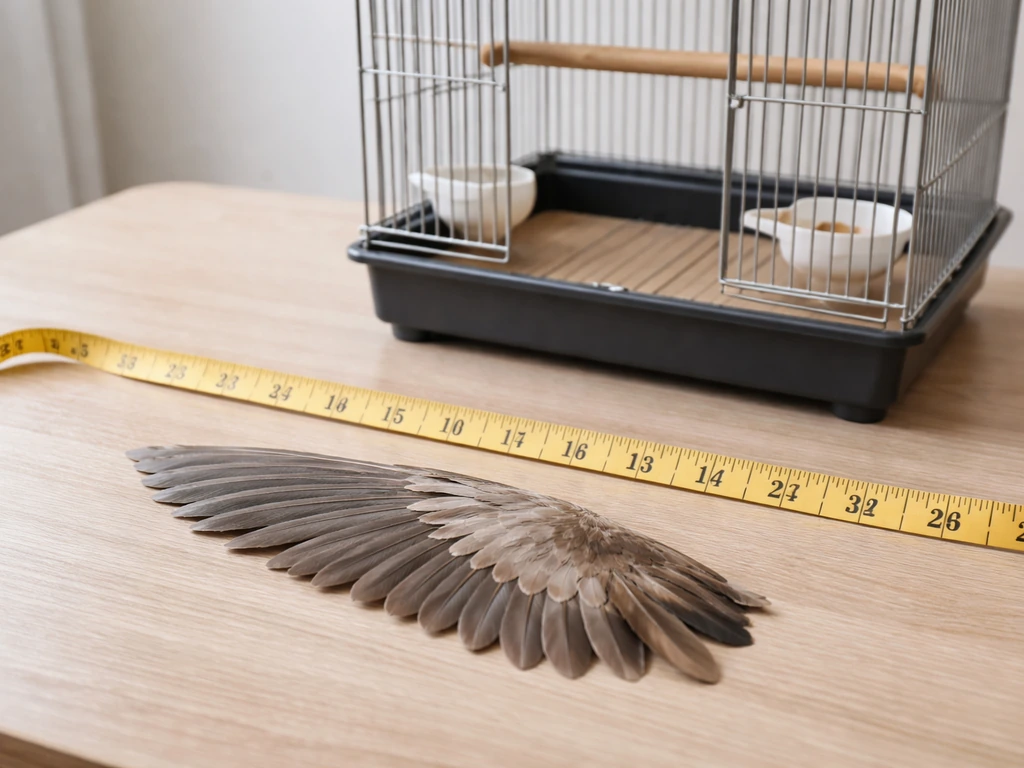
There's a simple sizing rule from Purdue University's veterinary guidance that I think is more useful than most cage-size charts: the cage should be at least twice your bird's wingspan in width, length, and depth. Scottish welfare licensing guidance for birds also uses a formula based on wingspan, expressing minimum cage dimensions as multiples of the average flying wingspan a formula for bird minimum cage dimensions based on wingspan. So measure your bird's wingspan (or look it up for the species you plan to buy) and double it in all three dimensions. That's your minimum floor. Most starter cages sold in pet stores fall short of this for medium and large species, which is worth knowing before you buy.
For specific species, the Merck Veterinary Manual provides a helpful reference. Small birds like budgerigars, cockatiels, lovebirds, and parrotlets need a minimum cage size of 20 x 20 x 30 inches, with bar spacing no wider than 0.5 inches. Larger parrots need progressively more space and wider bar spacing. The bar spacing point is especially important for safety: if the gap between bars is too wide, a small bird can get its head stuck, which is a serious injury risk.
When it comes to layout, a rectangular cage gives your bird more useful horizontal flying or hopping space than a tall, narrow one. Height looks impressive but birds move side to side more than up and down. A wide cage at mid-height is almost always a better choice than a tall, thin tower cage, even if the total cubic volume is similar.
| Species Group | Min Cage Size (inches) | Bar Spacing (max) | Notes |
|---|---|---|---|
| Budgerigar, cockatiel, lovebird, parrotlet | 20 x 20 x 30 | 0.5 inches | Go larger if possible; flight cage preferred |
| Conures, caiques, small Amazons | 24 x 24 x 36 | 0.75 inches | Needs horizontal width for movement |
| African greys, large Amazons | 36 x 24 x 48 | 1 inch | Bigger is always better for these active birds |
| Macaws, large cockatoos | 48 x 36 x 60+ | 1–1.5 inches | Aviary-style housing strongly preferred |
What actually needs to go inside the enclosure
Perches
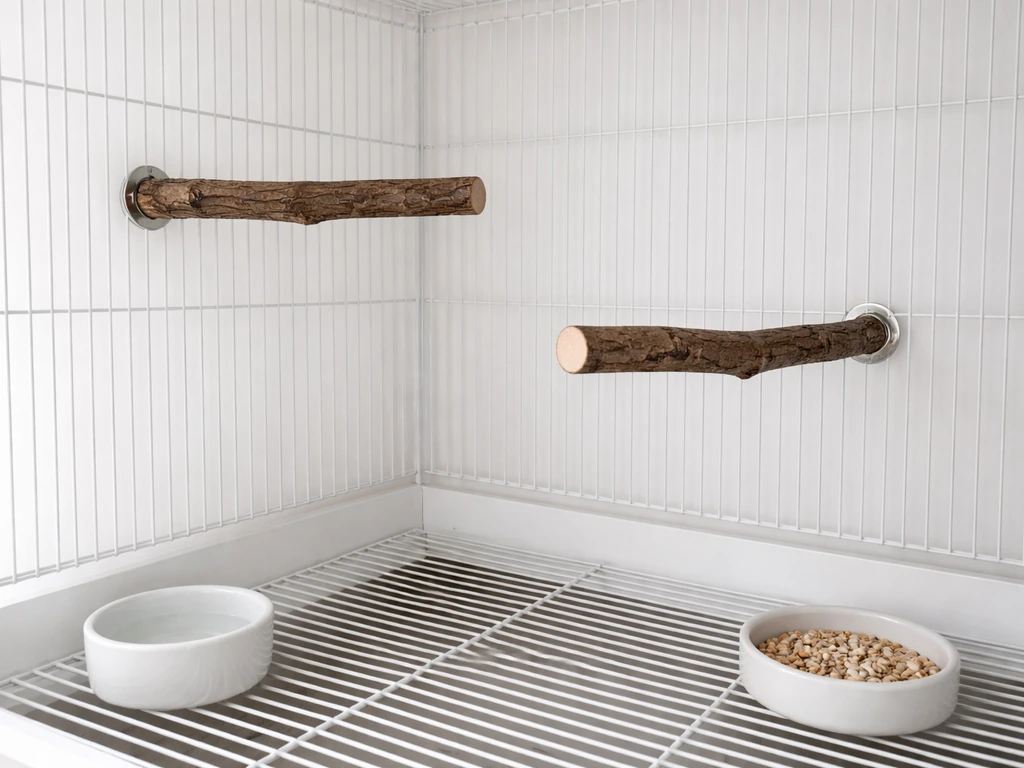
Perches are not an afterthought. A bird hook knife is commonly used to safely remove stuck droppings or debris from cage bars, perches, and hard-to-reach corners without damaging the surfaces. Purdue's husbandry guidance specifically recommends that no two perches in the cage should be the same diameter. The variation forces the bird to grip differently on each perch, exercising the muscles and tendons in its feet and reducing the risk of pressure sores.
Natural wood perches, like manzanita, are a solid choice because they're hard and durable while offering slight texture variation. Rope perches can be useful for enrichment but carry a risk: birds sometimes shred and ingest the fibers, or get toes tangled, so inspect them regularly and replace them when they fray.
Place perches at different heights and positions so your bird has options. Avoid positioning them directly above food or water dishes, because droppings contaminate both quickly.
Food and water containers
Stainless steel bowls are the practical standard because they're easy to clean, don't harbor bacteria in scratches the way plastic does, and most birds can't easily destroy them. You want at least two sets so you can swap clean bowls in while the used ones are being washed. Purdue recommends cleaning food and water containers once or twice daily before refilling, which sounds like a lot until you see how quickly water bowls get contaminated with droppings and food debris.
Cage floor and bedding
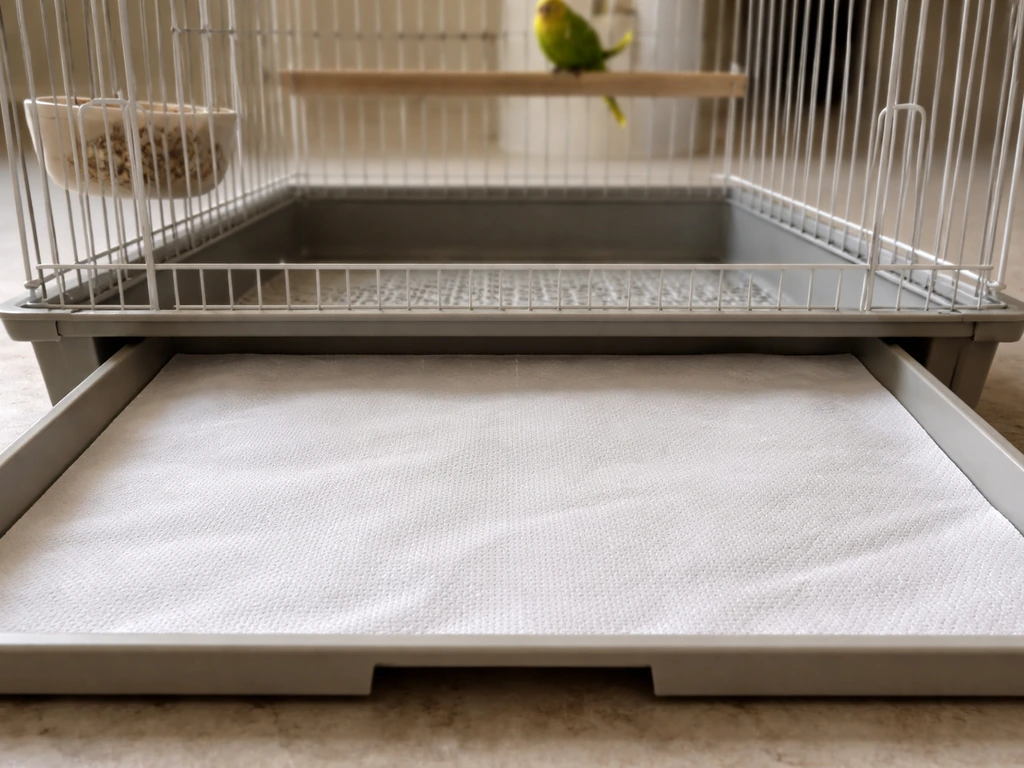
Most cages have a pull-out tray at the bottom. Line it with plain paper (unprinted newsprint or paper towels) rather than wood shavings, corncob, or scented bedding. Paper makes it easy to check droppings daily for health changes, doesn't carry the mold risk of organic bedding, and is easy to swap out. Avoid cedar and pine shavings entirely because the aromatic oils are respiratory irritants for birds.
Safety checklist before you put a bird in
- Bar spacing matches your species (0.5 inches for small birds like budgies and cockatiels)
- No zinc-coated or galvanized wire (zinc is toxic if chewed or ingested)
- No sharp wire ends or loose welds inside the cage
- Latches are secure (parrots especially are escape artists)
- No painted surfaces that could chip and be ingested
- All accessories (toys, perches, dishes) are bird-safe materials
Cleaning, maintenance, and daily habits that actually matter
The cleaning routine for a bird enclosure works on three timescales: daily, weekly, and monthly. Daily, you're swapping out the cage liner, cleaning food and water dishes before refilling, and wiping obvious debris off perches or cage bars. Weekly, you're doing a more thorough wipe-down of perches, toys, and cage walls. Monthly, you do a full disassembly and deep clean with a non-toxic disinfectant, hot water, and a thorough rinse.
VCA Animal Hospitals recommends cleaning the entire cage at least once or twice a month using non-toxic disinfectant soap and hot water. The most important step after any cleaning product use is a thorough rinse. Birds are acutely sensitive to chemical residues on surfaces, and even trace amounts of cleaning agent can cause serious health problems. Never mix bleach and ammonia-based cleaners; the Merck Veterinary Manual warns this combination produces highly toxic gas that can cause severe breathing distress in birds within 12 to 24 hours. Even separately, bleach must be rinsed off completely before the bird goes back into the cage.
When you're deep-cleaning, move the bird to a separate, secure space in a different room so it doesn't inhale cleaning fumes. Let the cage air dry fully before returning the bird to it. This isn't overcautious, it's just the reality of how sensitive avian respiratory systems are.
Indoor air quality and where to place the enclosure
Placement is where a lot of first-time bird owners make mistakes that have nothing to do with cage size or bar spacing. Birds have extraordinarily sensitive respiratory systems, and fumes that are harmless to humans can kill a bird quickly. The most well-documented hazard is PTFE (polytetrafluoroethylene), better known as Teflon. When PTFE-coated cookware is overheated, it releases fumes that are highly toxic to birds.
Cornell University documented a toxicosis event in birds exposed to PTFE, and VCA Animal Hospitals advises keeping birds well away from kitchens where non-stick cookware is used. If you have a bird, switching to stainless steel or cast iron cookware in any room the bird might be exposed to is a practical precaution worth taking seriously.
Beyond Teflon, the Association of Avian Veterinarians warns against a broader range of household fume sources: aerosol sprays, air fresheners, scented candles, certain cleaning products, and even some paints and adhesives. The rule of thumb is this: if you can smell it strongly, it's potentially a problem for your bird. Never place a cage in a kitchen, near a laundry room, or in a space where aerosols are used regularly.
Good placement for an indoor cage means a room with natural light (but not direct afternoon sun all day, which causes overheating), stable temperature, no drafts from air vents or open windows, and low chemical exposure. A living room or dedicated bird room works well for most species. Avoid placing the cage in a corner against two walls with poor airflow, and keep it at roughly human eye level so the bird doesn't feel exposed or threatened from above.
If you're considering an outdoor aviary, the additional factors are weather protection, predator-proofing, and preventing wild birds from entering and potentially transmitting disease. The RSPCA notes that aviary wire needs to be strong enough to resist chewing and sized small enough to keep wild birds out. A double-door entry system (a small buffer zone between the outer door and the aviary interior) is standard practice to prevent escape during feeding and cleaning.
Matching the enclosure name to your actual bird
Here's a quick practical summary for the most common beginner pet birds. If you're getting a budgie or cockatiel, start with a cage that's at least 20 x 20 x 30 inches, use 0.5-inch bar spacing, and plan for supervised out-of-cage flight time daily. If you're getting finches or canaries, a flight cage is a much better fit than a standard cage because these birds need to fly to stay healthy. If you're considering a larger parrot like an African grey or Amazon, a standard cage is really just a sleeping and resting space, and a full aviary or large flight enclosure is the honest minimum for good welfare.
The terminology confusion around bird enclosures is real, but it resolves quickly once you connect each word to what it actually means in terms of space and purpose. A cage gives your bird a safe home base. A bird basket gift is a thoughtful way to choose an enclosure and care basics for a small pet bird, especially when you match the setup to the species.
A flight cage or aviary gives it the space to actually be a bird. Bird launchers are designed to help a bird move safely from the enclosure into supervised flight or training time. Most beginner setups benefit from at least a flight cage, even if budget and space make a full aviary impractical.
And whatever you call it, the fundamentals of safe materials, correct bar spacing, clean water, varied perches, and good placement matter far more than the label on the box. Many people also search for the liver bird building because it has become a well-known option for local bird-keeping and enclosure setup guidance. What is the liver bird building used for, and how should you think about it when planning your bird enclosure?
FAQ
Is it okay to call any bird enclosure an “aviary”?
Yes. In everyday speech “aviary” and “bird enclosure” overlap, but technically an aviary is the larger setup that allows free flight. If you mean a small indoor home base, “cage” is the clearer term, while “enclosure” is the safest umbrella word when you are not specifying size or flight access.
Can I use the word “coop” for pet birds like budgies or cockatiels?
“Coop” usually refers to outdoor poultry housing (chickens, ducks, etc.). For companion birds, retailers might use the term loosely, but if you are shopping for a cage-like home for parrots, finches, or budgies, you will get better results searching for “cage,” “flight cage,” or “aviary” instead.
How do I know whether my enclosure is truly a “flight cage” vs just a large cage?
If your bird can only pace a little or hop between perches but cannot do full wing stretches, the setup is functionally more like a cage than a flight enclosure, even if it looks big on paper. Use the twice-wingspan rule in all three dimensions and also confirm your bird can make at least a short, continuous flapping path inside.
What’s the biggest mistake people make besides cage size?
Bar spacing matters most for head entrapment risk, but placement and perches matter just as much for safety. If a bird can reach the bars and get its head between them, it can injure itself quickly, so treat wider-than-recommended spacing as an immediate stop sign regardless of overall dimensions.
Can I rely on toys or enrichment baskets instead of a flight area?
You can, but do it in a way that still gives the bird daily movement. Plan for supervised out-of-cage time or a dedicated flight area, and avoid relying on enrichment baskets or toys as a substitute for space and exercise.
When should I use the term “bird habitat” instead of “enclosure”?
Not necessarily. “Habitat” usually means the full support system (space, airflow, safety, and day-to-day care). If you are buying equipment, you will likely want to think in terms of the specific enclosure type first, then treat “habitat” as the overall plan once the basics are in place.
Do I need to upgrade my enclosure over time?
No, because a bird enclosure is not “one-and-done.” A cage that is adequate today can become too small after growth or behavior changes, especially for active parrots. Recheck space, bar spacing, perch diameters, and the bird’s ability to exercise every time your bird grows or you change diet and activity routine.
What are the cleaning mistakes that can be dangerous for birds?
If you clean with chemical products that leave residues, birds are at higher risk than most pets. After using any disinfectant or cleaner, rinse thoroughly and let everything dry fully, and never mix bleach with ammonia-based cleaners.
Is Teflon the only household fume I should worry about?
A good rule is to keep the bird out of any space with strong-smelling aerosols or fumes, and to switch away from non-stick cookware (PTFE/Teflon) in any room where the bird might be exposed. Also avoid scented candles, air fresheners, and heavy use of sprays.
Where should I place the cage for best safety and comfort?
Placement can indirectly affect safety. Avoid placing perches directly above food or water so droppings do not contaminate them, and avoid direct overheating from strong sun or drafts from vents and open windows.
Can I place a bird cage in the living room if I cook or use sprays there?
Choose a location where the bird has some quiet and predictability, but also stable temperature and good airflow. If you want to use the same room regularly for cleaning, cooking, or laundry, that area may be unsuitable for the bird because fumes and aerosols travel.
Next Articles
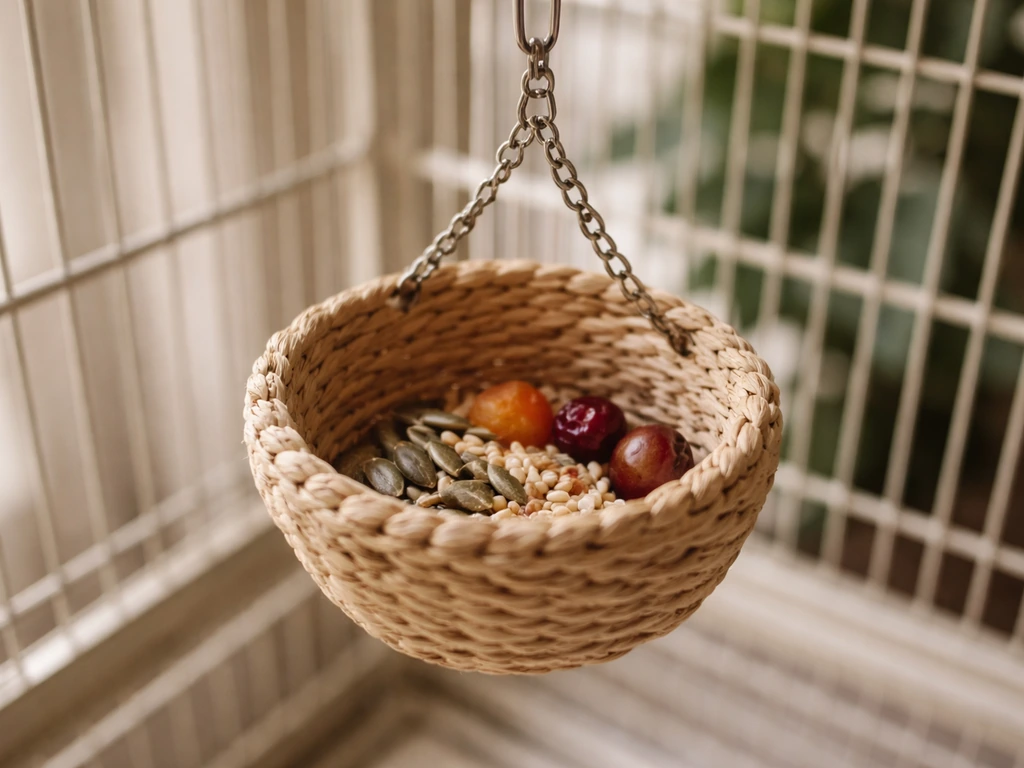
What Is a Bird Basket? Uses, Sizes, Safety, and Tips
Learn what a bird basket means, how to choose safe sizes and materials, and set up transport or enrichment correctly.
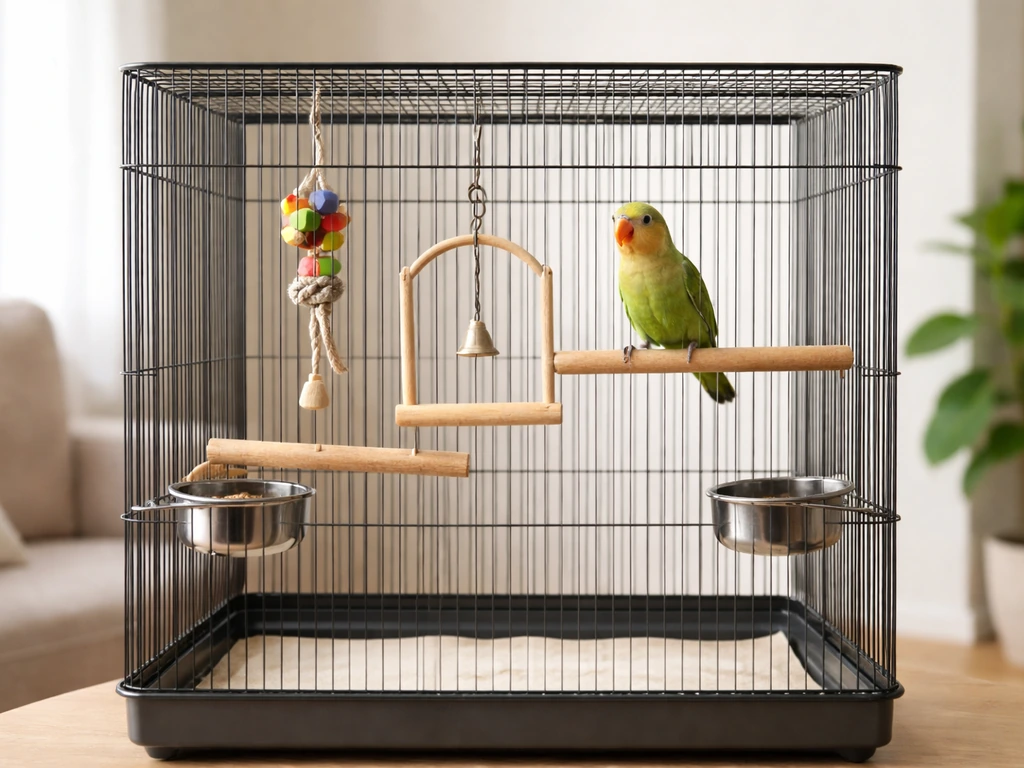
What Is a Bird Habitat? Setup Guide for Pet Birds
Learn what a bird habitat is for pet birds and how to set up a safe, enriching enclosure with the right gear.
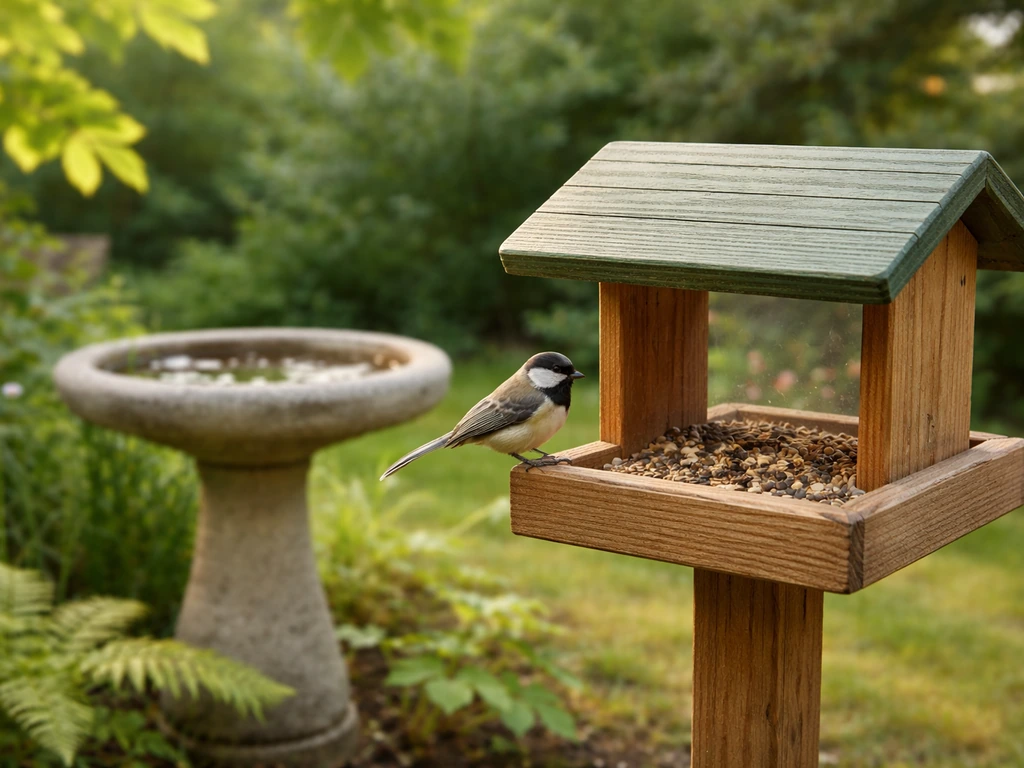
Garden Bird Checklist: Wild Species, IDs, and Tracking Tips
Ready-to-use wild garden bird checklist with IDs, field marks, tracking tips, and a bird station setup for beginners.