For robins, the best feeding setup is a low, open platform feeder or tray-style bird table with a mesh or screened bottom, placed at or near ground level where robins naturally forage. Skip enclosed tube feeders entirely. For nesting, robins don't want a traditional birdhouse with a hole in it. They need a three-sided open nesting shelf or platform mounted between 6 and 10 feet off the ground in a sheltered spot. These two things (a feeding platform and a nesting shelf) are genuinely different products, and buying the wrong one is one of the most common beginner mistakes.
Best Bird Table for Robins: Feeding and Bird House Guide

Marcus Chen
11 May 2026
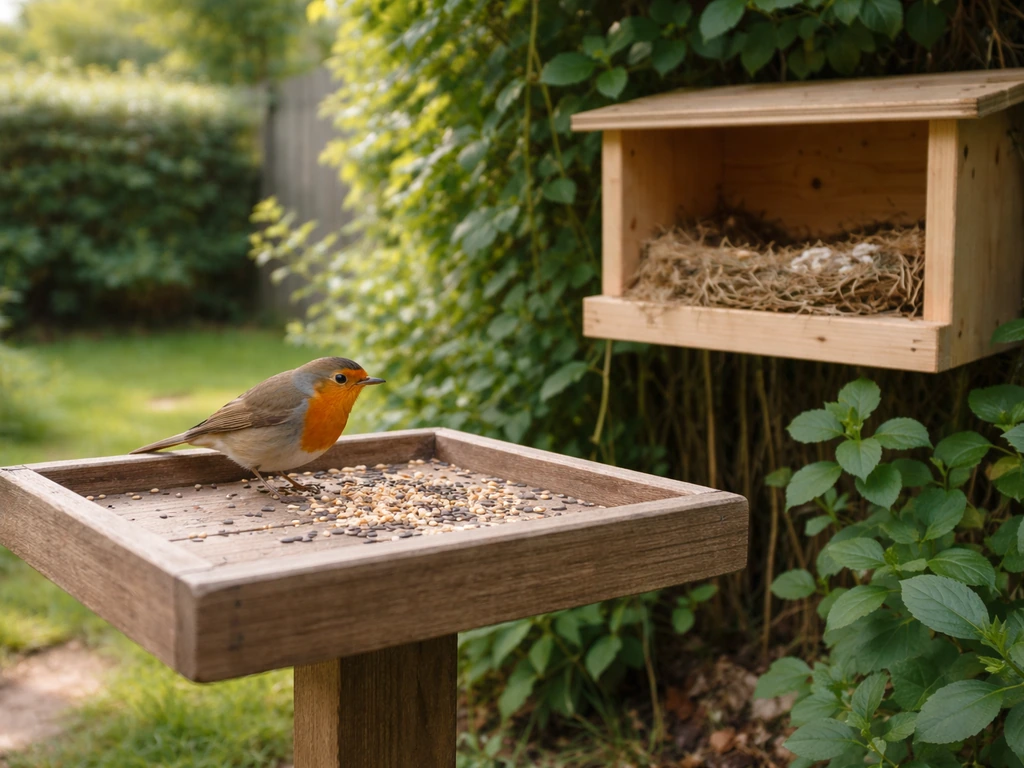
Bird table vs bird house: which one do you actually need for robins?
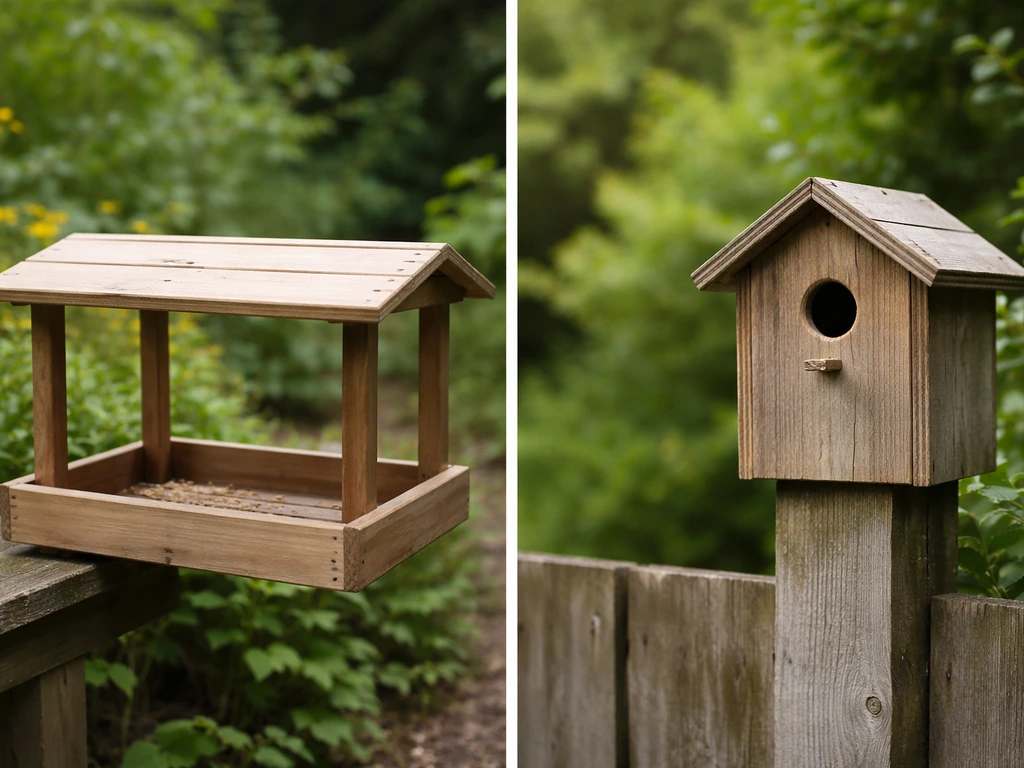
This is where a lot of people get confused, and it's worth clearing up before you spend money. A bird table or platform feeder is for feeding. A bird house (or in this case, a nesting shelf) is for nesting. They serve completely different purposes and are set up differently.
Here's the thing about robins and birdhouses specifically: American Robins are not cavity nesters. They will not use a traditional enclosed birdhouse with a round entry hole, no matter how nice it looks. If you buy one of those, it will sit empty all season. What robins actually need for nesting is an open, three-sided platform or shelf that mimics the kind of ledge or branch fork they naturally choose. The U.S. Fish and Wildlife Service and Audubon both confirm this: robins need a nesting shelf, not a cavity box.
So, what do you actually need? If you want to attract robins to your yard for feeding and watching, get a platform bird table or tray feeder. If you want to encourage them to nest, build or buy an open nesting shelf. Many people want both, which is totally reasonable, but they go in different spots and serve different goals. The rest of this guide covers both, starting with the feeder.
Key features to look for in a robin-friendly bird table or feeder
Not every platform feeder is equally good for robins. Here's what genuinely matters when you're choosing one.
Open, flat tray design
Robins forage on the ground and on open surfaces. They're not clingers. They don't hang off tube feeders or work seed out of small ports. You need a flat, open tray where they can walk around and pick food up easily. The tray should be wide enough for a robin to move comfortably, which isn't a huge amount of space, but narrow trays that also attract larger, dominant birds can make feeding stressful for them.
Mesh or screened bottom for drainage
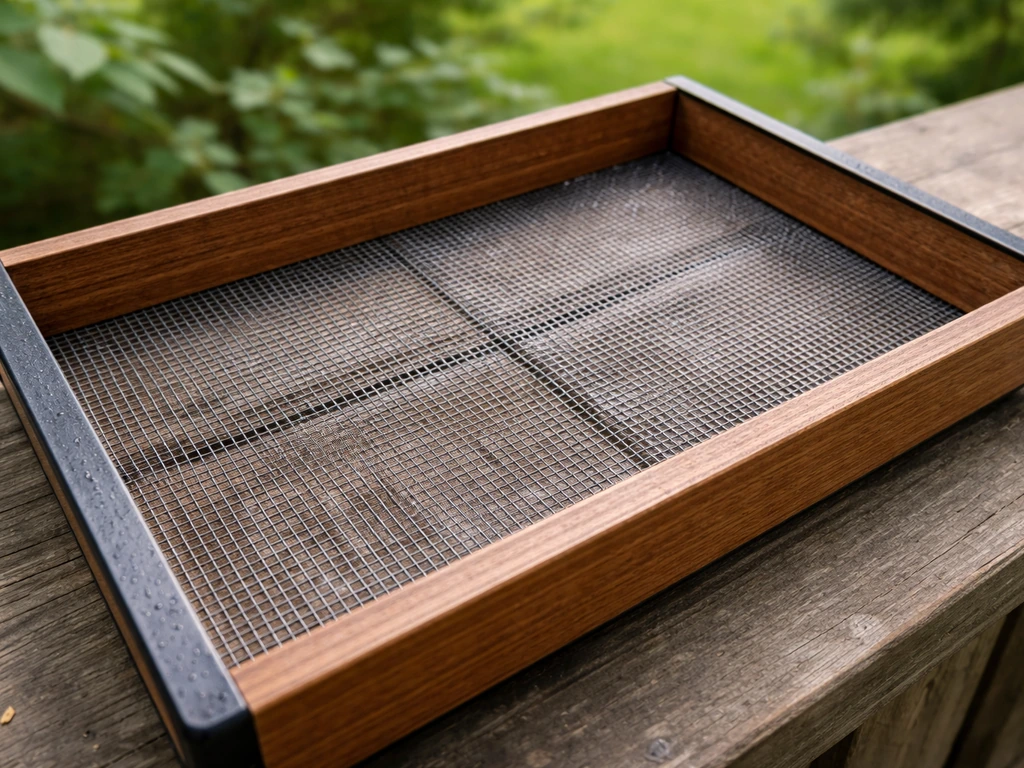
This is probably the single most important feature, and it's one that gets overlooked constantly. A solid-bottomed tray holds water. Wet food, whether it's mealworms, fruit, or anything else, goes bad fast and can make birds sick. Project FeederWatch and Cornell Lab's All About Birds both specifically recommend trays with a screened or mesh bottom so moisture drains through rather than pooling. If your feeder has a solid bottom with a few small holes drilled in it, that's okay but not ideal. A proper mesh base is better.
Roof or cover (optional but useful)
A roof over the tray keeps rain off the food and can reduce how quickly things get soggy and contaminated. It also provides a tiny bit of visual cover that some robins seem to prefer. That said, it's not essential, and a good mesh-bottomed tray without a roof will work fine if you're topping it up regularly. If you're in a rainy climate or you know you won't be checking the feeder every day or two, the roof helps a lot.
Sturdy build and easy cleaning
Robins are not particularly rough on feeders, but the feeder still needs to be solid enough not to wobble in wind (which spooks birds) and easy enough to disassemble that you'll actually clean it regularly. Avoid feeders with lots of tight corners, grooves, and joints where food debris and droppings accumulate invisibly. Simple designs win here. Cedar and other rot-resistant hardwoods hold up better outdoors than pine or cheap softwoods. If you're interested in material choices in more depth, the question of what the best wood for a bird table is worth looking into separately. For a broader comparison, see our guide to the best bird tables UK for easy cleaning, drainage, and robin-friendly access. If you care about durability and weather resistance, the best heavy duty wooden bird tables usually combine a rot-resistant hardwood with a simple design that is easy to clean best wood for a bird table.
For the nesting shelf: what to look for
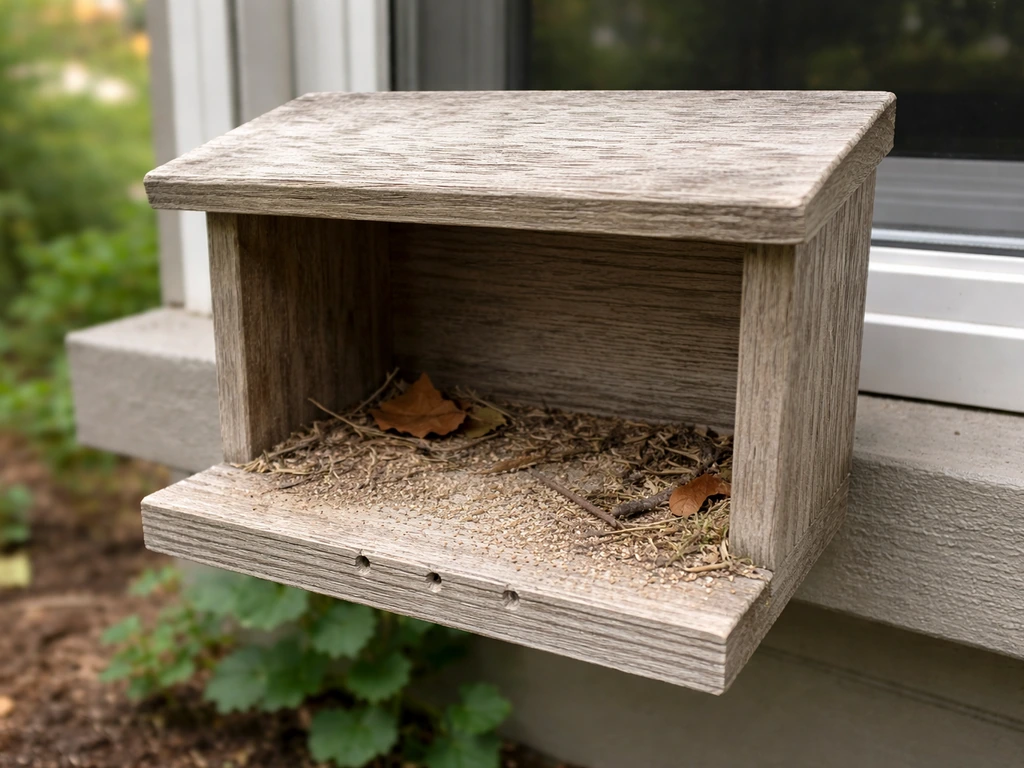
If you're also setting up a nesting shelf, keep it simple. Three sides, an open front, a roof, a slightly rough floor surface for grip, and good drainage. The floor should be around 6 by 8 inches minimum. Avoid anything painted or treated with chemicals on the inside. Cedar or untreated pine both work. The BTO's robin nest box plans recommend keeping the structure modest and avoiding smooth surfaces inside that make it hard for the nest to anchor.
Where to put it: location, height, and placement
Placement makes a bigger difference than the feeder itself in many cases. I've seen nice setups completely ignored because they were in the wrong spot, and basic trays visited constantly because the location was right.
Height for the feeding table
Robins forage primarily at ground level and low heights. A table or tray mounted at roughly ground level to about 3 feet high will get the most robin traffic. You don't want to go too high. That said, putting a feeder directly on the ground increases the risk of cat predation and makes it harder to keep clean. A low post or stump-mounted platform at 12 to 24 inches tends to be a sweet spot for robins. For more detailed guidance on height considerations that apply to different setups, the question of how high a bird table should be is worth exploring in its own right.
Height for the nesting shelf
This is different from the feeding table. Audubon's nesting data (based on Henderson's Woodworking for Wildlife) puts the recommended mounting height for a robin nesting shelf at 6 to 10 feet off the ground. The BTO's guidance similarly indicates robins often nest below about 6 to 7 feet, so anywhere in that 6 to 10 foot window, sheltered under an eave, on a fence post, or in a tree, is ideal.
Visibility and cover
Robins like to be able to see what's around them while feeding but also have a quick escape route to nearby cover. A spot within 10 to 15 feet of shrubs or a tree works well. Don't place the table in a completely exposed open area with no cover in sight, and don't bury it so deep in dense plantings that the bird can't see a predator approaching. The middle ground is the goal.
Distance from windows and hazards
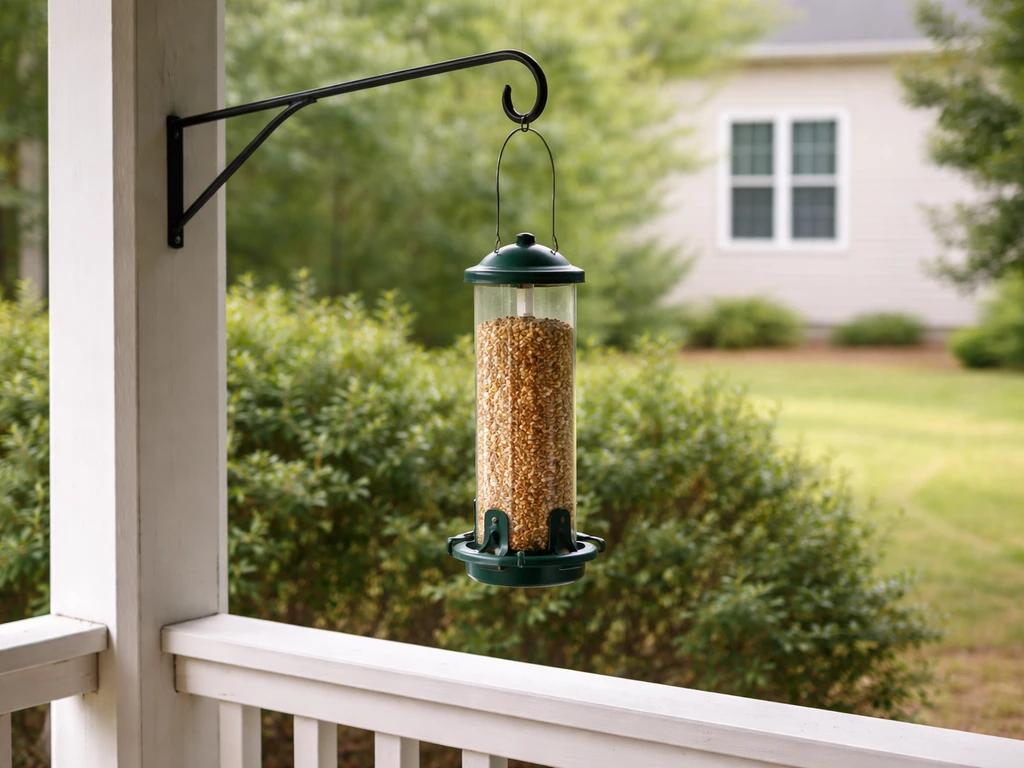
Place the feeder either very close to a window (within 3 feet, so a collision won't be fatal due to low speed) or well away from it (more than 30 feet). The dangerous zone is the middle distance, where birds fly fast enough to be hurt by impact. Keep the feeder well away from busy pathways and from spots where cats tend to sit and wait.
What robins actually eat and how to offer it safely
This part catches a lot of beginners off guard. Robins are not seed eaters in the way that finches or sparrows are. If you fill your robin feeder with sunflower seeds or millet, they'll mostly ignore it. Their diet is dominated by invertebrates in spring and summer, and fruit in fall and winter.
According to Audubon's field data, fruit can make up around 60 percent of an American Robin's diet year-round, and in fall and winter that figure can jump to more than 90 percent. Spring and summer are when earthworms and insects dominate. So what you put out needs to reflect the season.
What to offer by season
| Season | Best food to offer | Notes |
|---|---|---|
| Spring / Summer | Live or dried mealworms, earthworms | Place in a shallow dish on the tray; refresh daily |
| Fall / Winter | Softened raisins, berries, chopped apple, dried fruit | Avoid hard dried fruit that hasn't been soaked; chop into small pieces |
| Year-round supplement | Fresh or frozen (thawed) berries | Holly, crabapple, and dogwood berries are especially attractive |
| Year-round supplement | Suet with fruit or insect mix | Use a flat suet cake on the tray, not a hanging cage feeder |
What to avoid
- Dry, unsoftened raisins or large fruit pieces (choking risk and hard to eat)
- Whole peanuts or sunflower seeds (not part of a robin's natural diet and largely ignored)
- Bread and processed foods (nutritionally empty and can go moldy fast)
- Salted or seasoned foods of any kind
- Food left out longer than one to two days, especially in warm or wet weather
Offer only as much food as the birds will eat in about one to two days. This keeps the food fresh, reduces waste, and prevents the tray from becoming a source of contamination. Horticulture magazine specifically recommends this one-to-two-day rule for platform feeders, and it's one of the most practical habits you can build early on. For a fuller picture of what works across different seasons and bird species, the topic of what to put on a bird table goes into more detail. If you want the basics, see our guide on what a bird table is and how it’s different from a birdhouse what to put on a bird table.
Cleaning, hygiene, and keeping pests away
I'll be honest: cleaning is the part of bird feeding that most people underdo, and it's the part that matters most for the birds' health. A dirty feeder is genuinely dangerous. Droppings and wet food debris on a tray can harbor salmonella and other pathogens that kill songbirds. This isn't a theoretical risk.
How often to clean
Project FeederWatch recommends cleaning seed feeders about every two weeks as a baseline, and more often in warm, wet conditions or when the feeder is heavily used. For a platform tray where you're putting out moist foods like mealworms and fruit (which robins prefer), I'd push that to at least once a week. The Iowa DNR recommends a monthly deep clean with a 10 percent bleach solution, but for a high-use tray feeder with perishable foods, more frequent cleaning is better.
How to clean it properly
- Remove all old food, debris, and droppings from the tray
- Wear disposable gloves (the CDC recommends this for anyone cleaning bird feeders or baths)
- Scrub the tray with hot soapy water and a dedicated brush (not one used in your kitchen)
- Soak or rinse in a solution of 9 parts water to 1 part bleach for about 10 minutes
- Rinse thoroughly with clean water until no bleach smell remains
- Let the feeder dry completely before refilling — a wet tray accelerates mold and bacteria growth
- Do all of this outdoors, not in your kitchen or food prep areas
The 9:1 water-to-bleach ratio is recommended by both Audubon and the Virginia DWR and is the standard most wildlife health authorities use. Vinegar is a softer alternative (soak for about an hour) but is less effective against bacteria and pathogens. Use bleach for your regular deep cleans.
Pest prevention
Squirrels, rats, and raccoons are drawn to platform feeders, especially ones with fruit and mealworms. A baffle on the post below the feeder helps with squirrels and some ground-based predators. Avoid leaving food out overnight. Rats are mostly nocturnal, so clearing the tray at dusk removes their incentive. If you notice signs of rats (droppings near the base, food disappearing overnight), take the feeder down for a couple of weeks, clean it thoroughly, and reconsider the placement.
If you see sick or dead birds
The CDC's archived guidance on salmonella outbreaks linked to songbirds recommends removing your feeders and bird baths entirely for at least two weeks if you find sick or dead birds nearby, then cleaning them thoroughly before putting them back out. This is a hard reset that breaks the contamination cycle. It feels drastic but it's the right call.
Seasonal tips and the mistakes beginners almost always make
Spring and summer
This is when robins are most active at feeders and most likely to be nesting nearby. Live mealworms are the single best thing you can offer right now. They're high in protein and closely mimic what robins are hunting naturally. Dried mealworms work too but are less attractive. If you have a nesting shelf up, keep your distance once a pair starts building. Human activity near an active nest can cause abandonment.
Fall and winter
Switch to fruit-heavy offerings. Robins in fall and winter are almost entirely fruit-dependent (sometimes over 90 percent of their diet according to Audubon's data). Soaked raisins, chopped apple, and berries are your main tools. Native berry-bearing plants in your yard (holly, dogwood, serviceberry, crabapple) will attract robins more reliably than any feeder, so if you're planning a garden, that's a long-term investment worth making.
Common beginner mistakes
- Buying an enclosed birdhouse expecting robins to use it: they won't. Robins need open nesting shelves, not cavity boxes.
- Filling a platform tray with sunflower seeds: robins eat insects and fruit, not seed. Seed-filled trays attract other species and get ignored by robins.
- Not cleaning the tray often enough: with perishable foods like mealworms and fruit, a tray can become a health hazard within days in warm weather.
- Placing the feeder too high: robins forage low. A tray at 4 or 5 feet misses them; aim for 12 to 24 inches for feeding.
- Putting out too much food at once: excess food rots, attracts pests, and signals to you that the birds aren't visiting when actually they just can't eat it fast enough. Offer small amounts every one to two days.
- Placing the feeder in a completely exposed spot with no nearby cover: robins won't feed somewhere they feel trapped and unable to escape quickly.
- Cleaning the feeder inside over the kitchen sink: always do it outdoors with gloves to avoid spreading bacteria indoors.
The setup doesn't need to be complicated or expensive to work well. A simple mesh-bottomed tray on a low post, stocked with mealworms in summer and softened fruit in winter, cleaned weekly and placed near some shrubby cover, will bring robins in reliably. If you're building or upgrading your setup, use the best bird table design checklist so your feeder stays easy to clean and robin-friendly simple mesh-bottomed tray. If you also want them to nest, add an open three-sided shelf at 6 to 10 feet in a sheltered spot and leave it alone once they show interest. That's genuinely all it takes.
FAQ
What’s the best bird table style for robins if I want one setup for both feeding and nesting?
Use two separate pieces. A tray-style feeder at low height is for food, and a three-sided nesting shelf at 6 to 10 feet is for nesting. Mixing them into one “bird house and feeder” design usually fails because robins need an open ledge-like space, not a cavity.
Can I use a standard birdhouse if I remove the entrance hole or modify it?
For American robins, avoid cavity-style boxes entirely. Even with a larger opening, the enclosed interior still discourages nesting. The more reliable approach is an open, three-sided shelf with drainage and grip, mounted in a sheltered location.
How wide should the tray be so robins can feed comfortably?
Aim for a tray that lets a robin stand and pivot without bumping the sides. Very narrow trays can limit movement and push robins away, especially when other birds arrive. If the feeder looks “tight” from above, choose a wider option rather than relying on deeper food mounds.
Do robins need a roof on the feeder tray?
A roof helps most when weather is rainy or when you cannot refill frequently. Without a roof, the best outcome depends on topping up and cleaning on a tight schedule so wet food does not pool or ferment.
What foods are safest for robins on a platform tray?
Mealworms and fruit are the safest high-acceptance staples for robins, since they match natural diets. Avoid seed-only mixes like sunflower or millet, as robins often ignore them. Also, keep fruit pieces small enough to reduce spoilage on the tray.
How do I prevent wet food from spoiling between visits?
Use a screened or mesh bottom, and offer only what birds will eat in one to two days. If your schedule is unpredictable, reduce portion size and switch to foods that tolerate handling better (like smaller fruit portions) rather than leaving large, wet piles.
Is it okay to drill holes in a tray if it doesn’t have mesh?
It can work in a pinch, but drainage is usually less reliable than a true mesh base. Holes may still allow puddling around the edges. If you have options, prioritize a feeder designed with a screened bottom intended for drainage.
Why do robins disappear from the feeder after a few days?
Common causes are contamination from infrequent cleaning, pooled moisture, or food placed in a poor micro-location (too exposed, too high, or near a frequent cat sit spot). Troubleshoot by cleaning, reducing food volume, and moving the feeder closer to nearby cover (while keeping it visible for escape).
How often should I clean a mesh-bottom feeder when I’m offering mealworms or fruit?
Plan on at least weekly cleaning for perishable foods, and more often in warm, wet weather or when many birds use the tray. A weekly routine matters because droppings plus wet debris can build up quickly on open platforms.
What cleaning solution should I use, and what’s the safest approach?
For deep cleans, use a bleach-to-water ratio that’s appropriate for wildlife hygiene, then rinse thoroughly and let the tray dry fully before refilling. If you want a gentler routine, vinegar can help for lighter maintenance, but it is less effective for bacteria and pathogens than bleach.
Should I stop feeding if I see a dead bird or sick birds nearby?
Yes, do a “hard reset.” Remove feeders and bird baths for at least two weeks, then clean everything thoroughly before restarting. When you relaunch, keep portions small and clean on schedule to avoid restarting the contamination cycle.
Will adding a baffle or barrier help if squirrels keep taking food?
A baffle under the feeder helps, especially for platform feeders with fruit or mealworms. It reduces easy climbing access. Also, remove food at dusk since rats are more likely to use the area overnight.
Is it safe to put the feeder near a window?
Yes with positioning. Keep the feeder within about 3 feet of the window or place it more than 30 feet away to reduce injury risk from window collisions. Avoid placing it in the middle distance where birds can still fly fast enough to be hurt.
How do I handle it if robins start nesting on my shelf?
Leave it alone once activity begins. Reduce human traffic nearby, especially in the line of sight from the shelf, because disturbances can cause abandonment. If you must clean around the area, do it quickly and outside of nesting building and early brooding periods.
What if robins refuse the nesting shelf even though it’s the right height?
Check for the key nesting features: open front, three-sided design, sheltered placement, and a floor surface that provides grip (avoid smooth interiors). Also ensure it is truly in the 6 to 10 foot range, and keep nearby disturbances low during the decision period.
Next Articles
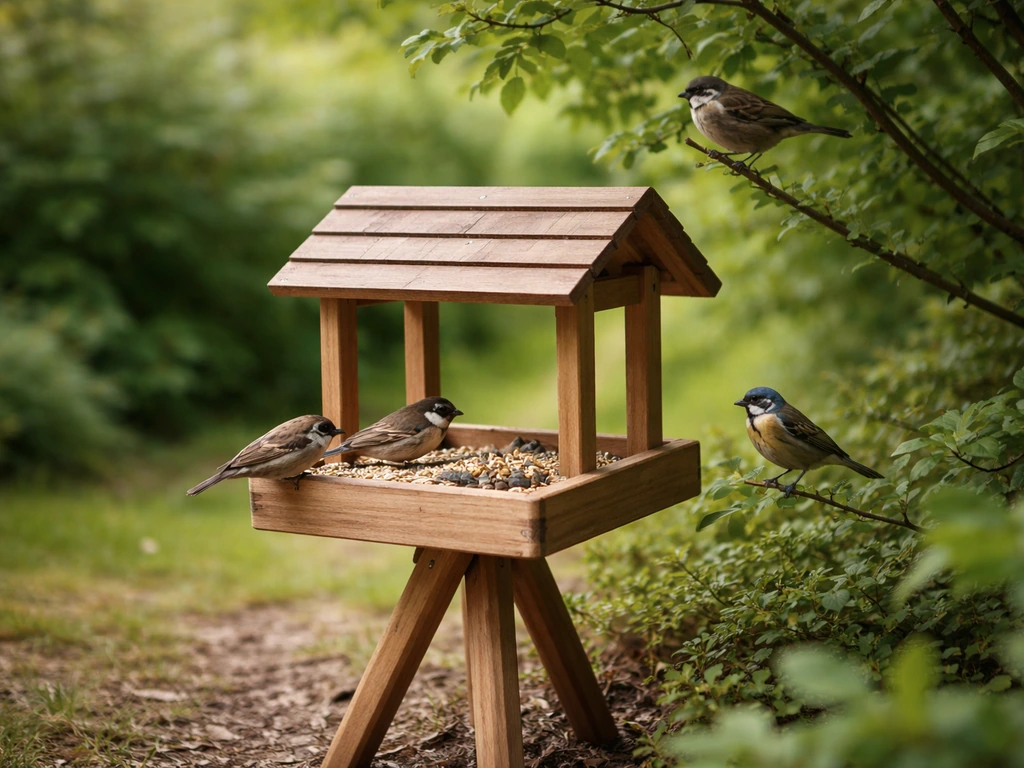
What Is a Bird Table? Beginner Guide to Feeding Birds
Learn what a bird table is, which birds it attracts, how to choose place and feed, and keep it clean safely.
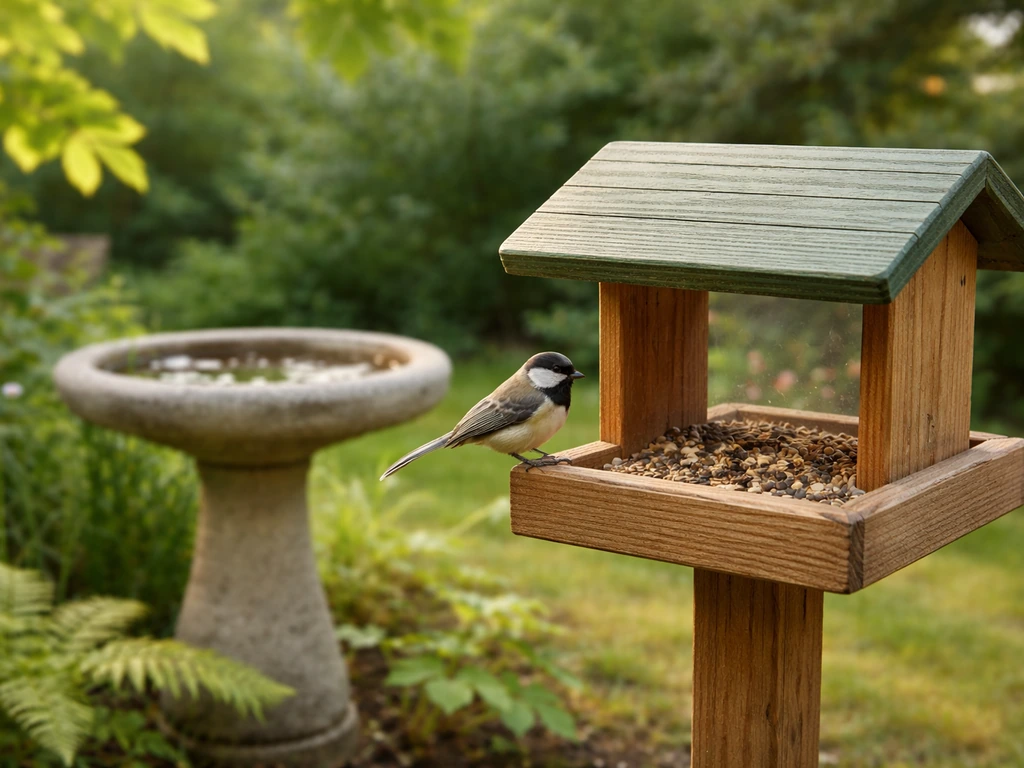
Garden Bird Checklist: Wild Species, IDs, and Tracking Tips
Ready-to-use wild garden bird checklist with IDs, field marks, tracking tips, and a bird station setup for beginners.
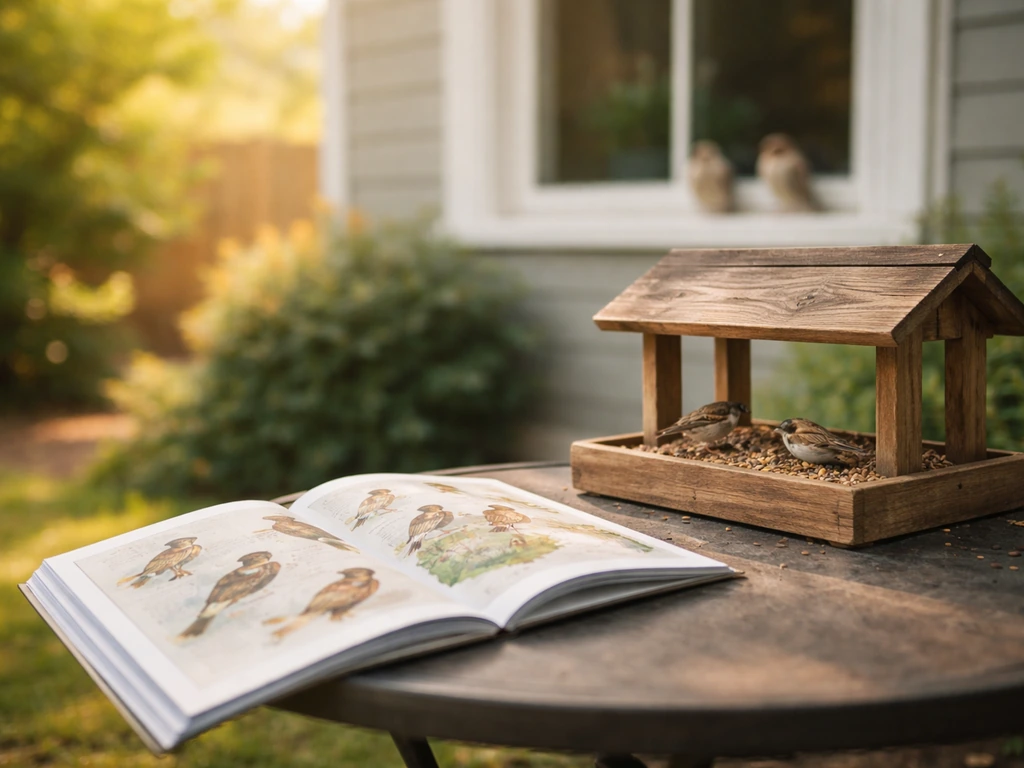
Printable Backyard Bird Guide for Beginners and First IDs
Printable backyard bird guide for beginners: simple ID key, look-alikes, and a ready-to-fill checklist for backyard sigh