A tabletop bird stand is a compact perch or play gym that sits on a flat surface like a counter, desk, or table, giving your bird a safe, comfortable place to hang out outside their cage without needing a freestanding floor unit. For most small to medium pet birds, a well-chosen tabletop stand is one of the best investments you can make early on. The key is picking the right size for your bird, placing it somewhere genuinely safe, and introducing it at the right pace so your bird actually uses it.
Table Top Bird Stands: How to Choose and Set Up Safely

Marcus Chen
29 Apr 2026
What a tabletop bird stand is actually for
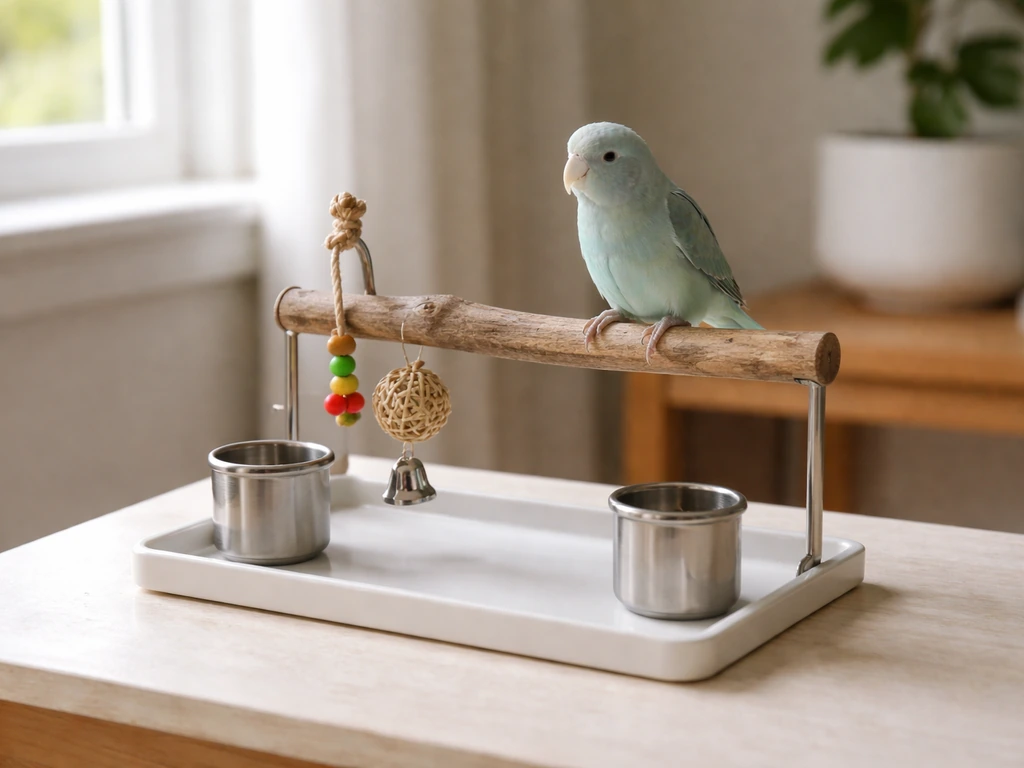
The main job of a tabletop stand is to give your bird a dedicated out-of-cage perching spot during supervised time outside. Birds need time off the cage perch every day for mental stimulation, social bonding, and foot health. Standing on the same diameter perch in the same position all day is rough on feet over time, and a tabletop stand with varied perch textures and heights fixes that problem without requiring you to give up your living room to a floor-sized bird gym.
You specifically need one if your bird is flighted or semi-flighted and tends to land on random surfaces you'd rather protect, if you want a consistent spot where you can interact during training sessions, or if your bird gets anxious without a clear 'home base' when roaming outside the cage. It's also just a lot easier to redirect a bird to their own stand than to constantly retrieve them from the top of your curtain rod.
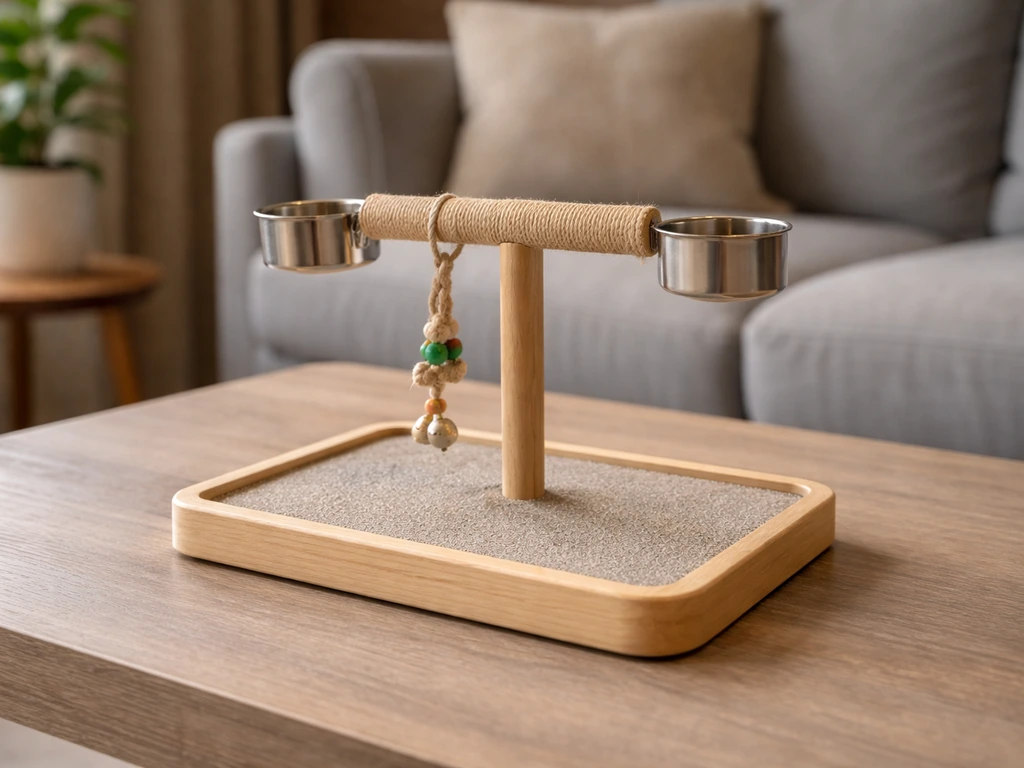
Tabletop stands overlap closely with tabletop play gyms and open-top designs, which add ladders, swings, toy hooks, and feeding cups. A plain single-perch stand is fine for calm birds that just need a resting spot. If your bird is active and curious, a tabletop play stand with accessories gives them something to do and keeps them occupied while you work nearby. A bird table top play stands setup like this can give your bird a dedicated place to explore while staying safe on your furniture.
How to pick the right stand for your bird's size and personality
Size matching is the single most important decision here, and it's more specific than most product labels suggest. The main perch diameter needs to fit your bird's feet so the front toes wrap about two-thirds of the way around and the back toe (hallux) rests comfortably without gripping painfully. For budgies and small parakeets, aim for perch diameters starting around 3/8 to 1/2 inch. Cockatiels do well in the 1/2 to 1 inch range depending on the individual bird's foot size. Larger birds like small conures and quaker parakeets need thicker perches, generally 3/4 inch to 1.5 inches. Don't just trust the species label on the package because birds within the same species vary. Watch how your bird grips: if the toes almost touch underneath, go up in diameter.
Beyond size, think about your bird's temperament. A calm, older cockatiel that likes to sit and preen is perfectly happy on a simple T-bar or single-perch stand. An active conure or lovebird that chews everything and bounces around needs a sturdier, heavier stand with more surface area and ideally some toys or foraging attachments to keep them busy. If you buy a flimsy stand for a bird that likes to stomp and flap, it will tip within the first week and your bird will never trust it again.
Also consider whether your bird is trained to step up reliably. If they're still working on basic handling, a simple stand close to the cage makes training easier. If they're already comfortable with you, a stand positioned at your desk or couch gives you companionship while you go about your day. The stand's purpose shifts slightly depending on where your bird is in their training.
Safety basics you can't skip
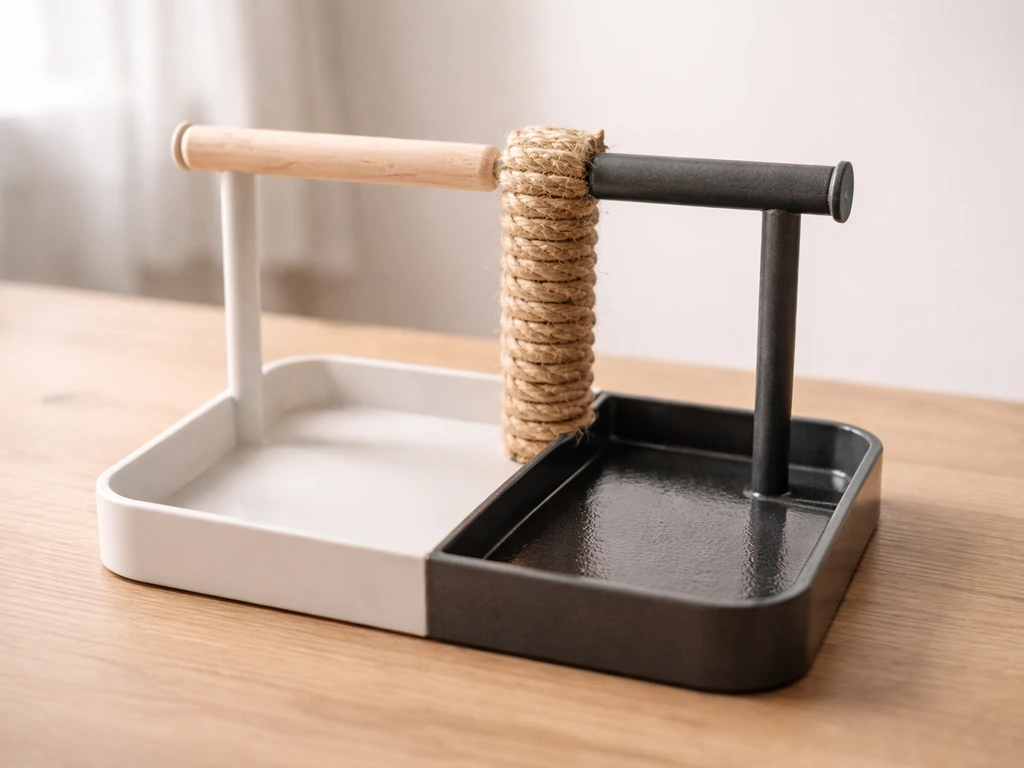
Materials: what's safe and what will hurt your bird
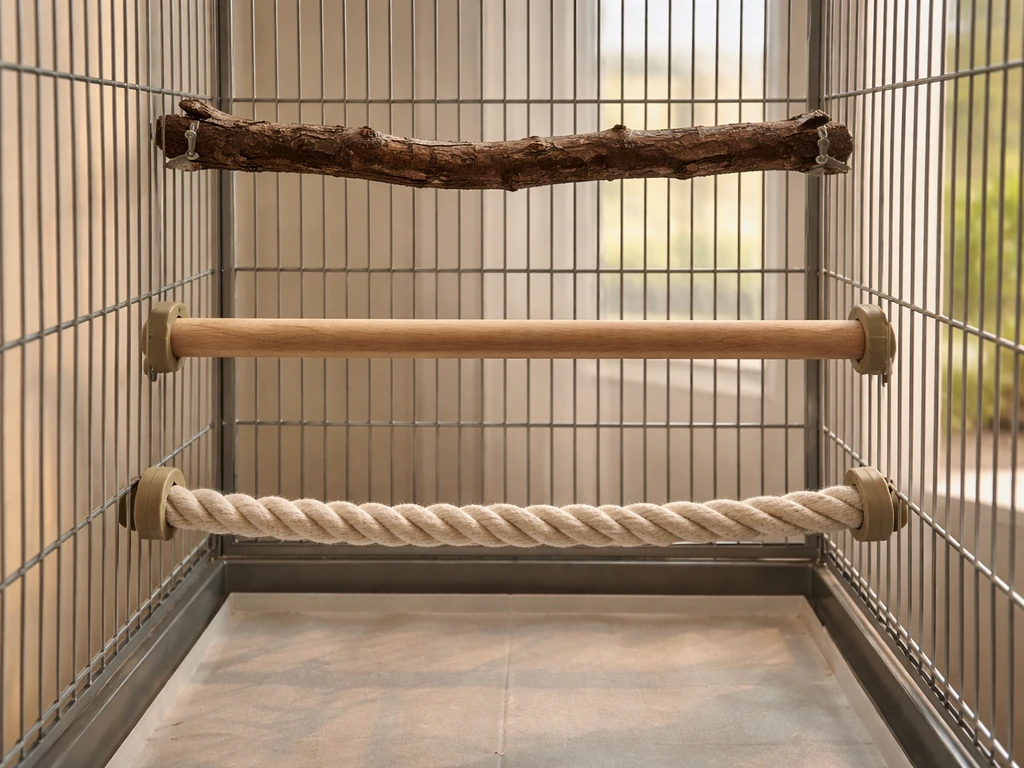
Birds are extremely sensitive to fumes. blank" rel="noopener noreferrer">Overheated non-stick coatings like PTFE (Teflon) release toxic gases that can kill a bird quickly, so never buy a stand with any non-stick coating on the perch, tray, or hardware. Powder-coated metal is safe as long as the coating is labeled bird-safe and free of zinc and lead. Stainless steel is the gold standard for metal parts. For the perch itself, natural hardwood (like manzanita, dragonwood, or Java wood) is the best all-around choice: varying natural diameter, safe to chew, and easy to replace. Choosing the best bird perches for your tabletop stand comes down to safe, chewable materials and the right perch diameter for your bird's feet. Rope perches made of natural cotton or sisal are fine for variety but check them regularly for frayed strands that can catch toes.
Cement or sandy-textured perches are worth including on a stand for nail conditioning, but they should never be the only perch your bird stands on. Prolonged contact with a rough surface is hard on the feet, especially the ball of the foot. Use them as one option among several textures.
Stability: the most underrated safety feature
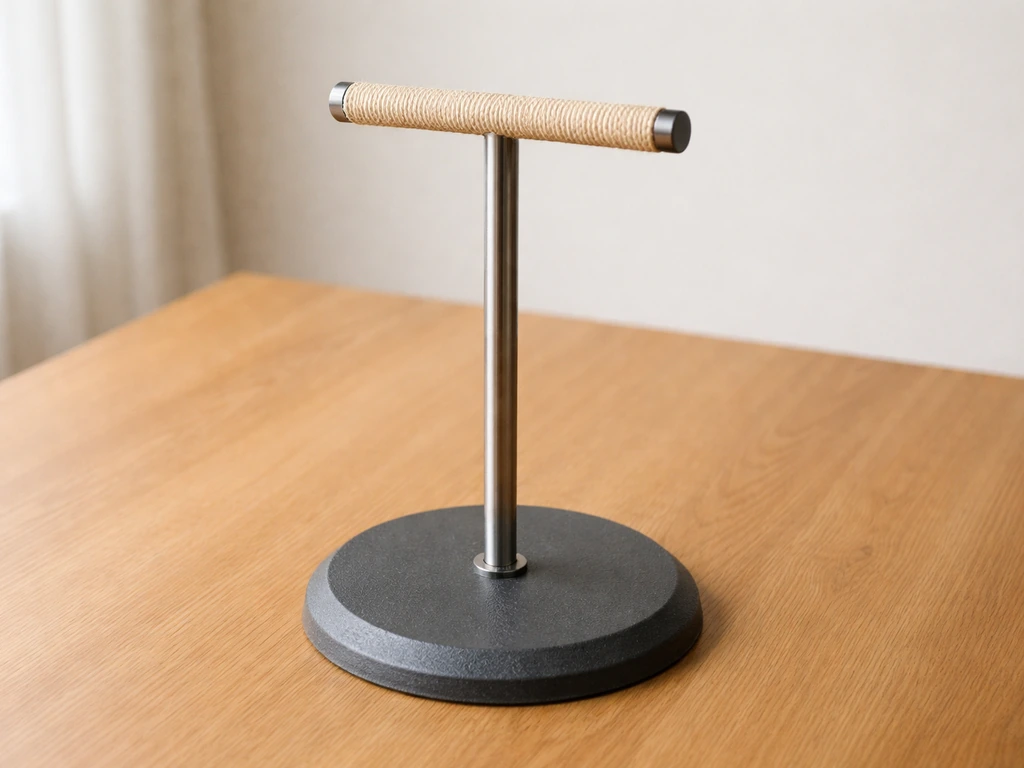
A stand that tips is a stand your bird stops trusting, and a frightened fall can injure a small bird. Before buying, look for a heavy base or wide footprint relative to the height. Rubber feet are a must: they prevent sliding on smooth countertops and add grip. If a stand you already own feels wobbly, you can add non-slip mat material under the base and use a food-safe double-sided adhesive pad for extra grip. Avoid stands taller than about 12 inches for small birds unless the base is very wide; height amplifies tipping leverage.
Placement: the hazards most people don't think about
Never place a tabletop stand in or near the kitchen. The combination of cooking fumes, non-stick cookware, and temperature swings makes kitchens the most dangerous room in the house for birds. Avoid spots near windows with direct cold drafts, heating or AC vents, scented candles, air fresheners, or anywhere another pet can reach the stand. Eye level or slightly below eye level when you're seated is ideal: it keeps your bird in a social position without putting them so high they become territorial.
Setting up the stand and introducing your bird
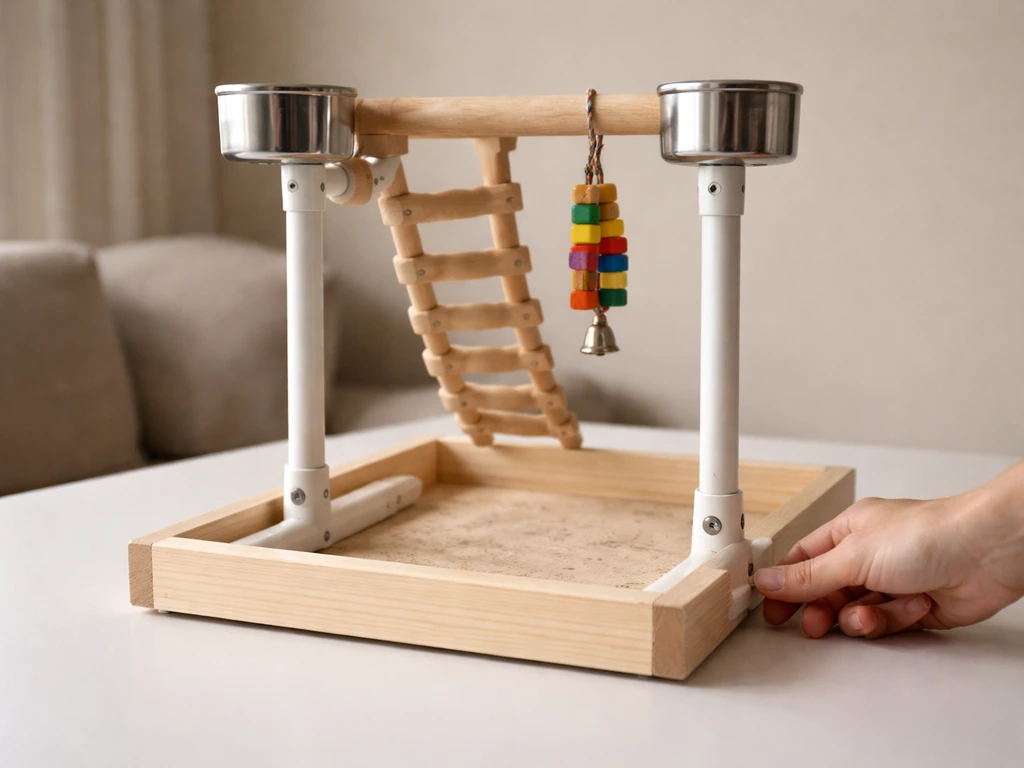
- Assemble the stand fully before bringing the bird anywhere near it. Check every connection for wobble and test the base on the actual surface you'll use it on.
- Place the stand in a quiet room where your bird already feels comfortable, not in the middle of a busy, noisy area. Lower stimulation during the introduction period makes a big difference.
- Before using the stand independently, let your bird see and sniff it while still in or near their cage. Some owners clip a small piece of familiar wood or a favorite toy to the new stand so it smells and looks familiar.
- Bring your bird to the stand using the step-up command they already know. The first session should be short, around 5 to 10 minutes, with you present and calm. Don't walk away during early sessions.
- Gradually extend time on the stand over several days. Most birds are comfortable with 20 to 30 minute sessions within a week if the introduction was calm and positive.
- Establish a routine: same time of day, same location, same signal to go to the stand. Birds are creatures of habit and a predictable routine reduces anxiety around out-of-cage time.
One thing I found genuinely useful early on: before moving a bird to a new play area, first place the target perch inside their cage for a few days so they get used to the texture and shape. By the time you move it to the stand, it already feels familiar. This approach comes directly from bird training guidance and it cuts introduction time noticeably.
Keeping the stand clean day to day
Bird droppings on a stand are inevitable, and if you let them build up, you're looking at bacterial growth and potential infection risk. The basic routine is simple: wipe the perch and tray daily with a damp cloth or bird-safe cleaning spray, and do a full disinfection once a week.
For weekly disinfection, a diluted bleach solution works well: mix roughly 1/4 to 1/2 cup of plain unscented bleach per gallon of water. Apply to all surfaces, let it sit for about 10 minutes (that contact time matters for it to actually work), then rinse thoroughly. Bleach residue is an irritant, so rinsing completely is not optional. Let everything air dry fully before the bird goes back on the stand. Do this cleaning in a well-ventilated area and keep the bird in another room the entire time to avoid fume exposure.
Natural wood perches need a little more attention. Scrub them with a stiff brush to get into the grain, rinse well, and let them dry completely. Waterlogged wood grows mold fast, especially in humid climates. If a wooden perch cracks significantly or develops black spots, replace it rather than trying to clean it back to safe.
Rope and cotton perches should be checked weekly for fraying. If you can pull a long strand loose, cut the strand off immediately or replace the perch. Loose rope strands can tangle around toes and cut off circulation, which is a genuine emergency.
Mistakes beginners make with tabletop stands (and how to fix them)
- Buying a stand sized for the species label, not the actual bird. Check perch diameter against your bird's foot, not the package description. Some cockatiels have noticeably larger feet than the listed range.
- Placing the stand too high. Height above eye level triggers territorial behavior in some birds and makes them harder to retrieve. Start lower and adjust from there.
- Putting the stand in the kitchen. This is the most common dangerous mistake. Cooking fumes and Teflon cookware are lethal risks for birds.
- Using the stand without supervising during early sessions. An unsupervised bird on an unfamiliar stand can fall, get spooked, and injure themselves or fly somewhere unsafe.
- Skipping the rinse step after disinfecting. Bleach residue left on a perch can burn your bird's feet and mouth. Rinse until there's no smell remaining.
- Only offering one perch texture. Variety in diameter and texture keeps feet healthy and prevents pressure sores. Mixing natural wood, rope, and one slightly textured perch is a better setup than a uniform surface.
- Not replacing worn perches. Splintered wood and fraying rope are both injury risks. Budget for replacement perches every few months as normal maintenance.
Stand styles and add-ons: what's worth the money
Tabletop stands come in a few distinct configurations, and the right one depends on your bird and how you want to use it.
| Stand Style | Best For | Worth It? | Watch Out For |
|---|---|---|---|
| Single T-bar perch | Calm birds, training sessions, small spaces | Yes, for simplicity and easy cleaning | No enrichment for active birds |
| Multi-perch/ladder stand | Active small birds, longer sessions | Yes, if base is heavy and stable | Cheap versions tip easily; test the base |
| Tabletop play gym with toy hooks and cups | Conures, lovebirds, curious cockatiels | Yes, if bird stays busy independently | Can get cluttered; keep 2-3 toys max to avoid overwhelm |
| Hanging/suction-cup shelf style | Supplemental perch near a window or wall | Situational; good as a secondary spot | Weight limits are low; only for very small birds |
| Play stands with food/water cups attached | Birds that spend 30+ minutes on the stand | Yes, especially for longer training or work sessions | Cups need daily cleaning or they grow bacteria fast |
On add-ons specifically: toy hooks are genuinely useful because they let you rotate toys easily without buying a new stand. Stainless steel food cups are worth it for any session longer than 20 minutes. Swing attachments are hit or miss because some birds love them and others ignore them entirely, so wait to see your bird's preference before spending money there.
What I'd skip: decorative wooden ladders with painted rungs (paint safety is hard to verify), very small plastic trays that don't actually catch droppings, and any stand advertising it's suitable for 'all bird sizes' since that's almost always marketing language for an unstable compromise design.
If you're drawn to larger multi-feature setups, it's worth looking into dedicated bird playground designs or open-top configurations that sit on a table but have more vertical space. If you want the best bird playground experience, focus on designs that offer safe variety, comfortable perches, and enough room for your bird to move dedicated bird playground designs. For smaller species like budgies and parrotlets, a clean and simple single or dual-perch stand usually outperforms a complicated gym in terms of actual use and hygiene.
Quick-reference checklist before you buy
- Perch diameter matches your bird's foot size, not just the species category on the label
- Base is heavy, wide, and has rubber feet for grip on smooth surfaces
- All materials are bird-safe: no non-stick coatings, no zinc or lead in hardware
- Stand height is appropriate for the bird and the surface it will sit on
- Design allows for easy disassembly and cleaning of all parts
- Placement location is away from kitchen, drafts, vents, and other pets
- You have a cleaning routine planned before the stand arrives
FAQ
How do I know if a tabletop bird stand is the right size beyond the perch diameter?
Check stability first, then measure the bird’s usable space. Your bird should be able to shift feet without being forced to grip constantly, and there should be enough clearance for tail and wings while perched (especially if they fluff or stretch). If the stand is so small that droppings land mainly on the perch area, plan on more frequent wiping or choose a design with a deeper, more functional tray.
Can I use a tabletop stand indoors on a finished wood table or laminate counter?
Yes, but protect the surface and reduce slipping. Use rubber feet on the stand, and if your unit sits slightly uneven, add a food-safe non-slip pad under the base rather than relying on towels or paper that can slide. Also keep the tray area clean so moisture and cleaner residue do not damage finishes.
My bird won’t step onto the stand. What’s the most common mistake?
Usually it is introducing the stand too quickly or too high relative to your bird’s comfort. Start with a low, stable placement close to the cage, and use short, supervised sessions. If your bird only approaches but won’t step up, keep a perch from inside the cage in the exact same orientation on the stand for several days before moving the whole setup.
Is it safe to let my bird use the tabletop stand unsupervised?
No, tabletop stands are intended for supervised time. Even a stable stand can tip if a bird flaps, climbs onto accessories, or startles near the edge. Supervision also lets you catch toe tangles early, especially with rope or swing attachments.
How do I position the stand if my bird gets territorial at eye level?
Try slightly below your seated eye line and ensure the bird can still see you without being face-to-face. Territorial behavior often improves when the bird has a clear line of sight to familiar areas, not when it is forced into direct confrontation. If your bird reacts strongly, move the stand farther from you for the next session and re-evaluate.
What should I do if the stand wobbles even after I tighten it or add a mat?
Stop using it. A wobble that persists after tightening and adding grip usually means a base that is too narrow for the height, a weak joint, or uneven feet. In that case, switching to a wider footprint or heavier model is safer than continuing, because loss of trust can also increase frantic climbing and falls.
Are rope perches safe long term, and how often should I inspect them?
They can be safe, but treat them as higher-maintenance. Inspect at least weekly, and check more often if your bird is a heavy chewer. If you see any fraying, stiffness, or loose strands, replace immediately because strands can wrap around toes and restrict circulation.
Can I use disinfectants other than the bleach method described?
Yes, but only if the product is explicitly bird-safe and you can achieve proper contact time and thorough rinsing. Avoid scented cleaners and anything that leaves a residue. Regardless of the product, rinse well, air dry completely, and keep the bird in another room until fumes are gone.
How do I prevent mold or lingering odor on wooden perches?
Dry them fully after every rinse and cleaning, and do not store wet components. If the wood develops black spots, persistent odor, or visible cracking beyond normal wear, replace the perch instead of continuing to scrub. In humid climates, consider limiting soaking and using quick rinses followed by aggressive drying.
My bird poops on the stand right away. How soon should I clean it during a session?
Wipe as needed, but do not leave droppings to sit and dry for long periods. For short sessions, a quick wipe of the most soiled areas is fine, then do the full daily cleaning afterward. The more important goal is avoiding buildup on the perch surface and tray so bacterial load does not accumulate.
What if my bird lands on the stand but also tries to chew hardware or tray edges?
Cover the risk areas with better chewable options and reduce access to questionable parts. Choose stands with stainless steel hardware and safe tray materials, and add a chew-friendly attachment that redirects behavior away from painted or unknown components. If the bird is repeatedly targeting screws or edges, stop using that attachment and upgrade the stand.
Next Article
Best Bird Perches: How to Choose, Set Up, and Maintain
Choose, set up and maintain the best bird perches for safe foot health, comfort, and enrichment.