The best bird toys for cockatiels are safe, sized right for a medium parrot, and made from materials they can actually destroy. The same safety and sizing principles also help you choose the best bird toys for conures. The same safety and sizing principles also help you choose the best bird toys for budgies best bird toys for conures. That last part matters more than most people expect. If you want the shortest path to what works, pairing the same safety and sizing principles with the best bird toys for conures is a good place to start. Cockatiels are active chewers and shredders, and a toy they cannot interact with is just decoration. The short answer: natural wood chews, palm-fiber shredders, foraging toys stuffed with treats, and a good swing cover the core needs for most cockatiels. Everything else is a bonus.
Best Bird Toys for Cockatiels: Safe Picks and Setup Guide

What actually makes a cockatiel toy "best"
Safety comes first, full stop. Cockatiels mouth everything they touch, which means any coating, dye, metal hardware, or adhesive goes straight into the equation. The ASTM F963 consumer toy safety standard sets limits on hazardous substances like cadmium in accessible substrates, and while it applies to children's toys, it's a useful benchmark when evaluating bird toys too. Bird-specific safety resources like Birdsafe Toys take an even more conservative approach: no long strands of rope or leather that could trap a beak or toe, no small parts that snap off and become ingestion hazards, and no designs where a bird can get its head stuck. Messy Beaks also recommends checking for gaps where a bird’s feet or beak could get caught, and avoiding toys that can break into swallowable pieces no small parts that snap off and become ingestion hazards. Those criteria should be your minimum filter.
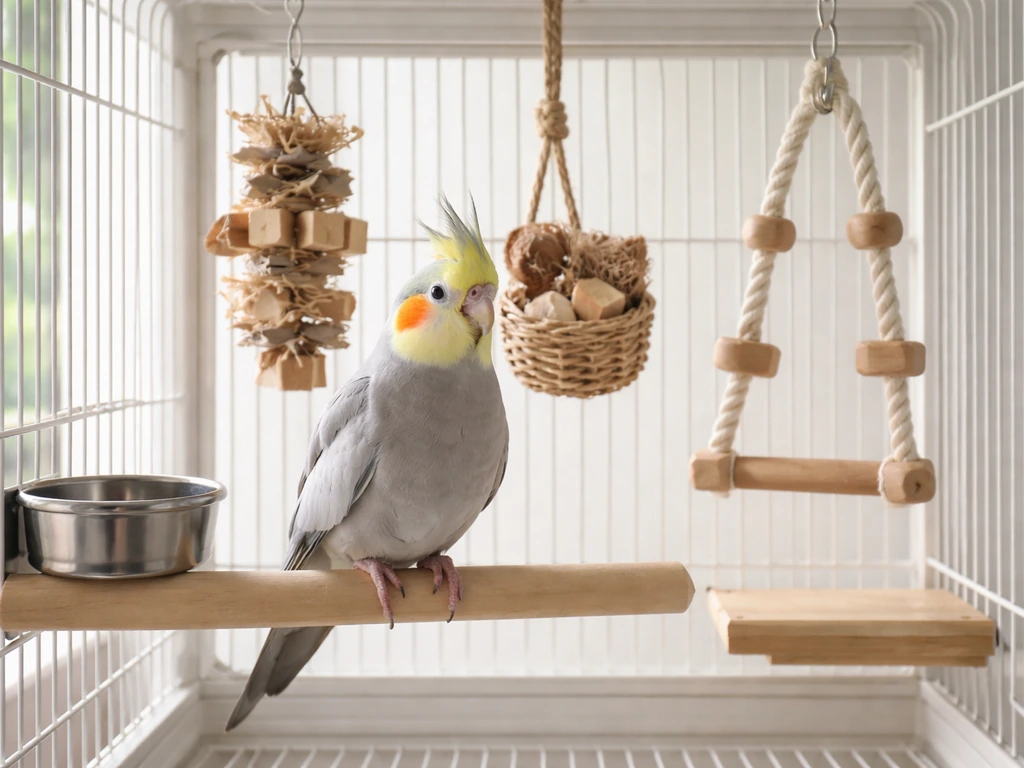
After safety, size and fit matter more than people realize. Cockatiels are medium-small parrots, typically 10 to 12 inches long and weighing around 80 to 100 grams. A toy built for a macaw will intimidate them; a toy built for a budgie will bore or frustrate them within minutes. You want perch diameters in the 0.5 to 0.75 inch range, hanging toys that don't crowd the cage so much that your bird can't spread its wings, and link or ring sizes that a cockatiel foot can grip without slipping through. When in doubt, size down rather than up.
Material is the third filter. Safe materials for cockatiels include untreated softwoods (pine, balsa, poplar, willow), natural cork, palm fiber, sisal (in short, non-fraying strands), food-grade paper and cardboard, and bird-safe leather tanned without chromium. Avoid anything with zinc or lead hardware (check clasps, bells, and chain links), painted or lacquered surfaces, plastic with sharp edges, and glues that aren't clearly labeled non-toxic. Purdue’s veterinary husbandry guidance also advises avoiding toys with looped or otherwise risky synthetic materials and steering clear of designs with openings that could trap a bird or catch a foot or neck General Husbandry of Caged Birds. The ASPCA specifically flags synthetic items like yarn, ribbon, and plastic wrap as unsafe enrichment for birds, and that guidance applies directly here.
Toy categories cockatiels actually use
Not every toy type works equally well for cockatiels. Based on how they naturally behave, four categories get the most consistent engagement.
Chew and shred toys
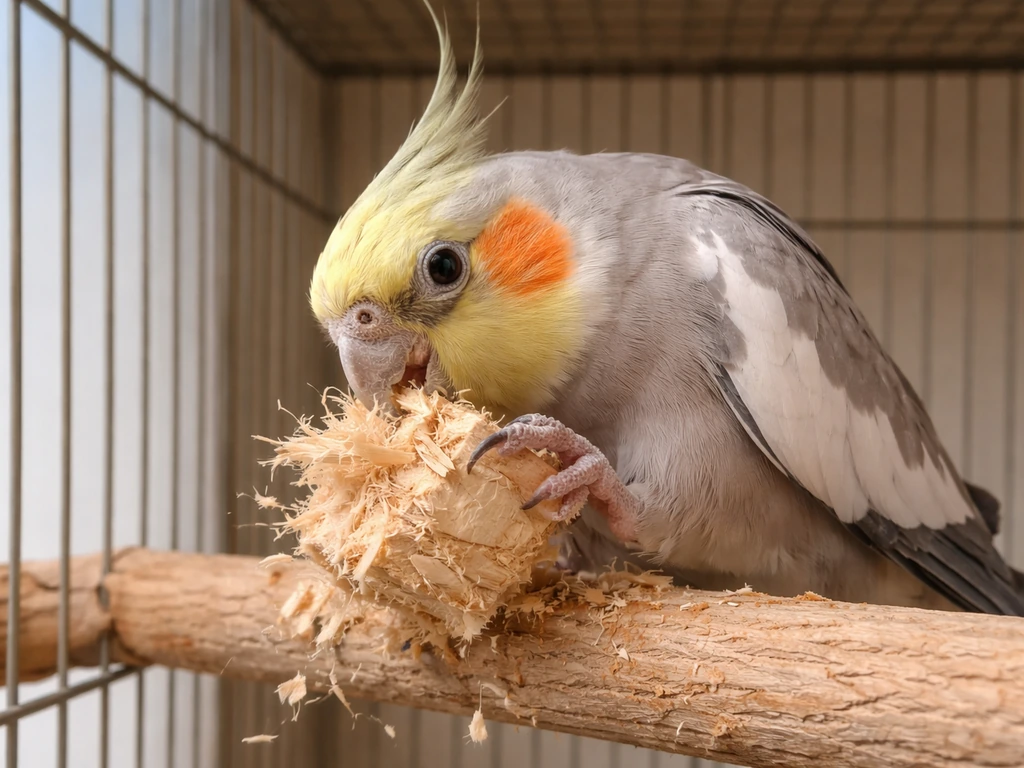
This is the highest-value category for cockatiels. They are hard-wired to chew and will do it on whatever is available, including your furniture and cage bars if you don't give them something better. Softwood blocks and slices, palm-fiber bundles, and seagrass mats all work well. Balsa wood is a great starter because it's soft enough for even a hesitant chewer to demolish quickly, which gives them immediate positive feedback. Layered paper and cardboard shredders are also excellent and inexpensive. The key metric: a good shred toy should be partially destroyed within a week of regular use. If it's untouched after two weeks, it's probably the wrong material or placement.
Foraging toys
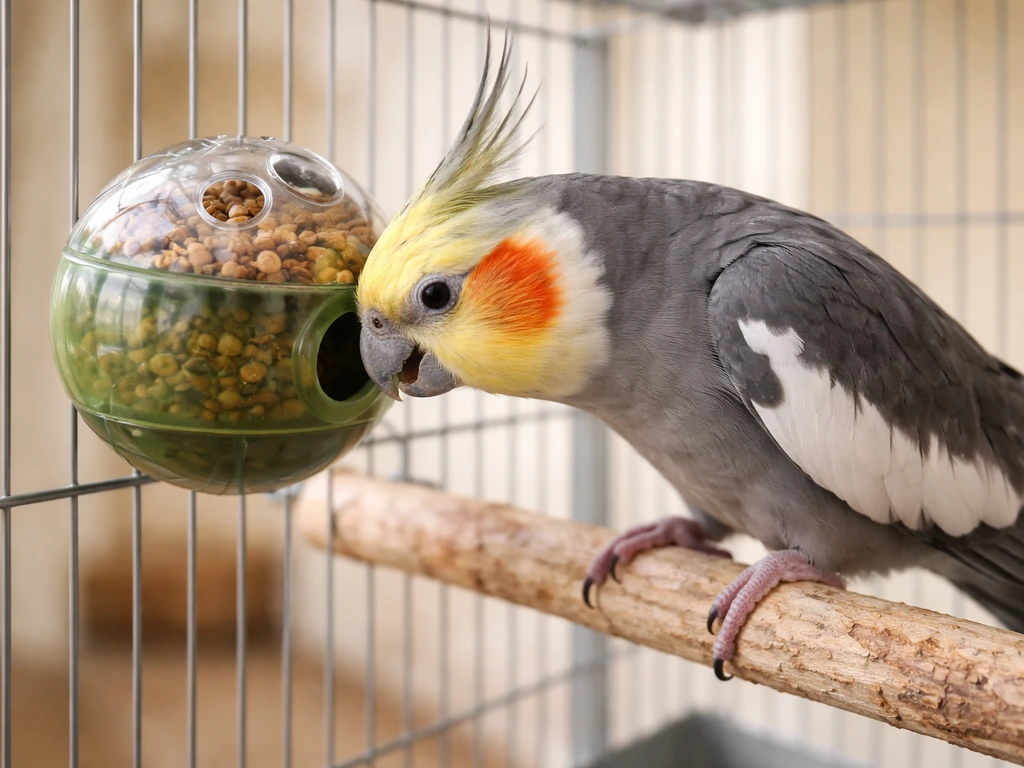
Foraging toys are the biggest welfare upgrade you can make for a cockatiel kept alone. In the wild, cockatiels spend a large part of their day searching for food. A cage where food just sits in a bowl all day removes that mental work entirely. Simple foraging toys include cups or tubes you can stuff with millet or small pellets, paper cups folded around a treat, and transparent foraging boxes where the bird can see the food but has to figure out how to get it out. Start with easy-to-open designs and gradually make them harder as your bird gets more confident. Puzzle-style foraging toys fit here too, though cockatiels tend to prefer physical manipulation (sliding doors, removable caps) over complex sequential puzzles. If you’re specifically after a variety of bird puzzles, you’ll want the ones that stay safe while still encouraging hands-on problem solving Puzzle-style foraging toys.
Swings, bridges, and climbing enrichment
Cockatiels love to sway, and a simple rope or wooden swing is often the first toy a new bird will actually use. Go for swings with a natural wood perch in the 0.5 to 0.75 inch diameter range and rope or chain attachments that don't have large loops a foot could slip into. Rope bridges and ladders add climbing interest, especially if you have a playstand outside the cage. The rope material matters: tightly woven cotton is acceptable, but check regularly for fraying. Loose threads and long dangling strands are a toe-entanglement hazard. Some owners prefer bamboo or wooden slat bridges entirely, which avoid the fraying issue.
Foot and grip toys
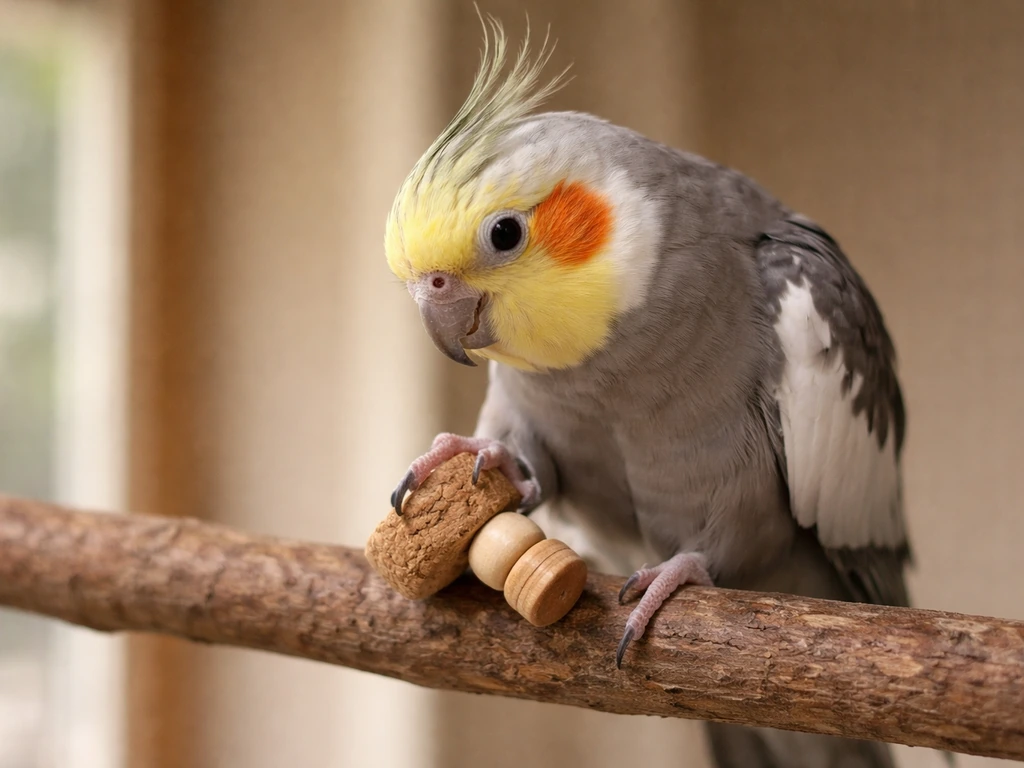
Cockatiels use their feet almost like hands and really enjoy holding objects. Small wooden foot toys, cork pieces, and cardboard scraps they can pick up, manipulate, and chew while perching give them a different kind of stimulation than hanging toys. These are also great options for birds that are shy about new toys in the cage because you can just drop them on the cage floor or perch and let the bird investigate at its own pace.
Recommended toy picks by situation
Rather than giving you a single ranked list, here's a practical breakdown by situation, because the right toy depends a lot on where it's going and who it's for.
| Situation | Best toy type | What to look for |
|---|---|---|
| First cage toy, beginner bird | Balsa wood chew or palm-fiber shredder | Soft wood, no paint, simple attachment clip, small-medium size |
| Adding enrichment to an existing cage | Foraging cup or stuffable tube | Transparent or semi-transparent, easy first difficulty level |
| Playstand outside the cage | Rope or wooden swing, foot toys | Sturdy top attachment, perch diameter 0.5–0.75 inch |
| Bored bird that ignores toys | Destructible paper/cardboard toy | Loud colors (bird-safe dye), easy to shred, low barrier to engage |
| Upgrade for an experienced forager | Puzzle-style foraging box | Sliding doors, removable caps, food visible through clear panel |
| Bird that chews cage bars | Softwood block hung on cage bars | Balsa or pine, sized to redirect chewing habit |
For beginners, start with two or three toys maximum: one chew/shred toy, one swing, and one foraging option. Overcrowding the cage with toys is a common mistake that actually stresses birds out rather than enriching them. You can always add more once you know what your specific bird engages with.
How to introduce toys and build a rotation schedule
A lot of people hang a new toy and then wonder why their cockatiel is terrified of it. Cockatiels are naturally cautious about unfamiliar objects in their territory, and that's completely normal. The fix is a staged introduction. Place the new toy near the cage but outside it for a day or two so the bird can observe it without feeling threatened. Then move it to the outside of the cage bars before finally hanging it inside. This process takes patience but works reliably.
Placement inside the cage matters too. Hang toys near a favorite perch but not directly above the food and water dishes (both for hygiene and because your bird needs clear access). Avoid placing toys so low they're near the cage floor, where most cockatiels feel less safe. Mid-height to upper-cage placement gets the best engagement.
Rotation is what keeps things interesting long-term. A cockatiel that sees the same three toys every day will stop interacting with them within a few weeks. A simple rotation schedule: keep three to four toys in the cage at any one time, and swap one out every one to two weeks. Clean and store the rotated toys, then reintroduce them later. Birds often react to a familiar toy returned after a break as if it's brand new, which is one of the easiest enrichment hacks there is.
- Start with 2 to 3 toys in the cage, not a full cage stuffed with options
- Introduce new toys outside the cage first, then on the cage bars, then inside
- Place toys at mid-to-upper cage height, away from food and water
- Rotate one toy out every 1 to 2 weeks to maintain novelty
- Track which toys get the most use and prioritize those categories
Common toy mistakes that can actually hurt your bird
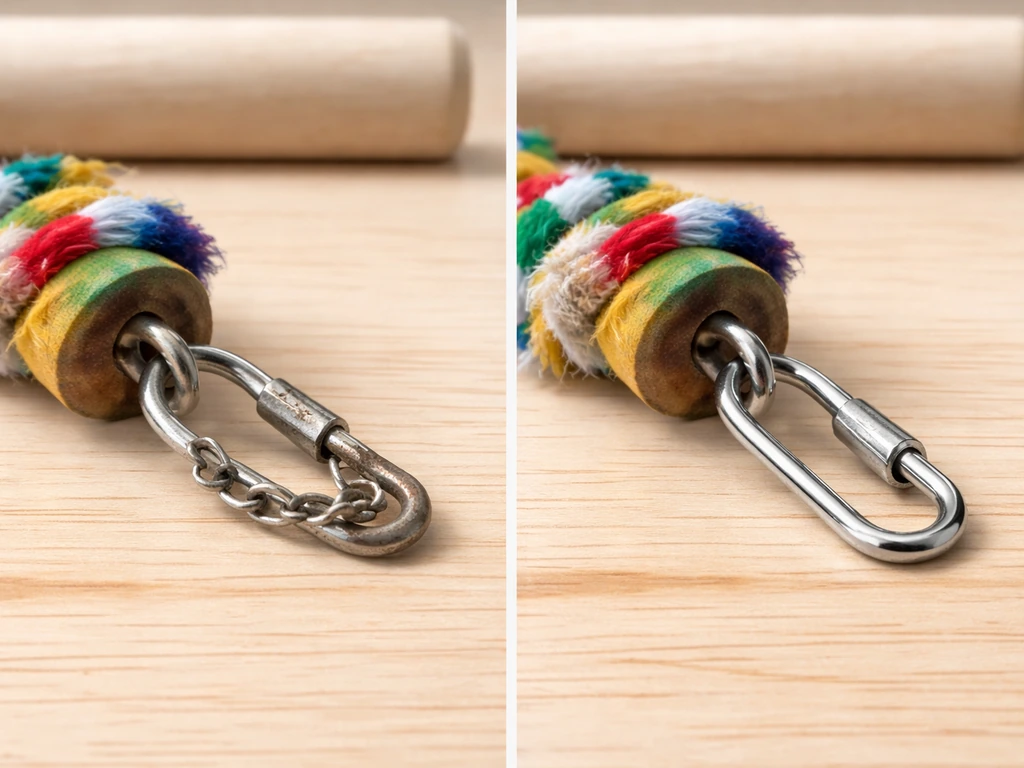
The toy aisle (or toy section of a bird supply site) has a lot of products that look fine but aren't. Here are the mistakes I see most often and the ones that carry real risk.
- Toys with zinc or lead hardware: bells, chain links, and quick-link clasps are the usual culprits. Check for "bird-safe" or "nickel-plated" hardware and avoid anything that looks like cheap chrome plating
- Long rope strands or frayed fibers: ASPCA guidance specifically calls out yarn and ribbon as unsafe for birds. Long loops of any material can catch toes or even necks
- Toys sized for larger parrots: anything designed for African greys or larger is usually too heavy and has apertures and ring sizes a cockatiel foot or head can slip into
- Painted or lacquered wood: untreated is always safer. If you're unsure what the coating is, skip it
- Toys that crowd the cage: a bird that can't spread its wings or move freely between perches is stressed, not enriched
- Plastic toys with sharp edges or easily cracked shells: cockatiels will chew plastic and ingest fragments
- Toys with small detachable parts: beads, bells with accessible interior clappers, and snap-off decorations are all ingestion risks
- Hard-to-clean crevices: toys with lots of tight grooves trap bacteria and mold, especially near food-based foraging setups
One myth worth addressing directly: bigger is not safer. A lot of new cockatiel owners go for larger, sturdier toys assuming they're more durable and therefore safer. But a toy sized for a conure or small Amazon can have ring sizes, perch diameters, and hanging loops that are genuinely hazardous for a cockatiel. Size appropriately, not up.
Cleaning, inspection, and knowing when to toss a toy
Bird toys get dirty fast, especially anything near the food area or anything a cockatiel has been chewing and dropping. A basic cleaning routine: wipe down hard surfaces (wood blocks, plastic components) weekly with a bird-safe disinfectant or a diluted vinegar solution, rinse thoroughly, and let dry completely before returning to the cage. Never put damp toys back in because mold grows fast in a warm cage environment.
Inspect toys every time you clean them. What you're looking for: fraying rope or fiber strands longer than about half an inch (trim or replace), cracked plastic that now has sharp edges, hardware that has started to corrode or flake, and any wood that has developed soft spots or mold. Destructible toys like balsa chews and paper shredders should be replaced when they're significantly broken down, not just when they're completely gone. A toy that's 70 percent destroyed may have sharp splinters or loose fragments that are now more hazardous than useful.
For foraging toys that hold food, inspect and clean after every use. Wet or damp food residue left in a tube or cup will mold within 24 to 48 hours in typical indoor temperatures. These toys need more frequent attention than a hanging wood chew.
| Toy type | Cleaning frequency | Replace when |
|---|---|---|
| Softwood chews (balsa, pine) | Weekly wipe-down | Heavily splintered or 70%+ destroyed |
| Palm fiber / shredders | Weekly inspection | Frayed strands over 0.5 inch or significant mass lost |
| Foraging cups and tubes | After every use | Cracked, warped, or impossible to clean thoroughly |
| Rope swings and bridges | Weekly | Any fraying, loose loops, or hardware corrosion |
| Foot toys (cork, small wood) | Weekly | Sharp edges, splinters, or mold |
| Paper and cardboard toys | N/A (disposable) | When destroyed or wet/soiled |
What to do when your cockatiel won't touch any toys
This is the most common frustration I hear from new cockatiel owners, and the good news is it's almost always fixable. The most frequent cause is that the toy was introduced too quickly and placed directly in the cage before the bird had any chance to acclimate to it. Go back to the staged introduction method: outside the cage, then cage bars, then inside.
If the staged introduction still isn't working, try making the toy interesting by association. Clip a small piece of millet or a favorite treat directly onto the toy, or rub the toy against a food item so it carries a familiar scent. You can also model toy use yourself by touching and manipulating the toy while your bird watches, since cockatiels are observational learners and will often investigate something after seeing a trusted person interact with it.
Some cockatiels are genuinely more cautious than others, especially rescue birds or those that weren't socialized with toys early. For these birds, start with the least threatening toy possible: a small piece of balsa wood or a cardboard scrap placed on the cage floor. No hanging, no swinging, no noise. Let them approach it entirely on their own terms. Once they start chewing or picking it up, you've established a foundation to build from.
If your bird engages with one toy obsessively and ignores everything else, don't force variety. Use that preferred toy type as an anchor and slowly introduce new toys nearby. A bird that loves shredding paper will often transition to palm fiber shredders, then to softwood chews, over time. Let the behavior lead the enrichment choices rather than trying to impose a balanced toy rotation before the bird is ready for it.
Cockatiels that live with parakeets, conures, or other birds will sometimes need separate toy introductions because group dynamics affect what feels safe to investigate. If you’re shopping for parakeet toy needs too, focus on safe, appropriately sized chew and shred options that match their activity level. If you're also thinking about enrichment for other species, the approaches for parakeets and conures share some overlap with cockatiels but differ in size requirements, chew intensity, and foraging complexity, which is worth keeping in mind if you have a mixed flock.
Your quick-reference checklist
- Choose toys made from untreated softwood, natural fiber, food-grade paper, or bird-safe leather
- Check all hardware for zinc, lead, and corroding plating before buying
- Size for a cockatiel specifically: perch diameters 0.5 to 0.75 inch, no large loops or apertures
- Start with 2 to 3 toys: one chew/shred, one swing, one foraging option
- Introduce new toys outside the cage first, then cage bars, then inside
- Place toys at mid-to-upper cage height, away from food and water dishes
- Rotate one toy out every 1 to 2 weeks to maintain novelty
- Inspect and clean weekly; clean foraging toys after every use
- Replace destructible toys when 70% gone or when sharp fragments appear
- For reluctant birds: associate toys with food, model use yourself, or start with floor-level foot toys
FAQ
How can I tell if a toy is the right size for my cockatiel, without buying blind?
Use fit checks before full-time hanging. For perches and dowels, aim for about 0.5 to 0.75 inch diameter, then confirm your bird can grip with its toes without the foot passing through any ring or loop. For hanging items, make sure the toy leaves enough room for a full wing spread, and watch for tail or wing clipping during normal movement.
What should I do if my cockatiel keeps swallowing tiny pieces from a chew or shred toy?
Remove the toy immediately and switch to a safer format, such as larger blocks or softer shredders that release big fragments instead of dust-like particles. Also check whether the toy is over-damaged, since heavily broken balsa or paper can create sharper, looser pieces. Offer smaller, shorter chew sessions and reintroduce a replacement only after your bird shows normal chewing behavior.
Is it safe to use rope toys if my cockatiel is a heavy chewer?
Rope can work, but only if it is tightly woven and you inspect it very often. Focus on fraying and dangling strands, if you see threads longer than about half an inch, trim carefully or replace. Avoid ropes with loose fibers near the entry points of attachments, because those are the first places beaks and toes get caught.
Can I leave foraging toys in the cage all day?
You can, but only if they are designed for dry, non-perishable treats and you clean promptly when food is used. For any toy that holds wet or moist food residue, remove after your bird finishes, then wash and dry completely to prevent mold. If your cockatiel is fast and leaves partially consumed food behind, plan shorter foraging sessions instead of all-day access.
How often should I rotate cockatiel toys, and what if my bird gets upset when a favorite toy is removed?
A practical schedule is 3 to 4 toys in rotation, swapping one every 1 to 2 weeks. If your bird becomes clingy or agitated, keep the anchor toy (the one it loves most) in the cage and rotate only the other pieces. Reintroducing a familiar toy after a break often triggers renewed interest, but abrupt removal of the anchor can reduce confidence.
My cockatiel won’t touch new toys. Should I keep trying or give up?
Keep trying with a staged, low-pressure approach. Place the toy outside the cage first, then near the cage bars, then inside, and avoid hanging it above food or water. If there is still no engagement, add a safe association like a small millet piece attached to the toy and model the interaction yourself while your bird watches, then return to the staged progression.
Are bells and metal parts on bird toys ever safe for cockatiels?
They can be risky if the hardware is zinc or if small parts can detach. Prefer toys where bells and connectors are securely embedded and not flaking or corroding. Before each use and during cleaning, check for rust, sharp edges, and any looseness that could allow ingestion of small pieces.
What’s the best way to clean wooden, palm-fiber, and paper toys without damaging them?
For hard surfaces, wipe weekly with a bird-safe disinfectant or a diluted vinegar solution, then rinse thoroughly and dry completely. For paper and palm-fiber items, spot-clean only if the manufacturer allows it, otherwise replace when soiled. Never return damp toys, because warm cage conditions accelerate mold growth and can make foraging or chew toys unsafe quickly.
Is it okay if a toy is partially destroyed, or does that mean it’s unsafe?
Partially destroyed is often the goal for shredding and chewing, but safety depends on the texture and fragmentation. If you see sharp splinters, loose fragments, cracked plastic edges, or rope fibers longer than about half an inch, replace or switch styles. A toy that is 70 percent destroyed may still be usable for shredding in some cases, but it becomes a higher risk when the remaining pieces are sharp or no longer stable.
Do cockatiels need different toys if they live with other small birds?
Often yes, because group dynamics change what feels safe to investigate. Even when toys are the same type, consider spacing and timing so one bird cannot monopolize or block access. Use separate introduction phases for each bird and start with non-threatening chew and shred options so you can confirm each bird can use the toy without stress.