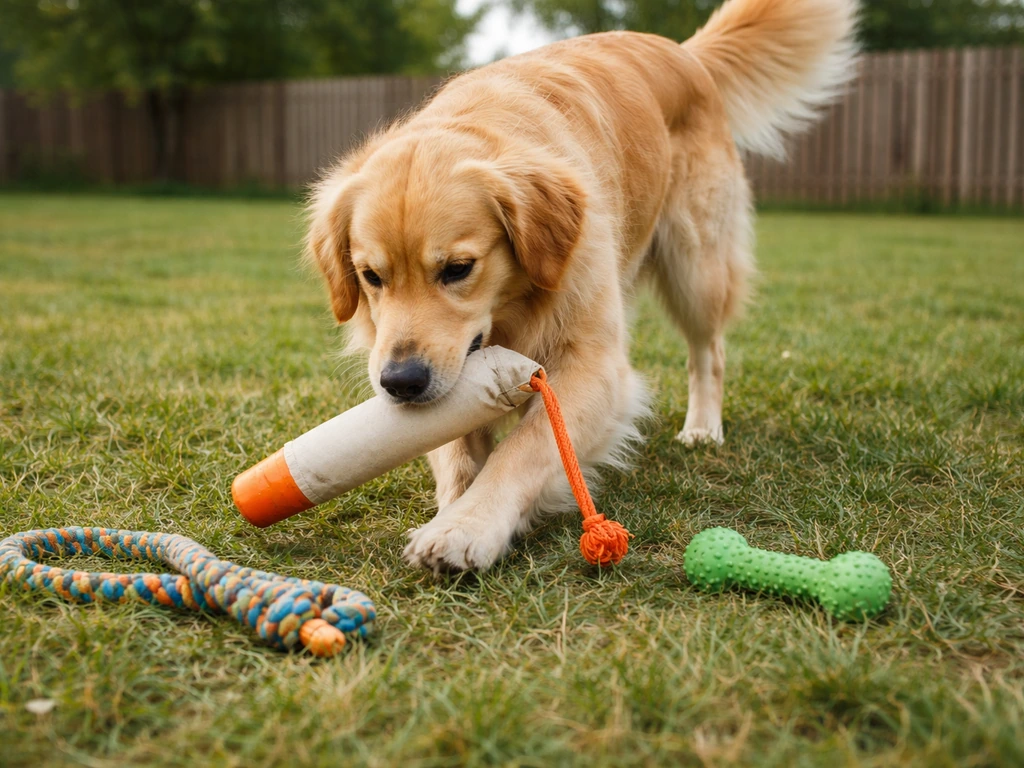
If you landed here searching for 'best bird dog puppy toys,' you're probably in one of two camps: you have a pet bird and want to find it great toys, or you have a bird-dog puppy (think German Shorthaired Pointer or Vizsla) and want safe chew toys. If you meant a bird instead of a bird-dog puppy, you may also want to check what to give pet birds in terms of safe, species-appropriate toys bird dog puppy toys. This site is squarely focused on pet birds, so the bulk of this guide covers the best toys for parakeets, cockatiels, conures, parrots, and similar companion birds. But if you genuinely meant puppy toys, scroll down to the last section and you'll find a quick breakdown there too. Either way, you won't leave empty-handed.
Best Bird Dog Puppy Toys vs Bird Toys: Safe Picks

Marcus Chen
16 May 2026
Quick clarification: bird toys or bird-dog puppy toys?
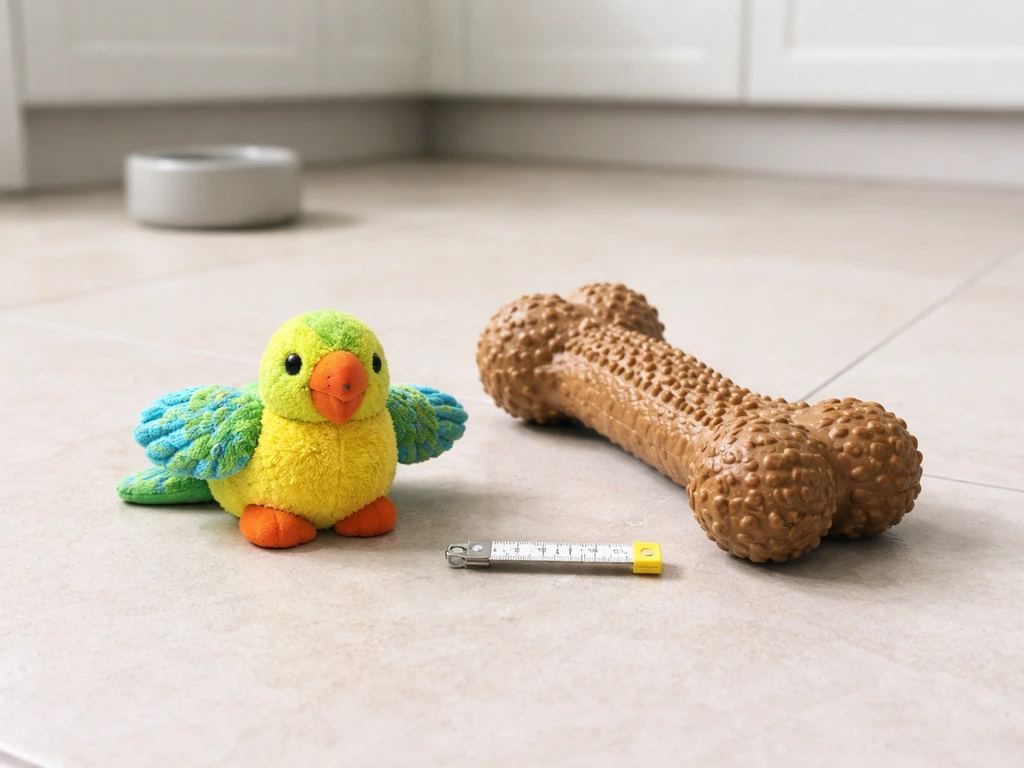
The phrase 'bird dog puppy' most commonly refers to a sporting breed bred to hunt birds, like a Brittany, Weimaraner, or English Setter. Their puppies have strong chewing instincts and need specific toy types. But on a pet bird website, 'bird' almost always means a feathered companion living in your home. If you got here because you're a new bird owner trying to figure out what to put in your conure's cage, you're in exactly the right place. The main guide below is for you. If you're hunting for puppy-safe chew toys for a teething sporting breed, jump to the final section.
How to choose the right toy for your specific bird
The single biggest mistake I see new bird owners make is buying toys that look fun to humans but are completely wrong for the bird's size, species, or personality. A toy that's perfect for a large Amazon parrot can be a strangling hazard for a budgie. Start here before you buy anything.
Match the toy to your bird's size
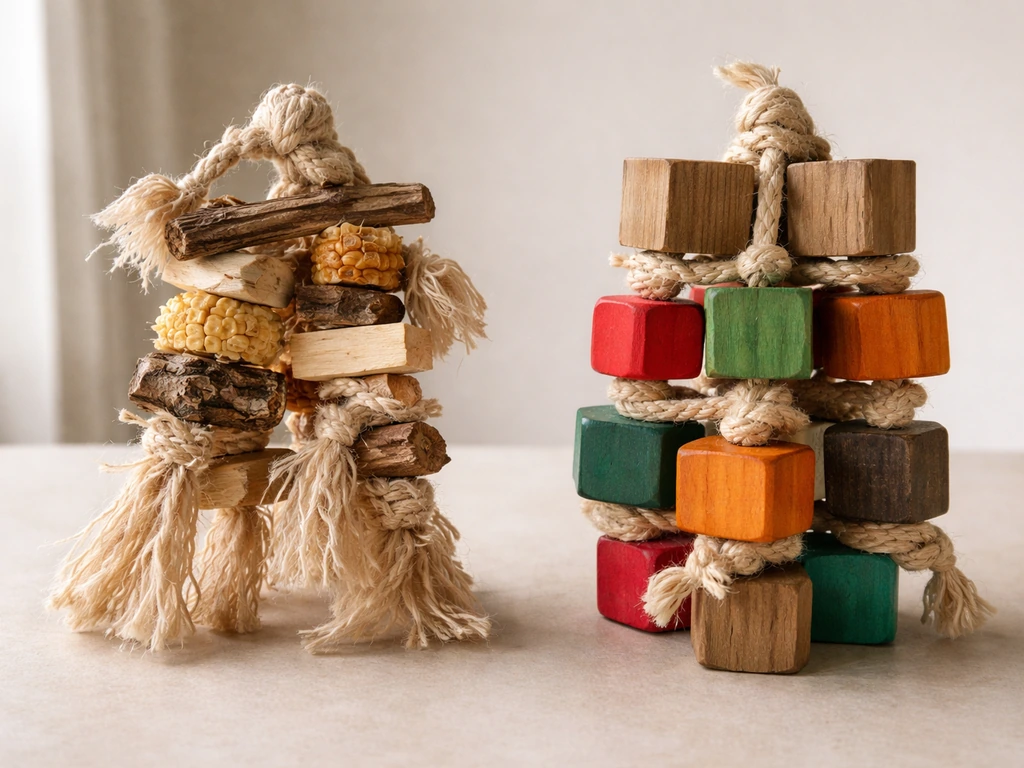
Most reputable bird toy brands publish a sizing chart that groups birds roughly like this: small (budgies, parrotlets, lovebirds), medium (cockatiels, conures, caiques), large (African Greys, Amazons, Eclectus), and extra-large (macaws, cockatoos). If your bird is a light or cautious chewer, some manufacturers recommend sizing one category down. The key principle from Lafeber Vet is simple: the toy should be sized appropriately for the individual bird. A toy with openings that are too large can trap a head or foot, and parts that are too small for the size can become swallowed chunks.
Think about your bird's personality and chewing style
Some birds are demolition machines (most conures and macaws qualify), while others are gentle nibblers (many cockatiels and budgies). A heavy destroyer will turn a balsa wood toy into confetti in minutes, which is fine as long as none of those splinters are coated with anything toxic. A timid bird may ignore a loud jangling toy entirely. Watch your bird's existing behavior: does it chew everything? Shred paper? Prefer to manipulate objects with its feet? Let that drive the toy category you prioritize.
Species to keep in mind
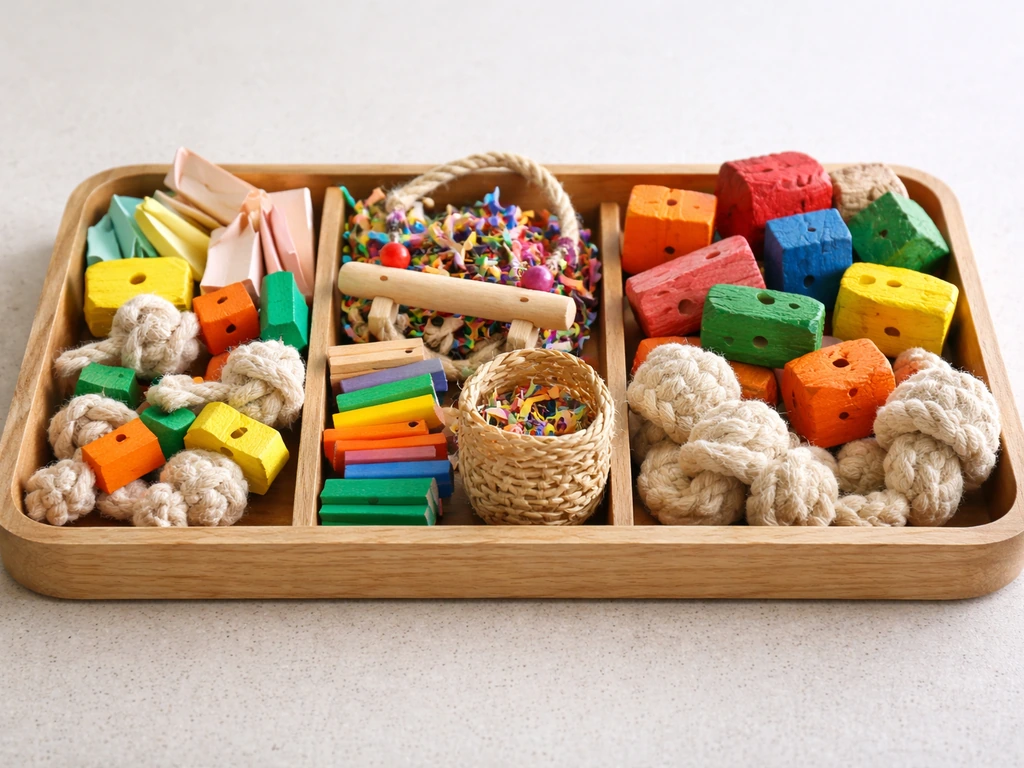
- Budgies and parrotlets: lightweight wood, small paper, soft rope knots, tiny foot toys
- Cockatiels: soft wood chews, shredding toys, small swings, foraging cups
- Conures: medium-sized foraging toys, tough shredders, swings, puzzle toys
- African Greys and Amazons: complex puzzle/foraging toys, heavy wood chews, large foot toys
- Macaws and cockatoos: extra-large stainless hardware, dense wood blocks, big foraging challenges
The safety checklist you actually need
Bird toy safety is not complicated once you know what to look for, but it matters more than almost any other toy decision you'll make. Heavy metal toxicity from toy hardware is one of the most documented causes of preventable illness in pet birds. Here's what to check before anything goes in the cage.
Metals: stainless steel only
Galvanized wire and hardware (chains, hooks, quick-links, connectors) contain zinc and often trace lead. Multiple veterinary sources, including Merck, University of Illinois, and The Bird Clinic, flag these as real toxicity risks because birds chew and lick metal repeatedly. When a bird gnaws at a zinc-coated quick-link daily, it is ingesting zinc salts each time. The fix is simple: choose stainless steel hardware exclusively, and confirm the product explicitly says zinc-free and lead-free. Avoid copper, silver-plated, and iron-coated hardware too.
Parts, openings, and entrapment
Any opening in a toy (a ring, loop, or gap between components) needs to be either too small for a foot or beak to fit through, or large enough that the bird can pull free easily. The same logic that applies to cage bar spacing applies to toy design. Remove any toy immediately if it ever catches on your bird's beak or toenail, even for a moment. Frayed rope is a strangulation risk and should be replaced, not trimmed and reused.
Materials: what to avoid
- Galvanized or zinc-coated anything (nails, bolts, wire, chain)
- Breakable hard plastics that can shatter into sharp shards
- Synthetic looped nylon or narrow yarn (entanglement risk)
- Bell clappers (often contain lead weights inside)
- Toys with lead weights as counterbalances
- Coated or painted wood (check that any dye is food-safe or non-toxic)
- Harmful inks or glues in paper products
- Toys with strong artificial fragrances or wax coatings
- Any toy with openings sized to trap feet or neck
Materials that are generally safe
- Untreated softwood and hardwood (pine, balsa, manzanita, birch)
- Stainless steel hardware (zinc-free, lead-free confirmed)
- Natural fiber rope: sisal, hemp, jute, cotton, coir, manila
- Vegetable-tanned leather (not chrome-tanned)
- Food-grade dyes only for colored wood or paper
- Plain cardboard and paper without toxic inks or coatings
- Short lengths of PVC pipe for larger birds (burr-free edges)
The 'planned obsolescence' principle
Purdue's veterinary guidance puts this well: toys should have planned obsolescence. Your bird will destroy them, and that's the whole point. But the toy should fall apart in ways that don't create swallowable chunks or obstructions. A balsa toy crumbling into soft splinters is fine. A plastic toy cracking into sharp plastic shards is dangerous. Think about how the toy fails before you buy it.
The main toy categories and what to look for in each
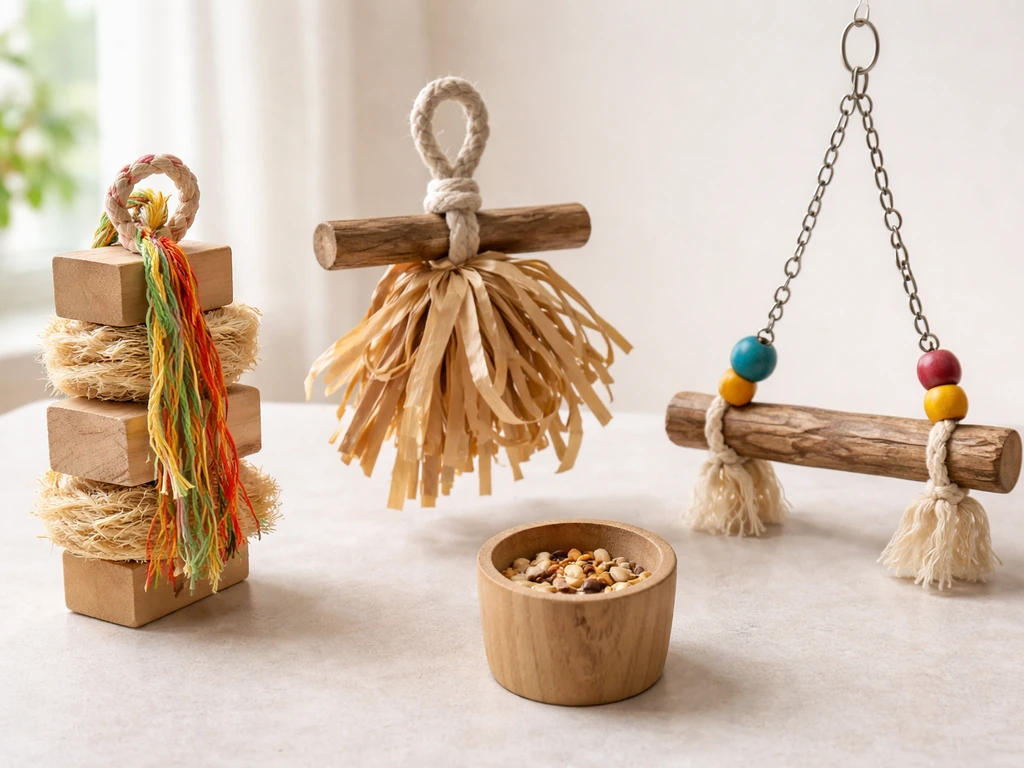
A balanced enrichment setup covers a bird's four core needs: chewing, shredding, foraging, and movement or manipulation. A good rule of thumb from SpectrumCare is to keep one toy of each type in the cage at any given time: one chew/shred toy, one foraging toy, one movement toy (swing or ladder), and one manipulative or puzzle toy. Here's what to look for in each.
Chew toys
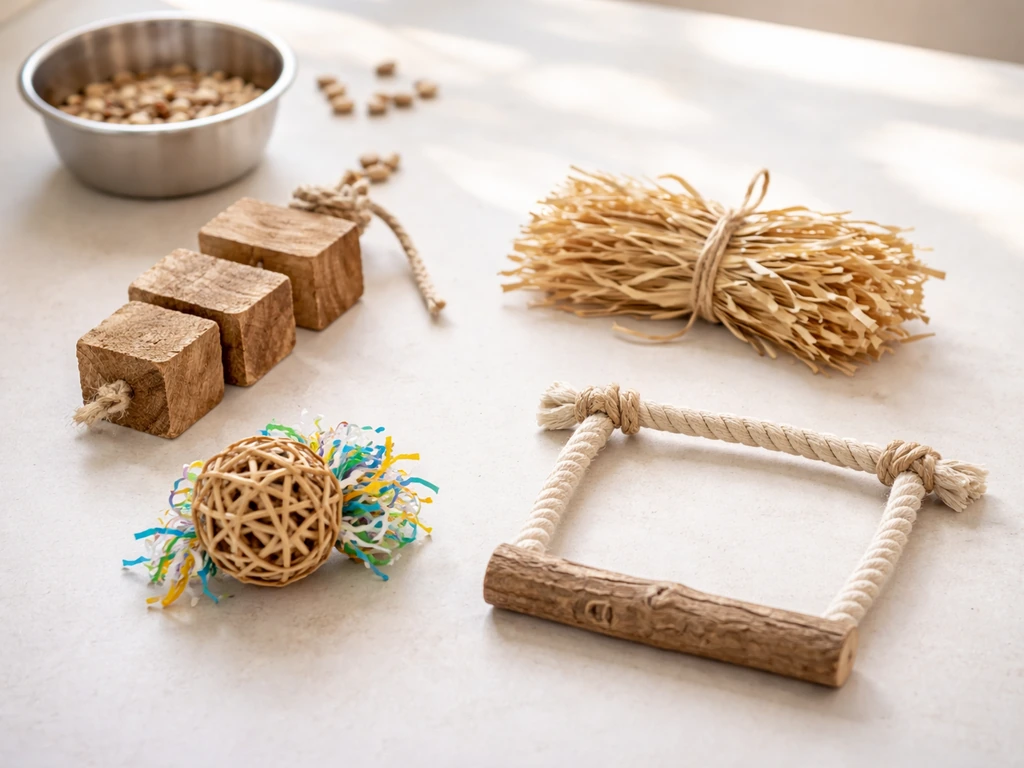
These are designed to be demolished. Untreated softwood blocks, pine slats, and balsa chunks are classics. For larger birds, dense hardwood (like eucalyptus or manzanita branches) provides longer-lasting chewing satisfaction. The main thing to check: no coatings, no metal parts with zinc, and no breakable plastic. The wood should splinter softly, not crack into large chunks.
Shredding toys
Shredding toys tap into a behavior that's especially strong in cockatiels and conures. Palm frond strips, corn husk, paper, and natural woven materials all work well. Avoid anything with synthetic dyes or finishes. The best shredding toys unravel in soft, non-swallowable strips rather than breaking into chunks.
Foraging toys
These are where you can really make a difference in your bird's mental health. Foraging toys hide treats or pellets inside containers, wrapping, or compartments that the bird has to work to access. VCA notes that a good foraging toy can keep a bird occupied for hours retrieving food. Start easy (treats visible but just inside a cup) and increase difficulty as your bird gets the hang of it. Purdue specifically highlights puzzles and foraging toys as among the best options for birds, noting they simulate the natural food-finding behavior wild birds spend most of their day doing.
Swings, perches, and ladders
Movement toys give birds physical exercise and vestibular stimulation (balance and coordination). A simple cotton rope swing or a wooden ladder adds variety to the cage landscape. Check that rope is natural fiber (not synthetic nylon), that attachment hardware is stainless steel, and that the swing diameter fits your bird's foot. Parakeets and cockatiels love simple wood-and-rope swings. Larger birds benefit from more substantial perch toys.
Foot toys and puzzle toys
Foot toys are small enough for the bird to hold in one foot while manipulating with its beak. Small wooden shapes, cork pieces, and rolled paper balls work well. Puzzle toys require problem-solving to unlock treats or navigate a series of steps. These are especially valuable for intelligent species like African Greys and large parrots. Just keep in mind that a bird that can disassemble a toy quickly may also create small parts it can ingest, so watch the first few sessions carefully.
Best toy picks by enrichment goal
Rather than naming specific brands (which come and go), here are the right categories to prioritize based on what your bird actually needs, especially if you're just getting started.
| Bird type / goal | Best toy category | What to look for |
|---|---|---|
| Small birds (budgies, parrotlets) — first toy | Soft wood chew + small swing | Light balsa or pine, stainless ring attachment, natural fiber swing |
| Cockatiels — boredom prevention | Shredding toy + foraging cup | Palm frond or corn husk shredder, easy-access treat cup |
| Conures — mental stimulation | Foraging toy + puzzle | Multi-step foraging box, medium-complexity puzzle with pellet reward |
| African Greys — cognitive enrichment | Complex puzzle + foot toy | Multi-compartment foraging box, solid wood foot toy without coatings |
| Macaws / cockatoos — heavy chewers | Dense hardwood block + large foraging toy | Eucalyptus or manzanita, extra-large stainless hardware throughout |
| Any nervous or new bird | Simple foot toy or paper toy | Low stimulation, quiet, no bells or moving metal parts |
For newbies, the safest starting point is usually a simple untreated wood chew and a small foraging cup. They cover the two most critical needs (chewing and foraging), they're inexpensive, and they'll tell you a lot about your bird's preferences before you invest in fancier options. You can also get a sense of how much your bird spends on toys by checking out articles on how much bird toys typically cost before committing to a full setup. If you want to save money while trying DIY bird toys, keep an eye out for a make your own bird toys coupon code. If you are wondering how many toys should a bird have, a simple starting ratio is to offer a small rotation so your bird stays interested without getting overwhelmed. If you're shopping for bird toys, you'll also want a quick sense of typical prices so you can budget for a safe setup how much are bird toys.
How to introduce new toys without stressing your bird out
This is where I've seen a lot of beginners go wrong. You buy an exciting new foraging toy, drop it in the cage, and your bird panics and refuses to go near it for a week. It's not broken. Birds are prey animals and treat unfamiliar objects as potential threats. Here's how to do it right.
- Place the new toy outside the cage first, where your bird can see it but doesn't feel ambushed by it. Leave it there for a day or two.
- Move it to the cage door or cage top (still outside the interior) for another day.
- Introduce it inside the cage in a low-traffic corner, away from food and water bowls.
- Supervise the first few sessions closely. Watch for any part catching on a beak or toenail, and remove the toy immediately if that happens.
- Once your bird engages comfortably, you can move the toy to a more prominent position.
Toy rotation: how often and why it matters
Rotation prevents boredom without overwhelming your bird. The Environmental Literacy Council notes that rotation frequency should match the bird's personality: some birds are fine with weekly swaps while others get stressed by too-frequent change. A practical starting schedule from SpectrumCare is to keep three to four toys in the cage at once and rotate one out every one to two weeks, replacing it with something 'new' (which can be a previously used toy the bird hasn't seen in a while). Placing a toy near each perch, as STAR Avian recommends, helps ensure your bird actually interacts with it rather than ignoring it in a distant corner.
Common mistakes to avoid
- Buying toys based on appearance rather than safety and species fit
- Leaving frayed rope or worn toys in the cage (replace them, don't repair them)
- Rotating all toys at once, which can confuse and stress the bird
- Skipping supervision on the first few days with a new toy
- Assuming silence means your bird is happy — a bird ignoring all toys may be bored or anxious
- Using toys with galvanized hardware because they were cheap or widely available
- Putting toys with bells that have lead clappers in the cage without checking the hardware
If you actually meant dog toys: what to get for a bird-dog puppy
If you have a teething Vizsla, GSP, or other sporting breed puppy and ended up here by accident, here's the short version of what you need to know.
Puppies teethe hard, especially high-drive bird-dog breeds. For a deeper look at the right options, see our picks for the best toys for bird dogs. The core rule from veterinary sources is to match toy toughness to the puppy's age and jaw strength. PetMD recommends rubber-based teething toys (like the KONG Puppy line) for tougher chewers because they flex without cracking into sharp pieces. VCA warns that the wrong chew toy can crack teeth, obstruct the gut, or pose choking hazards. Vetstreet adds that rawhide should only be given under supervision because a puppy can bite off large chunks that become choking risks.
For a bird-dog puppy specifically, look for these qualities in a toy:
- Rubber or durable natural rubber construction (not hard nylon that can crack teeth)
- Size appropriate for the puppy's breed and current weight (too small means a choking hazard)
- No small detachable parts that can be chewed off and swallowed
- No toxic dyes, coatings, or chemical treatments
- Replaced immediately when it shows significant damage or piece loss
FirstVet emphasizes that toys which are too small or lose small pieces easily are the top choking and intestinal blockage risk for puppies. If you can pull off a piece with your fingers, it's not safe for an unsupervised teething puppy. Stick to properly sized, durable rubber toys, monitor every chewing session for the first few weeks, and swap out anything that shows significant wear.
FAQ
Are bird toys still safe if they are labeled “non toxic” or “food safe”?
For pet birds, avoid anything that contains dye-like coatings, soft gels, or unknown “food safe” finishes on the part your bird chews. If a toy is marketed for rodents or craft use, treat coatings and glue as a safety unknown until you can confirm the exact materials (ideally plain, untreated natural fibers or stainless hardware).
What should I do if my bird starts shredding a toy and pieces get tangled?
If your bird routinely shreds paper or woven material, trim nothing. Remove the toy as soon as fibers become tangles or long strips that could wrap a toe or beak, then replace with a size and material that produces shorter, safer pieces. The goal is planned replacement, not partial repair.
How do I check for toy pinch or entrapment points beyond the opening size?
A toy can be sized “right” but still be unsafe if the mounting creates a small gap, for example between a chain and a ring, or if the bird can lever the toy until it folds. Check the toy attached inside the cage, then do a hands-on test: look for any way a toe or beak can get wedged when the toy shifts.
Can I use DIY natural materials (like branches, rope, or paper) as bird toys?
Yes, but only if the toy hardware is stainless steel and the design prevents trapping. Foraging and shredding are usually the most rewarding, because natural materials can release scent, but you must watch for rapid destruction and discard on the first signs of sharp cracking or large chunk formation.
My bird panics around new toys, how should I introduce them so it does not get stressful?
When you first introduce a new toy, keep it in view and gradually make it accessible, instead of placing it directly in the favorite “sleep” area. For cautious birds, start with foraging items where the treat is visible but the bird has to work for the last bit, then change only one variable at a time.
What are common reasons a bird ignores a toy even though it seems safe and appropriate?
If your bird ignores a toy after several sessions, the issue is often placement height, toy orientation, or mismatch to chewing strength. Try moving it closer to a perch your bird already uses, rotate it so it is easy to grasp with one foot, and swap the material type before changing the whole category.
What’s a reliable at-home safety test for puppy chew toys?
For bird-dog puppies, the safest default is a durable rubber teether designed for puppies, because it flexes and resists fragmentation. A quick test: if you can rip off a piece with gentle finger pressure, it is not safe for unsupervised chewing.
How often should I replace a teething toy for a sporting breed puppy?
Do not rely on supervision alone if the toy becomes “pieceable.” For teething phases, replace toys based on wear patterns, for example tears, cracks, or any loosened inserts, even if the puppy is still actively chewing.
What should I do if my puppy chews something unsafe or swallows a piece?
Sometimes the best move is to offer an alternative texture immediately, like rubber instead of plush or rawhide, while you take away the unsafe item. If the puppy has already swallowed a chunk or you notice gagging, vomiting, abdominal pain, or unusual lethargy, treat it as urgent and contact a veterinarian right away.
Next Article
Best Toys for Bird Dogs: A Practical Buying Guide
Best toys for bird dogs: choose retrieving, tug, chew, puzzle and scent toys by age and drive with safety tips