Choosing a bird comes down to one honest question: does this species fit the life you actually live, not the life you plan to live? I've seen too many people fall in love with a macaw at the pet store, bring it home, and realize three weeks later that they can't handle two-plus hours of daily interaction, a noise level that carries through walls, and a beak that can crack a walnut.
How to Choose a Bird: Step-by-Step Checklist for Beginners
Marcus Chen
23 Mar 2026
The bird suffers, the owner feels guilty, and everyone loses. So before you pick a species or walk into a breeder's aviary, you need to work through a short checklist of your real lifestyle, budget, and commitment level. Everything else follows from that. If you want a simple starting point, this guide helps you narrow down what is the best bird for beginners based on your lifestyle, noise tolerance, and daily interaction.
what is the best bird for beginners
Start with your lifestyle, budget, and commitment
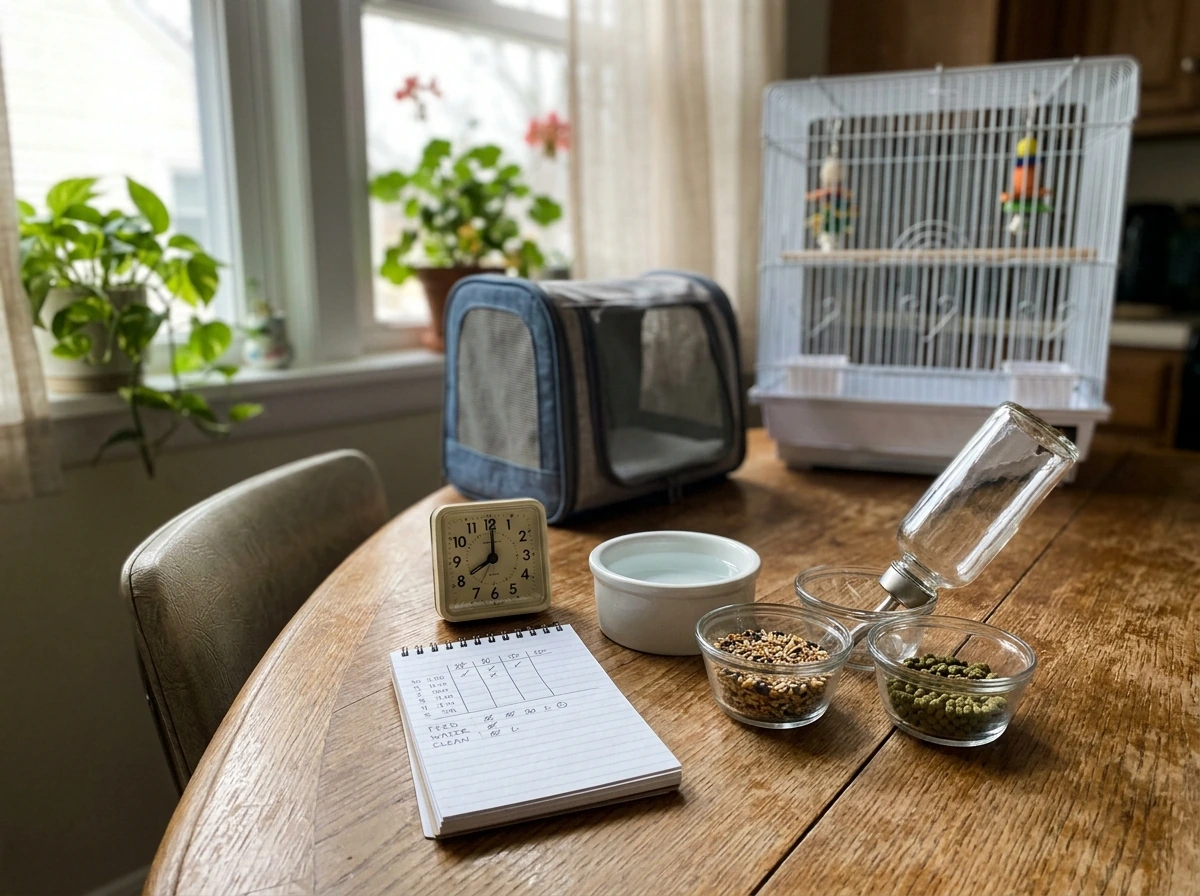
Birds are not low-maintenance pets. Even the most beginner-friendly species, like a budgie or cockatiel, need daily interaction, fresh food and water, and a clean cage. The difference between species is how much of each they need and how much it costs when something goes wrong. Before you pick a bird, get honest answers to these questions:. pet bird for beginners
- How many hours are you home and available each day? Some parrots need two to four hours of out-of-cage social time. Others do fine with 30 to 60 minutes plus in-cage enrichment.
- Do you live alone, with roommates, or with kids? Noise tolerance in a household is a real constraint, not a preference.
- Can you afford an avian vet? Birds hide illness well, and when they finally show symptoms they can go downhill fast. An avian vet visit runs $50 to $150 or more for a well-bird checkup, and emergencies cost significantly more.
- What's your actual budget for ongoing care? Beyond the bird itself, factor in cage, food, toys, perches, and annual vet visits. A budgie setup might run $200 to $300 upfront. A medium parrot like a conure or caique can cost $500 to $1,500 for the bird alone, plus ongoing costs.
- How long can you commit? Budgies live 7 to 10 years. Cockatiels 15 to 20 years. African greys and large cockatoos can live 40 to 60 years. This is a long-term relationship.
If you're new to birds, I'd strongly encourage starting with a beginner-friendly species and getting it right before moving up. There's no shame in starting with a budgie. It will teach you more about bird behavior, diet, and body language than any book, and if you decide birds genuinely fit your life, you can upgrade later with real experience behind you. best first time bird to buy
Match bird species to your actual needs
People often choose a bird based on looks or a viral video. That's how you end up with a cockatoo that screams for three hours a day in a studio apartment. Instead, match species to your four real constraints: noise tolerance, mess tolerance, how much social interaction you can reliably provide, and your experience level.
Beginner-friendly options
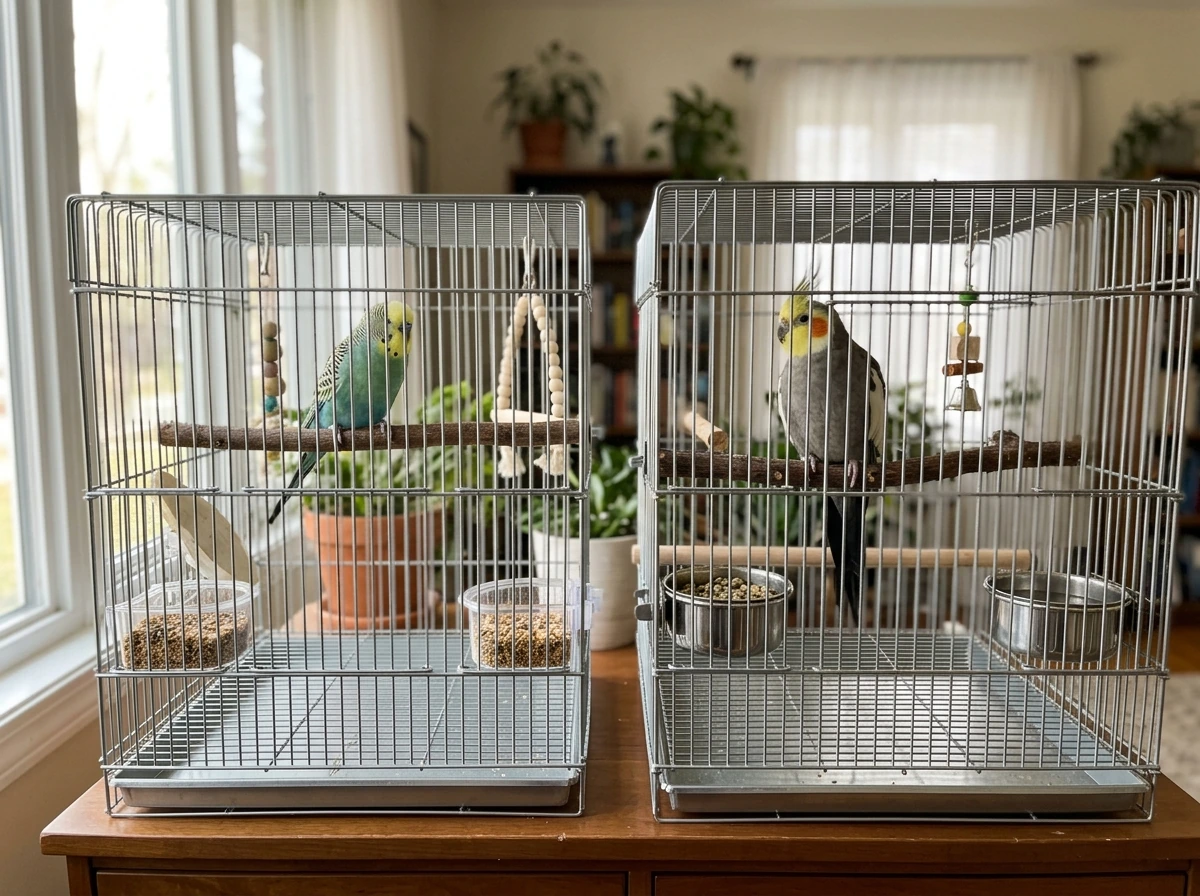
Budgerigars (budgies), cockatiels, and parrotlets are consistently the most manageable starting points. If you want the quickest path, compare a few beginner-friendly species and choose the one that fits your noise, mess, and daily interaction limits beginner-friendly options. Budgies are small, relatively quiet, affordable, and genuinely affectionate when hand-raised. Cockatiels are a step up in size and personality but still forgiving for beginners.
They can whistle loudly but rarely hit the decibel levels of larger parrots. Parrotlets are tiny but have big personalities and can be feisty, so they suit someone who wants a more engaging (and occasionally opinionated) bird without a large space requirement. Lovebirds are popular but often underestimated in terms of how much attention they need; a single lovebird requires significant daily interaction or it can become nippy and stressed.
Intermediate options
Green-cheeked conures, caiques, and Pionus parrots are solid intermediate choices for someone who has handled a smaller bird and wants more personality and interaction. Conures are louder than cockatiels but smaller and less demanding than large parrots. Caiques are playful and energetic but can be nippy and need consistent training. These birds suit someone who is home most of the day and can commit to regular out-of-cage time and enrichment.
Demanding species (be realistic)
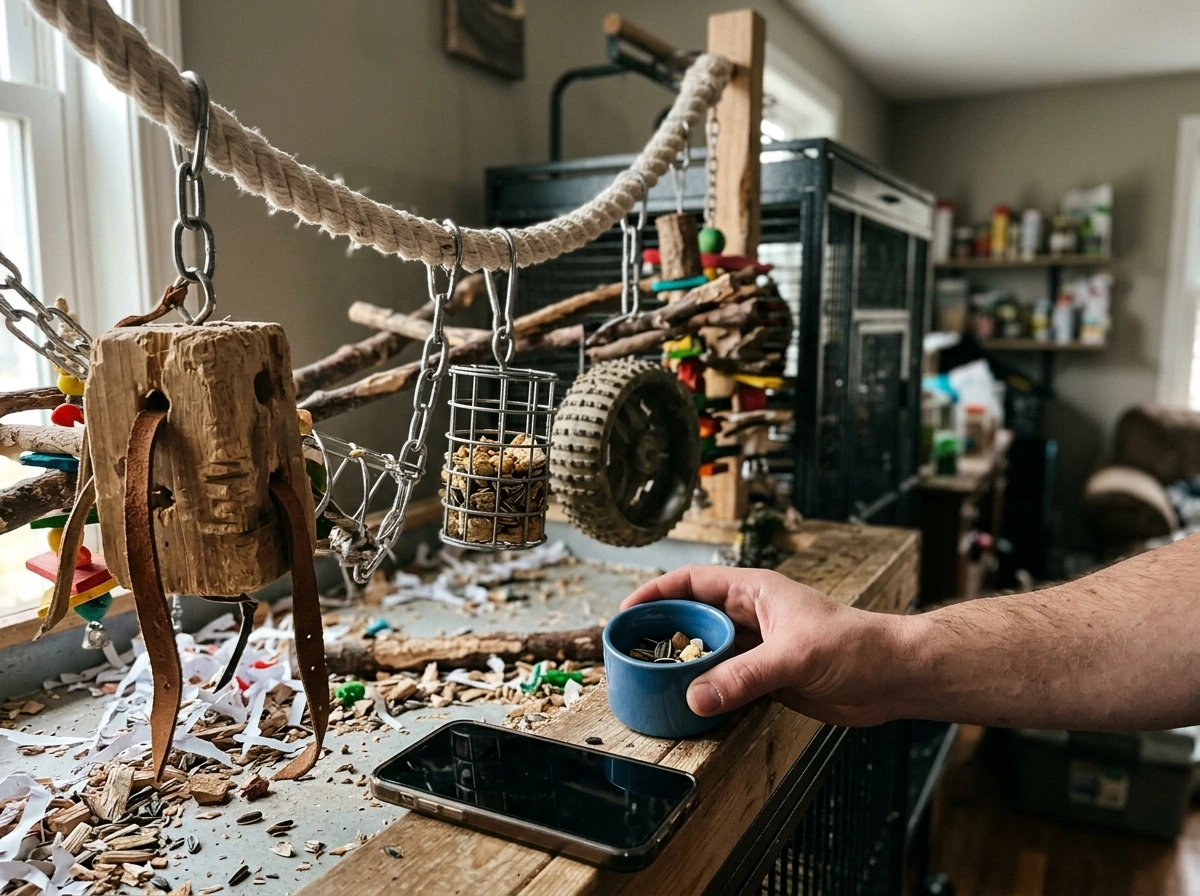
African greys, large cockatoos, macaws, and Amazons are incredibly rewarding but genuinely difficult. They need multiple hours of daily interaction, significant mental stimulation, and an owner who understands bird behavior well enough to avoid reinforcing problem behaviors. African greys in particular are emotionally sensitive and can develop feather-destructive behaviors under stress. I'd only recommend these to someone with prior bird experience or someone willing to invest serious time in research and ideally in-person mentorship before bringing one home.
| Species | Noise Level | Mess Level | Daily Interaction Needed | Lifespan | Best For |
|---|---|---|---|---|---|
| Budgerigar | Low to moderate | Low | 30-60 min | 7-10 years | First-time owners |
| Cockatiel | Moderate | Moderate (dander) | 45-90 min | 15-20 years | First-time owners |
| Parrotlet | Low to moderate | Low | 30-60 min | 15-20 years | Beginners wanting personality |
| Lovebird | Moderate | Low to moderate | 60-90 min | 10-15 years | Attentive beginners |
| Green-cheeked Conure | Moderate to high | Moderate | 1-2 hours | 20-30 years | Intermediate owners |
| Caique | Moderate to high | Moderate | 1-2 hours | 25-40 years | Intermediate owners |
| African Grey | Moderate | Moderate | 2-4 hours | 40-60 years | Experienced owners only |
| Large Cockatoo | Very high | High (dander) | 3-5 hours | 40-70 years | Experienced owners only |
What a healthy, well-tempered bird actually looks like
This is where impulse buying kills people. You see a bird in a store, it steps up onto your finger, and you're sold. But you didn't check the basics. Here's what to actually look for before you commit.
Physical signs of health
- Bright, clear eyes with no discharge, redness, or swelling around them
- Clean nares (nostrils) with no discharge or crustiness
- Smooth, well-formed feathers with no obvious bare patches, broken shafts, or excessive fluffing
- Active and alert posture; a bird sitting puffed up at the bottom of the cage is a red flag
- Normal breathing: quiet and closed-mouth. Labored breathing, open-mouth breathing, tail-bobbing with each breath, or excessive wheezing are serious warning signs
- Clean vent area with no staining or matting from loose droppings
- Good body condition: feel the keel bone (breastbone) gently; it should be present but not razor-sharp, which can indicate undernourishment
One thing worth understanding: birds are prey animals and instinctively mask illness. By the time a bird is visibly sick, it may have been unwell for days or even weeks. That's why choosing a bird that looks genuinely healthy at the outset, and not one that 'seems a bit tired today,' matters so much. Don't rationalize a bird that shows any of the physical red flags above.
Temperament and behavior
A well-socialized bird should be curious and responsive to your presence without being frantic or aggressive. Watch how it reacts when you approach the cage slowly. Excessive fear, biting at cage bars, or repetitive stereotyped behaviors (like pacing or constant bobbing) can signal stress or poor socialization. A hand-raised bird should be comfortable with hands near the cage, even if it's not immediately cuddly. Ask the seller or rescue to show you how the bird behaves during handling. If they refuse, that tells you something. If the bird bites hard and repeatedly when handled by an experienced person, factor that into your decision, especially as a beginner.
Where to get a bird and what to ask
Where you get a bird matters almost as much as which bird you choose. Each source has real tradeoffs.
Reputable breeders
A good breeder is the gold standard for hand-raised, well-socialized birds. They can tell you the bird's exact hatch date, its diet history, its parents' health, and how much handling it has had. The best breeders will ask you questions back, which is actually a good sign. They want their birds in good homes. Ask to see where the birds are raised and whether the parents are on site. Ask specifically if the bird has been vet-checked. Red flags include breeders who won't let you see the aviary, can't tell you the bird's age, have multiple species crammed in poor conditions, or pressure you to buy quickly.
Pet stores
Quality varies enormously. Some independent pet stores work with local breeders and sell well-socialized birds. Large chain stores are more variable: birds are often younger, stressed from constant noise and foot traffic, and may not have received consistent handling. If you buy from a store, ask who the breeder is, whether you can get that information in writing, and what the health guarantee policy is. Insist on a vet check within a few days of purchase as a condition of keeping the bird.
Rescues and rehoming
Bird rescues are full of older parrots that need experienced homes, but they also frequently have cockatiels, budgies, and lovebirds that ended up there through no fault of their own. Adopting from a rescue is genuinely rewarding and typically costs far less than buying from a breeder. A good rescue will have done a behavioral assessment and be honest about the bird's history, quirks, and needs.
The challenge is that rescue birds sometimes come with unknown histories, possible previous trauma, or ingrained behaviors that take patience to work through. For a first-time bird owner, a rescue can work well if you're prepared to invest time in trust-building. Ask the rescue what the bird's daily routine looks like, what it eats, and whether it has been evaluated by a vet.
Key questions to ask any source
- How old is this bird and what is its hatch date?
- Has it been vet-checked? Can I see the records?
- What is it currently eating, and has it been transitioned to pellets?
- How much handling does it get daily?
- Does it step up consistently? Has it bitten anyone?
- What is your health guarantee and return policy?
- Can I contact you with questions after I bring it home?
Prepare your home before the bird arrives
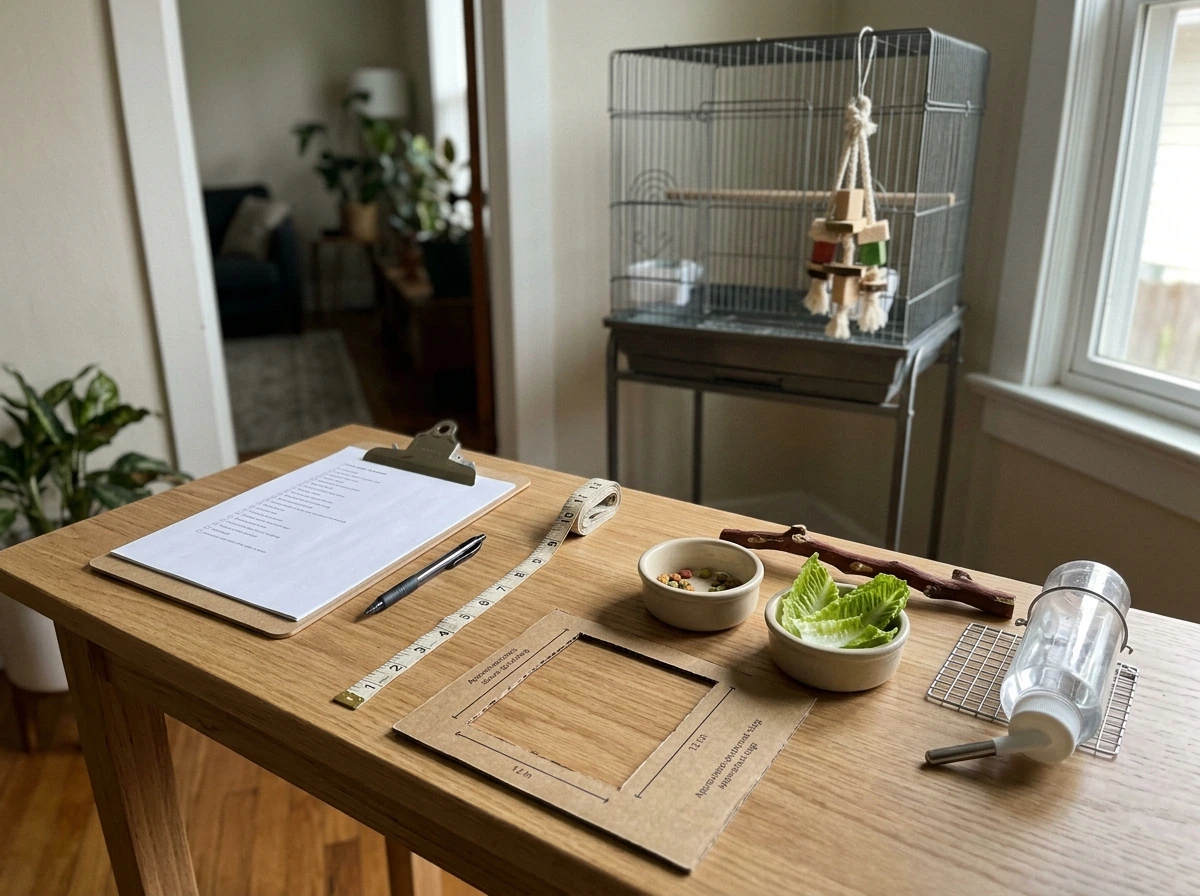
Do not buy the bird and the cage on the same day. Set up the habitat first, let it air out, stock it with food and enrichment, and then bring the bird home. This matters more than most beginner guides admit.
Cage size and bar spacing
Bigger is better, but there are minimums you should not go below. For budgies, cockatiels, lovebirds, and parrotlets, a cage of at least 20 x 20 x 30 inches with bar spacing of 0. Merck Veterinary Manual’s table of minimum cage dimensions and bar spacing lists 20 × 20 × 30 inches and 0. 5-inch bar spacing for budgerigars, cockatiels, lovebirds, and parrotlets [cage of at least 20 x 20 x 30 inches with bar spacing of 0.
](https://www. merckvetmanual. com/multimedia/table/minimum-and-bar-spacing-recommendations). 5 inches is the accepted minimum.
Some guidance puts the budgie minimum slightly smaller at 18 x 18 x 24 inches, but I'd go larger whenever space allows because birds spend a lot of time in the cage and need room to move laterally. Bar spacing matters for safety: bars that are too wide let a small bird get its head stuck. The cage should be wide enough for the bird to fully extend its wings without touching the sides.
Placement and environment
Place the cage in a room where the family spends time so the bird stays socialized, but avoid the kitchen (more on that below) and direct drafts from air conditioning vents or windows. Position the cage so at least one side is against a wall; this gives the bird a sense of security. Avoid direct, all-day sunlight that can overheat the cage.
Perches, toys, and enrichment
Vary perch diameters so the bird's feet don't grip the same position all day, which can cause sores. Natural wood perches from bird-safe trees (like manzanita, java wood, or dragonwood) are ideal. Avoid sandpaper perch covers, which are hard on feet. Toys should rotate regularly to prevent boredom; a bird that gets the same three toys indefinitely will stop engaging with them. Foraging opportunities, things that require the bird to work for its food, are especially valuable for mental stimulation. Shredding toys, puzzle feeders, and hiding treats in paper cups are all easy starting points.
Diet basics and what long-term care actually looks like
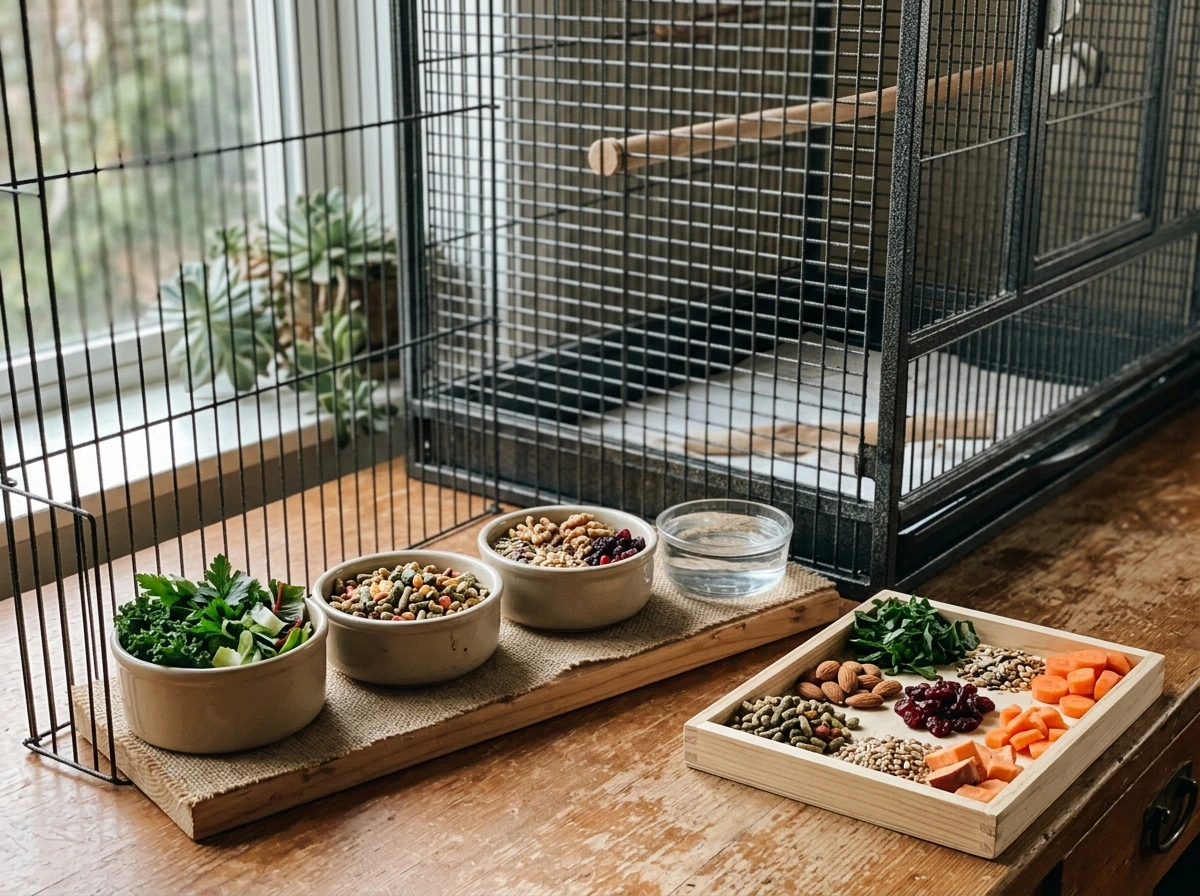
Seed-only diets are one of the most common and damaging mistakes new bird owners make. Seeds are high in fat and lack essential vitamins and minerals. A bird on a pure seed diet is essentially living on junk food. The Association of Avian Veterinarians is clear that a pelleted diet supplemented with fresh vegetables is far healthier long term.
If you're buying from a breeder or store that's been feeding seeds, expect a transition period. Birds are highly suspicious of new foods, and you can't just swap out seeds for pellets overnight. The process should be gradual: introduce pellets alongside familiar food so the bird can get used to the sight and taste before seeds are reduced. Some pellet conversion protocols suggest a phased approach where seeds are offered for limited windows and pellets are available the rest of the time. Be patient; this can take weeks to months with some birds, especially older ones. Never starve a bird into eating pellets. If the bird isn't eating enough during transition, slow down and consult an avian vet.
Beyond pellets, offer a variety of fresh vegetables daily: leafy greens, carrots, bell peppers, and squash are all good options. Avoid avocado, onion, garlic, chocolate, and anything high in salt or sugar. Fresh water should be changed daily, and food and water dishes should be washed daily to prevent bacterial growth. Cage paper or liners should be changed frequently enough that you can actually see and monitor the droppings; paper liners are better than particulate bedding for this reason.
Long-term, budget for at least one annual well-bird checkup with an avian vet, not a general-practice vet who sees occasional birds. Avian medicine is specialized. Catching problems early is the difference between a manageable treatment and a crisis.
Common beginner mistakes and air quality you can't ignore
The impulse buy trap
Walking into a pet store 'just to look' and walking out with a bird is how most bad matches happen. Go in with a species already researched and a cage already set up at home. If a different bird catches your eye, go home, research it properly, and come back. A good bird will still be there in a week. If it's not, another good one will come along.
Underestimating the commitment
A cockatiel you buy today might outlive a dog, a cat, and possibly a career change or two. People get birds, life changes, and the bird ends up in a rescue. That's not a tragedy unique to bad owners; it happens to good ones too. But being realistic about long-term commitment before you buy is how you reduce the chances of that outcome. Ask yourself what happens to this bird if you move, travel for work, have a baby, or go through a major life change. Do you have a plan?
Air quality and household toxins
Birds have extremely efficient respiratory systems that are also extremely sensitive to airborne toxins. This is not a minor consideration. The most dangerous common household hazard is PTFE, the non-stick coating on many cookware brands (commonly known as Teflon). When non-stick pans overheat, they release fumes that can kill a bird in minutes. The ASPCA warns explicitly that birds can be fatally affected when overheated PTFE/Teflon fumes are present. This means no non-stick cookware in a kitchen adjacent to where the bird lives, or you need to rehome those pans before the bird arrives.
Other airborne hazards include scented candles, incense, aerosol sprays, air fresheners, and cigarette or cigar smoke. Even secondhand smoke can cause skin, eye, and respiratory disease in birds. If anyone in your household smokes indoors, that's a serious problem for bird ownership. When you clean the cage, be careful with disinfectants. Bleach and many common disinfectants can release toxic fumes if used improperly or in high concentrations. Rinse cleaned surfaces thoroughly and allow them to air dry before the bird returns.
Ideally, place the cage away from the kitchen entirely. A living room or bedroom (if you're comfortable with the noise and early waking) is better than a kitchen, even a well-ventilated one. If you cook with non-stick frequently and can't immediately replace the cookware, keeping the bird in a room with a door between it and the kitchen is a reasonable short-term measure while you transition your cookware.
Cleaning mistakes that backfire
Skip the particulate cage bedding like corn cob or walnut shell. These materials make it nearly impossible to monitor your bird's droppings, which are one of the first indicators of illness. Plain paper liners or newspaper let you see exactly what's happening. Change them daily or every other day at minimum. Wash food and water dishes daily; bacterial growth in a water dish is fast, especially in warm environments.
Your shortlist and next steps
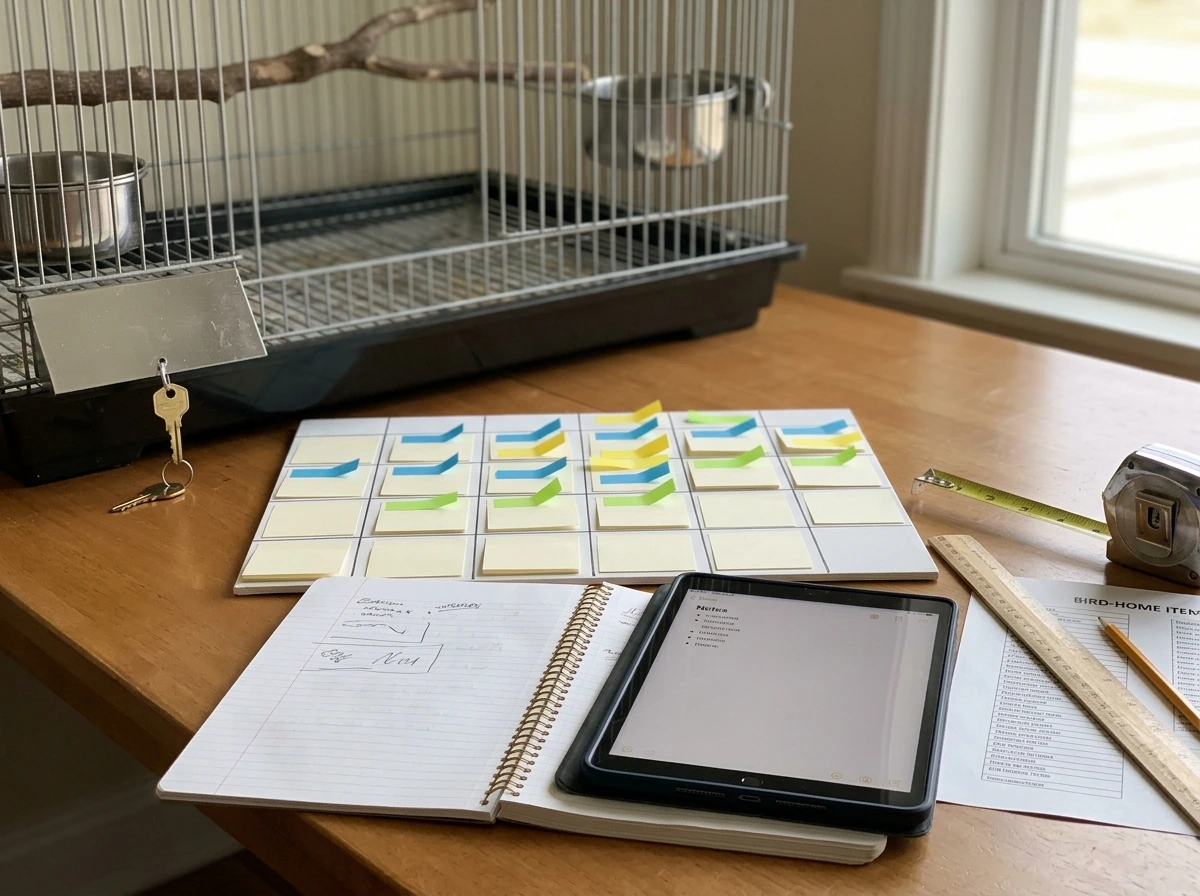
If you've worked through everything above, you should now have a clearer picture. Here's how to convert that into a concrete plan starting today:
- Decide on your species based on your real noise tolerance, daily time availability, and budget. If you're a first-time owner, start with a budgie, cockatiel, or parrotlet.
- Measure your intended cage space and order the right cage before you look for a bird. For small birds, minimum 20 x 20 x 30 inches, 0.5-inch bar spacing.
- Identify at least one avian vet in your area and confirm they see your chosen species. Book a new-bird checkup appointment before you even pick the bird.
- Research two or three breeders, rescues, or reputable stores in your area. Prepare your list of questions before you visit.
- Check your kitchen for non-stick cookware and start replacing it with stainless steel or cast iron before the bird arrives. Remove aerosols, scented candles, and air fresheners from the bird's area.
- Buy your starting food supply: a quality species-appropriate pellet, fresh vegetables for the first week, and a few foraging toys.
- When you go to evaluate a bird, use the health checklist: eyes, nares, feathers, breathing, behavior, vent. Walk away from any bird showing red flags, no matter how appealing it seems otherwise.
- Once home, give the bird a few days to decompress before pushing for interaction. Let it settle in on its terms.
Choosing the right bird is mostly about being honest with yourself before you fall in love with a specific one. Get the setup right, find a healthy bird from a trustworthy source, and you'll be starting from a genuinely solid foundation. When you are prepping for an avian or exotics appointment, AVETS provides a clinic-prep checklist PDF that outlines what to expect during the visit. The research you do in the next week will pay off for the next decade or more.
FAQ
How do I tell if a bird is a good match for my schedule, not just my interest level?
A “good match” usually means the bird’s daily needs fit your actual schedule, not your best-case day. Make a realistic checklist of time for out-of-cage interaction, training, and quiet hours (especially mornings and evenings), then compare it to the bird’s typical temperament for that species.
What does “hand-raised” really mean, and how should I verify it when shopping?
Hand-raised is a helpful sign, but it does not guarantee a calm bird. Ask what “hand-raised” means in practice (daily handling frequency, weaning process, and whether the bird is accustomed to being touched all over, not just stepping up). Also watch for consistent body language across several minutes, not just a single friendly moment.
What behaviors during cage viewing are red flags for beginners?
If a bird shows repeated fear responses like constant bar biting or persistent frantic pacing, treat it as a compatibility issue, not a challenge you can instantly “fix.” For beginners, pick a bird that can relax during slow approach, uses its perch normally, and shows curiosity without escalating aggression when you stay nearby for a few minutes.
What should I examine before buying, given that birds hide illness?
No. Birds can mask illness, so you need to verify health directly. Request a recent avian vet check if available, and look for clear eyes, normal breathing, intact feather condition without patches of missing feathers, and normal droppings consistent with the species. If anything looks “off,” do not proceed because the symptoms may worsen after purchase.
How long should pellet conversion take, and what should I do if my bird refuses?
A transition timeline is normal when changing diet, but it should be planned. If you are not seeing gradual acceptance within a few weeks, or the bird is eating too little, slow the process and involve an avian vet. Never force-feed or starve the bird to speed conversion, and keep the pellet introduction consistent.
What’s the best way to prepare for veterinary care before bringing a bird home?
Plan for at least one emergency-care option before you buy, since avian problems can become urgent quickly. Identify an avian vet or emergency avian clinic, confirm they see birds, and ask what their after-hours process is so you are not scrambling later.
What should I prioritize in the first week after purchase to avoid mistakes?
Your first upgrade should usually be habitat stability: correct cage size, safe placement, and a consistent routine, then add diet quality and foraging. Buying lots of toys at once can backfire if they are unsafe or if the bird becomes overwhelmed. Start with a small rotation you can manage, then expand gradually.
Can I choose a bird if I’m away from home most weekdays?
If you must work longer hours away from home, prioritize species that tolerate solitude better within reason and provide strong enrichment, but also be honest that “tolerate” is not the same as “thrives.” You still need daily interaction and mental stimulation, so consider schedules, weekend coverage, and whether another household member can help.
How should I factor noise concerns if I live in an apartment or shared building?
Yes, especially with noise and routine-sensitive species. Before committing, check housing details like nearby walls (sound carries), early morning wake patterns, and whether everyone can tolerate vocalization. If you live in shared walls or thin floors, avoid louder intermediate and large parrot options.
What safety checks are easy to miss before the bird comes home?
Many injuries happen during setup, so verify safety before the bird arrives. Confirm bar spacing matches the bird size, remove anything with sanding or sharp edges where toes could scrape, and secure the cage so it cannot tip. Also avoid kitchen-adjacent non-stick cookware, scented products, and aerosol sprays in the bird’s room.
What questions should I ask a rescue about a specific bird’s behavior and history?
If you adopt from a rescue, ask for documented daily routine details (sleep schedule, diet, and any triggers), and whether staff can describe stress signs specific to that individual. Also ask what “known behavior issues” look like day-to-day, so you can evaluate your patience and training plan upfront.
How should I handle the first days at home, especially if my bird is shy or scared?
Give your bird a decompression period and reduce variables right away. For the first days, focus on consistent food access, safe perch placement, calm voice, and predictable light cycle, then handle gently only when the bird seems receptive. If the bird appears more stressed, postpone training sessions rather than pushing harder.
Next Articles
Pet Bird for Beginners: Best Types and First Week Setup
Choose the best beginner pet bird types and set up essentials for safe feeding, daily care, and first-week success.
Best Bird for First-Time Owners: Pick the Right Beginner Species
Choose the best bird for first-time owners with a checklist, realistic beginner picks, setup tips, and daily care steps.
Best Bird for Beginner Falconry: Pick the Right First Option
Choose the best beginner falconry raptor with side-by-side care, training, sourcing, permits, and a quick decision check