The best first time bird to buy, for most people, is a budgerigar (budgie) or a cockatiel, The best first time bird to buy, for most people, is a budgerigar (budgie) or a cockatiel, The best first time bird to buy, for most people, is a budgerigar (budgie) or a cockatiel, often the best bird pet for beginners, start with a budgie or a cockatiel. If you want to narrow it down to the best bird pet for beginners, budgies and cockatiels are usually the safest starting point. If you are still deciding between options, this guide to the best bird pet for beginners can help you compare picks against your lifestyle. If you are looking for a pet bird for beginners, budgies and cockatiels are a smart starting point because they tend to be easier to care for and train. If you are comparing options beyond budgies and cockatiels, you can also use this guide to help you find the what is the best bird for beginners fit for your home best bird pet for beginners. Full stop. best bird for first-time owner
Best First Time Bird to Buy: Choose Safely and Easily
First, decide what "best" actually means for you
"Best" is doing a lot of heavy lifting in that phrase. The best bird for a studio apartment with thin walls is completely different from the best bird for a house with a yard. Before you look at a single species, be honest with yourself about four things: your space, your noise tolerance (and your neighbors'), how much time you can actually give the bird each day, and your budget for both the bird and ongoing care.
Space matters more than most beginners expect. A minimum cage for a budgie or cockatiel is around 18 to 20 inches wide and long, with appropriate bar spacing, but you also need room to put that cage somewhere safe, at eye level, away from drafts and kitchen fumes. If your apartment is genuinely tiny, a single budgie in a properly sized cage is manageable. A larger parrot is not.
Noise is the dealbreaker that people underestimate the most. Cockatiels have a contact call that carries through walls. Conures are loud enough to cause real problems in apartments. Budgies chirp and chatter but are genuinely quieter. If you rent, or you work from home with video calls, noise level should rank at the top of your list.
Time is trickier to quantify. Birds are social animals. A lone budgie or cockatiel needs at least one to two hours of out-of-cage time or active interaction daily, even if they have toys and enrichment inside the cage. If you are gone twelve hours a day and come home exhausted, either get two birds so they can socialize each other, or reconsider the timeline.
Budget has two parts: the upfront cost and the ongoing cost. Budgies are among the least expensive pet birds to purchase, and their food and cage costs are proportionally lower. Cockatiels sit in a similar range. But every bird needs an avian vet visit within the first few days of coming home, and that is a real cost most first-timers do not plan for. Factor it in from the start.
Top beginner bird choices and how they actually differ
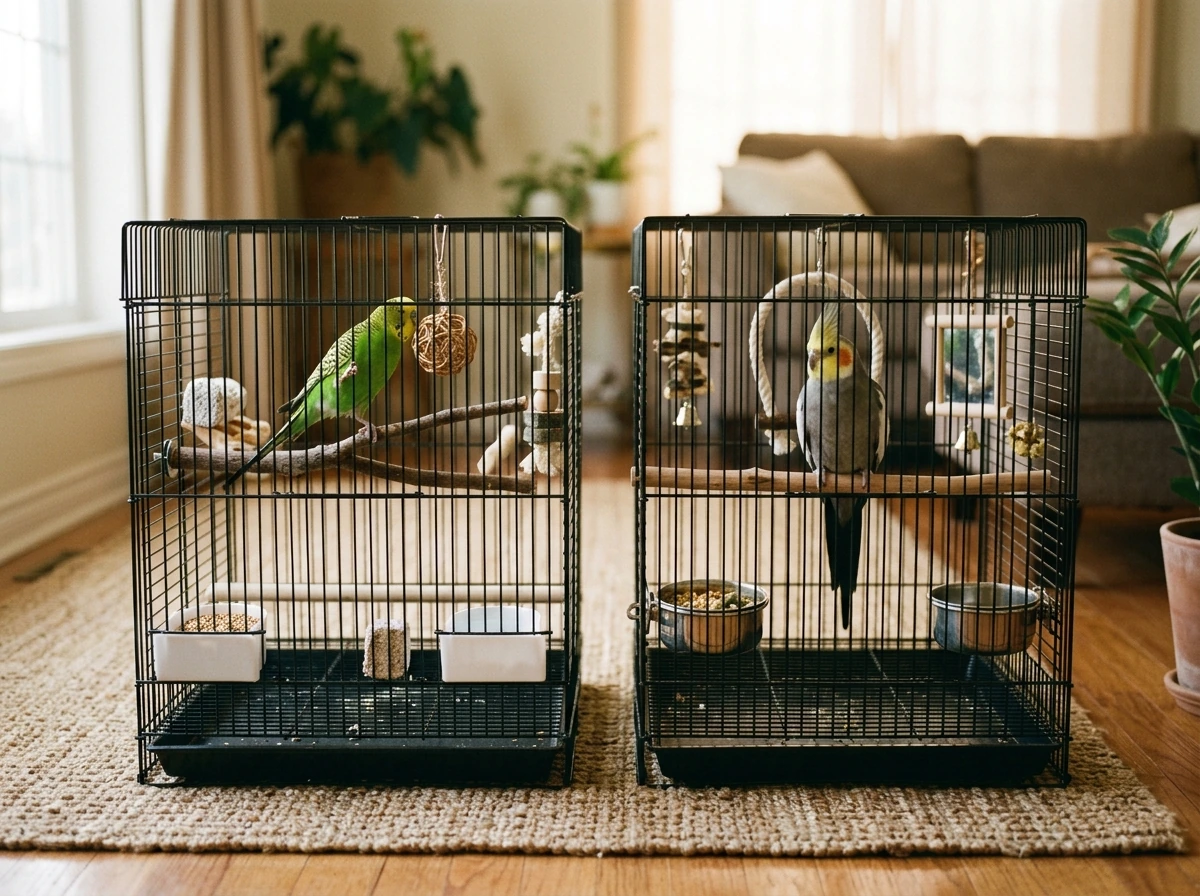
There are a handful of species that genuinely show up on every beginner-friendly list, and they are there for real reasons. If you want a quick shortcut, the best bird pet for beginners is usually one of the well-reasoned “starter” species discussed next. Here is how they stack up across the things that matter most to a first-time owner.
| Species | Noise Level | Temperament | Mess/Dust | Lifespan | Best For |
|---|---|---|---|---|---|
| Budgerigar (Budgie) | Low to moderate | Playful, curious, bonds well with patient handling | Low mess, minimal dust | 7 to 15 years | Small spaces, quieter households, tighter budgets |
| Cockatiel | Moderate (contact call is piercing) | Affectionate, gentle, loves head scratches | Moderate mess, notable feather dust | 15 to 25 years | People who want a cuddly companion and can handle more interaction |
| Lovebird | Moderate to high | Bold, feisty, can be nippy without consistent handling | Low to moderate | 10 to 15 years | Experienced beginners who research the species first |
| Parrotlet | Low to moderate | Assertive, intelligent, needs lots of stimulation | Low | 15 to 20 years | Small-space owners who want a big personality in a small bird |
| Green Cheek Conure | Moderate to high | Playful, clownish, very social | Moderate | 25 to 30 years | People with more time and no close neighbors to disturb |
Budgies: the honest case for them
Budgies are genuinely underrated because people associate them with cheap starter pets. They are actually intelligent, capable of learning words and tricks, and can form real bonds with their owners. The main advantage for a first-timer is the low margin for error: their food and housing costs are lower, their noise footprint is smaller, and their care requirements are forgiving enough that a new owner can get their routine dialed in without the stakes being as high as they would be with a larger bird.
Cockatiels: the case for stepping up
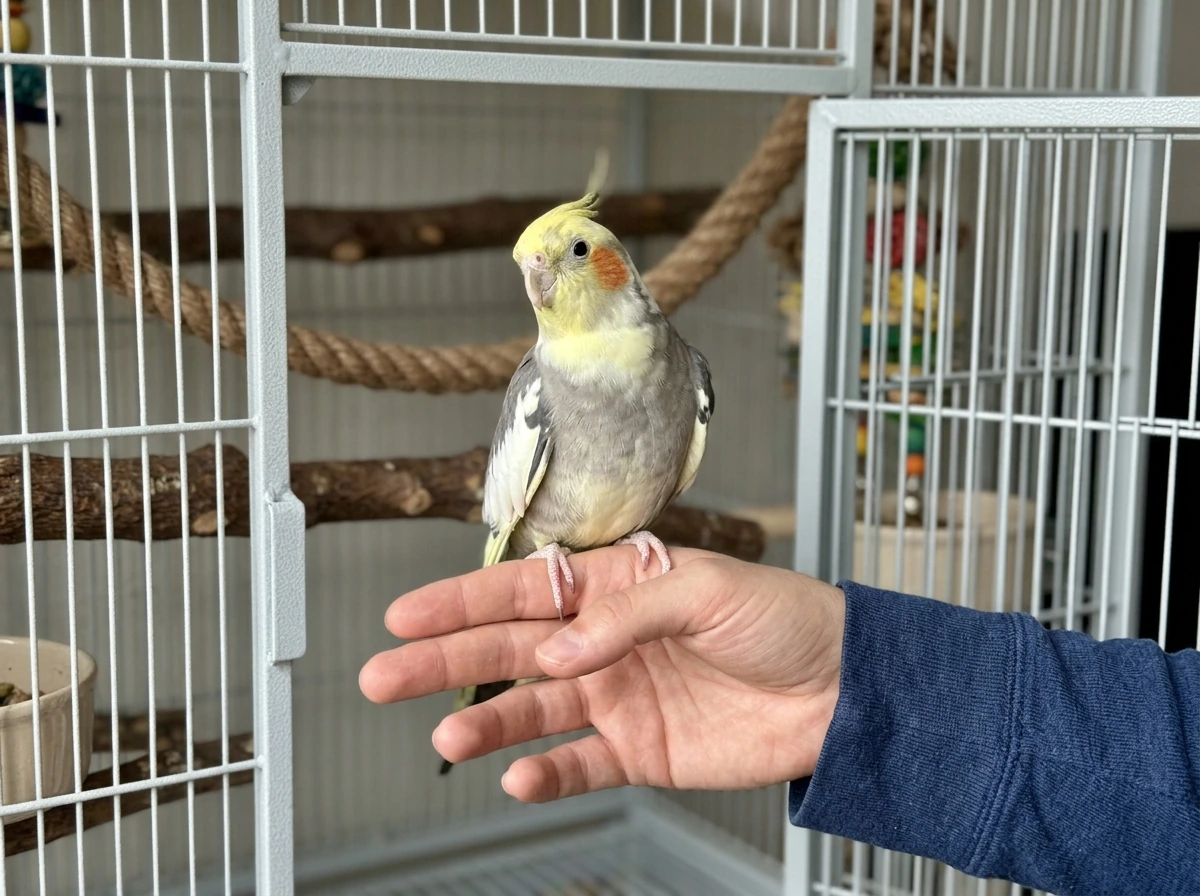
If you have done even light research and feel confident, a cockatiel is a deeply rewarding first bird. They are affectionate in a way budgies take longer to show, and a hand-tamed cockatiel will come to you for head scratches within days of arriving home. The downsides are real though: cockatiels produce a fine feather dust that coats surfaces and can trigger allergies, and their contact call is genuinely loud when they want your attention. They also live 15 to 25 years, which is a commitment that most people do not fully sit with when they are excited about a cute bird at the pet store.
A note on larger parrots for beginners
African Greys, macaws, and Amazon parrots come up in beginner searches and they should not be your first bird. They are brilliant, long-lived (often 40 to 80 years), expensive, and they need levels of enrichment and interaction that take real experience to provide well. There is a reason experienced bird owners talk about parrot rescue populations: a lot of those birds came from well-meaning first-time owners who were not ready. Start smaller, build your skills, then consider a larger species. If you want the best large beginner bird, the key is choosing a species and setup you can handle day after day.
What to check before you hand over any money
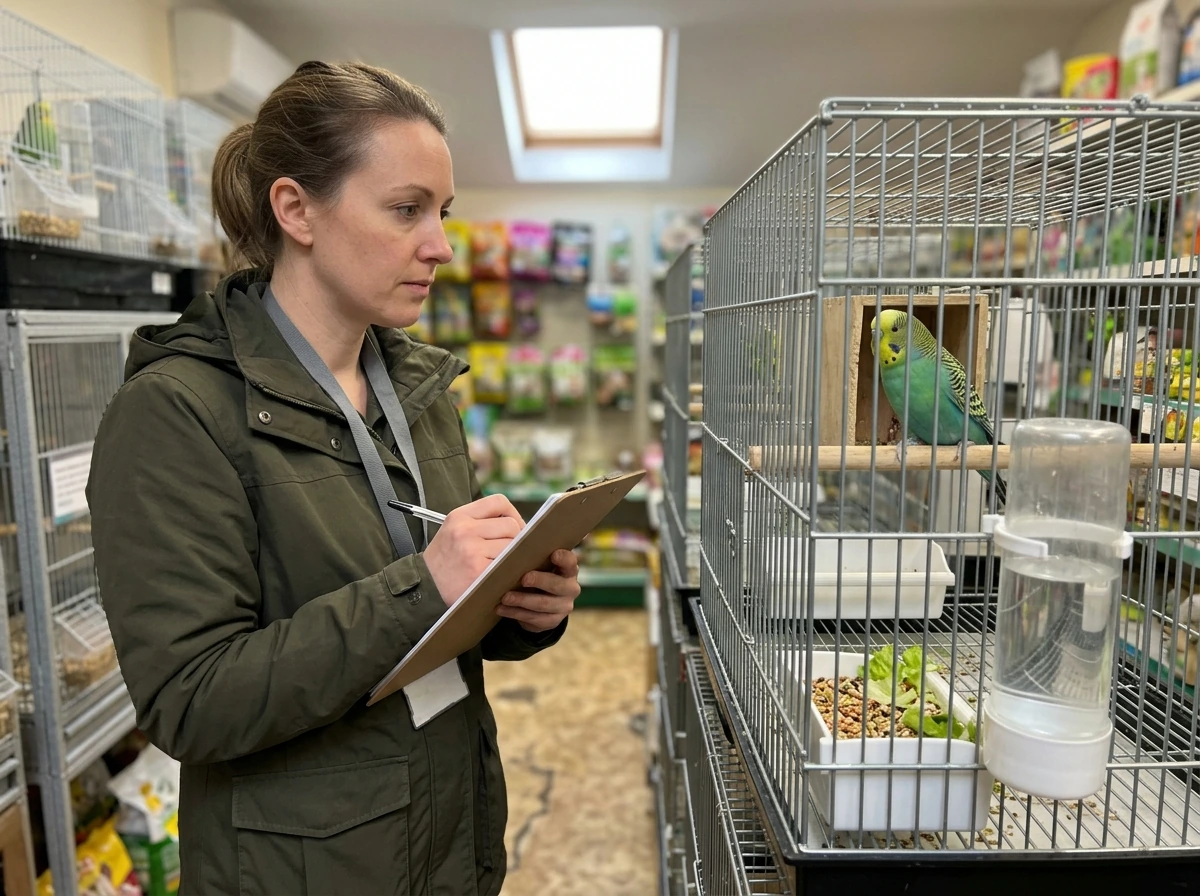
Where you get your bird matters almost as much as which species you choose. Reputable breeders, bird-specific rescues, and established specialty pet stores are all viable sources. What you want to avoid are bird mills, flea market sellers, and online listings where you cannot see the bird in person before purchase. Psittacosis and other zoonotic diseases are real considerations when buying birds from unknown sources, which is one reason public health organizations recommend that birds be tested before or at the point of sale and that any testing be supervised by an experienced avian veterinarian.
When you go to see a bird, take your time and actually watch it. An active, alert bird is a healthy bird. A bird sitting fluffed up on the bottom of the cage, or one that is not moving much, is showing you something is wrong. This is not a minor detail: it is one of the most reliable health signals you have access to before any vet visit.
Do a physical check by looking at the bird closely, even through the cage glass if you cannot handle it yet. Here is what to look for:
- Eyes: clear, bright, no discharge or swelling
- Nostrils: clean, no staining or crusting on the feathers above the nostrils
- Feathers: smooth and complete for the bird's age, not frayed, tattered, or missing patches
- Vent (cloaca): clean and dry, no matted or pasty feathers around it
- Droppings: should have a dark green or brown solid part, white urate, and clear liquid urine; abnormal color or consistency is a flag
- Breathing: quiet and regular, no open-mouth breathing, no tail-bobbing with each breath
- Body: feel the keel bone gently if allowed; a very sharp, prominent keel means the bird is underweight
On tameness and age: a hand-fed or hand-tamed young bird is almost always the right choice for a first-time owner. A wild-caught or parent-raised bird that has not been handled will take much longer to tame, and the process can be frustrating for a beginner. Ask the breeder or store when the bird was weaned and whether it was hand-fed. For cockatiels and budgies, you ideally want a bird between 8 and 16 weeks old that has already been socialized with people.
Get the home ready before the bird arrives
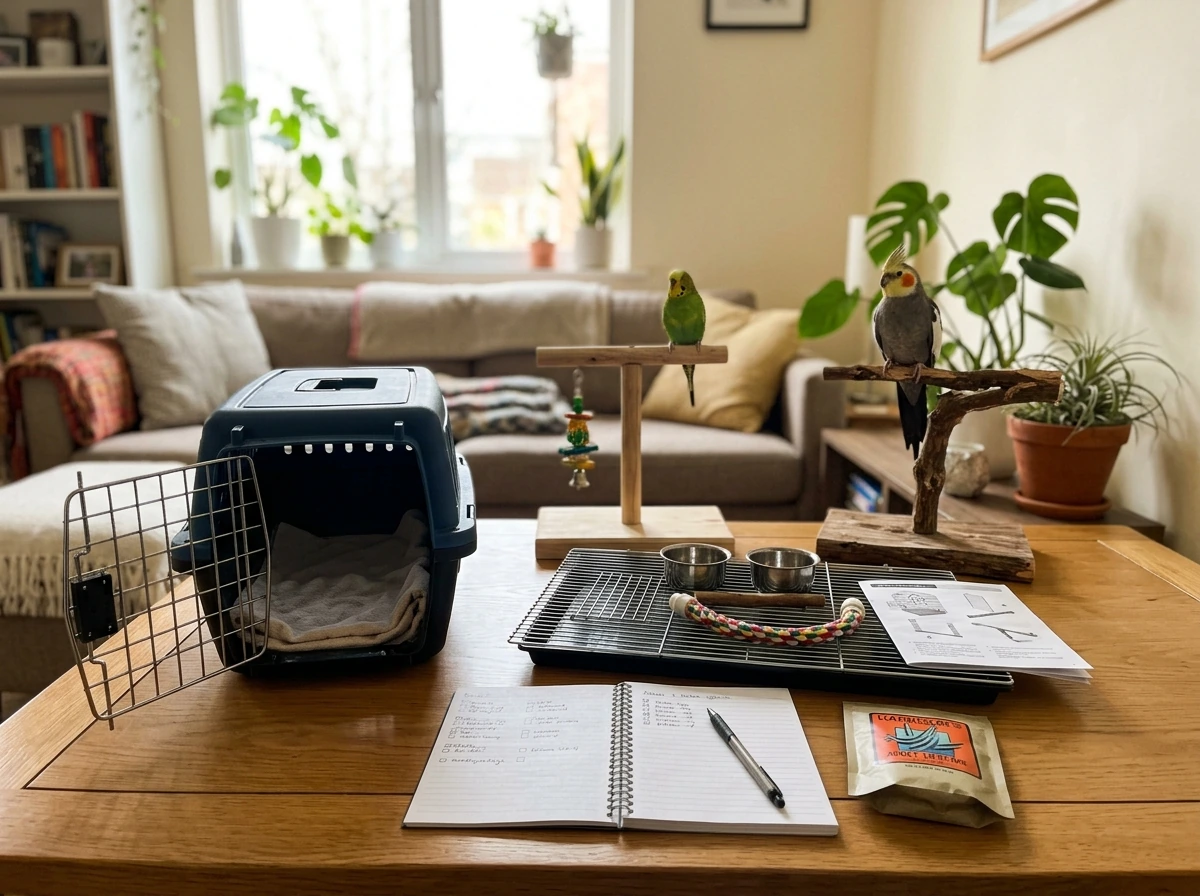
This is the step most first-time owners rush, and it causes problems in the first week. Set everything up at least a day or two before you bring the bird home so you are not scrambling with a stressed new bird in a carrier while you are still assembling a cage.
Cage sizing and bar spacing
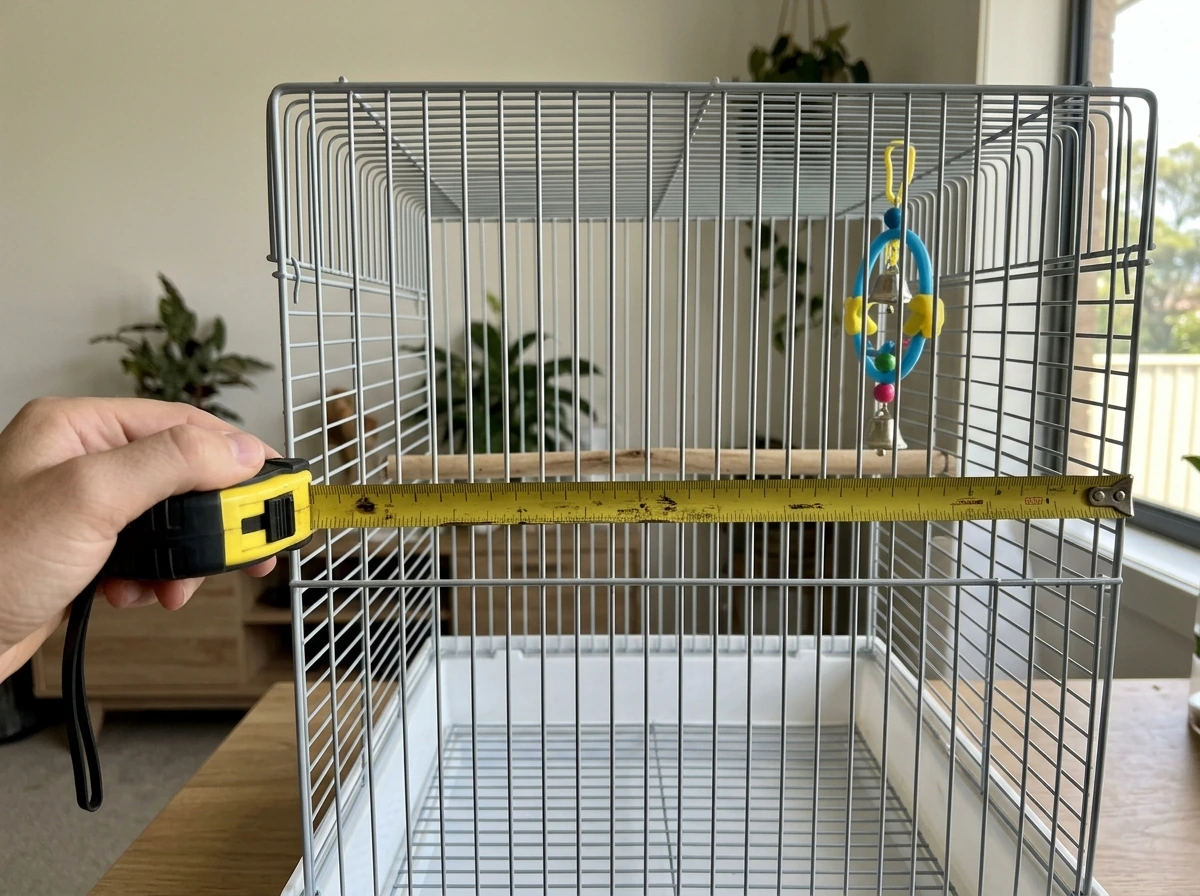
For budgies, cockatiels, lovebirds, and parrotlets, the minimum cage size you should accept is 18 to 20 inches wide and long, with at least 30 inches of height. Bar spacing for these small birds should be around 0.5 inches; wider spacing is a head-entrapment hazard. Go bigger than the minimum if you can. A wider cage lets the bird fly horizontally, which is more useful than extra height.
Placement and environment
- Place the cage in a room where the family spends time; birds are social and need to feel part of the household
- Keep the cage away from the kitchen; cooking fumes, especially from overheated non-stick (PTFE/Teflon) cookware, are lethal to birds
- Avoid drafty windows, air conditioning vents, and direct sustained sun exposure
- Position the cage at roughly chest or eye level; birds feel more secure when they are not on the floor
- Cover the cage partially at night to signal a consistent sleep cycle; 10 to 12 hours of darkness per night is appropriate
Gear checklist
- At least two or three perches of varying diameter and texture (natural wood perches like manzanita help foot health; avoid sandpaper perch covers)
- Separate food and water dishes (stainless steel or ceramic cleans more safely than porous plastic)
- Cage liner: plain unprinted paper or paper-based cage liners; makes daily monitoring of droppings easy and reduces mess
- A few species-appropriate toys: foraging toys, shreddable toys, and at least one mirror or bell for budgies
- A cage cover or dark cloth for nighttime
- A small travel carrier for vet visits
Daily care: what the routine actually looks like
Bird care is not complicated, but it requires consistency. The daily tasks are not time-consuming individually, but skipping them compounds fast. Here is what every day looks like with a budgie or cockatiel.
- Fresh water every single day: dump and refill the water dish with clean, fresh water. Do not just top off a bowl that has been sitting there.
- Remove all leftover food from the previous day and replace with a fresh portion. Old food grows bacteria and mold faster than you expect in a warm room.
- Swap the cage liner so you can check the droppings (monitoring droppings daily is one of the best early illness detection tools you have).
- Give the bird out-of-cage time or direct interaction: at least 30 to 60 minutes of hands-on or supervised free-flight time.
- Spend a few minutes actually watching the bird: is it alert, eating, vocalizing? Any behavioral change is worth noting.
Weekly, wipe down the cage bars and perches with a bird-safe cleaner or diluted white vinegar solution. Monthly, do a more thorough clean of the entire cage. When cleaning up cage dust and debris, do not dry sweep or vacuum; those methods put particulate matter into the air, which is both a respiratory hazard for the humans in the home and a vector for psittacosis. Cornell University College of Veterinary Medicine also reports that PTFE begins to degrade when heated above 280°C and can produce toxic byproducts that cause respiratory distress and death in affected birds. Use a damp cloth or damp paper towels instead.
Training and enrichment
Training is not optional enrichment for overachievers; it is one of the most effective ways to build trust and prevent behavioral problems. Start with step-up training: offer your finger at the bird's chest level and gently press until it steps up. Keep sessions short, three to five minutes, and end on a success. Positive reinforcement with a small treat (a millet spray works well for budgies and cockatiels) makes the process faster. Once step-up is reliable, you can teach recall, then simple tricks. The mental work of training keeps birds occupied and dramatically reduces screaming and feather-destructive behavior.
Rotate toys every week or two so the bird does not habituate and ignore them. Foraging toys that make the bird work for a treat are more enriching than a bell the bird bats once and forgets. For birds that are alone during the day, leaving the radio or a nature sounds recording on low keeps them from feeling isolated.
Beginner mistakes that are easy to avoid once you know them
Most of the problems first-time bird owners run into are not about bad intentions. They are about gaps in information that no one filled in before they brought the bird home.
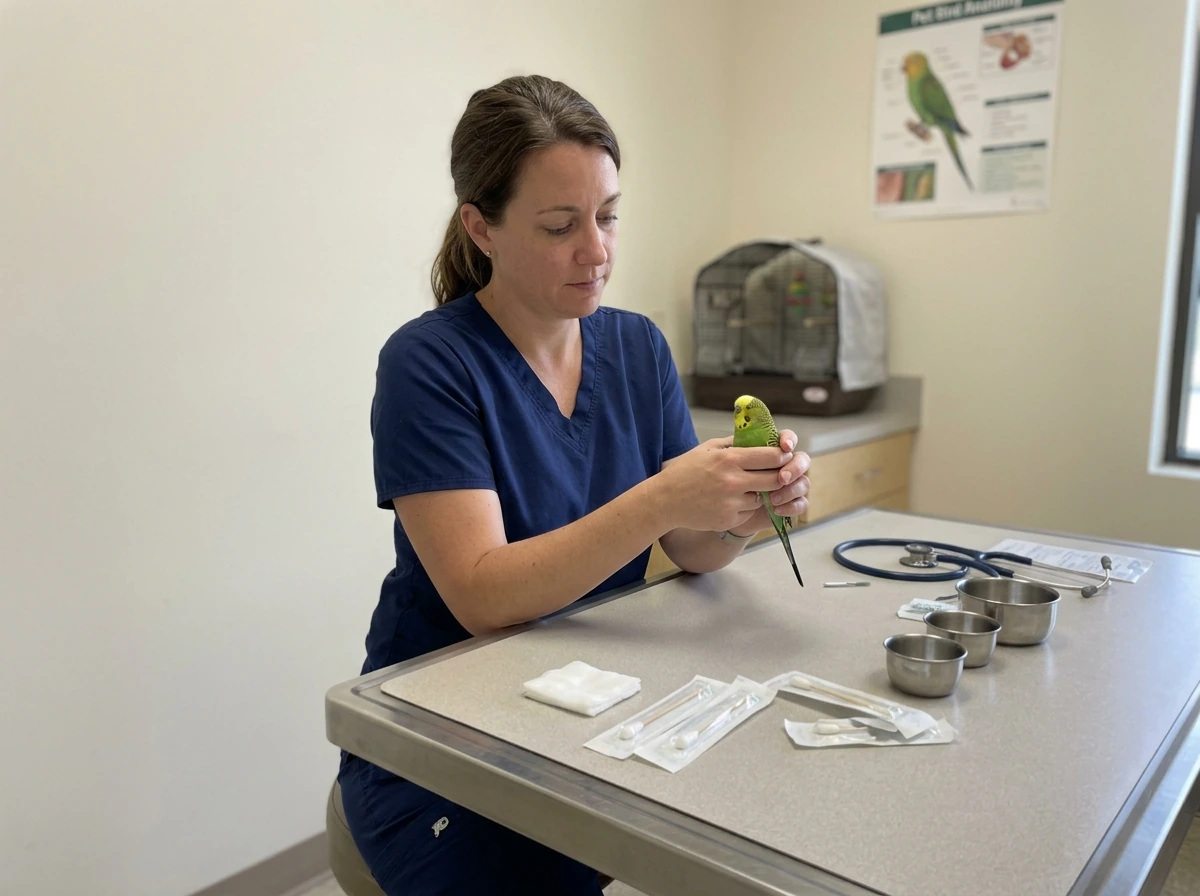
- Skipping the first vet visit: a lot of people assume a bird looks healthy so it must be healthy. Birds mask illness instinctively. A vet check within the first few days of purchase catches problems early, and the CDC specifically recommends this step for every new bird.
- Using non-stick cookware near the bird: overheated PTFE-coated pans release fumes that cause rapid death in birds. Move the cage out of the kitchen entirely, not just away from the stove.
- Buying a cage that is too small: the minimum sizes above are minimums, not targets. A bird crammed into an undersized cage develops stress behaviors and physical health problems.
- Feeding only seed: an all-seed diet is like feeding a person only chips. Seeds should be part of the diet, but fresh vegetables, leafy greens, and a quality formulated pellet should make up a significant portion of what the bird eats.
- Giving the bird too much space too soon: a new bird released into a large room immediately can panic and injure itself. Introduce out-of-cage time in a small, bird-proofed room first.
- Using scented candles, air fresheners, or aerosol sprays near the bird: birds have extremely sensitive respiratory systems. Scented products and aerosols can cause serious harm.
- Assuming two birds means less work: two birds will bond to each other and may become harder to tame individually. If you want a bird that bonds closely with you, start with one.
Health basics and when to call the vet
The single most important thing you can do for your bird's health is find an avian vet before you need one. Not a general practice vet who occasionally sees birds. An actual avian vet. Find one in your area before you bring the bird home, and schedule that first wellness visit within a few days of the bird arriving. This is not overcautious; it is the baseline.
Normal behavior in a healthy bird includes active movement around the cage, vocalizing at predictable times (usually morning and late afternoon), eating regularly, and producing consistent droppings. A healthy bird's droppings will have a formed dark solid portion, white or cream-colored urates, and clear liquid. Variations in droppings from one day to the next are normal if the diet changed slightly, but persistent changes are worth noting.
Here are the signs that should prompt a same-day or next-day call to your avian vet:
- Open-mouth breathing or labored breathing at rest
- Tail bobbing with each breath (a sign of respiratory distress)
- Sitting fluffed up on the bottom of the cage
- Not eating for more than 24 hours
- Blood anywhere on the body
- Discharge from the eyes or nostrils, or staining/crusting around those areas
- Abnormal droppings persisting for more than a day: diarrhea, entirely green or black droppings, or absent urine portion
- Sudden loss of feathers outside of a normal molt
- The bird is unusually quiet and inactive when it would normally be alert
One zoonotic disease worth knowing about is psittacosis, a bacterial infection (Chlamydia psittaci) that birds can carry and transmit to humans. It is not common in well-sourced, vet-checked birds, but it exists. Symptoms in birds can look like general illness, including fluffed feathers, lethargy, and abnormal droppings. In humans it presents like a flu or atypical pneumonia. This is another reason sourcing from a reputable breeder or retailer who follows proper testing protocols matters, and why that early avian vet visit is non-negotiable.
If you are doing all of the above, getting a hand-tamed young bird from a reputable source, setting up a proper environment before it arrives, establishing a consistent daily care routine, and booking that first vet visit, you are already ahead of most first-time bird owners. The learning curve is real but manageable. Start with a budgie or cockatiel, get the basics right, and you will have a companion that genuinely rewards the effort.
FAQ
Is a budgie or cockatiel a better first time bird if I live in an apartment with thin walls and light sleepers?
For thin-wall apartments, a budgie is usually the safer bet for sleep and neighbor comfort because its regular chirping is typically easier to tolerate than a cockatiel’s attention-getting contact call. If you choose a cockatiel, plan for where the cage will sit during the quietest hours (often away from bedrooms) and confirm you can handle the noise during the first few adjustment weeks.
Do I need two birds for a budgie or cockatiel, or can I keep just one?
A single budgie or cockatiel can work, but only if you reliably provide at least one to two hours of out-of-cage interaction daily (not just “some time” when you’re available). If your schedule makes that unrealistic, two birds can keep each other company, but they still benefit from daily human interaction so they do not become fully bonded to each other and ignore you.
What is the minimum cage size and bar spacing I should actually buy, not just aim for?
Aim for the baseline sizes stated for width and length, and do not compromise on bar spacing. For small birds, around 0.5 inch bar spacing is a key safety limit, wider gaps can create head-entrapment risk. Also, place the cage so it is not in a draft, not in front of heat/air vents, and not too close to cooking fumes.
How soon should I schedule my first avian vet visit, and what should I ask for?
Schedule a wellness exam within a few days of the bird arriving, then ask the vet to review current diet, droppings, and an initial parasite and respiratory health check. If the seller provided recent health paperwork, bring it, and request guidance on what “normal” droppings and breathing should look like for that individual bird.
Is it safe to vacuum or sweep if I’m careful and the bird is in another room?
Avoid dry vacuuming or dry sweeping even with careful timing, because fine dust and particles can still become airborne and irritate the bird’s respiratory system. Use damp cloths or damp paper towels for cage-area cleanup, and if you must clean the whole room, keep the bird fully out of the space until everything is finished and settled.
How can I tell whether a fluffed bird is just resting or actually sick?
Fluffing alone is not always a crisis, some resting is normal, but a sick pattern is usually combined with reduced movement, dull eyes, abnormal droppings, or ongoing lethargy rather than brief quiet naps. If the bird stays fluffed and inactive for a significant portion of the day, or refuses food, contact your avian vet the same day or next day.
What does “hand-tamed” mean in practice when I’m shopping for a beginner bird?
Look for a bird that is comfortable with gentle handling or at least steps toward you without panicking, ideally with a known weaning and socialization timeline. Ask whether the bird was hand-fed and how long it has been handled, then verify behavior yourself by watching it for alertness, eating, and willingness to move around.
What age should I target for a budgie or cockatiel so training is not miserable?
A common beginner-friendly target is roughly 8 to 16 weeks for budgies and cockatiels, because they are usually socialized enough to handle but still young enough to build trust quickly. If the bird is older, you can still succeed, but expect slower progress and plan more time for gradual desensitization.
Should I start with step-up training right away, or let the bird settle first?
You do not need to wait weeks, but you should avoid rushing the first day. Many birds handle short, calm sessions after they adjust to the new cage setup, typically after you have completed the basics like feeding, quiet routines, and stable placement. Keep sessions very short, 3 to 5 minutes, and stop on a success to avoid teaching fear.
What type of toys are actually worth buying for a first budgie or cockatiel?
Prioritize toys that support active foraging, chewing, and safe movement rather than novelty items the bird ignores after one interaction. Rotate toys every week or two to maintain interest, and choose foraging options that make the bird work for treats so the bird stays engaged during times you are not available.
How much of my budget should I reserve for the first few weeks, beyond the purchase price?
Budget for an avian vet wellness visit within days of arrival, and plan for consumables immediately (quality seed or pellet base, fresh produce if approved, and grit or supplements only if recommended). Many first-time buyers underestimate that the vet visit is not optional, and some birds need additional follow-up tests or treatments after the first exam.
If I notice droppings change after diet shifts, how do I decide whether it’s normal or a red flag?
Minor variation can happen when diet changes slightly, but persistent changes, especially combined with reduced activity or abnormal breathing, are not something to wait on. Track what the bird eats and when the change started, then call your avian vet if the droppings remain consistently different for more than a short adjustment window.