The easiest bird to take care of is the budgerigar, or budgie. That's the short answer. They're small, relatively quiet, inexpensive to feed and house, and genuinely enjoyable to watch and interact with. Cockatiels are a close second and arguably a better fit if you want a bird that actively bonds with you. Beyond those two, canaries and finches round out the practical beginner shortlist for anyone who wants a low-interaction pet. Everything else, including lovebirds, conures, and larger parrots, asks significantly more from a first-time owner. This guide walks you through which bird fits your life, what you actually need to set one up, and what a realistic day-to-day routine looks like.
What Is the Easiest Bird to Take Care Of? (Beginner Guide)
Marcus Chen
23 Mar 2026
The Best Beginner Birds (Practical Shortlist)
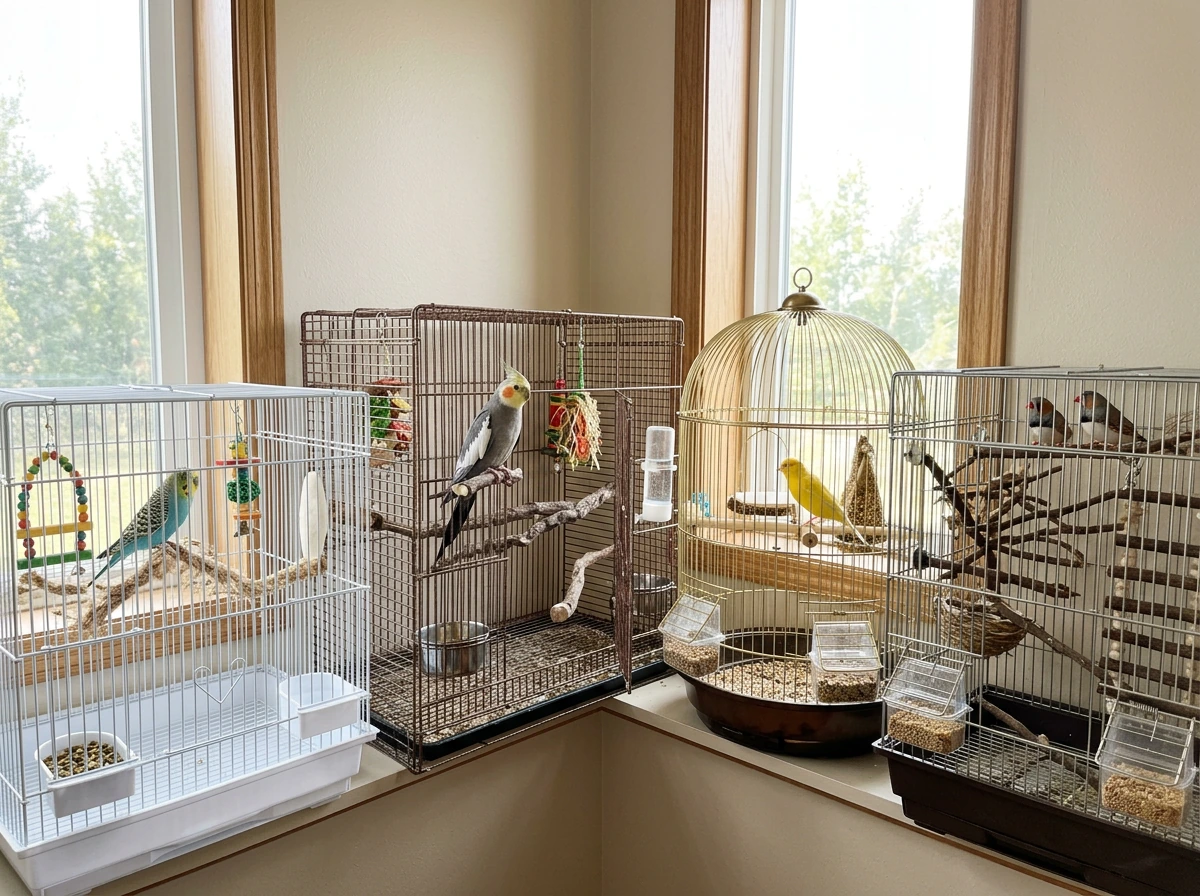
There are hundreds of pet bird species, but only a handful are genuinely beginner-friendly in the sense that they're forgiving of minor mistakes, don't require enormous cages, and don't need hours of daily attention to stay psychologically healthy. Here are the four worth considering.
Budgerigar (Budgie / Parakeet)
Budgies are the most widely kept pet bird in the world for good reason. They're small (around 7 inches long, weighing about 1 ounce), hardy, and inexpensive to feed. A pair of budgies will keep each other company if you work during the day, which dramatically reduces the social pressure on you. They can be hand-tamed with patience, and some individuals even learn to mimic words. Lifespan is typically 7 to 10 years, though well-cared-for budgies have lived into their mid-teens.
Cockatiel
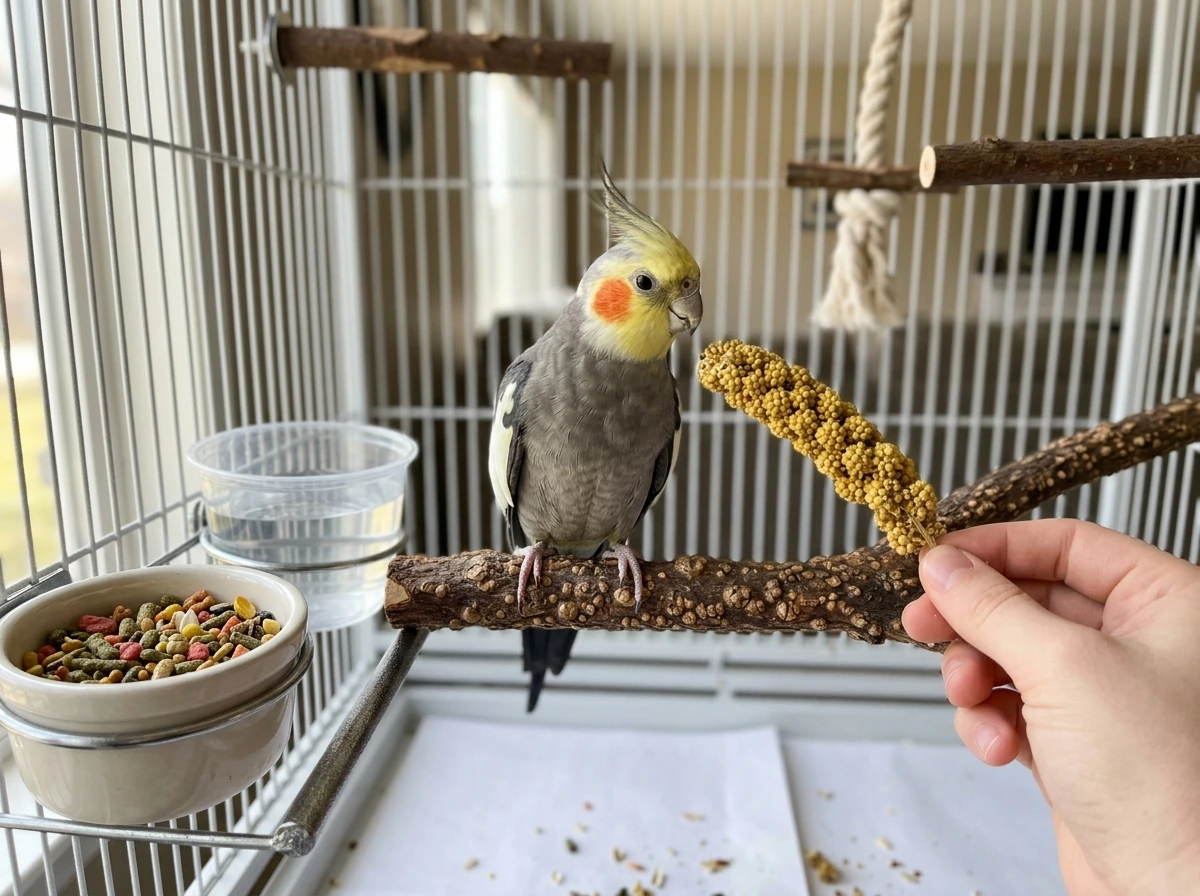
If you want a bird that genuinely bonds with you, a cockatiel is the move. They're affectionate, moderately quiet (their whistles are pleasant, not piercing), and tolerant of handling once they're comfortable with you. Cockatiels run about 12 inches in length and weigh around 3 ounces, so they need a larger cage than a budgie but still nothing massive. Lifespan is 15 to 20 years, so this is a longer commitment. Males are generally chattier and more social; females tend to be calmer.
Canary
Canaries are the best option if you want a beautiful, low-interaction bird. They don't particularly enjoy being handled and are perfectly happy to entertain themselves. Male canaries sing, which is either a selling point or a dealbreaker depending on your household. They need a reasonably sized flight cage but are otherwise minimal in their demands. Lifespan is typically 10 to 15 years.
Finches (Zebra Finch, Society Finch)
Finches are the most hands-off option on this list. They're kept in pairs or small groups, are not interested in human interaction, and are content to live their lives in a well-planted aviary or large cage. Zebra finches are particularly robust. If you want a living, animated piece of decor that you enjoy watching rather than touching, finches are ideal. Lifespan runs 5 to 10 years.
Why These Four Actually Are Easier (The Real Differences)
The word 'easy' gets thrown around loosely when it comes to pet birds. What it really means in practice is: lower time demand, lower noise output, smaller mess radius, and more forgiving temperament when you're still learning. Here's how the shortlist stacks up across those dimensions.
| Species | Daily Time Needed | Noise Level | Mess Level | Handling/Bonding | Lifespan |
|---|---|---|---|---|---|
| Budgie | 30–60 min | Low to moderate (chirpy) | Low to moderate | Moderate (can be hand-tamed) | 7–10 years |
| Cockatiel | 45–90 min | Moderate (whistles, not screams) | Moderate (powder down) | High (bonds strongly) | 15–20 years |
| Canary | 15–30 min | Moderate (males sing) | Low | Low (not hands-on) | 10–15 years |
| Finches | 15–20 min | Low (soft chirps) | Low | Very low (watch, don't touch) | 5–10 years |
One thing worth flagging: cockatiels produce a fine white powder from their feathers, called powder down. It coats nearby surfaces and can be a problem for people with respiratory sensitivities or allergies. Budgies produce less of it, and canaries and finches produce almost none. If air quality is a concern in your home, that's a meaningful factor.
Temperament-wise, budgies and cockatiels are the most forgiving of a beginner's handling mistakes. A canary or finch simply won't tolerate being handled at all, which is either limiting or fine depending on what you want. Lovebirds and parrotlets, which sometimes appear on beginner lists, are actually feisty little birds that bite hard and bond intensely. I wouldn't put them in the 'easy' category for a true first-timer.
What You Actually Need to Set Up a Starter Bird
The cage is the most important purchase you'll make, and the most common place beginners go wrong. The pet store 'starter kit' cages are almost always too small. Here's what the minimum dimensions actually look like for each species, based on veterinary guidance:
| Species | Minimum Cage Size (L×W×H) | Bar Spacing |
|---|---|---|
| Budgie (pair) | 18" × 18" × 24" | 1/2" |
| Cockatiel | 20" × 20" × 26" (aim for larger) | 1/2" to 5/8" |
| Canary | 24" × 16" × 16" flight cage (longer is better) | 1/2" or less |
| Finches (pair) | 30"+ length flight cage | 1/2" or less |
Bigger is always better. These are floors, not targets. If you can afford and fit a larger cage, get it. Bar spacing matters too: a budgie or cockatiel can get their head stuck in bars spaced wider than 5/8 inch, which is genuinely dangerous.
Skip round cages entirely. Birds are prey animals, and they need a corner to retreat to when they feel threatened. A round cage eliminates that option and creates constant low-level stress. Square or rectangular cages only.
Cage Placement
Put the cage in the family room or wherever your household gathers most. Birds are social creatures; isolation in a back bedroom makes them anxious and boring. One hard rule: never place a bird cage in or adjacent to the kitchen. Nonstick cookware (PTFE/Teflon) releases fumes when overheated that are odorless to humans but lethal to birds. Even a cage placed down the hall from a kitchen can be too close if your home isn't well ventilated. This isn't a scare tactic, it's a documented cause of sudden bird death.
Perches, Toys, and Enrichment
Vary the perch types. A mix of natural manzanita wood, rope perches, and maybe a ladder gives your bird foot exercise and prevents pressure sores. For a budgie, a perch of roughly 1/2-inch diameter is a good baseline; the bird should be able to wrap its feet about halfway around. Don't rely on the dowel perches that come with most cages as your only option.
For toys, focus on chewable and foraging options. Budgies and cockatiels love shredding things. Rotate toys every couple of weeks so the cage stays interesting. If a toy sits completely untouched for two weeks, pull it out and try something different.
Full Equipment Checklist
- Appropriately sized rectangular cage with correct bar spacing
- 3 to 4 different perch types (natural wood, rope, at least one textured perch)
- 2 to 3 food dishes (one for pellets, one for fresh food, one for water)
- High-quality formulated pellets sized for your species
- Cuttlebone or mineral block (important for budgies and cockatiels)
- 4 to 6 rotating toys (chewable, foraging, puzzle styles)
- Cage cover for nighttime
- A sturdy cage stand or placement plan (bird height: approximately eye level)
- Travel carrier for vet visits
- Avian vet contact established before you bring the bird home
A Realistic Daily Care Routine
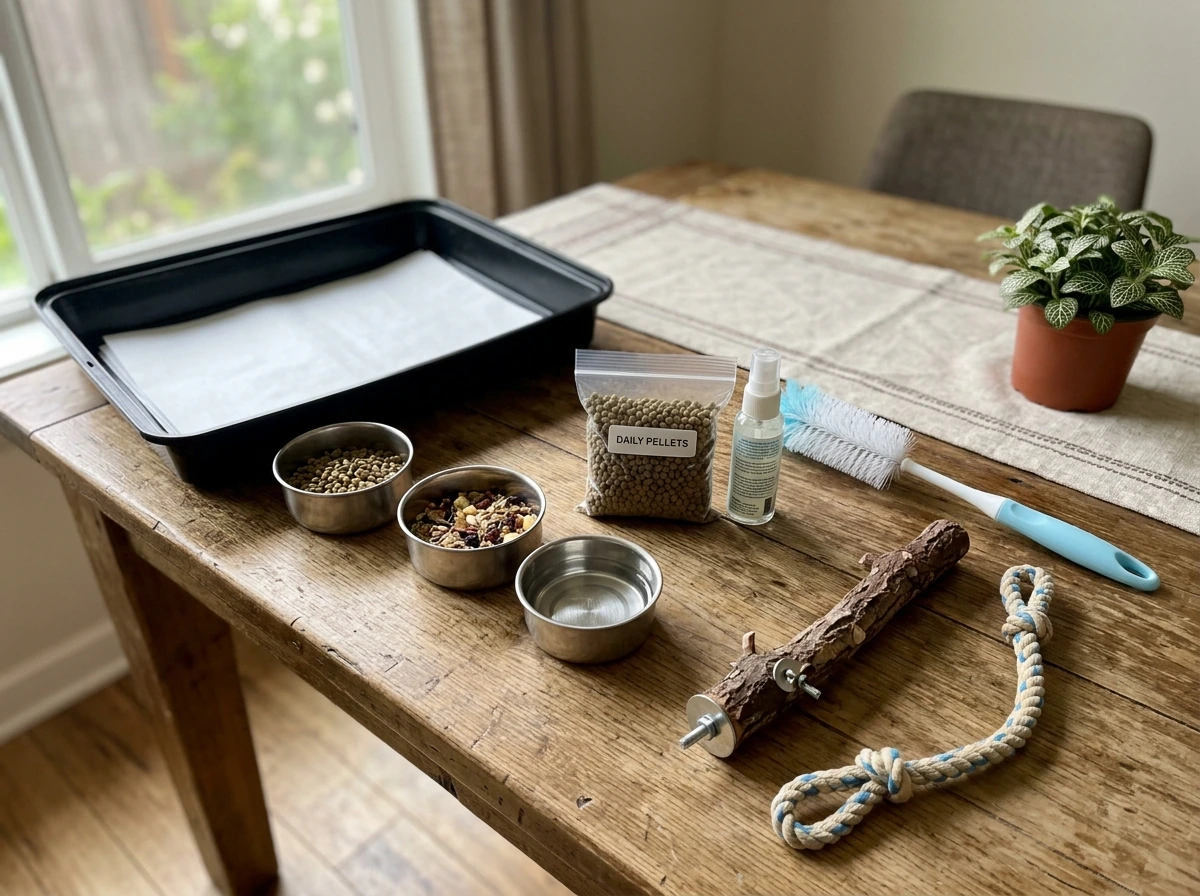
One of the things that surprises new bird owners is how much of bird care is just routine maintenance rather than complex skill. Here's what a typical day actually looks like with a budgie or cockatiel. Canary and finch care is similar but minus the handling component.
Morning (10 to 15 minutes)
- Remove the cage cover and greet your bird calmly.
- Replace water with fresh, clean water (daily, no exceptions).
- Refresh the pellet dish and remove any uneaten fresh food from the night before.
- Add fresh vegetables or a small amount of fruit for the day.
- Do a quick visual check: is the bird alert, eating, and moving normally?
Midday or Afternoon (15 to 30 minutes)
- Out-of-cage time in a bird-safe room (budgies and cockatiels especially benefit from this).
- Gentle handling or interaction if your bird is comfortable with it.
- Check food and water levels.
Evening (10 minutes)
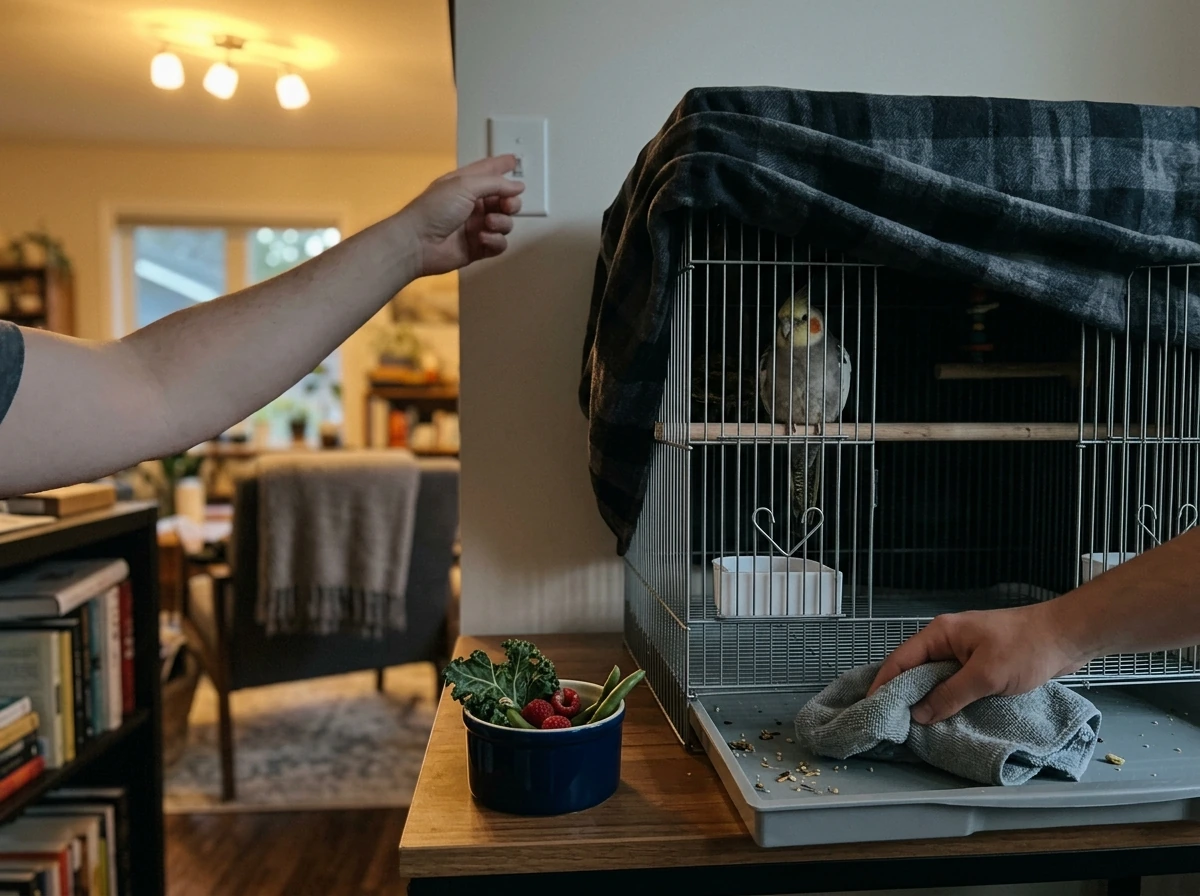
- Remove all fresh food from the cage before it spoils overnight.
- Wipe down cage floor tray (daily spot clean; full clean weekly).
- Cover the cage at a consistent time to reinforce a sleep schedule.
Diet breakdown matters more than most beginners realize. The target is roughly 80% formulated pellets as the base of the diet. Seeds should be a treat or a small supplement, not the foundation. The RSPCA recommends seeds make up no more than about a tenth of a psittacine's diet, and that canaries and finches, while traditionally seed-fed, also benefit significantly from quality pellets and fresh washed greens like dandelion leaves and chickweed. A bird living on seeds alone is like a person surviving on crackers: technically alive, but not thriving.
Never offer avocado, chocolate, or fruit pits (apple seeds, cherry pits, apricot pits). These are legitimately toxic to birds. Avocado contains persin, which can cause heart and respiratory failure. Fruit pits contain cyanide compounds. These aren't edge cases or internet myths: they're documented causes of bird death.
Mistakes That Make Easy Birds Hard
Most beginner problems aren't about the bird being difficult. They're about avoidable setup and husbandry errors that compound over time. Here are the ones I see most often.
- Too-small cage: The packaged 'starter kits' sold at pet stores are almost always undersized. A cramped bird is a stressed, often noisy bird. Buy larger than you think you need.
- Seed-only diet: This is the biggest health mistake beginners make. Seeds are high in fat and low in essential vitamins. Convert new birds to pellets gradually by mixing pellets into the seed dish and slowly shifting the ratio over several weeks.
- No vet relationship established: Birds hide illness instinctively. By the time a bird looks sick, it's often seriously ill. Find an avian vet before you bring the bird home, not after something goes wrong.
- Kitchen proximity: Nonstick cookware fumes can kill a bird in minutes. Scented candles, air fresheners, and aerosol sprays are also risky. Birds have highly sensitive respiratory systems.
- Round cage: Removes the bird's ability to find a secure corner, causing chronic stress.
- Over-handling too soon: A new bird needs time to decompress in its cage before you start handling it. Give it at least a week to settle before initiating contact.
- Under-enrichment: A bored bird screams, feather-picks, or becomes aggressive. Rotate toys, provide foraging opportunities, and ensure out-of-cage time.
- Inconsistent sleep schedule: Birds need 10 to 12 hours of darkness per night. Irregular sleep disrupts hormones and behavior.
How to Choose the Right Easy Bird for Your Specific Life
The 'easiest' bird depends on your household as much as the species. Here's how to match yourself to the right option.
You have limited time (under 30 minutes per day)
Go with finches or a canary. They don't need or want hands-on interaction and are content with a well-stocked cage and daily food and water refreshes. If you want something slightly more interactive but still low-commitment, a pair of budgies who have each other for company is a reasonable middle ground.
You live in an apartment or noise-sensitive building
Budgies and finches are the quietest options. Male canaries sing, which is melodic but can be constant during breeding season. Cockatiels whistle and can be quite vocal in the morning. They're not loud by parrot standards, but they're audible through walls.
You have allergies or respiratory sensitivities
Cockatiels and cockatoos produce heavy powder down that coats surfaces and can trigger allergies. If you or someone in your household has asthma or bird-related allergies, a canary, finch, or budgie produces significantly less dander. Always run an air purifier with a HEPA filter in the bird's room regardless of species.
You want a companion bird that bonds with you
Cockatiel, without question. They are the most affectionate and relationship-oriented bird on this list. A hand-raised cockatiel that's socialized regularly will actively seek you out, enjoy being petted, and whistle for your attention. Budgies can bond well too, but they're more independent. If bonding is your primary goal, a cockatiel is worth the slightly higher care commitment.
You have a small home or limited cage space
Budgies need less space than cockatiels and are the most practical choice for small apartments. A pair of budgies in a correctly sized cage takes up a reasonable footprint. Finches need a long flight cage but it can be fairly narrow, so they can fit in tighter spaces depending on the layout.
You have young children in the home
Cockatiels are generally more patient and less likely to bite than budgies when startled, but all birds need adults to supervise child interactions. Finches and canaries are hands-off and aren't suitable as 'a kid's bird' in the interactive sense. If a child wants to hold and interact with the bird, a hand-raised cockatiel is the most forgiving option.
Finding a Healthy Bird and What to Do Next
Where you get your bird matters almost as much as which bird you get. Your three main options are a reputable breeder, a bird rescue, or a pet store. Each has tradeoffs.
A reputable breeder is usually the best source for a hand-raised, well-socialized bird. A hand-raised budgie or cockatiel from a breeder who handles chicks from a young age will be dramatically easier to tame and bond with than a parent-raised bird. Ask to see where the birds are raised, whether the parents are on site, and whether the breeder has an avian vet they work with.
Bird rescues are an underused option and worth serious consideration. Rescues often have adult birds that are already socialized, and the staff usually knows each bird's personality well enough to help you find a good match. The adoption fee is typically lower than a breeder price, and you're giving a bird a second home.
Pet stores are the most accessible option but come with the most variability. Large chain pet stores sell budgies that are often parent-raised in group settings, which means more taming work for you. If you go the pet store route, look for a store that keeps birds in clean, uncrowded conditions and can answer basic husbandry questions knowledgeably.
Signs of a Healthy Bird
- Alert and responsive to movement around the cage (not fluffed up and sitting at the bottom)
- Bright, clear eyes with no discharge
- Clean nostrils with no crusting or discharge
- Feathers smooth and well-preened (some pinfeathers are normal in young birds)
- Active and moving around the cage, not hunched on a perch
- Clean vent area (no matted or soiled feathers around the tail)
- Eating and drinking visibly during your visit
Your First Steps After Bringing the Bird Home
- Have the cage fully set up before the bird arrives: perches placed, food and water stocked, cage positioned correctly away from the kitchen.
- Book a well-bird exam with an avian vet within the first two weeks, even if the bird seems healthy. This establishes a baseline and catches issues you might miss.
- Give the bird 5 to 7 days to decompress before attempting to handle it. Let it watch you come and go. Talk to it calmly. Don't rush the bonding process.
- Start converting to a pellet-based diet from day one if the bird was on seeds. Mix pellets into the seed dish and gradually reduce seeds over 4 to 6 weeks.
- Establish a consistent daily routine: same wake time, same feeding time, same cover time at night.
- Bird-proof the room where you'll allow out-of-cage time: windows closed, ceiling fans off, other pets secured, toxic plants removed.
If you're still weighing which specific species is right for you, it's worth reading more on the full range of beginner bird options, including how different personality types and household situations affect the choice, see our guide on "how to choose a bird" for more practical help. The short version: start with a budgie or cockatiel if you want interaction, a canary if you want a singer, and finches if you want a low-maintenance, watchable pet. A pet bird for beginners guide can help you choose between budgies, cockatiels, canaries, and finches based on your time and comfort level. Any of them, set up correctly and cared for consistently, will reward you far more than most people expect from a small bird, especially the best large bird for beginners. best bird for first-time owner, best bird for beginner falconry. what is the best bird for beginners
FAQ
What if I want the easiest bird but I don’t want to handle it at all?
If you want the easiest bird for the widest range of people, start with a budgerigar (budgie) if you prefer some interaction and you can commit to daily basics. Choose a cockatiel only if you are actively seeking a more relationship-focused bond, since it requires more long-term attention and more powder-down. If you want a bird that is easiest because you will not handle it much, a canary or finch is usually the better match.
Do I still have to spend time each day if I get two birds so they can keep each other company?
Don’t assume “two birds” means “no effort.” Even a bonded pair still needs daily food and water checks, weekly cage cleaning, and regular toy and perch rotation. A good rule is to plan on at least 20 to 30 minutes per day for maintenance, even for the most hands-off species like finches.
Are budgies, canaries, or finches actually better for allergies than cockatiels?
Yes, but the best choice depends on your allergy type. Cockatiels produce more powder down, which can be a deal-breaker for some people with asthma or bird dander sensitivity. Budgies, canaries, and finches are generally less problematic in the article’s lineup, but you should still run a HEPA air purifier in the bird room, keep the room ventilation strong, and avoid placing the cage in the bedroom where you sleep.
What’s the most common feeding mistake that makes an easy bird become harder?
A “beginner diet” mistake is feeding mostly seeds because they are easier to find and birds accept them immediately. The practical fix is to transition to about 80% formulated pellets, then use seeds as a small treat. For canaries and finches, pellets and fresh washed greens like dandelion leaves and chickweed still matter, even if tradition says they should be seed-heavy.
What foods should I avoid completely for the easiest beginner birds?
Two big toxicity pitfalls are offering avocado and offering fruit pits, including apple, cherry, and apricot pits. Even small amounts can be dangerous, and birds may not show immediate symptoms. If you are unsure, skip the food entirely rather than “testing a tiny bite,” because some toxins are not obvious in the moment.
How can I tell if a cage is too small or unsafe before buying it?
Choose a cage that fits the bird’s movement, not just the bird’s current size. Round cages should be avoided because birds need a retreat option, and bar spacing matters because a budgie or cockatiel can get a head stuck in bars spaced wider than 5/8 inch. If you can fit a larger cage than the minimum, do it, because “bigger” reduces stress and makes daily cleaning easier.
What perch setup reduces the most common beginner problems like foot soreness?
Many “starter kit” perches are not enough by themselves. Add different perch types so the bird can vary grip pressure and get foot exercise, include natural wood and rope, and consider a ladder. Also check perch diameter, aim for about a 1/2-inch baseline for budgies so the bird can wrap its feet about halfway around.
Which of the easiest birds is usually the quietest throughout the year?
If you want the least noise with the most predictable routine, finches and budgies are typically the quietest in this guide. Male canaries sing, sometimes more during breeding season, and cockatiels can be fairly vocal in the morning. Also expect that any bird can make noise when scared, hungry, or under social stress, so cage placement and consistent routines matter.
If a child wants to hold the bird, which “easy bird” is the safest bet?
Choose based on your willingness to supervise. All birds can bite, but hand-raised cockatiels that are socialized regularly are generally the most forgiving option for a child who wants interaction. Finches and canaries are not interested in handling, and lovebirds or parrotlets are often too feisty for a true first-timer.
Does where I get the bird matter more than the species for taming and bonding?
Make the “easy” species easier by starting with the right source. A hand-raised, socialized bird from a reputable breeder is usually easier to tame and bond with than a parent-raised bird. If you adopt, ask rescue staff about each bird’s handling comfort and temperament, since adult birds can still be great matches when you match personality to your household.
How do I choose between budgies, cockatiels, canaries, and finches based on my schedule?
The simplest compatibility target is to match your interaction level to the bird’s natural preference. If you want interaction, pick budgies (pair it for companionship if you are away) or a hand-raised cockatiel for more bonding. If you want watch-only entertainment, pick a canary or finch, and plan for a flight cage and minimal handling expectations.