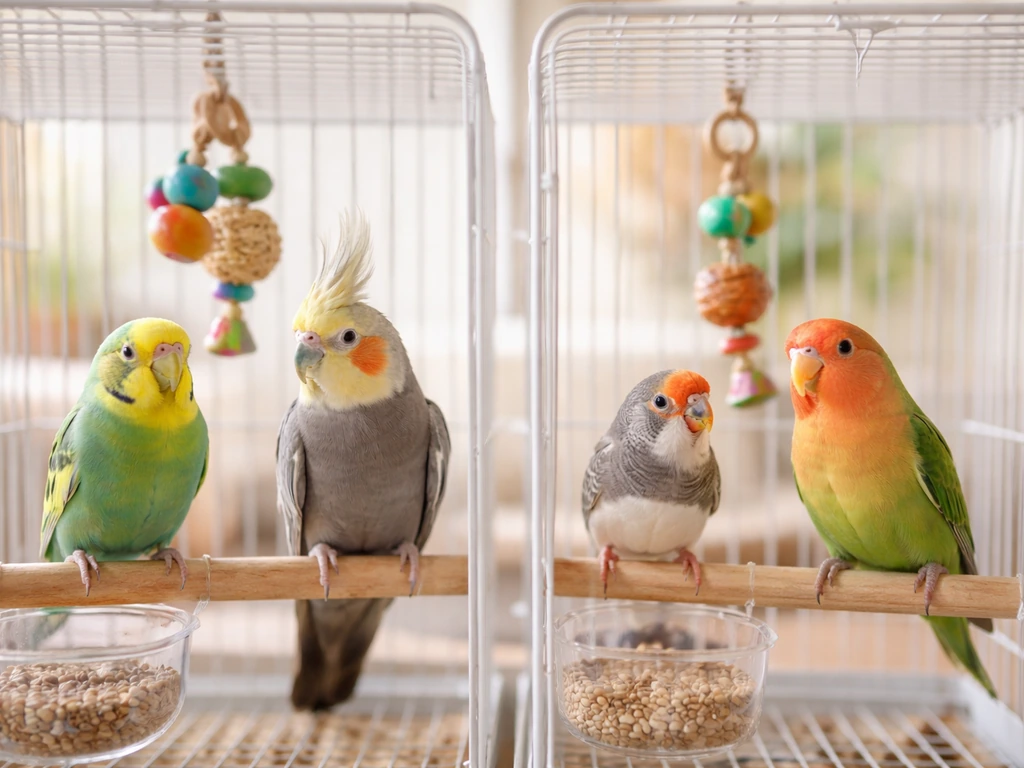
In practical terms, small pet birds are species that weigh roughly 10 to 100 grams and can live comfortably in a cage footprint of about 20 x 20 x 30 inches or less, though bigger is always better. This group includes finches, canaries, budgerigars (parakeets), lovebirds, parrotlets, and cockatiels, which sit at the upper end of the size range but are still solidly in "small bird" territory. What separates them from each other isn't really size. It's noise level, how much human interaction they need, how messy they are, how long they live, and how complicated their diet and health care gets.
Here's what I wish someone had told me upfront: small does not automatically mean easy or quiet. A single lovebird can be louder than you expect, and a pair of finches can generate a surprising amount of seed debris. Lifespan is also something people underestimate. Budgies typically live 7 to 10 years with good care. Cockatiels routinely hit 15 to 20 years. That's a real commitment, not a starter pet you hand off when you move. Before picking a species, ask yourself three questions: Do I want a bird that interacts with me directly, or am I happy watching birds socialize with each other? How much noise can I tolerate on a daily basis? And how much time do I realistically have for daily care and out-of-cage interaction? Avian Welfare’s “Housing for Birds” handout also emphasizes giving birds daily out-of-cage time in a bird-safe room for exercise blank" rel="noopener noreferrer">out-of-cage interaction.
Top beginner-friendly small bird recommendations (quick picks)
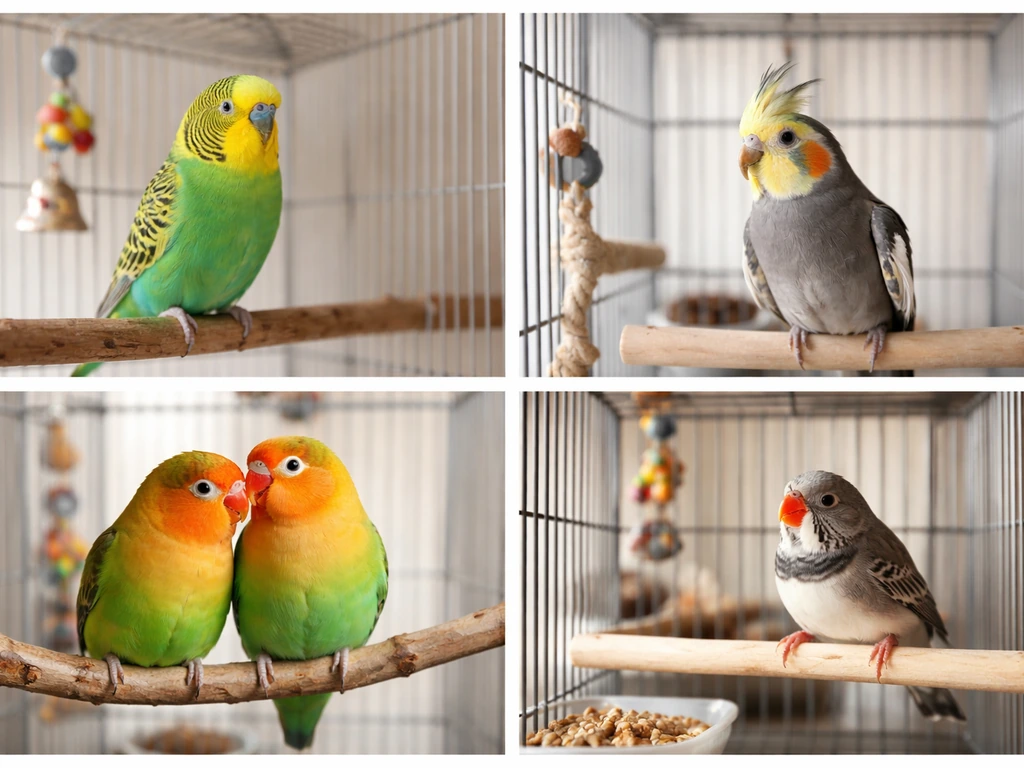
If you want a direct answer before diving into the details: budgerigars (budgies) are the best all-around small bird pet for most beginners. They're affordable, genuinely affectionate when hand-tamed, capable of learning words and tricks, and hardy enough to forgive early rookie mistakes. Cockatiels are the best pick if you want a slightly larger, cuddlier companion with more personality. Finches and canaries are the best choice if you want a low-maintenance, visually enjoyable bird that doesn't need hands-on interaction. Lovebirds and parrotlets are worth considering if you want a bold, feisty personality in a tiny body, but they're honestly not ideal as your very first bird.
| Species | Best For | Noise Level | Tameness Potential | Care Level | Typical Lifespan |
|---|
| Budgerigar (Budgie) | Most beginners, apartment dwellers | Low-Moderate | High (with handling) | Easy | 7-10 years |
| Cockatiel | Those wanting a cuddly companion | Moderate | Very High | Easy-Moderate | 15-20 years |
| Canary | Hands-off, song enjoyers | Low-Moderate | Low | Easy | 10-15 years |
| Finch (Zebra, Society) | Hands-off, pairs/groups | Low | Low | Easy | 5-10 years |
| Lovebird | Experienced beginners wanting personality | Moderate-High | Moderate (with work) | Moderate | 10-15 years |
| Parrotlet | Confident handlers wanting a big bird in small form | Low-Moderate | High (with work) | Moderate | 15-20 years |
Species-by-species breakdown: personality, tameness, noise, mess, and care
Budgerigars (Budgies / Parakeets)
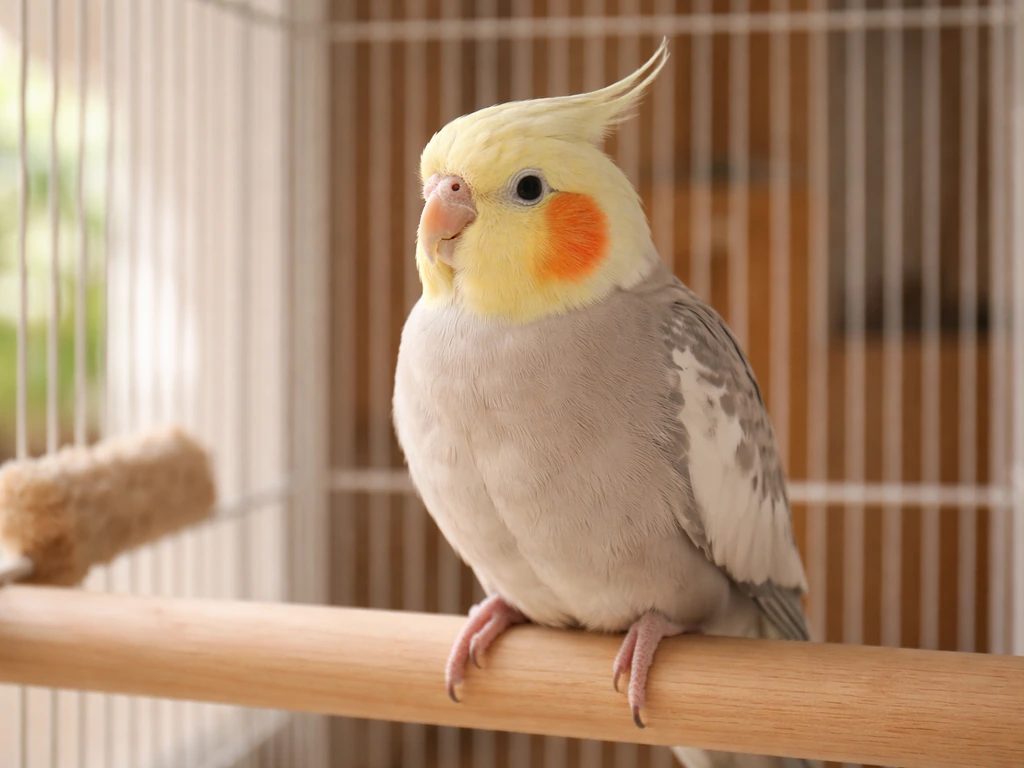
Budgies are the world's most popular pet bird for good reason. A hand-raised budgie is curious, social, and surprisingly communicative. Some develop impressive vocabularies. They're small enough (around 30 grams) that even a modest cage in a studio apartment works, and their chirping is cheerful rather than ear-splitting. The main thing to know is that a single budgie needs significant daily interaction from you to stay mentally healthy. If you can't commit to at least an hour of out-of-cage time and active engagement daily, get two budgies so they keep each other company. Mess-wise, expect seed husks and feather dust in a radius around the cage. A skirt or tray helps.
Cockatiels
Cockatiels are the sweet spot between easy care and genuine companionship. They're bigger than budgies (around 80 to 100 grams), which means they need a larger cage, around 20 x 20 x 24 inches at minimum, and they produce noticeably more feather dust, which matters if anyone in your home has asthma or allergies. But the trade-off is a bird that genuinely wants to be near you. Cockatiels whistle, mimic sounds, and will happily sit on your shoulder for hours. They're not typically loud the way larger parrots are, though males can go through persistent whistling phases. Their long lifespan (15 to 20 years) is the biggest consideration: adopting a cockatiel is closer to adopting a cat than buying a fish.
Canaries
If you want a bird primarily for the experience of having a living, beautiful creature in your home rather than a hands-on companion, canaries are excellent. Male canaries are bred for song, and a good singer is genuinely impressive. They don't need or particularly want to be handled, which is perfect for people who appreciate birds but aren't interested in training sessions. Care is straightforward: a spacious cage (wider rather than taller, since canaries are horizontal fliers), a clean diet of seed and fresh vegetables, and minimal fuss. They're also relatively quiet by most standards, making them a good option if you're in an apartment. Canaries are also one of the best bird options for apartment living because they’re relatively quiet compared to many other small birds best bird pets for apartment. For seniors, choosing a bird with manageable noise, easy daily care, and a comfortable routine is key, which is why apartment-friendly options often make great picks best bird options for apartment living. The downside is that you get a viewer relationship, not a bond.
Finches (Zebra Finches, Society Finches)
Finches are the most hands-off small bird you can keep. They're tiny (10 to 15 grams), fast, and not interested in human interaction, but they're fascinating to watch when kept in pairs or small groups. Zebra finches are especially hardy and forgiving, making them genuinely beginner-proof. The main rule with finches is that they should never be kept alone: they're highly social and will deteriorate without a companion of the same species. A wide flight cage is more important than a tall one. Noise is soft chattering and peeping, nothing that will bother neighbors. These are ideal for someone who travels a few days a week, has a busy household, or simply doesn't want the pressure of daily hands-on interaction.
Lovebirds
Lovebirds have a reputation for being sweet, but that reputation is partially misleading. They're bold, territorial, and can be nippy if not consistently handled from a young age. A well-socialized, hand-tamed lovebird is a genuinely affectionate companion, but getting there requires real commitment. They're louder than budgies and canaries, and they can develop behavioral problems quickly if undertreated. The appeal is their outsized personality: they're confident, playful, and intensely bonded to their person. If you want a bird that acts like a small, feathered attitude machine and you're prepared to put in the socialization work, lovebirds are rewarding. For most first-timers, I'd suggest starting with a budgie or cockatiel first.
Parrotlets
Parrotlets are the smallest parrot species kept as pets, but they have the personality of a bird three times their size. They're quiet compared to larger parrots, which makes them popular in apartments, but they're not quiet birds in an absolute sense. They can be nippy and possessive, and they require consistent daily interaction to stay tame. The payoff is a genuinely bonded, intelligent bird that can learn tricks and words and will clearly prefer you over everyone else in the room. Their 15 to 20 year lifespan is also worth taking seriously. Parrotlets are best for someone who's done some research, has experience with birds, or is very committed to putting in the socialization time consistently.
How to choose the right bird for your lifestyle
The most common mistake I see beginners make is choosing a bird based on looks or a YouTube video rather than honest self-assessment. Here's a practical decision framework that actually works.
- You want a bird that bonds closely with you and will learn your name or some words: Choose a budgie (easiest, most forgiving) or a cockatiel (warmer, more cuddly).
- You live in an apartment with thin walls or noise-sensitive neighbors: Budgies, finches, canaries, or parrotlets are your safest bets. Cockatiels and lovebirds can get loud.
- You work full-time and can't guarantee daily out-of-cage time: Get a pair of finches or canaries. Do not get a single budgie, lovebird, or parrotlet and leave it alone all day.
- You want minimal mess and allergen concerns: Finches and canaries produce the least feather dust. Cockatiels produce the most among small birds.
- Your budget is tight: Budgies are the most affordable to buy and feed. Cockatiels are mid-range. Vet care costs are roughly similar across species.
- You want to train, teach tricks, and have a real interactive relationship: Budgies and cockatiels first. Parrotlets and lovebirds if you're confident and consistent.
- You have young children at home: Cockatiels and budgies tend to be the most tolerant. Lovebirds and parrotlets can nip and are better with older kids.
- You're considering senior-friendly options or want a calmer bird: Cockatiels are gentle and slow-paced. Canaries and finches are stress-free to manage physically.
One more thing worth mentioning: if you're debating between a bird for an apartment specifically, or wondering whether your living situation is well-suited for a specific species, the apartment context matters a lot, especially for noise tolerance and cage placement. Similarly, if you're buying for a household rather than a studio, the species range opens up a bit.
Essential setup and gear for small birds
Cage size and bar spacing
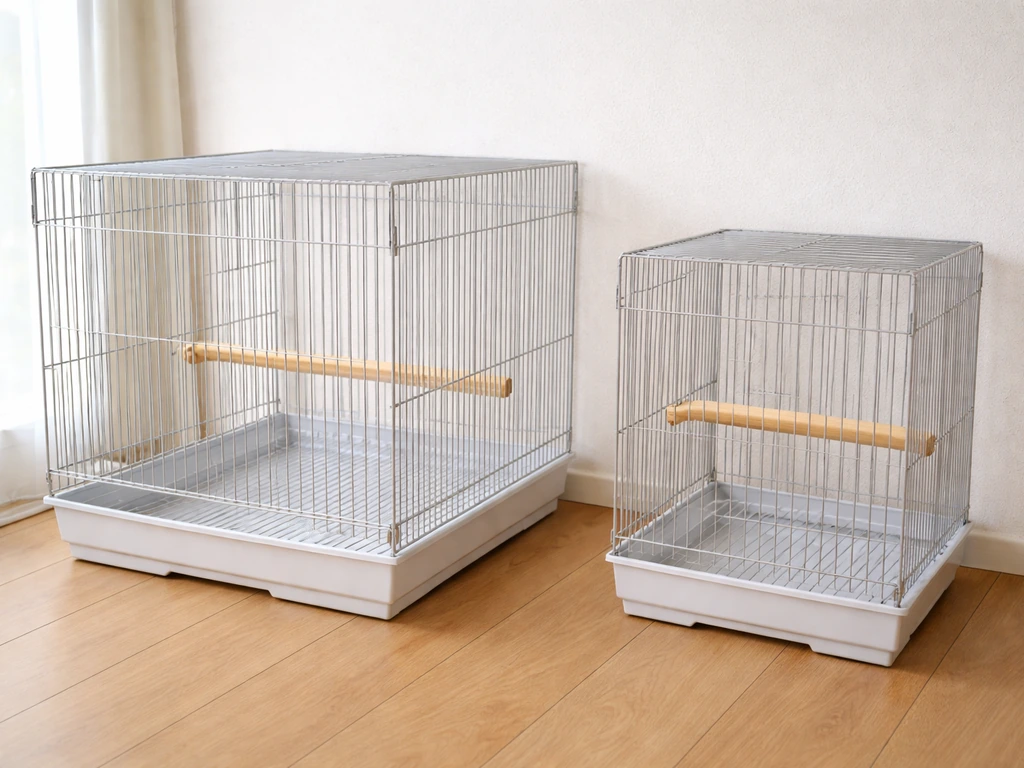
The minimum cage size recommended by avian veterinary standards for budgerigars, lovebirds, parrotlets, and cockatiels is approximately 20 x 20 x 30 inches, with bar spacing around 0. The Association of Avian Veterinarians (AAV) publishes species-specific minimum cage size recommendations and explains where owners can find guidance online or through an avian veterinarian minimum cage size recommended by avian veterinary standards. 5 inches. For finches and canaries, width matters more than height since they fly horizontally, so aim for at least 30 inches wide even if height is shorter. These are minimums: go bigger whenever your space allows. A cramped bird is a stressed bird, and stress leads to feather plucking, aggression, and illness. Always buy the largest cage you can reasonably fit and afford.
Perches, food, and water
Use natural wood perches of varying diameters rather than uniform dowel rods. Different diameters exercise foot muscles and reduce arthritis risk. For food, the current best-practice recommendation is a base of high-quality pellets (not seed alone) supplemented with fresh vegetables and limited fruit. Seed-only diets are nutritionally incomplete, which is one of the most common beginner mistakes. For budgies and cockatiels, look for species-appropriate pellet brands and aim for pellets to make up about 50 to 70 percent of the diet. Fresh water should be changed daily, and food dishes should be cleaned every single day. This isn't optional: bacteria grow fast in bird dishes.
Toys and enrichment
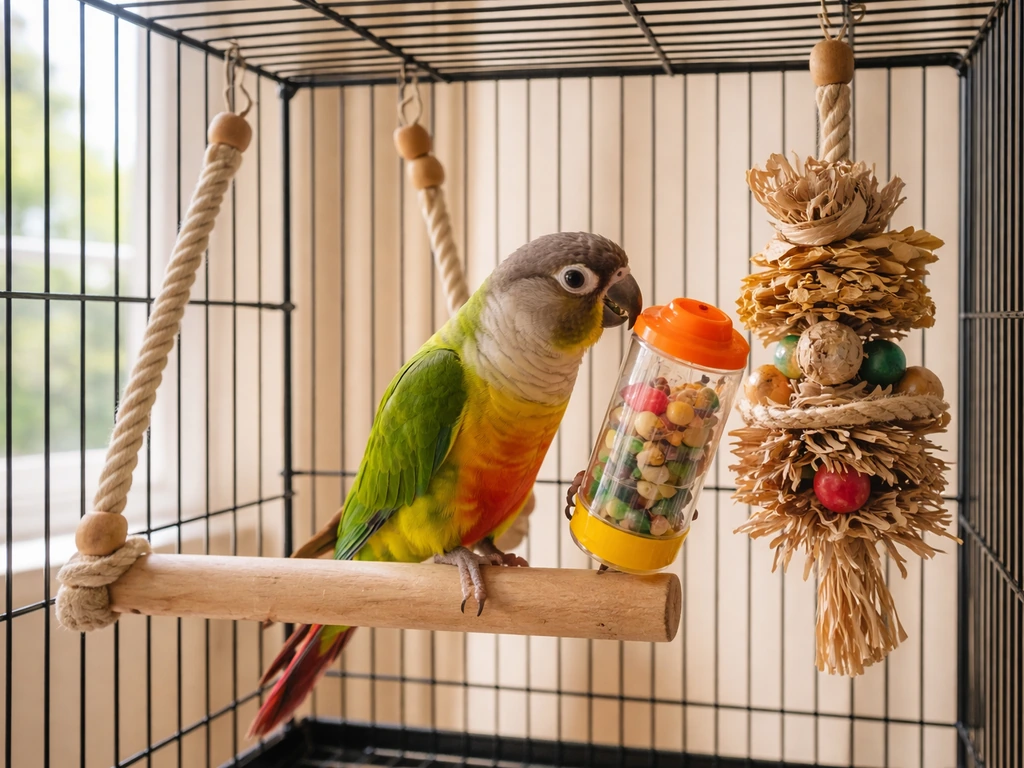
Small birds need mental stimulation to stay healthy. For parrots (budgies, cockatiels, lovebirds, parrotlets), provide foraging toys, shreddable toys made from bird-safe materials, bells, and swings. Rotate toys every week or two so the bird doesn't get bored. Finches and canaries need different enrichment: nesting materials (for finches), swings, and visual variety. Avoid painted toys with unknown coatings, and skip anything with small parts that could be swallowed.
Cage placement and safety
Place the cage in a room where the family spends time, at roughly eye level, with one side against a wall so the bird feels secure. Never place it in the kitchen. Cooking fumes, particularly from overheated nonstick (PTFE) cookware, are acutely toxic to birds and can kill them within minutes. The fumes are odorless to humans but lethal to a bird's respiratory system. This isn't a remote risk, it's one of the leading causes of sudden bird death in homes. Similarly, avoid placing the cage near windows with direct unfiltered sun all day, in drafty hallways, or near air vents.
What good daily care actually looks like
People often imagine bird care is a "set it and forget it" situation. It's not, but it's also not overwhelming if you build a simple routine. Here's what a realistic day looks like for a beginner with a budgie or cockatiel.
- Morning: Uncover the cage, replace water, refresh food dishes, and do a quick spot-clean of the cage floor (remove droppings and old food debris).
- Midday or afternoon: Let the bird out for supervised free-flight or out-of-cage time. For interactive species like budgies and cockatiels, aim for at least one hour daily, broken into sessions if needed.
- During out-of-cage time: Talk to your bird, offer foraging opportunities, let them explore safe perches or play stands. This is the relationship-building time that matters most for tameness.
- Evening: Refresh food if needed, do a final check of the cage, and cover the cage at the bird's regular bedtime to ensure 10 to 12 hours of dark, quiet rest.
- Weekly: Deep clean the cage with a bird-safe cleaner or diluted white vinegar, replace cage liner, and disinfect perches and toys.
Integrating your bird into family activities is genuinely good for them, not just nice-sounding advice. Birds are flock animals, and being included in the household's daily rhythms reduces stress and builds trust. The RSPCA frames this well: your bird should feel like part of the social flock, not an isolated object in the corner.
Common beginner mistakes and what to watch for
Diet mistakes
The biggest and most common mistake is feeding seed-only diets long-term. Seeds are high in fat and nutritionally imbalanced. Birds fed seed-only diets frequently develop fatty liver disease, vitamin A deficiency, and shortened lifespans. Transition new birds gradually to a pellet-based diet (mix pellets with seed and slowly reduce the seed proportion over weeks). Fresh vegetables like leafy greens, carrots, and broccoli should be offered daily. Avoid avocado, onion, chocolate, caffeine, and anything with added salt or sugar.
Air quality and household toxins
Birds have uniquely sensitive respiratory systems, far more sensitive than cats, dogs, or humans. The Merck Veterinary Manual specifically warns that household cleaning agents including chlorine bleach can cause respiratory tract irritation and ulceration in birds. Mixing bleach and ammonia-based cleaners produces highly toxic gas that can be rapidly fatal to a bird in the same room. Use bird-safe cleaners only, ventilate heavily when cleaning, and ideally move the bird to another room when using any spray product. As mentioned above, nonstick cookware (PTFE/Teflon) is also a serious risk. Even normal cooking temperatures can off-gas enough PTFE fumes to kill a bird, and overheating dramatically increases the danger. If your kitchen uses nonstick pans, either switch to stainless steel or cast iron, or make absolutely sure your bird's cage is as far from the kitchen as possible and the space is well-ventilated.
Stress and health red flags
Birds instinctively hide illness because showing weakness in the wild is dangerous. By the time a bird looks sick, it's often very sick. Know the early warning signs: fluffed feathers outside of sleep time, sitting on the cage floor, reduced appetite, changes in droppings (color, consistency, volume), sneezing with discharge, labored breathing, or unusual lethargy. Any of these warrants a call to an avian vet, not a wait-and-see approach. Find an avian-certified vet before you bring the bird home, not after something goes wrong.
Cage size and enrichment failures
Undersized cages are a chronic problem in beginner setups. A bird crammed into a tiny cage with no toys and minimal out-of-cage time will develop behavioral problems: feather plucking, screaming, biting, and repetitive movements. These aren't personality flaws, they're symptoms of an unmet need. If you see these behaviors developing, the first questions to ask are whether the cage is large enough, whether the bird is getting enough out-of-cage time, and whether there's sufficient mental stimulation.
Next steps: buying, adopting, and setting up before you bring them home
The single best thing you can do right now is set up the habitat before the bird arrives. A bird coming home to a ready cage with perches, food, toys, and correct placement is going to settle in faster than one introduced into an empty wire box you're still assembling. Order or buy your cage at least a week early, set it up, and make sure the placement is right. This also gives you time to find an avian vet and schedule a new-bird wellness check for within the first week of ownership.
When it comes to sourcing the bird, consider rescues and shelters first. There are countless budgies, cockatiels, and even lovebirds in bird rescues who need homes, often already partially tame and at lower cost than pet stores. If you buy from a breeder, visit in person, observe the birds' conditions, and ask how the birds were socialized. Avoid birds that look lethargic, have dirty feathers around the vent, or are housed in overcrowded conditions. For pet stores, the same rules apply: look for clean cages, active birds, and staff who can answer basic questions about the species.
Questions worth asking any seller or rescue before committing:
- How old is the bird, and was it hand-raised or parent-raised?
- What has it been eating, and will I get a few days of the same food to transition it slowly?
- Has it been examined by a vet recently, and do you have records?
- Has it shown any signs of illness, behavioral issues, or feather problems?
- Is it used to being handled, and what's the best approach for the first few days?
For the first few days home, keep handling to a minimum and let the bird acclimate to the new environment and sounds. Talk softly near the cage, offer treats through the bars, and resist the urge to rush interaction. A bird that settles in calmly in the first week will almost always become more handleable over time than one that's stressed from day one. Patience in the first two weeks pays off for months and years after.
To summarize the practical checklist before bringing any small bird home:
- Cage set up with appropriate bar spacing (0.5 inch for most small parrots), minimum 20 x 20 x 24 to 30 inches, placed away from kitchen and drafts
- Natural wood perches of at least two different diameters installed
- Species-appropriate pellet food and fresh vegetables sourced, plus some of the bird's current food for transition
- Clean water dish and food dishes ready to swap daily
- Two or three beginner-safe toys (shreddable, foraging, or mirror depending on species)
- Avian vet identified and first appointment scheduled
- Cleaning supplies confirmed as bird-safe (no bleach sprays, no ammonia, no aerosol air fresheners near cage area)
- Nonstick cookware situation assessed and addressed if the kitchen is near the cage area
- Cage cover (light cloth) ready for nighttime
The right small bird for most people reading this is a budgie or a cockatiel. If you're specifically shopping for the best house bird pets, budgies or cockatiels are often the easiest starting point and a great match for most home routines. Start there, get the setup right, build the routine, and you'll wonder why you waited so long. The species that suits you best long-term is the one that fits your actual daily life, not the one you saw in a video that seemed cool. Be honest about your schedule, your living situation, and your tolerance for noise and mess, and the choice becomes pretty clear. Dove birds can also be a good home option, but their suitability depends on your space, noise expectations, and daily care time is dove bird good for home.