A good garden bird checklist covers the common species likely to visit your yard, the key field marks that separate one bird from another, and a simple note-taking habit that actually sticks. For most North American backyard birders, that means starting with around 10 to 20 species you can realistically expect (think American Goldfinch, Black-capped Chickadee, House Sparrow, American Robin, and Downy Woodpecker), then adding a setup that gives them food, fresh water, and somewhere safe to perch or nest.
Garden Bird Checklist: Wild Species, IDs, and Tracking Tips

Marcus Chen
18 Jun 2026
What your garden bird checklist should include
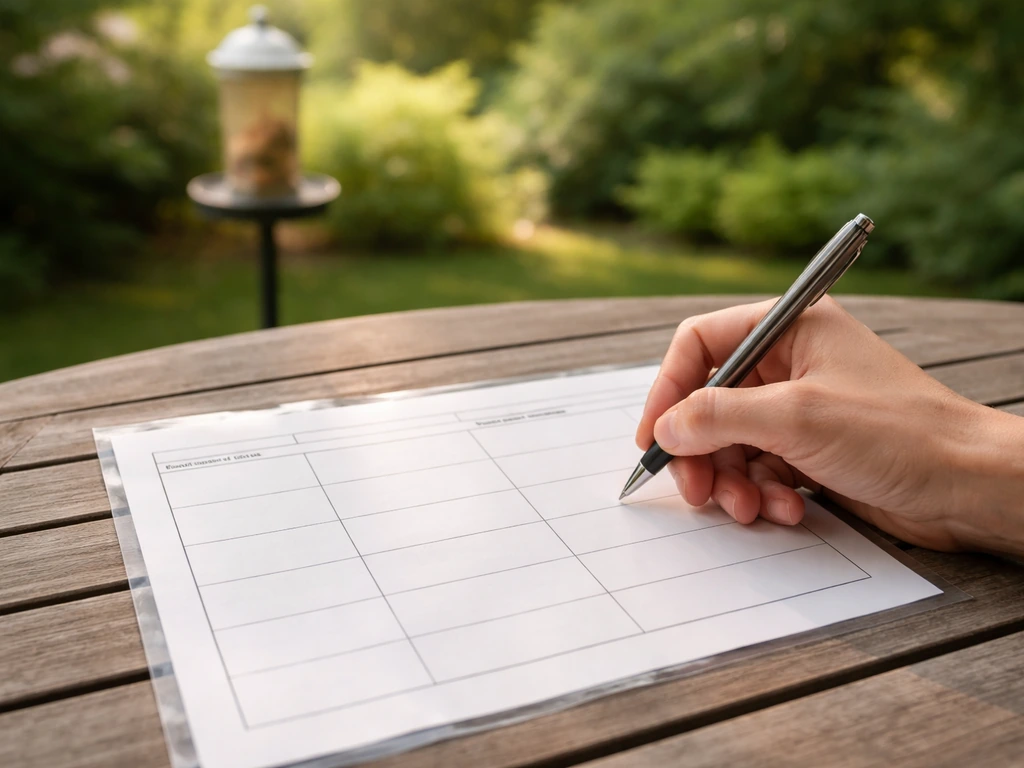
The checklist itself is not just a species list. Think of it as a field guide you've pre-filtered for your own backyard. A solid one includes the species name, a one-line description of the most obvious field mark, the time of year you'd expect to see it, and the habitat or location in your yard where it tends to show up. That last column is underrated: a Black-capped Chickadee will work a tube feeder; a Song Sparrow usually stays lower and scratches around on the ground.
Here's a starter list of common garden species to build from. Adjust it based on your region, but these birds appear on backyard lists across a wide swath of North America:
| Species | Standout Field Mark | Likely Season | Where in the Garden |
|---|---|---|---|
| American Goldfinch | Bright yellow body, black wings with white bars | Year-round (duller in winter) | Tube feeders, thistle/nyjer seeds |
| Black-capped Chickadee | Black cap and bib, white cheeks | Year-round | Tube or hopper feeders, tree edges |
| American Robin | Orange-red breast, yellow bill | Spring through fall | Lawn, low shrubs, birdbaths |
| Downy Woodpecker | Small size, white back stripe, red spot (male) | Year-round | Suet feeders, tree trunks |
| House Sparrow | Streaky brown, stout bill, male has black bib | Year-round | Platform feeders, ground feeding |
| Northern Cardinal | Crested head; male all red, female warm brown-red | Year-round | Hopper feeders, dense shrubs |
| Dark-eyed Junco | Dark hood, white belly, white outer tail feathers | Fall through spring | Ground below feeders |
| House Finch | Male has rosy-red head and breast, streaky brown | Year-round | Tube feeders, platform feeders |
| Mourning Dove | Slim, long-tailed, soft gray-brown, pink legs | Year-round | Ground and platform feeders |
| American Crow | All black, large, flat-footed walk | Year-round | Open lawn, trees, anywhere |
You can expand this into a printed sheet or a notes app entry. If you want a printable version to take outside, a printable backyard bird guide is worth having alongside your checklist so you can compare markings on the spot rather than relying on memory. If you print the checklist as a guide, you can also record sightings and compare field marks right when you spot them printable backyard bird guide.
Quick identification tips for common garden visitors
Most beginners try to ID a bird by color first, which is honestly one of the least reliable starting points. Color changes with light, changes seasonally when birds molt, and is the first thing you lose in a quick sighting. Cornell Lab's approach, which they call the '4 keys,' is much more useful: start with Size and Shape, then Color Pattern, then Behavior, then Habitat. Run that order every time and you'll make fewer embarrassing mistakes.
Size and shape means asking: is it sparrow-sized or robin-sized? Is the bill thick and seed-cracker-shaped, or thin and insect-probe-shaped? Tail short or long? These structural features don't change between seasons. The Audubon Society puts it well: bill structure and body proportions are your most reliable first clues. Then you look at field marks, which are the distinctive stripes, spots, or patterns that separate similar species. A wingbar, for example, stays visible even when a bird has molted out of its bright breeding plumage, making it a very reliable mark.
A couple of specific tricks that beginners often overlook: watch tail posture. The Missouri Department of Conservation points out that some birds cock their tail up (wrens do this constantly) while others flick or pump their tails. That behavior alone can narrow down a confusing bird before you even see the color pattern clearly. And listen. Birds use calls and songs constantly, and once you learn five or six common yard calls you'll start identifying birds you never even see.
A quick ID workflow for the field
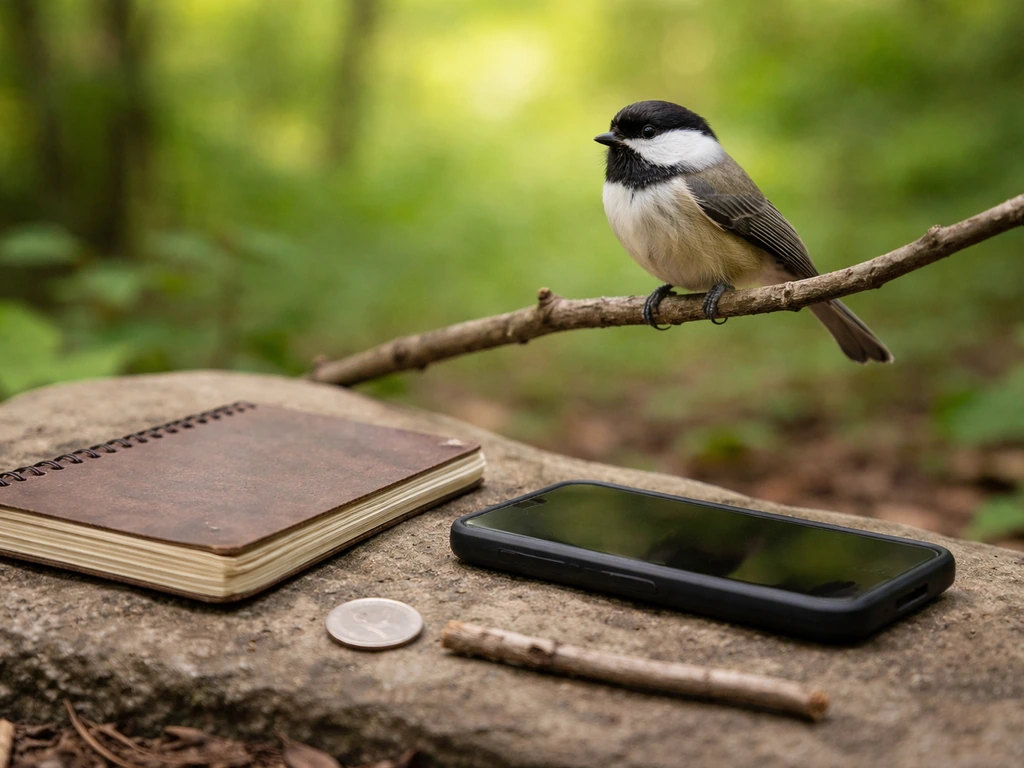
- Note the size relative to a bird you already know (sparrow-sized, robin-sized, crow-sized).
- Look at the bill shape first: seed-cracker, thin probe, hooked, or chisel-shaped.
- Check for obvious structural features: crest, long tail, wing shape in flight.
- Scan for field marks: wingbars, eye rings, streaks on the breast, cap color.
- Watch behavior for 30 seconds: how does it move, where is it feeding, does it hop or walk?
- Listen for any call or song and note it as 'musical,' 'buzzy,' 'chip,' or 'harsh.'
- Then check your checklist or app to confirm.
Garden setup checklist to attract birds (food, water, shelter)
Getting birds into your yard consistently comes down to three things: food in the right format, reliable clean water, and somewhere they feel safe. You don't need an elaborate setup to start. A single tube feeder with nyjer seed, a shallow birdbath, and one or two dense shrubs will attract more species than most people expect within the first week.
Feeders
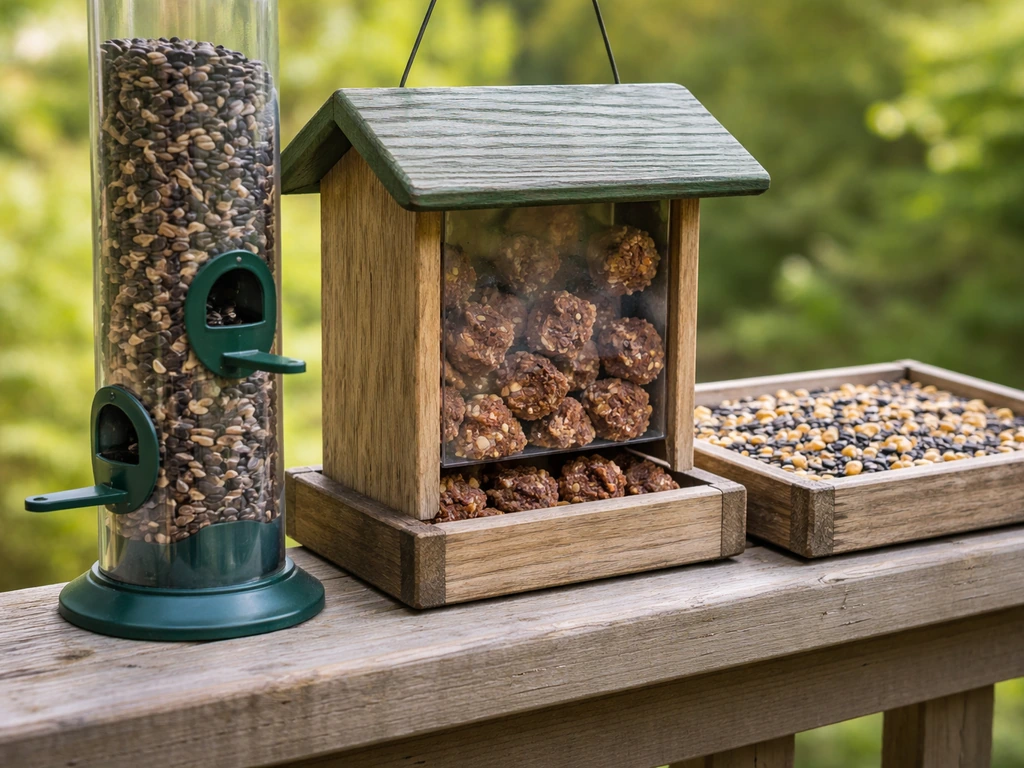
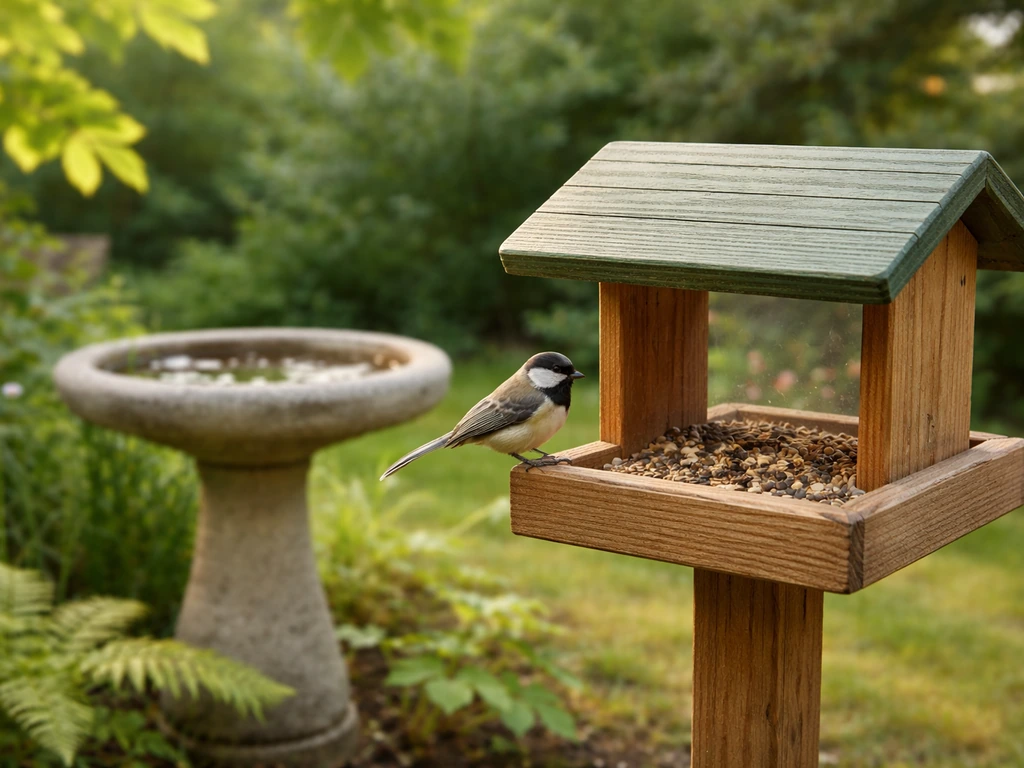
Different feeder types attract genuinely different birds, so running more than one type makes a real difference. Project FeederWatch explains that hopper feeders help protect seed and attract larger species, tube feeders are hollow cylinders with multiple ports or perches, platform feeders are flat raised surfaces for spilled seed, and suet can be tied to trees or smeared into knotholes Feeder Types. Here's how to think about the main categories:
- Tube feeders: hollow cylinders with multiple ports and perches, great for small finches and chickadees. Fill with sunflower chips or nyjer depending on species you want.
- Hopper feeders: enclosed seed reservoir, protects seed from weather, accommodates larger birds like cardinals and grosbeaks. Black-oil sunflower seed is your best all-round fill.
- Platform/tray feeders: flat raised surfaces where ground-feeding birds like juncos, sparrows, and doves feel comfortable. Also a good spot to put fruit or dried mealworms.
- Suet feeders: cage-style holders or smeared into bark crevices, specifically designed to attract woodpeckers, nuthatches, and wrens. Most effective in fall and winter when insects are scarce.
One thing worth saying directly: bread, crackers, and sugary food scraps are not appropriate for wild birds at feeders. The U.S. Fish and Wildlife Service flags these explicitly, noting they can introduce harmful bacteria and mold at feeding sites and cause respiratory problems for birds. Stick to species-appropriate seeds, suet, and fresh fruit.
Water
A birdbath will consistently attract species that never touch your feeders. Robins, warblers passing through, and thrushes all rely on water sources far more than seed. Keep the water shallow (no more than 2 to 3 inches at the deepest), change it every two to three days in summer to prevent mosquito larvae, and place it in a semi-open spot where birds can see approaching predators. A dripper or wiggler attachment adds movement, which birds notice from a distance.
Shelter and nesting spots
Dense native shrubs provide cover for perching and nesting. If you have space, layered planting (a tall tree, mid-height shrubs, and low groundcover) mimics natural habitat structure and supports more species than open lawn. Nest boxes attract cavity nesters like chickadees, wrens, and bluebirds, but species-specific box dimensions matter: a hole that's too large invites starlings and house sparrows to compete. Keep nest boxes mounted on a baffle pole to reduce predator access.
Feeder hygiene is non-negotiable
This is the part most beginners skip, and it's genuinely important, not just for birds but for you. The Cornell Lab (cited by U.S. Fish and Wildlife Service) recommends cleaning your feeder at least once every two weeks. Tube feeders need particular attention because wet seed inside can harbor bacteria that spreads eye infections between birds, specifically a condition called conjunctivitis. If you ever notice birds with swollen or crusty eyes at your feeder, take it down immediately and clean it before putting it back up.
For disinfection, use a 9-to-1 water-to-bleach solution, as recommended by both Audubon and Sequoia Audubon. Rinse thoroughly and let it dry completely before refilling. Also clean up spilled seed beneath feeders regularly: wet, rotting seed on the ground attracts rodents and creates mold that can make birds sick. Spreading food across multiple feeders rather than overloading one also reduces the chance of sick birds contaminating a shared food source.
Recording sightings safely and accurately
Your checklist is most useful when you actually write things down, even roughly. The moment you start recording sightings, patterns emerge that you'd never notice otherwise: which feeder gets used most, which species arrives in October and leaves by March, what the first warbler of spring was last year. That knowledge compounds fast.
The easiest digital option for most people is eBird from Cornell Lab. Their guidance encourages you to make your best estimate of numbers rather than agonizing over exact counts. eBird Mobile has a Quick Entry feature that lets you type a species number and start filtering by name as you go, which is genuinely fast once you get used to it. Mistakes are no big deal: you can correct, update, or delete any observation from your account later.
If you're not confident in an ID, iNaturalist is a great parallel tool. You can flag your certainty level on any observation, and the community of experts and enthusiasts can help confirm or correct your identification based on any photos or notes you add. Records that get enough community agreement reach 'Research Quality' status, which means your backyard sightings can actually contribute to science.
For a physical checklist, keep it simple: date, time, weather, species name, rough count, and one note about behavior or location in the yard. That's genuinely enough to build a useful multi-year picture. If you want a ready-made format, a printable backyard bird guide with a recording column is a practical shortcut.
What to do when you find a sick or dead bird
The CDC and U.S. Fish and Wildlife Service both advise taking feeders and birdbaths down temporarily if you find dead birds nearby or observe multiple sick birds with similar symptoms. Don't handle dead birds with bare hands. Wear gloves, bag the bird, and check your local wildlife authority's guidance for disposal. Clean and disinfect all feeders and water sources before putting them back out. Record the event in your log: date, species if identifiable, and symptoms observed. This is the kind of note that matters if a local disease event is later identified.
Seasonal updates and how to personalize your list
A garden bird checklist isn't a static document. The whole point is that it changes with the seasons and with your growing experience. In spring you'll see migrants passing through that never appear at other times of year. In winter your feeder regulars may shift entirely, with juncos and White-throated Sparrows replacing the warblers of October. Updating your checklist seasonally is what turns it from a beginner cheat sheet into a real record of your local birdlife.
Project FeederWatch runs a structured count from November 1 through April 30, which is a great framework to give your winter observation habit some structure. You count birds at your feeders over two consecutive days per week during that window and submit your data. It gives your record-keeping a purpose beyond your own backyard and helps you stay motivated through the colder months when garden activity feels slower.
A few practical ways to personalize your list over time:
- Add a 'first of season' date column so you can track arrival and departure patterns year over year.
- Note which feeder type each species prefers in your garden specifically (your yard may be different from the general advice).
- Flag species you want to learn to ID by ear and focus one season on learning those songs.
- Check a local birding group or county eBird list to find out which unexpected species have been spotted near you, and add those as 'possible' entries to watch for.
- Revisit your checklist each quarter and archive or move species you haven't seen in over a year to a 'rare/historical' column rather than deleting them.
If you enjoy the garden design side of this, there's real depth to explore in how planting choices and habitat setup can attract nesting pairs rather than just feeding visitors. That territory overlaps with the kind of advice you'd find in a full backyard bird lover's guide covering attracting, nesting, and feeding, which is worth reading once your basic setup is running smoothly.
Beginner mistakes to avoid and next steps
The single most common beginner mistake is setting up a feeder, seeing a bird once, and then letting the feeder go empty or dirty for weeks. Birds develop feeding routes, and once they learn your feeder is unreliable they stop visiting. Consistency matters more than the fancy feeder type. For more step-by-step tiny bird garden tips, use the feeder, water, and shelter checklist throughout this guide feeder type.
Second most common: trying to ID every bird immediately and getting frustrated when you can't. Some birds take weeks to confidently identify. That's fine. Log it as 'unknown sparrow, streaky brown, ground feeding' and come back to it. You don't lose points for not knowing.
Here's one that catches people off guard: dust and debris from bird seed, particularly if you're storing large quantities or opening bags near indoor spaces, can affect air quality. If you have bird seed stored in a garage or shed attached to your home, keep it in a sealed container and don't handle it around people with respiratory sensitivities. This is the same principle the site covers for indoor pet bird care, but it applies outdoors too when you're regularly handling bulk seed.
A few other mistakes worth calling out directly:
- Placing feeders too close to windows: birds can't judge glass and collisions are common. Keep feeders either within 3 feet of a window (so birds don't build up speed) or more than 30 feet away.
- Skipping feeder cleaning because the birds 'seem fine': disease can spread before symptoms are obvious. Clean on schedule regardless of what you observe.
- Using mesh or nylon netting near feeders: birds can get tangled and injured. Remove any loose netting from your garden bird area.
- Filling all feeders with the same seed: a mix across feeders attracts a much wider variety of species than one type of seed in every feeder.
- Forgetting about cats: if neighborhood cats use your garden, your ground-feeding setup puts birds at real risk. Baffles, motion-activated deterrents, and elevated feeding stations reduce that danger significantly.
Your next steps are simple: build your regional species list using eBird's Explore tool filtered to your county, pick two or three feeder types to start, download Merlin Bird ID for on-the-spot help, and commit to a basic cleaning schedule. If you are looking for ready-made tiny bird garden codes, Merlin Bird ID and eBird can help you quickly match what you see to common yard species. Once those habits are running, adding seasonal tracking, joining Project FeederWatch, and refining your garden plantings are natural progressions that keep this genuinely interesting for years.
FAQ
How many species should I put on my garden bird checklist to start?
For a first garden bird checklist, aim for “expected regulars” not “possible sightings.” Start with 10 to 20 species based on your local region, then add migrants and winter visitors later. If you start with a huge list, you’ll spend more time flipping pages than noticing field marks.
What should I record in addition to the species name so my garden bird checklist stays accurate?
Make your checklist usable in bad light by writing at least one structural clue every time (bill shape, tail length, overall size) plus one behavior or location note. Color can be misleading, so if you only record color, you’ll struggle to re-ID the same bird later when plumage changes.
What should I do if I cannot confidently identify a bird for my checklist?
If a bird is only briefly visible, use a “confidence-first” approach: log what you can verify (size/shape, habitat, behavior, call) and set a rough certainty level. You can add a photo or update the ID later, instead of forcing a guess you will not be able to defend.
Should my garden bird checklist include more than date and species, like yard location and behavior?
Date and time matter, but location within your yard can be even more useful. Add where it happened (tube feeder, open lawn edge, shrub cover, near birdbath, on a specific tree) and whether it was alone or in a group. This helps you separate similar species that use different microhabitats.
How do I track which feeder attracts which species without confusing my results?
If you use multiple feeders, keep them from competing with each other by recording which feeder or water source each bird used. Some species repeatedly choose one type, so your checklist will tell you what is actually working, and what to adjust first.
If I notice sick birds near my yard, should I stop feeding immediately and update my checklist?
Yes, temporarily removing feeders during a disease concern is different from stopping for the season. After you observe multiple sick birds or find dead birds nearby, take feeders and birdbaths down, disinfect, and only put them back after cleaning is complete. Keep notes of the event in your log so you can interpret unusual absence afterward.
What if birds stop using my birdbath even though I filled it?
Clean-water issues show up as behavior changes before species disappear. If birds stop using your birdbath, check depth, cleanliness, and placement (birds avoid stagnant or muddy water and locations where they cannot see approaching predators). Scrub the basin and refresh water on your normal schedule, then reassess over the next few days.
Is it okay to mix seeds or keep refilling my feeders with whatever I have?
Mixing seed types is usually fine, but do it deliberately. If you top off with a different seed when the old seed is still wet or dirty, you can increase mold or attract the wrong visitors. For best results, remove caked or spilled material, then refill with the seed your target species prefer.
How can I prevent feeder problems that make birds stop visiting, especially with tube feeders?
Moisture inside certain feeders is a common reason birds don’t return. For tube feeders, give extra attention to wet seed and clumping, not just visible debris. If you are seeing eye issues or crusty material, take the feeder down, clean thoroughly, and avoid “partial cleanups” that leave contaminated residue.
How should I use bird calls in my garden bird checklist when I’m still learning IDs?
If you are unsure about a sound, treat it as a clue, not a final ID. Record the call or song you heard (even a short description like “sharp chip” or “two-note whistle”), the time of day, and what the bird was doing. Later you can match sounds with birds you already likely have on your checklist.
What are the most common mistakes that ruin feeding results for my checklist?
Mismatched bait can cause frustration. If you want small finches and seed specialists, use the right seed format, and avoid offering bread or sugary scraps because it can create harmful conditions that reduce overall bird health. Your checklist will become more useful when the food supply stays appropriate and consistent.
Can seed dust from my garden bird setup affect indoor air quality?
Dust and debris is most noticeable during bulk seed handling and when you refill without managing spillage. Store seed in sealed containers, fill outdoors when possible, and vacuum or wipe up stray hulls around doors and windows. This keeps indoor air quality safer for people with respiratory sensitivities.
How should I estimate bird counts on my garden bird checklist so comparisons over time make sense?
For backyard records, you can estimate numbers, but be consistent in how you estimate. Use simple methods like “count individuals at the feeder for 10 minutes” or “peak birds visible at once,” then write the method in a note the first time you use it. That way, comparisons across weeks are meaningful.
How often should I update my garden bird checklist throughout the year?
Yes, especially during seasonal transitions. Re-check your “expected list” at least every month, and add late migrants or winter replacements when you notice a new pattern. Keep earlier entries, but update your starter expectations so you don’t assume a missing species will return the same week every year.
How can I use my checklist results to improve my yard for more bird species?
Use the checklist as a decision tool for small garden changes. If you record repeated visits to shrubs but not nesting activity, consider adding or adjusting cover and making sure the height layers are present. If you get lots of feeder traffic but low variety, consider adding a different feeder category and keeping water reliable.
Next Articles
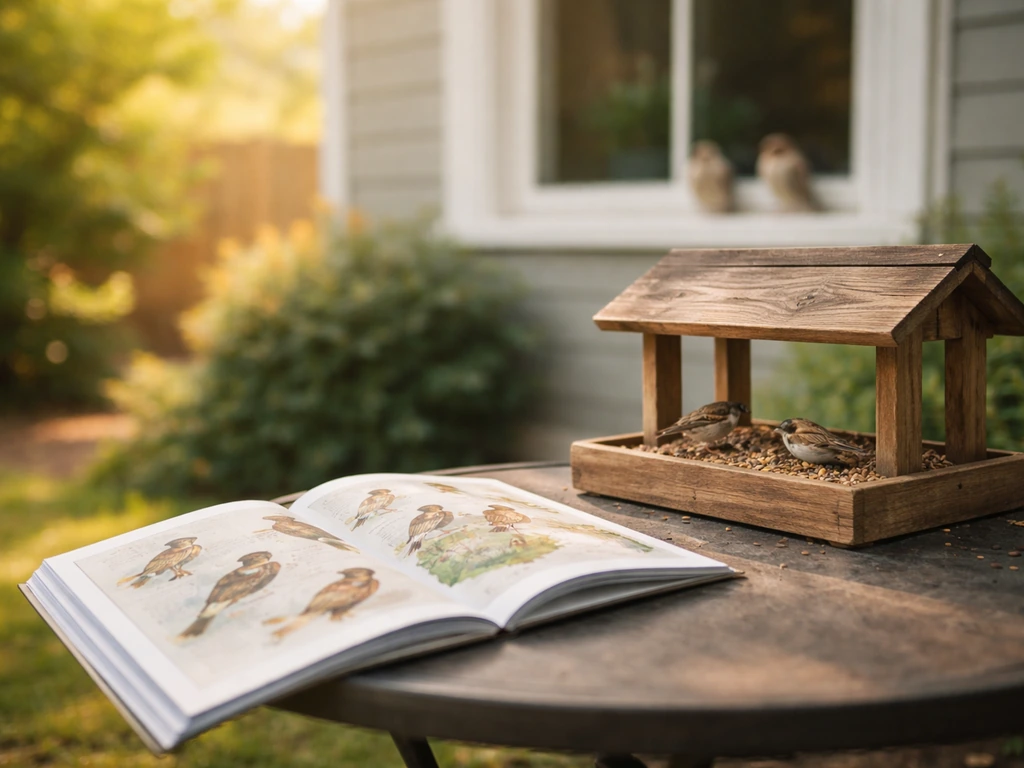
Printable Backyard Bird Guide for Beginners and First IDs
Printable backyard bird guide for beginners: simple ID key, look-alikes, and a ready-to-fill checklist for backyard sigh
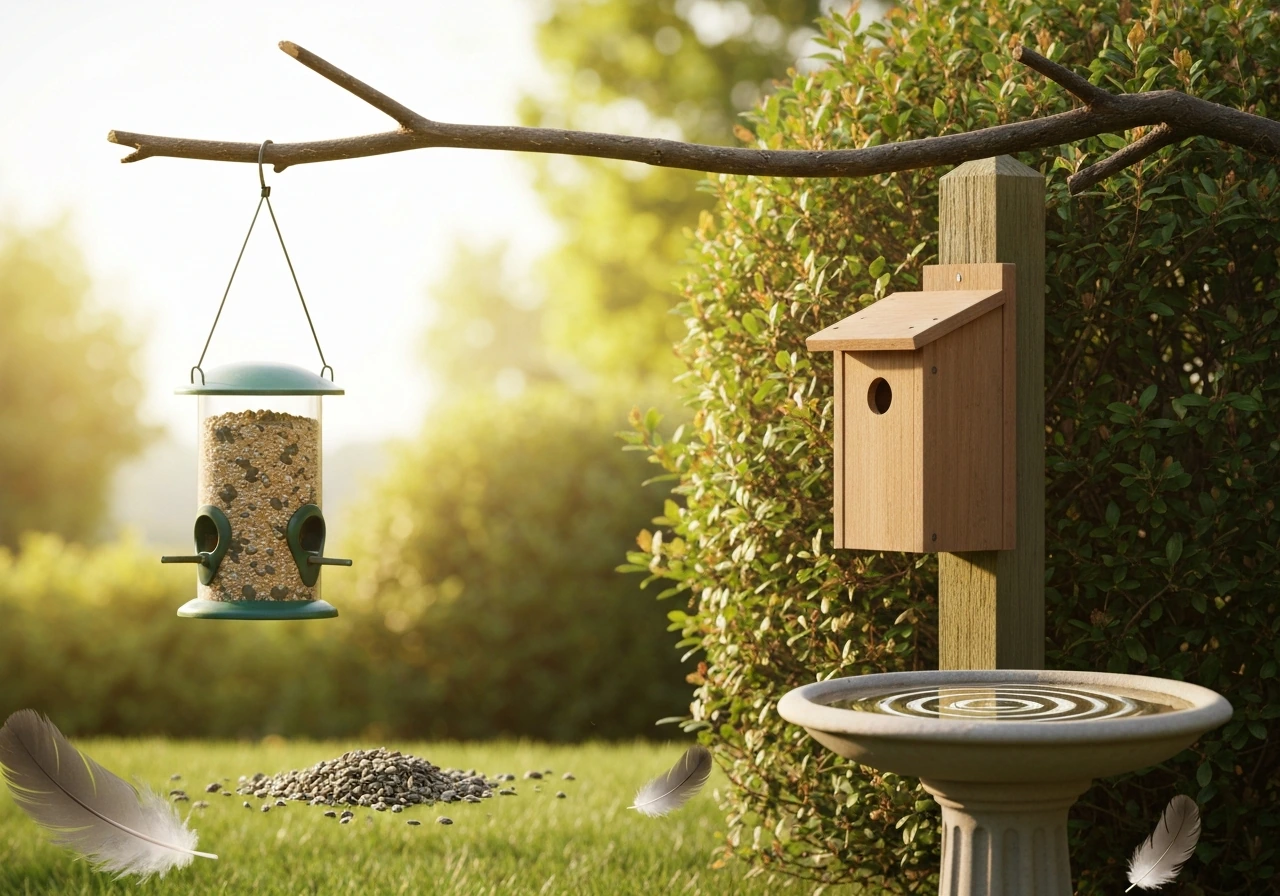
The Backyard Bird Lover’s Guide to Nesting and Feeding
Step by step guide to attract nesting birds with the right feeders, foods, water, safe placement, and beginner tips.
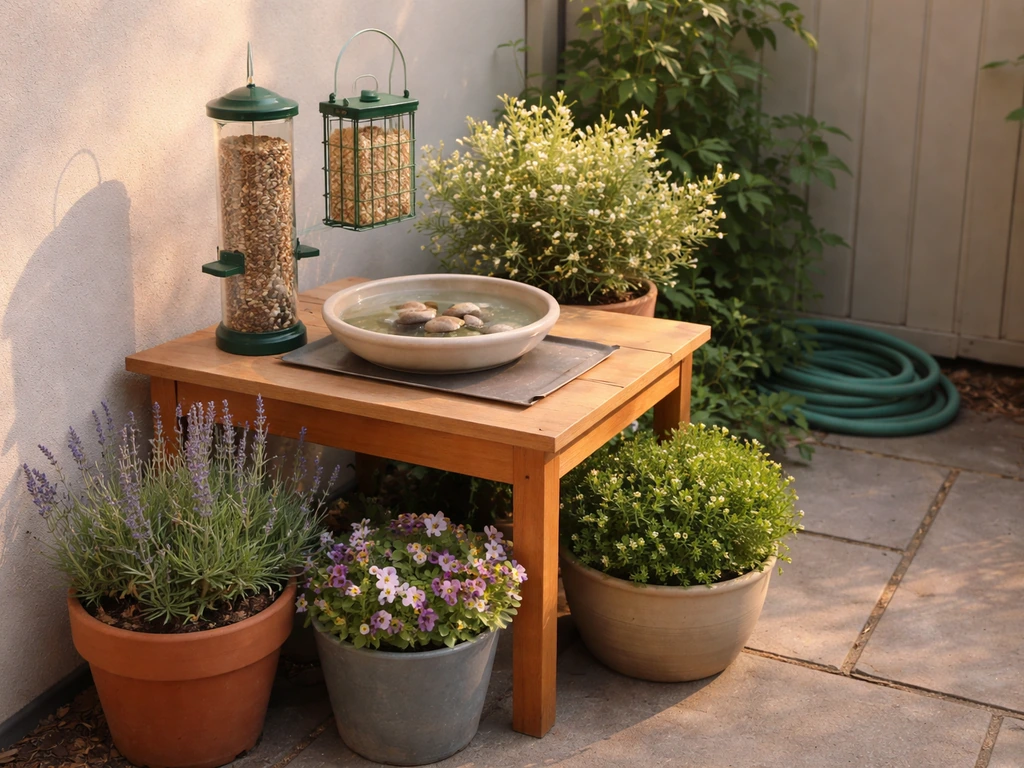
Tiny Bird Garden Tips: A Beginner Guide for Small Spaces
Step-by-step tiny bird garden tips for small patios: safe plants, food, water, shelter, cleaning, and beginner care.