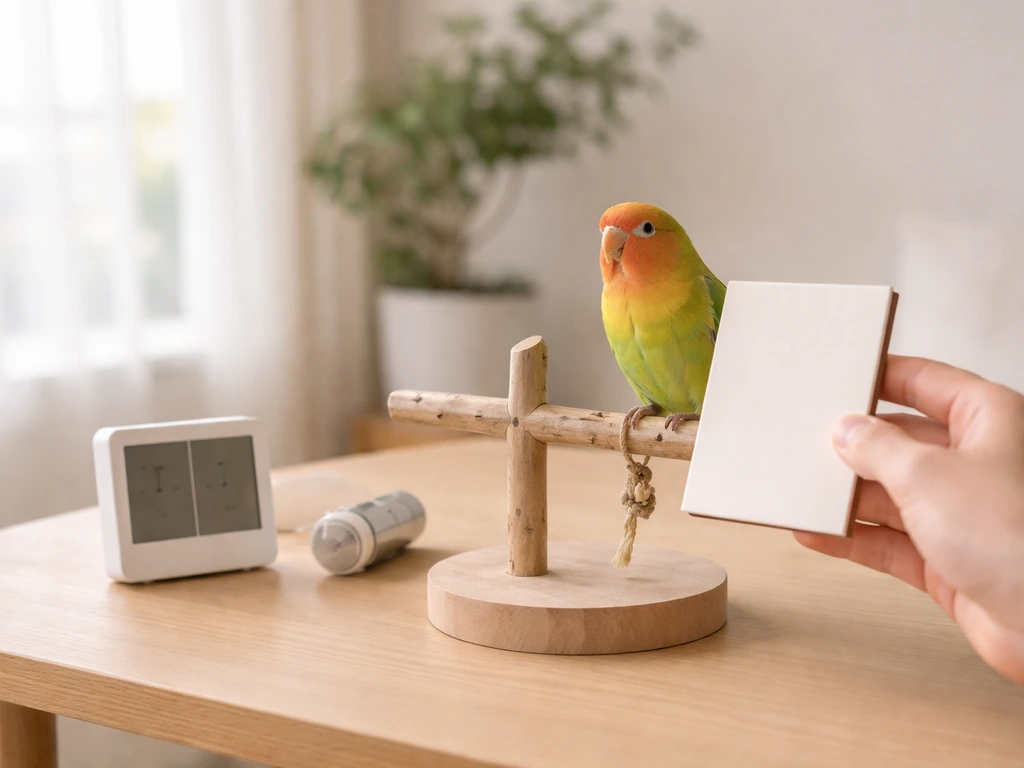
Getting a pet bird right from the start comes down to five things: picking a species that matches your lifestyle, buying the right equipment (not just the cheapest cage), making your home genuinely safe, feeding a balanced diet instead of just seeds, and building a daily routine you can actually stick to. Do those five things well and you'll have a healthy, happy bird for a decade or more. Miss them and you'll spend the next few months troubleshooting problems that were totally avoidable.
Bird Care Guide: Setup, Feeding, Cleaning, and Fixes
Marcus Chen
17 May 2026
Choosing the right beginner bird
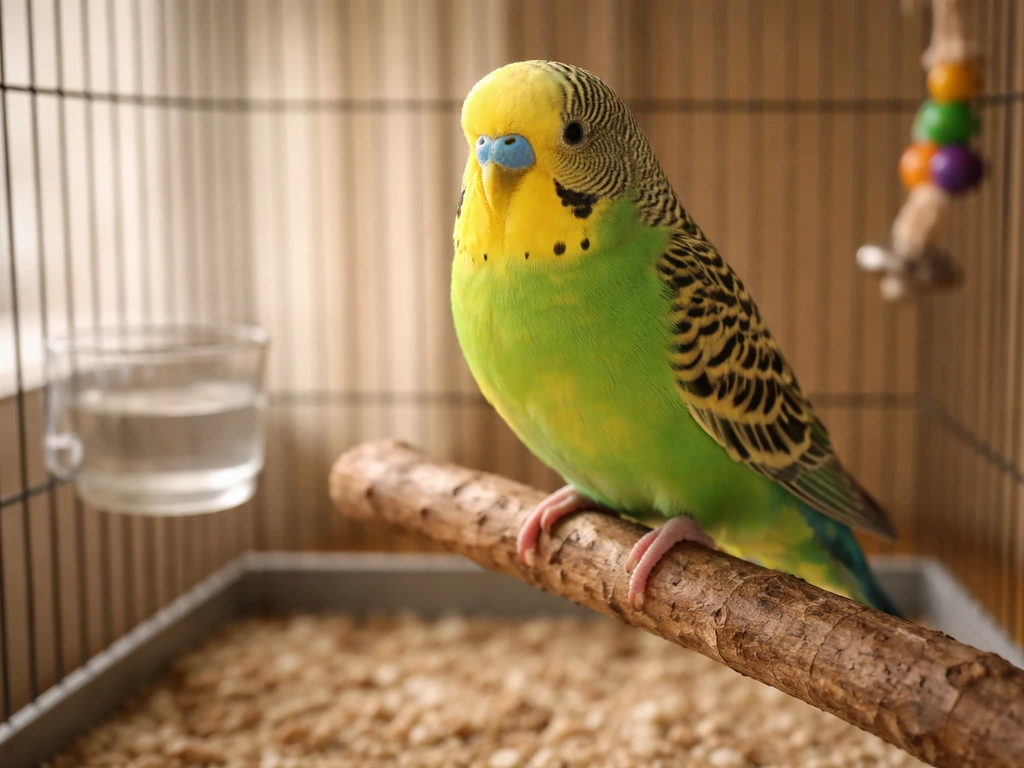
Before you fall in love with a bird at the pet store, think through four practical questions: How much will it cost to maintain long-term? How much daily time can you honestly give it? How large a cage can you fit in your space? And how much noise can you tolerate? The Merck Veterinary Manual flags exactly those four factors as the ones most first-time owners underestimate. Get honest with yourself here and you'll avoid buyer's remorse.
For most beginners, budgies (budgerigars) are the single best starting point. They're small, relatively quiet, genuinely affectionate when socialized well, and live about 10 to 12 years with proper care. PetMD describes them as a pleasant addition for families, though adult supervision is still smart around very young kids. If you want something a step up in personality and interactivity, cockatiels are a natural next choice. They're a bit louder and messier, and their diet needs a little more attention, but they reward the extra effort with impressive personality.
Lovebirds are another popular option, partly because of their ease of maintenance, but there's a catch most beginners don't hear: a single lovebird without sufficient human interaction will suffer socially. The MSPCA-Angell is direct about this: a lone lovebird needs that social interaction replaced by you. If you can't commit to serious daily one-on-one time, get a pair instead of one. Just know that bonded lovebird pairs often become less interested in human handling, so factor that in too.
| Species | Noise Level | Time Commitment | Lifespan | Best For |
|---|---|---|---|---|
| Budgie | Low-moderate | Moderate | 10–12 years | True beginners, smaller spaces |
| Cockatiel | Moderate | Moderate-high | 15–20 years | Beginners wanting more interaction |
| Lovebird | Moderate-high | High (if kept solo) | 10–15 years | Owners with time for daily handling |
My honest recommendation: start with a budgie. The learning curve is gentler, the cost is lower, and you'll build the habits that translate perfectly to any other species later. Once you've got bird keeping dialed in, you can always add a more demanding species to your home.
Essential supplies and budget-friendly setup
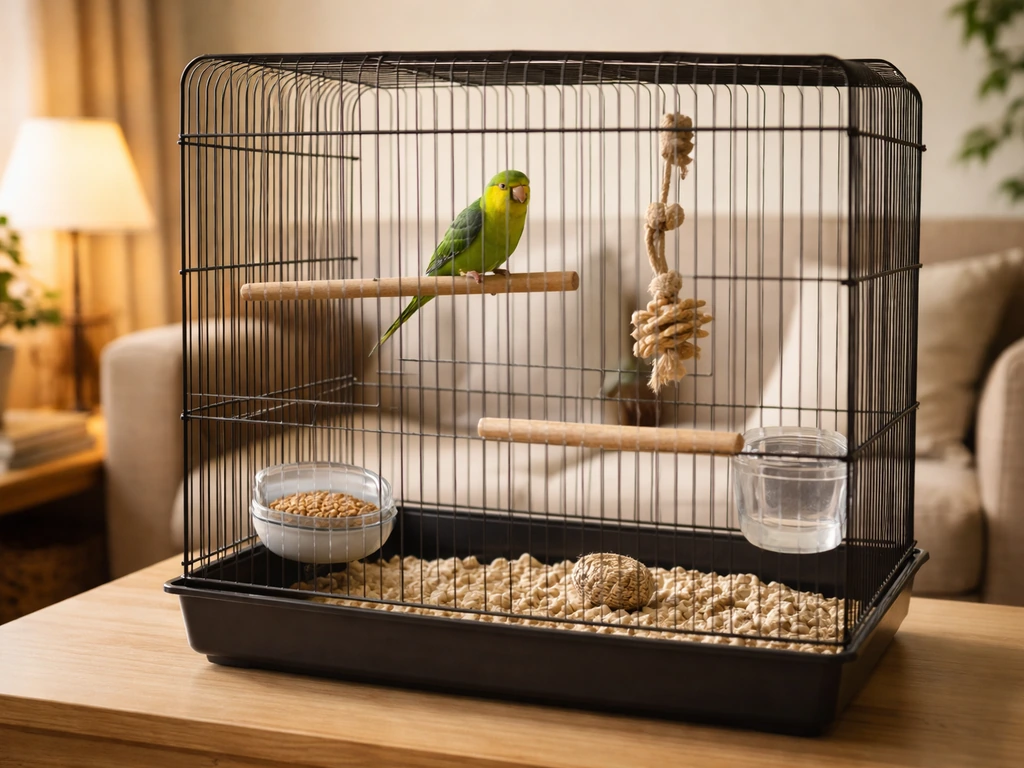
You don't need to spend a fortune, but you do need to spend on the right things. The cage is where most beginners go wrong by buying the largest-looking cage for the cheapest price, without checking bar spacing or build quality. Everything else can be relatively modest.
Here's what you actually need before your bird comes home:
- Appropriately sized cage with correct bar spacing (more on this below)
- At least two or three perches of varying diameter and texture (natural wood is ideal)
- Two food dishes and one water dish: use ceramic, earthenware, or stainless steel — not plastic. Lovebirds in particular will chew through plastic dishes, and the MSPCA-Angell notes ingesting plastic can be lethal
- A pellet-based diet formulated for your species plus fresh produce
- Three to five toys for enrichment, rotated weekly
- A cage cover for nighttime
- A spray bottle for misting (most birds enjoy a light mist bath)
- A basic digital scale to monitor weight weekly — weight loss is often the first sign of illness
- An avian vet contact established before you even bring the bird home
For a budgie setup, you're realistically looking at $150 to $300 for a solid starter kit including the cage. Cockatiels and lovebirds need larger cages, which pushes the initial cost higher. Don't cut corners on the cage or the food dishes. Those two items directly affect your bird's safety and nutrition every single day.
Cage, habitat, and environmental needs
Cage size and bar spacing
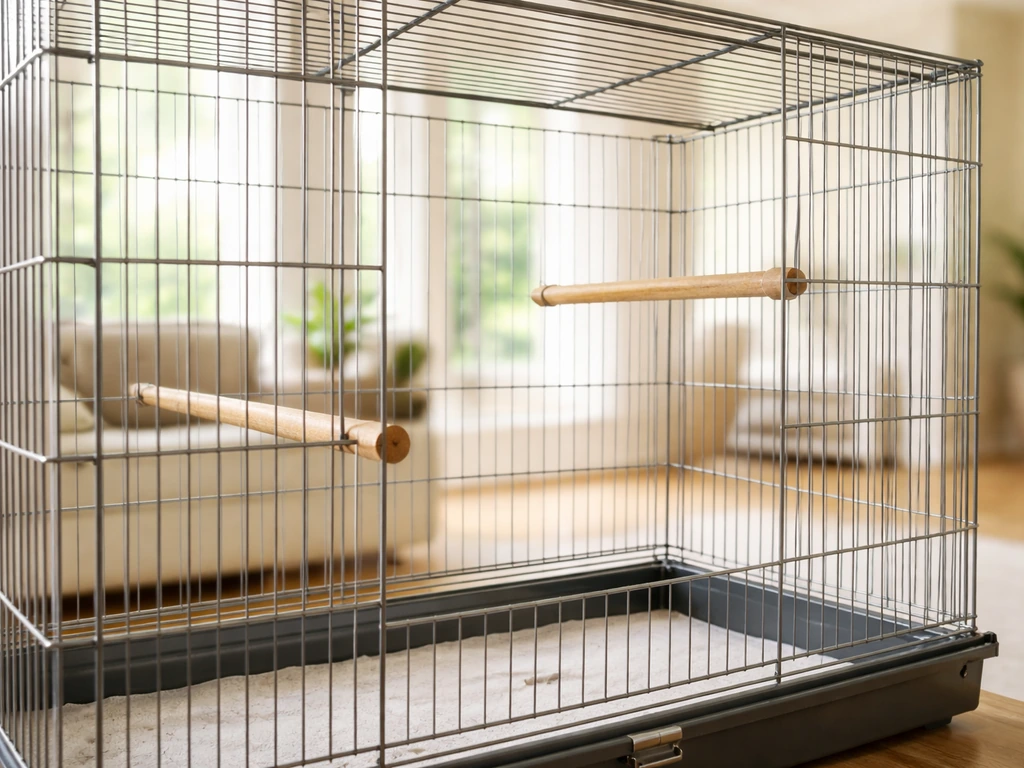
The cage needs to be large enough for your bird to fully extend its wings and move between perches without tail feathers pressing against the bars. Bigger is almost always better. The non-negotiable rule on bar spacing: the bird's head must not be able to fit between the bars. For cockatiels, the AAV specifically recommends bar spacing of no more than half an inch (0.5 inch). For budgies it's similar. A bird that gets its head stuck in the bars can break its neck trying to free itself.
Placement and light cycles
Put the cage somewhere your bird can see family activity during the day, birds are social and isolation in a back room causes stress. Avoid placing it directly in front of a window (temperature swings and direct sun are problematic) or in the kitchen (more on that below). Most birds are diurnal, meaning they follow the day-night cycle closely. The AAV recommends maintaining a consistent light and dark cycle as part of safe husbandry. Birds generally need 10 to 12 hours of sleep per night, with some species needing closer to 12 to 14 hours. A cage cover helps block light and signal nighttime consistently.
Air quality: the hazards most beginners don't know about
This is the section I wish someone had handed me on day one, because the kitchen is genuinely one of the most dangerous rooms in your house for a bird. Bird problems at home often start with avoidable kitchen air hazards, so learn what to do to keep your bird safe. Non-stick cookware coated with PTFE (Teflon and similar fluoropolymers) releases toxic particles and acidic gases when heated above 280 degrees Celsius (536 degrees Fahrenheit). In birds, this can cause sudden death. Cornell University documented PTFE toxicosis causing sudden death in birds following exposure. Never use non-stick pans around birds, even if the kitchen is in an adjacent room with the door open.
The other air hazards that catch beginners off guard include:
- Cigarette, cigar, and pipe smoke — VCA Animal Hospitals notes this can cause chronic bronchitis in birds, and the damage often isn't immediate, which makes it easy to dismiss until it's serious
- Essential oil diffusers and vaporizers — these are not appropriate around birds
- Aerosol sprays: air fresheners, spray disinfectants, insect killers, and household cleaners including bleach, ammonia, oven cleaners, and toilet bowl cleaners
- Beauty products: nail polish remover, hair dye, deodorants, and aerosol hairspray
The practical rule is simple: if it has a strong smell or comes out of a spray can, keep it away from your bird's airspace. Merck Veterinary Manual’s “Household Hazards for Pet Birds” provides examples of common household poisons, including bleach, ammonia, and toilet bowl or oven cleaners, as well as nail polish remover, hair dye, deodorants, rubbing alcohol, and sunscreen If it has a strong smell or comes out of a spray can, keep it away from your bird's airspace.. Run a HEPA air purifier in the room where your bird lives, ventilate well whenever you cook, and just retire any non-stick cookware you own.
Temperature and other environmental safety
Most small parrots do fine in normal household temperatures between 65 and 80 degrees Fahrenheit. Avoid drafts, air conditioning vents blowing directly on the cage, and sudden temperature drops at night. Keep the cage away from ceiling fans when the bird is out of the cage, and make sure windows and mirrors are clearly visible to avoid collision injuries during out-of-cage time.
Daily bird care routine and feeding basics
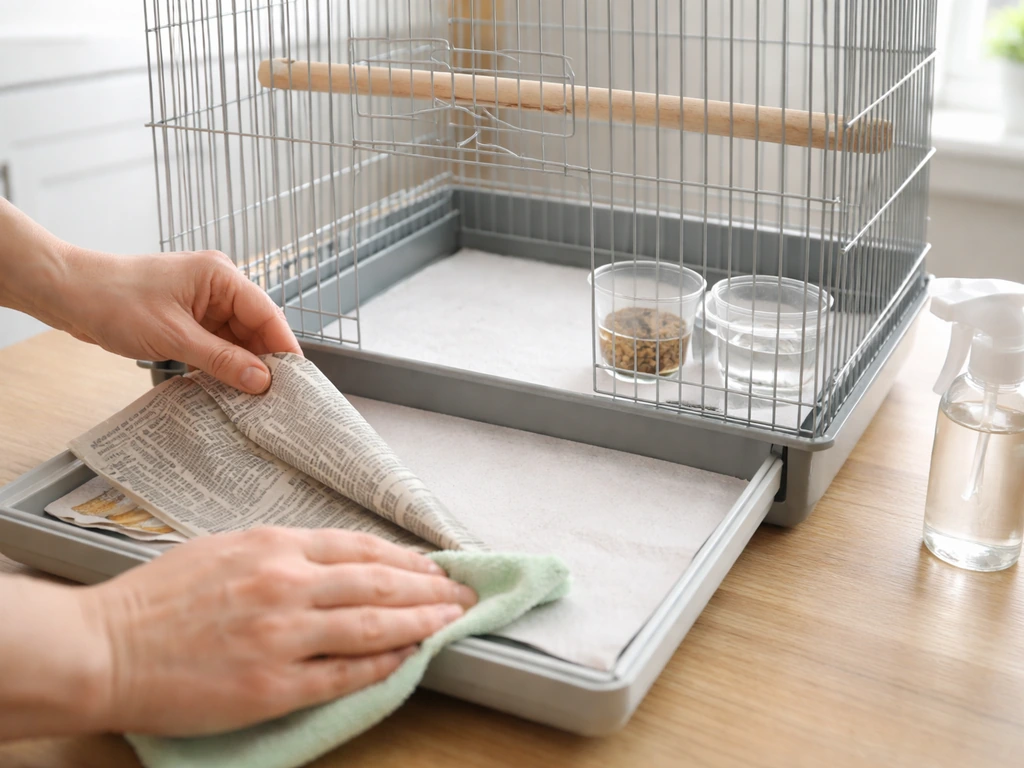
Building a daily routine
Consistency matters more than perfection. A solid daily routine takes about 20 to 30 minutes and covers the core needs. Here's what a practical daily schedule looks like:
- Morning: Remove cage cover, check that your bird is alert and active, refresh water and food dishes
- Morning: Offer fresh vegetables or fruit as the first food of the day while your bird is hungriest
- Midday or afternoon: Out-of-cage supervised interaction time (minimum 1 to 2 hours for most social species)
- Evening: Remove any uneaten fresh food — fresh food left too long spoils and becomes a bacterial hazard
- Evening: Light cleaning of the cage floor; replace cage liner paper
- Nighttime: Cover the cage at a consistent time to maintain the sleep cycle
Weekly, do a more thorough wipe-down of perches, cage bars, and dish corners. Purdue University's veterinary guidance specifically calls out food and water bowl corners as prime spots for bacterial buildup. At least once a month, do a full deep clean of the entire cage with a bird-safe disinfectant, rinse thoroughly, and let it fully dry before returning your bird.
What to feed and in what proportions
The biggest nutritional mistake beginners make is feeding a seed-only diet. If you're looking for bird care for beginners, start by focusing on a balanced diet rather than a seed-only approach. Seeds are high in fat and low in essential nutrients. The Merck Veterinary Manual is direct about this: seeds should not make up most of a pet bird's diet. For small parrots like budgies, cockatiels, and lovebirds, blank" rel="noopener noreferrer">aim for roughly 40 to 50 percent high-quality pellets, 30 to 40 percent seed mix, 10 to 15 percent vegetables, and 5 to 10 percent fresh fruit. PetMD recommends cockatiels get an even higher pellet ratio, with nutritionally complete pellets making up at least 60 to 70 percent of their diet.
Fresh, clean water should always be available. Change it every day, not just when it looks dirty. Birds drop food and droppings into water dishes faster than you'd expect.
Foods that are toxic to birds
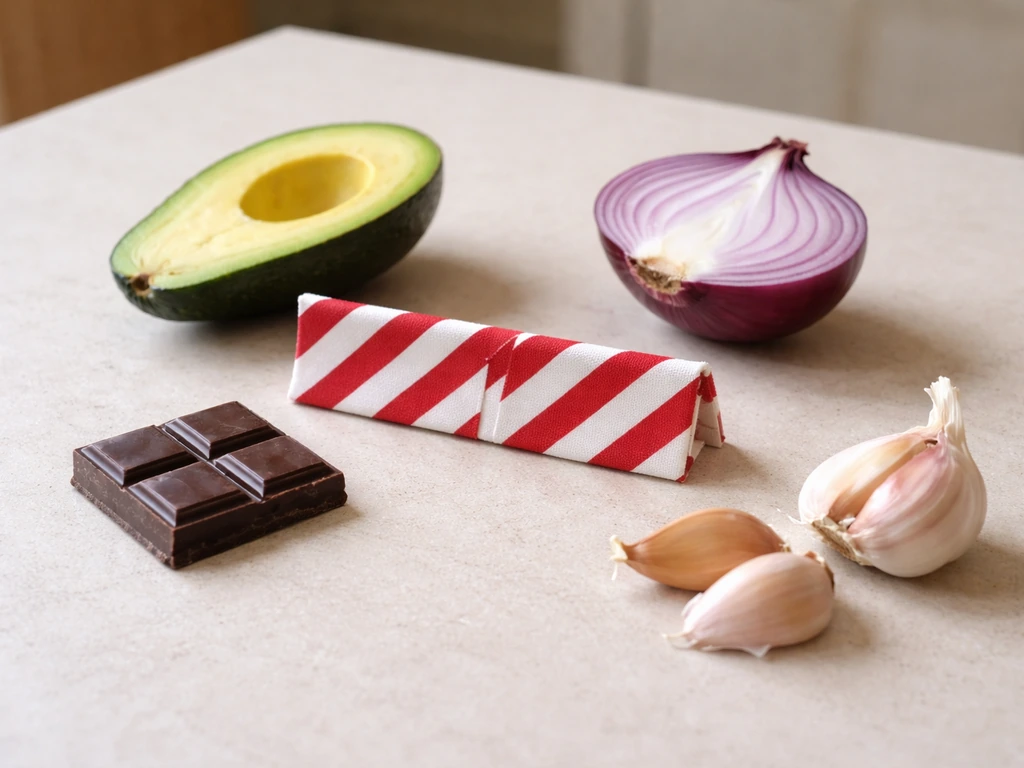
Several common human foods are genuinely dangerous for birds. Avocado is toxic to caged birds. Chocolate contains theobromine and caffeine, both of which are harmful. Onions and garlic can cause severe anemia through red blood cell damage. Caffeine in any form is on the avoid list too. Keep all of these entirely out of reach, and be cautious with any "people food" until you've verified it's safe for your specific species.
Enrichment, handling, and keeping your bird mentally healthy
A bored bird is a stressed bird, and a stressed bird gets destructive, loud, and eventually sick. Enrichment isn't a luxury, it's part of basic care. The AAV frames it the same way, and their enrichment guidance emphasizes target training as one of the best tools for both mental stimulation and building your relationship with your bird.
Target training: the best place to start
Target training uses positive reinforcement to teach your bird to touch a target (like the end of a chopstick or a dedicated training stick) with its beak. You mark the exact moment it touches the target with a click or a mouth click, then immediately reward with a small treat. The AVSAB is clear that positive reinforcement training never involves fear, force, or coercion. Start with five-minute sessions once or twice a day. Most budgies and cockatiels pick this up within a few days, and once the concept clicks, you can use the same method to teach step-up, recall, and other useful behaviors.
Practical enrichment ideas
- Rotate three to five toys weekly so the cage always feels novel — foraging toys that hide food are especially engaging
- Offer foraging opportunities by wrapping food in paper or hiding pellets in a small cup of shredded paper
- Provide natural wood perches of varying diameters to exercise foot muscles
- Allow supervised out-of-cage exploration time daily in a bird-proofed room
- Mist baths two to three times per week (most birds love them and they support feather health)
- Play soft music or bird-safe audio when you're away — complete silence is stressful for social species
Handling should be calm and consistent from day one. Let a new bird settle for three to five days before you start pushing interaction. Move slowly, speak quietly, and always let the bird choose to step up rather than forcing contact. Birds that feel they have control over interactions are far more likely to become genuinely tame.
Common beginner mistakes and how to fix them fast
Most beginner mistakes follow a predictable pattern. Here are the ones I see most often and what to do about each one right now: If you spot patterns in your daily routine, this bird problems and solutions guide can help you troubleshoot issues faster and spot what to fix first.
| Mistake | Why It's a Problem | Fix It Now |
|---|---|---|
| Seed-only diet | High fat, low nutrients lead to deficiency and shortened lifespan | Introduce pellets by mixing with seeds, gradually increasing the pellet ratio over two to four weeks |
| Cage too small or wrong bar spacing | Stress, injury, and escape risk | Measure bar spacing against species requirements; upgrade the cage if it doesn't meet minimum size guidelines |
| Non-stick cookware still in use | PTFE fumes can kill birds rapidly | Replace non-stick pans with stainless steel or cast iron immediately |
| Fresh food left in the cage all day | Spoiled food causes bacterial infections | Remove fresh food after two to three hours, especially in warm weather |
| Skipping the avian vet baseline visit | Illness goes undetected until it's advanced — birds hide symptoms | Book a wellness visit within the first month; establish a vet relationship before you need it urgently |
| Neglecting daily cage floor cleaning | Droppings and old food create a bacterial and fungal environment | Change cage liner paper every single day; deep clean monthly |
| Inconsistent sleep schedule | Disrupted light cycles cause chronic stress and hormonal issues | Cover the cage at the same time each evening to guarantee 10 to 12 hours of dark and quiet |
| No enrichment or routine handling | Boredom leads to feather destructive behavior and aggression | Start target training today; rotate toys weekly and commit to daily out-of-cage time |
Signs your bird needs a vet, not just a routine adjustment
Birds instinctively hide illness, so by the time symptoms are obvious, things are often serious. The AAV lists the early warning signs that warrant a vet call: labored breathing or abnormal respiratory sounds, eating or drinking significantly more or less than usual, a fluffed-up posture, and sleeping much more than normal. If you notice any of these, don't wait to see if it improves. Get to an avian vet the same day.
If you want to go deeper on species-specific care, the routines for budgies specifically have their own nuances worth exploring, and the broader topic of bird keeping for beginners covers the mindset and lifestyle considerations that set experienced bird owners apart from frustrated ones. The core advice here applies across the board, though. Get the fundamentals right first, and the rest gets a lot easier.
Your bird care checklist
- Choose a beginner-appropriate species based on your honest time, space, and noise tolerance
- Buy a properly sized cage with correct bar spacing for your species before the bird comes home
- Replace all non-stick cookware and remove aerosol products from your bird's airspace
- Set up ceramic or stainless steel food and water dishes — no plastic
- Start a pellet-forward diet and transition away from seeds as the primary food
- Change cage liner paper daily and deep clean the cage monthly
- Establish a consistent sleep schedule with a cage cover every night
- Begin target training within the first week using positive reinforcement only
- Rotate toys weekly and provide foraging opportunities
- Book a baseline wellness visit with an avian vet within the first month
- Know the early illness signs and act on them the same day they appear
FAQ
Can I move my bird’s cage around the house, or should it stay in one place?
A good rule is to decide whether your bird will eat, bathe, and sleep in the same spot every day. If you must move the cage, do it gradually over several days (small shifts) and keep the background routine stable, so the bird is not adjusting both lighting and location at once. Also, avoid moving the cage right before bedtime, since sudden schedule changes can disrupt sleep.
How often should I clean food and water dishes, and what’s the easiest way to avoid bacterial buildup?
Use the “weekly corners” cue: rinse and scrub dish corners at least once per week, even if the dishes look clean, because buildup can hide there. For daily use, wash with hot water and a dedicated bird-dish brush, then fully air-dry. Moisture left behind in crevices can quickly lead to slime or persistent odor.
What if my household is active at night, can my bird still get enough sleep?
Yes, but control the triggers. During the day, offer out-of-cage time with supervision, then darken and cover the cage before you would normally go to sleep to keep a consistent light and dark cycle. Be extra cautious if your household is loud late at night, since constant interruptions can reduce sleep duration even when you think the bird is “off.”
Is it okay to give extra seeds as treats, and how do I keep the diet balanced?
Don’t judge “seed as a treat” the same way for every species, because pellets are typically the backbone of balanced nutrition. If you use seeds for training or bonding, keep them small portions and count them toward the daily seed limit, otherwise the diet drifts back into a seed-heavy pattern. For budgies, cockatiels, and lovebirds, aim to keep pellets as the primary item.
What should I do if I already bought a cage and I’m unsure about bar spacing?
If your bird’s head can fit between bars, it is not a safe cage, even if the bird seems fine today. Replace the cage rather than “making it work,” because growth happens quickly and accidents during climbing or fright are when bar spacing issues become dangerous. For cockatiels, do not exceed the half-inch bar spacing guidance.
Can I use common household disinfectants to deep clean the cage?
You generally do not want to disinfect with household cleaners. Instead, use a bird-safe disinfectant, rinse thoroughly, and let everything dry completely before the bird returns, since residue can irritate airways. If you smell strong chemical odor after rinsing, keep rinsing until the odor is gone.
Are air fresheners, candles, or room sprays safe near my bird?
Yes, but treat it like a health risk, not a preference. If you notice changes like increased coughing, open-mouth breathing, repeated sneezing, or trouble eating while using fragrances or sprays nearby, stop the product immediately and improve ventilation. Airborne irritants can worsen quietly before obvious illness shows up.
What’s the safest way to manage temperature and airflow for my bird?
Avoid sudden temperature drops, and don’t rely on the thermostat alone. Birds can be affected by direct airflow from vents and drafts, so place the cage where it is not in the path of HVAC or ceiling fans. If you need a workaround, use gentle indirect climate control rather than moving the bird into a drafty corner.
How do I know if target training is stressing my bird, and what should I do?
Start training when the bird is comfortable in the home, usually after a short settling period, and keep sessions very brief. If the bird freezes, backs away, or vocalizes in an agitated way, end the session early, use a smaller reward, and resume later. Consistency matters more than length, five minutes once or twice daily is often enough.
If I want a single lovebird, what does “enough interaction” actually look like in practice?
A single lovebird can become distressed without consistent human interaction, but the “fix” is not just feeding and cage cleaning. If you choose one lovebird, you must plan daily dedicated one-on-one time and enrichment that replaces the social component. If you cannot, a pair is usually the better setup, but note bonded pairs may be less interested in handling.
What early symptoms mean I should call an avian vet immediately?
Yes, because illness can look subtle at first. If you see early warning signs like labored breathing or abnormal respiratory sounds, major changes in eating or drinking, fluffed posture, or unusually long sleep, contact an avian vet the same day. Also, take note of how much the bird has eaten and whether droppings and breathing pattern changed, since that helps the vet triage faster.
How can I do a quick bird-proofing sweep before I let my bird out of the cage?
Begin by removing high-risk items from the bird’s reach and airspace, then create a “safe play zone” for out-of-cage time. Prioritize hazards first, kitchen air hazards, candles or sprays, toxic foods, and collision risks with mirrors or windows. After that, add enrichment so the bird stays active in the safe area instead of exploring dangerous spaces.
Next Article
Bird Problems and Solutions: Fix Common Issues Fast
Quick triage for common bird problems, from stress and noise to diet and setup fixes, plus health red flags.