A 'bird dish where you cover your head' most likely refers to one of three real-world setups: a domed or covered feeding dish placed inside or outside a bird's habitat, a handler technique where you gently cover a bird's head with a breathable cloth to calm it during feeding or handling, or a DIY contraption combining both ideas. The most common version for pet bird owners is a covered dish or dome-style feeder that keeps food clean and reduces mess. Which one you're dealing with changes everything about how to set it up safely, so let's figure out which version you actually have before diving in.
Bird Dish Where You Cover Your Head: Safe Setup Guide

Marcus Chen
28 Apr 2026
Which setup do you actually have?
The phrase is genuinely ambiguous, and I've seen people use it to describe pretty different things. Here are the three main possibilities and how to tell them apart.
Option 1: A covered or dome-style feeding dish
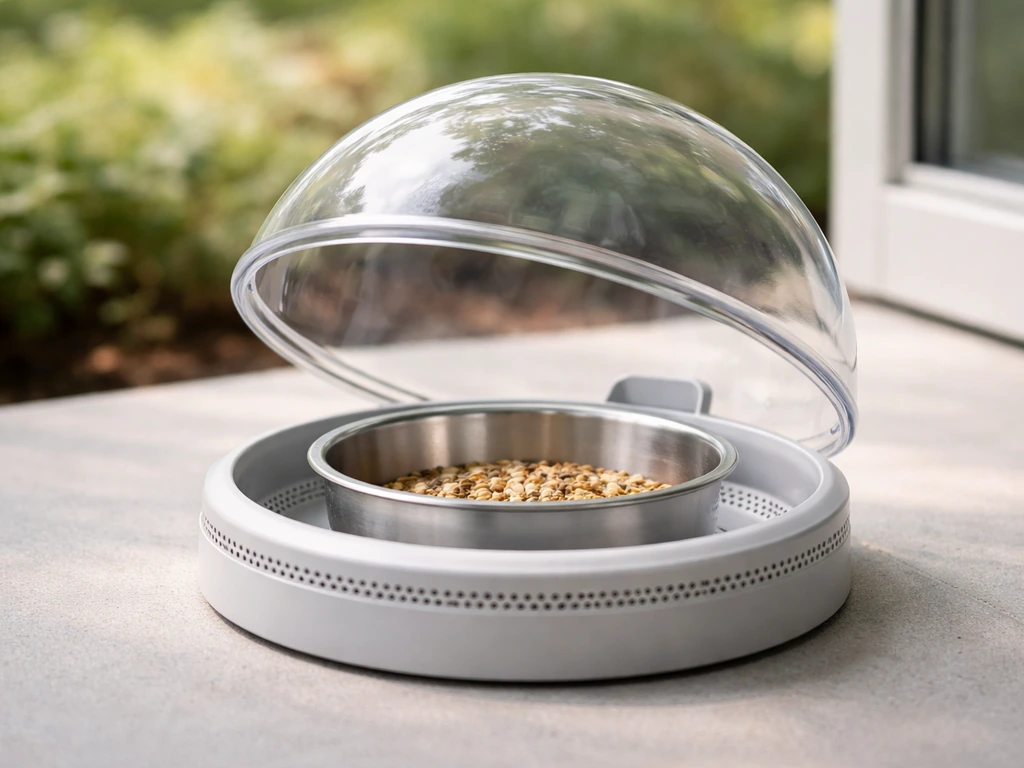
This is the most common interpretation. You have a food tray or bowl with a dome or lid placed over it, like the clear dome feeders sold for wild birds (one popular version has a 7-inch tray under a 10-inch dome cover). The dome sits above the food, protecting it from droppings, debris, and moisture while still letting the bird access the food from the sides or through an opening. For pet birds inside cages, this could also look like a locking bowl mounted to the cage wall with a partial cover or hood attached above it.
Option 2: Head-covering as a handling or calming technique
In avian husbandry and veterinary handling, gently draping a lightweight breathable cloth over a bird's head is a recognized technique for reducing panic during restraint or close-contact situations. The logic is that blocking visual stimuli, especially looming overhead movement, reduces the bird's threat perception. This is sometimes used by handlers during feeding of nervous or recovering birds. If someone described 'covering your head' in this context, they probably meant covering the bird's head, not yours.
Option 3: A DIY or novelty feeder with a head-cover element
There's a niche category of novelty or DIY bird feeders shaped like figures, decorative objects, or contraptions where a cover or hood element sits above or around the feeding area. A chirpy top bird wine pourer is another example of a novelty feeder style with a decorative head or cover element that may change how birds approach and access the food. These are less common for indoor pet birds but do exist. If you found this via a photo on social media or a craft site, this might be what you're looking at.
How to identify your exact setup
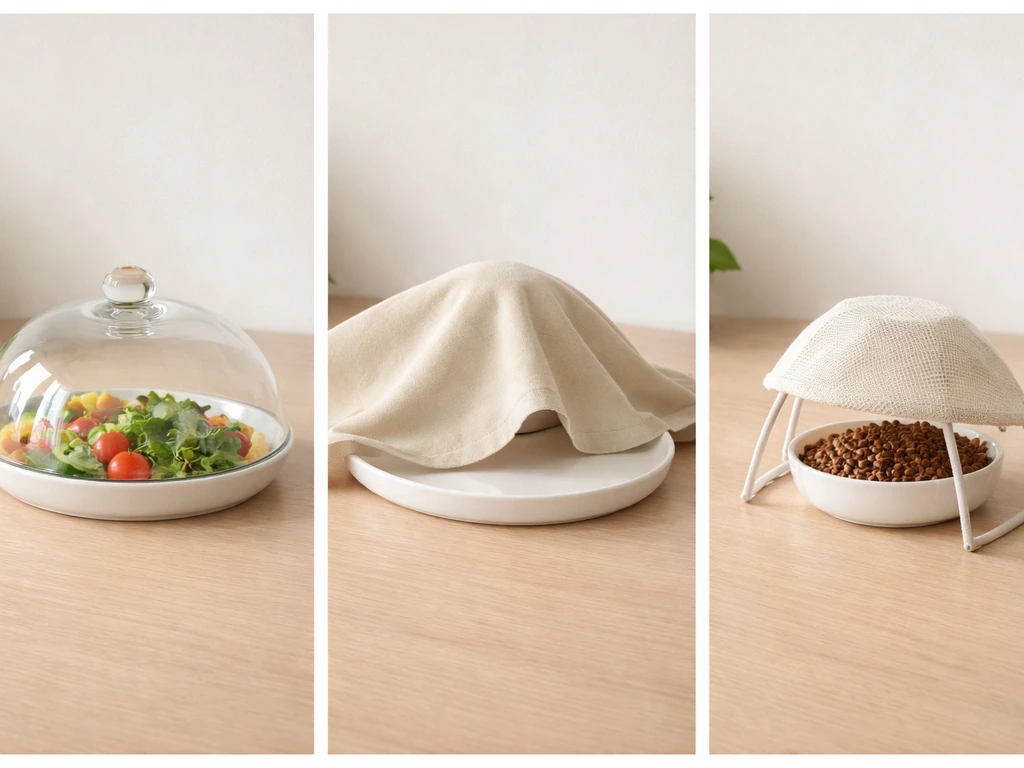
- If there's a transparent or solid dome/lid sitting above a flat tray or bowl: you have a covered dish setup (Option 1).
- If someone is describing what to do with their hands or a cloth near the bird during feeding or handling: you're looking at a head-covering technique (Option 2).
- If you have a decorative or sculptural object with a food compartment and some kind of canopy or cap: it's probably a novelty feeder (Option 3).
- When in doubt, take a photo and compare it to manufacturer listings for dome feeders or locking cage bowls, which will usually clarify the design intent immediately.
When head-covering actually helps, and when it backfires
Here's where I see beginners go wrong the most: they assume that covering a bird's head or placing a cover nearby is automatically calming. It isn't. Whether it helps depends entirely on how it's done and what the bird's baseline stress level already is.
When it helps
- A dome cover over a food dish genuinely reduces fecal contamination of food, especially in cage setups where perches are positioned above the bowl.
- A lightweight breathable cloth used to cover a very stressed or injured bird's head during restraint can reduce panic responses by blocking the looming visual stimuli that trigger fear reactions.
- Dome covers on outdoor feeders protect seed from rain and droppings, which directly reduces mold and contamination risk.
- For shy or easily startled pet birds, a partially covered feeding nook (a three-sided hood rather than a full cover) can create a sense of security during meals.
When it makes things worse
- Using a solid, non-breathable cover over a bird's head, even briefly, is dangerous. It can cause overheating, panic, and oxygen restriction.
- Suddenly placing any cover near a bird that hasn't been desensitized to it will likely trigger a fear response, not calm it. Birds track overhead movement as a predator threat, so a dome or cloth approaching from above can cause cowering, trembling, or lunging.
- A cover that traps moisture inside the feeding area creates exactly the contamination problem you're trying to prevent: wet seed molds fast and bacterial growth accelerates.
- Covering the full feeding area so the bird has to push past the cover to access food adds a physical and psychological barrier that discourages eating, especially in birds that are new to a space or already under stress.
The stress signs to watch for: raised head feathers, dilated pupils, cowering or crouching, lunging, increased alarm calls, or a complete refusal to approach the food. If you see any of these after introducing a cover element, back off and reintroduce it slowly.
What makes a safe covered dish setup
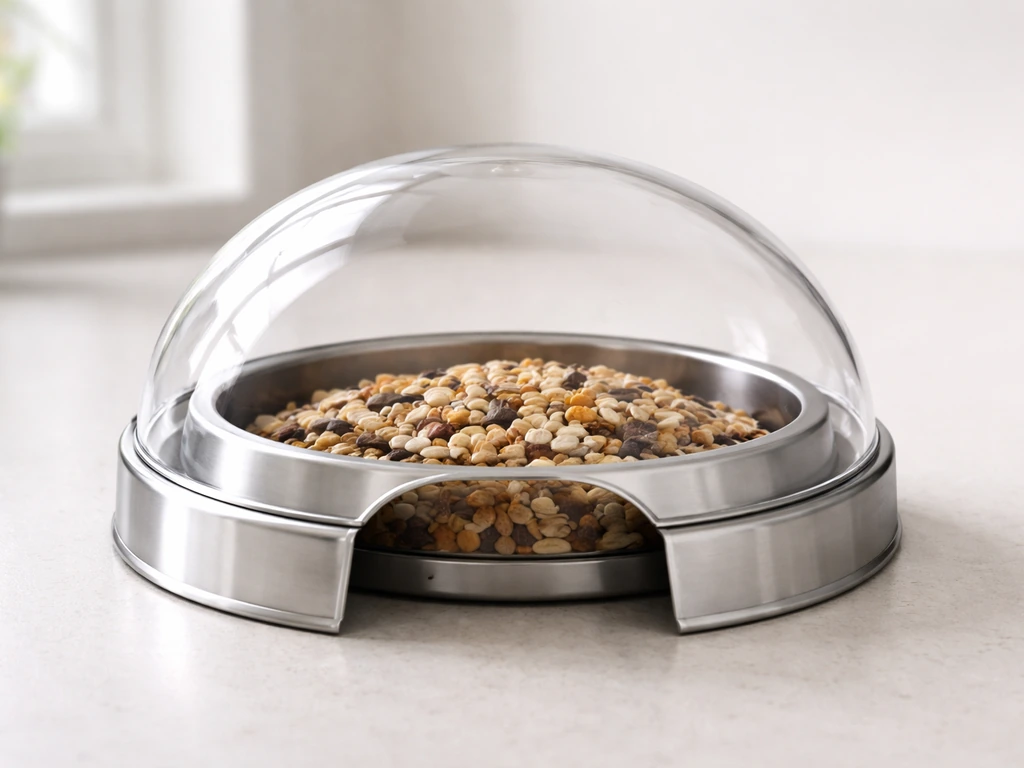
Whether you're using a dome feeder, a hooded cage bowl, or a DIY cover, the physical requirements are the same. Cut corners on any of these and you'll either stress the bird or make its food unsafe.
Materials
- Stainless steel for the bowl itself: it doesn't harbor bacteria in scratches the way plastic does, it's easy to disinfect, and it won't leach anything into food or water. Locking stainless steel bowls designed to mount to cage bars are the gold standard for indoor pet birds.
- Clear acrylic or polycarbonate for dome covers: lets you see food levels without disturbing the bird, doesn't trap heat the way dark opaque covers do, and is easy to wipe clean.
- Avoid galvanized metal (zinc toxicity risk), painted surfaces that could chip, and porous ceramic that's difficult to fully disinfect.
- If using a cloth for head-covering during handling: 100% cotton, loosely woven, never synthetic fleece or microfiber that could restrict airflow.
Ventilation and access
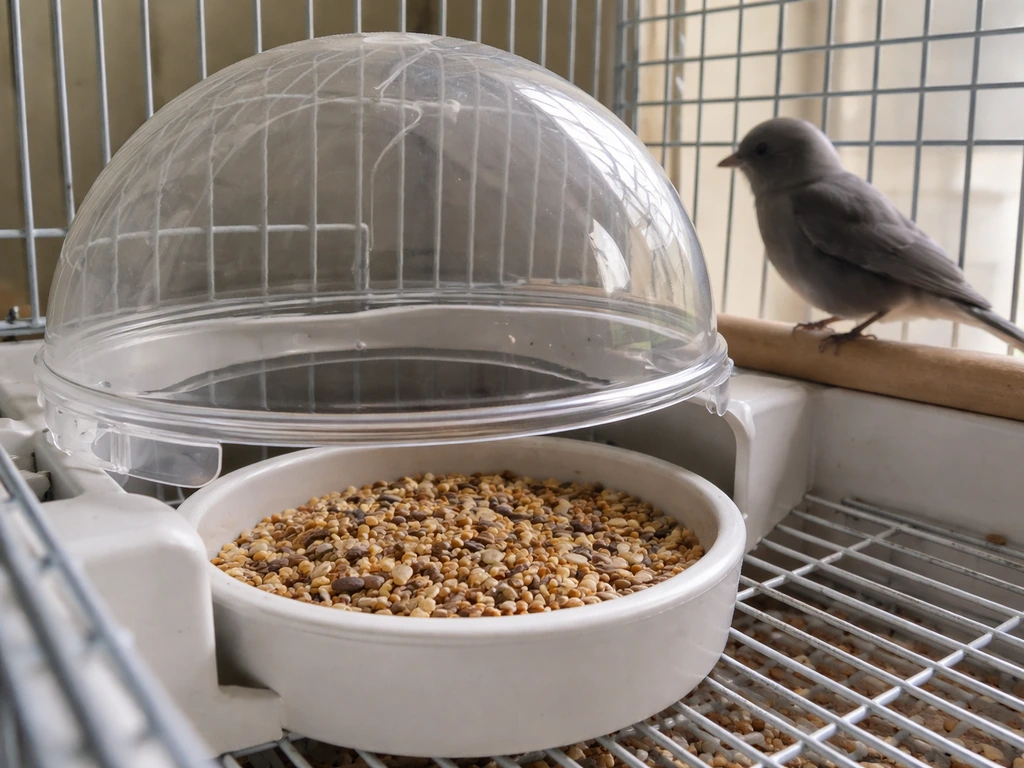
- A dome or cover should sit at least 2 to 3 inches above the food surface so air can circulate freely and moisture doesn't condense under the cover.
- The opening for the bird to access food must be wide enough that the bird doesn't have to squeeze, contort, or feel trapped when eating. For small birds like budgies or cockatiels, a side opening of at least 3 to 4 inches wide is practical.
- Never fully seal a cover over a food dish inside a cage. The goal is protection from above, not an enclosed box.
- If the cover has a drainage issue (rain enters from the sides on outdoor feeders), add drainage holes or switch to a dome with a wider overhang.
Placement inside the cage
- Mount feeding bowls at mid-cage height, not at the very bottom where fecal matter accumulates and not at the very top where the bird can't comfortably perch nearby.
- Position the bowl away from perches that are directly above it, or use a covered/hooded bowl specifically to prevent droppings falling into the food.
- Place the bowl in a spot the bird can approach from the side, not from above. Birds feel more secure landing beside a food source than descending straight down onto it.
- Keep the covered dish away from cage corners where air circulation is lowest and moisture is most likely to build up.
How to set it up and use it today: step by step
- Choose your dish and cover: For an indoor pet bird, get a stainless steel locking bowl that mounts to the cage bars plus a clear acrylic hood or dome cover sized to sit 2 to 3 inches above the bowl rim. For a dome-style outdoor or aviary feeder, verify the tray diameter (a 7-inch tray under a 10-inch dome is a common and functional ratio).
- Wash everything before first use: Scrub the bowl and cover with hot soapy water, rinse thoroughly, then disinfect with a dilute bleach solution (roughly 1 part household bleach to 30 parts water). Let it sit for 10 to 15 minutes, then rinse multiple times with plain water and air dry completely. Never put a damp bowl back into service.
- Mount the bowl at mid-cage height, on the side of the cage the bird already gravitates toward. Lock it in place so the bird can't dislodge it and knock food to the floor.
- Position the dome or cover above the bowl before introducing it to the bird. Don't try to place it over existing food with the bird already eating nearby. The sudden overhead movement will trigger a fear response.
- Let the bird observe the new setup from a distance for 10 to 20 minutes before approaching. If your bird is particularly skittish, leave the cover off for the first day and introduce it the next day once the bowl itself is familiar.
- Place food in the bowl and step back. Observe from a distance. Don't hover. Quick movements and looming presence near the feeding area are the most common reasons birds refuse to approach a new setup.
- If using a cloth head-covering technique during handling: use a small, loosely woven cotton cloth, approach from the side not from above, drape it gently, and never leave it in place for more than a minute or two. This is a situational tool for restraint, not a routine feeding aid.
Keeping the setup clean and contamination-free
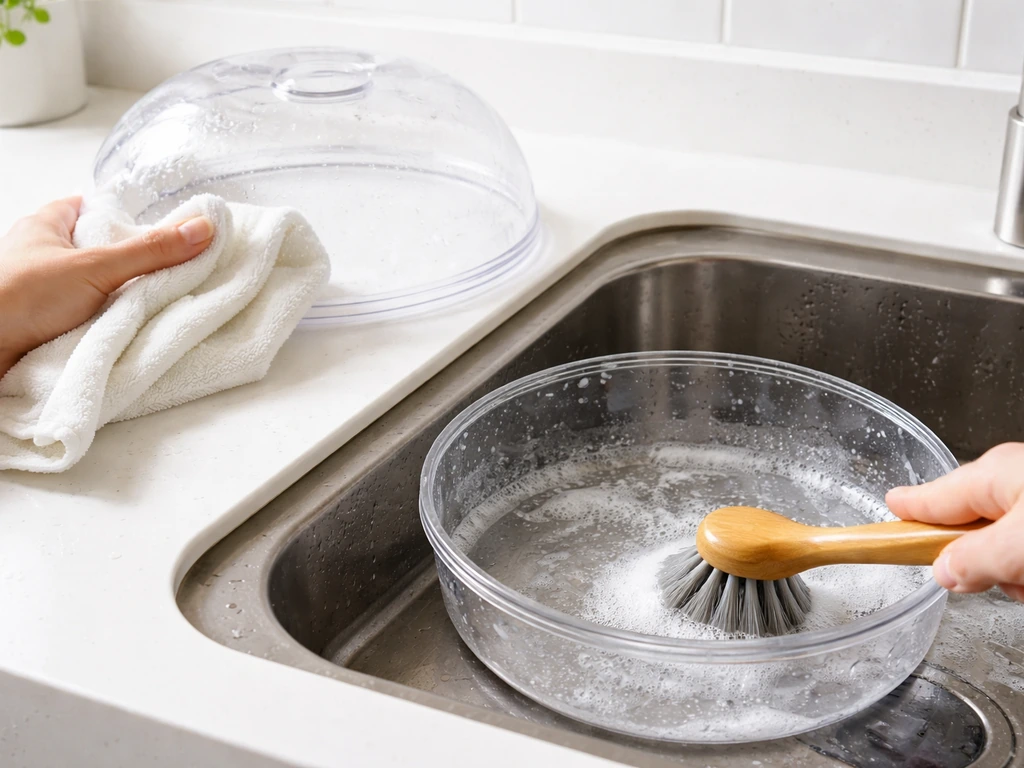
This is where most people underestimate the work. A covered dish doesn't clean itself, and the microenvironment under a dome can actually concentrate bacteria and mold faster than an open bowl if you're not staying on top of it. Mississippi State Extension recommends cleaning bird feeders with warm, soapy water and soaking them in a 9:1 water-to-bleach solution for 10 minutes.
Daily routine
- Remove and rinse the food bowl every day. Hot water and a stiff brush are the minimum. Dump any uneaten food, especially soft foods or anything moist.
- Wipe the inside of the dome or cover daily with a damp cloth. Check for condensation or visible residue on the inner surface.
- Replace food with fresh portions. Don't top off old food with new; dump and refill.
Weekly deep clean
- Disinfect the bowl and cover once a week minimum. Use a bird-safe disinfectant or a dilute bleach solution.
- Allow the disinfectant the full contact time specified on the label, typically 5 to 15 minutes depending on the product. Don't cut this short; it's the contact time that kills pathogens, not just the wetting.
- Rinse aggressively with plain water multiple times. Birds can and do ingest disinfectant residue from incompletely rinsed bowls, and that residue causes real harm.
- Dry completely before returning to the cage. A wet bowl under a dome is a perfect mold environment.
Contamination red flags to watch for
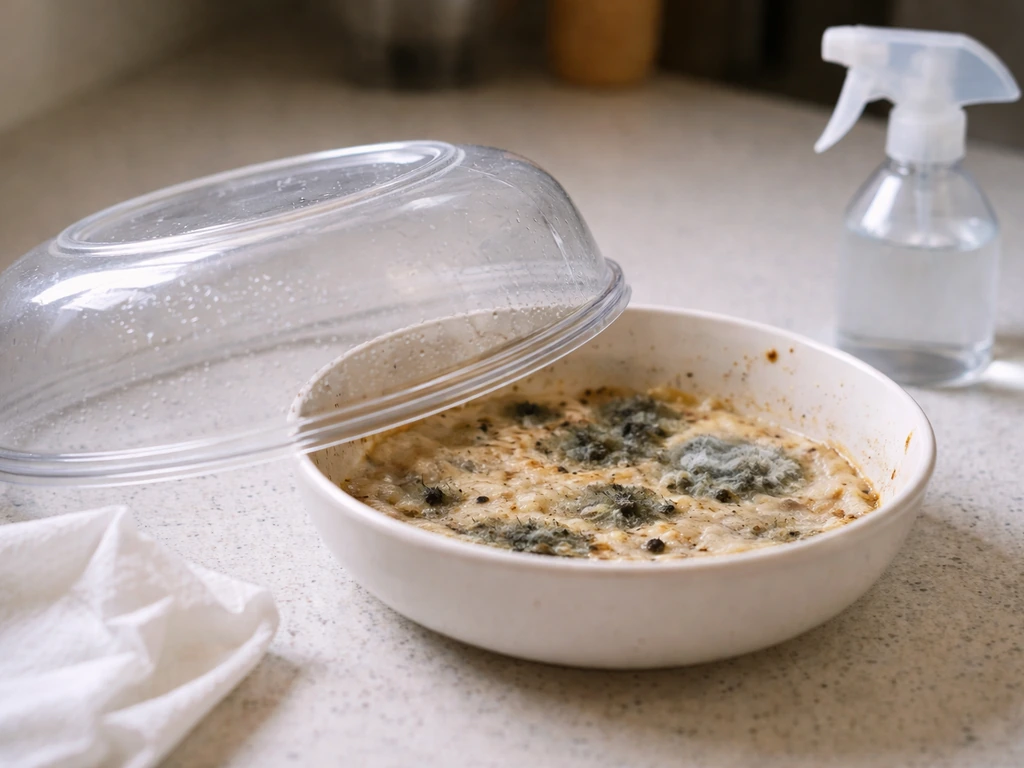
- Any visible mold or dark spots on food or the bowl surface: throw out the food, disinfect immediately.
- Sour or off smell coming from under the dome: same response.
- Droppings inside the covered area: check whether the dome opening is positioned in a way that allows the bird to defecate into the food zone, and adjust placement or the cover angle.
- Water pooling under the dome cover: add drainage holes or raise the dome higher to improve airflow.
When things aren't working: troubleshooting
Bird won't approach the covered dish
This almost always comes down to how the cover was introduced. If it appeared suddenly overnight or was placed while the bird was watching, the bird now associates the dome with a threat. Remove the cover, go back to the bare bowl for two or three days, then reintroduce the cover gradually: place it on the cage floor nearby first, then on a shelf below the bowl, then above the bowl with the food removed, then finally above the food. Slow desensitization works better than waiting the bird out.
Bird is stressed but still eating
Mild stress during a setup change is normal. Watch for whether it resolves within a day or two. If you're seeing persistent raised feathers, dilated pupils, repeated alarm calling, or feather picking that started around the same time as the new setup, that's a signal the cover is genuinely bothering the bird and you need to either modify it or remove it. Persistent appetite changes or weight loss warrant a vet call.
Messy eating and food ending up outside the dome
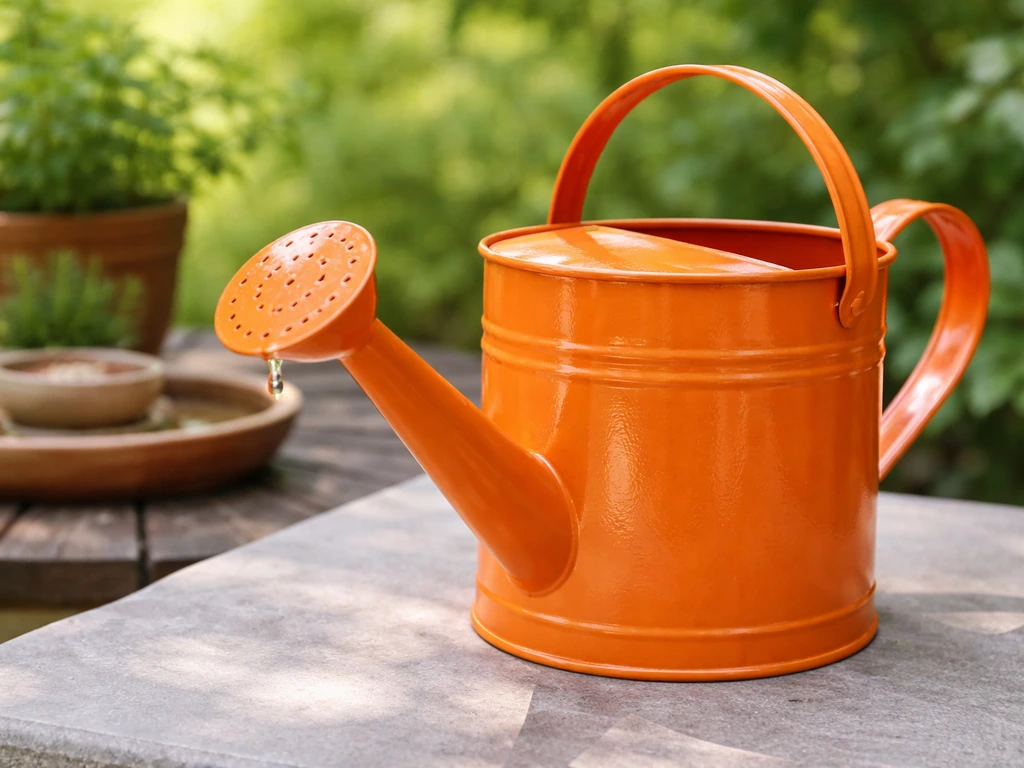
Some birds, especially parrots, are enthusiastic foragers and will fling food in every direction regardless of what you do. A dome helps reduce but won't eliminate mess. If mess is a major issue, look at the bowl placement: a bowl positioned lower in the cage with a taller dome gives the bird less throwing range. If you’re working with an orange bird watering can style novelty feeder, the bowl placement and cover height matter even more for reducing how far mess can fly. You can also try a bowl with higher walls for seed or pellets.
Hygiene problems keep recurring despite cleaning
If you're cleaning regularly and still seeing mold or contamination, the most likely culprit is either moisture trapping (the dome is too close to the food surface, or there's not enough airflow) or the bowl material itself. Plastic bowls develop micro-scratches that harbor bacteria even after cleaning. Switch to stainless steel and increase the gap between the dome and the food surface.
If you want a simple starting point, look for bird-safe cookware made from non-toxic, food-grade materials and designed to be easy to clean Switch to stainless steel. Also check whether your disinfectant is actually effective at the dilution you're using. Minnesota DNR recommends cleaning bird feeders with a bleach solution made from 2 ounces of bleach mixed with 1 gallon of water, and scrubbing the feeder surfaces [your disinfectant is actually effective at the dilution you're using](https://www. dnr.
state. mn. us/birdfeeding/cleaning. html).
Many people dilute too aggressively and end up with something that smells like disinfectant but isn't doing much.
The cloth head-covering isn't calming the bird
If a cloth is making the bird more panicked rather than less, stop immediately. Not every bird responds the same way to head covering during handling. For pet birds that haven't been trained to accept toweling, forcing it will make future handling harder. Work on hand-taming and trust-building as the foundation instead, and reserve cloth covering for genuine veterinary restraint situations rather than routine feeding.
Beginner mistakes and what to do today instead
The biggest mistake I see is treating the cover as a set-it-and-forget-it fix. It isn't. A covered dish that isn't maintained daily is worse than an open bowl because the enclosed space traps contamination and you're less likely to notice it building up. The second biggest mistake is rushing the introduction. Birds notice every change in their environment and respond to it as a potential threat first. Give the setup time and give the bird time.
Common beginner mistakes
- Using a plastic bowl because it's cheaper: plastic scratches and harbors bacteria in ways stainless steel doesn't.
- Placing the dome too close to the food surface: this traps moisture and heat, accelerating bacterial growth.
- Introducing the cover suddenly while the bird is present and then wondering why the bird won't eat.
- Skipping the rinse step after disinfecting: residue from cleaning products is genuinely toxic to birds.
- Topping off old food instead of replacing it: old food mixed with new food contaminates the fresh batch.
- Using a non-breathable cover during handling: always breathable, always brief, always from the side not overhead.
- Assuming the bird is 'just being picky' when it won't approach: behavioral refusal to eat is often a real stress or fear signal, not stubbornness.
Your daily routine checklist
- Remove the food bowl, dump uneaten food, rinse with hot water and scrub.
- Wipe down the inside of the dome or cover with a damp cloth.
- Refill with fresh food and replace the bowl.
- Check the cover position: still elevated 2 to 3 inches above the food surface, opening clear and accessible.
- Observe the bird approaching and eating: no stress signs, no avoidance.
- Once a week: full disinfection of bowl and cover, full contact time, multiple rinses, complete air drying before return to cage.
If you're also thinking about other accessories and products that interact with your bird's food environment or daily routine, the same principles around bird-safe materials and contamination prevention apply across the board. If you are shopping for novelty decor, keep an eye out for a perfume bottle with a bird on top, but remember that it is not a bird-feeding item perfume bottle with bird on top. Choosing the right setup for feeding is part of a broader pattern of keeping your bird's environment clean and low-stress from day one. If you enjoy upcycling, learning the best out of waste bird DIY ideas can help you create fun enrichment without adding safety risks.
FAQ
How do I tell if the “cover” I’m using is meant to protect the food or to calm the bird during handling?
Look at where the cover sits relative to the bird. If it sits over the food tray and the bird eats from the sides, it’s a dome or covered feeder. If the cover is applied directly over the bird’s head for short periods during a moment of restraint, it’s a handling technique. If you are unsure, stop and observe the bird’s body language before and after you change the setup.
Is a covered feeder always cleaner than an open bowl?
Not automatically. A dome can reduce mess, but if it traps moisture or has poor airflow, mold can develop faster than in an open bowl. Clean the dome and tray with the same frequency you would use for an open dish, and ensure there is a gap that prevents condensation on the food surface.
How often should I clean and disinfect a domed feeder to prevent bacteria buildup?
At minimum, follow a daily wash for any setup that covers food, especially if your bird eats pellets that get damp or sticky. If you see any residue, smell, or any film on the dome, increase cleaning to twice daily. Make sure the dome fully dries before reassembly, since trapped water promotes microbial growth.
What should I do if the bird stops eating when the dome or cover is present?
Do not force access. Remove the cover and return to the bare bowl for a short period (a couple of days), then reintroduce gradually in small steps. Keep the food the same type and location during the transition so the bird is not adjusting to multiple changes at once.
Can I use the “head-covering cloth” technique for routine feeding to keep my bird calm?
Only if your bird already tolerates it. If your bird shows panic cues (cowering, alarm calls, lunging, refusal to approach), stop. For routine feeding, focus on trust-building and optional, low-pressure desensitization rather than covering the head, because forced toweling often increases future handling stress.
Are there any bird species or temperaments that react particularly poorly to a cover element?
Yes. Many parrots are high-alert and can interpret sudden overhead movement or a looming cover as a threat. Highly nervous or recently ill birds may also react strongly. If your bird is new to you, recovering, or recently moved homes, introduce covers more slowly or avoid them until the bird is stable.
What placement adjustment reduces mess the most if my bird flings food anyway?
Lower the bowl in the cage relative to the dome and increase the dome height so there is less upward and sideward throwing space. If your bird throws hard, consider a bowl with higher walls for the specific food type (seed or pellets) rather than relying on the dome alone.
My dome feeder still grows mold, even though I clean it. What else could be causing it?
Common causes are a dome that is too close to the food, insufficient airflow under the cover, or cleaning and drying that leaves microscopic residue or moisture. Also check the bowl material, because scratched plastic can hold bacteria. If you use disinfectant, verify you are mixing and rinsing correctly, since improper dilution can reduce real effectiveness.
What are safe material choices for covered feeding bowls?
Prefer stainless steel or other bird-safe, non-toxic, food-grade materials that are easy to clean and do not develop deep micro-scratches over time. Avoid unknown plastics, painted interiors, or decorative coatings that can chip. If a bowl has scratches, replace it rather than trying to scrub until it “looks clean.”
How long is it reasonable to expect stress to settle after introducing a cover?
Mild stress should usually fade within a day or two if the bird accepts the change. If the bird continues showing persistent raised feathers, dilated pupils, repeated alarm calling, feather picking, or appetite problems tied to the cover, modify the setup or remove it and consider professional guidance.
Should I reintroduce the cover if my bird had a one-time scary reaction?
Usually you should pause and return to the baseline first. A single frightened response can mean the cover was introduced too quickly or positioned in a way that looks threatening. Reset with the bare bowl, then reintroduce more gradually by starting with the cover nearby and only later positioning it directly over the food.
Can I leave a covered feeder outside the cage for wild birds but still keep it safe for pets nearby?
Be cautious about cross-contamination and access. Wild bird feeders can attract different species and droppings, so prevent your pet bird from contacting the outdoor feeder area. Use physical barriers or separate feeding zones, and don’t reuse domes or tools between wild and pet bird setups without full cleaning and drying.
Next Article
Orange Bird Watering Can Guide for Safe Daily Watering
Choose and use an orange bird watering can safely: setup, daily cleaning, unclogging, and leak fixes for fresh water.