The safest and most practical woods for bird perches are manzanita, apple (including crabapple), ash, and grapevine. These are widely regarded as non-toxic, durable enough to handle serious chewing, and available from reputable pet suppliers. If you're just getting started and want one go-to recommendation: grab a manzanita branch perch sized to your bird, pair it with a softer natural wood option, and skip the plain wooden dowels that come with most budget cages.
Best Wood for Bird Perches: Safe Picks and What to Avoid
Marcus Chen
1 May 2026
Why wood choice matters more than most beginners realize
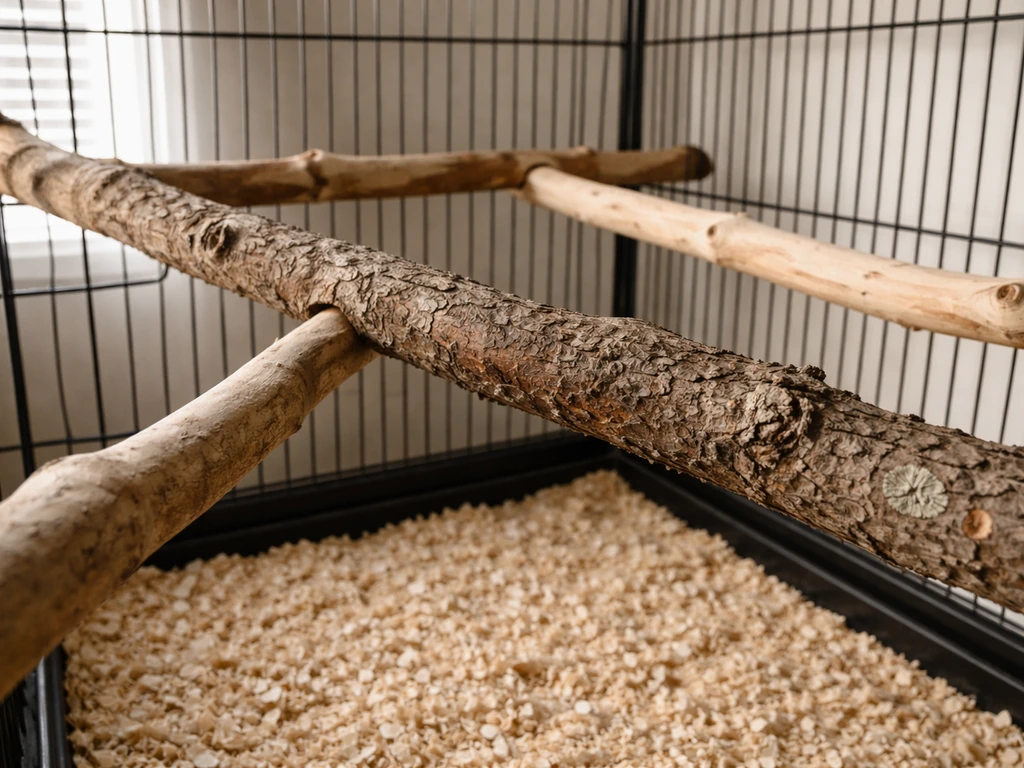
Here's the thing most first-time bird owners don't know: your bird is going to chew that perch. Not occasionally, but constantly. That means 'touch-safe' is not a good enough standard. Whatever wood you put in that cage will eventually end up in your bird's system, so it has to be safe to ingest, not just safe to stand on. This changes the whole evaluation. A wood that might be fine for a parrot toy on the outside of a cage becomes a real hazard if it contains toxic resins, oils, or chemical treatments that get released when chewed.
How to screen any wood before it goes in the cage
Before you buy or forage any perch wood, run it through this checklist. The species has to be confirmed non-toxic for birds, not just non-toxic for humans or other pets. The wood must not have been chemically treated, pressure-treated, stained, varnished, or painted. If you're collecting branches from outside, they need to come from a pesticide-free area because any pesticide residue on an otherwise 'safe' wood makes it toxic. Finally, avoid anything that smells strongly resinous or sticky to the touch, like fresh pine, which can have sap on the surface that causes problems.
Some woods contain natural oils that are harmful when chewed. Cedar is a commonly flagged example, and Norfolk Island Pine is another species that carries a different safety status than regular pine. The safest approach as a beginner is to stick to a known-safe list and treat anything outside that list as suspect until confirmed otherwise. If you're buying from a reputable pet dealer, kiln-dried perch wood is generally a reliable option since the drying process reduces resin and moisture concerns.
The best wood options and what each is good for
Not all safe woods are equal in terms of what they offer your bird. Here's how the top choices break down by their practical benefits:
| Wood | Safety Status | Best For | Notes |
|---|---|---|---|
| Manzanita | Safe (confirmed by AAV) | All bird sizes; long-lasting | Extremely hard and durable; holds up well to heavy chewers like macaws and cockatoos; natural irregular shape provides good grip variation |
| Apple / Crabapple | Safe (confirmed non-toxic) | Small to medium birds; foraging enrichment | Softer than manzanita so birds can really chew into it; great for species that like to destroy things |
| Ash | Safe (confirmed non-toxic) | Medium to large parrots | Good balance of hardness and workability; easy to find as natural branches |
| Grapevine | Safe; widely recommended | Any bird size; natural grip texture | Twisted, irregular surface gives excellent traction and foot variety; easy to sanitize |
| Willow | Generally considered safe | Small birds; light chewing species | Softer wood; good for budgies, finches, and canaries who benefit from gentler surfaces |
| Birch | Generally considered safe | Small to medium birds | Good texture; accessible if you're foraging branches from known pesticide-free areas |
If your bird is on the larger side (African grey, Amazon, cockatoo, or macaw), manzanita is the workhorse perch. It will last months even under aggressive chewing. For smaller birds like budgies, cockatiels, or parrotlets, softer woods like apple or willow are a better fit because they allow the bird to exercise its beak naturally without the perch being indestructible. Grapevine works beautifully across species because of its natural twisting shape, which we'll get into more below.
Woods and finishes to avoid completely
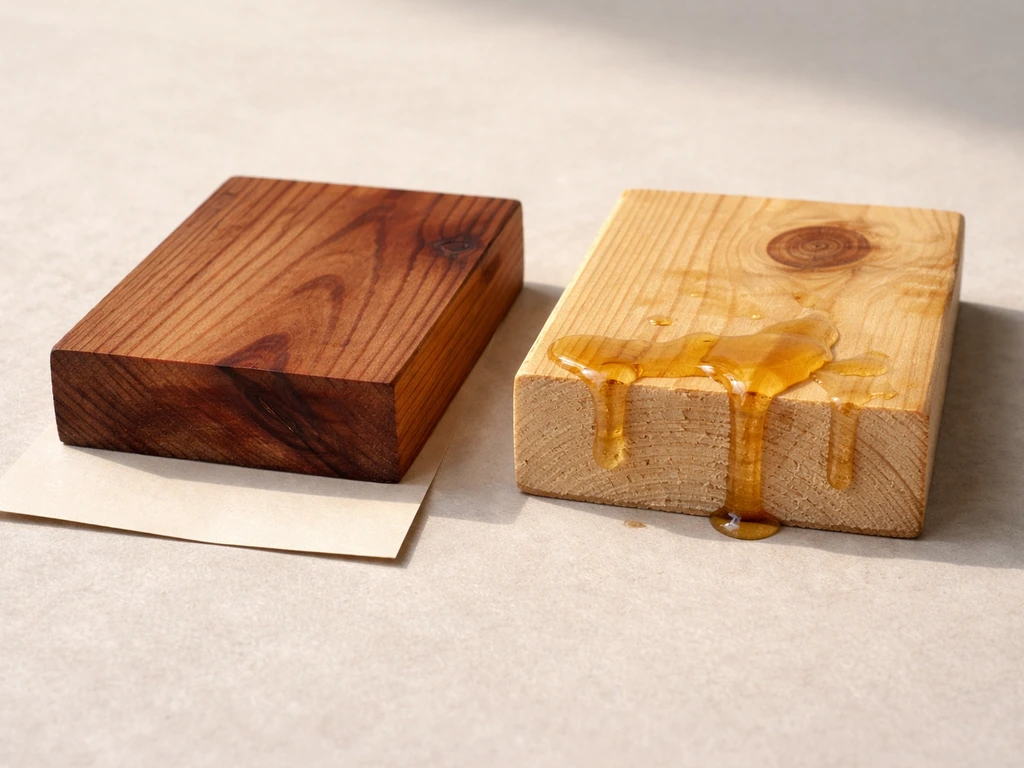
This list is just as important as the safe list. Some of these surprises new bird owners: A CT/CAES fact sheet explains that pressure treatment uses preservatives injected deep into wood, which is why pressure-treated wood is not a good choice for a chewable perch.
- Cedar: toxic oils; flagged as unsafe for parrots by multiple avian sources
- Norfolk Island Pine: different safety profile than standard pine; avoid
- Fresh pine with visible sap or sticky surface: the resin is the problem, not dried pine per se, but fresh branches are risky
- Any wood that has been pressure-treated, painted, stained, varnished, or lacquered
- Wood from unknown backyard sources where pesticide history is unclear
- Driftwood or reclaimed lumber: often has contamination or treatment history you can't verify
- Anything that smells strongly chemical, solvent-like, or unusually aromatic
A note on rope perches: synthetic fiber rope and nesting materials are not recommended by avian veterinarians. The fibers can fray and become a hazard if a bird gets a toe or nail caught, and loose threads that get ingested can cause crop and digestive issues. If you want a soft perch option, a natural cotton rope perch that is checked regularly for fraying is lower risk than synthetic, but it still requires close monitoring.
Shape matters: natural branches vs dowels vs other perch types
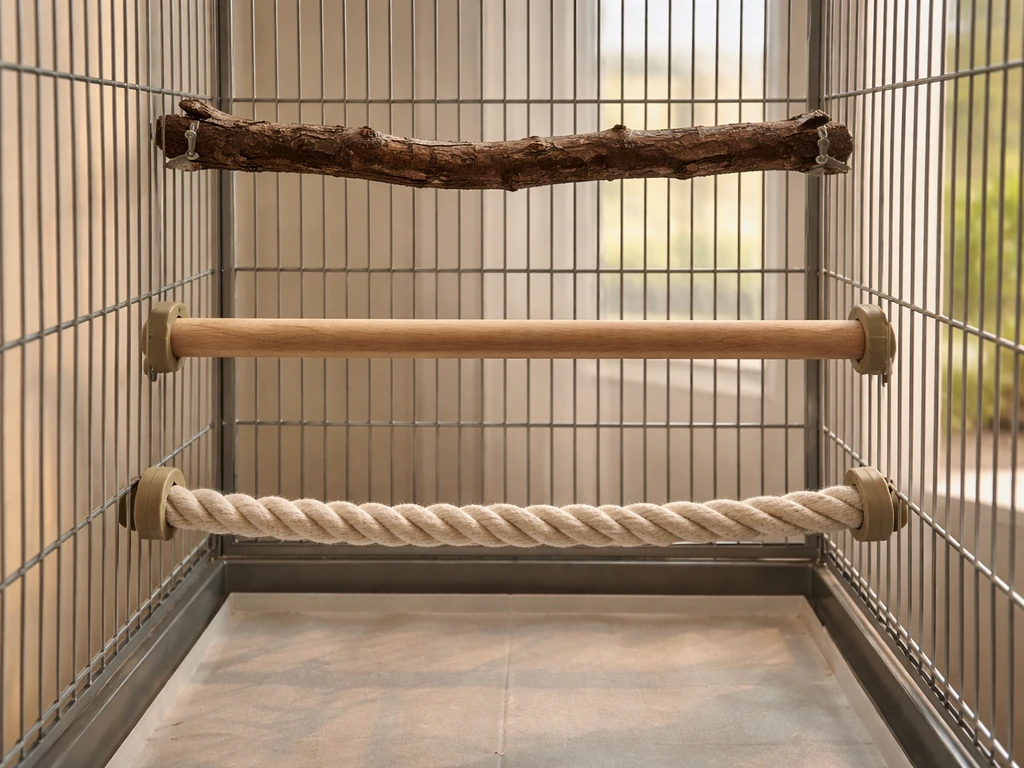
The round wooden dowels that come included with most starter cages are one of the worst perch setups you can leave in place long-term. They're the same diameter end to end, which means your bird's foot grips the exact same pressure points every single time it lands. Over months, this creates localized foot stress, and in some birds it leads to calluses or sore spots. Natural branches win here because the diameter varies along the length, so the bird constantly adjusts its grip and distributes pressure across different parts of the foot.
Grapevine branches are a great example of why shape matters practically. The twists and knots mean no two sections feel the same underfoot. A bird walking along a grapevine branch is essentially getting a low-level foot workout compared to standing on a uniform dowel. Manzanita branches have similar irregular qualities. If you're going to keep any dowels at all, use them as a secondary perch only and make natural branch perches the primary option.
Harder wood perches as the only option in a cage can also contribute to foot problems over time. The practical fix is mixing textures and hardness levels: one firm manzanita-style perch, one softer natural branch, and potentially a properly sized and monitored rope perch or a grooming perch. This gives feet genuinely different surfaces to adapt to throughout the day.
Getting the diameter right for your bird's feet
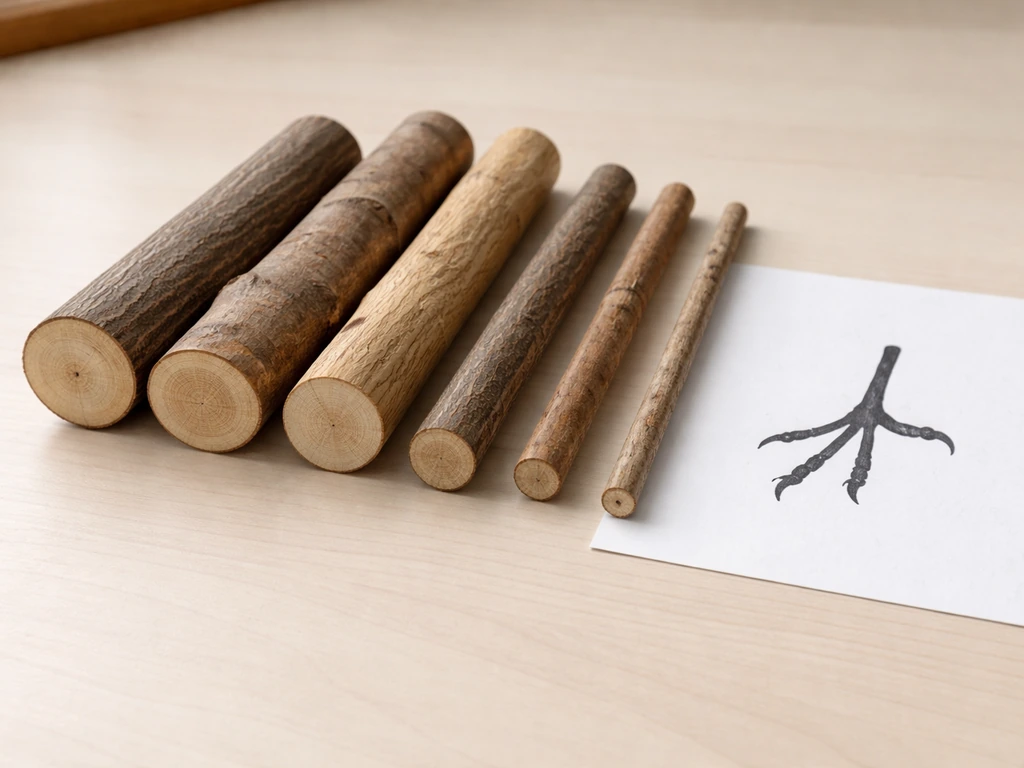
Perch diameter is one of the most under-discussed variables in beginner bird care, and getting it wrong causes real problems. The general principle is that a bird should be able to close its feet about halfway around the perch. For a budgie or parakeet, that typically means roughly 3/8 to 1/2 inch (about 0.5 inch) diameter is appropriate. If the perch is too large, the toes can't wrap properly and pressure sores may develop at the junction of the inner toes. If the perch is too small, the toes and joints get cramped and compressed over time.
| Bird Size | Examples | Approximate Perch Diameter |
|---|---|---|
| Very small | Finches, canaries, small budgies | 3/8 inch (approx. 1 cm) |
| Small | Budgies, parrotlets, lovebirds | 1/2 inch (approx. 1.3 cm) |
| Small-medium | Cockatiels, conures | 5/8 to 3/4 inch (approx. 1.5–2 cm) |
| Medium | Caiques, Amazons, African greys | 3/4 to 1 inch (approx. 2–2.5 cm) |
| Large | Cockatoos, macaws | 1 to 1.5 inches (approx. 2.5–4 cm) |
These are starting points, not rigid rules. Because natural branch perches vary in diameter along their length, a single well-chosen branch will naturally span multiple sizes, which is exactly what you want. The bird will seek out the section that feels right for its grip in any given moment. Variable diameters improve foot circulation and prevent the chronic pressure point problems that come from single-size perches.
Setting up a full cage perch plan
Most beginner cages come with two dowels at the same height. Replace or supplement both. Here's how to think about a well-planned perch setup:
- Aim for at least 3 perches per bird in a standard cage, with different diameters and textures
- Place the highest perch at a comfortable sleeping height, away from drafts and not directly under another perch (droppings fall down)
- Put one perch near food and water, but not directly over bowls where the bird will stand and contaminate what it eats
- Avoid crowding perches so close together that the bird can't flap or turn without hitting something
- Leave the bottom third of the cage relatively clear so the bird can move to the floor if needed
- Use a grooming or sandy-texture perch near the food station to help with nail maintenance, but monitor for over-gripping or sore feet
One placement note worth emphasizing: ceramic or concrete grooming perches near food bowls seem convenient but they increase contamination risk because birds stand on them, eat, clean their beaks, and then droppings hit the bowl area. Keep grooming perches away from feeding stations.
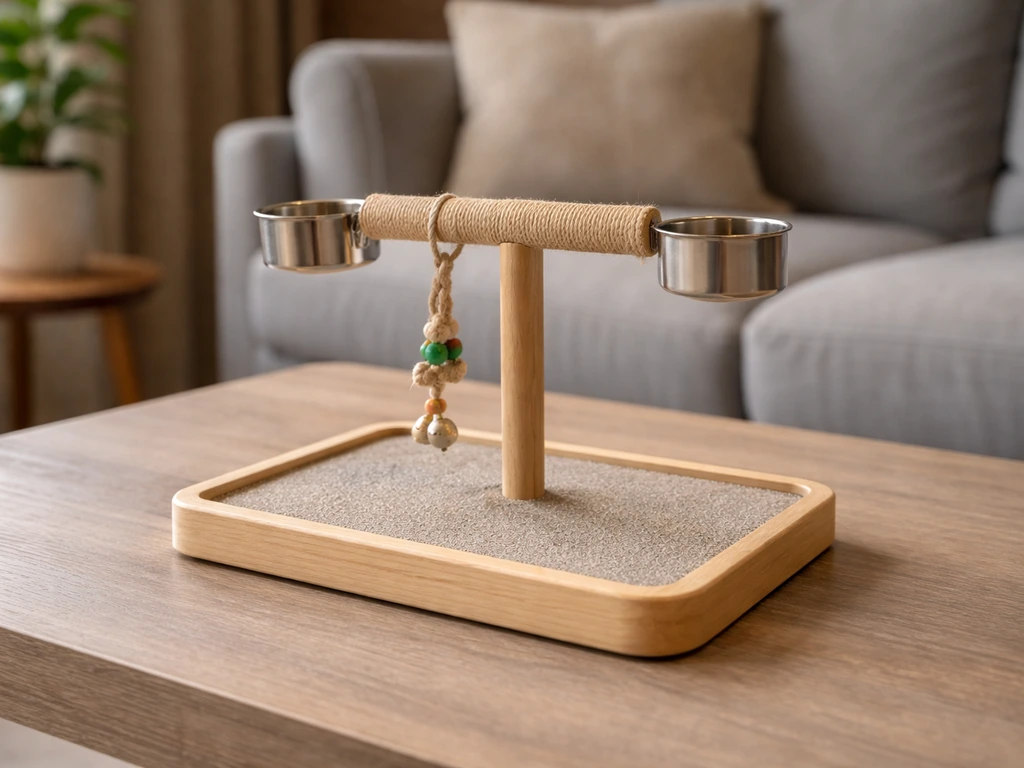
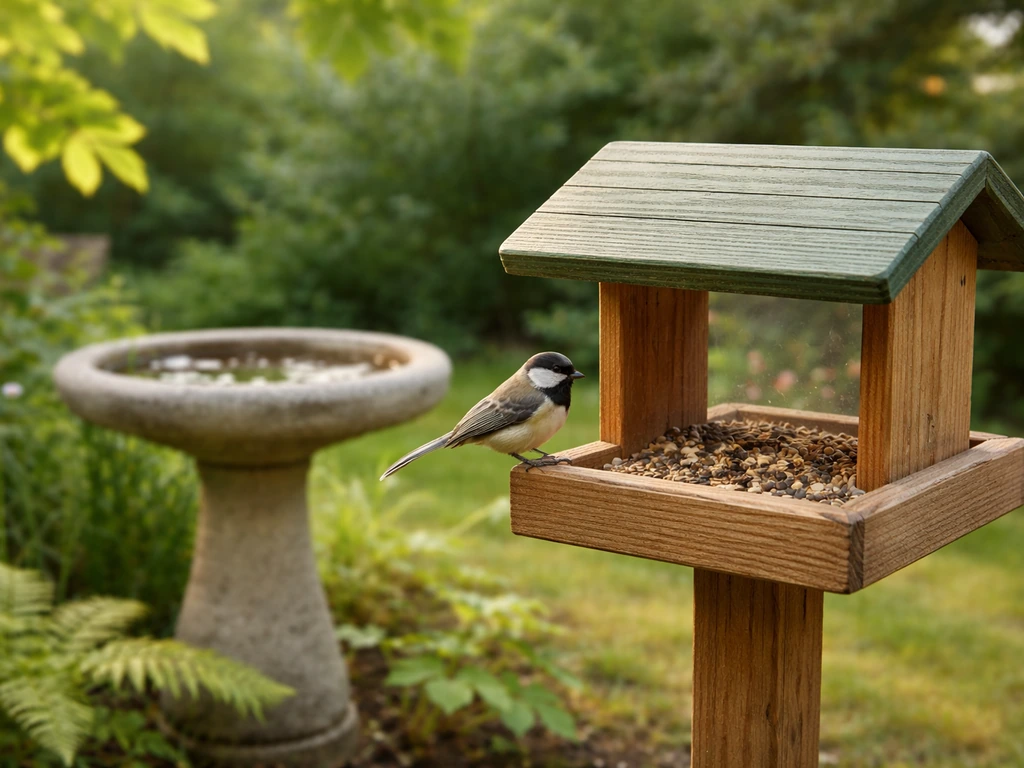
If you're also thinking about open-top cage setups, tabletop play stands, or playgrounds outside the cage, those environments benefit from the same wood selection logic. Open-top bird tables also benefit from the same perch and wood safety logic, so choose only species that are safe to chew and not chemically treated open-top cage setups. The same safe-wood and treatment-free approach applies when choosing bird table top play stands, since birds will chew and contact them frequently.
If you are building or buying a play area, look for wood perches that match this same safety and chew-ready checklist for the best bird playground experience. A natural branch perch on a tabletop bird stand is just as valuable for foot health during out-of-cage time as it is inside the cage. A table top bird stands setup makes it easier to offer safe, chew-ready perches during supervised play tabletop bird stand.
Cleaning perches and knowing when to replace them
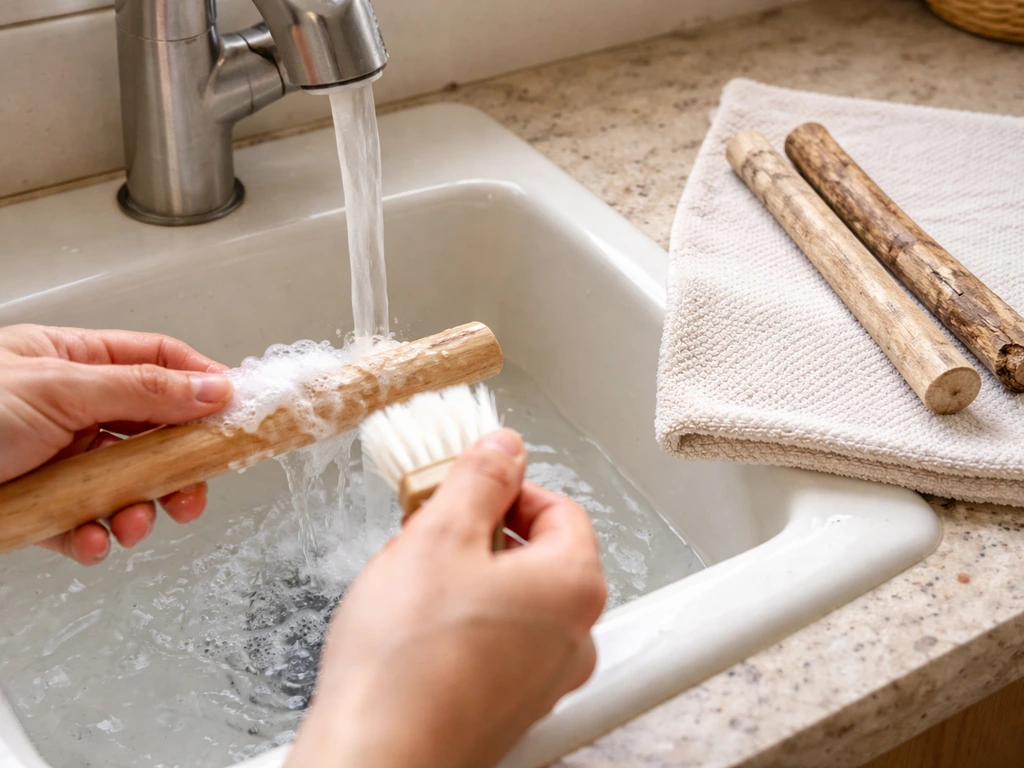
Wood perches need regular cleaning. The cage itself should be thoroughly cleaned at least once or twice a month using a non-toxic disinfectant soap with hot water, spraying down and scrubbing surfaces. Perches get droppings on them constantly, so they need attention more frequently than that, at minimum a wipe-down every few days and a full scrub weekly.
When cleaning with disinfectants, be careful with bleach and vinegar. Both can release fumes that are harmful to birds if they're present in the room. Use them with excellent ventilation, allow perches to fully dry and air out before returning them to the cage, and never use them in an enclosed space with the bird nearby. Accelerated hydrogen peroxide products are a gentler alternative worth looking into.
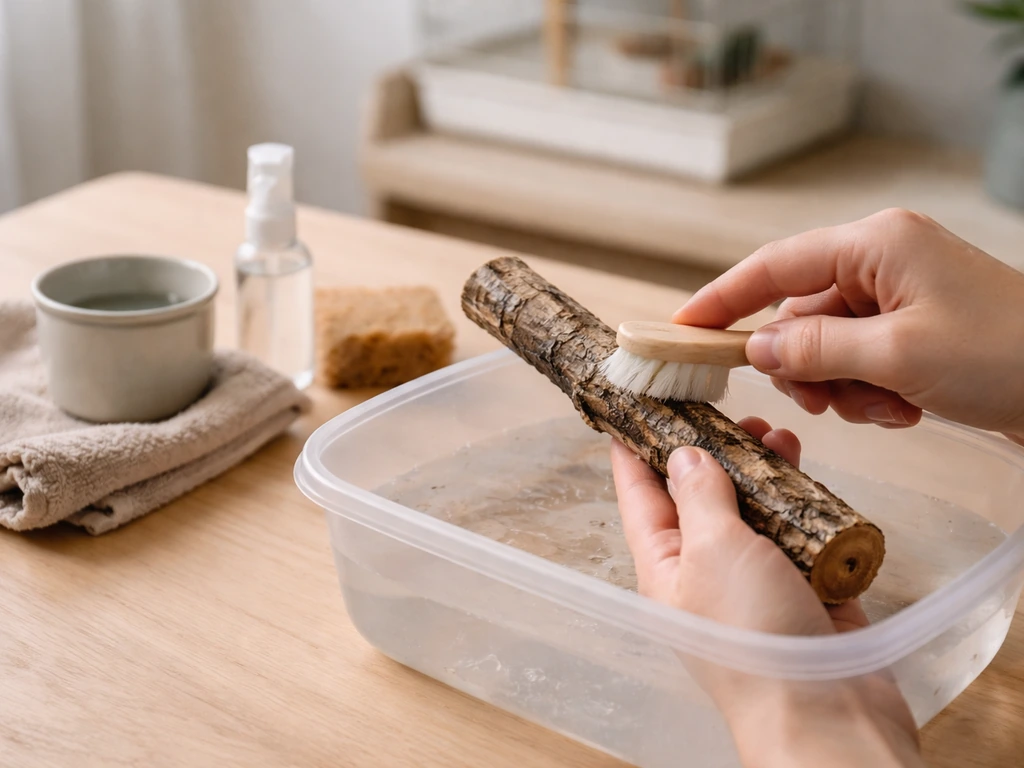
For DIY natural branch perches collected from outside, scrub branches well with a non-toxic cleaner before the first use. Some keepers bake branches in the oven at a low heat (around 200 to 250 degrees Fahrenheit for 30 to 60 minutes) to kill surface bacteria, mites, and fungi. This is especially useful if you can't verify the full history of the wood.
Signs a perch needs to be replaced
- Deep grooves or significant chewing that has exposed inner wood layers soaked in droppings
- Soft, spongy, or crumbling texture suggesting moisture rot
- Visible mold or persistent dark staining that doesn't clean off
- Cracks wide enough to trap bacteria or debris even after cleaning
- Heavy soiling that has saturated the wood and can't be scrubbed clean
- Any perch with a synthetic covering (cord, rope wrap) that has frayed significantly
Softer wood perches like apple or willow that are being actively chewed may need replacement every few weeks for a heavy chewer. Harder manzanita perches can last months or even longer. Rather than following a fixed schedule, inspect perches weekly and swap them when they meet any of the replacement criteria above. Keeping a spare perch or two on hand means you're never caught without a clean replacement.
Quick reference: safe vs avoid
| Category | Safe | Avoid |
|---|---|---|
| Wood species | Manzanita, apple/crabapple, ash, grapevine, willow, birch | Cedar, Norfolk Island Pine, fresh resinous pine, unknown species |
| Wood source | Reputable pet suppliers, kiln-dried, confirmed pesticide-free outdoor branches | Treated lumber, driftwood, reclaimed wood, hardware store dowels with unknown finish |
| Finishes/treatments | None (bare, natural wood only) | Paint, varnish, stain, lacquer, pressure treatment, chemical preservatives |
| Perch shape | Natural branches with variable diameter, grapevine, irregular manzanita | Uniform-diameter dowels as the only option |
| Other materials | Natural cotton rope (monitored for fraying) | Synthetic fiber rope, nesting rope not recommended by avian vets |
Start with one good manzanita perch and one softer natural wood option, sized to your bird, placed at different heights in the cage. That single upgrade from the stock dowels that came with your cage will make a measurable difference in your bird's foot health and daily comfort. Everything else, the grooming perches, the grapevine additions, the full cage layout, can layer in from there as you get more comfortable. If you want to build the safest, most engaging bird playground, focus on chew-safe wood, variety in textures, and spacing that encourages natural perching throughout the day best bird playground.
FAQ
How can I tell when a “safe” wood perch is no longer safe to use?
If your bird chews heavily, check the perch at least weekly for sharp edges, deep splits, flaking, sticky resin pockets, and any odor that returns after wiping. Replace immediately if chunks can be torn off or if the surface becomes glossy or tacky from sap, because those signs suggest ongoing degradation or residue transfer.
What prep should I do before putting a new wood perch in the cage?
For kiln-dried store-bought perches, a quick rinse and thorough air-dry are usually enough before the first use. If you are unsure of the source, scrub with a non-toxic cleaner and then let the perch fully dry (no damp smell). Baking is most appropriate for foraged wood or wood with unknown history, and should be done only once you are sure it is untreated and will not off-gas chemicals.
Can I use old furniture wood or leftover lumber if I sand it down?
Pressure-treated, stained, varnished, or painted wood is not a safe shortcut, even if the bird only chews occasionally. The risk is that coatings and treatments can transfer when worn down or chewed, so the safest approach is to use bare, untreated branch or confirmed kiln-dried perch wood from a pet supplier.
I found a branch outdoors, but I am not sure about nearby pesticide use, what should I do?
If a perch came from a tree in a pesticide-treated area, cleaning usually cannot guarantee removal of residues that may be absorbed into the wood. Your best decision aid is to only forage from areas you know are pesticide-free, or replace with a known-safe, purchased perch. When in doubt, treat it as suspect and do not introduce it.
Are dowels ever acceptable in a bird cage?
Yes, but only as a secondary strategy. The bird can develop callusing from uniform pressure even if the dowels are untreated, and the article recommends variable-diameter natural branches as the primary grip surfaces. If you keep dowels temporarily, choose a different diameter than the included dowels and position them so they are not the main landing spot.
How many perches should I add, and where should they be placed?
Multiple perches at different heights help because birds choose where to grip based on comfort, but you should still avoid crowding the cage so that birds must step on droppings to reach food or water. Place perches so droppings fall away from bowls, and ensure there is at least some open flight and climbing space between major perch levels.
If I want a soft perch, what is the safest rope choice and how often should I inspect it?
Rope perches are best limited to monitoring-required “softer” options, not a core perch replacement. Even natural cotton rope should be checked for loose threads and fraying frequently, and removed at the first sign of unraveling or knot failure. Synthetic fibers increase the chance of toe or nail snagging.
Why does the location of grooming perches matter?
Ceramic and concrete grooming perches near food create a contamination loop, because birds step on them, then eat, and droppings can land around the bowl area. If you use them, position them well away from feeding, and consider using natural wood and grapevine near feeding stations instead.
What are the real signs my perch diameter is wrong?
If the perch is too large, pressure concentrates at the inner toe joints and can cause sores. If too small, the toes and joints can be cramped and compressed over time. Use the article’s guidance that the bird should be able to close its feet about halfway around the perch, and remember natural branches vary along their length so one branch can cover multiple grip “sizes.”
How should I handle drying and ventilation after disinfecting perches?
Yes, but avoid turning that into a persistent hazard. Let the cage sit and dry fully after cleaning, and never return a perch that smells strong, feels oily, or has residues. If you used any disinfectant, rinse and dry until there is no scent, and ensure good ventilation so fumes are not trapped near the bird.
My bird keeps destroying one perch, how do I fix the setup without leaving the cage without proper perches?
If you see a bird preferentially chewing one perch, it is a hint about hardness and texture. You can reduce rapid wear and foot monotony by rotating in a softer wood segment (like apple) for chewing, plus a longer-lasting firmer option (like manzanita). Keep a spare perch so you can swap without delaying hygiene.
What is the simplest perch combination for better foot comfort over time?
You can use a “different texture” approach rather than adding only hardness. Combine one firm manzanita-style perch, one softer natural wood perch, and only include additional non-wood surfaces (like rope or grooming perches) in locations that do not increase contamination or snag risk.
Do outdoor play stands need different wood safety rules than in-cage perches?
If you are building a play area outside the cage, apply the same checklist: untreated, bird-safe species, no pesticides, and chew-ready surfaces. Also plan for exposure issues, UV, and rain by choosing woods that can be cleaned and dried thoroughly between sessions, and remove any perch that stays damp or develops a sticky surface after weather.