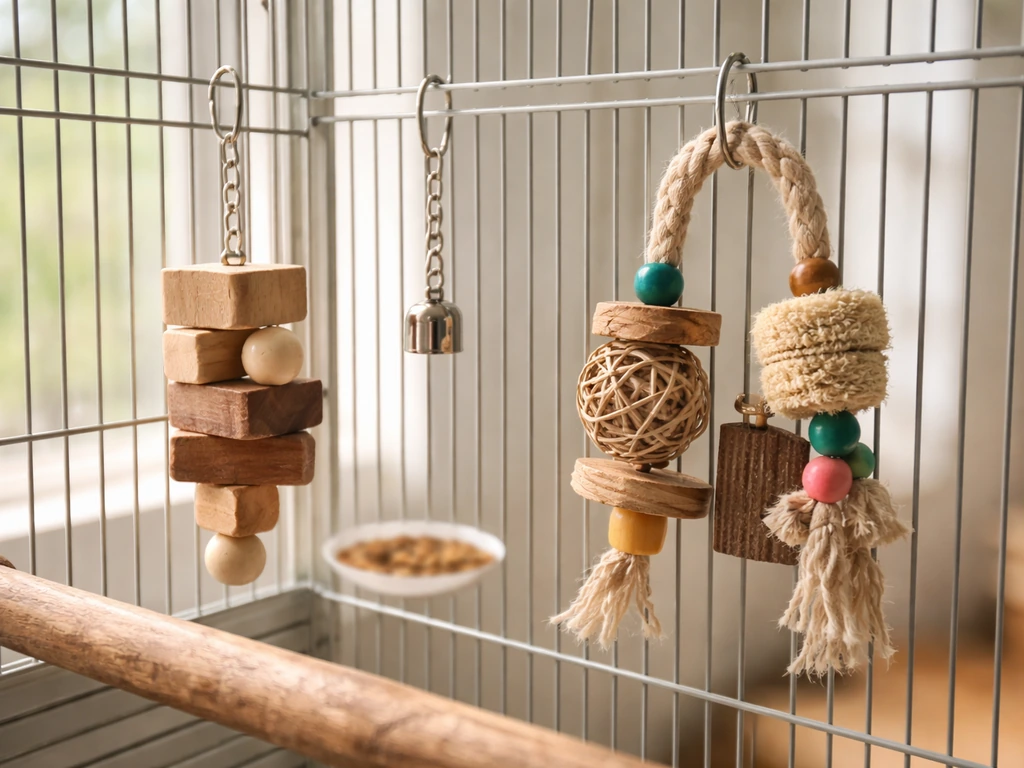
For conures, the best starting lineup is a wooden chew toy, a shredding piñata, a foraging toy with hidden food, and a swing or rope perch for movement. Those four types cover the core behaviors conures actually need to express: chewing, shredding, problem-solving, and physical play. Everything else is a bonus. The real challenge isn't finding toys, it's picking the right materials, sizing them correctly, and rotating them so your bird doesn't go stale on the same setup week after week.
Best Bird Toys for Conures: Top Picks and Safety Guide

Marcus Chen
14 May 2026
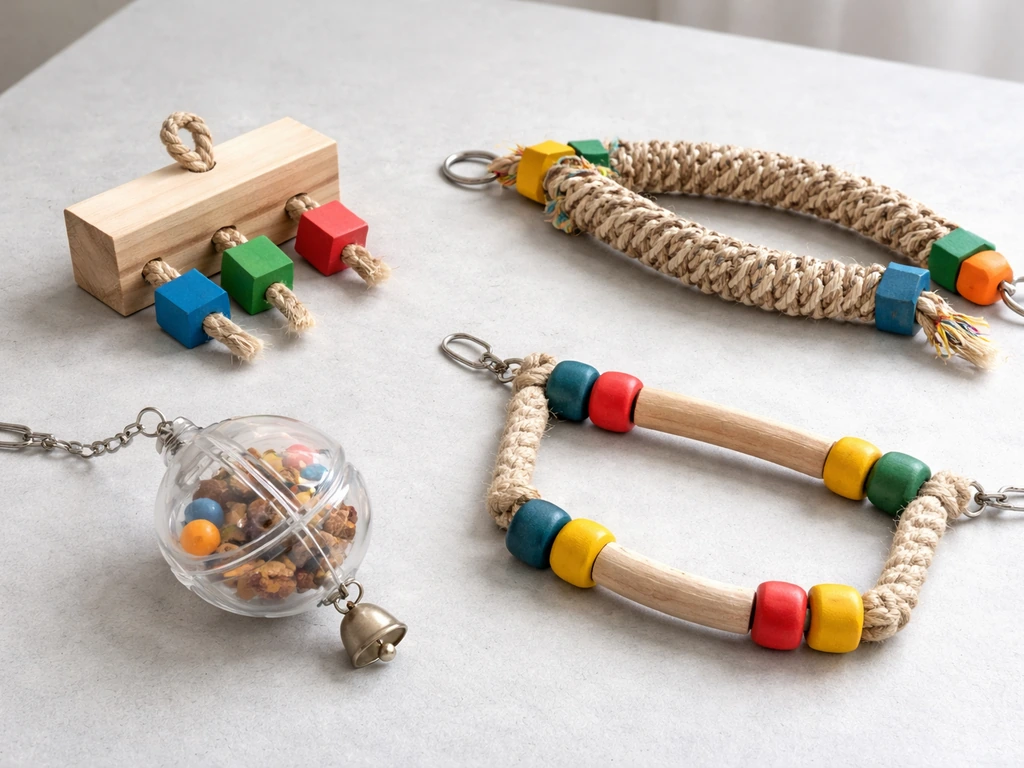
How to choose conure-safe toys
The first thing I wish someone had told me is that "bird toy" is not a safety guarantee on its own. Plenty of things marketed for birds can injure or poison them. Conures are active chewers and will mouth almost anything you hang in their cage, so material selection matters a lot more than it does for a less destructive species.
The safest hardware is stainless steel. The Association of Avian Veterinarians is clear that stainless steel is the gold standard for cage construction and toy components. Zinc and lead are the two metals you most want to avoid because both are genuinely toxic to birds. That said, the AAV also notes that toxicity risk from metal components depends partly on how actively a bird mouths or picks at those parts. A conure that obsessively chews metal rings is at far higher risk than one that ignores them. Know your bird.
For wood, stick to untreated hardwoods. Balsa, pine, willow, and java wood are popular safe choices. Treated wood is a problem because the glues, stains, or preservatives used can be harmful. The same applies to leather: only vegetable-tanned leather is safe. Conventional leather may be processed with toxic dyes or chemicals.
Rope is where a lot of first-time owners get tripped up. Sisal, hemp, jute, and 100% cotton are the rope materials you want. The issue is that many toys just say "rope" with zero disclosure of what type. If a seller can't or won't tell you what fiber they used, that's a red flag. Synthetic fibers like nylon and carpet-style materials can cause gut blockages if ingested and are not appropriate for conures.
Plastic and acrylic are often used in bird toys but they are not automatically safe. Breakable plastic is a particular hazard: sharp edges and small fragments that can be swallowed. Avoid anything plastic that a conure could crack into shards. If you use acrylic, it should be thick, bird-specific acrylic designed for larger parrots, not repurposed cat or small-animal toys.
Best toy types for conures (by behavior and needs)
Conures are high-energy, curious, and social parrots. Their natural behaviors in the wild include foraging for food, chewing through wood and plant matter, climbing, and a lot of social interaction. Good toys map directly onto those behaviors. Here's what works and why.
Chew and shred toys
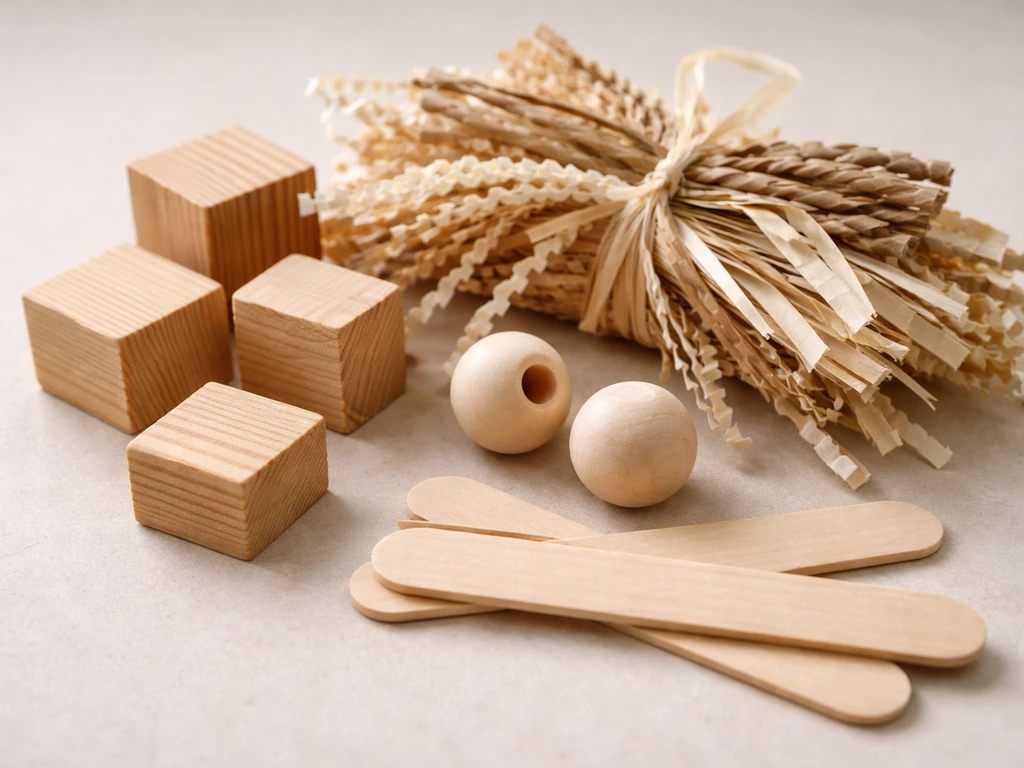
These are non-negotiable for conures. A bird that can't chew will find something else to destroy, usually your furniture or your hands. Wood blocks, popsicle sticks, wooden beads, and palm frond or paper shred toys are all excellent. Piñata-style shred toys made from all-natural materials (palm, seagrass, paper, corn husk) are a huge hit with most conures. Planet Pleasures makes a well-regarded spiked piñata toy in this category. Expect the bird to fully destroy it: that's the point. Purdue's veterinary guidance calls this "planned obsolescence" and frames it as a feature, not a waste of money.
Foraging toys
Foraging is probably the most behaviorally important category. If you want the best bird puzzles, focus on foraging puzzles that make your conure work for treats like the ones described here Foraging is probably the most behaviorally important category.. Purdue's husbandry guidance puts it directly: "choice pieces of food are the best toys for your bird." A toy that makes your conure work for a treat activates the same mental circuits as hunting for food in the wild. Simple foraging cups, puzzle boxes, or piñata-style toys with food tucked inside all work well. The Bonka Bird Toys Tri Foraging Star (roughly 13 inches tall and 8 inches wide) is sized appropriately for conures and gives them multiple compartments to investigate. Even wrapping a piece of food in paper or stuffing a palm toy with pellets counts as foraging enrichment.
Climbing and movement toys
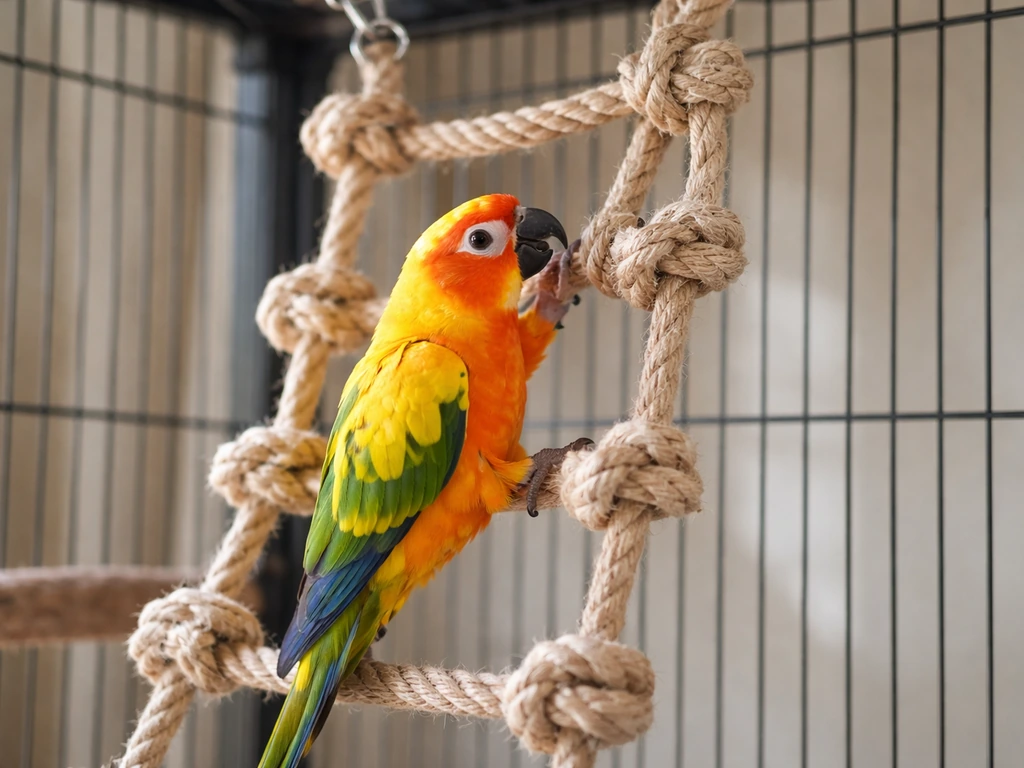
Conures love to move. Swings, rope ladders, and climbing nets give them physical exercise and satisfy the need to navigate space. Short lengths of heavy nautical rope tied in knots (as recommended by Purdue's veterinary team) double as both chew and climbing enrichment. Swings also provide comfort: many conures use a swing as a sleeping or resting spot. Java wood perches with irregular shapes are great for both foot health and beak exercise.
Interactive and preening toys
Dangling pull toys encourage physical interaction and beak use. Prevue's Court Jester is a good example: it's a cotton rope and coffeawood toy designed specifically for beak and tongue exercise. Bells made from bird-safe materials are also popular, though check that any bell has no loose parts a bird could trap its beak in. Preening toys with soft fibers give a conure something to "groom" when they're not interacting with you.
How many toys at once
Three to six active items at a time is the right range for a conure's cage. A typical setup might include one chew toy, one shred or piñata toy, one foraging toy, a climbing item or rope ladder, and a swing. That's five items covering every major behavioral need without overcrowding the cage.
Top picks by skill level and budget
If you're just starting out, don't overthink this. You need one of each core category, not a shelf full of expensive toys. Here's how I'd tier it.
| Category | Budget Pick | Mid-Range Pick | What to Look For |
|---|---|---|---|
| Shred/Chew | Paper and palm shred toy (under $8) | Planet Pleasures Spiked Piñata or similar all-natural piñata ($10–$16) | All-natural materials, no synthetic dyes, disposable by design |
| Foraging | Folded paper with hidden pellets (free DIY) | Bonka Tri Foraging Star or similar multi-compartment forager ($10–$18) | Multiple access points, food-safe construction, easy to reload |
| Climbing/Movement | Short knotted sisal or cotton rope ($5–$8) | Java wood rope ladder or swing with stainless steel quick-link ($12–$20) | Natural fiber rope, stainless steel hardware, no loops large enough to trap head |
| Interactive/Beak | Wooden bead toy with bell ($6–$10) | Prevue Court Jester or similar coffeawood pull toy ($12–$18) | Stainless steel bell with no loose parts, vegetable-tanned leather if used |
| Perching | Natural branch from a safe tree | Java wood or manzanita perch with varied diameter ($8–$15) | Irregular shape for foot health, untreated wood, appropriate diameter for conure feet |
For a first-time owner, I'd spend around $30–$40 total and get one item from the shred, foraging, and climbing categories. That covers the most critical behavioral needs without overwhelming your bird or your wallet. Experienced owners trying to level up their enrichment setup should focus on adding variety within categories: multiple foraging styles, different wood textures for chewing, and rotating in new shred toys every few weeks.
Toy safety checklist (materials, sizing, placement)
Go through this before hanging anything new in your conure's cage. It takes two minutes and it matters.
Materials
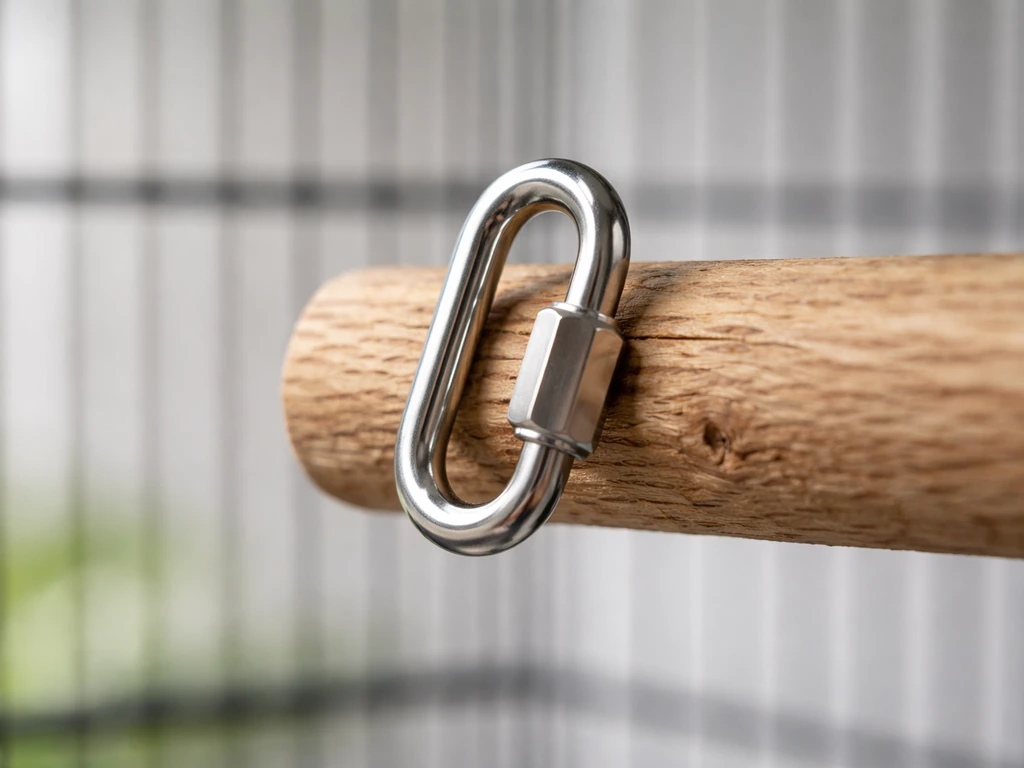
- Hardware: stainless steel only; avoid zinc, lead, and copper components
- Wood: untreated hardwoods (balsa, pine, willow, java, manzanita); no treated, painted, or chemically preserved wood
- Rope: 100% cotton, sisal, hemp, or jute only; reject anything labeled just "rope" with no fiber disclosure
- Leather: vegetable-tanned only; no conventional dyed leather
- Plastic: avoid anything breakable or brittle; thick bird-specific acrylic only and only if you supervise use
- No: nylon, carpet fibers, sewing thread, synthetic yarn, or soft rubber that can be chewed into pieces
Sizing
- Conures need toys sized for small-to-medium parrots; do not use toys labeled for larger birds like macaws or Amazons (parts will be too big or too heavy) and do not use toys sized for budgies or finches (parts will be too small and swallowable)
- Check any loop, ring, or opening: it must be small enough that your conure cannot get its head through and hang itself
- Bar spacing reference: conures fit a cage with 0.75-inch bar spacing, so toy components should follow similar logic—no openings wide enough to trap a foot or neck
Attachment and placement
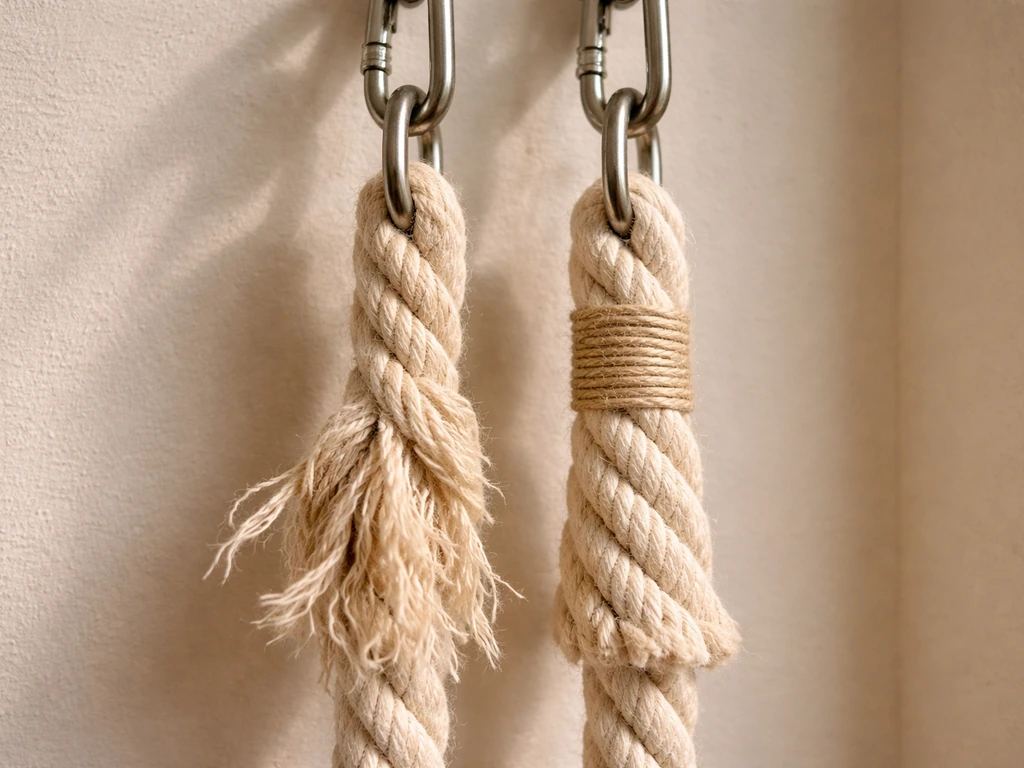
- Use stainless steel quick-links to hang toys; avoid split rings and dog-clip style fasteners that can trap a beak
- Hang toys at different heights to encourage climbing and movement
- Leave clear flight paths inside the cage: overcrowding with toys is a real risk in smaller setups
- Keep rope and ladder toys away from the cage bottom where they could drag and create entanglement hazards
- Do not hang anything directly over food and water dishes where debris will fall in
Wear and tear monitoring
- Inspect rope toys daily once a bird starts unraveling them; loose strands can wrap around toes and cut off circulation within hours
- Trim fraying rope back immediately; replace the toy when fraying becomes significant
- Remove broken plastic components the moment they crack; sharp edges are a laceration and ingestion hazard
- Discard any toy with exposed wire or compromised metal fasteners
- Plan to replace shred and chew toys regularly: they are supposed to be destroyed
Rotating and introducing toys to prevent boredom
A lot of first-time owners buy five toys, hang all of them at once, and then wonder why their bird ignores half of them within a week. The issue isn't the toys: it's novelty. Conures, like most parrots, habituate quickly to their environment. Rotating toys on a schedule is genuinely one of the most effective enrichment strategies you can use.
The practical approach is to keep two or three toys in "rotation storage" that are not currently in the cage. Every one to two weeks, swap one hanging toy out and bring a stored one back in. Because the bird hasn't seen it for a couple of weeks, it feels new again. This is cheaper and more effective than constantly buying new toys.
How to introduce a new toy
Some conures are adventurous and will investigate a new toy within minutes. Others are genuinely afraid of unfamiliar objects, which sounds ridiculous but is completely normal prey-animal behavior. If your conure is the cautious type, use a phased introduction. Start by placing the new toy near (but not inside) the cage for a few days so the bird can observe it without feeling threatened. Then hang it on the outside of the cage bars for a few more days. Only move it inside once the bird is showing curiosity rather than alarm. Sitting with your bird during those first interactions is worthwhile: your presence reassures them that the new object is not a threat.
For the first few days after hanging any new toy inside the cage, supervise play sessions when you can. This is especially important with rope toys and anything with loops or moving parts. The Greater Columbus Community Bird Center (GCCBC) also advises that any loop, including looped rope or wire, should be small enough that the bird cannot get its head stuck and hang itself, and that rope toys should be trimmed or replaced when they start to fray blank" rel="noopener noreferrer">rope toys and anything with loops or moving parts. The GCCBC advises removing toys when you're not available to supervise until you've confirmed the toy is safe for your specific bird's play style.
Building a foraging routine
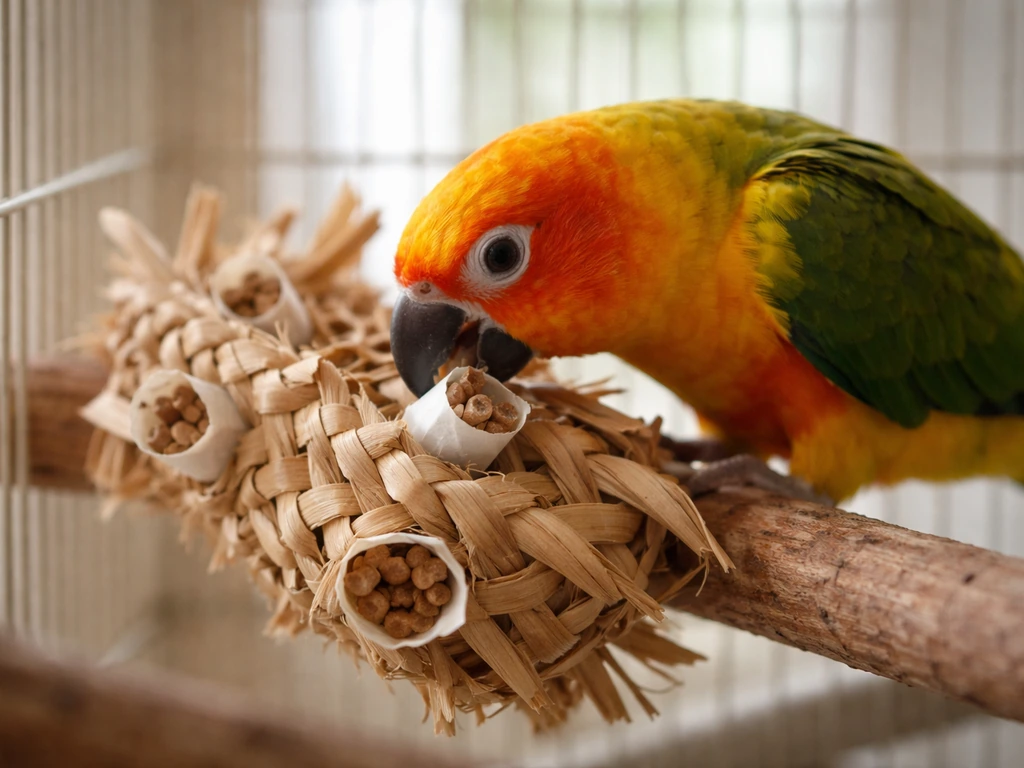
The simplest enrichment upgrade you can make costs nothing: start hiding part of your conure's daily food. Wrap a few pellets in paper, tuck a bit of fruit inside a palm shred toy, or use a foraging cup that requires opening a door or moving a block. Do this at the same time each day and your bird will start anticipating it. Over time you can make the foraging more complex. This one habit, more than any specific toy purchase, transforms enrichment from passive decoration into active daily engagement.
Where to buy and what to avoid for first-time owners
You can find good conure toys at specialty bird stores, reputable online bird-supply retailers, and some well-stocked pet chains. Brands like Bonka Bird Toys, Planet Pleasures, Prevue Pet Products, and Super Bird Creations are transparent about their materials and make products specifically for parrots. That material transparency is the most important thing to look for: if a product page can't tell you what the rope is made of or what finish is on the wood, skip it. If you’re comparing options across species, this guide to the best bird toys can also help you spot solid choices that match your bird’s behavior.
Amazon and general pet retailers can be fine sources but require more scrutiny. A lot of listings use vague language like "natural materials" or "bird safe" without specifying what those materials actually are. Check the product description for specific fiber names (sisal, cotton, hemp) and hardware type (stainless steel). If it just says "metal" or "rope," ask or move on.
Common mistakes first-time owners make
- Buying toys sized for larger parrots because they look more impressive or durable: oversized components are a head/neck trap hazard and the toy is too heavy for a conure to interact with properly
- Buying cheap dog or cat toys and assuming they're fine because birds seem to like them: they are not designed with avian safety in mind and materials are not vetted
- Hanging all toys at once and never rotating: the cage looks enriched but the bird is bored
- Ignoring rope wear: a rope toy that looked fine last week can develop dangerous fraying quickly if a conure has been working on it daily
- Skipping foraging entirely and relying only on perches and bells: passive toys are not enough enrichment for an intelligent parrot
- Not supervising new toy introductions: the first few days with an unfamiliar toy are when accidents are most likely to happen
- Choosing toys based on visual appeal to humans rather than behavioral fit: shredable, destroyable, food-hiding toys are less pretty than polished acrylic puzzles but far more effective for conures
If you're comparing notes with what works for other small parrots, the toy priorities for conures overlap quite a bit with what cockatiels and parakeets need, though conures are more aggressive chewers and tend to need sturdier materials and more frequent shred-toy replacement. For budgies, the best bird toys for budgies will also focus on safe chew and shred options, plus simple foraging enrichment. You can use the same categories and safety checks when choosing the best bird toys for parakeets. Cockatiel owners can use the same toy categories, but you should choose gentler sizes and safer materials to match their chewer level cockatiels. The foraging-first mindset applies across all of them. Start with the core four toy types, check every material before it goes in the cage, rotate consistently, and your conure will have genuinely excellent enrichment without requiring a complicated or expensive setup.
FAQ
Are “bird-safe” toys from big pet retailers actually safe for conures?
Not automatically. For conures, safety depends on the exact material and how your bird uses it. Look for stainless steel hardware, untreated hardwood or clearly named fibers for rope, and avoid listings that say only “rope” or “metal” without specifying what it is. If the product page does not disclose fiber type or finishes, skip it or contact the seller.
How do I size toys correctly for a conure?
Use the idea of “grippable and chewable,” not “fully swallowable.” Avoid toys with parts small enough to fit through the beak and fully break into pea-sized fragments. For foraging toys, choose ones large enough that your conure has to manipulate pieces rather than grabbing and gulping treat contents in one motion.
Can I use my conure’s toys to hold daily food, like lettuce or pellets?
Yes, but treat pieces of food differently from loose fresh produce. Wrap pellets in paper or stuff palm shred toys for foraging, but monitor soft foods to prevent spoilage and mold if they get wet or sit too long. Remove any food remnants promptly during play if your bird is slow to eat.
What should I do if my conure starts chewing metal rings or hardware on a toy?
First, reduce access by choosing toys with stainless steel components and removing any rings that are meant for decoration rather than function. If your conure obsessively mouths metal, stop using that toy until you can verify the metal type and check for sharp edges or flaking coatings. Rotate the toy out and reintroduce only when the chewing behavior is clearly controlled.
How often should I replace shredding toys or wooden parts?
Replace based on condition, not a fixed date. When the toy becomes splintered into sharp fragments, has frayed rope, or produces pieces your bird can swallow, remove it immediately. With heavy shredder conures, expect more frequent replacement than with “medium chewers,” and keep backups for rotation.
Is acrylic ever okay for conures, and what’s the safest way to use it?
Acrylic can be acceptable only if it is thick, specifically made for large parrots, and unlikely to crack into bite-sized shards. Avoid thin, decorative, or repurposed small-animal acrylic items. Inspect for chips weekly, because even small cracks can turn into sharp edges after repeated beak pressure.
Can I use cotton rope or jute rope if the fibers can get ingested?
They are preferred over synthetics, but ingestion risk still exists if the rope frays heavily. Use ropes with good construction, supervise initial sessions, and remove the toy when fibers pull off easily in long strands. For ongoing use, rotate rope toys so a damaged one is caught quickly during inspection.
Should I leave toys in the cage all the time and just add new ones?
Usually not. Conures habituate fast, so constant clutter can reduce interest. A better approach is to keep a small set (about 2 to 3 active items) and rotate one or two toys every 1 to 2 weeks, storing the rest so they feel novel again.
My conure is afraid of new toys. How long should I wait before giving up?
Give a phased introduction a few days at each step, then reassess. Start with placement near the cage, then outside the bars, and only move inside when curiosity outweighs alarm. If your bird shows sustained panic (cowering, intense avoidance, or refusal to eat around the toy) for several days, remove it and try a different toy category or texture.
Are bells safe, and what’s the main risk to watch for?
Bells can be okay, but loose parts are the biggest issue. Check that the bell has no detachable clappers, screws, or small items that could trap a beak or be chewed into swallowable fragments. Test stability by gently shaking while watching your conure’s interest, then supervise the first interactions.
Is it normal if my conure ignores foraging toys at first?
Yes, especially if your bird prefers immediate eating. Start by hiding familiar treats and using simpler access methods, like foraging cups with easier openings or paper-wrapped pellets the bird can rip. Increase difficulty gradually once the bird reliably engages, and avoid leaving foraging toys empty because that can reduce learning.
What’s the fastest way to “upgrade” enrichment without buying more toys?
Use your daily feeding time. Hide part of the daily ration in paper, stuff pellets into a palm shred toy, or use a simple foraging cup that requires moving a piece to access treats. Consistency matters, aim for the same time each day, and increase complexity only after your conure shows steady engagement.
Next Article
Best Bird Toys for Beginners: Safe, Quality Choices
Best bird toys for beginners: safe materials, right sizing, toy placement, and easy cleaning plus how to introduce and r