Yes, you can absolutely keep a pet bird inside your house, and for most species it is genuinely the ideal setup. The phrase "bird scooter" doesn't refer to a recognized bird species (that term is almost universally used for Bird-brand electric scooters), so if you landed here, you're most likely asking whether a specific pet bird can live indoors full-time. The answer is yes, with clear conditions: the right cage size, safe placement, clean air, daily hygiene, and enough social interaction. Skip any one of those and indoor bird-keeping gets stressful fast, for both you and the bird.
Can You Keep a Bird Scooter in Your House? Indoor Care Tips
Marcus Chen
4 May 2026
Wait, what exactly is a "bird scooter"?
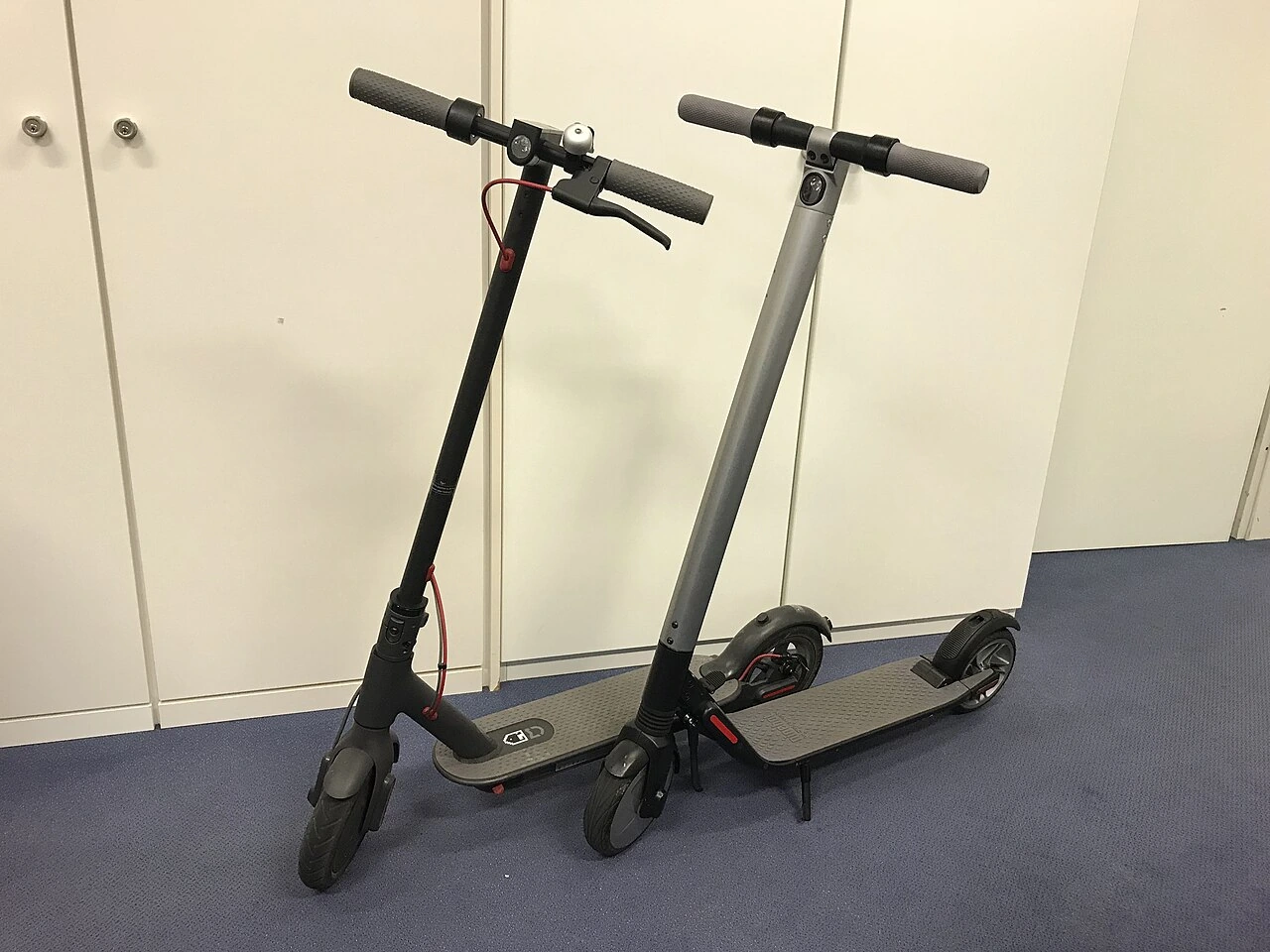
Just to clear the air: "Bird scooter" almost always refers to Bird's electric scooter-sharing service, not a bird species or bird product. If you were searching for whether you can store an e-scooter in your house, that's a totally different article. But if you're here because you want to keep a pet bird indoors and stumbled on an unusual term along the way, you're in exactly the right place. Everything below is practical, first-time-owner guidance for keeping a pet bird inside your home.
Getting the housing right: cage size, placement, and escape prevention
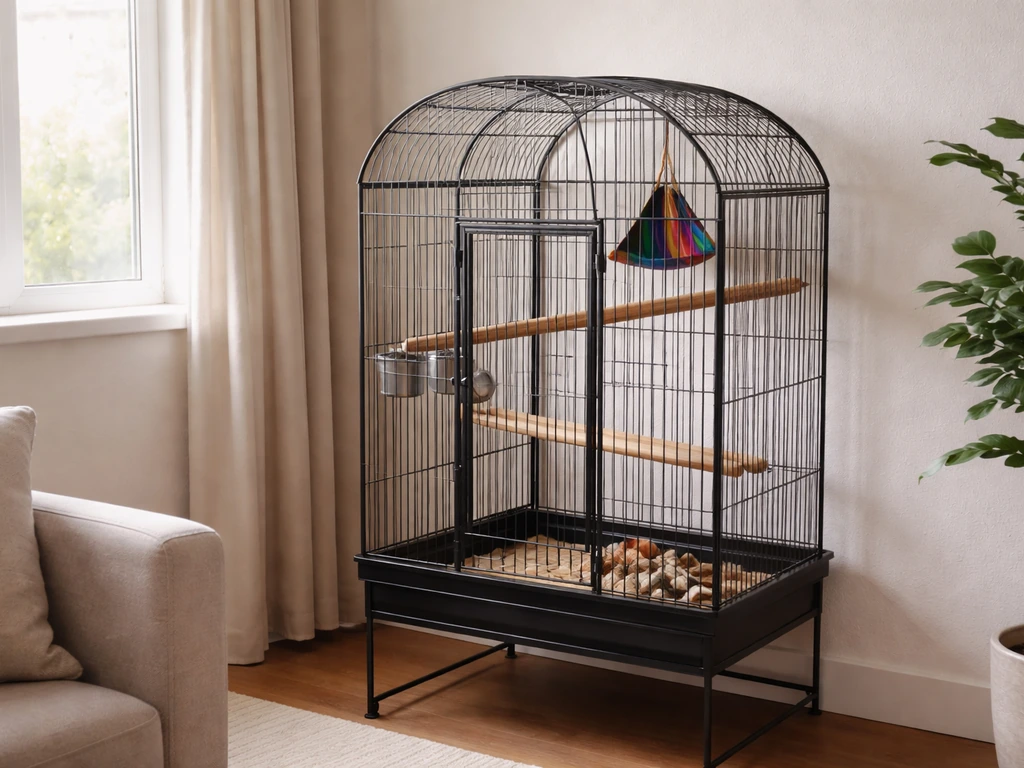
The cage is the single biggest decision you'll make, and most beginners underestimate the size they need. Bird hammocks can be safe, but you still need to choose durable materials, avoid anything that can snag toes or beaks, and check the placement so your bird stays secure safe placement. A good rule of thumb: buy the largest cage you can reasonably fit and afford.
The bird needs to be able to fully spread its wings without touching the bars, and it should have enough horizontal space to move between perches without awkwardly shuffling. Bar spacing also matters a lot. For small birds like budgies and cockatiels, bars should be no wider than half an inch apart so the bird can't squeeze through or get its head stuck.
Where you put the cage matters almost as much as the cage itself. Avoid placing it near exterior doors or windows that create cold drafts, near air conditioning or heating vents, or anywhere it gets direct midday sun with no shade. A corner of a living room or bedroom that gets natural light but not a direct blast of afternoon heat is usually ideal. Keep it off the kitchen entirely (more on why in the next section). The cage should sit at roughly eye level when you're standing, which helps the bird feel like an equal part of the household rather than an afterthought on the floor.
- Bar spacing for small birds (budgies, cockatiels): no more than 1/2 inch
- Bar spacing for medium birds (conures, small parrots): no more than 3/4 inch
- Minimum width: at least 1.5 times the bird's full wingspan
- Avoid drafty windows, HVAC vents, and direct strong sunlight
- Keep cage away from the kitchen at all times
- Eye-level placement reduces stress and makes socialization easier
- Latch the cage door with a secondary clip or carabiner, parrots especially can learn to open simple latches
When you do let the bird out for supervised free time, be aware that unsupervised free-roaming birds can get into serious trouble. Ceiling fans, open toilets, hot stovetops, and other pets are all real risks. Keep out-of-cage time intentional and supervised until you know your bird's habits well.
Air quality is not optional: the hazards that can kill your bird fast
Birds have incredibly efficient respiratory systems, which is exactly what makes them so vulnerable to airborne toxins. What gives you a mild headache can kill a budgie within minutes. This is the part of indoor bird ownership that new owners most often underestimate, and it's where things go tragically wrong.
Nonstick cookware (Teflon/PTFE): the number one indoor killer
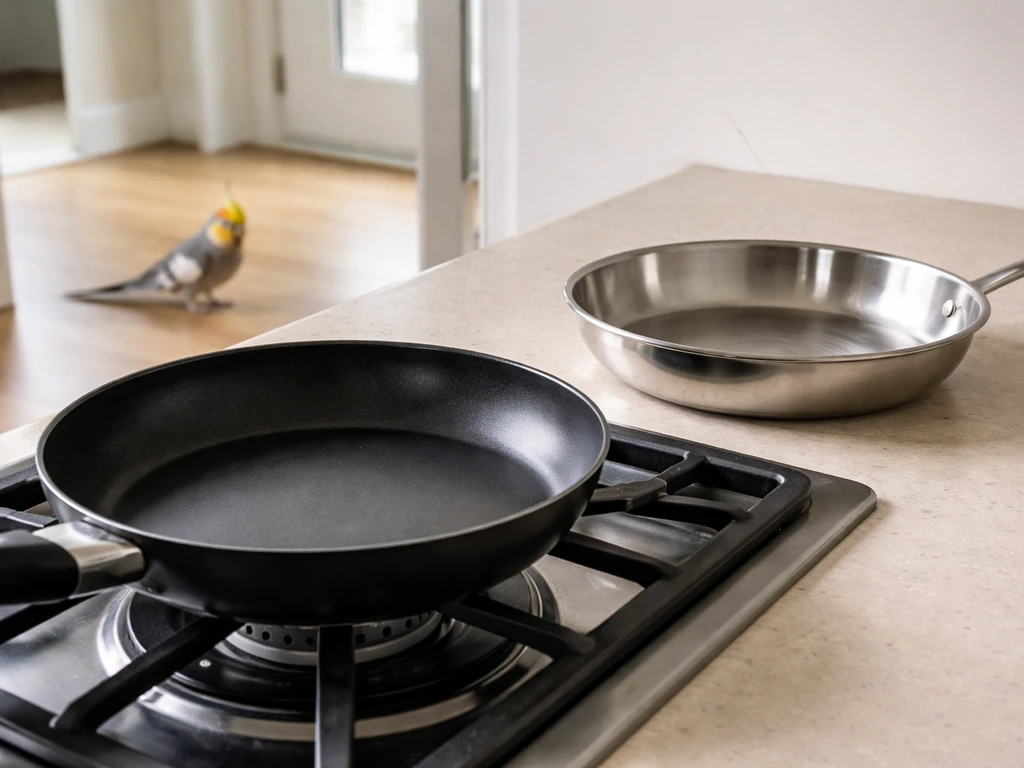
When PTFE-coated nonstick pans are overheated, they release toxic particles and acidic gases that are lethal to birds. This isn't a theoretical risk.
Documented cases exist of birds dying within minutes of a nonstick pan being left on high heat. The kitchen is the most dangerous room in your home for a pet bird, which is why the cage should never be placed there. If you cook with nonstick pans, do it with the kitchen well-ventilated and the bird in a room with the door closed. Better yet, replace nonstick cookware with stainless steel or cast iron entirely.
If you suspect your bird has been exposed, get it to fresh air immediately and call an avian vet. Pet Poison Helpline provides a 24/7 phone line at (855) 764-7661 so you can get immediate guidance in suspected pet poisoning situations.
Aerosols, fragrances, and cleaning products
Aerosol sprays including hairspray, air fresheners, scented candles, essential oil diffusers, and spray cleaning products are all hazardous to birds. Their airways are simply too sensitive for the chemical load these products introduce into the air. When you clean near the cage, use plain hot water and a non-toxic soap, and make sure the room is fully aired out before returning the bird. Scented candles and plug-in air fresheners should be kept out of any room where your bird spends time.
- Never use nonstick (PTFE/Teflon) cookware on high heat near a bird
- No aerosol sprays anywhere near the bird's room
- No scented candles, wax melts, or essential oil diffusers in the bird's space
- No cigarette or vape smoke in the home
- Ventilate the kitchen during all cooking, especially high-heat cooking
- Use non-toxic, fragrance-free cleaners for cage cleaning only
- If your bird looks suddenly lethargic or is breathing labored, move it to fresh air and call a vet immediately
Daily care basics: what the routine actually looks like
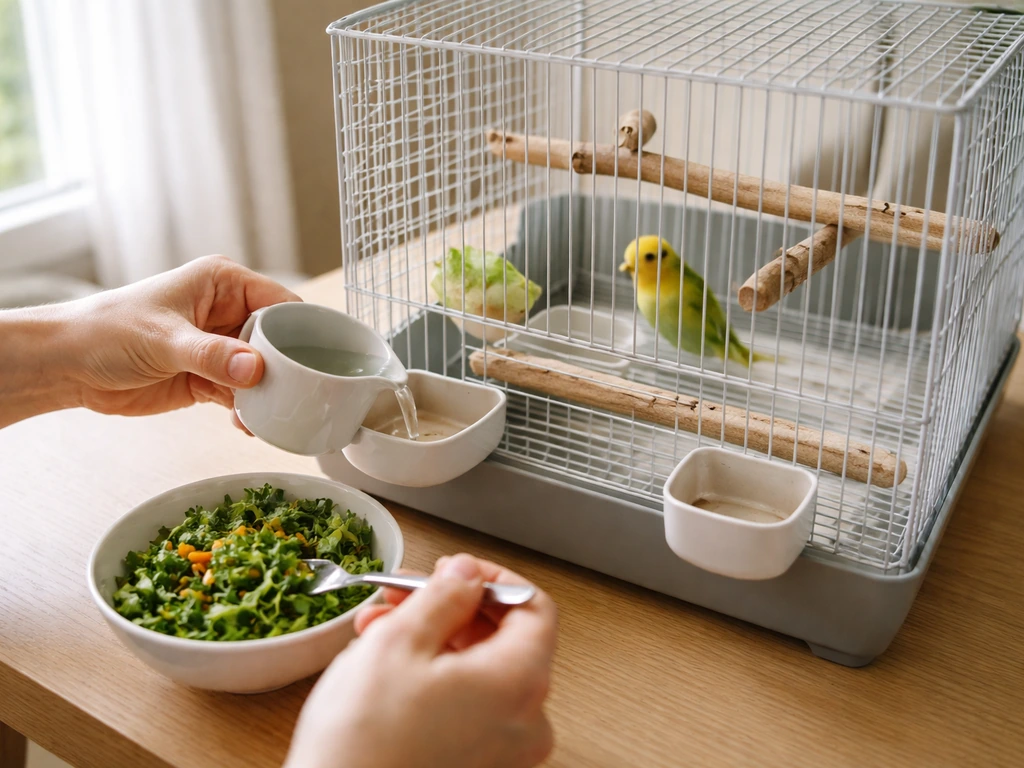
Indoor bird care is not passive. If you're expecting a low-maintenance pet, a bird will surprise you. The daily and weekly routine is manageable but it has to happen consistently.
Feeding
Seeds alone are not a complete diet, and relying on them is one of the most common beginner mistakes. Seeds are high in fat and low in the vitamins and minerals your bird needs long-term. A healthier diet is built around high-quality pellets as the base (roughly 70 to 80 percent of intake for most species), supplemented with fresh vegetables, small amounts of fruit, and occasional treats. For larger parrots, something close to 80 percent pellets, 10 to 15 percent vegetables, and 5 to 10 percent fruit is a widely recommended breakdown. Fresh food should be removed after a few hours so it doesn't spoil in the cage.
Water
Water dishes need to be washed with soap and hot water every single day, not just topped off. Stagnant water in a dish grows bacteria fast, especially when food particles fall in. If you use a water bottle instead of a dish, check that it's actually dispensing water daily and change the water daily regardless, since bottles can still harbor bacteria.
Cleaning schedule
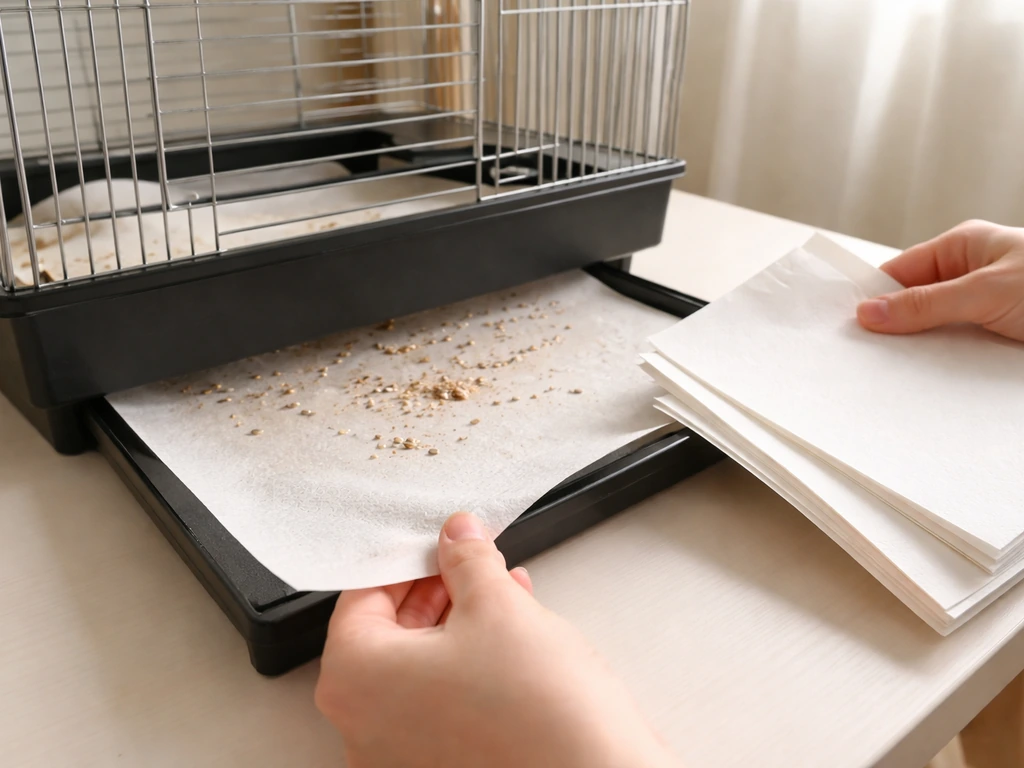
Line the bottom of the cage with plain paper, newspaper, or paper towels. Change this liner daily. It takes about 30 seconds and gives you a daily visual check of droppings, which is one of the earliest signals of a health problem. Beyond the liner, the full cage including bars, perches, and dishes needs a thorough scrub with non-toxic disinfectant soap and hot water at least once or twice a month.
Enrichment and training
Boredom is a genuine welfare issue for indoor birds. A bird that doesn't have enough mental stimulation can develop feather-destructive behavior, constant squawking, and biting. Rotate toys regularly so the cage environment stays interesting. Foraging toys (where the bird has to work to get a treat) are especially good at occupying time constructively.
Bird toys also need to be rat-safe if you are housing rats, so choose materials and cleaning habits carefully. Daily handling and out-of-cage interaction, even just 20 to 30 minutes, makes a significant difference in a bird's emotional health. Consistent, short training sessions using positive reinforcement also build trust and give the bird a mental workout. Bird swings and hammocks are popular enrichment additions too, and they're worth considering as part of a well-furnished cage setup.
Light and sleep
Birds need roughly 10 to 12 hours of uninterrupted sleep in a dark, quiet space. Indoor environments with TVs, room lighting, and late-night activity can easily disrupt this. A cage cover at a consistent bedtime helps a lot. Try to keep a predictable light/dark schedule that roughly mirrors natural daylight, because irregular schedules can cause hormonal stress over time.
Noise, mess, and social needs: the honest reality
I'll be straight with you: birds are messier and louder than most new owners expect. Seed husks, feather dust, and scattered food end up outside the cage regularly. A tray skirt or cage apron helps contain some of the mess, but you'll still be sweeping or vacuuming near the cage daily. If you're sensitive to dust or have respiratory conditions, factor this in seriously before committing. To encourage natural behavior outdoors, bird sounds can sometimes attract local birds, but indoors your focus should stay on safe, healthy conditions for your pet bird sounds attract birds.
On noise: every species is different, but most birds will vocalize at dawn and dusk at minimum. Some, like conures, are genuinely loud enough to annoy neighbors in an apartment. Cockatiels and budgies are much more manageable volume-wise. The noise itself isn't a problem indoors, but you need to be honest about your living situation and your tolerance before choosing a species. Bird sound playback can also be stressful or confusing for some birds, so use it carefully and prioritize natural interaction instead.
Social needs are the part people most often underestimate. Birds are social animals by nature, and a bird kept isolated with no interaction can become genuinely depressed. If you're away from home most of the day, consider keeping two birds so they can keep each other company, or commit to meaningful daily interaction when you're home. A lonely bird is a loud, unhappy bird, and that affects your quality of life indoors too.
Which bird actually makes sense for a first-time indoor owner
If you're still choosing your bird rather than already committed to one, this decision matters a lot for how manageable your indoor setup will be. The two most consistently recommended starter birds are the budgerigar (budgie) and the cockatiel. Both are well-suited to indoor living, are forgiving of beginner mistakes, and have noise and space requirements that fit most households. Neither requires a huge cage, though bigger is still better.
| Species | Noise Level | Space Needs | Social Needs | Beginner-Friendly |
|---|---|---|---|---|
| Budgerigar (Budgie) | Low to moderate | Smaller cage OK (min. 18x18x18 in.) | High, does well in pairs | Excellent |
| Cockatiel | Moderate | Medium cage (min. 20x20x24 in.) | High, very affectionate | Excellent |
| Conure (small species) | High | Medium-large cage | Very high, needs daily interaction | Moderate |
| Lovebird | Moderate | Medium cage | High, best kept in pairs | Good |
| Larger parrots (macaw, cockatoo) | Very high | Large aviary-style cage | Extremely high, very demanding | Not recommended for beginners |
If the term "bird scooter" was your way of referring to a specific bird you've heard about or seen somewhere, a budgie or cockatiel is almost certainly a better starting point than jumping straight to a larger parrot. Larger parrots can live 50 to 80 years, demand enormous amounts of daily interaction, and can develop serious behavioral problems if their needs aren't met. Start small, learn the fundamentals, and scale up if you want to later.
Your next steps today
If you're ready to move forward, here's what to do right now rather than spending another week researching in circles.
- Decide on a species: budgie or cockatiel if you're a first-timer with an average household and typical work schedule
- Find an avian vet in your area before you bring a bird home, not after, because regular avian vets are harder to find than general vets
- Buy the largest cage you can afford and fit, with correct bar spacing for your chosen species
- Identify and remove nonstick cookware from your kitchen, or commit to keeping the bird's room sealed during cooking
- Swap aerosol air fresheners and scented candles for fragrance-free alternatives throughout the home
- Stock up on a quality pellet-based diet formulated for your species before the bird arrives
- Set up a daily cage liner (newspaper or paper towels) and build the 5-minute daily cleaning habit from day one
- Plan for at least 20 to 30 minutes of out-of-cage supervised interaction every day
Indoor bird ownership is genuinely rewarding when the setup is right. The hazards are real but completely manageable once you know what they are. Get the air quality right, get the cage right, and commit to the daily routine, and you'll have a healthy, interactive bird that thrives inside your home for years.
FAQ
If you meant “Bird” the electric scooter, can you keep one inside like you would a pet bird setup?
That’s different from keeping a pet bird. Electric scooters should be stored in a dry, ventilated area away from heat, and you should follow the manufacturer’s charging and battery safety guidance (including not charging unattended). Don’t store a scooter near where a pet bird spends time, since any chemical smells, dirt, or cleaning residue from the scooter could affect indoor air quality.
Can you keep a bird indoors if you only let it out of the cage for a short time each day?
You can, but aim for consistent, supervised sessions rather than rare long playtimes. Even 20 to 30 minutes daily helps with trust and reduces cage stress. If you have any gaps in supervision, assume the bird will find hazards quickly, so you’ll want a “bird-proof” room (no ceiling fans, open toilets, or hot surfaces).
What’s the minimum cage setup for indoor safety beyond bar spacing?
Use perches that are varied in thickness, and avoid smooth dowels as the bird’s main grip because feet can get sore over time. Also place food and water where droppings are least likely to contaminate them, and confirm there are no loose cords, hanging toys, or strings the bird can tangle in.
Is it okay to keep a bird near a window if you close the curtains at night?
Sunlight is fine in moderation, but full-time window placement can create drafts and heat spikes even when curtains are used. If you use a window area, ensure the cage is not in direct midday sun, provide shade options inside the cage, and keep it away from HVAC vents to prevent respiratory stress.
How should you handle cleaning if you have nonstick pans and a pet bird at home?
The safest approach is to avoid nonstick entirely for any cooking in the home with a bird present. If you still use it, cook in another room with doors closed and ensure strong ventilation, then remove the bird from the area before cooking and keep it away until air has cleared. Never use candles, diffusers, or spray cleaners in the same space the bird uses.
Can you use air fresheners, vacuuming, or laundry scent products with a bird indoors?
It depends, but many scented products are risky. Avoid plug-in air fresheners and scented candles in bird rooms. For vacuuming, use a HEPA filter if possible and pause the bird’s time in the room until dust settles, and avoid heavily scented detergents on laundry that might off-gas in the same air space.
How often should you replace the cage liner paper to spot problems early?
Daily is the baseline, but also do quick checks mid-day if the droppings look watery, unusual in color, or dramatically different from the usual pattern. Birds can change droppings quickly with stress or diet shifts, so noticing it sooner helps you respond earlier.
What’s the right way to transition to pellet food if your bird currently eats mostly seeds?
Switch gradually over 2 to 4 weeks so the bird doesn’t refuse pellets out of preference. Offer pellets alongside the familiar foods first, keep fresh vegetables available, and remove them after a few hours. If the bird stops eating, don’t force pellets by starvation, contact an avian vet, and consider a species-appropriate pellet size.
Do birds need supplements if they eat pellets and vegetables?
Often they do not, but it depends on the species and the diet quality. If you’re already feeding the pellet-based ratio plus fresh produce, extra supplements can be unnecessary or imbalanced. A safer next step is to check with an avian vet, especially for calcium-related supplements if the bird’s species or diet history is unknown.
What’s the biggest “indoor bird” hazard people miss besides fumes?
Electrical hazards and small-room hazards. Chewable cords, open trash bins, and gaps where the bird can get stuck are common causes of injuries. Use cord covers, secure any dangling strings, and avoid leaving the bathroom or kitchen accessible during out-of-cage time.
Can you keep one bird indoors long-term if you work full-time?
It’s possible, but isolation is a major problem the article already points to, so plan for meaningful daily interaction. If you’re away most of the day, two birds can help with companionship, but you should still provide interaction when you’re home. Alternatively, invest in bird-safe enrichment and consider arranging a mid-day visit or sitter for companionship and training.
Next Articles
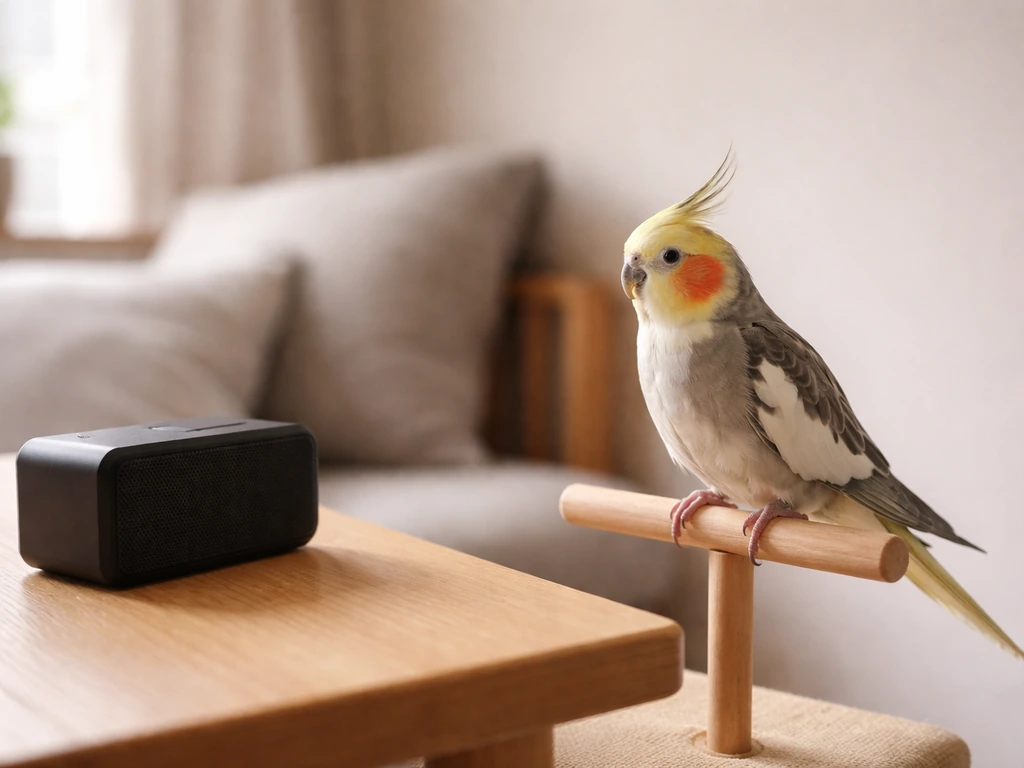
Is It Good to Play Bird Sounds for Your Bird?
When and how to play bird sounds for pet birds, with pros, cons, safer settings, and signs to stop if stressed.
Does Playing Bird Sounds Attract Birds? A Practical Guide
When bird song playback attracts birds and when it backfires, with how to match calls, place speakers, and avoid habitua
Garden Bird Checklist: Wild Species, IDs, and Tracking Tips
Ready-to-use wild garden bird checklist with IDs, field marks, tracking tips, and a bird station setup for beginners.