The short answer: yes, with conditions
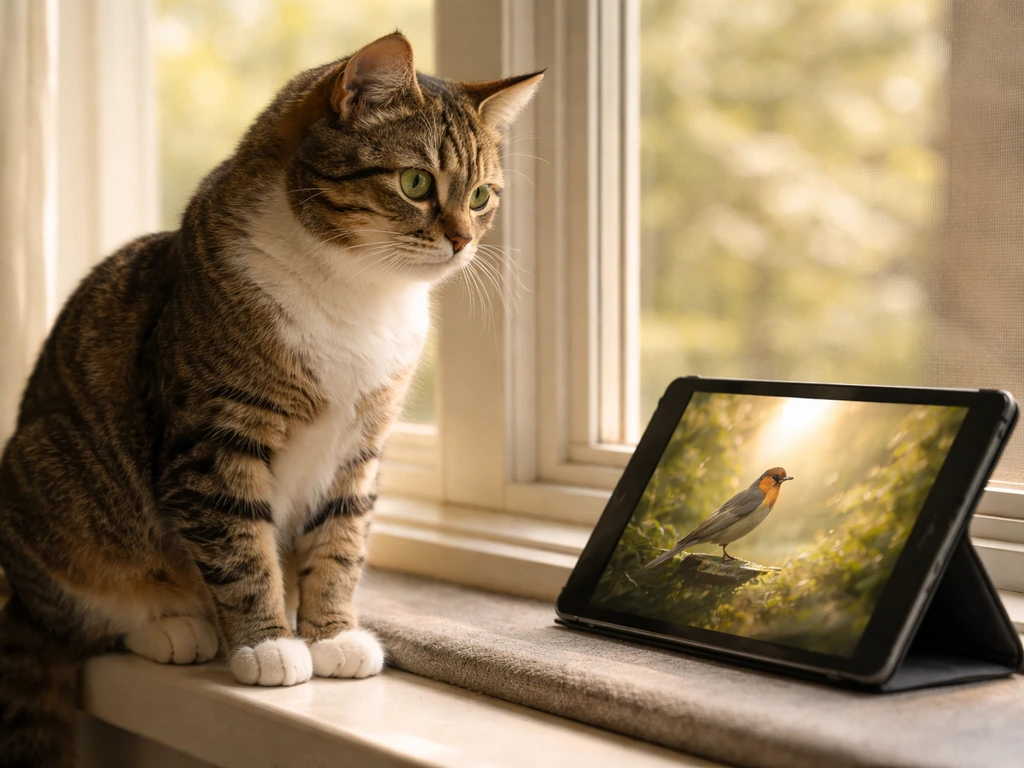
Bird videos are generally fine for cats to watch, and for many cats they provide a real, low-effort boost of mental stimulation. But "fine" is not the same as "always beneficial," and there are situations where the same video that entertains one cat will genuinely stress out another. The honest answer is: bird videos are a useful enrichment tool when used in short, supervised sessions, and a potential source of frustration or overstimulation when left running all day without any outlet for the energy they trigger. If you want the best bird videos for cats, choose content that keeps sessions short and supervised so your cat stays stimulated without tipping into stress bird videos are a useful enrichment tool. So the real question is not whether your cat can watch bird videos, but how you let them do it.
Why cats are so drawn to bird videos in the first place
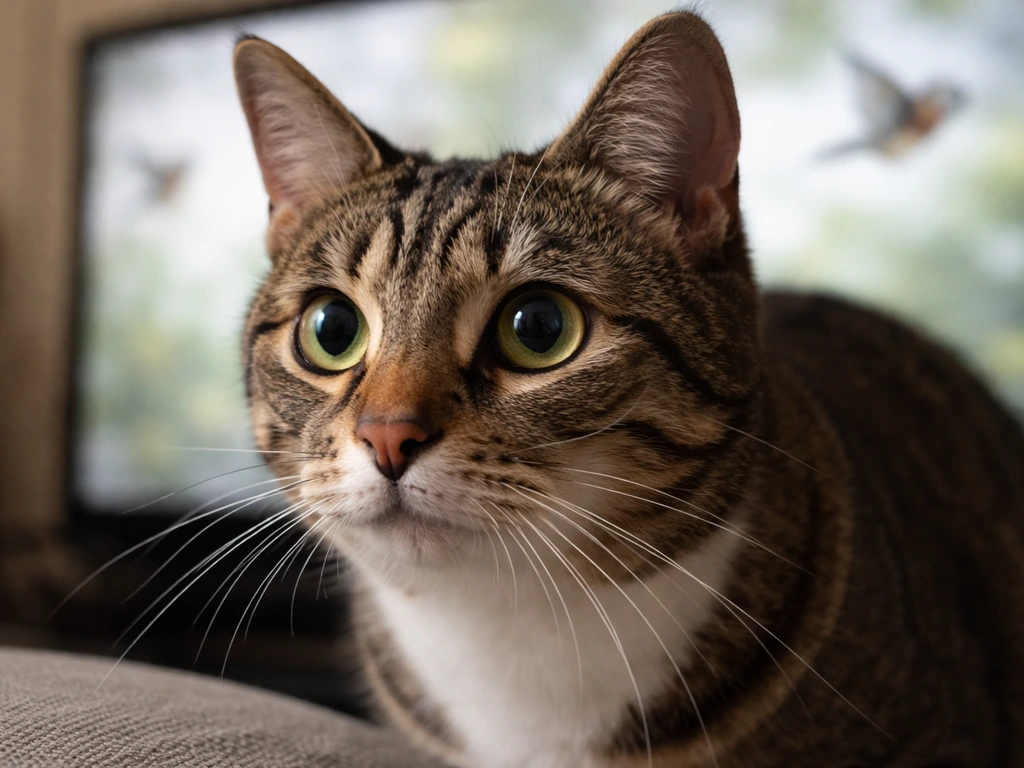
Cats are not watching bird videos because they find them relaxing the way you might watch a nature documentary. They are responding to a hardwired predatory sequence: stalk, pounce, kill, and eat. Research on feline visual systems confirms that cats' eyes are specifically tuned to detect quick, erratic movement, exactly the kind birds produce when hopping, fluttering, or darting across a screen. The flicker of wings and the unpredictable trajectory of a bird in flight hit all the right buttons neurologically.
What you are seeing when your cat locks onto the screen, dilates their pupils, and starts chirping or chattering is the beginning of that predatory sequence firing up. The stalk-and-pounce behavior that shows up in play with wand toys is driven by the same instinct. Bird videos essentially give that system something to latch onto, even if there is no real prey involved. That is not a bad thing by default, but it does mean you are activating a behavior sequence that is meant to end in a physical resolution, and a screen cannot provide that.
Real benefits vs. what bird videos cannot do
When used thoughtfully, bird videos offer genuine value for indoor cats. Visual stimulation that activates predatory attention is a recognized enrichment strategy, and for cats in smaller apartments or homes without a good window view, a tablet or TV showing bird footage can serve a similar function to a well-placed window perch overlooking a bird feeder. Mental engagement, even without physical movement, reduces boredom and can lower baseline stress for cats who lack other stimulation.
That said, there is a clear ceiling on what screen watching can do. It does not provide physical exercise. It does not give a cat the tactile satisfaction of actually catching and handling something. And it does not discharge the predatory energy it builds up. Think of it like showing someone a photograph of food when they are hungry. It might hold their attention briefly, but it will not satisfy the underlying drive. Bird videos work best as a supplement to real interactive play, not a replacement for it.
| Factor | Bird Videos | Real Interactive Play | Window Bird Feeder View |
|---|
| Mental stimulation | Good | Good | Good |
| Physical exercise | None | High | None |
| Discharges predatory energy | No | Yes | Partial |
| Risk of frustration | Moderate | Low (with proper play) | Low |
| Cost/effort | Very low | Low (daily commitment) | Low-moderate (setup) |
| Best use case | Short solo enrichment sessions | Daily core enrichment | Passive background enrichment |
The risks you need to know about
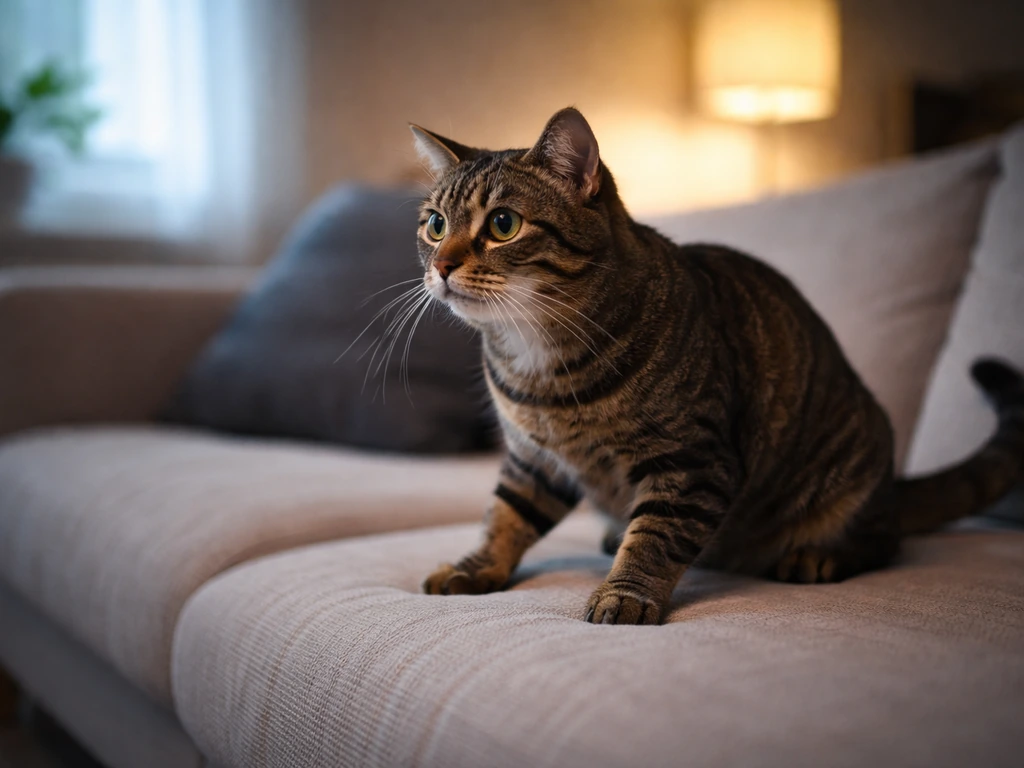
The biggest issue with bird videos is overstimulation. When a cat watches a bird on screen, the predatory system activates but never gets to complete its cycle. If that arousal keeps building without a release, you can end up with a cat that is genuinely agitated: dilated pupils, skin rippling or twitching along the back, increased vocalizations like growling or yowling, and body language shifting from playful to tense. These are not signs your cat is enjoying themselves; they are signs the stimulus has pushed past the point of enrichment into stress territory.
Redirected aggression is the more serious concern. This happens when a cat gets highly aroused by something it cannot reach or control, and then redirects that aggression toward whoever or whatever is nearby: you, another pet, or even a pet bird living in the same home. A cat that has been fixated on bird videos for an extended period and then suddenly lashes out is experiencing redirected aggression, and it can be genuinely alarming if you are not expecting it. If you share your home with a pet bird, this is worth taking seriously.
Fixation is another pattern to watch. Some cats develop a habit of sitting in front of the screen for hours, becoming agitated when it is turned off, or ignoring food and social interaction to return to it. That level of obsessive engagement is not enrichment anymore; it is a stress response that has settled into a compulsive loop. Certain cats, especially those who are already anxious or under-stimulated in their environment, are more vulnerable to this.
How to set up bird video watching safely
Start with short sessions, somewhere in the 10 to 20 minute range, and stay in the room the first few times. You want to see how your individual cat responds before you start treating it as a routine enrichment tool. Some cats watch calmly, make a few excited chirps, and then wander off when they lose interest. That is a good sign. Others escalate quickly, and you need to catch that early.
Setup matters more than most people think. Put the screen at a height your cat can comfortably watch without straining, ideally at or just below eye level when they are sitting. Avoid placing the screen right next to your pet bird's cage or near other animals that could become a redirected aggression target. Keep the volume low or off entirely because bird sounds can be more arousing than the visuals alone, and a cat that is already worked up from the image does not need audio fuel added to it.
Always follow a bird video session with an interactive play session using a wand toy. This is the step most people skip, and it makes a real difference. The play session lets the predatory energy that built up during the video actually discharge through movement, so the cat finishes in a calm, satisfied state rather than a wound-up one. Think of the video as the warm-up and the wand toy as the workout.
- Keep initial sessions to 10-20 minutes and stay nearby to observe.
- Place the screen at the cat's eye level, away from pet bird enclosures and other animals.
- Keep audio low or muted to reduce arousal intensity.
- Follow every session with 5-10 minutes of interactive wand toy play.
- Do not leave bird videos running on a loop unattended for hours.
- Turn the screen off if you see escalating stress signals.
Signs your cat is not okay and what to do
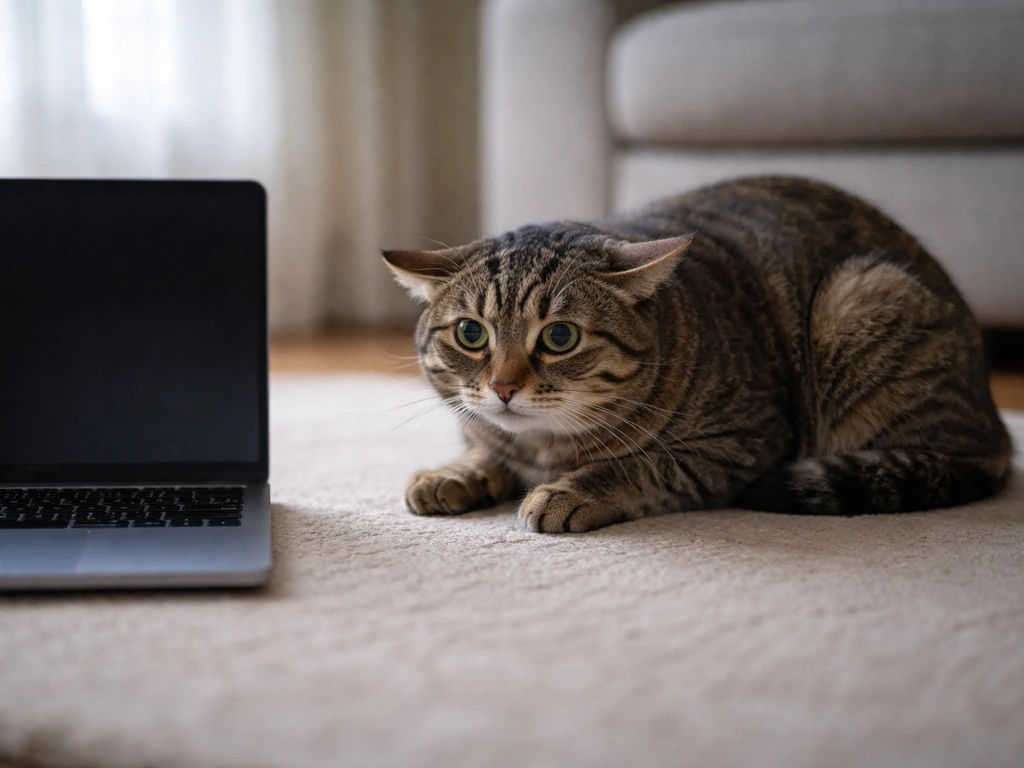
There is a clear difference between an engaged, playfully excited cat and a cat that is heading toward overstimulation. Calm engagement looks like wide eyes, soft chattering, occasional tail movement, and relaxed posture overall. The cat may reach out toward the screen or chirp, but the body stays loose. That is fine.
Stop the session if you see any of these warning signs: ears flattened back, tail lashing hard and fast, fur standing up along the spine, skin rippling or twitching, low growling or yowling, aggressive pawing at the screen, or a sudden freeze-and-crouch posture. These are the body language equivalents of a red light. Turn the screen off, give the cat space to decompress, and do not try to pet or pick them up immediately because redirected aggression can happen in that window even after the screen is off.
If your cat consistently reacts badly to bird videos, the simple answer is to drop them from the rotation entirely. Not every enrichment tool works for every cat, and forcing it because it seems like it should be fun is not a useful approach. Cats with high predatory drive and low frustration tolerance often do much better with real interactive play than with passive screen time.
Better enrichment options to use alongside (or instead of) bird videos
The most reliable enrichment strategy for cats is daily interactive play with a wand toy, because it mimics actual prey movement and lets the full predatory sequence complete. Ten to fifteen minutes twice a day covers most indoor cats' needs and produces a noticeably calmer, more content animal. The difference between a cat that gets regular wand toy play and one that does not is genuinely dramatic over time.
A window perch positioned near real outdoor bird activity, like a feeder mounted outside the glass, gives cats passive visual enrichment that closely mimics what makes bird videos appealing, but with real, unpredictable movement and natural light. It is lower-intensity than a screen right in front of them, which actually makes it better for cats that tip into overstimulation easily. If you keep pet birds yourself, you will already know how much activity a feeder creates outside, and that same activity benefits your cat without putting your birds at any risk. If you also use a feeder or a perch for pet birds, watch how your cat reacts so the stimulation stays positive.
Puzzle feeders and food-dispensing toys are another high-value option that directly engages the hunting instinct in a constructive way. Instead of watching prey, the cat is actively working to get food out of an object, which approximates the catch-and-eat portion of the predatory sequence. These are especially useful for cats that eat too fast or seem bored between play sessions.
- Wand toy play (10-15 minutes, twice daily): the most effective core enrichment for most cats.
- Window perch with outdoor bird feeder: passive, low-intensity visual stimulation with no screen-related downsides.
- Puzzle feeders and food-dispensing toys: engage hunting instincts through active problem-solving.
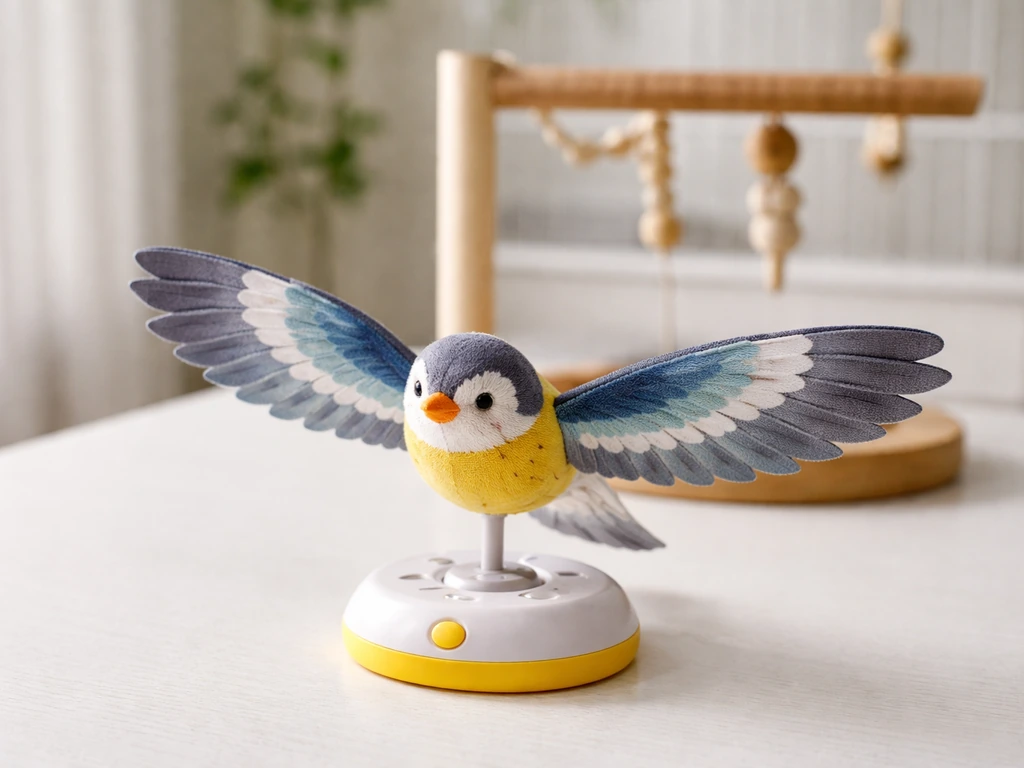
- Interactive bird-shaped or flapping toy designs: give physical engagement for cats who want to actually catch something.
- Cardboard boxes, tunnels, and climbing structures: support exploratory behavior and reduce ambient boredom.
- Rotating toy selection: novelty matters; cats habituate quickly, so switching toys every few days keeps interest high.
Bird videos are a genuinely useful tool in the right context. They are just not a shortcut around the need for real play, and they carry real risks when overdone. Use them as one item in a broader enrichment toolkit, follow the sessions with physical play to discharge built-up arousal, and pay attention to how your specific cat responds. Bird videos are a useful enrichment option too, but the best flapping bird cat toy can help you go straight to interactive, physical predatory play. That combination will get you most of the benefit with very little of the downside.