The best flapping bird cat toy for most cats right now is the PetSafe Peek-a-Bird, and it is safe to use around pet birds as long as you keep them in separate rooms during play sessions. It has a covered battery compartment, motion-activated shutoff, and predictable flap motion that engages cats without the erratic unpredictability that causes overstimulation. If you also own pet birds, the bigger issue is not the toy itself but whether your bird can see or hear a cat in full hunt mode nearby. That stress alone can be harmful to birds even with no physical contact involved.
Best Flapping Bird Cat Toy: Safe Choosing and Setup Guide
Marcus Chen
23 Apr 2026
What flapping bird cat toys actually are
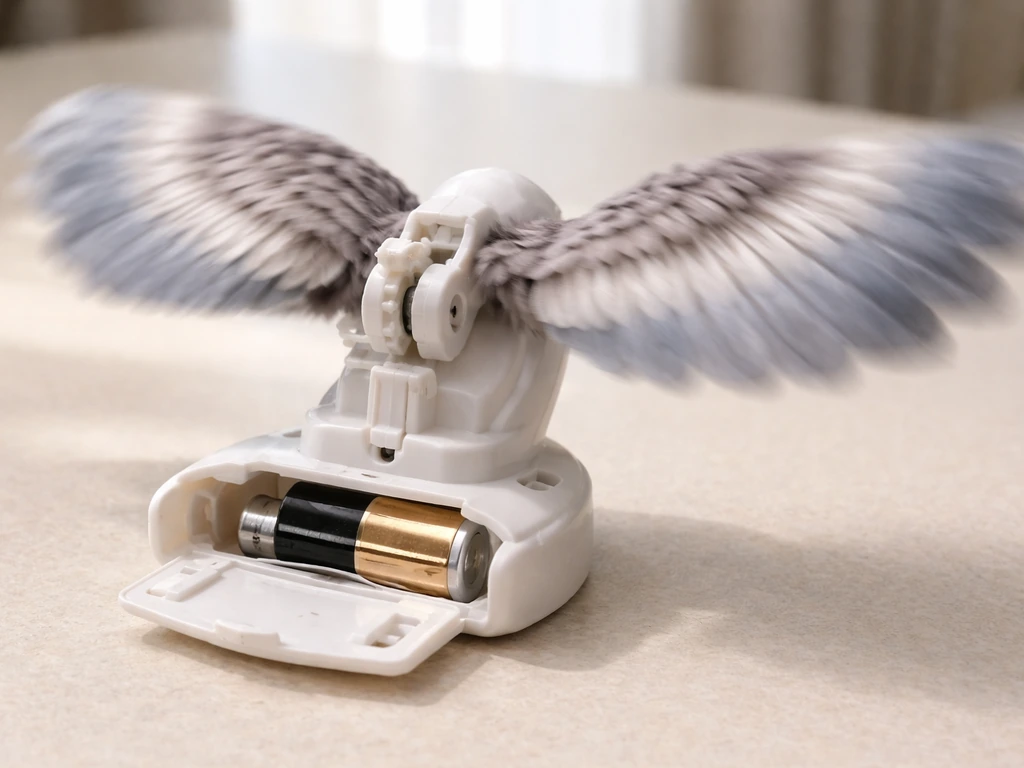
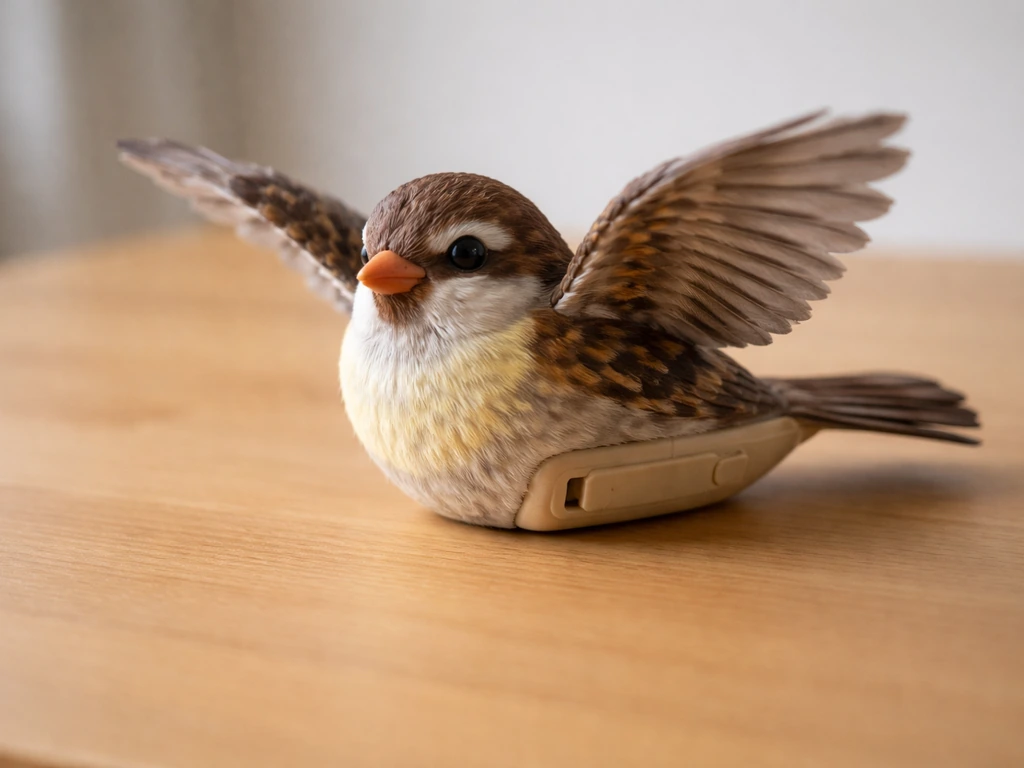
Flapping bird cat toys are motorized toys that mimic the wing movement of a bird. Most use a small electric motor powered by AA, AAA, or button-cell batteries to drive a spinning or oscillating arm, which is tipped with a feathered or fabric "bird" that flaps or swoops in a looping arc. Some versions, like the Gigwi Melody Beating Wings, hang from a doorframe and beat in place. Others, like the PetSafe Peek-a-Bird, pop up from a base unit and retract again in a hide-and-reveal motion. A few are simple wand attachments you operate by hand.
The appeal is obvious: birds move in ways that trigger cats at a deep instinctual level. The combination of irregular flapping, bright feather colors, and sometimes chirping sounds hits the prey-detection circuits in a cat's brain in a way a static stuffed toy simply cannot. For cats that live indoors and don't get enough active stimulation, these toys genuinely help. For people who also keep pet birds, they introduce a layer of complexity worth thinking through carefully.
How to pick the right one: safety, size, motion, and durability
The single most important safety factor is the battery compartment. The CPSC has issued warnings specifically about cat toys with accessible lithium coin (button) batteries, because those batteries are lethal if swallowed by children or pets. Avoid any toy where the battery door is loose, missing a screw, or where the battery can be reached by a persistent chewer. The PetSafe Peek-a-Bird uses a screwed battery compartment, which is the standard you want. Always check this before buying.
Beyond batteries, the American Humane Society points to small parts, sharp edges, and toxic materials as the leading causes of toy-related pet injuries. On flapping bird toys specifically, watch out for thin wire armatures that can bend and expose sharp ends, cheaply glued feathers that pull off and become choking hazards, and plastic housings that crack into sharp shards under repeated impact. A toy that your cat will attack repeatedly needs to be built to take that punishment.
Size matters more than most buyers realize. A very small flapping toy can be batted across the room and lost under furniture, killing the play session fast. A toy that's too large and slow may not trigger the quick-strike instinct. For most domestic cats, a "bird" attachment roughly the size of a sparrow (about 4 to 6 inches including tail feathers) hits the sweet spot. Match flap speed to your cat's energy level: older or calmer cats do better with a slower, more predictable arc, while younger high-energy cats need faster, less predictable motion.
| Feature | What to look for | Red flags |
|---|---|---|
| Battery type | AA or AAA with screwed door | Accessible coin/button cell batteries |
| Feather attachment | Knotted or sewn, not just glued | Feathers that pull off easily with light tugging |
| Housing material | Thick ABS plastic or rubberized casing | Thin brittle plastic that cracks on impact |
| Motion type | Looping or hide-reveal arc | Single-direction spin only (cats learn it fast) |
| Auto shutoff | Motion-activated or timed shutoff | Runs continuously until battery dies |
| Replacement parts | Spare feather attachments sold separately | No replacement parts available |
Features that matter if you actually care about birds
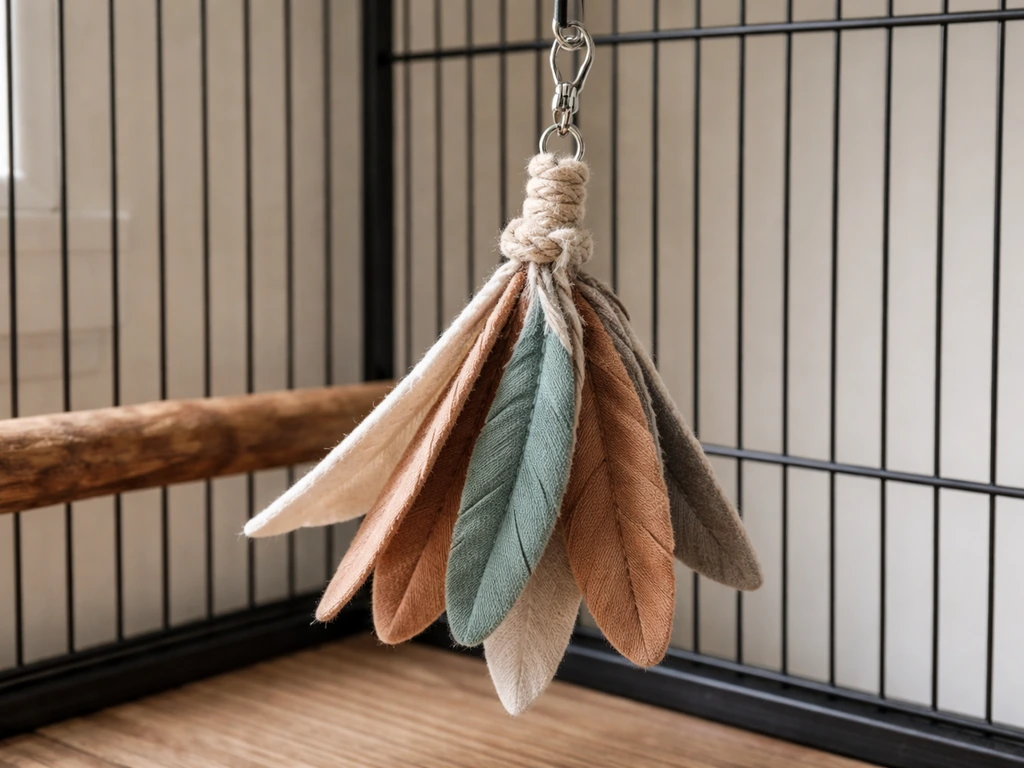
Here is where this gets personal: if you own pet birds, you probably have feelings about toys that turn birds into prey targets. I get it. But there is a real difference between a toy that superficially looks like a bird and one that realistically mimics distress calls or precise wing patterns. Most commercial flapping bird toys use generic feathers and simple motor motion. They are not accurate enough to be mistaken for a specific species, and most do not produce authentic bird calls. That gap between "bird-like" and "bird-accurate" is actually reassuring from a bird-owner perspective. If you want the best flying bird cat toy, look for one that provides safe, controlled motion and uses a secure battery compartment.
What you want in a flapping bird toy for enrichment purposes is realistic enough motion to engage the cat, but not so realistic in sound that it triggers a sustained predatory fixation that your cat then redirects at your actual pet birds. Avoid toys that play recorded bird distress calls on a loop, and be cautious with toys that produce very high-pitched chirping, which can carry through walls and stress birds in adjacent rooms. A toy with a simple motor hum or silent operation is better in a multi-pet bird household.
- Motion realism: looping or flapping wing motion, not spinning in circles
- Sound: silent or low-hum motor preferred; avoid distress-call recordings
- Feather material: synthetic or ethically sourced, not bright dyed real feathers that shed fine particles
- Durability rating: look for toys explicitly marketed as chew-resistant or heavy-duty
- Replacement feather sets sold separately so you do not have to replace the whole unit
- Auto shutoff to prevent obsessive play loops that lead to overstimulation
Setting it up and running the first play session safely
The Wisconsin Humane Society's guidance on wand toys applies directly here: maintaining distance and control between the cat and the toy (and by extension, between the cat and anything that resembles the toy's target) is how you keep play safe and structured. With a flapping bird toy, "control" means you are in the room, the bird room is closed, and you are watching for signs that play is tipping from fun into fixation.
- Close all doors between the play space and any room where your pet birds are kept before starting.
- Place the toy on a flat, non-slip surface with enough clearance for your cat to approach from multiple angles without being cornered.
- Turn it on and let your cat observe it for 30 to 60 seconds before engaging. This prevents startling and lets the cat size up the "prey."
- Keep initial sessions short: 5 to 10 minutes is plenty for a first introduction.
- Watch your cat's body language throughout. Slow blinks, relaxed tail, and pause-and-pounce rhythm are good signs. Flattened ears, dilated pupils that stay that way, and growling are signs to end the session.
- End by letting your cat "catch" the bird (hold it still or power down) so the session ends with a sense of completion, not frustration.
- Follow up with a small food reward to complete the hunt-catch-eat cycle and help your cat settle.
The Connecticut Humane Society's advice to end play sessions before overstimulation kicks in is key here. The moment your cat shifts from playful pouncing to rigid, tunnel-vision stalking with no breaks, the session is already going too long. For most cats, 10 to 15 minutes per session, two to three times a day, is enough. Leaving a motorized toy running unsupervised is a mistake both for overstimulation reasons and because it accelerates wear on the toy and increases the risk of your cat accessing damaged parts.
Your buying checklist, cleaning routine, and when to replace
Before you buy
- Battery compartment has a screw closure, not a friction fit or snap
- No accessible coin or button cell batteries
- Feather attachment is secured by knot or stitch, not glue alone
- Replacement feather sets are available from the same manufacturer
- Housing is thick plastic or rubberized, not thin hollow shell
- Motion includes at least two patterns or speeds
- Auto shutoff or timer mode included
- No recorded distress calls if you have pet birds in the home
Cleaning and maintenance
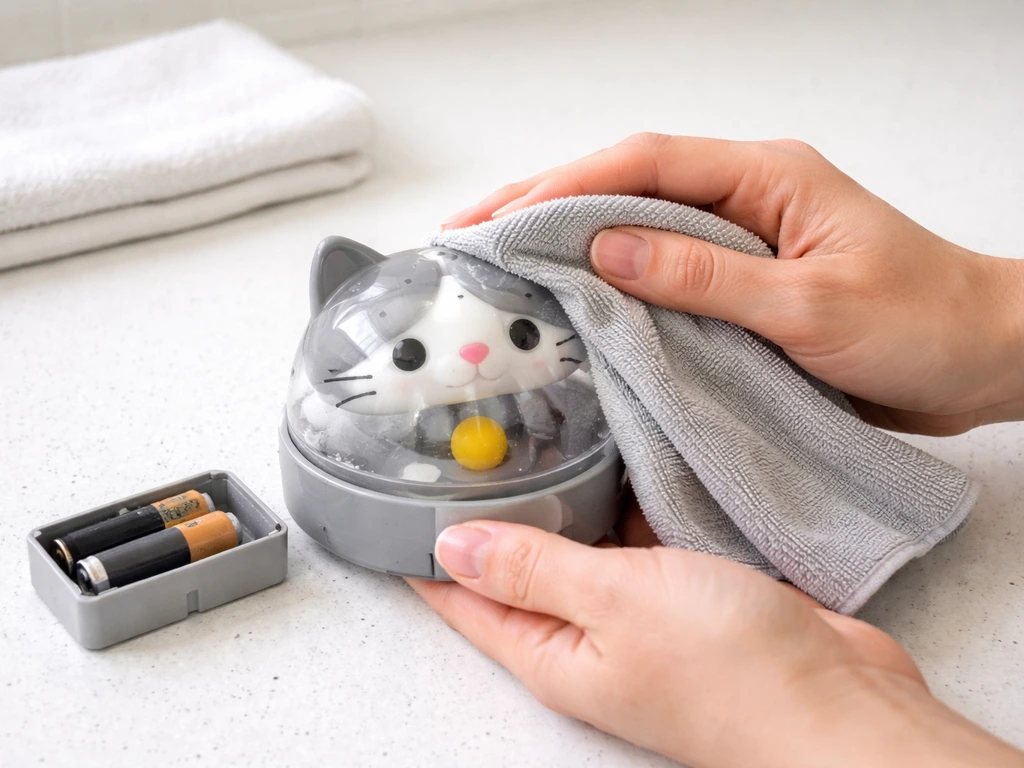
Wipe down the plastic housing with a damp cloth and mild unscented soap after every few sessions. Cats deposit saliva on toys during play, which builds up and can harbor bacteria. Never submerge the motor unit in water. The feather or fabric attachment can usually be removed and hand-washed in cool water, then air-dried completely before reattaching. Check battery contacts for corrosion every month. If you see any greenish residue on the contacts, clean it with a dry cotton swab before it causes contact failure.
When to replace
- Feather attachment is more than 50% missing or frayed to bare wire
- Plastic housing has cracks, sharp edges, or missing pieces
- Motor produces grinding noise or inconsistent speed
- Battery contacts are corroded beyond cleaning
- Your cat has chewed through any part of the tether or base
- The toy has been dropped in water or left in outdoor humidity
Common problems and how to fix them
The toy won't flap or stops mid-session
Nine times out of ten this is a battery contact issue, not a broken motor. Pop the battery door, remove the batteries, and press firmly on the metal contact springs to restore their tension. Wipe the contacts with a dry cloth. Reinsert fresh batteries. If the toy still won't run, check whether the feather arm is tangled or jammed against the housing, which stalls the motor. Clear the obstruction and try again. If the motor runs but the arm doesn't move, the drive pin or arm attachment has likely broken and the toy needs replacing.
Your cat is chewing the toy instead of playing with it
Some cats, especially kittens and cats with high prey drive, will immediately try to carry or chew the toy rather than bat at it. If this happens, stop the session immediately and inspect the toy for damage. A toy your cat can pick up and chew is a choking hazard, full stop. Switch to a toy with a weighted, non-portable base (like the Peek-a-Bird, which sits in a base unit) rather than a free-standing or hanging toy. If chewing persists, the toy is not right for this cat's play style and you should try a wand-style alternative you operate manually.
Your cat is getting overstimulated
Signs of overstimulation include pupils that stay fully dilated even after the toy stops, growling or hissing at you when you end the session, redirected aggression toward furniture or other pets, and inability to settle for 30-plus minutes after play. If this is happening, cut session length in half and add the food-reward cooldown at the end of every single session without exception. If your cat is still overstimulated on short sessions, this particular toy's motion pattern may simply be too triggering for them. A slower, less erratic toy or a standard wand toy with human-controlled pacing will serve them better.
Parts are shedding into the environment
Feather dust, dye particles, and small plastic fragments from a deteriorating toy are a real concern in any home, but especially in a bird household where air quality already needs careful management. If you notice feather fibers accumulating on floors or in your bird's space, retire the toy immediately. Synthetic feathers from low-quality toys can shed fine particles that irritate bird respiratory tracts, which are far more sensitive than a cat's or a human's. This is another reason to buy from established brands with quality materials and to replace attachments on schedule rather than running them to failure.
Is it safe to use a flapping bird toy if you have pet birds?
Yes, with clear boundaries in place. The toy itself is not the danger: the cat's activated predatory state afterward is what you need to manage. Vetstreet's guidance is direct on this point: a cat that is actively stalking or fixated on prey should be physically separated from pet birds. A 20-minute flapping bird play session does not just end when you turn the toy off. Your cat may remain in a heightened arousal state for another 15 to 30 minutes, and during that window you do not want them anywhere near a bird cage.
The practical rule is to always play in a closed room away from your bird's space, then give your cat the full post-play cooldown period (food, rest, settle) before you open any doors. Even if your cat and bird have coexisted peacefully for years, a cat mid-arousal from a predatory play session is operating on instinct, not learned behavior. The coexistence you've built up over months can evaporate in seconds if you skip this step.
Air quality and scent are secondary concerns worth noting. If your cat's toy uses dyed real feathers or heavily scented materials, keep it stored in a sealed bag between sessions and away from your bird room. Birds have highly efficient respiratory systems that are sensitive to airborne particles, synthetic dyes, and off-gassing from new plastics. Unscented, synthetic-feather toys stored separately eliminate most of this risk. It is the same category of concern as using non-stick cookware or scented candles near birds: the risk is manageable if you stay aware of it.
One more thing worth mentioning: if you're interested in enrichment ideas for cats who love birds from an observational standpoint, there is real value in bird-watching setups and bird videos designed for cats as lower-stimulation alternatives on days when a full flapping-toy session is not practical. Bird videos can be a useful low-stimulation option for cats, and if you are looking for the best bird videos for cats, compare a few cat-focused playlists before you try them. If you want an even calmer alternative, bird-watching can help satisfy your cat's interest in birds without triggering a chase response. Bird watching can be a gentler, lower-stimulation way to offer enrichment to cats, as long as you manage their stress and keep them from fixating too intensely bird-watching setups. Bird videos can be a useful low-stimulation option for cats, but they still should not replace interactive, supervised play. These options engage the cat's interest in birds without the predatory arousal spike, which makes them a gentler complement to active toy play in a multi-species home.
FAQ
Can I let my cat and pet bird be in the same room while the flapping bird cat toy is running?
Yes, but treat it as a supervised, short-session activity only. Keep the bird in its closed room, play with the toy in a separate space, then wait through the full post-play cooldown before allowing any contact with the cage or the bird’s play area. If your cat shows fixation signs, reduce session length and consider a slower toy or a wand you control manually.
What if my cat tries to pick up or carry the toy instead of batting at it?
Do not. Even if the toy’s battery door is secure, a toy that is small enough to be carried or carried back to the bird area effectively bypasses your room-separation plan. For cats that pick up the toy, switch to a non-portable, base-mounted style or switch to a wand toy you hold, then store the toy out of reach between sessions.
How can I tell when the flapping bird toy is no longer safe to use?
Use a quick “visual checks first” routine. After each session, look for loose feathers or fabric tears, exposed wires, cracks in the plastic housing, and any feather shedding. If you see any sharp edges, stop using it immediately, since repeated impact can worsen damage even if the toy still runs.
My toy’s motor runs but the bird doesn’t flap. What should I check first?
If you hear the motor run but the arm does not move, first clear the most common mechanical causes: check for tangling, a jammed feather attachment, or an obstruction against the housing. If it still fails, inspect the drive pin or arm connection, because a broken drive part usually means replacement rather than continued troubleshooting.
What kind of sound setting is safest around pet birds (chirps, distress calls, or silent)?
In a bird household, aim for lower-pitched, non-distress audio if your toy has sound. Avoid looped distress call recordings and be cautious with high-pitched chirps, which can travel and stress birds in adjacent rooms. If your cat also becomes overly fixated, prioritize silent or simple motor hum models.
How do I choose the right size and flap speed for my cat?
Start smaller and simpler. Most cats do best when the toy’s “bird” is around sparrow-size (roughly 4 to 6 inches including the tail), but if your cat misses repeatedly or can bat the toy out of sight, adjust down in footprint or switch to a base-mounted design. Match speed too, older cats often prefer slower, more predictable motion.
How long should I run the flapping bird cat toy before stopping?
10 to 15 minutes per session is a strong default for many cats, with two to three sessions per day. If overstimulation signs show up, cut the next session in half and add the food-reward cooldown every time. If your cat cannot settle for about half an hour after play, that toy’s motion pattern is likely too triggering.
Is it ever okay to let my cat chew on the toy briefly?
Yes, but rotate safety controls. For cats that chew, the priority is preventing access to a chewable, portable item. Make sessions supervised, use a weighed base style, remove the toy immediately when chewing starts, and if it continues, switch to a wand alternative you actively manage.
How often should I inspect batteries and contacts, and what symptoms point to battery problems?
Plan battery checks as part of normal maintenance. Clean any corrosion on the battery contacts monthly and avoid leaving old batteries in the toy for long stretches. If the toy intermittently stops or the arm movement changes, contact issues and battery tension are more common than a burned-out motor.
What should I do if my bird seems stressed even when I separate rooms?
If your bird is already stressed by cat presence, use an extra buffer. Play when the bird room is closed, then only re-open after your cat has had time to fully settle (not just after the toy turns off). If you notice cage tension, calling, crouching, or frantic behavior, increase separation time or choose a lower-stimulation alternative like bird videos.