
The best bird videos for cats are close-up, slow-to-medium paced footage of real birds at feeders or foraging on the ground, with natural ambient sound and minimal editing. That combination triggers your cat's stalk-and-watch instinct without the chaotic cuts and music overlays that cause most cats to lose interest or get overstimulated within minutes. YouTube channels dedicated to backyard bird feeders, filmed in 4K with good natural audio, are genuinely the sweet spot right now in 2026, and they're free. In fact, bird-watching for cats can be beneficial when the content is calm, the sessions are short, and you pair it with real play is bird watching good for cats.
Best Bird Videos for Cats: What to Watch and Setup Tips

Marcus Chen
26 Apr 2026
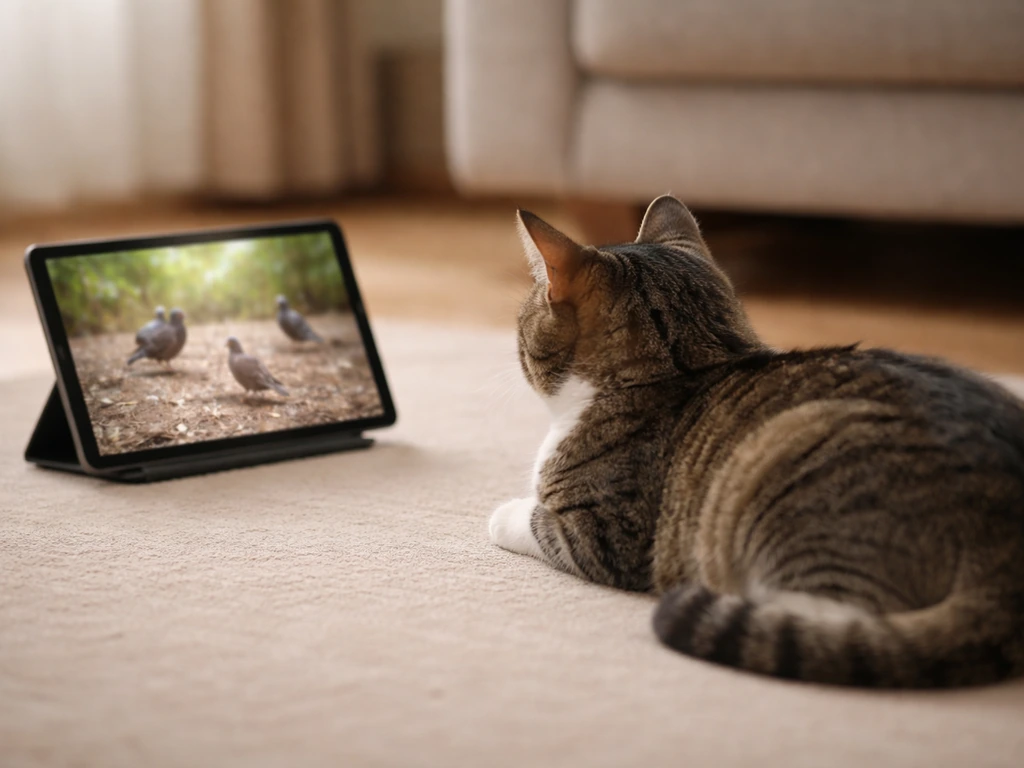
Why bird videos actually work for cats
Cats are hardwired to hunt in a specific sequence: stare, stalk, chase, pounce, grab, kill bite. Bird videos essentially hijack the first two stages of that sequence. The movement of a bird hopping along a branch or pecking at seeds fires up the same neural pathways that get activated by a real mouse or sparrow. It's not that your cat is confused about whether the bird is real, most cats figure that out fairly quickly. What keeps them watching is that the motion pattern is inherently interesting to a predator's brain.
For indoor cats especially, this matters. The ASPCA frames blank" rel="noopener noreferrer">environmental stimulation as essential for indoor cat welfare, not optional. Bird videos are one of the easiest ways to deliver that stimulation on days when you can't squeeze in as much interactive play. That said, video watching alone doesn't complete the prey sequence, your cat never gets to pounce, grab, or "catch" anything. That's why pairing videos with real interactive play is so important, and I'll come back to that in detail later.
How to choose the best bird videos for your cat
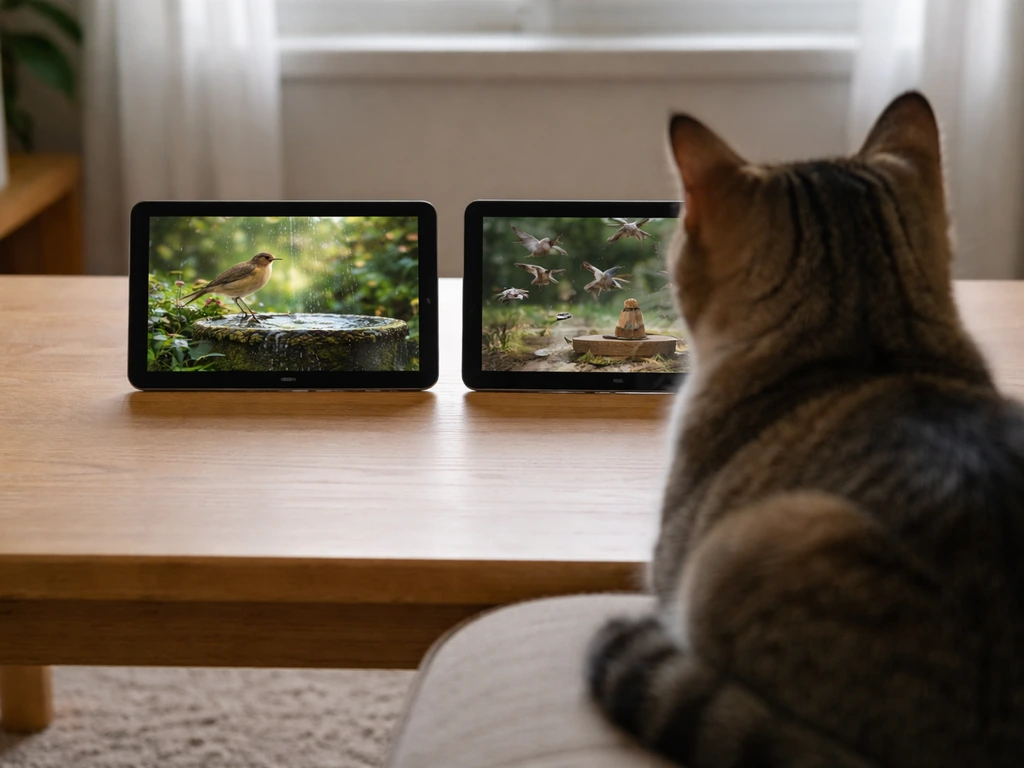
Not every cat responds to the same type of content, and matching the video to your cat's personality makes a real difference. A high-drive hunter who crouches and chatters at every bird shadow outside is going to need a different video than a senior cat who mostly just wants something mellow to observe.
| Cat Type | Best Video Style | Pacing | What to Avoid |
|---|---|---|---|
| Curious, calm watcher | Wide feeder shots, variety of species | Slow to medium | Sudden loud calls or jump cuts |
| High-drive hunter | Close-up bird movement, ground foraging | Medium, with frequent motion | Static shots with no movement |
| Skittish or easily startled | Gentle footage, single bird species, soft ambient sound | Slow, predictable | Rapid cuts, loud audio, multiple birds fighting |
| Senior or low-energy cat | Long, quiet feeder footage, minimal action | Very slow | Fast-moving flocks or intense chase sequences |
| Kitten | Short clips with active bird movement | Medium to fast | Very long sessions that lead to frustration |
Duration matters too. Shorter sessions of 10 to 20 minutes work better than leaving a four-hour loop running all day. If a cat is glued to the screen for hours, that's usually a sign they're not getting enough physical play elsewhere, not a sign the video is working well. Think of bird videos as an appetizer, not the whole meal.
Top video types and bird species that hold attention
From watching a lot of these with my own cats, there are some clear patterns in what actually keeps a cat engaged versus what they'll ignore after 30 seconds.
Behaviors that trigger the most interest
- Ground foraging — birds pecking and scratching along the floor trigger the prey-movement response hard
- Feeder hopping — birds flying in and out of frame in short bursts keeps attention active without overwhelming
- Wing flapping at close range — the sudden, unpredictable motion is irresistible to most cats
- Bird calls and chirping (natural, not amplified) — audio cues reinforce visual interest
- Two or three birds interacting — mild competition or chasing behavior reads as prey activity
Bird species and scene types that tend to perform well
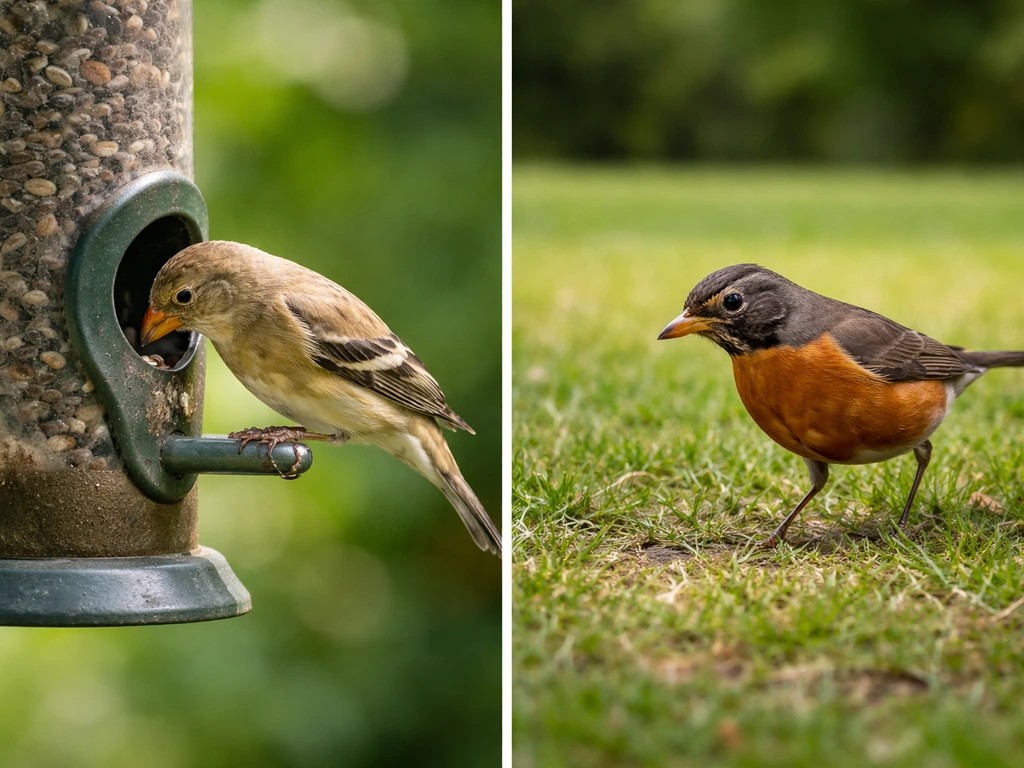
- Small songbirds at feeders (finches, sparrows, chickadees) — small size and quick movements are close to typical prey size
- Robins and thrushes foraging on grass — slow deliberate movement with sudden hops is compelling
- Pigeons and doves on the ground — larger and slower, often good for calmer or senior cats
- Hummingbirds — rapid wing movement and hovering can captivate high-drive cats, but the speed can also overstimulate some
- Backyard feeder compilations with multiple species — good for curious cats who lose interest quickly
Wide landscape shots of bird flocks or aerial footage rarely hold a cat's attention for long. The bird needs to be visible, close, and doing something. A single robin hopping across a wet lawn, shot from about four feet away, will outperform a sweeping drone shot of a thousand flamingos almost every time.
Setting up a safe and effective viewing experience
The setup matters more than most people expect. Get this wrong and you'll either bore your cat or create a stress situation you didn't intend.
Screen placement and distance
Put the screen at roughly your cat's eye level when they're sitting or lying down, a TV on a low stand, a tablet propped on a cushion, or a monitor pulled to the edge of a desk all work. A cat shouldn't have to crane upward to watch; that's uncomfortable and discouraging. Keep the screen close enough to see detail but far enough that your cat isn't pressed against it. About two to four feet is a reasonable starting range. If your cat immediately rushes and paws at the screen, move it further back.
Room lighting and screen brightness
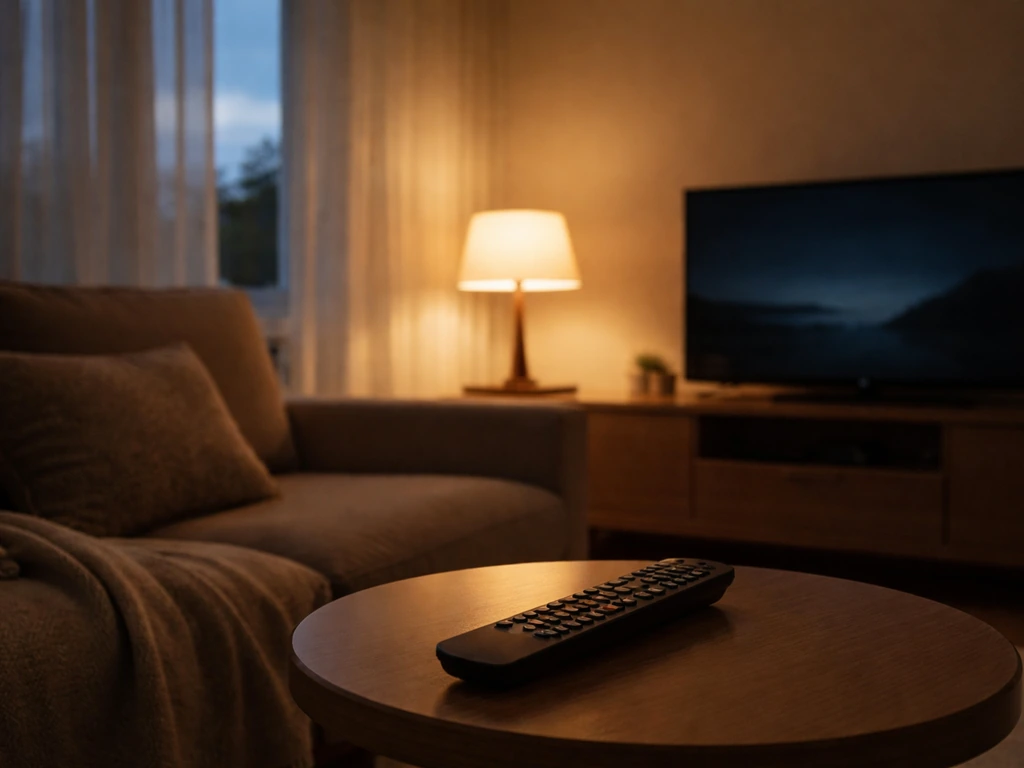
Don't run bird videos in a completely dark room. A well-lit environment is safer and reduces the intensity of screen flicker contrast, which can be stressful (and in rare cases, in cats with predispositions, a potential seizure concern). Normal room lighting is fine. Also reduce screen brightness slightly from maximum, overly bright, saturated displays can be jarring, especially for skittish cats.
Volume
Keep audio at a low to moderate level. Natural birdsong and ambient outdoor sound are genuinely helpful for engagement, but blasting it at full volume on a TV speaker can stress a cat rather than relax them. If the video has dramatic music overlaid on the bird footage, mute it or find a different video. Natural sound only.
Session length
Aim for 10 to 20 minutes per session, and schedule two or three sessions per day rather than one long continuous block. This maps naturally to the Wisconsin Humane Society's recommendation of 2 to 3 daily play sessions for cats. End each session intentionally with an interactive toy so your cat gets to complete the hunt sequence rather than staying in a state of permanent, unresolved arousal.
When things go wrong: troubleshooting common problems
Most bird video problems fall into four categories. Here's what's actually happening and what to do about it.
Overstimulation and aggression
If your cat is puffing up, lashing their tail hard, flattening their ears, or suddenly redirecting aggression toward you or another pet, the video is too intense. Watch for early warning signs: tail tip twitching, dilated pupils, ears rotating backward, and a rigid body posture. Those are the signals to end the session immediately, not to wait and see. Turn off the video, give the cat space, and don't try to pet or engage them until they've visibly settled. Next time, choose slower footage with fewer birds and lower audio.
Frustration, pacing, or pawing at the screen
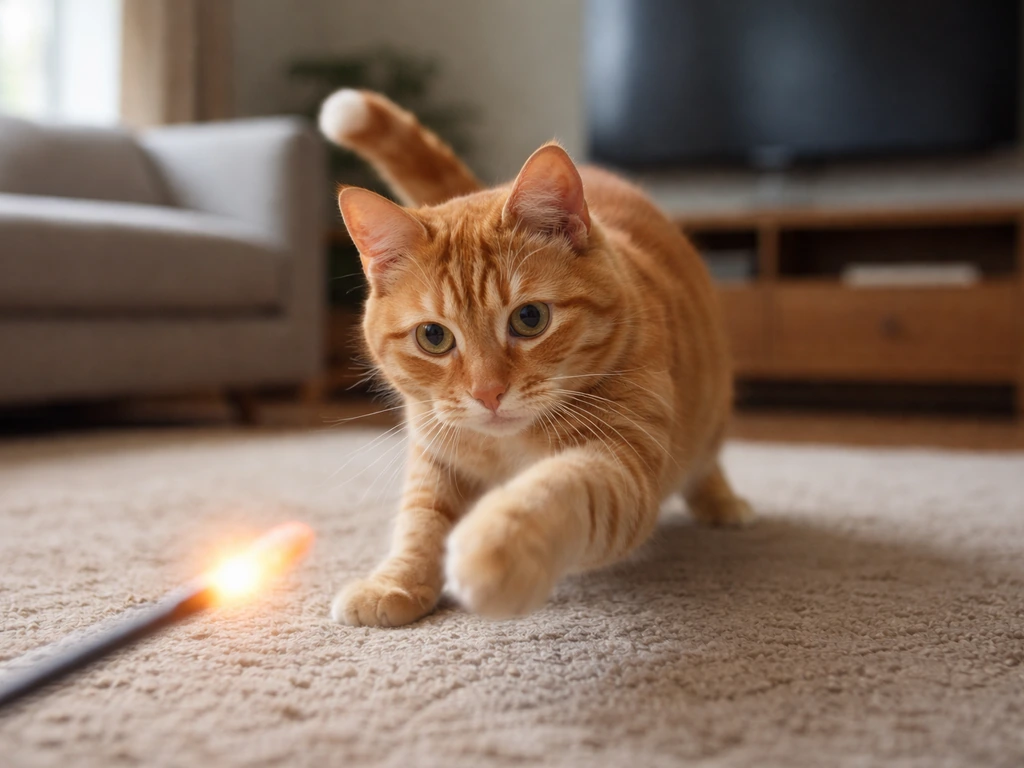
This is the unresolved prey sequence problem. In the ASPCA’s FSA manual, the predatory sequence in cats is outlined as stalk to pounce to kill, followed by removal, which can be used as a helpful framing device when thinking about what videos can and cannot replace [unresolved prey sequence problem](https://www. aspcapro. org/sites/default/files/ASPCA-FSA-manual-2016.
pdf). The cat is aroused and has nowhere to direct it. The fix is always the same: follow the video session with an interactive wand toy play session immediately afterward. After you’ve nailed the video routine, a great best flying bird cat toy can help complete the chase-and-catch part with hands-on motion that keeps your cat engaged interactive wand toy.
If you're specifically shopping for the best flapping bird cat toy, look for realistic motion, safe construction, and good control so play stays engaging great best flying bird cat toy. Wand toys are ideal here because they keep your hands safely out of striking range while mimicking the erratic movement of a bird. A few minutes of genuine chase-and-catch play will release the arousal that the video built up.
If the pawing at the screen is persistent and the cat seems distressed rather than playful, shorten or eliminate video sessions for a while.
The cat completely ignores the screen
Some cats genuinely don't respond to screen-based content, especially older cats or cats who haven't been exposed to TV much. Try repositioning the screen lower, switching to a tablet held closer to the cat's level, or selecting a video with more prominent natural audio. If the cat still doesn't engage after a few different videos and positions, they're probably just not a screen-watcher, and that's fine. Puzzle feeders, window bird feeders mounted outside, and interactive toys provide the same enrichment without a screen. If you want the same kind of stimulation without a screen, try a window bird feeder or a planter-style bird setup to bring birds closer bird can fox kitten planter.
Stress responses (hiding, crouching, flattened ears, freezing)
FAQ
How do I tell if my cat is enjoying bird videos versus getting overstimulated?
Look for calm, forward-facing watching (soft body, relaxed tail, ears mostly neutral) as the baseline. If you see rigid posture, ear flattening, tail lashing, sudden redirection of aggression, or frantic screen-pawing that ramps up, treat it as overstimulation, stop the video, and give 5 to 10 minutes of space before trying again.
Should I leave bird videos on while I’m away?
It’s usually better not to. The article notes that persistent screen fixation often means unresolved arousal, and you cannot safely intervene if fear or aggression signals appear. If you must, keep sessions short (around 10 to 20 minutes), use moderate audio, and avoid “intense” content with lots of birds or frequent chaotic cuts.
What if my cat only watches briefly, then walks away?
That can be normal, especially if the pacing is wrong for your cat’s personality. Try switching to closer, single-bird clips with slower movement, reduce brightness slightly, and keep the screen at the correct height (cat eye level). Also confirm your cat’s interactive play earlier in the day was sufficient, since videos work best as an appetizer, not a replacement.
Can bird videos make my cat more aggressive toward other pets or toward me?
They can indirectly contribute if your cat becomes aroused and the prey sequence is not completed. The key mitigation is immediate follow-up interactive wand play (5 to 10 minutes) plus a small end-of-session reward. If aggression happens during or after videos, shorten sessions, choose calmer footage, and consider switching to a window feeder or puzzle-based enrichment.
My cat stares and then suddenly startles or hides. What should I do?
Stop the session immediately. Hiding, freezing, flattened ears with wide pupils, or changes in normal eating or litter habits are stress indicators, not engagement. After a break of at least a day, reintroduce only milder, lower-audio videos, slightly farther screen distance, and end with play and a food closure. If the pattern repeats, switch to non-screen options like a window feeder viewed from a safe distance.
Are there cats that shouldn’t watch bird videos at all?
Yes. Cats showing consistent fear responses, severe screen fixation with distress, or any change in basic routines around video times should avoid them. Also be cautious with cats with known seizure risk (screen flicker and darkness can be a problem), and keep normal lighting on with moderate brightness and audio.
How should I choose the right device and placement for the “best bird videos for cats” setup?
Use a screen that sits at your cat’s eye level when lying or sitting, and aim for a viewing distance where the cat can see detail without pressing their nose to the display. Tablets can work well because you can position them closer and more precisely, while TVs on low stands or monitors pulled to the desk edge also fit the recommended height and distance range.
Does audio matter if the video looks good?
Audio matters because natural birdsong and ambient feeder sounds support engagement. Keep volume low to moderate through TV speakers, and avoid videos with dramatic music overlays. If your cat startles at certain sounds, lower volume further or try a different channel with cleaner natural audio.
How long should a session be if my cat is a high-drive hunter?
Start with the same 10 to 20 minute window, but watch for early warning signs of overstimulation (tail twitching, ear rotation backward, rigid body). For high-drive cats, it often helps to end the video on the earlier side (closer to 10 to 12 minutes) and move straight into wand play to complete the stalk-chase-pounce sequence.
What’s the best way to finish the session so my cat doesn’t stay restless?
Use the closure described in the article: video first (about 10 to 15 minutes), then wand toy chase-and-catch (5 to 10 minutes), then a small food reward or puzzle feeder. The food step signals “hunt completion,” reducing unresolved arousal that otherwise shows up as persistent pawing or searching for an outlet.
How can I rotate bird video types without making my cat lose interest?
Rotate by both content and “stimulus level.” Alternate between close single-bird footage and slightly calmer feeder scenes, then mix in puzzle feeding on days you skip video. If you notice predictability (same behavior every time, same time length), change pacing and camera distance rather than just swapping bird species.
If my cat doesn’t respond to videos, what alternatives are closest in effect?
A window bird feeder mounted outside is often the most direct alternative because it is unpredictable and three-dimensional. Puzzle feeders, especially those timed around the “video session,” can also provide prey-like foraging. You can also try re-positioning the screen and using a more natural-audio clip, but if the cat never engages after several adjustments, switch fully to enrichment options.
Is watching bird videos enough to meet enrichment needs for indoor cats?
No. The article frames video as stimulation, not a full substitute for the full hunt sequence. For indoor welfare, you still need physical play and environmental variety. Use bird videos as one component, then reliably include interactive play and either small food rewards or puzzle feeding afterward.
Can I use bird videos to help a cat become more comfortable with a real bird later?
Be cautious. Habituation to watching birds can actually increase attention and prey-driven behavior, so it does not “train down” predatory instincts. Introducing a pet bird requires separate, careful management and safety planning that isn’t solved by screen conditioning.