Woodpeckers are your best bet. They're the birds most reliably documented eating carpenter bees, specifically by drilling into the bees' own tunnels to pull out the larvae. UF/IFAS Extension also notes that woodpeckers dine on carpenter bee larvae, making them an important garden predator. Beyond woodpeckers, aerial hunters like tree swallows and Eastern kingbirds will snag adult carpenter bees mid-flight, but they're opportunistic about it. If you've got carpenter bees boring into your deck or eaves, woodpeckers are the predator worth paying attention to.
What Bird Eats Carpenter Bees and How to Confirm It

Marcus Chen
3 May 2026
Which birds actually eat carpenter bees
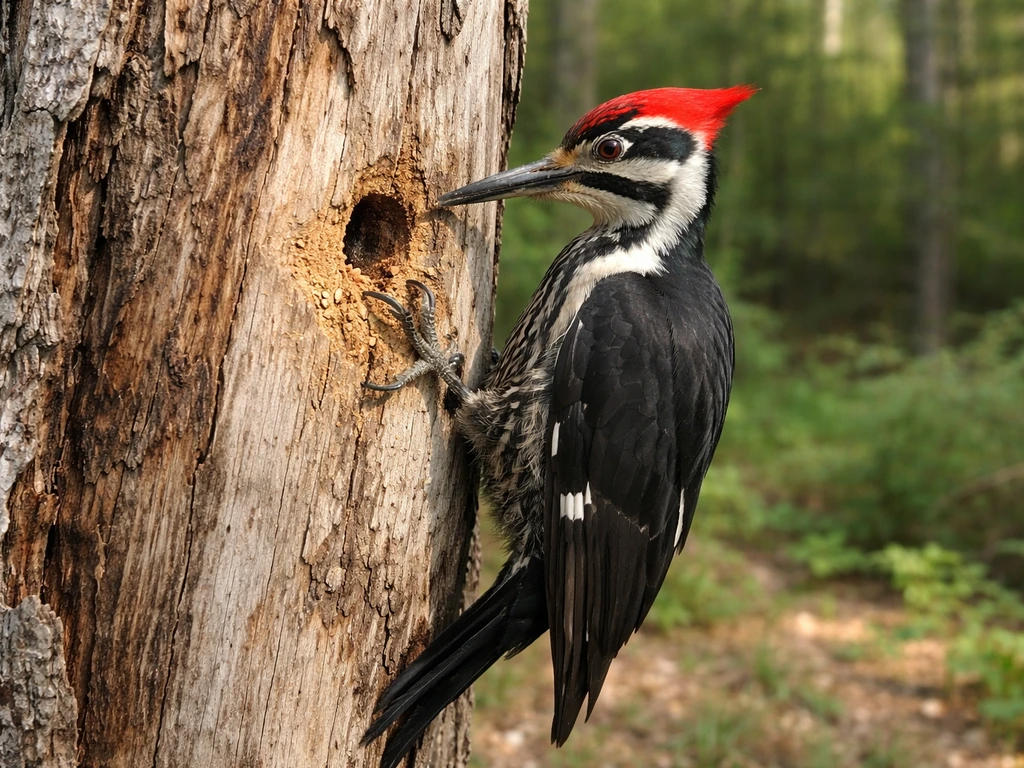
The UF/IFAS Extension puts it plainly: woodpeckers, especially the pileated woodpecker, dine on carpenter bee larvae at every opportunity. Purdue Extension backs this up, describing how woodpeckers will actively enlarge carpenter bee tunnels to get to the larvae inside. That's a meaningful distinction: woodpeckers aren't just bumping into bees in the yard. They're specifically targeting the nests, which makes them genuine, sustained predators rather than occasional visitors.
Beyond woodpeckers, a few other birds will take carpenter bees under the right conditions. Tree swallows hunt insects in flight and bees are on the menu when they're available. Eastern kingbirds, great crested flycatchers, and purple martins are similarly built for aerial insect pursuit. White-breasted nuthatches forage along tree bark and wood structures and could plausibly pick off bees around active nest sites. But none of these birds have the same targeted, larvae-level relationship with carpenter bees that woodpeckers do. They're more likely to take an adult bee opportunistically than to seek out a colony.
| Bird | What they eat | How they hunt | Carpenter bee focus |
|---|---|---|---|
| Pileated woodpecker | Carpenter bee larvae (and adults) | Drills into tunnels | High, targeted |
| Downy / hairy woodpecker | Larvae in wood galleries | Drills and pecks | Moderate, targeted |
| Tree swallow | Flying insects including adult bees | Aerial pursuit | Low, opportunistic |
| Eastern kingbird | Flying insects including adult bees | Aerial pursuit | Low, opportunistic |
| Purple martin | Flying insects | Aerial pursuit | Low, opportunistic |
| White-breasted nuthatch | Insects in and around wood | Bark foraging | Low, incidental |
When and where these birds hunt carpenter bees
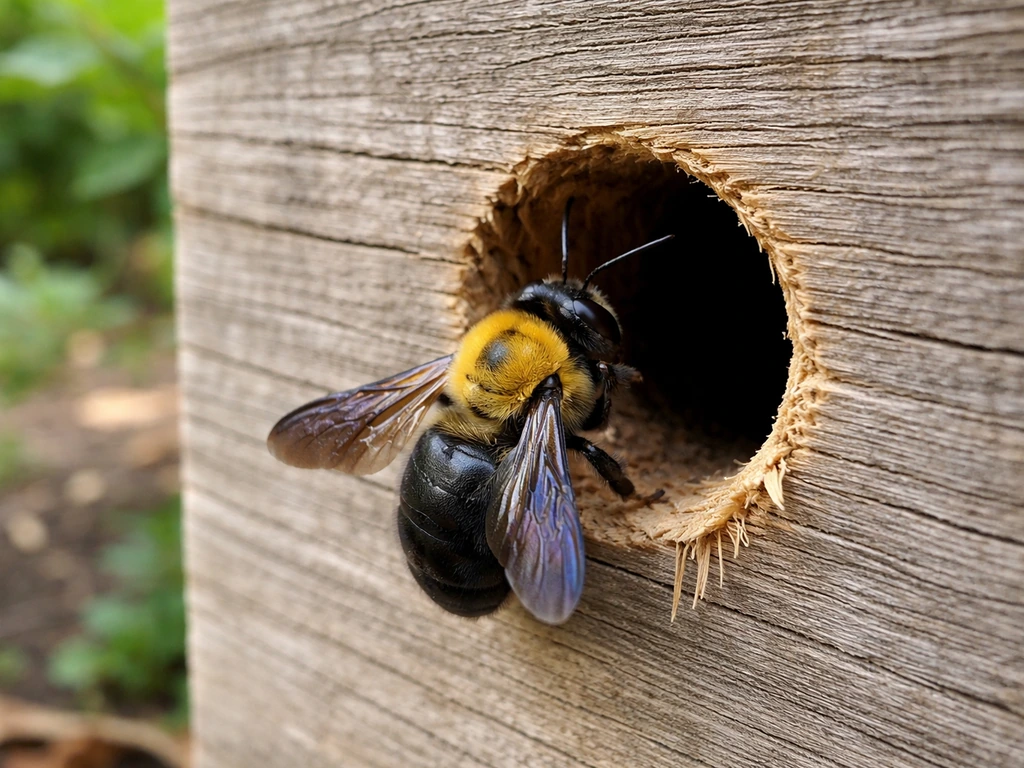
Carpenter bees are most active in spring and early summer. Adults emerge in April or May, mate, and females bore their nearly perfect circular entrance holes into exposed, unpainted wood. That's the window when woodpeckers are most likely to show up, because fresh nesting activity means accessible larvae. By late summer, the new generation is developing inside the tunnels, and that's when woodpecker excavation tends to ramp up. They can detect larvae through the wood, and they'll work a piece of structural lumber or a fence post repeatedly if bees are nesting there.
Aerial hunters like swallows and kingbirds are most active when carpenter bee adults are flying, which overlaps with spring and early summer. These birds are naturally present during warm months when insect populations peak. If you're watching your yard in May and June and see fast, acrobatic fliers darting around wooden structures, there's a real chance they're picking off adult bees between foraging trips.
How to confirm a bird is actually targeting carpenter bees in your yard
This is where most homeowners stop short. Seeing a bird near carpenter bee holes doesn't mean predation is happening. Here's how to tell the difference.
Look at the damage pattern
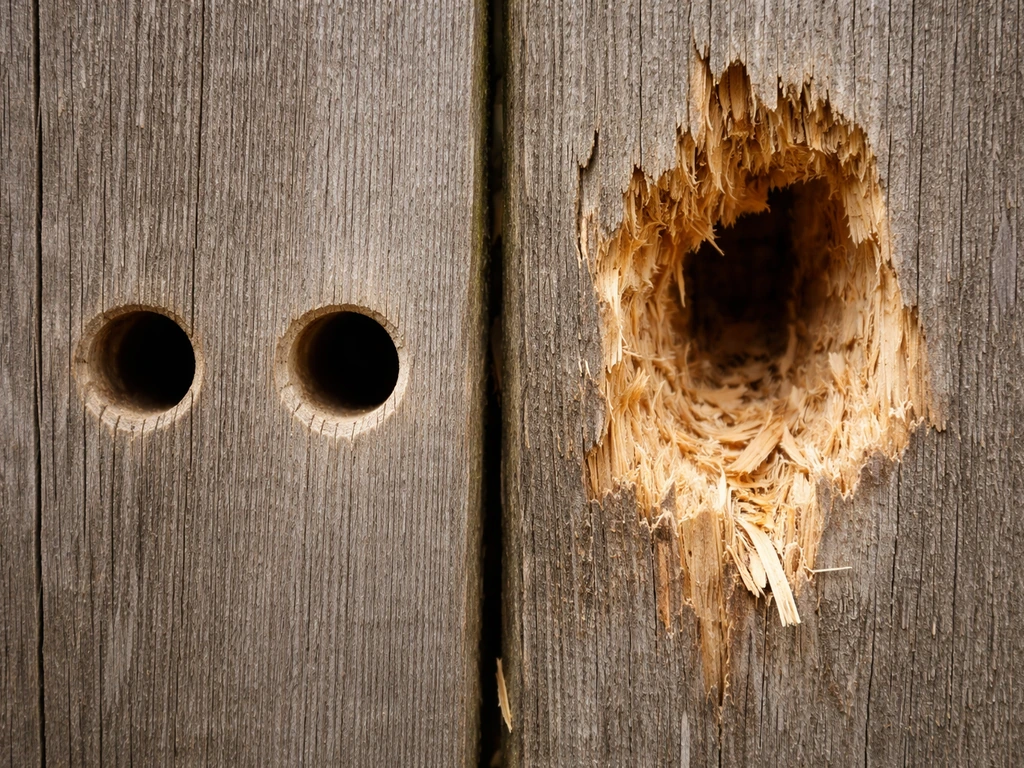
Carpenter bee entrance holes are clean, nearly perfect circles, roughly half an inch in diameter. If a woodpecker is working those tunnels, you'll see the surrounding wood gouged open, ragged, and splintered around the original hole. Purdue Extension describes this as 'gaping wounds' in the wood, distinct from the neat circular entry a carpenter bee makes on its own. NestWatch confirms that when woodpeckers excavate carpenter bee tunnels for larvae, the damage intensifies noticeably beyond what the bees created. If your wood looks surgically entered, that's the bees. If it looks like something tore it open, that's a predator.
Watch the bird's behavior directly
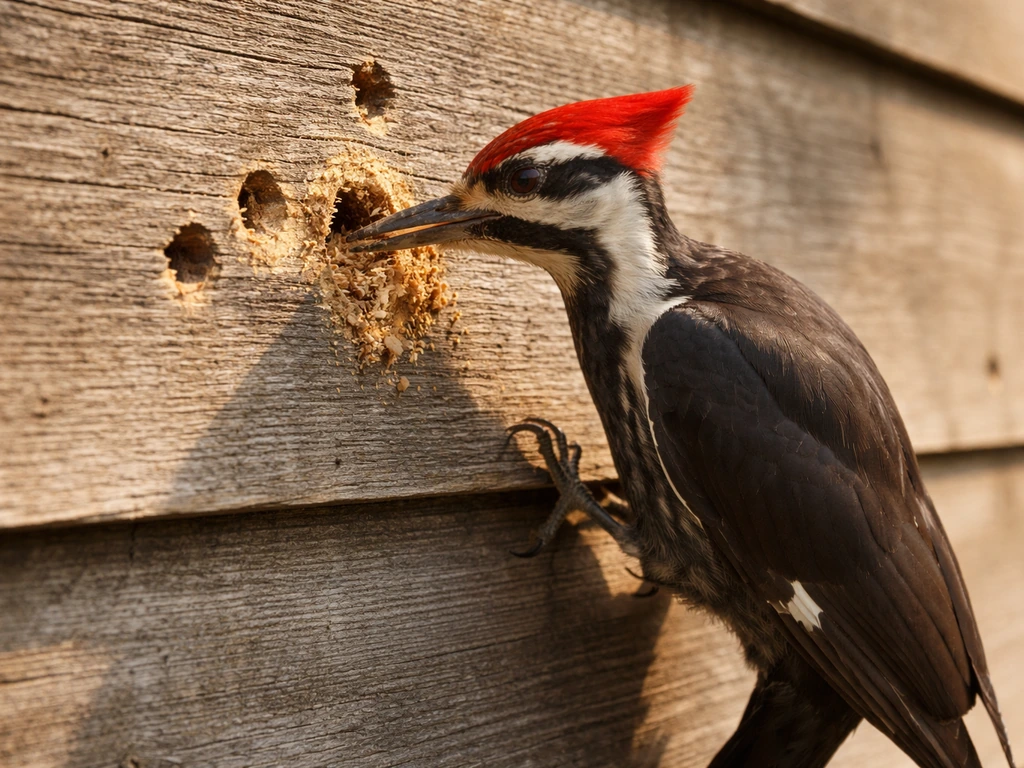
Spend 15 to 20 minutes watching the area during peak bee activity, usually late morning on a warm spring day. A woodpecker actively hunting larvae will return to the same spot repeatedly, probe with its beak, and work at the wood methodically. An aerial hunter pursuing adult bees will be moving fast, diving toward bees in flight rather than hovering near wood surfaces. A bird just passing through looks completely different from one working a food source. If you see persistent, targeted behavior at the same wood structure over multiple days, you've confirmed predation.
Check for timing overlap
If woodpeckers appear at your siding or deck in spring and early summer and you've had carpenter bee activity in the same spot in prior years, the connection is almost certainly real. Woodpeckers have good spatial memory and will revisit known food sources. Seeing them at a spot with known carpenter bee history is strong circumstantial evidence, especially combined with characteristic excavation damage.
When birds aren't enough: practical next steps for reducing carpenter bee trouble
Here's the honest truth: even a healthy woodpecker population won't eliminate a carpenter bee infestation. If you are trying to replace a pie bird for attracting the right birds, focus on practical alternatives like suet, nest boxes, and habitat tweaks that make hunting carpenter bees more likely what can i use instead of a pie bird. Birds help, but they're not a magic fix. If the bees are doing real damage to your structures, you need a layered approach.
If you are thinking about using a pie bird to increase bird activity around your yard, pair it with the same targeted, low-impact approach used elsewhere in carpenter bee management. If birds do not fully solve the problem, a bird dog exercise alternative can be a practical way to stay active while managing energy and attention more safely.
- Paint or seal exposed wood. Carpenter bees strongly prefer unfinished, weathered wood. Painted, stained, or sealed surfaces are far less attractive to them. This is the single most effective non-chemical deterrent.
- Fill inactive tunnels. In late summer or fall, after bees have completed their nesting cycle and tunnels are no longer active, fill holes with wood putty or a wooden dowel and caulk. This removes future nesting real estate.
- Consider construction material swaps. Hardwoods like cedar and redwood are less preferred than softer pine. If you're replacing decking or trim, this is worth factoring in.
- Use physical barriers on vulnerable spots. Steel wool temporarily stuffed into active holes during the off-season slows reuse. Covering fascia boards with aluminum or vinyl flashing makes them inaccessible entirely.
- Set realistic expectations for pesticide use. If you feel you must treat active tunnels, use targeted dust insecticides placed directly into holes at night when bees are inside, and cap the holes afterward. Avoid broad-spectrum sprays that will affect pollinators throughout your yard.
The Integrated Pest Management (IPM) framework recommended by the US EPA and USFWS is worth understanding here. IPM means you monitor, identify the scale of the problem, and intervene with the least-risk option that actually works. For most homeowners with moderate carpenter bee activity, sealing wood and supporting natural predators is genuinely sufficient. Reaching for pesticides before trying these steps isn't just environmentally costly, it's also usually unnecessary.
How to attract insect-eating birds to your yard
If you want more woodpeckers and aerial insectivores in your yard, you don't need to do anything complicated. These birds have real habitat preferences, and meeting them is straightforward even if you're new to backyard bird hosting.
Feeders that work
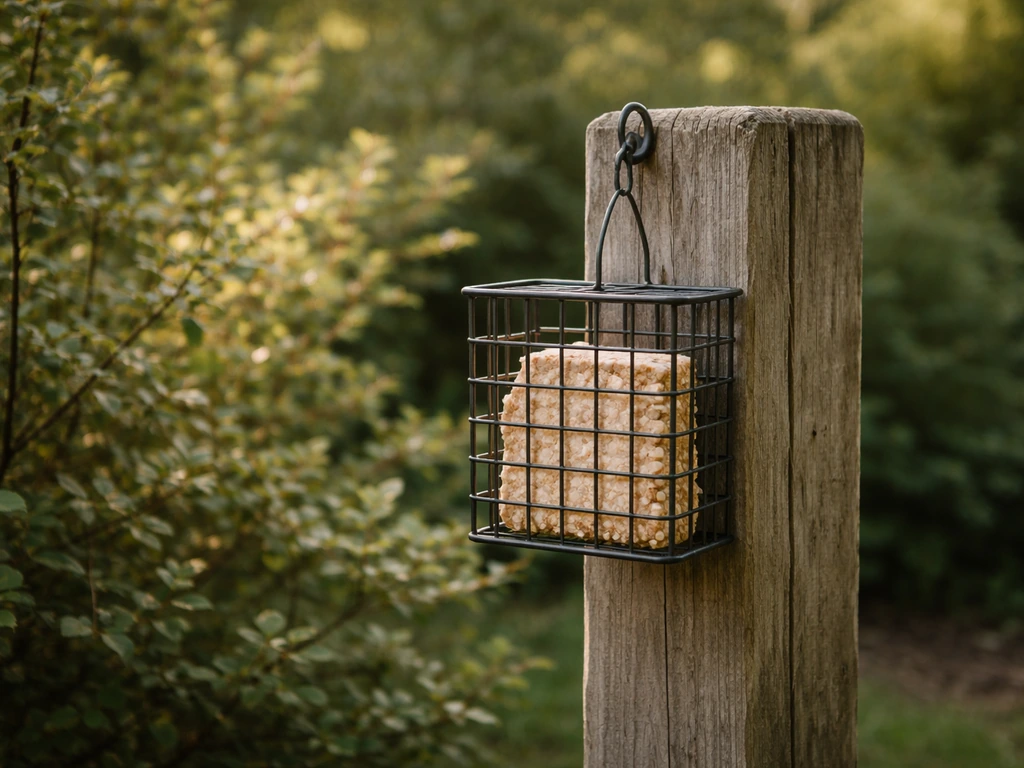
Suet is your go-to for attracting woodpeckers and nuthatches. Project FeederWatch specifically calls out suet as the best feeder choice for insect-eating birds. Use a cage-style suet feeder mounted on or near a tree trunk, since that's the feeding posture these birds are most comfortable with. Woodpeckers feel exposed on flat platform feeders and prefer to cling vertically. In warmer months, switch to no-melt or summer suet formulas so it doesn't turn rancid.
For aerial hunters like swallows and purple martins, feeders aren't really the mechanism. These birds need open flying space and nesting structure. Purple martin houses and swallow nest boxes in open areas near water will bring them in. Tree swallows in particular will readily use nest boxes mounted on poles in open areas, and they're active insect hunters from late spring through summer.
Habitat tweaks that make a real difference
- Leave dead or dying trees standing if they're not a safety hazard. Snags are prime woodpecker habitat and foraging territory.
- Plant native shrubs and trees. Native plants support the insect populations that insectivorous birds depend on, creating a natural food web in your yard.
- Add a water source. A simple ground-level birdbath or shallow dish with fresh water attracts far more birds than feeders alone. Clean it every two to three days.
- Reduce lawn pesticide use around bird activity areas. Insectivorous birds need insects, and a chemically treated lawn offers a fraction of the food a natural one does.
- Position feeders and nest boxes away from windows and cat territory to reduce collision and predation risk, especially important if you're new to hosting birds.
Keep it balanced: protecting beneficial insects while managing carpenter bees
This is the part most pest-control advice glosses over. Carpenter bees are actually important pollinators, especially for open-faced flowers that honeybees struggle to access. Getting rid of them entirely would be a net negative for your garden. The goal isn't elimination, it's management: reducing structural damage while keeping the broader insect community intact.
The Xerces Society's research on neonicotinoids is a serious caution here. These insecticides are toxic to bees in very small quantities and can persist in plant tissue long after application. Using neonicotinoid-based products anywhere in a yard where bees forage can have effects well beyond the carpenter bee you're targeting. The USGS has documented wild bees being exposed to these compounds through normal foraging. If you're treating carpenter bee nests, stick to targeted dust applications directly into tunnel entrances, and avoid any systemic treatments that could move through plant tissue.
Birds also need a functioning insect ecosystem to thrive. If you wipe out insects with broad sprays, you're undercutting the very food web that supports the woodpeckers and swallows you want to attract. The two goals, reducing carpenter bee damage and supporting insectivorous birds, are only compatible if you stay targeted and restrained in any chemical intervention.
The realistic expectation, after all of this, is a yard where carpenter bee activity is reduced and managed rather than eliminated, where woodpeckers and aerial hunters are regular visitors, and where you're not fighting the insect community you actually need. That's a genuinely achievable outcome with a season or two of consistent effort. It's also a more interesting yard to spend time in. Better bird finch lovers blend with other birds by keeping seed, water, and safe nesting resources available throughout the season.
Quick-reference checklist
- Identify your primary predator: look for woodpecker excavation damage (ragged, enlarged holes) around carpenter bee tunnel entry points.
- Watch for 15 to 20 minutes during late morning on warm spring days to confirm targeted predation behavior.
- Mount a cage-style suet feeder near tree trunks or wooden structures to attract woodpeckers and nuthatches.
- Install swallow or purple martin nest boxes in open areas if aerial insectivores are common in your region.
- Paint or seal exposed wood to remove the habitat that carpenter bees prefer.
- Fill inactive tunnels in late summer or fall with wood putty and caulk.
- Leave a snag or two standing if safe, and plant native species to support the insect food web.
- Avoid neonicotinoids and broad-spectrum sprays. If you treat tunnels, use targeted dust applications only.
- Set realistic expectations: birds and habitat management reduce carpenter bee damage, they don't eliminate it.
FAQ
If I see a woodpecker near a carpenter bee hole, how can I tell it is actually eating the larvae and not just investigating?
Yes, and it helps narrow the culprit. If the “hole” is clean and circular but you see no ragged wood tearing beyond it, that points to carpenter bees working, not woodpeckers excavating larvae. Woodpecker activity usually creates damage that spreads beyond the entrance, with splintering or gouged-open wood around the original hole.
How long should I watch the area to confirm predation rather than a brief visit?
Look for repeated work at the same exact spot over multiple days. Woodpeckers hunting larvae tend to return to the same section of siding, fence post, or deck beam and probe or enlarge the tunnel area methodically. A one-time visit or a quick peck without follow-up damage is more often curiosity than predation.
Do birds target carpenter bees at the same time of year, or does the bird type change by season?
Season timing matters, but so does whether bees are actively flying. In late summer, more “excavation” can occur because larvae are growing inside tunnels, yet aerial hunters are less likely to be active if adult bee flight has dropped. If you see birds diving at flying bees, that strongly suggests adult-hunting behavior rather than larvae excavation.
What clues separate aerial hunting of adult bees from woodpecker larvae excavation?
Most people miss the scale clue. Aerial hunters typically appear and disappear quickly, diving toward moving insects, so damage to wood is usually not the giveaway. Larvae-focused predation by woodpeckers should correlate with enlarged or torn wood around the entrance hole, meaning you can often confirm with the condition of the structure itself.
If I’m trying to attract woodpeckers, what feeder placement mistake prevents results?
Use where you place feeders as a decision aid. If you want woodpeckers and nuthatches, prioritize cage-style suet near vertical surfaces like tree trunks, since these birds prefer clinging postures. If you place suet on open platform trays, you may attract different birds that do not help much with carpenter bee control.
Why might swallows or purple martins ignore my yard even when carpenter bees are abundant?
Nesting structure is the key constraint for swallow and purple martin type birds. If you have no open flight corridors or suitable nesting boxes in an area where they can watch and approach, they may never establish even if insects are present. Position nest boxes in open areas near water, and maintain visibility to flying lanes.
Can I use insecticides and still keep birds attracted to my yard?
Yes, and the “no pesticides first” rule is the safeguard. Systemic insecticides and broad sprays can reduce the wider insect prey base that supports the aerial insectivores you want. If chemical help is needed, keep it localized to tunnel entrances and avoid treatments that can move into plant tissue where bees forage.
If woodpeckers are eating carpenter bees, why do I still see new holes next season?
Even if birds are hunting, carpenter bees can persist because wood-boring activity and structural choices make them return. The practical management move is to pair predator support with reducing future nesting opportunities, such as sealing or modifying exposed unpainted wood. Birds lower risk, but prevention reduces recurrence.
Could nuthatches or other small birds be the main predator, or is woodpecker damage always the real tell?
It is common to see nuthatches or other bark foragers around structures, but confirmation usually comes from the damage pattern. Woodpecker larvae predation is tied to enlarged, ragged excavations beyond the neat entrance. If you only see small pecks and no widening around holes, it is less likely to be sustained carpenter bee nesting-site feeding.
Next Articles
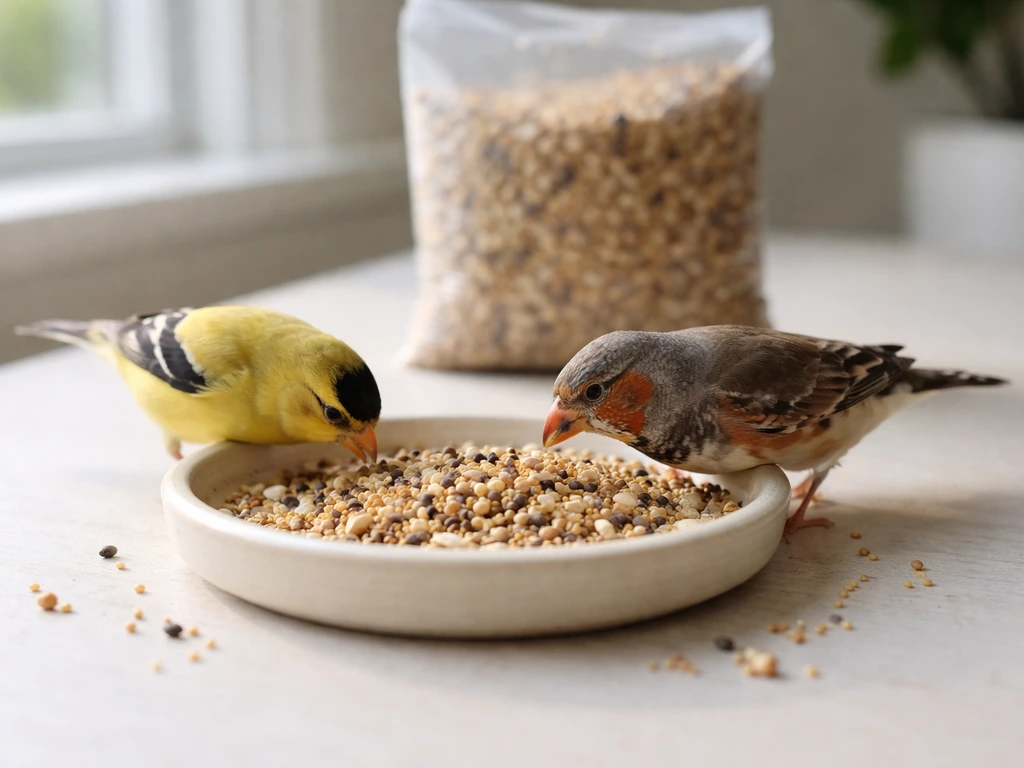
Better Bird Finch Lovers Blend: How to Use It Safely
Beginner guide to safely choose, transition, and feed a better bird finch lovers blend for healthy finches

Bird Dog Exercise Alternative: Best Substitutes and How To
Best bird dog exercise alternative: substitutes for core stability, anti-extension, and safer form plus cues and progres
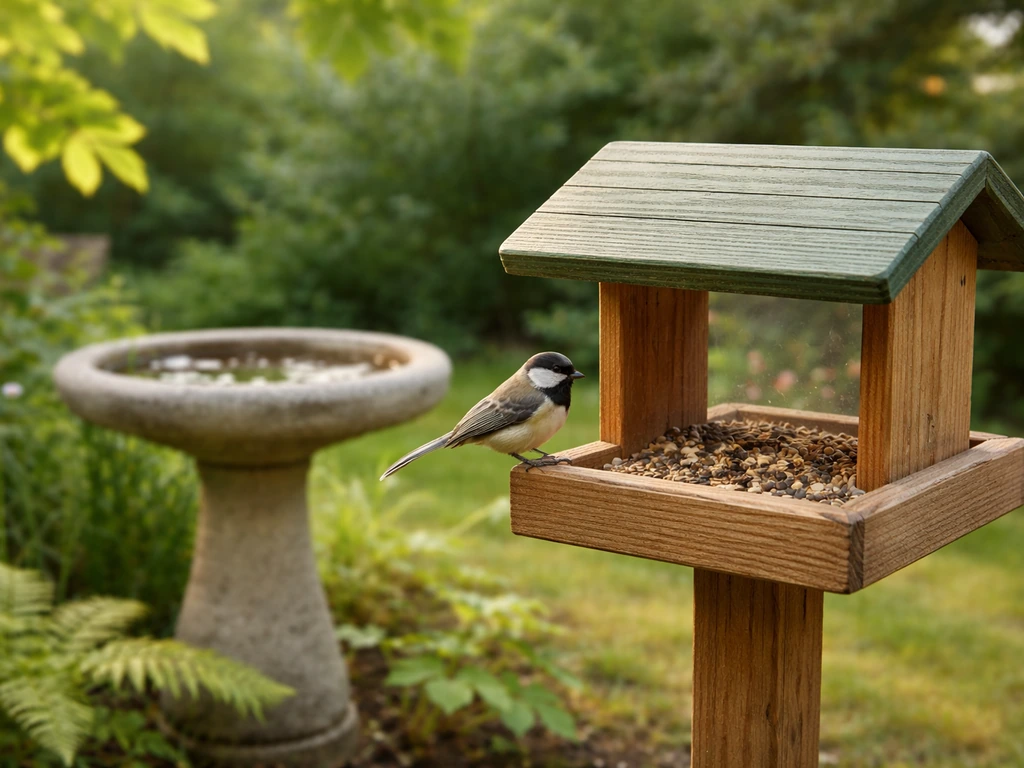
Garden Bird Checklist: Wild Species, IDs, and Tracking Tips
Ready-to-use wild garden bird checklist with IDs, field marks, tracking tips, and a bird station setup for beginners.