If you want a large pet bird and you're just starting out, the honest answer is this: the blue-and-gold macaw is the most beginner-friendly large bird you can realistically own, with the African grey and the blue-fronted Amazon close behind as solid alternatives. But "beginner-friendly" with a large bird still means a serious daily commitment, a significant upfront cost, and a lifespan that can stretch 50 to 80 years depending on species. There's no such thing as a low-maintenance large parrot. What we're really choosing here is the large bird that's most forgiving of beginner mistakes while still being genuinely rewarding to live with. what is the best bird for beginners
Best Large Bird for Beginners: Top Picks and Setup Tips
Marcus Chen
23 Mar 2026
What "large bird" actually means in practice
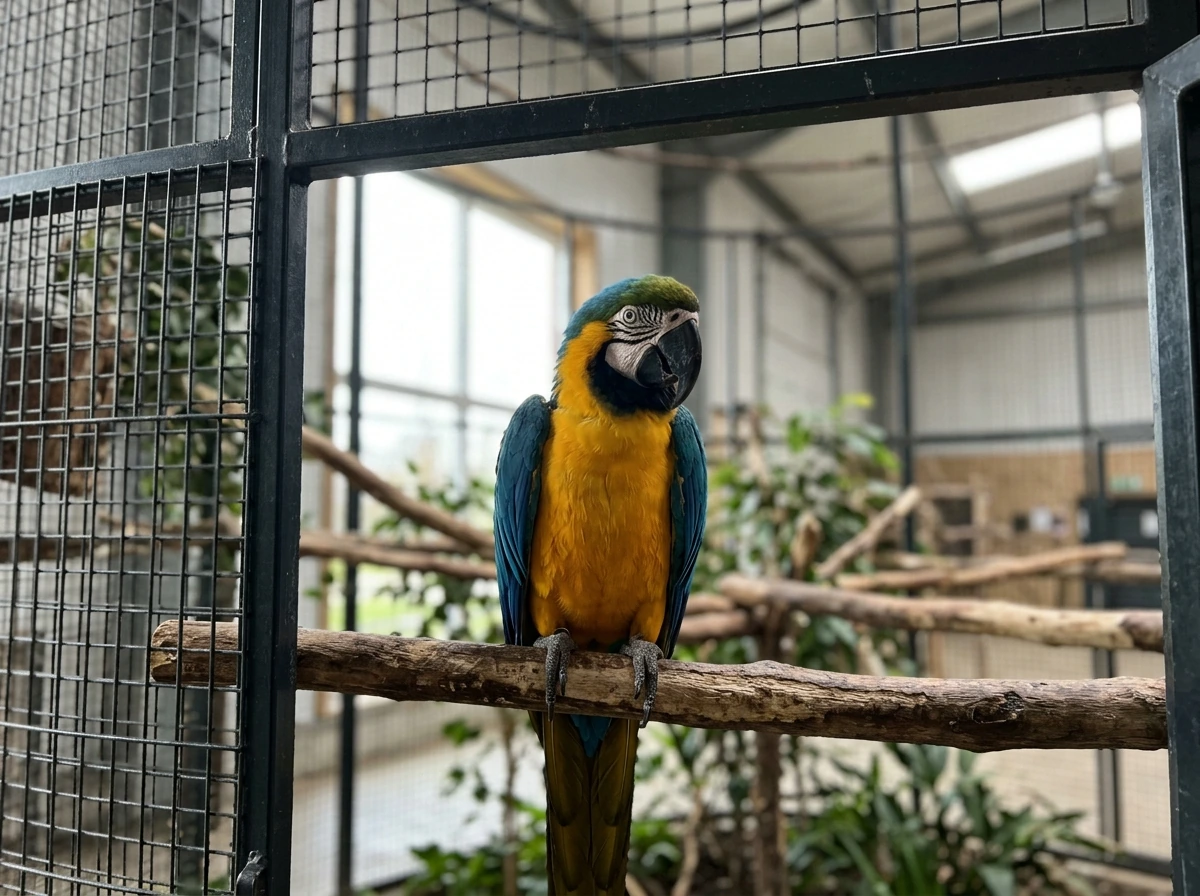
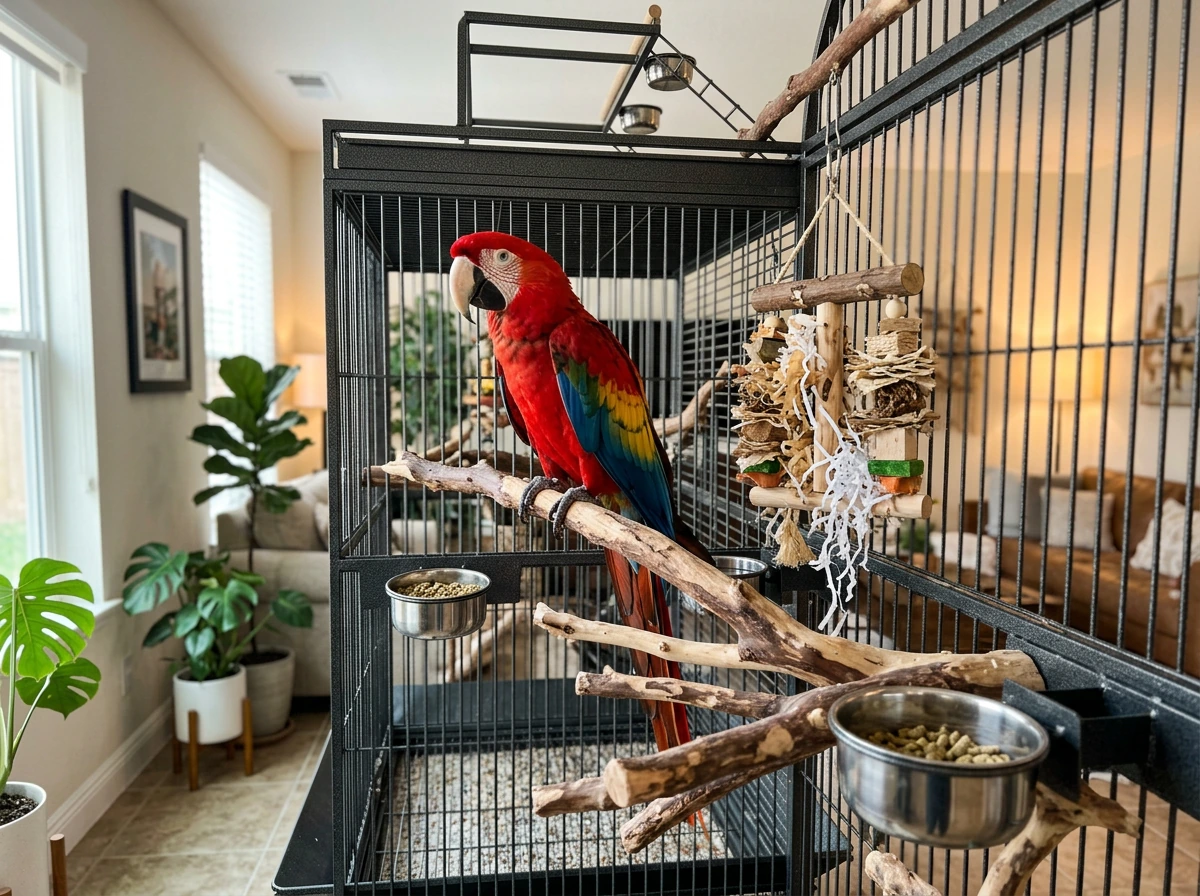
The USDA draws the line at 250 grams adult body weight when defining large pet birds under the Animal Welfare Act. That puts most parrots you're probably thinking about, macaws, cockatoos, Amazons, and African greys, firmly in the large category. For context, a budgie is around 30 to 40 grams. A cockatiel sits around 90 to 120 grams. A large macaw like a blue-and-gold? Around 900 to 1,200 grams. The weight difference matters because it scales directly with noise, mess, cage size, food cost, vet cost, and the physical strength of a bite.
In practical terms, a large bird means a cage that dominates a room, daily droppings you will absolutely notice, feather dust (especially with cockatoos) that coats nearby surfaces, and a scream that can be heard through walls and sometimes outside your home. It also means a bird that can live alongside you for decades, learn your name, your routines, and recognize your moods. That's the trade-off: the same qualities that make large parrots fascinating are the qualities that make them genuinely hard to care for.
The top beginner-friendly large birds, ranked
These rankings are based on how forgiving each species tends to be with inexperienced handling, how stable their temperament is across a variety of household environments, and how realistic it is These rankings are based on how forgiving each species tends to be with inexperienced handling, how stable their temperament is across a variety of household environments, and how realistic it is for a <a data-article-id="12A440B7-6309-43F3-8F23-71392598622D">best bird for first-time owner</a> to meet their basic needs without burning out.
- Blue-and-gold macaw: The top recommendation for most beginners who want a large bird. Known for being affectionate, trainable, and relatively predictable in temperament compared to other macaws. They bond strongly with their person, tolerate gentle mistakes during training, and generally signal their moods clearly enough for beginners to read. They are loud, messy, and need 3 to 4 hours of interaction daily, but among large parrots, they're about as forgiving as it gets.
- African grey parrot: Arguably the most intelligent pet parrot in the world, and a genuinely good choice for a beginner who is calm, consistent, and willing to invest in slow trust-building. Greys are sensitive and can develop feather-destructive behaviors if their environment is unstable, but a stable, enriched household suits them well. Expect the Congo African grey to weigh around 400 to 600 grams and live 40 to 60 years.
- Blue-fronted Amazon: Amazons are playful, vocal, and tend to be less physically demanding in terms of "hold me right now" bonding compared to macaws. They're sometimes described as more independent, which can suit beginners who have busy days but consistent evening routines. They can be nippy during hormonal seasons, so learning to read body language matters.
- Bare-eyed (little) cockatoo: A smaller end of the large category, but they still clear the 250-gram threshold. Less ear-splitting than a Moluccan or umbrella cockatoo, but still affectionate and needy. A reasonable starter if you love cockatoos but aren't ready for the full intensity of the larger species.
- Severe macaw: Smaller than a blue-and-gold but still a macaw in personality. More apartment-friendly in terms of cage footprint, and often described as having big macaw energy in a more manageable frame. Good for a beginner who's done their homework but has limited floor space.
A note on species that often come up but that I'd caution beginners against: Moluccan and umbrella cockatoos are among the most emotionally demanding parrots in captivity. They need intense daily bonding time, and when those needs aren't met, they develop destructive behaviors and piercing screams that are genuinely hard to live with. Hyacinth macaws are extraordinary birds, but at $10,000 to $20,000 and with very specific diet needs (including high-fat palm nuts), they're a poor beginner choice. Green-winged macaws are gentler than blue-and-golds in some ways, but their sheer size and bill strength amplify every beginner mistake.
Honest comparison: temperament, noise, mess, and daily time
| Species | Temperament | Noise Level | Mess Level | Daily Interaction Needed | Lifespan |
|---|---|---|---|---|---|
| Blue-and-gold macaw | Affectionate, trainable, mood-readable | High (loud calls, especially morning/evening) | High (large droppings, food flinging) | 3 to 4 hours | 50 to 60+ years |
| African grey | Intelligent, sensitive, bonds deeply | Moderate (talking, mimicry, less screaming) | Moderate (powder down dust, food mess) | 2 to 3 hours | 40 to 60 years |
| Blue-fronted Amazon | Playful, vocal, relatively independent | High (singing, loud calls) | Moderate to high | 2 to 3 hours | 40 to 60 years |
| Bare-eyed cockatoo | Cuddly, gentle, less intense than large cockatoos | Moderate to high | High (feather dust) | 2 to 3 hours | 40 to 50 years |
| Severe macaw | Bold, curious, playful, smaller bill | Moderate to high | Moderate | 2 to 3 hours | 30 to 40 years |
Noise deserves its own honest conversation. If you live in an apartment with shared walls, a macaw will almost certainly generate noise complaints. African greys are the quietest of the group in terms of sheer volume, though their mimicry can catch guests off guard. Amazons and macaws both have morning and evening vocalization periods that you cannot train away, only manage. If noise is a hard constraint for you, that should factor heavily into your species choice, and honestly might push you toward looking at our guides on smaller beginner birds first for pet bird for beginners. If you are still weighing options, a solid place to compare is the best bird for first-time owner based on temperament and daily demands.
Setting up the right home for a large bird
Cage size: bigger than you think, and then some
The Merck Veterinary Manual specifies a minimum cage size of 40 by 30 by 60 inches for birds like African greys, Amazons, and small cockatoos, with bar spacing no more than 0.75 inches. That's a minimum, not a recommendation. The Gabriel Foundation's standards go further, suggesting the cage width and depth should be at least 2 to 3 times the bird's wingspan. For a blue-and-gold macaw with a 3.5-foot wingspan, that means a cage footprint you genuinely need to plan for before you bring the bird home. The RSPCA's practical test is useful too: the bird should be able to fully spread its wings without touching the sides, and sit on a perch with its tail not touching the floor.
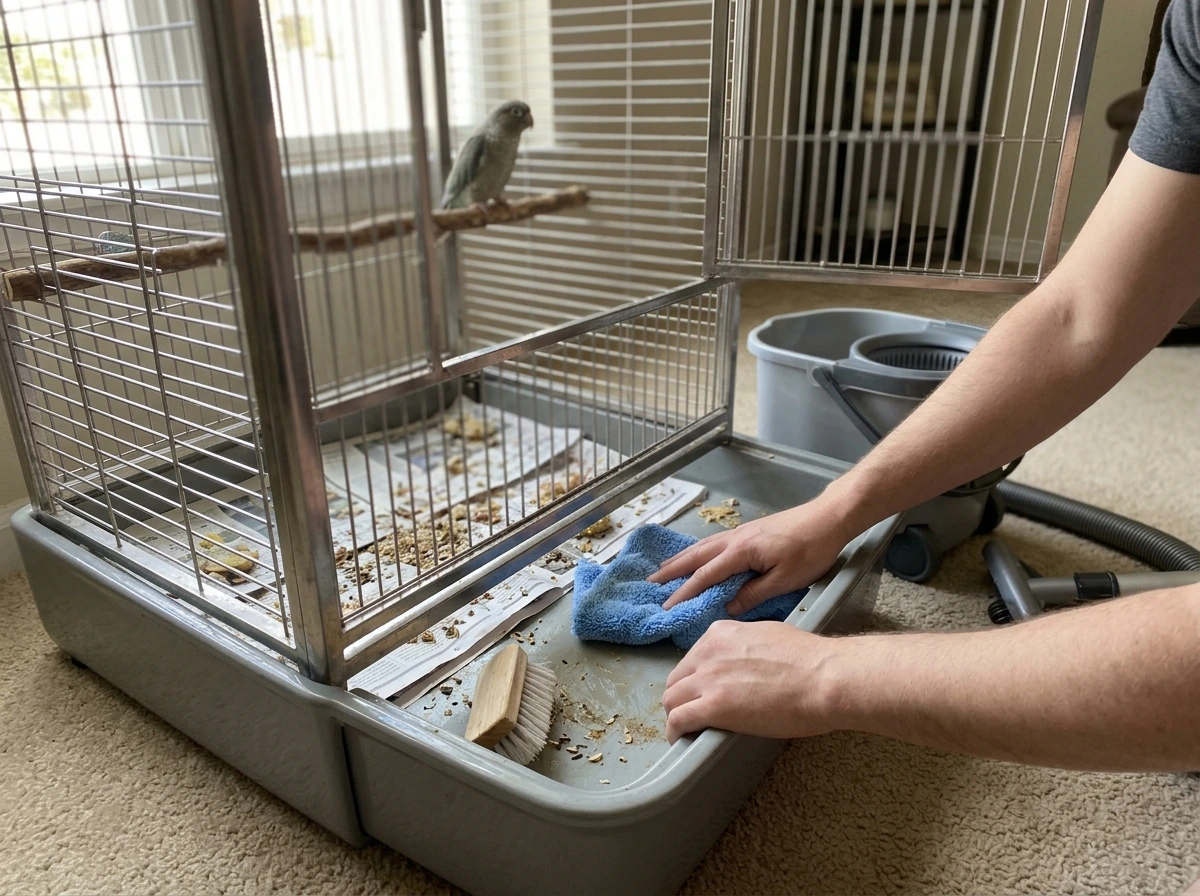
Bar spacing matters for safety. Bars too far apart allow a bird to get its head stuck; bars too close can trap feet. For large parrots, 0.75 to 1 inch bar spacing is the right range depending on species. Avoid round cages entirely, as they offer no corner for the bird to feel secure in, and skip anything with zinc or lead-based paint or hardware.
Where to put the cage
Keep the cage in a room where the family spends time, typically a living room or family room, so the bird doesn't feel isolated. But keep it out of the kitchen entirely. Cooking fumes, including the nearly odorless fumes from overheated non-stick (PTFE/Teflon) cookware, are deadly to birds. More on that in the health section. Avoid placement near drafts, air conditioning vents, or windows where temperature swings are extreme. One wall of the cage against a solid wall gives the bird a sense of security without fully isolating it.
Perches, toys, and enrichment setup
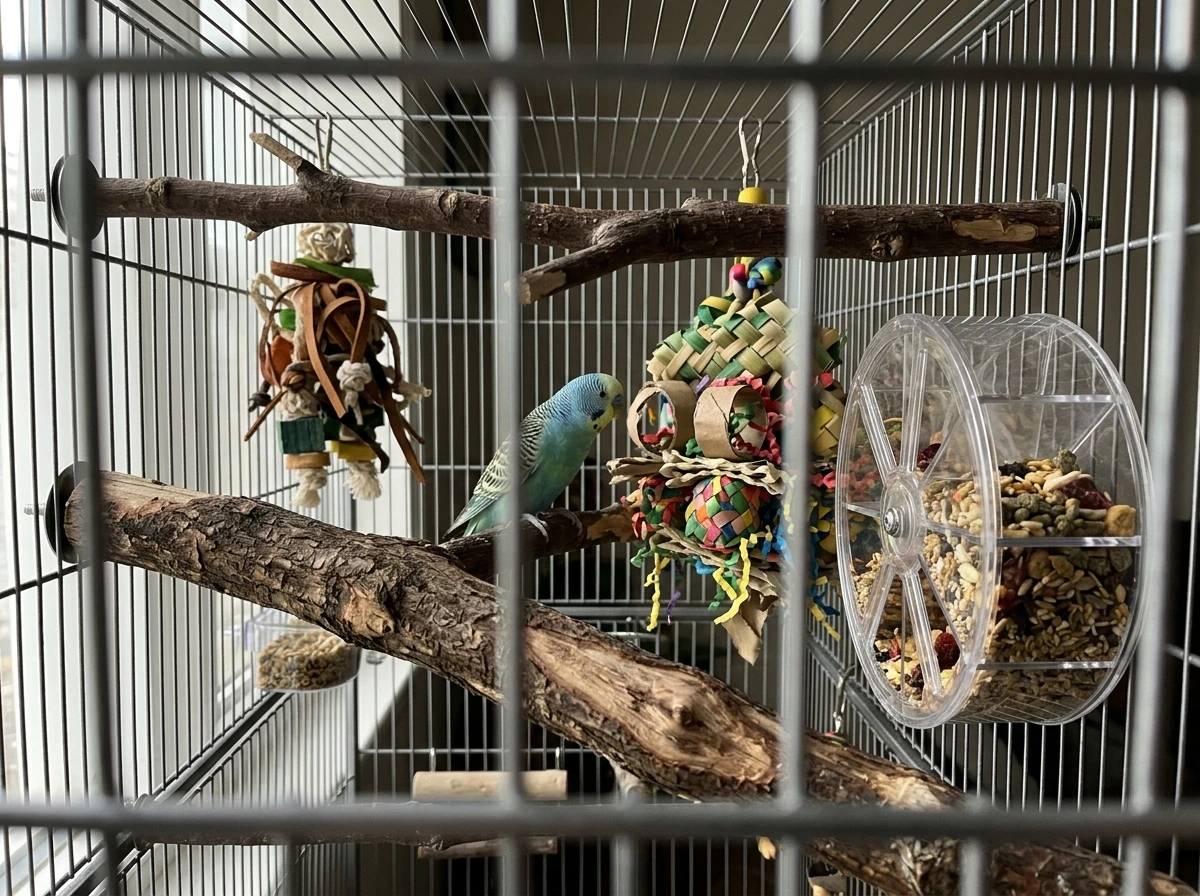
Variety in perch diameter is important. Different diameters exercise the foot muscles differently and reduce the risk of pressure sores. Use a mix of natural wood perches (manzanita, java wood), rope perches for comfort, and a concrete or pumice perch near the food bowl to help wear down nails naturally. Avoid sandpaper perch covers, which are abrasive and can cause foot sores.
Toys aren't optional for large parrots. They need foraging toys, shreddable toys, puzzle feeders, and rotating novelty to prevent boredom and feather-destructive behavior. A good rule: rotate at least two or three toys each week so the bird always has something new. Budget for toys as an ongoing monthly cost, not a one-time purchase.
Feeding, training, and daily interaction
What to actually feed a large parrot
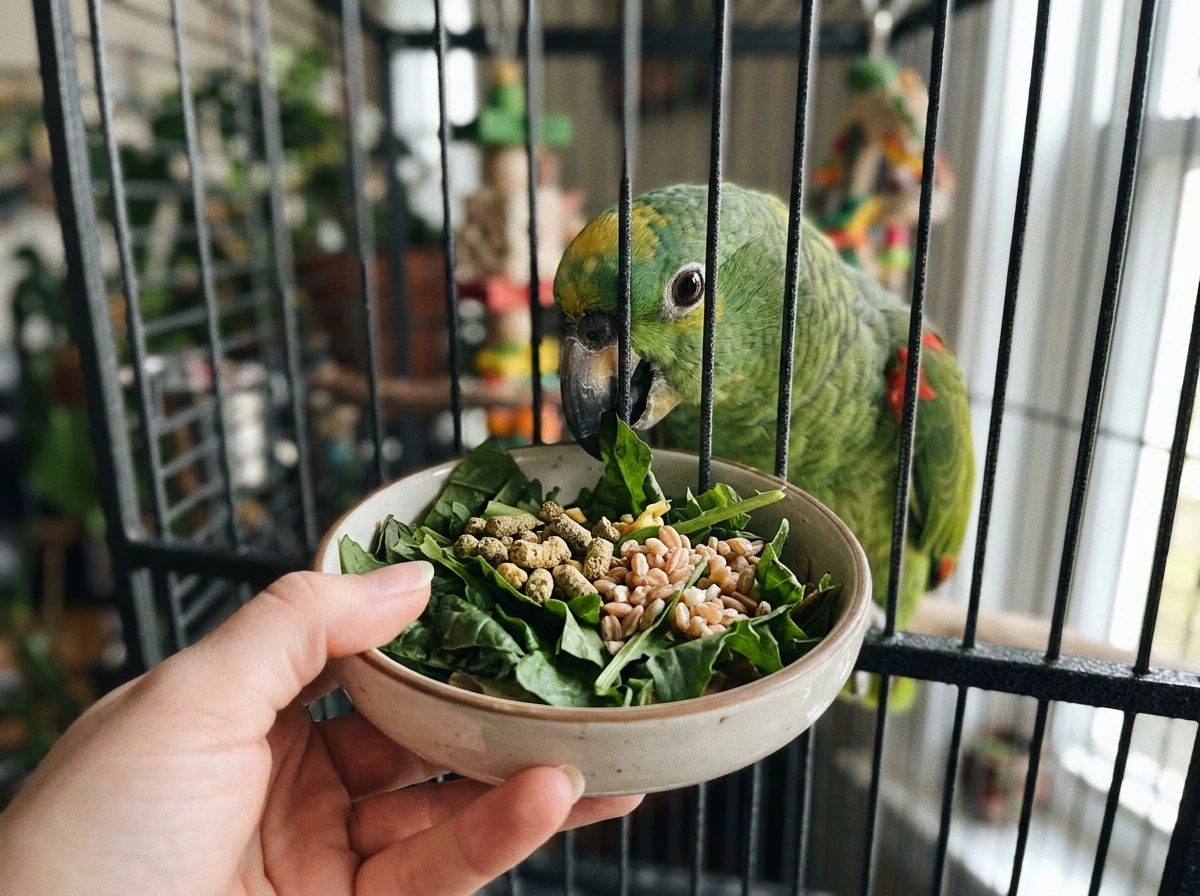
The research on this is consistent and clear. Seeds should not make up the majority of a large parrot's diet. The Merck Veterinary Manual states seeds are high in fat and not very nutritious as a dietary staple, and Bay Area Bird and Exotics Hospital's guidance indicates that birds stay healthier and may live longer on formulated (pelleted) diets. A practical starting framework: roughly 50 to 60 percent high-quality pellets as the base, with fresh vegetables and some fruit making up another 30 to 40 percent, and seeds offered occasionally as treats or training rewards rather than a food group.
Foods to keep completely away from your bird include avocado (which can cause cardiac damage within 24 to 48 hours according to Merck), chocolate, caffeine-containing foods, alcohol, and onions. Keep the kitchen and dining table strictly off-limits as foraging zones. Fresh food and water bowls need cleaning daily, not weekly, and water bottles can reduce contamination compared to open bowls in high-mess environments.
Training: start with step-up, build from there
The step-up command is your foundation. The method is straightforward: press a finger gently against the bird's lower chest just above the feet, and when it lifts a foot and steps up, immediately reward with a treat and calm verbal praise. Keep sessions short, around 5 to 10 minutes, and stop before either of you gets frustrated. Positive reinforcement is the only approach worth using. Yelling, pulling back your hand sharply, or any form of punishment tends to reinforce biting as an attention-getting behavior and erode the trust you're trying to build.
Socialization means exposing the bird gradually to different people, sounds, and environments while keeping those exposures positive. A large parrot that has only bonded to one person becomes very difficult to handle for anyone else, which is a real problem if you travel, need vet care, or have a family. From the start, have multiple household members interact with the bird consistently.
Out-of-cage time and bathing
Large parrots need safe time outside the cage every day. The RSPCA is clear that cage time alone is not sufficient; birds need opportunities to move, stretch, and use their wings. A designated "bird-safe" room or play stand setup lets you give that time without the chaos of a fully free-roaming bird in an un-bird-proofed home. Before any out-of-cage time, check that windows are closed, ceiling fans are off, other pets are secured, and there are no open water sources like full sinks or toilet bowls.
Bathing keeps feathers in good condition and most large parrots genuinely enjoy it. A gentle misting with a spray bottle, a shallow dish of water to splash in, or a supervised shower (many parrots love this) works well. Aim for a few times per week. Avoid soaking the bird in cold weather and never use any soaps or detergents.
Health basics and getting vet-ready
Find an avian vet before you bring the bird home, not after. A general small-animal vet is not equipped to handle parrots. Look specifically for a vet who lists avian medicine as a specialty, or who is board-certified by the Association of Avian Veterinarians. When you call a new clinic, ask how many avian patients they see per month and whether they have experience with the specific species you're getting. If the answer is vague, keep looking.
The Merck Veterinary Manual recommends at minimum annual wellness exams for pet birds. For a large parrot, this should include a physical exam, weight check, and discussion of any behavioral changes. A baseline blood panel when you first bring the bird home gives you reference values if something goes wrong later. For a new bird from any source, a 30-day quarantine in a separate room from any existing pets is standard practice, regardless of whether the bird has papers or came from a reputable breeder. how to choose a bird
The Teflon/non-stick danger is not overstated
PTFE (the coating on most non-stick pans, including Teflon) releases fumes when overheated that are colorless, nearly odorless, and can kill a bird within minutes. This is not a rare edge case: most PTFE poisoning incidents happen when a coated pan boils dry or is left on high heat unattended. If your bird is ever exposed to cooking fumes and you see sudden labored breathing, weakness, or collapse, get the bird to fresh air immediately and call your avian vet or emergency vet. Do not wait to see if it gets better. The safest move is to remove all non-stick cookware from your home entirely and switch to stainless steel or cast iron. Beyond cookware, avoid aerosol sprays, scented candles, air fresheners, and any cleaning products near the bird. Their respiratory systems are extraordinarily sensitive.
A normal resting respiratory rate for a large parrot (in the 400 to 1,000-gram range) is roughly 15 to 30 breaths per minute. If you see your bird breathing faster than that at rest, or notice tail-bobbing with each breath, that's a vet call, not a wait-and-see situation.
Mistakes beginners make and how to avoid them
Almost every beginner makes at least a few of these mistakes. Knowing them ahead of time is the closest thing to a shortcut this hobby offers.
- Buying a cage that's too small: The cage that looks big in the store is almost always undersized for a large parrot. Use the wing-stretch test and the Merck minimums as your floor, not your target.
- Feeding a seed-heavy diet: Seeds are like junk food for parrots. A diet that's 70 percent seeds will shorten your bird's life and cause nutritional deficiencies. Start with pellets as the base from day one.
- Underestimating the noise: Many first-time large-bird owners are genuinely unprepared for the volume and frequency of vocalizations. Listen to recordings online before committing, and be honest with yourself about your living situation.
- Not finding an avian vet first: Birds hide illness until they can no longer hide it. By the time a parrot looks obviously sick, it's often a medical emergency. Having an established avian vet relationship before that happens is critical.
- Keeping non-stick cookware: This one is worth repeating. The risk is real and the solution is simple. Switch the cookware before the bird comes home.
- Skipping socialization with multiple people: A bird that will only tolerate one person is a bird that becomes nearly impossible to care for when that person is unavailable.
- Impulse-buying based on appearance: Large parrots are visually stunning. That's not a reason to get one. Match the species to your actual lifestyle, time availability, and household noise tolerance.
- Assuming the bird will "settle in" without work: Large parrots don't automatically become well-adjusted pets. Trust and good behavior are built through consistent daily interaction and training. Without that investment, behavioral problems develop quickly.
Your next steps: a practical checklist before you bring a large bird home
- Identify and contact at least one avian vet in your area. Schedule a "new bird" appointment in advance so it's already on the calendar.
- Research and purchase the right cage before the bird arrives. Use the Merck minimums (40 x 30 x 60 inches for most large parrots) as your absolute floor and go larger if possible.
- Remove all non-stick cookware from your kitchen and replace with stainless steel or cast iron. Do this before day one.
- Stock up on high-quality pellets (not seed mixes) and plan your fresh food rotation. Know the toxic food list cold: avocado, chocolate, caffeine, onion, and alcohol are the big ones.
- Decide on your quarantine room if you have other pets. Plan for 30 days minimum of separation.
- Set up your perch variety, initial toy rotation, and a foraging setup before the bird's first day home.
- Choose your source carefully. Ask breeders or rescues for health records, ask whether the bird has been vet-checked recently, and ask about the bird's diet and socialization history. A reputable source will welcome those questions.
- If buying from a breeder, ask specifically whether the bird is weaned and what it has been eating. Avoid anyone who can't answer those questions or who pressures you to decide quickly.
- Commit to a realistic daily routine: morning feeding and interaction, at least 2 to 3 hours of out-of-cage time across the day, evening socialization, and a consistent sleep schedule (10 to 12 hours of darkness).
- Read up on general beginner bird care, including our guides on choosing your first bird and what the easiest birds to care for look like, so you have realistic context for what you're getting into at this level.
A large parrot done right is one of the most genuinely rewarding relationships you can have with an animal. A large parrot done wrong becomes a source of stress for both you and the bird, often ending in rehoming. The difference almost always comes down to preparation. You're already doing that part right by asking the right question first.
FAQ
What’s the biggest “gotcha” that makes beginners regret choosing a large bird?
Underestimating daily out-of-cage time and noise management. Even the easiest large species can become destructive or excessively vocal if it is left alone too long, or if the home routine constantly changes without enough predictable interaction and training sessions.
If I can only budget for the bird and cage, what cost category will still surprise me?
Ongoing food and veterinary expenses. Large parrots typically eat more per day than beginners expect, and wellness care, emergency visits, and baseline labs add up. Budget monthly for toys and fresh produce, and plan for at least annual avian exams plus a separate emergency fund.
Is a 30-day quarantine still necessary if I’m getting the bird from a reputable breeder or rescue?
Yes. Quarantine is about exposure control, not paperwork quality. Keep the new bird in a separate room, limit shared air and household traffic, and use dedicated tools for food, water, and cleaning so you do not accidentally transfer pathogens.
How do I know if my cage is truly “large enough,” not just the minimum?
Use a wing-spread and tail-clearance check: the bird should fully spread its wings without touching the sides, and when perched its tail should not drag on the floor. Also confirm door placement allows safe access for you, because squeezing in a cramped space increases handling stress and makes it harder to do daily cleaning.
Which is safer for large parrots, open bowls or water bottles?
Both can work, but bottles reduce contamination for high-mess birds. If you use open bowls, clean and refresh daily (twice daily if heavily foraged). Make sure the bottle tip is positioned so the bird can drink without straining its neck.
Do I need to train nail trimming or wing clipping right away?
Not right away, but you should plan for it and train for cooperation. Large parrots can be difficult during routine care, so start with short touch and step-up sessions, then schedule an avian vet visit to discuss safe nail management and whether wing trimming is appropriate for your bird and lifestyle.
What should I do if my large bird only bonds with one person?
Increase structured participation from multiple household members early and consistently. Practice brief, positive interactions during different times of day (hand feeding pellets, short step-up sessions, and calm handling). If bonding is already exclusive, do not force contact, instead slowly expand trust using the bird’s preferred rewards.
How soon should I begin “bird-safe” out-of-cage time after bringing the bird home?
After the bird settles enough to eat normally, perch comfortably, and show relaxed breathing, typically within the first couple of weeks, but it depends on the individual. Start with short supervised periods in a thoroughly prepared room, then increase time, because immediate full-length free roaming often leads to panic, collisions, or injury.
What are the early warning signs that my bird’s breathing is abnormal?
Watch for breathing faster than normal at rest, tail-bobbing with each breath, or any sudden change from its typical baseline. If you see those signs, treat it as urgent and contact an avian vet, especially if there was any possible exposure to fumes or irritants.
Are there everyday home smells and products that I might miss even if I avoid PTFE cookware?
Yes. Avoid aerosol sprays, scented candles, air fresheners, and strong cleaning chemicals near the bird. Also be cautious with new furniture, paints, or carpeting, because off-gassing can irritate sensitive respiratory systems even when the room seems “clean.”
How should I handle bathing if my bird hates it?
Use gradual options instead of forcing soaking. Try a gentle mist from a distance, then a shallow dish they can choose to approach. If the bird panics, stop and try a calmer method at another time, because repeated stress can create avoidance and reduce trust.
What’s a practical way to transition from seeds to pellets without causing major stress?
Start by keeping the bird on familiar foods while gradually increasing pellets in small amounts mixed into current favorites. Use pellets as part of foraging and training rewards (instead of replacing everything at once), and monitor droppings and appetite closely during the change.
Next Article
Tiny Bird Garden Codes: How to Plan a Safe Outdoor Setup
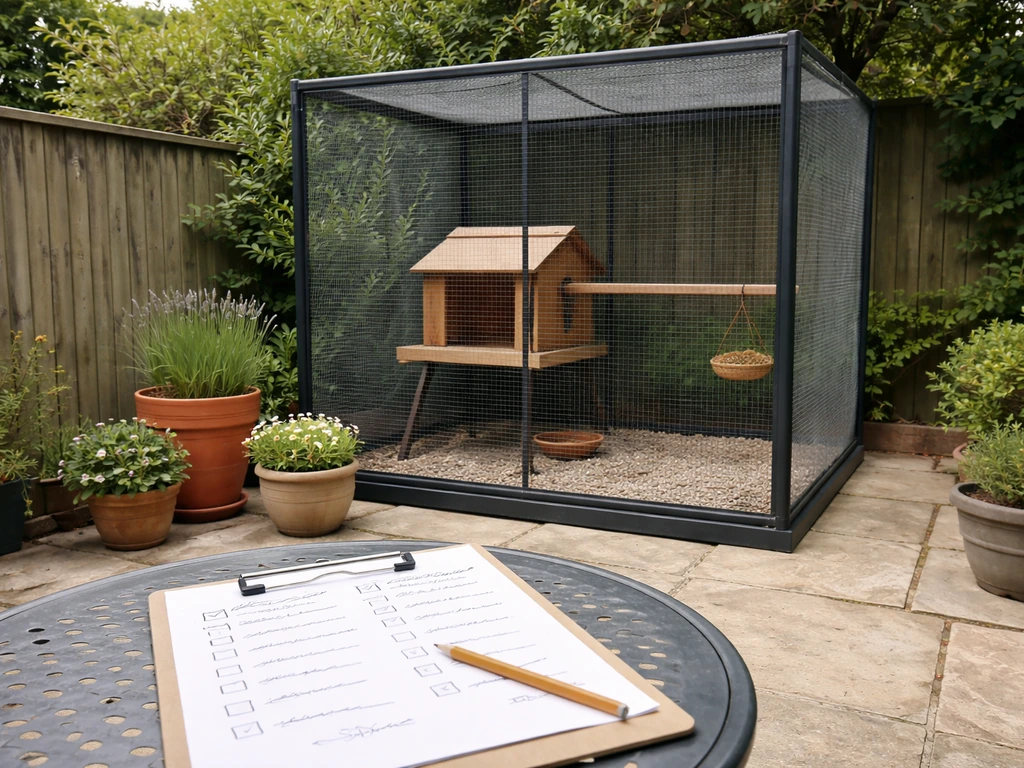
Learn how tiny bird garden codes map to local rules and safe outdoor enclosure specs, with a beginner setup checklist.