A myna bird can be a genuinely rewarding home pet, but only for the right person. If you want a talkative, personality-packed bird that actively engages with you, the hill myna (Gracula religiosa) is hard to beat. But mynas are loud, messy, socially demanding, and come with a specific dietary requirement (low-iron diet) that can be life-or-death serious. For a first-time bird owner who can commit to daily interaction, proper housing, and a specialized diet, a myna can absolutely work. For someone looking for a low-maintenance companion, it almost certainly won't.
Is Myna Bird Good for Home? Care, Noise, Diet Checklist

Marcus Chen
5 May 2026
What people actually mean by "myna bird"
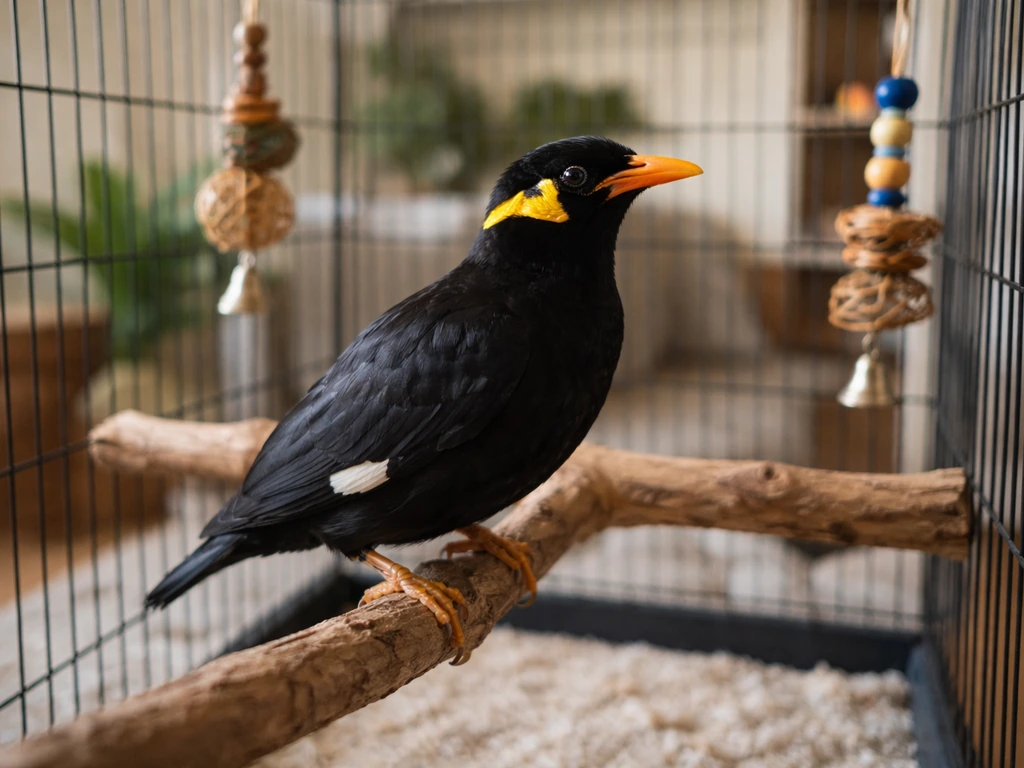
"Myna" covers a surprisingly wide group of starlings (family Sturnidae), but when people search for a pet myna, they're almost always referring to one of two species. The hill myna (Gracula religiosa) is the famous talker, about 25 cm (10 inches) long, native to South and Southeast Asia, and widely regarded as one of the best mimics in the bird world. It can replicate human speech with stunning clarity, better than most parrots in terms of tonal accuracy. The common or Indian myna (Acridotheres tristis) is slightly smaller at around 20-26 cm, highly vocal, and also a capable mimic, but it's been introduced to Australia, New Zealand, Hawaii, and other regions where it's considered invasive, which creates real legal complications around ownership in some places.
For the purpose of this guide, most of the care advice applies primarily to hill mynas, since those are the ones most actively sold through the pet trade and most commonly raised as companion birds. If you're looking at a common myna, check your local regulations carefully before doing anything else, because in several jurisdictions keeping them is either restricted or outright prohibited.
Temperament, noise, and what beginners should honestly expect
Hill mynas are social, curious, and bond strongly with their owners when hand-raised from a young age. They're not naturally aggressive, and biting, when it does happen, is usually fear-based or learned rather than a sign of a mean bird. That said, they are not a bird you can leave alone in a corner and expect to stay well-adjusted. They thrive on daily interaction and get bored fast, and a bored myna will let you know about it.
Let's talk noise honestly. Mynas are highly vocal year-round, and their calls include loud alarm calls, whistles, and full-volume mimicry. A hill myna imitating your ringtone or your laugh at 6 a.m. is charming exactly once before it becomes a real consideration if you live in an apartment or have close neighbors. This isn't a bird that will sit quietly. If you're curious how mynas compare to smaller, quieter options for apartment living, that's a genuinely different conversation.
Mynas are also not considered beginner-easy in the same way that some small, forgiving birds are. They require more specialized diet management, more social time, and more out-of-cage space than, say, a budgie or a canary. If this is your very first bird and you're not sure you can commit 30-60 minutes of direct interaction daily, it's worth looking at friendlier starting points before committing to a myna.
Setting up the right home for a myna
Cage size and bar spacing
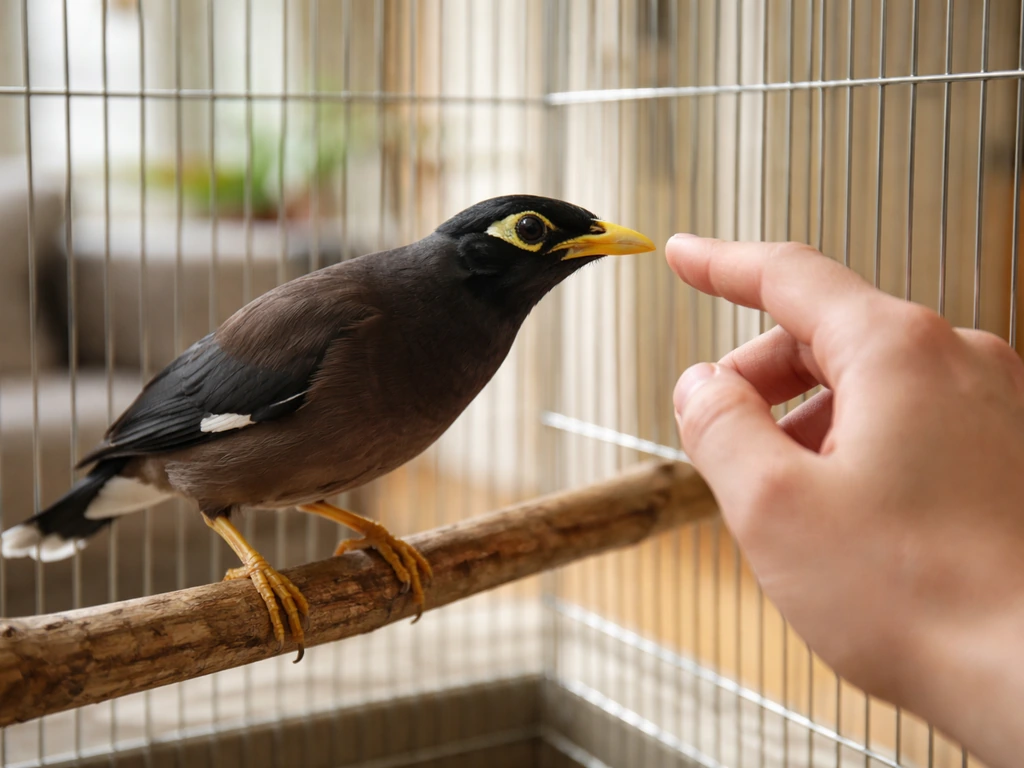
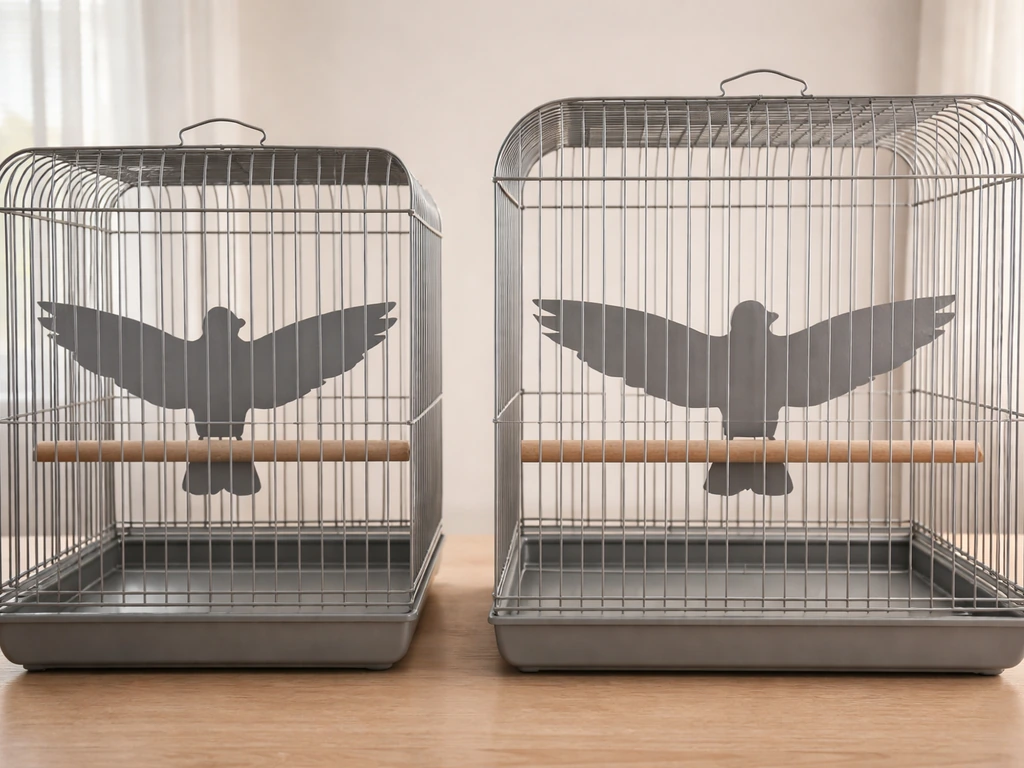
Mynas need serious space. The general rule for any pet bird is that the cage should be at least 1.5 times the bird's wingspan in every direction so it can stretch comfortably, but for a hill myna that's a minimum, not a goal. If you're keeping a pair, a recommended indoor enclosure is around 2 meters long by 1 meter wide by 1.8 meters tall, with access to additional protected outdoor space if possible. For bar spacing, use the finger-thickness test: if you can insert a finger and the bird's head could theoretically follow, the spacing is too wide. Mynas can push through gaps that look surprisingly small, so get a cage designed for birds of similar size.
Perches, enrichment, and out-of-cage time
Rope perches, natural wood perches of varying diameters, and climbing structures all help keep a myna physically active and mentally occupied. Rotate toys regularly. Research on captive mynas (including Bali mynas) has found that enrichment changes directly increase movement and reduce repetitive stress behaviors like excessive self-preening. A bird that isn't enriched will find its own entertainment, usually through screaming or destructive chewing. Give daily out-of-cage supervised time in a bird-proofed area. Aim for at least an hour outside the cage each day beyond training and feeding interactions.
Feeding a myna: the diet detail you can't skip
This is the section where myna care separates sharply from most other pet birds, and getting it wrong can shorten your bird's life significantly. Mynas are omnivores, not seed-eaters. In the wild they eat fruit, insects, small reptiles, amphibians, and scraps. In captivity, the safest diet foundation is a low-iron pelleted diet specifically formulated for soft-billed birds, supplemented with fresh fruit.
The reason iron matters so much: mynas are highly prone to iron storage disease (hemochromatosis), a condition where excess iron accumulates in the body's tissues and becomes life-threatening. The threshold you're aiming for is pellets containing less than 90-100 mg of iron per kilogram of diet (some guidance suggests even lower, around 60-100 ppm). Check the label before buying any pellet product. Not all soft-bill pellets are equal on this point.
For fruit, choose low-iron options. Good examples include peach, honeydew melon, skinless apple, and plum. Avoid high-iron fruits like raisins, berries, and dark leafy greens as staples, and skip any iron-fortified foods entirely. Occasional insects can be offered for protein variety, but keep the focus on the pellet-and-fruit base. Fresh water, cleaned daily, is non-negotiable.
| Food type | Recommended? | Notes |
|---|---|---|
| Low-iron soft-bill pellets | Yes, daily staple | Must be under 90-100 mg iron/kg |
| Low-iron fruits (apple, peach, honeydew, plum) | Yes, daily | Remove seeds; serve fresh |
| Insects (mealworms, crickets) | Occasional | Good protein supplement |
| Seed mixes | No | Not a natural food; nutritionally poor for mynas |
| High-iron fruits (berries, raisins) | Avoid as staples | Iron accumulation risk |
| Iron-fortified foods or supplements | No | Direct hemochromatosis risk |
Daily care: handling, social needs, and health checks
Building trust and handling
A newly arrived myna usually needs about a week to settle into its environment before regular training starts. Don't rush it. Once the bird seems comfortable, begin short, calm daily sessions using the "step up" cue: position your hand confidently near the bird's lower chest and pair the behavior with a treat reward. Consistency matters more than session length here. Confident, steady handling reduces fear-biting over time. Never jerk your hand away when a bird moves toward it, because that teaches the bird that moving toward you gets a reaction.
Social needs and interaction time
Plan for at least 30-60 minutes of direct interaction each day. This doesn't all have to be formal training. Talking to your bird while it's on a perch near you, letting it observe household activity, and short play sessions all count. Hill mynas ideally should not be kept alone if you can help it. A bonded pair keeps each other mentally stimulated on the days when your schedule gets tight. If you're keeping a single bird, your interaction time becomes even more critical.
Routine health checks
Daily, just watch your bird. Changes in droppings, appetite, posture, or vocalization are often the first signs that something's wrong. Birds hide illness well, so catching subtle behavioral shifts early matters. Weigh your bird weekly if possible. A consistent weight drop is a red flag. Find an avian vet before you need one urgently, because general practice vets often lack the training to catch myna-specific issues like early iron storage disease.
Real challenges and legal responsibilities
The day-to-day realities
Mynas are messy. Their droppings are liquid and frequent (soft-billed birds have very different digestive systems from hookbills), which means cage cleaning isn't a weekly event but a near-daily task. They also fling food. Budget time for this, and set up your cage area on an easy-to-clean surface.
Lifespan is another commitment factor. Hill mynas in good captive care can live 12-25 years. This is a long relationship. Before you bring one home, think seriously about whether your housing situation, lifestyle, and ability to provide specialized diet and avian vet care will hold up for potentially two decades.
Legal and ethical considerations
Hill mynas (Gracula religiosa) are listed on CITES Appendices, meaning international trade is regulated by treaty. If you're in the United States and considering importing a myna, USDA APHIS requires entry through designated ports and a mandatory 30-day quarantine with testing for birds from certain origins.
Imported pet birds must undergo a minimum 30-day quarantine at a USDA animal import center (or a USDA-approved private quarantine facility), and birds are tested in quarantine for certain communicable diseases mandatory 30-day quarantine with testing.
If you are importing regulated live animals, USDA’s APHIS FAQ directs importers to submit declarations and arrange import quarantine when applicable.
USFWS permits may also apply. This isn't bureaucratic noise you can skip. Buying from a reputable domestic breeder sidesteps most of this, but you still need to confirm the bird's legal status.
The common myna situation is more complicated. Because it's classified as invasive in Australia, New Zealand, Hawaii, and other regions, many jurisdictions either prohibit keeping them or restrict release. Even in places where it's technically legal to own one, check with your state or local wildlife authority before purchasing. "I didn't know" is not a defense if you're holding an illegally kept bird.
Is a myna actually the right bird for you?
Honestly, a myna is a great home bird for a specific kind of owner: someone with time, patience, a tolerance for noise and mess, the ability to source a proper low-iron diet, and access to an avian vet. For first-time bird owners who fit that description, the payoff is a bird that talks back, recognizes you, and becomes a genuine household personality. For everyone else, it's likely a frustrating mismatch.
If you're not sure which category you're in, use this checklist before deciding:
- Can you commit 30-60 minutes of daily hands-on interaction, every day, not just weekends?
- Do you have (or can you build) a cage of at least 2 x 1 x 1.8 meters for a pair, or equivalent for a single bird with extensive out-of-cage time?
- Can you consistently source low-iron soft-bill pellets (under 90-100 mg iron/kg) in your area?
- Is there an avian vet within reasonable distance who has experience with mynas or soft-billed birds?
- Are mynas legal to own in your city, state, and country, and do you have documentation of legal acquisition?
- Can you handle daily cage cleaning and the mess that comes with a soft-billed bird?
- Are you (and your household) genuinely okay with a highly vocal bird for potentially 12-25 years?
If you answered no to two or more of those, a myna probably isn't your best first bird. If you want help deciding on the best house bird pets for your situation, compare needs like noise, diet complexity, and daily interaction time best first bird.
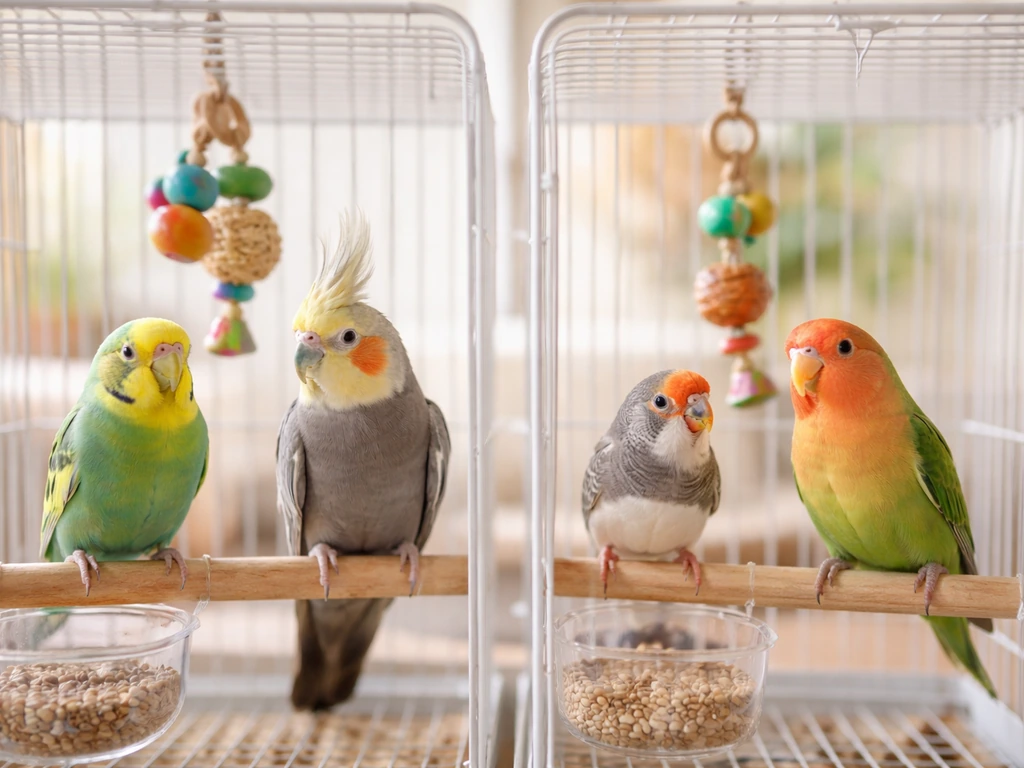
Better starting points for first-time owners who want personality and interaction include cockatiels, lovebirds, or green-cheeked conures, all of which are more forgiving of beginner mistakes, quieter in a relative sense, and easier to diet correctly. If you want something that fits your routine more easily, the best bird pets for seniors will be a useful comparison point before you commit to a myna.
If you're drawn to talking ability but want something smaller and more apartment-friendly, that's a different comparison worth exploring based on your living situation and lifestyle. The goal isn't to talk you out of a myna, but to make sure that if you get one, you're actually set up to give it a good life.
FAQ
Are mynas a good choice if I live in an apartment or have neighbors close by?
They can be a poor fit if noise sensitivity is a concern, because mynas vocalize year-round and can mimic at high volume. If you still want one, plan for sound-buffering limits (thin walls and shared ventilation), and choose a consistent “quiet-hours” routine you can enforce daily, not just sometimes.
Do I need to buy a specialized low-iron pellet diet immediately, or can I transition later?
Transition carefully. A newly brought bird should not be switched abruptly, because stress and diet changes can upset digestion. Start with the pellet type your breeder used if available, then move to the low-iron formulation gradually over multiple days while monitoring droppings and appetite.
What are the most common feeding mistakes with mynas?
The biggest errors are using regular seed/extra-iron pellets, adding iron-fortified foods, and relying on high-iron fruit like raisins or berries as frequent “treats.” Another frequent mistake is treating insects as the main protein instead of keeping the base pellet-and-low-iron-fruit plan consistent.
If myna droppings are liquid and frequent, how do I tell normal from a problem?
Normal behavior usually stays fairly consistent in color and frequency, even if it’s messy. Sudden changes like noticeably reduced or increased frequency, very dark or pale color, refusal to eat, or puffed posture are red flags, especially if paired with less vocalization than usual.
Can a hill myna be kept alone if I can interact for 30 to 60 minutes daily?
It can work, but daily interaction must be truly reliable because the bird’s mental needs are ongoing, not just scheduled training time. If your routine is unpredictable, a bonded pair usually provides more stable stimulation and reduces boredom-driven screaming or destructive chewing.
How much cage size is “enough” if myna needs space but my room is limited?
Use the article’s baseline as a minimum, but be conservative if your space forces shorter out-of-cage time. If you cannot provide substantial daily supervised time, the cage must work as the main environment, so invest in length and climbing space rather than only height.
Are mynas safe around other pets in the household?
They can be, but supervision is non-negotiable. Cats, dogs, and even other birds can trigger fear, resource guarding, or injury risk. Make the first introductions gradual, keep the myna in a secure area during early sessions, and watch for escalating cage stress like frantic pacing or refusal to eat.
Will a myna ever be “quiet,” or should I expect constant noise?
Expect a steady baseline of calls and periodic bursts, not quiet companionship. You can reduce disruption by training routines and increasing enrichment, but you should not count on silence, especially in the morning or when the bird is seeking attention.
What should I do during the first week after bringing a myna home?
Focus on settling, not training. Offer stable food and fresh water, keep handling calm and predictable, and limit loud disruptions so the bird decompresses. Start short “step up” only once the bird shows comfort, such as relaxed posture and normal eating.
How do I find the right avian vet for myna-specific issues?
Look for a clinic that explicitly treats birds and can discuss myna-related topics like iron storage disease screening and diet management. Before problems appear, ask what labs or exams they can run if your bird shows subtle weight changes or appetite shifts.
Is it safe to import or buy a common myna if it’s legal where I live?
Check beyond your own city limits. Common mynas can still be restricted by state or local wildlife rules, and ownership may not be sufficient for transport, breeding, or relocation. Confirm the exact legal status before purchase, and keep documentation showing lawful acquisition.
What cage features matter most for preventing escapes or injuries?
Avoid cages with gaps that a myna can squeeze through, and use secure latches because these birds are persistent. Perches and climbing structures should be positioned so the bird can move safely without falling when startled, and rope perches should be monitored for fraying to prevent chewing hazards.
Next Article
Best Small Bird Pets for Beginners: Picks, Care, Setup
Best small bird pets for beginners: choose finches, budgies, cockatiels, lovebirds with care, setup, routines, safety ti