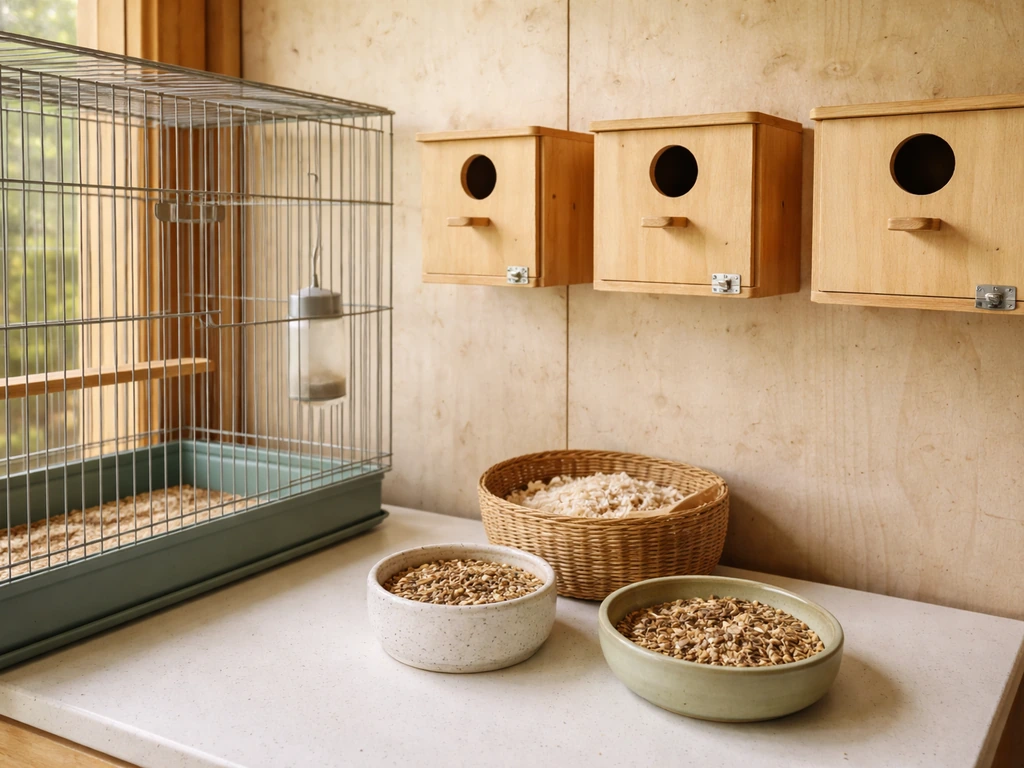
A functional bird breeding setup comes down to four things done right: the right species for your experience level, a room layout that keeps pairs calm and separated, stable environmental conditions (temperature, humidity, light, and clean air), and a daily routine that catches problems before they become disasters. A love bird breeding setup should follow the same core principles, but you also need to tune the housing, nest box choice, and environment to match lovebirds specifically. Get those four things in place and you give your birds a real shot at successful clutches, healthy chicks, and manageable workload for you.
Bird Breeding Setup Guide: Room, Care, and Biosecurity Basics
Marcus Chen
20 May 2026
Start with your goals and pick the right species
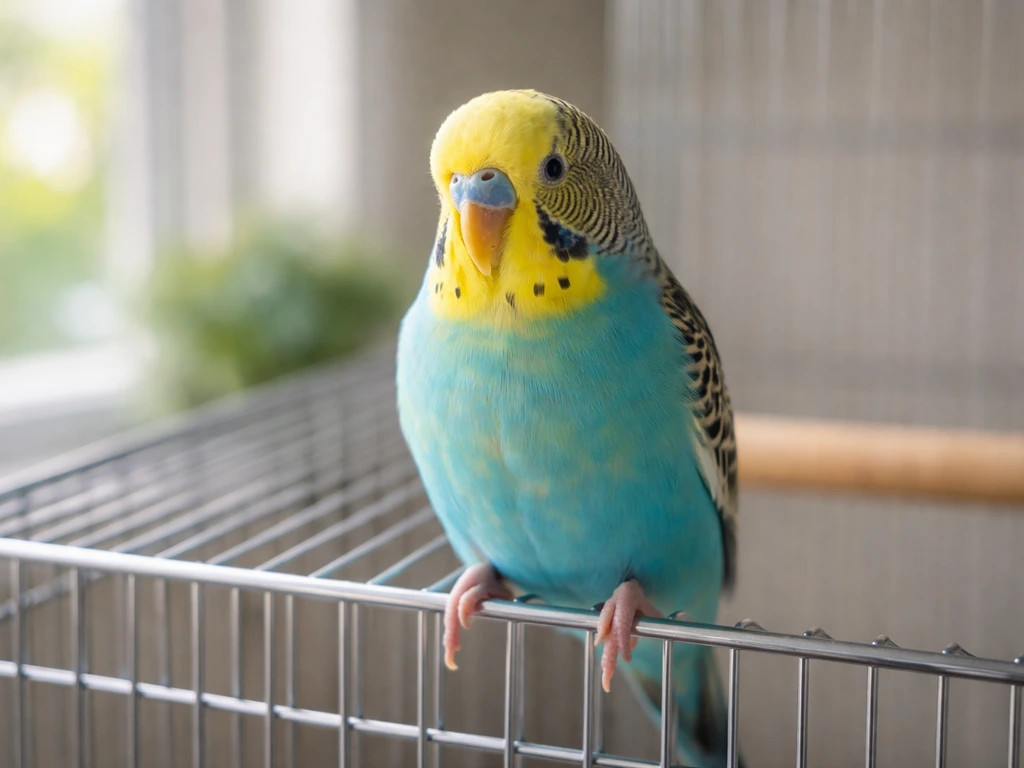
Before you buy a single cage or nest box, be honest about why you want to breed birds. Are you hoping to breed a specific color mutation? Raise chicks to sell locally? Simply experience the process with a species you already keep? Your answer shapes everything: species choice, number of pairs, housing scale, and how much daily time you can realistically commit.
For first-timers, budgerigars (budgies) and cockatiels are the two species that come up again and again for good reason. If you are looking for bird breeds for beginners, start by choosing a species like budgerigars or cockatiels that is well-suited to new keepers. The best bird for breeding depends on your experience, and for many first-timers budgerigars and cockatiels are top choices. Budgies are forgiving, breed readily, and their housing requirements are well-documented. Cockatiels are not inherently difficult to breed either, though successful outcomes depend heavily on bird maturity and a suitable environment. Both species have a wide support community, which matters when you hit your first problem at 10pm and need answers fast. Canaries and finches are another solid beginner option, though their husbandry and breeding triggers differ enough that they deserve their own research. One important note: budgies and cockatiels have different medical and husbandry requirements, so don't plan to house them together in a single breeding room without strict separation.
Whatever species you choose, start with just one or two pairs. Scaling up sounds exciting, but managing six pairs at once when you're still learning egg candling and chick feeding is a fast way to lose birds and confidence simultaneously.
How to lay out a bird breeding room
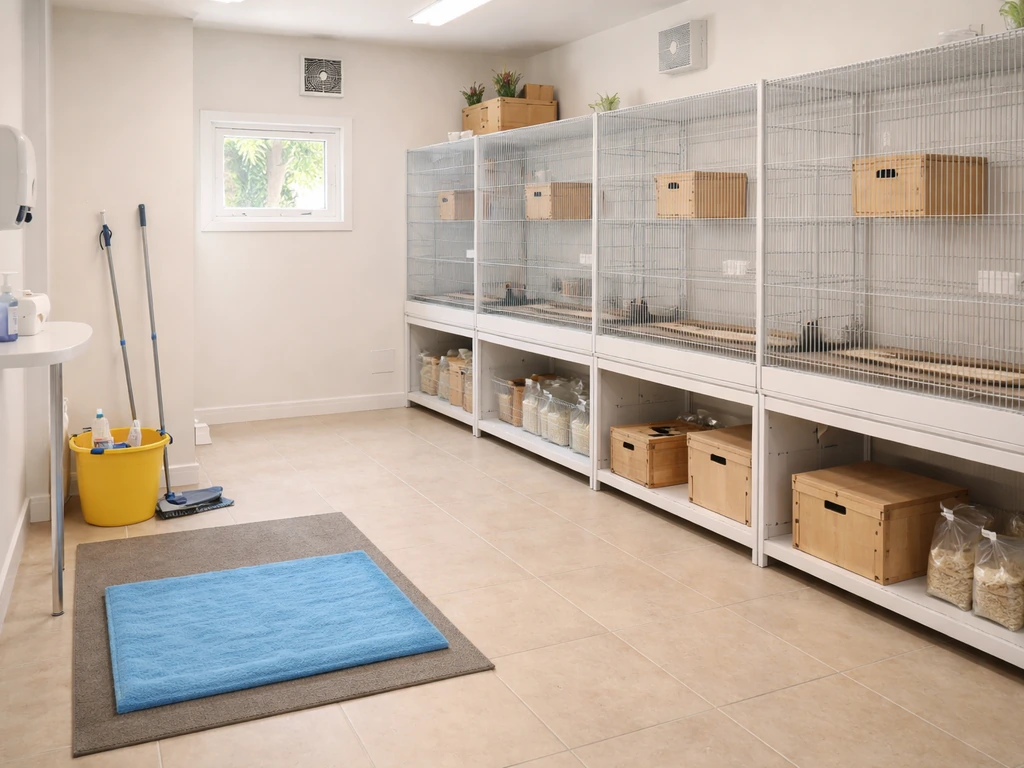
You don't need a dedicated room to start, but you do need a dedicated space, and how you zone it matters. Think of your breeding area in four functional zones: breeding pairs, active nesting and egg incubation, chick rearing (if you're hand-feeding), and isolation/quarantine. Even in a spare bedroom or large garage area, mentally mapping these zones before you place any cage prevents the chaotic cramming that causes stress, disease spread, and management headaches.
- Breeding pairs zone: Individual cages or flight cages per pair, with visual barriers between adjacent pairs to reduce territorial stress.
- Nesting zone: Nest boxes attached to or inside each pair's cage, positioned high and away from foot traffic.
- Chick rearing zone: A separate, warmer, quieter area for pulled chicks or parent-reared young that need supplemental monitoring.
- Quarantine zone: A physically separate area, ideally a separate room or at minimum a separate airspace, for new arrivals and sick birds. Never share equipment between quarantine and your main flock.
Airflow planning is non-negotiable and often the thing beginners skip. US federal regulations for indoor bird facilities require ventilation sufficient to prevent moisture condensation, odors, and ammonia buildup from droppings, while also minimizing drafts. Those two goals seem contradictory but aren't: the answer is indirect ventilation. A box fan or inline duct fan moving air across the room (not directly at cages) handles moisture and ammonia without creating cold drafts on eggs and chicks. Ammonia from droppings is odorless at low levels but still damages respiratory tissue, so don't wait until you smell it to act.
Cages, aviaries, nest boxes, and breeding materials
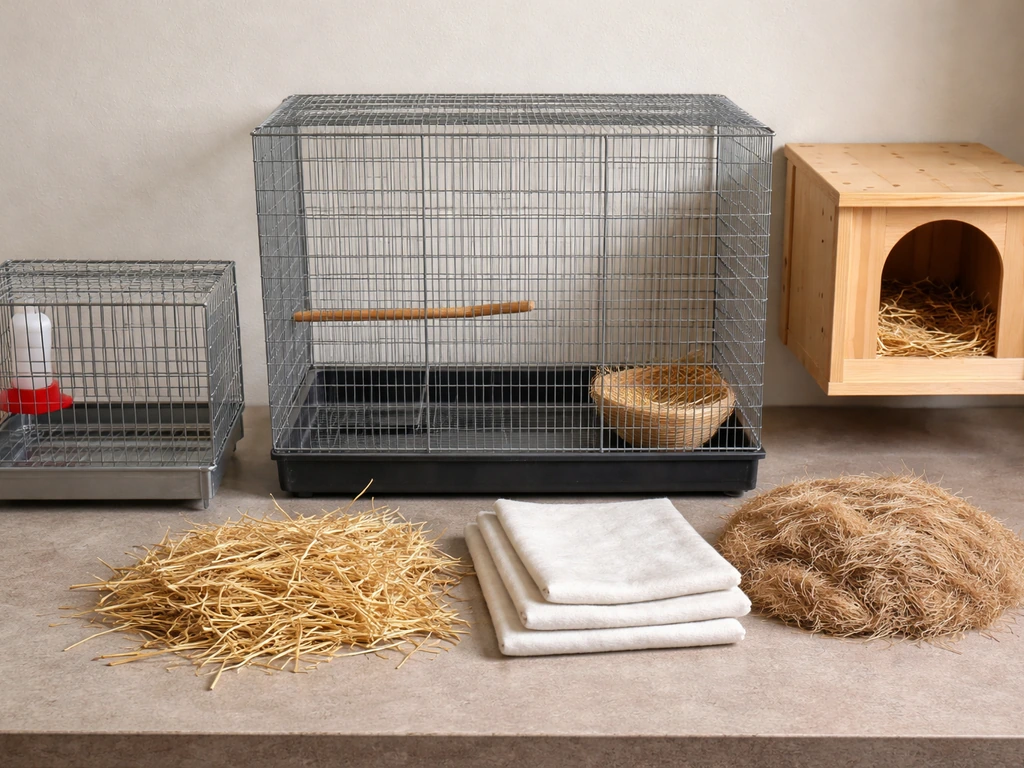
Choosing the right housing
There are two main breeding approaches: selective (cage) breeding and colony breeding. If you are focused on smaller numbers and tight control over outcomes, selective (cage) breeding is often contrasted with colony setups, and similar goal-setting applies to bird farming is called approaches as well. With selective breeding, each pair gets their own cage and you control exactly which birds produce which offspring. Colony breeding puts multiple pairs in a large aviary together. For beginners, selective cage breeding wins every time. You can monitor individual pairs, track clutch outcomes, and isolate problems without disrupting your whole flock. Colony setups look impressive but amplify every management mistake.
For bar spacing, get this right before anything else. Budgies need bar spacing of no more than 1/2 inch. Cockatiels do fine with 1/2 to 5/8 inch spacing. Too wide and birds can get their heads through and injure themselves. For a breeding pair of cockatiels, a cage of at least 24" x 24" x 24" gives them workable space, though bigger is always better. Wire cages are preferable to acrylic or solid-sided enclosures in a breeding room because airflow matters.
Nest boxes: sizing and placement
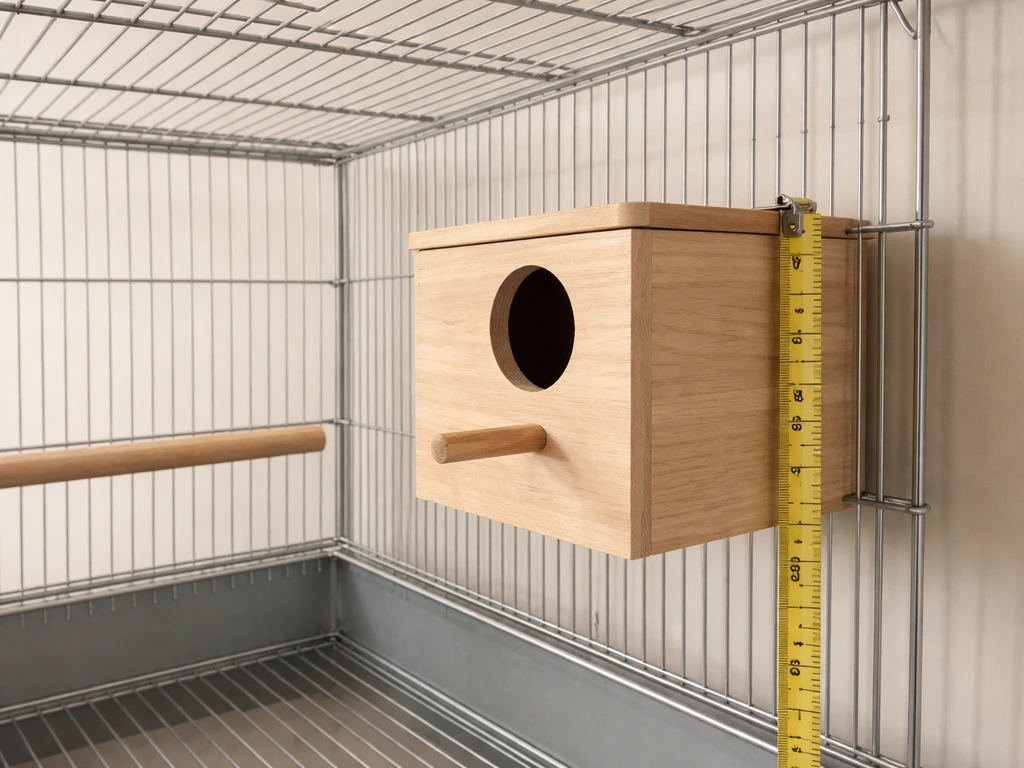
Nest boxes are attached to the cage once birds are paired together. For budgies, a standard nest box runs approximately 9 inches high by 6 to 8 inches wide by 6 to 7 inches deep, with an entry hole around 2 inches in diameter (roughly 5 cm). A common metric equivalent is about 15 x 15 x 25 cm with a 5 cm entrance hole. Cockatiels need a larger box, typically around 12" x 12" x 12" or bigger, with an entry hole of about 3 inches. Mount the box as high on the cage wall as possible since birds instinctively prefer elevated nesting sites. Add a concave dish or a shallow carved recess inside the box floor to keep eggs from rolling and to give chicks a stable resting position.
For nesting material, cockatiels typically don't need substrate in the box (they prefer bare wood). Budgies do better with a thin layer of pine shavings or untreated wood chips. Avoid cedar shavings (the aromatic oils are respiratory irritants), fabric scraps (tangle and strangulation risk), and cotton fibers. After each clutch, disinfect the nest box thoroughly before offering it again.
Getting the environment right: temperature, humidity, lighting, and air quality
Federal welfare regulations are explicit: indoor bird facilities must have temperature and humidity regulated to species-appropriate levels, not just for comfort but to prevent distress and health problems. For most commonly bred companion species, a room temperature range of roughly 68 to 78°F (20 to 26°C) covers the breeding adults well. Chicks and eggs are more sensitive, and if you're artificially incubating eggs, you need to hit approximately 99.5°F (37.5°C) with humidity around 50 to 60% during incubation. A separate incubator with a calibrated thermometer and hygrometer is essential if you're pulling eggs. If you plan to pull eggs, choosing a reliable incubator is one of the biggest decisions you will make best bird incubator.
Lighting and photoperiod are the main breeding triggers people underestimate. For canaries, breeding requires a minimum daylight length and a minimum daytime temperature of around 15°C (59°F) alongside bird maturity, a partner, and nest availability. For budgies and cockatiels, gradually increasing day length toward 12 to 14 hours using a timer simulates the seasonal cue that kicks off breeding behavior. Don't flip it on abruptly: ramp up by 15 to 30 minutes per week. On the flip side, if you need to suppress reproductive hormones in a bird that's over-breeding or showing hormonal aggression, limiting light to 8 to 10 hours per day can help dial things back.
Air quality deserves its own paragraph because it's the most commonly neglected variable in home breeding setups. Ammonia from droppings builds up silently and causes chronic respiratory irritation before you ever detect the smell. Poor humidity control encourages bacterial and fungal growth in nest boxes and substrate. The practical fix is a combination of good cage placement (not against walls where air stagnates), regular spot-cleaning of droppings, and an indirect ventilation source that cycles fresh air through the space without pointing airflow directly at nesting birds. A small HEPA-style air purifier in the room is a worthwhile addition, especially in a smaller indoor space.
Health, biosecurity, and quarantine
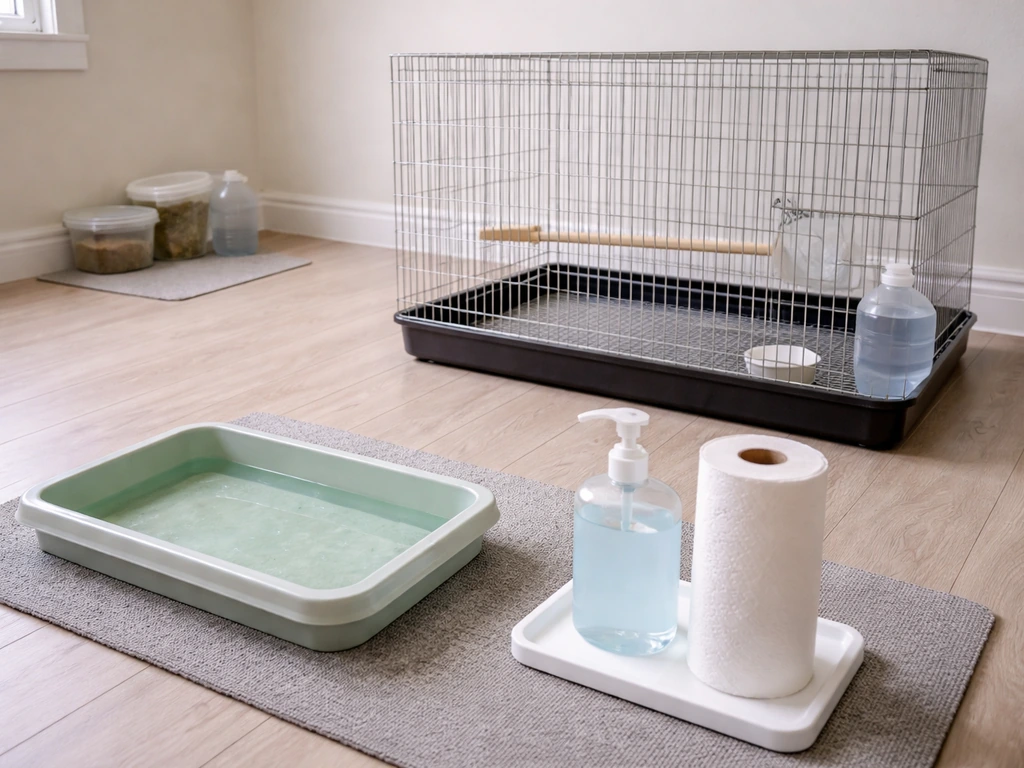
This is the section most beginners skim and then regret. Biosecurity is not overcautious paranoia; it's the difference between a setback and losing your whole flock.
Any bird entering your breeding space for the first time needs a quarantine period in a physically separate area, ideally a separate room with its own air circulation. US federal regulations for imported pet birds require a minimum of 30 consecutive days of quarantine with mandatory testing for HPAI and Newcastle disease. Even if you're buying from a local hobbyist, a 30-day quarantine before introducing new birds to your established pairs is the standard you want to hold yourself to. During quarantine, do not share food dishes, water containers, perches, or any equipment with your main flock. Wash hands between handling quarantine birds and your established birds.
On the daily side: the CDC flags bird hobbyists as being at elevated risk for exposure to avian influenza A viruses. OSHA's guidance is straightforward: avoid unprotected contact with birds and their droppings, use hand hygiene after every interaction with birds or contaminated surfaces, and take it seriously after handling sick or exposed birds. Gloves and a dedicated set of clothes or an apron for the bird room are practical steps, not overkill.
Know your disease reporting obligations. If birds show signs of serious illness like sudden unexplained deaths, neurological symptoms, or respiratory distress across multiple birds, USDA APHIS has a reporting framework for conditions like virulent Newcastle disease and avian influenza. Report signs of illness immediately rather than waiting to see if things resolve on their own.
What to watch for daily
Birds mask illness until they can't anymore, which means by the time a bird looks sick it's often seriously sick. VCA's guidance is to treat any deviation from normal behavior as a potential sign of ill health requiring prompt veterinary attention. Know your birds' baselines: normal droppings, normal activity level, normal vocalizations. Red flags requiring immediate isolation and vet contact include trouble breathing, inability to perch, lying on the cage floor, sudden weakness, inability to use a wing or leg, repeated regurgitation or vomiting, and rapid decline in condition.
Managing breeding day to day
Once your pairs are set up, your job shifts to observation and minimal interference. Pairing works best when birds have had prior exposure to each other or when you introduce them in a neutral space before confining them together. Forced pairing of incompatible birds wastes time and stresses both birds. Watch for mutual preening, co-feeding behavior, and the female spending time in or near the nest box as signs of a productive pair bond.
Budgies typically incubate eggs for about 18 days. Cockatiels run slightly longer at around 18 to 21 days. During incubation, check the nest box once daily at a consistent time to count eggs and note condition without lingering. Frequent disturbance causes parents to abandon nests. If you're candling eggs (shining a light through to check for development), do it after day 7 and limit sessions to once every few days.
Know when to intervene and when to leave well enough alone. Parents abandoning a nest, eggs that are clearly cold and unattended for more than a few hours, chicks that are not being fed, or a chick that is visibly weak or rejected by the parents are the triggers for stepping in. Pulling chicks for hand-feeding is a commitment: it requires feedings every 3 to 4 hours for young chicks and specific hand-feeding formula at the right temperature. If you're not prepared for that, having a backup plan (like a foster pair) matters.
Feeding breeding adults and chicks
Breeding birds have higher nutritional demands than pets being kept for companionship. A seed-only diet is not adequate for breeding condition. Your foundation should be a quality pellet diet supplemented with fresh vegetables, sprouted seeds, and egg food (cooked egg mixed with breadcrumbs or commercial egg food mix) during the breeding season. Egg food is especially important because it provides the protein boost breeding adults and growing chicks need. Cuttlebone and a calcium supplement become critical during egg production since hens pull a significant calcium load during clutch formation.
Fresh water must be available at all times and changed at least once daily, more often in warm conditions. Contaminated water is a fast route to bacterial infections in a breeding room where birds are physiologically stressed and more vulnerable.
For chicks being parent-raised, the parents handle feeding if conditions are right. Your job is to make sure the adults have constant access to soft foods (egg food, cooked vegetables, soaked seeds) alongside their regular diet. For hand-fed chicks, use a commercial hand-feeding formula appropriate for the species, mixed to the manufacturer's temperature guidelines (typically around 104 to 108°F at the crop), and feed with a syringe or spoon depending on chick age. Never microwave formula: it creates hot spots that burn the crop. Mix fresh batches for each feeding.
Troubleshooting common problems and the legal/ethical basics
Common setup problems and fixes
| Problem | Likely Cause | Fix |
|---|---|---|
| Birds ignoring the nest box | Box placed too low, wrong size, or wrong time of year | Raise box position, confirm correct sizing, adjust photoperiod gradually toward 12-14 hours |
| Eggs not hatching (infertile or abandoned) | Immature birds, incompatible pair, disturbance, temperature issues | Verify bird age (budgies: 12+ months; cockatiels: 18+ months), reduce disturbance, candle eggs to confirm fertility |
| Parents abandoning eggs or chicks | Stress, too much human interference, noise, or illness | Limit nest checks, reduce foot traffic near cages, rule out illness in both adults |
| Egg eating or chick aggression | Nutritional deficiency or overcrowding stress | Increase calcium and protein in diet, separate any aggressive birds immediately |
| Poor air quality / respiratory signs in birds | Ammonia buildup, mold in substrate, inadequate ventilation | Increase cleaning frequency, improve indirect airflow, replace substrate, check for mold in nest boxes |
| Chick not being fed by parents | First-time parents, stress, or sick chick | Monitor closely for 2-4 hours, be ready to pull and hand-feed, assess parent behavior |
Legal and ethical basics you can't skip
Breeding pet birds isn't a regulatory-free zone. Check your local and state laws before you start: some municipalities require permits for keeping birds above a certain number, and specific species (particularly parrots native to certain regions) may have additional protections. If you're selling birds, even casually, you may have seller disclosure obligations depending on your state. Never breed birds to the point where you have more than you can properly house and care for. An overstocked breeding operation is an animal welfare problem, not just a management inconvenience.
On the ethics side: only breed birds that are healthy, mature, and well-socialized. Breeding immature birds produces weaker clutches and can physically harm hens. Only produce as many chicks as you have homes for, whether those are your own enclosures or vetted buyers. Responsible breeding means being honest with yourself about your capacity and not treating birds as a production line.
Your practical next steps
If you're starting from zero, here's the order that makes the most sense: choose your species, source healthy adult birds of appropriate age from a reputable breeder, quarantine them for 30 days, set up your breeding room with proper ventilation and lighting control, introduce your pairs once quarantine is complete, add nest boxes when you see consistent bonding behavior, and build your observation routine before the first egg drops. If you are looking for bird breeding for beginners, focus first on choosing a beginner-friendly species and setting up the breeding room to minimize stress. If you are still deciding whether bird farming is right for you, start by learning the basics of what it involves and what equipment and time it requires. Everything else is refinement from there.
- Buy a digital thermometer/hygrometer combo and place it at cage level, not wall level, for accurate readings.
- Set your lighting on a timer from day one, targeting a gradual increase to 12-14 hours for breeding condition.
- Stock egg food, calcium supplement, and cuttlebone before breeding season starts, not after you notice the first egg.
- Have a hand-feeding formula and syringe on hand even if you plan to parent-raise, in case you need to intervene.
- Establish a relationship with an avian vet before you have an emergency. Finding one at 2am with a sick chick is not the time.
- Keep a simple breeding log: pair ID, date eggs laid, expected hatch date, number of chicks, and outcome. It pays off fast.
FAQ
How many breeding pairs should I start with in a bird breeding setup if I have limited space and time?
Start with one pair (or at most two) until you can reliably identify egg-laying versus egg binding signs, keep accurate dates for incubation, and manage daily cleaning without disrupting nesting. If you cannot dedicate a consistent daily check time for nest boxes, your risk of chilling eggs or missing early chick feeding declines sharply when you keep the pair count low.
Can I use a single cage for both breeding and quarantine before and after breeding cycles?
Not reliably. Quarantine needs physical separation from your established flock, including separate gear like perches, food dishes, and cleaning tools. If you only have one room, you can still quarantine in a locked, isolated area within that space, but you must treat it as separate airflow and use dedicated clothing and tools.
What’s the biggest mistake people make with ventilation in a bird breeding setup?
Pointing direct drafts at cages. Indirect, room-level airflow is safer because it reduces moisture and ammonia buildup without chilling eggs or irritating chicks. Also place cages so air can circulate around them, avoid stacking against walls, and avoid fans that create localized turbulence.
Do I need a separate incubator if my breeding pair is already incubating eggs?
If you plan to let the parents hatch the eggs, an incubator is optional. Use an incubator only when you must pull eggs for safety, you are hand-feeding, or you have a failed incubation scenario. If you do incubate, calibrate the thermometer and hygrometer against a known reference before the first clutch, not during incubation.
When should I candle eggs, and how do I avoid making a mess of the nest box schedule?
Candle after the first week, then space additional checks out (for example every few days) so you are not repeatedly cooling the clutch. Do it at the same time of day, keep handling minimal, and return eggs exactly to their original position to reduce abandonment risk.
How do I tell normal broody behavior from a problem that needs intervention?
Normal broody behavior includes steady time in the nest box, calm resting near the eggs, and consistent attention to the clutch. Increase concern when sitting abruptly stops, birds show repeated distress, eggs appear cold and unattended, or chicks later fail to be fed. Sudden, widespread illness across multiple birds is another reason to involve a veterinarian quickly.
Can I house budgies and cockatiels in the same breeding room if I keep them in separate cages?
It is not just about cage separation, it is also about shared air, shared equipment, and overlapping daily routines. If you do not have strict separation of airflow paths, dedicated cleaning tools, and a dedicated quarantine workflow, keep them in different rooms. Even with separation, be mindful that their medical care and husbandry details differ.
What humidity target should I aim for if eggs are incubated naturally versus in an incubator?
Naturally incubated eggs rely on the breeding room being stable and within species-appropriate ranges, not on chasing a precise number during the day. If you pull eggs for an incubator, follow the incubator’s humidity target window closely (because those eggs are not buffered by the parents). If your room humidity swings widely, consider controlling the room environment before relying on natural incubation.
What nest box material or bedding should I avoid beyond what’s in the article?
Avoid anything that can introduce respiratory irritants or snag hazards, including scented materials, straw with mold risk, or loose fibers that can wrap around chicks. If you use wood shavings, make sure they are dry and dust-controlled, and replace promptly when dampness appears.
If my birds show hormonal aggression or are too focused on nesting, how should I adjust the bird breeding setup?
Do not change multiple variables at once. A common first lever is reducing daily light exposure to a shorter photoperiod window while keeping temperature stable, then reassess behavior after several days. Also check whether nest boxes are still present and accessible, since removing nesting triggers can help prevent repeated egg-laying cycles that exhaust hens.
How should I plan daily cleaning so I don’t disrupt breeding pairs?
Spot-clean frequently but keep nest checks minimal. Remove droppings from areas outside the immediate nesting zone first, avoid reaching near the nest entrance during critical incubation stages, and use a routine that does not require frequent loud activity near breeding cages. Keep quarantine tools separate so cleaning does not cross-contaminate.
What nutritional changes matter most for a breeding bird breeding setup?
The shift is not just more food, it is higher protein quality and adequate minerals. Ensure egg food is available during the breeding season for both adults and growing chicks if parent-raised, and provide calcium sources during egg production. If your birds are getting only seed and greens, clutch quality and chick growth often suffer.
What’s a practical backup plan if parents stop feeding chicks?
Prepare in advance. Identify a foster or experienced breeder option, and if hand-feeding is part of your plan, set up formula storage, warming workflow, and an age-based feeding schedule you can follow day and night. Also be ready to separate the affected chicks so they are not repeatedly rejected by stressed parents.
Are there any early warning signs that my bird breeding setup is becoming overstocked?
Yes, you will notice it before you see obvious disease. Watch for delays in cleaning, difficulty managing multiple incubation timelines, more frequent cage disturbances, and increased time spent handling birds rather than monitoring them. Once you cannot maintain consistent observation, step back in scale, because overstocking increases stress and makes disease detection slower.
Next Article
What Is Bird Farming? Beginner Guide to Breeding Birds
Learn what bird farming means and how to start small-scale breeding: setup, care, legal needs, and common beginner mista