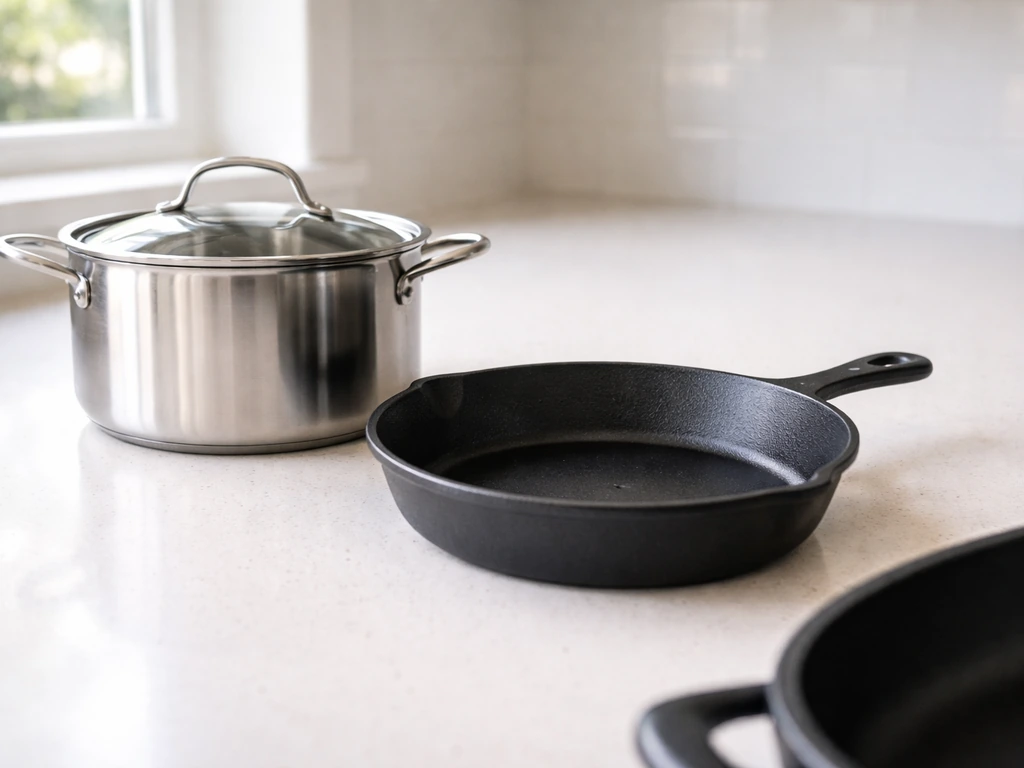
The safest cookware for pet birds is stainless steel, cast iron, carbon steel, plain ceramic (with no synthetic nonstick coating), stoneware, and glass (like Pyrex). What you absolutely need to remove from a bird household is anything coated with PTFE (sold under names like Teflon and many generic 'nonstick' brands), because when that coating overheats it releases fumes that can kill a small bird within minutes. That is not an exaggeration. Cornell University, the ASPCA, VCA, and virtually every avian vet source agree on this: PTFE fumes cause sudden death in birds, often with no warning signs at all.
Best Bird Safe Cookware: Materials to Use and Avoid

Marcus Chen
21 May 2026
Why this is a life-or-death issue for birds (not just a precaution)
Birds have an extraordinarily efficient respiratory system. That efficiency is exactly what makes them so vulnerable to airborne toxins. When a bird breathes, air moves through its lungs in a one-way flow (rather than the in-and-out tidal breathing mammals do), which means fumes get absorbed faster and more completely. In the days when miners carried canaries into coal mines, this sensitivity was the whole point. In your kitchen, it is a serious hazard.
PTFE (polytetrafluoroethylene) is the fluoropolymer used in most traditional nonstick coatings. When heated above roughly 240°C (464°F), it begins to vaporize and release acidic gases and toxic particles. The damage this causes in birds is pulmonary: the lungs fill with fluid (pulmonary edema and hemorrhage), and birds can be found dead in their cages with no prior symptoms. Texas A&M's Veterinary Medical Diagnostic Laboratory describes the clinical signs as difficult breathing, wheezing, gasping, weakness, and sudden death. The ASPCA states a small bird can die within a few minutes of exposure. This is not a slow process you can catch and correct.
The reason I lead with how serious this is: a lot of beginner bird owners know 'Teflon is bad' in the same vague way they know 'grapes are bad for dogs,' without truly understanding the speed and severity of the risk. Once you internalize that, the rest of the cookware decisions become pretty straightforward.
Cookware materials that are genuinely safe
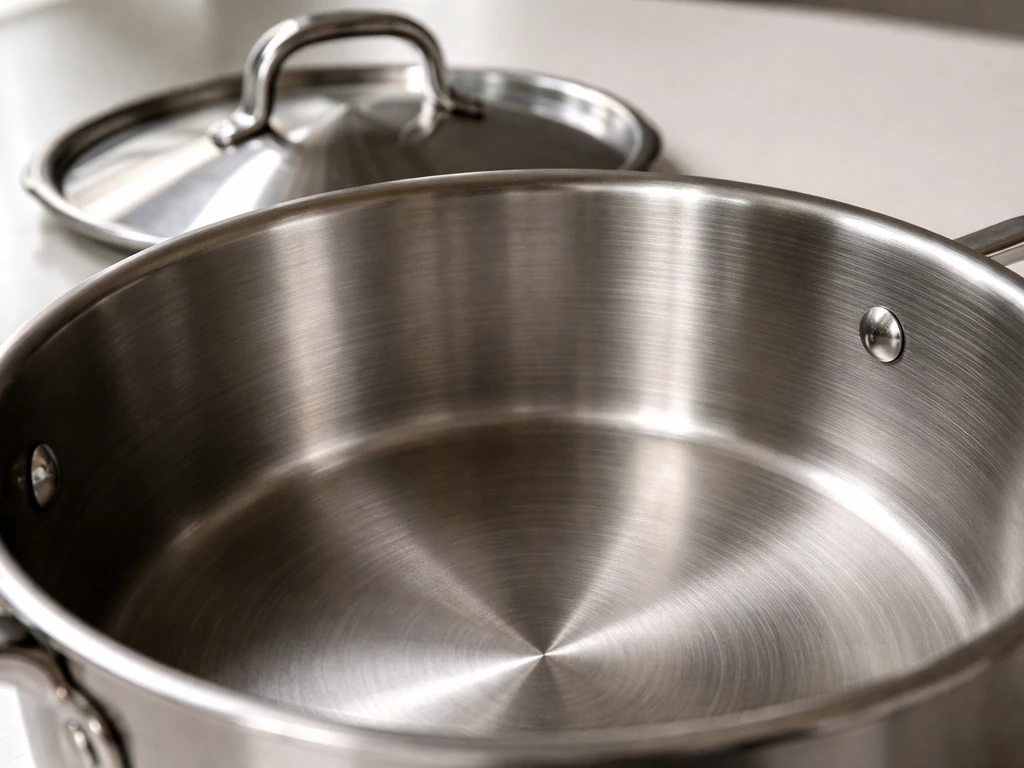
Stainless steel is the go-to recommendation from nearly every bird care source, including Chewy's bird-safe cookware guide. Chewy also notes that stainless steel cookware is one of the safest and most versatile choices for bird owners. It is durable, does not release fumes at cooking temperatures, cleans easily, and works on any stovetop including induction. The only real learning curve is that food sticks more than on nonstick, so you need a bit more fat or heat management. That tradeoff is completely worth it. A mid-range stainless steel set (think brands like Cuisinart or All-Clad's more accessible lines) will outlast a nonstick set by years and never put your bird at risk.
Cast iron is another excellent choice. It is heavy, requires some seasoning and drying care to prevent rust, but it creates a naturally nonstick surface over time without any synthetic coating. Carbon steel is essentially a lighter cousin of cast iron and is popular in professional kitchens for the same reasons. Both are completely bird-safe when properly maintained.
Ceramic cookware is safe only when it is truly free of PTFE and other synthetic nonstick coatings. This is a genuinely important caveat. Many pans marketed as 'ceramic' have a ceramic-look finish over a fluoropolymer base, or use ceramic coating alongside PTFE as a secondary layer. When shopping, look for pans explicitly labeled PTFE-free and PFOA-free, and check the manufacturer's material description rather than relying on the word 'ceramic' alone. True pure ceramic and stoneware bakeware (like a plain ceramic casserole dish or Pyrex glass bakeware) is completely safe. For baking and similar uses, a glass jar with a bird on top is a good example of a safe, non-coated glass option glass jar with bird on top.
| Material | Bird-Safe? | Notes |
|---|---|---|
| Stainless steel | Yes | Best all-around choice; durable, no fume risk, induction compatible |
| Cast iron | Yes | Naturally nonstick when seasoned; heavy but extremely durable |
| Carbon steel | Yes | Lighter than cast iron, similar properties, popular for sautéing |
| Plain ceramic / stoneware | Yes | Safe when truly free of synthetic coatings; verify label |
| Pyrex / borosilicate glass | Yes | Ideal for baking and oven use |
| PTFE / Teflon nonstick | No | Releases toxic fumes above 240°C; primary danger to birds |
| 'Ceramic-coated' nonstick | Check carefully | Only safe if explicitly PTFE-free; many are not |
| Aluminum (bare) | Generally safe | Uncoated aluminum at normal temps is low risk; avoid anodized with unknown coatings |
| Copper (lined) | Generally safe | Safe if lined with stainless steel; unlined copper can leach at high temps |
What to avoid and why
PTFE coatings are the main villain here, and they show up in more places than just frying pans. Best Friends Animal Society and other sources point out that the same fluoropolymer technology appears in many kitchen appliances: waffle makers, air fryers, rice cookers, electric skillets, and some toaster ovens all commonly use nonstick interior coatings. If you own a bird, check every appliance, not just your pans.
Self-cleaning ovens are another major risk that often gets overlooked. The self-cleaning cycle heats the oven to extremely high temperatures (around 500°C / 932°F) to incinerate food residue. If the oven has any PTFE-coated interior components, drip pans, or racks with coating, those temperatures will vaporize the coating and flood your home with toxic fumes. Best Friends Animal Society specifically advises against running the self-cleaning cycle if you have birds in the house.
- PTFE/Teflon nonstick pans and pots (any brand)
- Nonstick baking sheets and muffin tins with synthetic coatings
- Air fryers, waffle irons, electric grills, and rice cookers with nonstick interiors
- Self-cleaning oven cycle (even if the oven itself is otherwise safe)
- Any cookware or appliance you cannot confirm is PTFE-free
- Chipped or heavily scratched nonstick pans (these should be discarded regardless)
Temperature limits, ventilation, and how to cook more safely
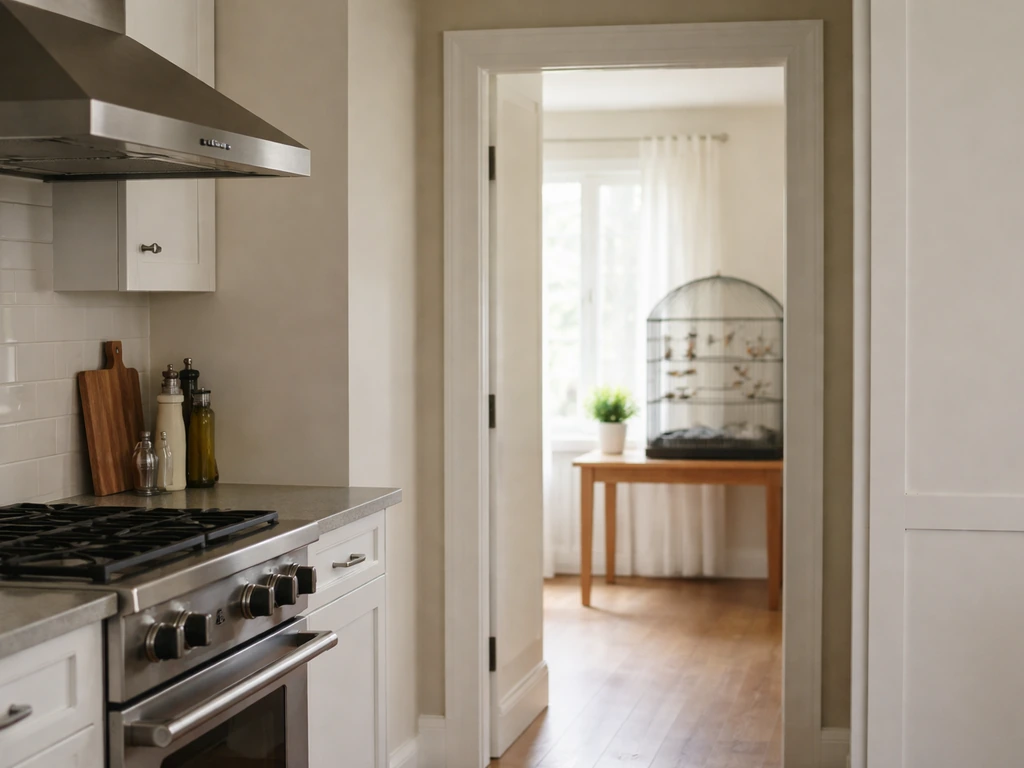
Even if you have switched fully to stainless steel or cast iron, ventilation and bird placement still matter. The Cookware Manufacturers of America is direct about this: birds should never be housed in or near the kitchen while cooking is happening. That is not just about cookware material. Smoke from burnt food, aerosols from cooking sprays, steam from cleaning agents, and fumes from overheated oils can all stress or harm a bird's respiratory system. The kitchen is simply the most aerosol-rich room in the house.
Keep your bird's cage in a room that is separated from the kitchen by at least a hallway, and keep that door closed while you cook. Run your range hood exhaust fan every time you cook, even if you are just boiling water. Open a window in the kitchen if possible. This is not paranoia; it is just minimizing accumulated airborne exposure.
If you still have any PTFE cookware in transition (replacing your whole kitchen on day one is not always realistic), know the critical threshold: fluoropolymers begin to vaporize at around 240°C (464°F). A dry pan left on high heat on a gas burner can reach this temperature in under five minutes. Never leave nonstick pans on unattended high heat, and never preheat an empty nonstick pan. At normal cooking temperatures with food or liquid in the pan, the risk is lower, but the margin for error is thin enough that replacement is the right move.
What to do if you suspect fume exposure
If your bird is showing signs of respiratory distress (open-mouth breathing, wheezing, tail-bobbing, sudden weakness, falling off its perch), get it into fresh air immediately. Move it outside or to a room as far from the kitchen as possible with windows open. Then call an avian vet or emergency animal hospital right away. Do not wait to see if the bird 'recovers on its own.' VCA and the ASPCA both emphasize that immediate veterinary attention is essential because pulmonary damage from PTFE fumes progresses quickly. The Pet Poison Helpline (855-764-7661) can also advise while you are in transit.
Choosing a starter cookware set: budget vs. durability
You do not need to spend a fortune replacing your kitchen, but you do want to be intentional about what you buy. Here is the realistic breakdown for a first-time bird owner building a bird-safe kitchen from scratch (or replacing existing nonstick).
Stainless steel sets in the $80 to $150 range (brands like Cuisinart MCP or Tramontina Tri-Ply) give you multiple pan sizes, a stockpot, and solid construction without paying premium prices. These will genuinely last 10 to 20 years with basic care. If you want to go budget, a single 10-inch stainless steel skillet plus a stainless saucepan and a cast iron skillet covers 90 percent of what most people actually cook, and that combination runs under $60 if you shop sales or thrift stores (more on secondhand in the next section).
For baking, swap nonstick baking sheets for aluminum or stainless steel sheet pans (uncoated), use Pyrex glass baking dishes, and replace nonstick muffin tins with silicone molds or greased metal tins without synthetic coatings. If you are looking for the best out of waste bird projects, start with safe, bird-friendly materials and clean, dry components. Silicone bakeware itself is generally considered safe for bird households at normal baking temperatures, though it is worth keeping it below 220°C (430°F) as a precaution.
One thing beginners often overlook: replace your nonstick utensils and small appliances at the same time. If you are also bringing in new bird-safe items like an orange bird watering can, wash it well first and keep it away from any cooking fumes. A nonstick pan is obvious, but a waffle iron or sandwich press with a nonstick plate sitting in the cabinet is just as dangerous if used while the bird is in the house.
Cleaning, maintenance, and the secondhand cookware question
Stainless steel and cast iron tolerate much more aggressive cleaning than nonstick. For stainless, Bar Keepers Friend (oxalic acid powder) handles burnt-on food and discoloration without damaging the surface. Avoid steel wool on stainless if you care about aesthetics, but it will not compromise safety. For cast iron, dry it thoroughly after every wash and apply a thin layer of oil before storing to prevent rust. Do not soak cast iron.
If you are holding onto any ceramic-coated nonstick pans, treat them the way you would treat PTFE pans: replace them if the coating is scratched, chipped, or peeling. Damaged coatings change the chemistry of what gets released when the pan heats up, and a visibly compromised pan should go in the trash regardless of what material it is supposedly made of. Do not keep scratched nonstick pans 'just for boiling water.' Discard them.
Secondhand cookware is trickier. Thrift stores and garage sales are great places to find stainless steel and cast iron at low prices, and those materials are completely fine to buy used as long as you clean them properly. Cast iron might need to be stripped and re-seasoned (easy to do with an oven and some oil). What you should never buy secondhand is any nonstick pan, even if it 'looks fine.' You cannot see coating degradation, and you do not know how it was heated or stored. The risk is not worth the five dollars you save.
Your bird-safe kitchen checklist
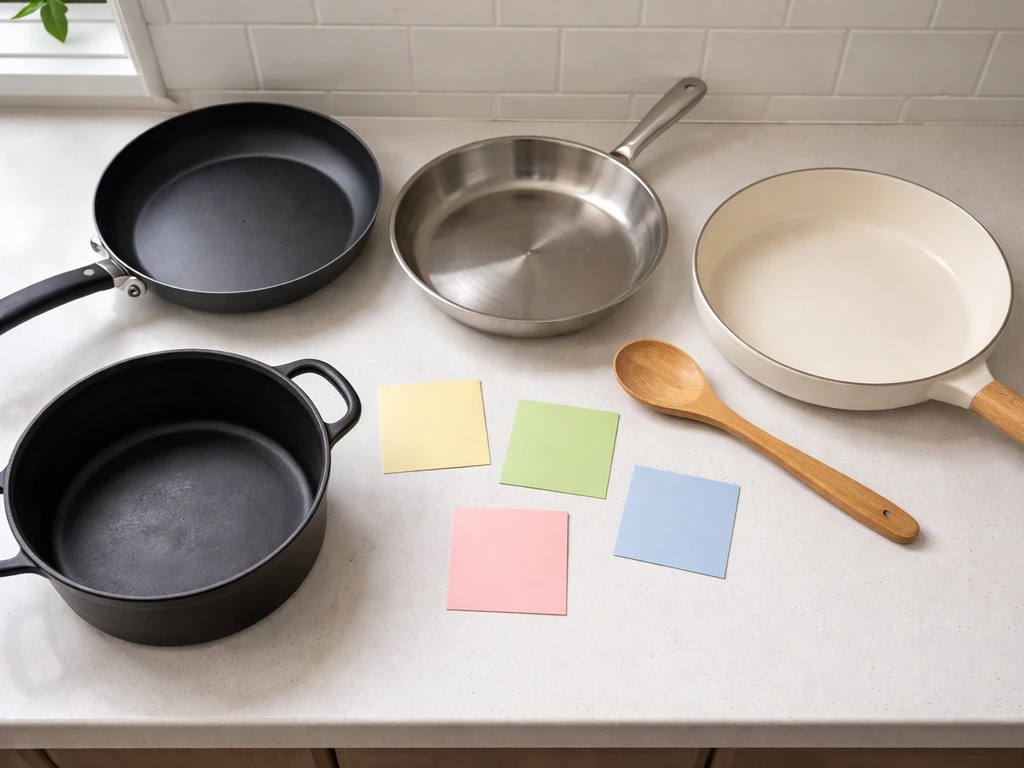
Use this as your action plan for today. Go through your kitchen systematically, not just the pans on the stove. Also watch for everyday fragranced items like perfume bottles, because decorative containers can still sit near the bird and expose it to strong fumes.
- Identify and remove all PTFE/Teflon nonstick cookware (pans, pots, woks, sauté pans). Set them aside for donation to a non-bird household or discard.
- Check every small appliance: air fryer, waffle iron, electric skillet, rice cooker, sandwich press, toaster oven. If the interior has a nonstick coating, it should not be used while your bird is in the house, or should be replaced.
- Note whether your oven has a self-cleaning cycle. If it does, do not use that cycle. Clean the oven manually instead.
- Replace with stainless steel (primary choice), cast iron, carbon steel, or verified PTFE-free ceramic cookware.
- Move your bird's cage to a room that is not the kitchen and keep a closed door between them during cooking.
- Run your range hood exhaust fan every time you cook. Open a window when possible.
- Know your emergency response: if you suspect fume exposure, move the bird to fresh air immediately and call an avian vet.
- Save an emergency contact now: your nearest avian vet's number and the Pet Poison Helpline (855-764-7661).
- When shopping for new cookware, look for 'PTFE-free' and 'PFOA-free' explicitly on the label. 'Ceramic' alone is not enough.
- Avoid buying secondhand nonstick cookware regardless of condition. Secondhand stainless steel and cast iron are fine.
Setting up a bird-safe kitchen is mostly a one-time effort. Once your nonstick is gone and replaced with stainless or cast iron, you do not have to think about it again. If you are also choosing what to pour from, stick to a bird-safe wine pourer like a chirpy top bird wine pourer so you avoid introducing any unsafe coatings into your kitchen routine. The cooking habits (ventilation, keeping the bird out of the kitchen) take a little adjustment but quickly become automatic. Your bird's respiratory health depends far more on what is happening in your kitchen than most new bird owners realize, so getting this right early is one of the highest-impact things you can do.
FAQ
Are PTFE-free ceramic pans actually safe for birds if they’re labeled “ceramic nonstick” or “green ceramic”?
Not automatically. “Ceramic” can describe the top look only. Treat anything marketed as ceramic nonstick like nonstick until you confirm the manufacturer states it is PTFE-free and does not use any fluoropolymer layer. If the listing does not clearly say PTFE-free (and ideally PFOA-free), replace it or use it only when the bird is fully out of the home’s cooking area.
Can I use bird-safe cookware only while cooking, and then let my bird hang out in the kitchen the rest of the time?
It’s better not to. The highest exposure window is cooking, but airborne byproducts can linger from steam, burnt food, and cleaning chemicals. Keep the bird out of the kitchen during cooking and ideally store or house the cage in a separate room with the door closed most of the time.
Is it safe to “quickly wipe” or wash a hot stainless or cast iron pan if my bird is nearby?
Be cautious. Even bird-safe cookware can create unsafe aerosols when you splash water on very hot metal or use strong degreasers. Turn off heat, move the bird away, and wait for the pan to cool before cleaning. Use mild cleaners and rinse well to avoid lingering fumes and residues.
What counts as “normal cooking temperatures” for stainless or cast iron, can I preheat on high heat?
Preheating is usually fine with stainless, but avoid long, empty preheats. A good rule is to avoid letting any pan sit empty at high heat, especially if you are unsure about the construction. If you preheat, do it briefly and only when you plan to add food promptly.
Do range hoods and open windows fully solve the risk, or do I still need to separate the bird from the kitchen?
Ventilation helps but does not replace separation. Even with a functioning hood, aerosols and fumes can travel. The safest setup is physical separation (hallway or closed door) during cooking, plus running the exhaust fan and, when possible, a window for additional dilution.
My cookware set has a stainless exterior but a nonstick interior, are there any “safe parts” I can keep?
No, the coating inside is the hazard. If the interior is fluoropolymer-based or otherwise nonstick-coated, the bird risk remains even if the outer surface is stainless or looks uncoated. The safest action is replacing any pan with a nonstick-lined cooking surface.
Is it safe to use silicone utensils or silicone bakeware with my bird, or can silicone be a hidden danger?
Usually silicone is considered low risk at typical baking temperatures, but heat and formulation matter. The article’s precaution to keep baking below about 220°C (430°F) is a good guideline, and you should avoid using silicone in situations where it can scorch, melt, or be used at very high temperatures for long periods.
Can I use an electric kettle, coffee maker, or blender with my bird in another room while I cook?
Often yes, but treat them like any other kitchen appliance. The main concerns are fumes from overheated heating elements or oils, and aerosols from sprays and cleaning. Keep the bird separated during active cooking or cleaning, and make sure you are not using any appliances that have nonstick interior coatings that run hot.
If I accidentally overheat a nonstick pan, what should I do immediately after I turn the burner off?
Move your bird away from the kitchen immediately to fresh air, open windows, and run ventilation. Then stop using the pan and remove it from the home if it shows discoloration or damage. Contact an avian vet or emergency animal hospital right away if the bird shows any respiratory signs, because symptoms can progress quickly.
Can I keep nonstick pans for boiling water if they’re never used for frying or high heat?
It’s still a bad idea to keep them. Boiling water might be lower risk than dry high-heat cooking, but you cannot control mistakes like leaving the pan empty, uneven heating, or accidental preheating. The safest approach is replacing all nonstick cookware with stainless, cast iron, carbon steel, or plain ceramic/glass.
Are utensils with nonstick coatings on the utensil itself (like coated whisks or spatulas) a problem?
The highest risk is fluoropolymer coatings that heat and release fumes, so utensil coatings are usually lower risk than cookware interiors. Still, if a utensil has a nonstick coating that can reach high heat (for example, when left on a hot burner area), it could become a source of airborne irritants. Prefer uncoated metal or silicone utensils that you use at normal temperatures.
When buying secondhand stainless or cast iron, how should I clean them to avoid residues that might irritate my bird?
Use a thorough cleaning before first bird exposure. Wash with hot water and a bird-safe mild detergent, rinse well, and dry completely. For cast iron, strip and re-season if there are odors, sticky residues, or any doubt about prior chemical exposure, and never soak cast iron.
What’s the simplest “minimum setup” of cookware for a bird-safe kitchen if I can’t buy a full set today?
A practical start is one stainless skillet plus one stainless saucepan (or a cast iron skillet), and one glass baking dish for oven use. These cover most daily cooking and baking tasks while you replace the rest over time. Keep the bird out of the kitchen during cooking until all nonstick cookware is removed.
Next Articles
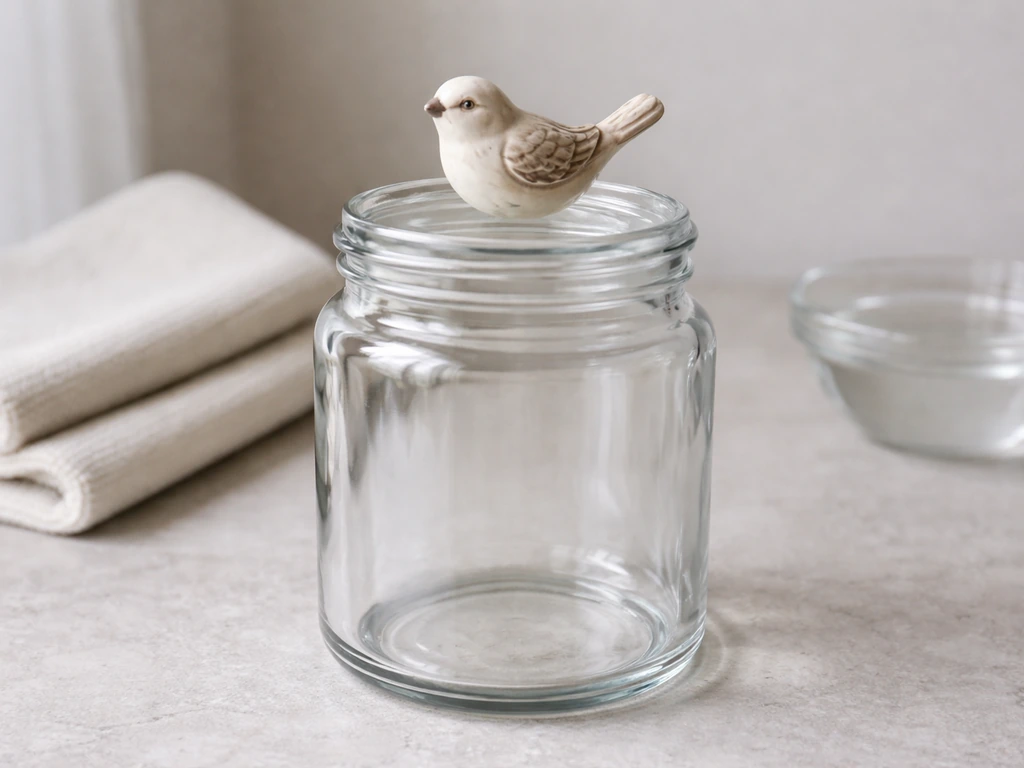
Glass Jar With Bird on Top: Bird-Safe Use and Care
Check if a glass jar with bird on top is bird-safe, how to inspect materials, clean it, and choose safer alternatives.
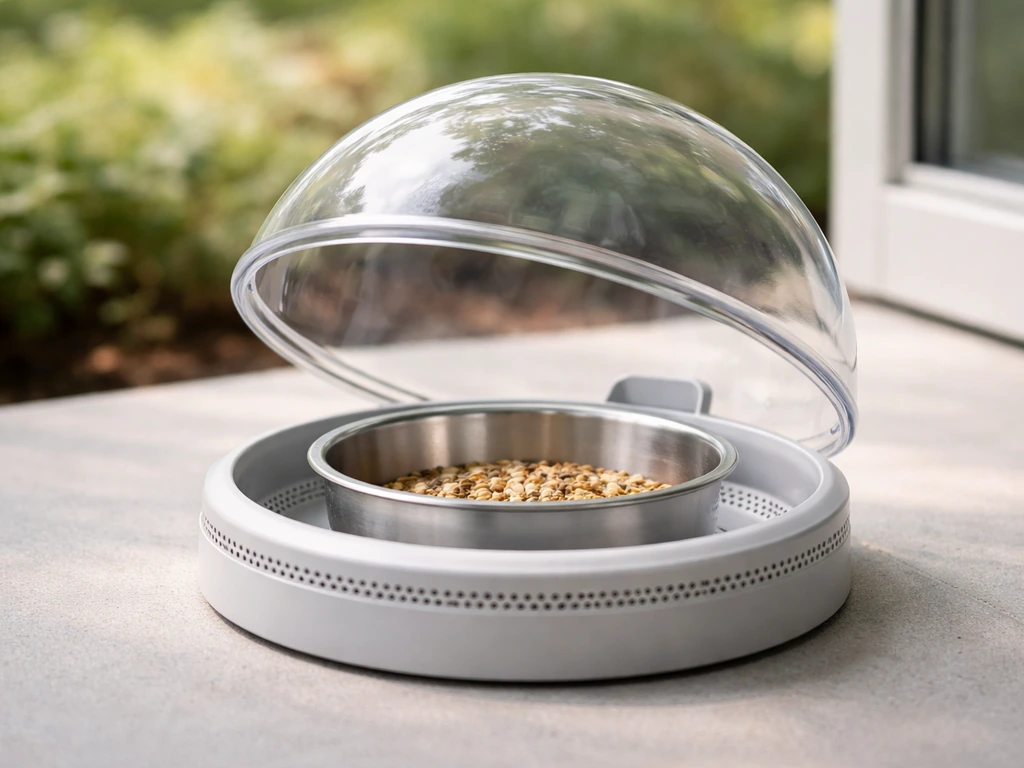
Bird Dish Where You Cover Your Head: Safe Setup Guide
Identify the head-cover bird dish you have and set up a safe, ventilated, easy-clean feeding cover with hygiene tips.
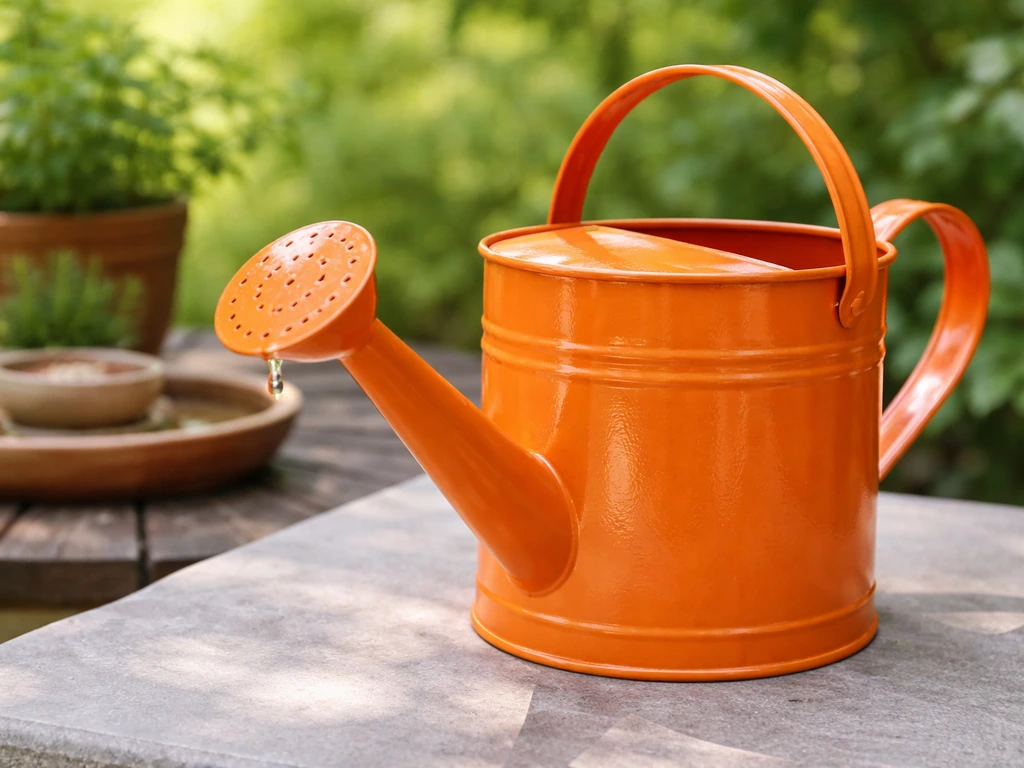
Orange Bird Watering Can Guide for Safe Daily Watering
Choose and use an orange bird watering can safely: setup, daily cleaning, unclogging, and leak fixes for fresh water.