Most glass jars with a bird on top are decorative home accessories, not pet-bird products. That matters a lot if you were planning to use one for storing treats, foraging enrichment, or anything your bird will physically interact with. The bird topper is almost always made with painted, glued, or metallic-finish details that are not food-safe, and the jar itself may have a velvet-backed or ornamental lid that's completely wrong for a bird household. That doesn't mean you can't use one thoughtfully, but you need to do a quick materials check before it gets anywhere near your bird.
Glass Jar With Bird on Top: Bird-Safe Use and Care

Marcus Chen
13 May 2026
What a "glass jar with bird on top" actually is
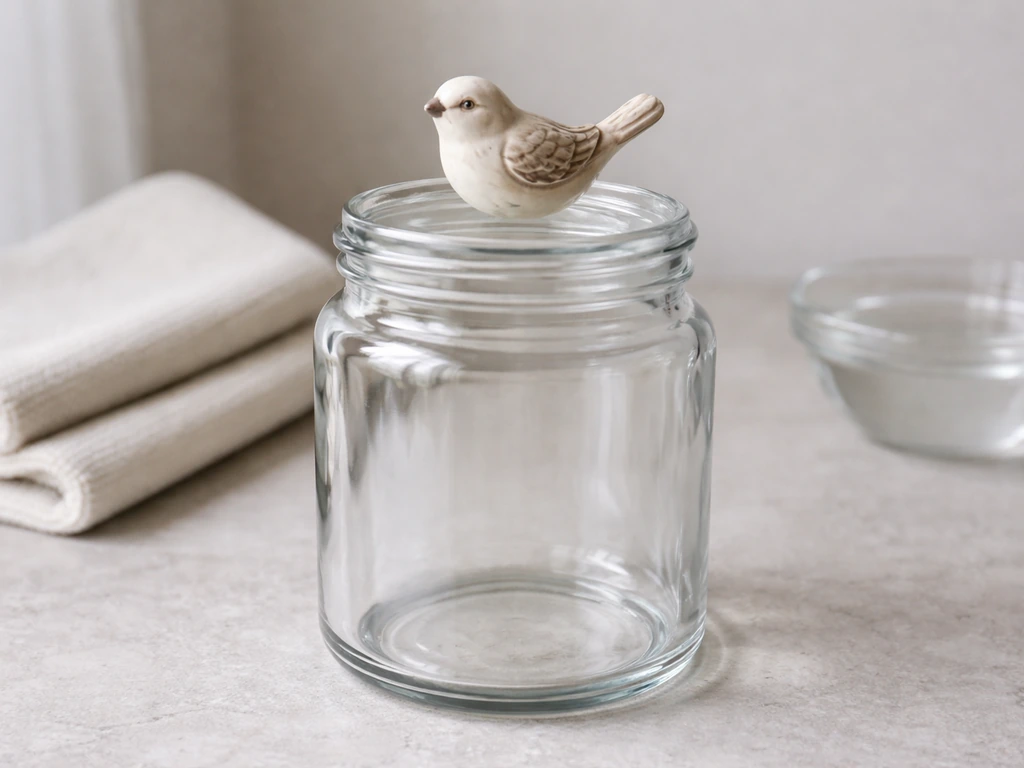
When you search this phrase, you're mostly going to find three categories of items, and they overlap in ways that cause confusion. First, there are straight-up decorative keepsake jars, like the Blue Illusion-style textured glass jar with a 3D gold bird lid, measuring roughly 10. 5 cm wide by 13 cm tall. These are sold for display shelves and home decor.
The lid has a velvet backing and the bird detail is a gold-finished ornament. Beautiful, but not built for food contact or repeated washing. Second, you'll find bird-themed bottle stoppers and wine pourers marketed around the same keyword. Kiyo Home also sells a "Bird Wine Bottle Stopper" designed as a decorative bottle accessory, with stainless steel construction and a silicone gasket to help create an airtight seal [bird-themed bottle stoppers and wine pourers](https://kiyohome.
com/products/bird-bottle-stopper). Products like the Kiyo Home Bird Bottle Stopper (stainless steel with a silicone gasket) or the Chirpy Bird Wine Topper are designed for wine, champagne, or olive oil bottles, not for pet-bird use at all. Third, and much rarer, you'll find actual bird-safe glass canisters that happen to have a bird motif, intended for kitchen storage. These are the only category genuinely suitable for storing bird treats or supplies.
So your first job is simply to identify which type you have or are shopping for. If you want the best out of waste bird option, focus on safe upcycling and make sure any reclaimed materials are fully bird-safe before reuse identify which type. Check the product listing or packaging for phrases like "ornamental," "decorative," "keepsake," or "home display" versus "food safe," "BPA free," or "airtight seal." That one check will tell you a lot before you spend another minute on it.
Bird-safety checklist before using any glass jar near your bird
Birds are dramatically more sensitive to airborne toxins, heavy metals, and surface contaminants than mammals. A jar that's perfectly fine sitting on a human coffee table can be a real hazard in a bird room. Here's what to check specifically.
- Bird topper finish: Gold, silver, or painted finishes on the bird figurine on the lid are a red flag unless the manufacturer explicitly states lead-free, food-safe paint or glaze. The FDA has flagged that some ceramics and decorative wares labeled "lead free" still contain extractable lead at levels exceeding action limits. If the bird topper is painted ceramic, treat it as potentially toxic until proven otherwise.
- Glue and adhesives: Decorative toppers are often glued on. Adhesives can off-gas fumes and, if your bird chews or contacts the topper, can cause serious harm. If there's any visible glue line or the bird topper feels like it was affixed rather than formed with the lid, keep the jar out of your bird's reach entirely.
- Sharp edges: Inspect the rim of the glass jar and the underside of the lid. Decorative jars are not manufactured to the same tolerances as food-safe glass, and chipped or rough edges can injure a bird.
- Velvet or fabric backing: Many ornamental jar lids have a velvet-backed interior. Fabric collects bacteria and mold quickly in a bird environment, and birds can ingest fibers. These lids are not suitable for treat or food storage.
- Stability and fall risk: Glass jars near bird cages or on shelves birds can access need to be stable. A jar that tips when a bird lands nearby or bumps the shelf can shatter. Keep glass items behind barriers or on weighted, non-slip surfaces.
- Small detachable parts: If the bird topper on the lid can be removed (as with the velvet-backed keepsake style), that figurine is a choking and ingestion hazard if your bird can reach it. Remove it or keep the jar entirely out of the bird's zone.
- Lead and cadmium in glazes: The FDA and Washington State DOH both note that ceramic glazes and decorative stains can contain hazardous metals including lead and cadmium. These are not safe for food contact and are especially dangerous for birds. If the jar body is ceramic rather than plain borosilicate glass, you need explicit food-safe certification.
Can you actually use it for treat or food storage?
The honest answer: it depends entirely on the specific jar, and most of the decorative "glass jar with bird on top" products you'll find are not suitable for food storage. The FDA's Food Code is clear that painted ceramics used in contact with food must be lead-free, and ornamental ceramicware containing lead must carry explicit labeling warning against food use. A lot of the bird-topped jars you'll encounter online carry no such certification because they were never designed for it.
That said, if you find a jar that is plain borosilicate or soda-lime glass with a food-safe lid (like a standard mason jar with a bird-themed decorative wrap or label), you can absolutely use it for storing dry bird treats, pellets, seed mixes, or foraging fillers. The FDA reports that some ceramics labeled “lead free” can still contain extractable lead at levels comparable to lead-glazed pottery, and in some cases exceeding FDA action levels.
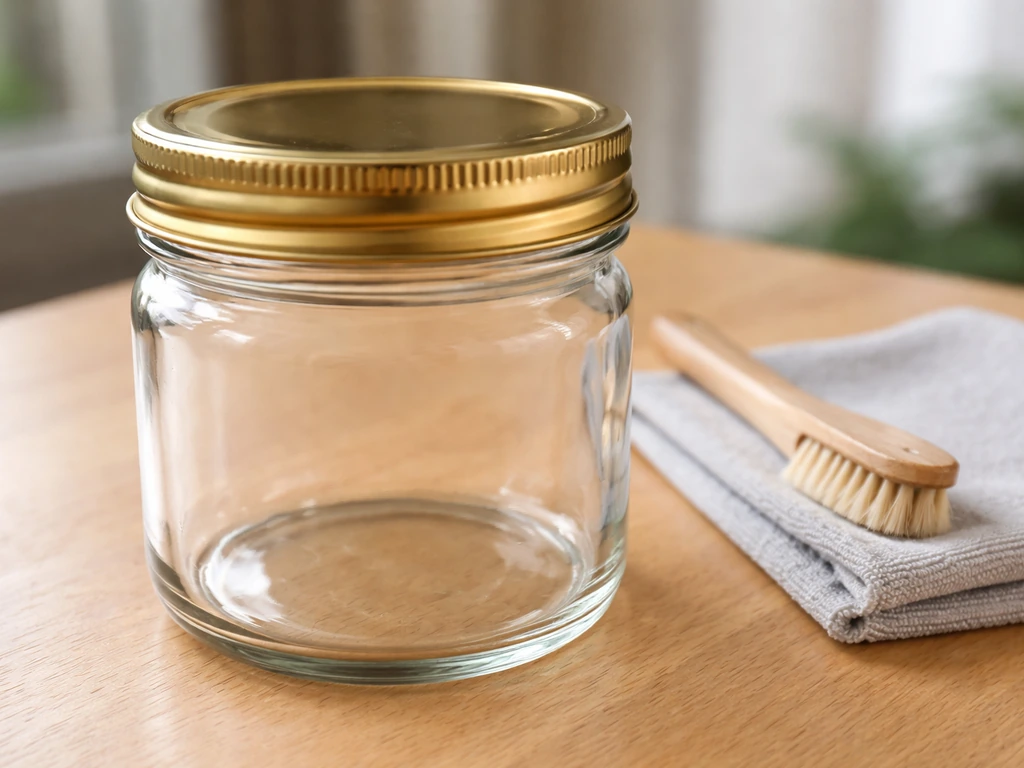
If you want the best bird safe cookware, prioritize glass that is food-safe and lids that create an airtight seal. The key requirements for food/treat storage are: airtight seal to prevent moisture and mold, no decorative coatings on food-contact surfaces, a lid that can be fully submerged and scrubbed, and no small loose parts. If the jar meets those four criteria, it works. If it doesn't, use it as decor only and store your bird's food in something purpose-built.
One practical shortcut: if the jar came with a "wipe clean with a damp cloth" care instruction (common on decorative stoppers and display jars), that's a dead giveaway it was not designed for repeated food-contact use. A real food-storage jar should be fully washable.
Picking the right jar size and design for your bird
If you've confirmed the jar is food-safe and you want to use it functionally, size and design actually matter quite a bit depending on what you're storing or doing with it.
For treat and dry food storage
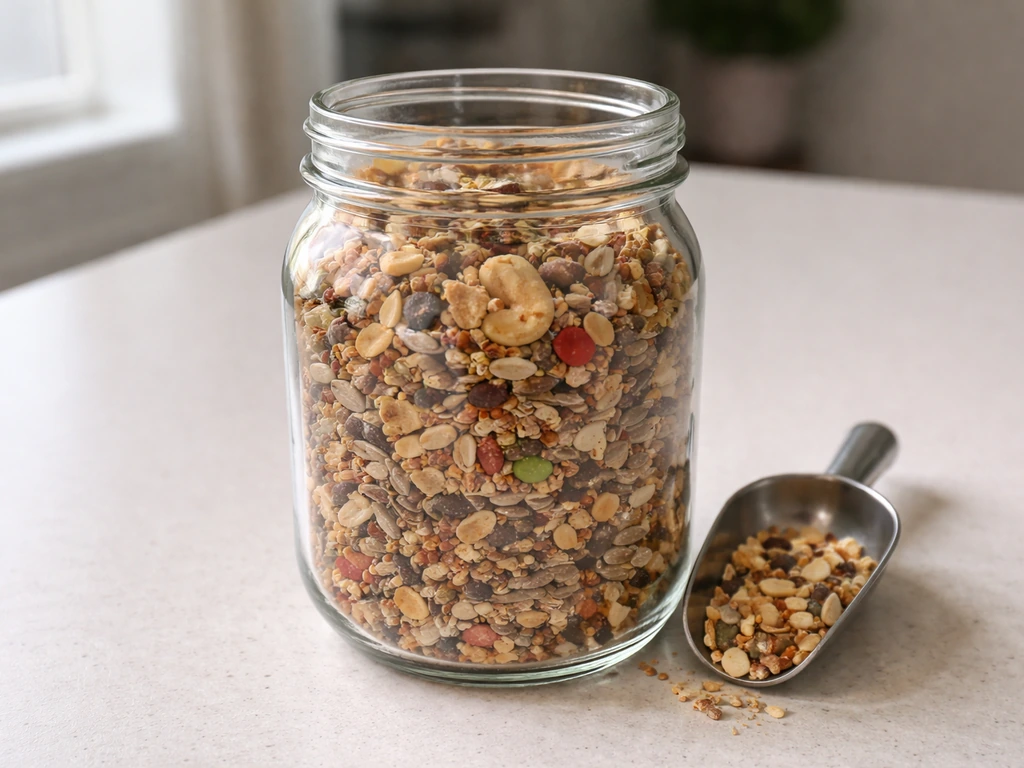
A wide-mouth jar in the 16 oz to 32 oz range works well for most small to medium birds (budgies, cockatiels, conures, caiques). Wide-mouth openings make it easy to scoop out treats without contaminating the whole batch by reaching in repeatedly. Narrow-mouth jars are harder to clean properly and easier to contaminate. For larger parrots like African Greys or Amazons, a 32 oz to 64 oz jar gives you enough capacity to store a week's worth of pellets without constantly refilling.
For foraging and enrichment use
If you're using the jar as a foraging prop (filling it with shredded paper, nuts, or foot toys for your bird to work through), you want something the bird can see into clearly, so clear glass is better than tinted. The jar should be wide enough that your bird can fit its head or at least a foot inside without getting stuck, but small enough that the foraging challenge is actually a challenge.
For a budgie, a small 4 oz mason jar is plenty. For a cockatoo, you're looking at something closer to a quart jar. Critically, for any foraging jar that the bird physically interacts with, the topper bird figurine must be removed entirely. Your bird will destroy it and ingest the materials.
Quick size reference
| Bird Size | Example Species | Recommended Jar Size | Best Use |
|---|---|---|---|
| Very small | Finches, canaries | 4–8 oz | Treat display or small foraging prop (supervised) |
| Small | Budgies, parrotlets | 8–16 oz | Treat storage or foraging jar |
| Medium | Cockatiels, lovebirds, conures | 16–32 oz | Treat or seed storage, foraging |
| Large | Caiques, Senegals, Amazons | 32–64 oz | Pellet or seed storage |
| Extra large | Macaws, cockatoos, African Greys | 64 oz+ | Bulk food storage, not foraging use |
Cleaning and maintaining glass jars in a bird household
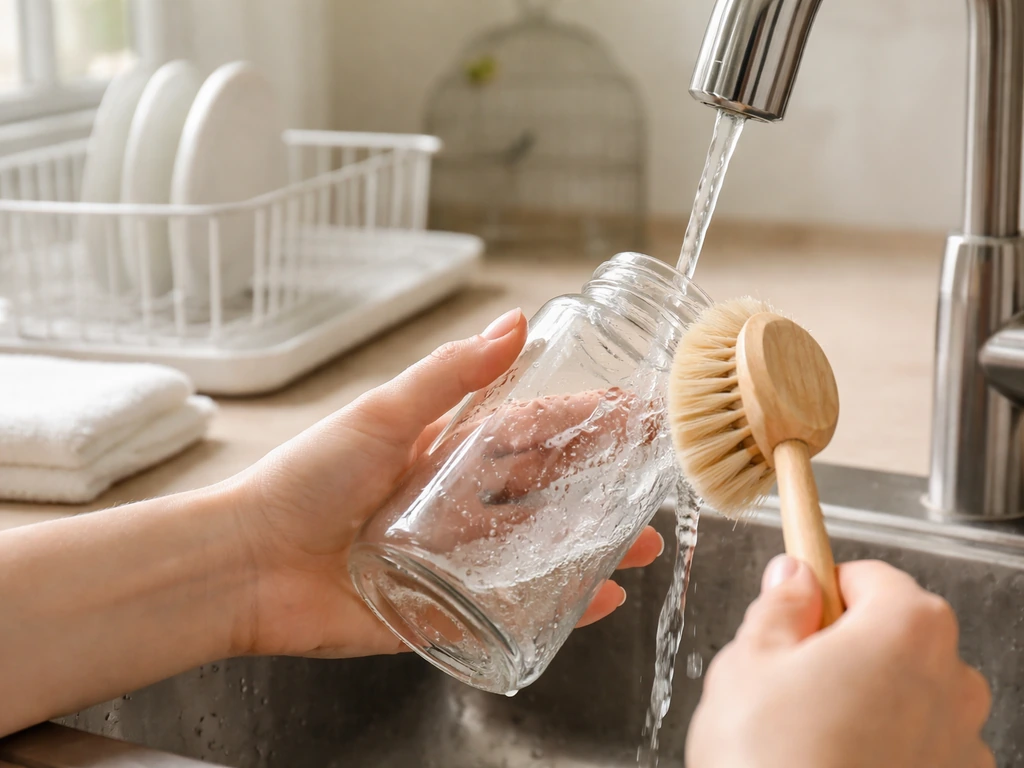
Bird households are genuinely dirtier than people expect. Dander, food debris, and moisture create conditions where mold and bacteria build up fast, especially in containers with tight lids. If you're using a glass jar for treat or food storage, you need a real cleaning routine, not just a quick rinse.
- Empty the jar completely before cleaning. Don't top off old food with new food. The bottom layer will have absorbed moisture and may have started growing mold before you can see it.
- Wash with hot water and unscented dish soap. Scented soaps leave residue that can irritate birds' respiratory systems. Rinse thoroughly because soap residue is also a problem.
- For a proper disinfection step (do this weekly at minimum), use either a diluted bleach soak (1 part bleach to 9 parts water, 10-minute soak) or a weak white vinegar soak (1 hour). Both approaches are validated for bird feeder sanitation by Project FeederWatch. After soaking, scrub with a dedicated bottle brush and rinse extremely well.
- Let the jar air dry completely before refilling. Sealing a damp jar traps moisture and you'll have mold within days.
- Inspect the lid seal and the lid interior every time you clean. If the lid has any rubber gasket or silicone ring, check it for cracking or discoloration. A compromised seal lets in moisture and air, which degrades food faster.
- If the jar has any decorative elements you've kept (like an external bird wrap or painted exterior), wipe those down separately with a damp cloth and let them dry before reassembling.
One thing I'd add from experience: dedicate specific cleaning tools to your bird supplies. Using the same sponge for your dishes and your bird's food jars is a contamination risk in both directions. A cheap bottle brush set used only for bird gear costs almost nothing and solves the problem.
When to skip it and what to buy instead
If the glass jar with bird on top you're looking at is a decorative keepsake (velvet lid, painted gold bird topper, no food-safe designation), the honest advice is: enjoy it as shelf decor somewhere your bird can't access it, and buy a separate functional container for actual bird use. An orange bird watering can themed jar is often in the decorative category too, so check for food-safe, washable materials before using it for bird treats. There are better-suited options for every use case.
| Your Goal | Skip the Decorative Jar Because... | Better Alternative |
|---|---|---|
| Storing dry treats or pellets | Non-food-safe finishes, velvet lid traps bacteria, no proper seal | Wide-mouth mason jar (Ball or Kerr) with a standard metal or plastic lid |
| Foraging enrichment prop | Bird topper is a chew/ingestion hazard, sharp edges, unstable | Plain glass jar (no topper) or a purpose-made foraging toy with safe materials |
| Food-safe airtight storage | Decorative lids don't create a reliable airtight seal | OXO Good Grips POP containers or stainless steel canisters rated food-safe |
| Decor near the bird cage | Painted/glued toppers off-gas and risk ingestion if bird reaches them | Unglazed plain glass or food-safe ceramic with no small detachable parts |
| Display away from birds | No issue, use the decorative jar freely on a shelf birds can't access | Keep the decorative jar, pair it with something functional for actual bird care |
It's also worth knowing that other bird-themed accessories in this same decorative category, things like bird-topped perfume bottles, decorative watering cans with bird motifs, and bird-shaped wine pourers, share the same limitation. They're designed for human use or pure display, and their paints, finishes, and construction reflect that. The same safety logic applies: lovely to look at, but verify before your bird ever touches them.
Your next steps right now
- Pick up the jar and check the bottom and any included paperwork for "food safe," "lead free" (with certification, not just a label claim), or "BPA free" language. If it says "ornamental" or "decorative use only," that's your answer.
- Look at the bird topper closely. Is it glued on? Painted with a metallic or lacquered finish? If yes, keep it away from your bird entirely or remove the topper before using the jar for anything food-related.
- Check the lid. If it has a velvet, fabric, or non-washable backing, it cannot be properly sanitized. Swap the lid for a food-safe alternative or repurpose the jar as decor only.
- If the jar passes the checks above and you want to use it for treats, wash it with the diluted bleach method once before first use, let it fully dry, then fill it.
- If it fails any check, set it on a display shelf out of your bird's reach and order a plain wide-mouth mason jar for your actual food storage needs. They cost a couple of dollars and solve the problem completely.
FAQ
Can I use a decorative glass jar with a bird topper to store pellets or seed mixes if it still looks clean?
Only if it is explicitly food-safe and washable, and only if the topper is removable from any area the bird could reach. Decorative lids often have fabric backing or glued metal details that can shed, and “looks clean” doesn’t tell you whether there are residues from adhesives, paints, or prior household use.
What should I do if the jar doesn’t mention “food safe” or “airtight seal” anywhere on the listing?
Treat it as decor. If you cannot confirm food-contact safety for the jar and lid, don’t rely on a test alone, especially for jars that have painted, metallic, or velvet-backed components. Instead, use a purpose-built storage container for bird food and keep the decorative jar for visual display.
Is it enough to remove the bird topper if the lid is decorative or has a velvet backing?
Usually no. Even with the topper removed, a velvet or ornamental interior can trap moisture and contaminants and can be difficult to disinfect fully. Choose a lid that you can scrub thoroughly or fully replace with a truly food-safe, washable lid.
How can I tell whether a lid can be fully cleaned and sanitized?
Check whether the lid can be taken apart (if it has gaskets), whether it resists staining, and whether all surfaces are reachable by a bottle brush. If the care wording points to “wipe only” or “spot clean,” assume it is not designed for the thorough cleaning birds need.
Can I use the jar for wet foods like soft mash or sprouts?
It’s risky unless the jar and lid are clearly designed for repeated washing and can stay airtight without trapping moisture. For wet foods, prioritize containers intended for food prep and storage, because decorative coatings and non-washable lid components can become breeding points for bacteria and mold.
What’s the safest way to upcycle a glass jar with a bird motif for bird treats?
Use only the plain glass body, remove all bird topper parts, and replace any lid that has fabric, glued embellishments, or non-washable finishes. Then use a dedicated brush and thorough cleaning, and let everything dry completely before refilling.
Can I use one jar that has held human snacks for bird food after washing?
Avoid it unless you can confirm all residues are removable and the materials are truly food-safe for bird use. Strong flavors and oils can cling to microscopic scratches, and some decorative finishes can degrade with repeated cleaning, so it is best to dedicate the jar to bird use only.
If I use the jar as a foraging container, does the glass type matter?
Yes. Clear, thick glass is easier to inspect for cracks and residue, and it tends to be easier to clean thoroughly than tinted or novelty-glass. Also size the opening so your bird can access the contents without getting stuck, then remove any topper completely to prevent ingestion.
How often should I deep clean a bird treat jar compared with regular dishwashing?
Deep clean after each refill if the jar is used for fresh or crumbly items, and at least weekly for dry treats if the environment is humid or the bird is messy. Use bird-only tools and make sure the lid seal area is cleaned, not just the glass.
What should I do if I notice peeling paint, cloudy spots, rust on hardware, or a lingering odor?
Stop using it for any bird contact. Peeling or cloudy surfaces can indicate degradation of coatings, and rust or odor suggests material breakdown or trapped residue that can be difficult to fully remove safely for birds.
Next Articles
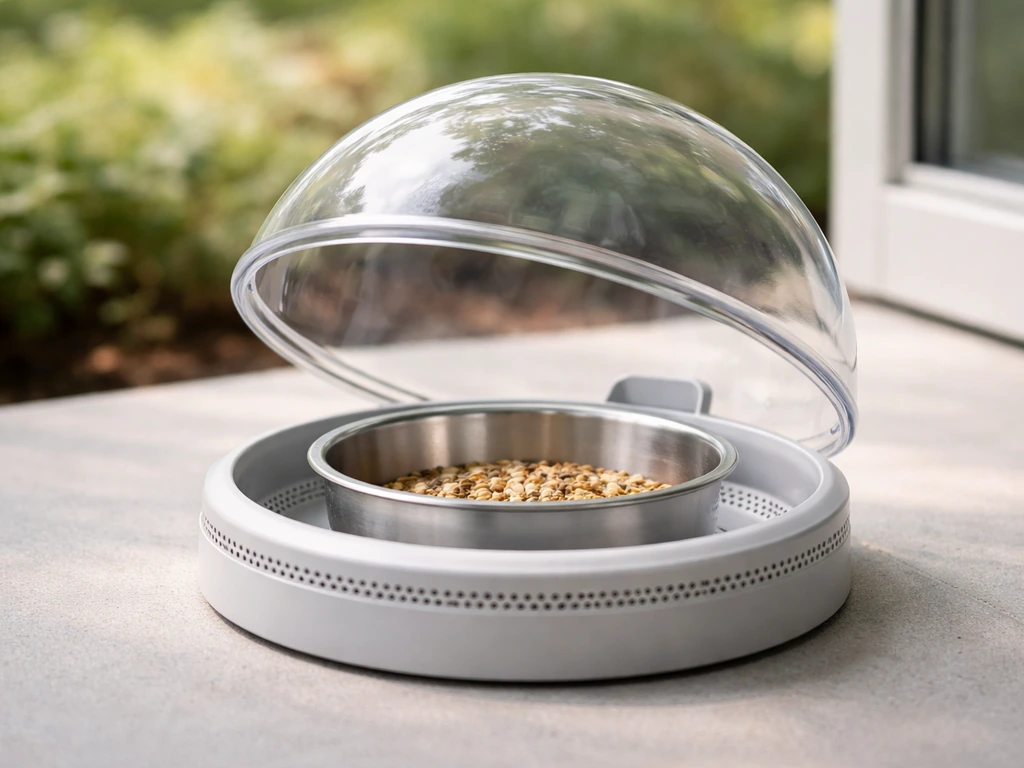
Bird Dish Where You Cover Your Head: Safe Setup Guide
Identify the head-cover bird dish you have and set up a safe, ventilated, easy-clean feeding cover with hygiene tips.
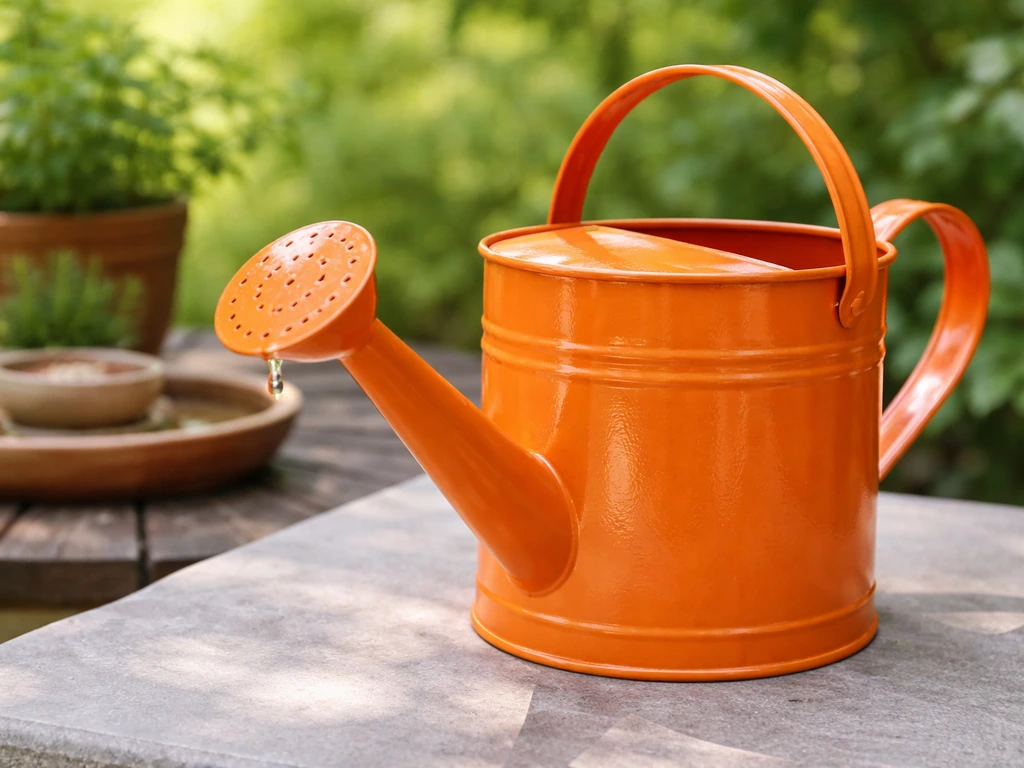
Orange Bird Watering Can Guide for Safe Daily Watering
Choose and use an orange bird watering can safely: setup, daily cleaning, unclogging, and leak fixes for fresh water.
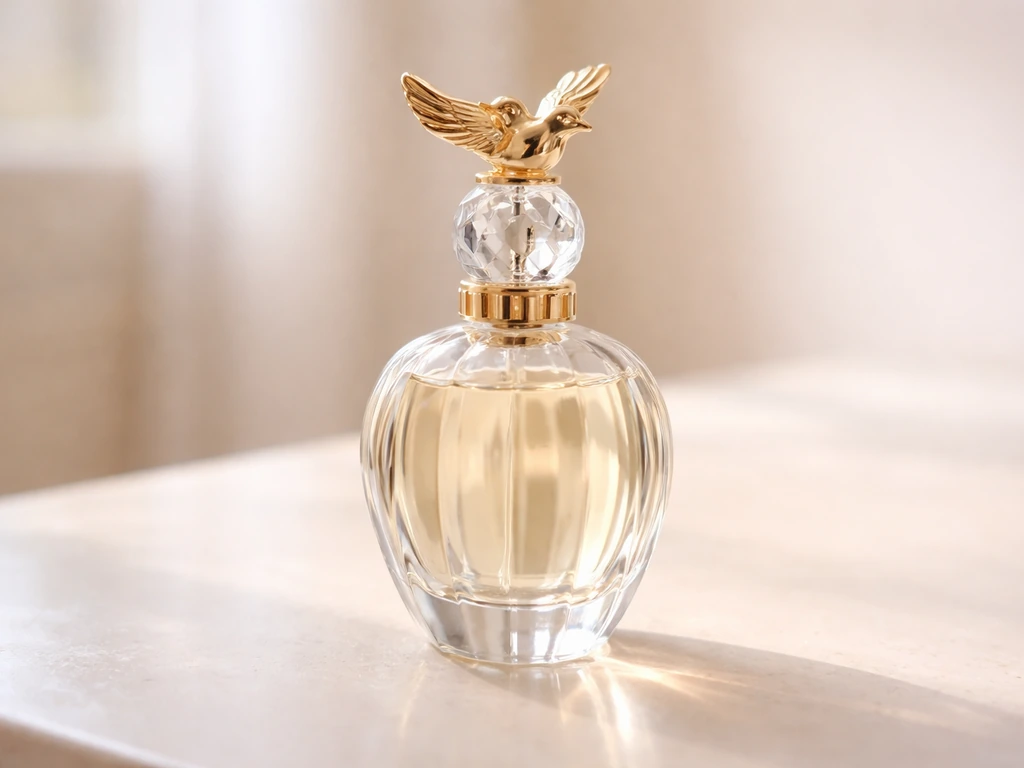
Perfume Bottle with Bird on Top: Buying Guide
Step-by-step guide to find and verify a perfume bottle with bird topper, budget, avoid fakes, and use safely with pet bi