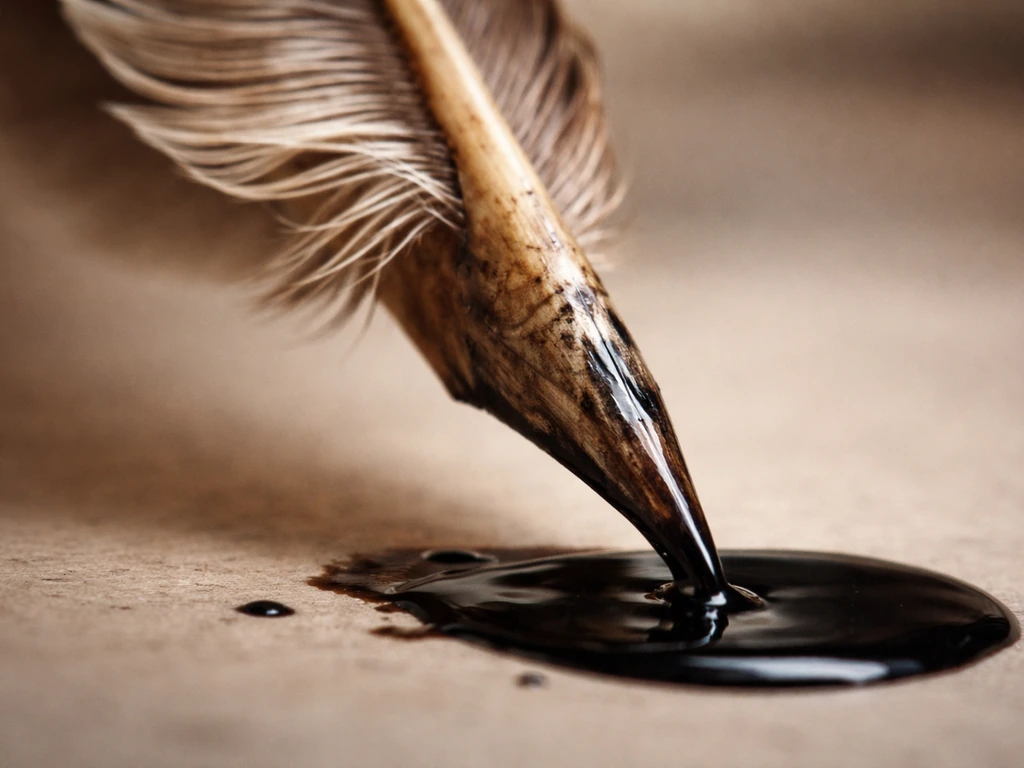
Pens made from bird feathers are called quill pens, and they're built from the hollow shaft of a large flight feather, most commonly from a goose, swan, or turkey. The shaft (called the calamus) acts as a tiny ink reservoir, and the tip is carved into a pointed nib with a blank" rel="noopener noreferrer">narrow slit that draws ink down to the page by capillary action). That's the real thing. Most feather pens you'll find for sale today, though, are decorative: they have a fancy feather glued to a modern plastic or metal pen body and have nothing functional to do with the feather at all.
What Pens Are Made From Bird Feathers and How to Choose One

Marcus Chen
20 May 2026
Quill pens vs. decorative feather pens: what's actually different
There are two completely different products being sold under the name 'feather pen,' and they work nothing alike. Knowing the difference upfront saves you a lot of confusion.
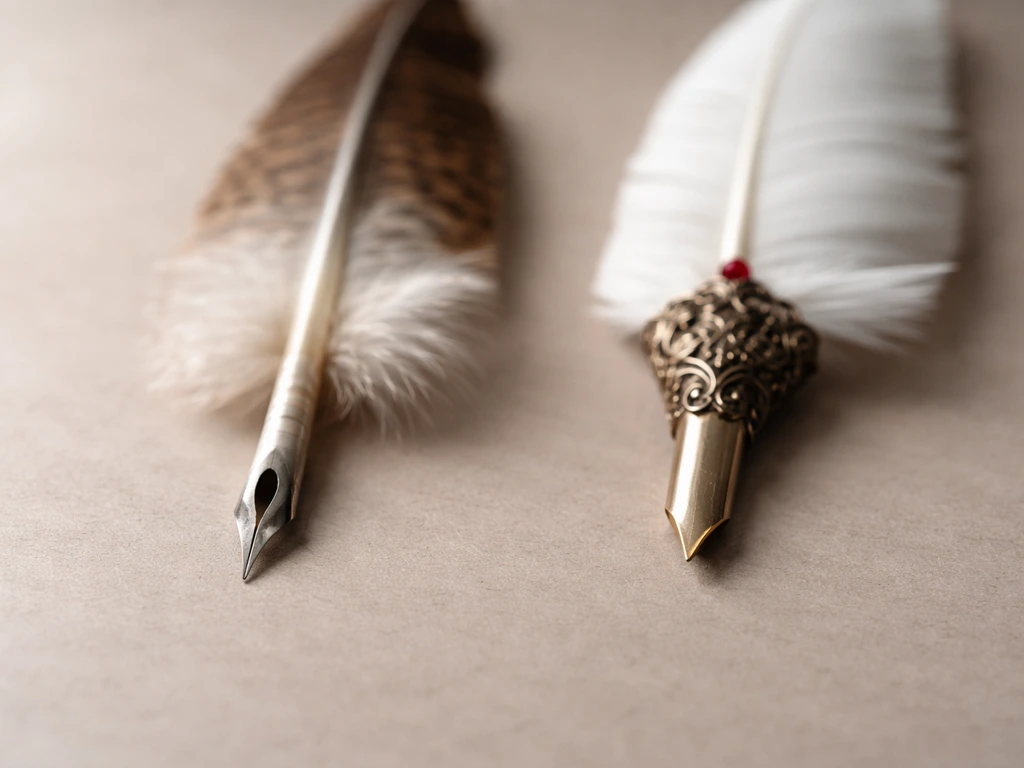
A true quill pen is the feather itself doing all the work. The hollow calamus at the base of a large flight feather holds a small amount of ink, and the carved nib at the tip delivers it to paper. Historical quills were made from the five outermost wing feathers of geese and swans and were the dominant writing tool in Europe for roughly a thousand years, right up until metal dip pens became mass-produced around 1820. They weren't just dipped whole into ink and dragged across a page. They were carefully prepared, shaped, and re-shaped as the nib wore down.
A decorative feather pen, on the other hand, is just a ballpoint or gel pen with a feather attached to the barrel for looks. The feather plays no functional role. These are the ones you find in tourist shops and gift sets. They're fine for novelty purposes, but calling them 'feather pens' in any meaningful sense is a stretch. If someone online is selling a 'feather quill pen' and the listing photo shows a pristine, uncut feather tip, that's almost certainly decorative.
Which bird feathers actually work for a quill nib
Not every bird feather can be made into a working pen. You need a large, stiff flight feather with a hollow shaft thick enough to hold ink and rigid enough to survive repeated nib-cutting. Historically the favorites were goose (the everyday standard), swan (larger, scarcer, and traditionally used for bigger letterforms), and turkey (a solid, durable option that's still commonly recommended for beginners). Crow, hawk, eagle, and owl feathers have also been used historically when writers wanted finer, narrower nibs, but those birds come with serious legal complications in most countries today.
What makes a feather shaft good for a nib comes down to three things: stiffness, wall thickness, and taper. The calamus needs enough wall thickness to be carved cleanly without crumbling, a gradual taper that lets you shape a functional nib point, and enough structural stiffness to hold a slit without splitting further under writing pressure. Goose, swan, and turkey feathers hit all three marks reliably. Smaller bird feathers, like those from parrots or songbirds, have shafts that are too thin and too fragile to carve a usable nib.
How a real feather quill pen is actually made
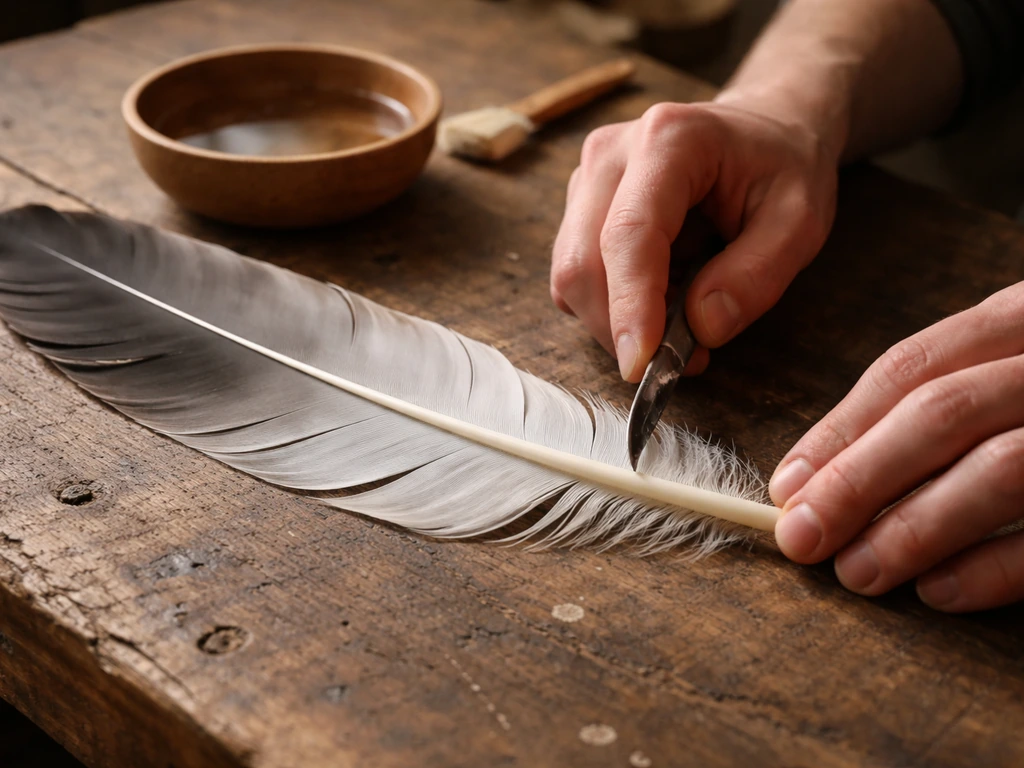
Making a working quill takes more prep than most people expect. The raw feather needs to be cleaned and cured before you can carve it, because an uncured feather shaft is too soft and greasy to hold a clean cut. The traditional method involves soaking the bare calamus end in warm water overnight to soften it, then cleaning out the inner membrane from the barrel. Some makers go a step further and heat-cure the shaft in hot sand to harden and clarify it, which produces a more durable nib.
Once the feather is prepped, you cut back the decorative barbs on the underside of the shaft near the tip so you have a clear working surface. Then comes the actual nib shaping, which is the hardest part to get right. Using a sharp penknife (historically called a 'penknife' specifically because of this job), you carve the shaft end into a tapered point and cut a narrow slit down the center. A “real feather quill pen” product description from FTC also outlines cutting the feather end into a point or nib with a small slit that helps store and release ink. That slit is everything. Too wide and ink floods out uncontrolled; too narrow and it won't flow at all. The two sides of the slit form the tines, and ink travels down from the calamus reservoir through the slit to the paper by capillary action.
One thing to know going in: quill nibs wear out. The keratin softens with use and repeated ink exposure, and the tip eventually rounds off or the slit widens. Historical scribes re-cut their nibs regularly, trimming a little more of the shaft each time until the usable length was gone. A single quill might be re-cut dozens of times before it was discarded. This is completely normal and expected, not a defect.
Step-by-step overview of basic quill prep
- Select a large flight feather from a goose, swan, or turkey. Left-wing feathers curve away from the right-handed writer's grip, which is why left-wing quills were historically preferred.
- Clean the feather shaft with warm water and mild soap. Remove the inner membrane from the calamus by scraping gently.
- Soak the bare calamus end in warm water for several hours or overnight to soften the shaft for shaping.
- Optional but recommended: heat-cure the calamus in hot sand to harden it, which produces a more durable finished nib.
- Trim or strip the decorative barbs from the underside of the lower shaft so you have a clean grip area.
- Using a sharp knife, carve the tip into a tapered nib shape, angling the cut to form a clean point.
- Cut a short, narrow slit straight down the center of the tip to form the two tines and create the ink channel.
- Test with ink, blotting excess. Adjust the slit width or tip angle as needed.
How to tell if a feather pen you're buying is genuinely made from a real feather
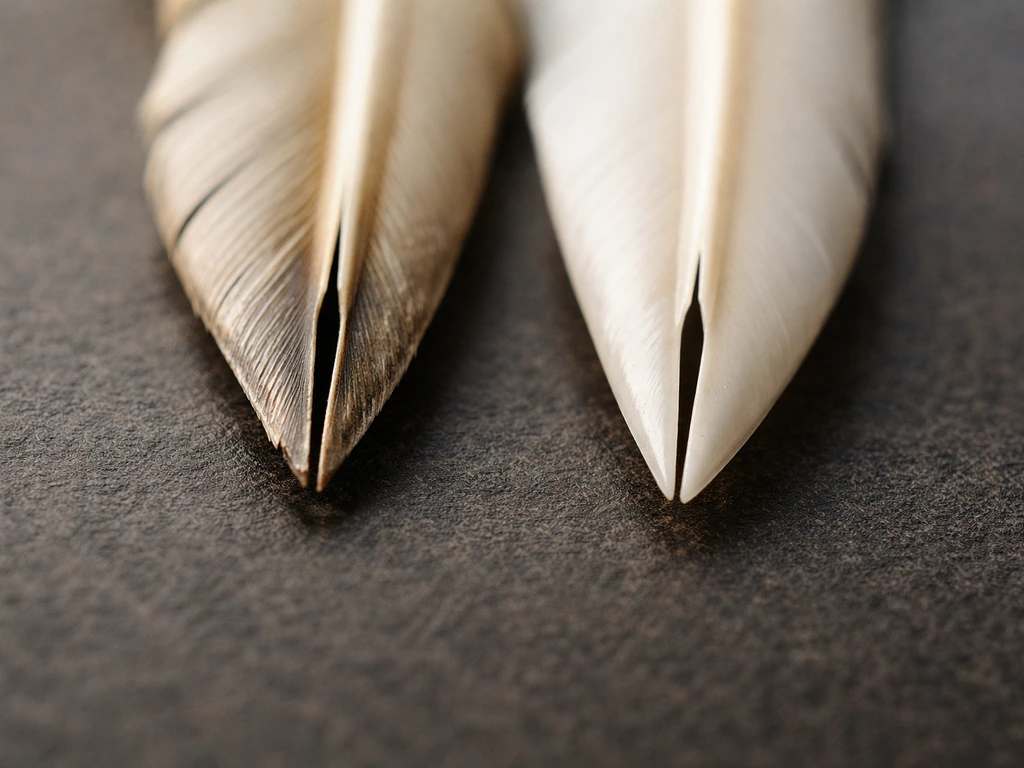
This is where it gets tricky, because the market is flooded with fakes in the sense of products that look like quill pens but don't function like them. Here's what to look for when shopping.
- The nib end should be carved, not intact. A real functional quill has a clearly shaped point with a visible slit. An untrimmed, perfectly preserved feather tip attached to a pen body is decorative.
- The feather should be a large flight feather, not a small plume or tail feather. Goose, swan, and turkey quills have thick, substantial shafts. Thin decorative plumes can't hold ink or be nibed.
- Look for listing language like 'hollow feather body,' 'calamus ink reservoir,' or 'hand-cut nib.' These suggest actual quill construction.
- Real quills are sold as dip pens. They don't have cartridges, converters, or caps. If the product description mentions refill cartridges, it's a decorative pen with a feather attached.
- Expect some variation and imperfection. Handmade quills aren't uniform. Suspiciously perfect, identical feather pens in a bulk set are almost always decorative.
- Some sellers offer 'quill-style' pens with synthetic feather shafts and metal nibs inserted into the barrel. These are a legitimate middle-ground product, but they're not true bird-feather quills. The listing should say 'metal nib' or 'synthetic quill body' if that's what it is.
Ethics and legality: where the feathers actually come from
This is the part that matters most if you care about birds, and honestly it should matter to anyone buying or making feather pens. If you’re wondering can you collect bird feathers for feather crafts, the biggest step is checking the species and local rules first buying or making feather pens. The short version: in the United States, possessing feathers from most native wild birds is illegal under the Migratory Bird Treaty Act (MBTA), even if you just picked one up off the ground. If you want to avoid the legal issues, you should be careful about whether you can pick up bird feathers where you live. The law doesn't distinguish between a found feather and one taken from a living bird. No permit, no possession, full stop. Similar restrictions apply in the EU under CITES regulations for protected species, and many other countries have equivalent laws.
That sounds alarming if you're thinking about making a quill, but here's the practical reality: the birds historically used for commercial quill production (domestic geese, turkeys, and farmed swans) are not protected species and are not covered by the MBTA. Feathers from domestic livestock birds are legally a completely different category from wild migratory bird feathers. A quill pen made from the shed or harvested feather of a domestic goose is legal to own and use. A quill made from a bald eagle feather, a red-tailed hawk feather, or any other wild native bird feather is not, regardless of how the feather was obtained.
The 'shed vs. harvested' distinction matters here too. Shed feathers (naturally molted by the bird) are technically still covered by the MBTA if the species is protected. The law doesn't exempt found feathers from protected species just because they fell off naturally. For non-protected domestic birds like chickens, turkeys, and domestic geese, shed feathers are fine to collect and use. If you keep pet birds yourself, including parrots, budgies, or cockatiels, their molted feathers are yours to keep since they're domestically owned, though their shafts are far too small and fragile for quill-making. The topic of what feathers you can legally collect, and how to tell protected from non-protected species, is worth understanding more deeply if you're exploring feather crafts broadly.
| Feather Source | Legal to Use (U.S.) | Practical for Quill-Making | Notes |
|---|---|---|---|
| Domestic goose (farm-raised) | Yes | Yes, ideal | Most common quill source historically and today |
| Domestic turkey (farm-raised) | Yes | Yes, very good | Thick shaft, durable, beginner-friendly |
| Mute swan (feral/wild in U.S.) | Gray area / restricted | Yes if legal | Check state and federal rules; some swan populations are protected |
| Wild goose (e.g., Canada goose) | No (MBTA protected) | Technically workable shaft | Illegal to possess feathers without permit |
| Crow, hawk, eagle, owl (wild native) | No (MBTA protected) | Historically used, now prohibited | Do not purchase or use without verified legal provenance |
| Pet parrot / budgie / cockatiel | Yes (owned domestically) | No, shaft too small | Fine to keep as mementos, useless for quill-making |
| Peacock (domestic/farm) | Yes (if farm-raised) | Possible for decorative use | Shaft is narrower than goose; challenging for functional nib |
When buying a finished quill pen, provenance matters. A reputable seller should be able to tell you the feather source. 'Domestic goose' or 'farmed turkey' are green flags. Vague answers like 'natural feather' or 'ethically sourced wild feather' without any specifics are worth questioning. The U.S. Fish and Wildlife Service notes that even expert identification from photos isn't definitive, so if you're ever uncertain about a feather's species origin, that's reason enough to pass on it.
Actually using a quill pen: inks, performance, and keeping it in good shape
Quill pens are dip pens, full stop. You dip the nib into an inkwell, let the excess drip or blot off, write a few words, and repeat. They don't hold much ink at a time, they require constant re-dipping, and they demand more patience than a ballpoint. But when they're working well, they're genuinely satisfying to write with, especially for calligraphy.
Which inks work with quills
Historically, iron gall ink was the standard pairing for quill pens, and it still works well. Modern iron gall formulations like Rohrer and Klingner Salix or Diamine Registrar's Ink are safe to use with quills. Traditional India ink (pigmented, waterproof) also works well with quills. What you should not do is try to use a quill with fountain pen ink in a fountain pen, or run calligraphy-specific dip inks through any fountain pen. These are different tools with different ink requirements. Dip pen inks, including many iron gall and pigmented calligraphy inks, can corrode metal fountain pen parts or clog narrow feed channels. Stick to dip pen inks for your quill and keep the two pen types separate.
Performance expectations
A well-made quill with a properly cut nib writes with a springy, responsive feel and can produce line variation (thicker on downstrokes, thinner on cross-strokes) that's hard to replicate with a ballpoint. But quills are not precision instruments. The nib wears down, the slit can widen or close depending on pressure and humidity, and the ink flow is sensitive to how long you've been writing since the last dip. Expect to re-cut or replace the nib periodically. This is part of the experience, not a failure.
Care and storage
- Clean the nib after each use by blotting and then wiping gently. Be careful not to split the slit wider when cleaning.
- Do not soak the whole feather in water. The calamus can be briefly rinsed, but extended soaking re-softens the cured shaft and weakens the nib.
- Store quills horizontally or nib-up in a holder, never nib-down where the tip can be damaged.
- Keep quills away from high heat and direct sunlight, which dry and crack the shaft.
- Inspect the nib before each use. If the slit has widened or the tip has rounded off, re-cut it before writing.
- For long-term display storage, keep feathers in a low-humidity environment and handle them minimally to prevent barb damage.
If you'd rather skip the feathers entirely
Honestly, for most people who are drawn to quill pens for the writing experience rather than the historical authenticity, there are better options available today. Modern dip pens with metal nibs (Speedball, Brause, Leonardt, and others) give you the same dip-and-write calligraphy experience with far more consistent ink flow, no nib-cutting required, and much longer nib life. They also pair with the full range of dip pen and calligraphy inks without any compatibility concerns.
If you want the feather aesthetic without the legal and ethical complications of sourcing real bird feathers, look for pens with synthetic feather shafts and inserted metal nibs. Some makers also sell 'quill nib' pens, which use smooth, flexible metal nibs specifically designed to mimic the line character and spring of a traditional quill. These are a legitimate, well-made product that sidesteps both the sourcing headaches and the maintenance burden of re-cutting a real quill nib.
For bird owners specifically: the feathers your pet sheds are sentimental and beautiful, but they won't make a functional writing quill. Parrot, cockatiel, and budgie feathers have shafts that are too narrow and fragile to carve into a nib. You're better off keeping them as keepsakes or decorative pieces rather than trying to craft a pen from them. If you're genuinely interested in the quill-making craft and want to use feathers from birds you know and trust, domestic turkey or goose farms are the practical, legal, and ethical sourcing path.
Quick reference: feather pen types at a glance
| Type | Feather Role | Ink Type | Maintenance | Best For |
|---|---|---|---|---|
| True quill pen (carved feather nib) | Structural, functional | Dip pen inks (iron gall, India ink) | High, regular nib re-cutting needed | Historical authenticity, calligraphy enthusiasts |
| Decorative feather pen | Visual only | Whatever the pen body takes (usually ballpoint) | Low | Novelty, gifts, display |
| Synthetic quill pen (metal nib, synthetic feather body) | Visual only | Dip pen inks | Low, metal nib replacement only | Calligraphy without sourcing hassle |
| Quill-nib metal dip pen | None | Dip pen inks | Low | Quill-like line quality with modern reliability |
FAQ
How can I tell if a “feather quill pen” listing is actually functional or just decorative?
Check the tip closely. A functional quill has a carved nib with an actual narrow slit (the opening that forms the tines). If the feather looks intact and uncut at the writing end, it is almost certainly a decorative feather glued to a normal pen barrel, meaning it will not behave like a true dip quill.
What size or stiffness of feather shaft do I need to make a real pen nib?
You need a large flight feather with a hollow calamus that has enough wall thickness to carve cleanly without flaking. Small feathers from songbirds or parrots usually have shafts too thin to hold a slit reliably, so the nib either crumbles during carving or won’t flow consistently.
Can I use any found feather, like one I pick up outside, to make a quill?
Not safely from a legal standpoint. In the U.S., possession rules generally do not depend on whether the feather was found or taken from a living bird. The species and local regulations matter, so it’s best to confirm you’re eligible before collecting or using any wild-origin feathers.
Is an uncured or improperly cleaned feather safe to write with, and will it work?
An uncured or greasy shaft typically cannot hold a clean carved cut, and it can ruin ink flow by softening or clogging the slit area. Cleaning and curing matter because a properly prepared calamus supports the nib shape and provides a stable ink reservoir.
Why does ink either flood out or refuse to flow with my quill?
Most of the time it comes down to slit geometry. If the slit is too wide, ink floods, and if it is too narrow or uneven, ink won’t travel by capillary action. Humidity and how much you blot off after dipping can also change flow, so minor adjustments and practice are expected.
How often should I expect to re-cut or replace the quill nib?
Wear is normal. Keratin in the nib softens with ink exposure, the slit can change, and the tip rounds over time. Many writers re-cut periodically during a session period, and over the life of a quill you may re-shape dozens of times depending on how aggressively you press.
What ink types are safest to use with quill pens?
Stick to dip-pen inks. Iron gall formulations and traditional pigmented dip inks are a good match for quills. Avoid fountain pen inks in fountain pens, and do not run calligraphy dip inks through fountain pen systems because they can corrode or clog narrow metal feed parts.
Are quill pens the same thing as fountain pens or standard dip pens?
They behave more like traditional dip pens. Quills do not store much ink, so you must re-dip often. Also, fountain pen ink and fountain nib/feed design are different, so compatibility is not automatic even if the writing experience seems similar.
If I want the feather look but not the maintenance, what are my best options?
Look for synthetic feather-shaft pens with inserted metal nibs, or products marketed as “quill nib” pens that use purpose-made metal nibs to mimic quill spring and line variation. These avoid the legal sourcing issues and eliminate the recurring nib-cutting and wear you get with real quills.
Can feathers from my own pet birds be used to make a working quill?
You can keep shed feathers as keepsakes, but they usually won’t work as functional quills because the shafts are too small and fragile to carve into a reliable nib. If you want a working quill from familiar birds, domestic goose or turkey farm sources are typically more practical and legally straightforward.
What should I ask a seller to verify provenance for a finished quill pen?
Ask for specific source details like “domestic goose” or “farmed turkey,” not vague labels like “natural” or “wild-sourced.” If the seller cannot clarify species origin, it is safer to pass, because identifying species from photos alone is not considered definitive.
How do I get consistent writing if ink flow changes after dipping?
After dipping, blot or let excess drip, then write a short test line before continuing. Consistency improves once you develop a rhythm and learn how long the nib takes to saturate in your specific ink, paper, and room humidity.
Next Articles
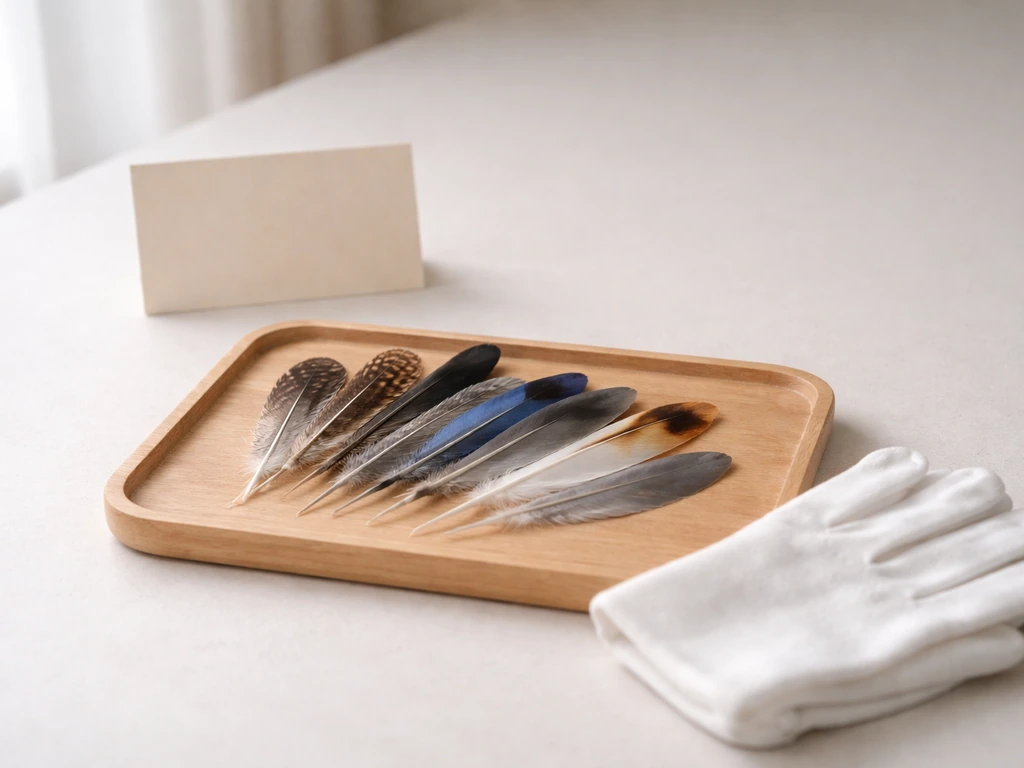
What Bird Feathers Can I Keep Safely and Legally
Learn what bird feathers you can keep safely and legally, how to clean/store them, and risks for pet birds.
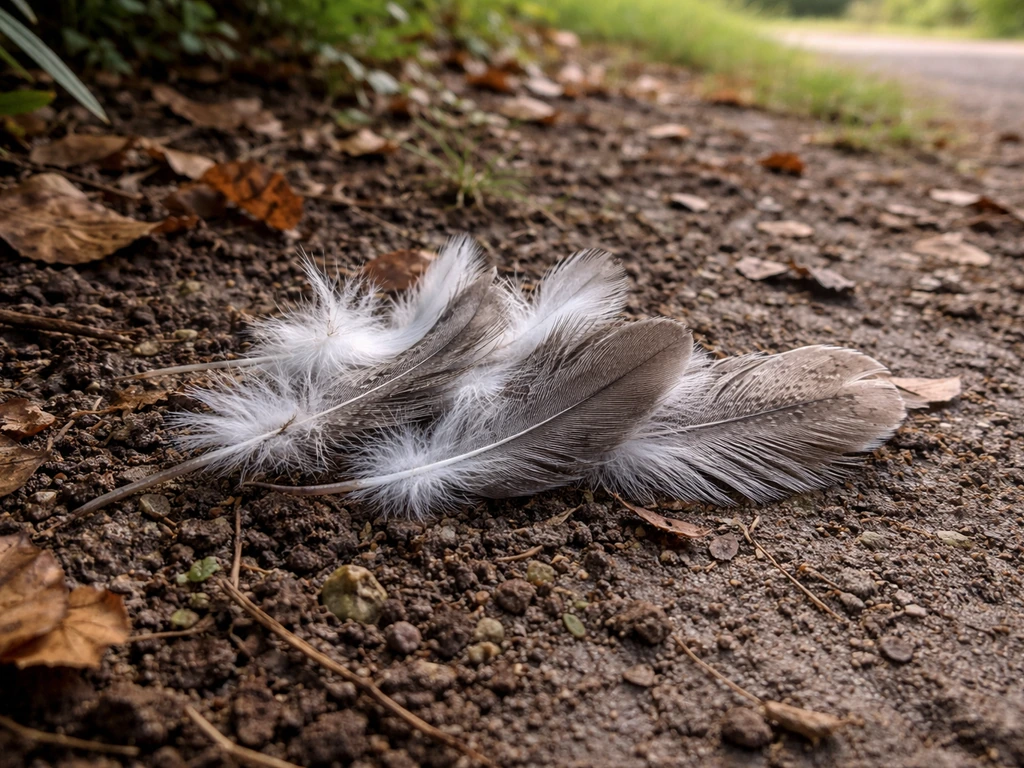
Can You Collect Bird Feathers? What’s Legal and OK
Learn when collecting shed bird feathers is legal and ethical, how to handle safely, and key cautions for pet-bird homes
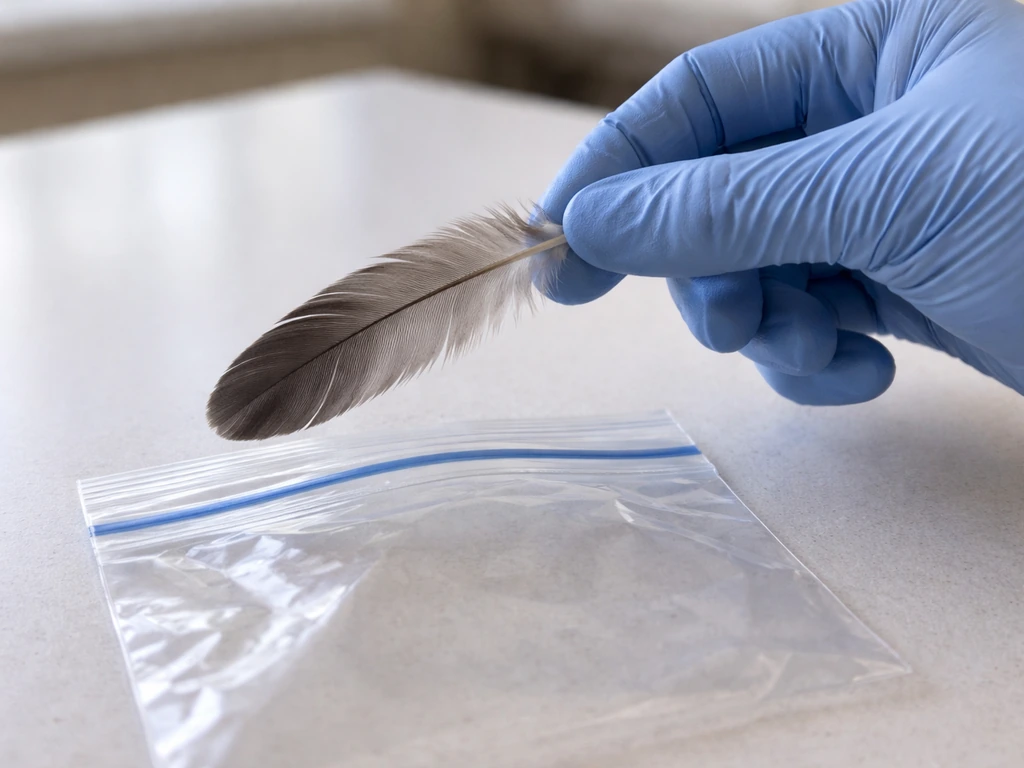
Can You Pick Up Bird Feathers Safely? What to Do
Learn when you can safely pick up loose bird feathers, how to handle and clean them, and protect pet birds from parasite