A bird aviary is a large enclosure designed to give birds enough space to actually fly, not just hop between perches. A bird basket is another term people use when they mean a small bird enclosure meant for housing a bird. Think of it as the step up from a standard cage: bigger, more open, and built around the idea that birds need real movement to stay healthy and mentally balanced.
What Is a Bird Aviary? Types, Benefits, and Setup Tips

Marcus Chen
25 Apr 2026
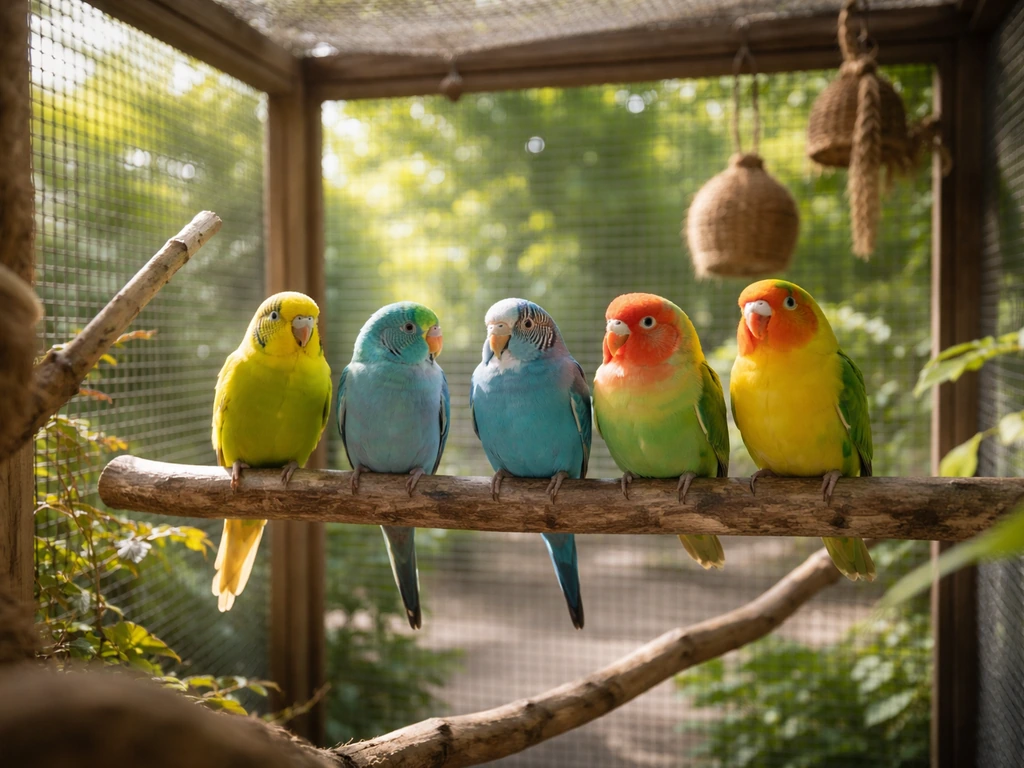
If you are choosing a smaller, giftable option instead, you may prefer a what is a bird basket gift style enclosure rather than a full aviary. Aviaries range from compact indoor flight cages about a metre wide to massive walk-in outdoor structures stretching 30 metres or more, but the defining feature is always the same: room to fly.
A bird habitat is basically the space and conditions where a bird can live safely and carry out natural behaviors, including flying.
Aviary vs enclosure vs cage: what's the actual difference?
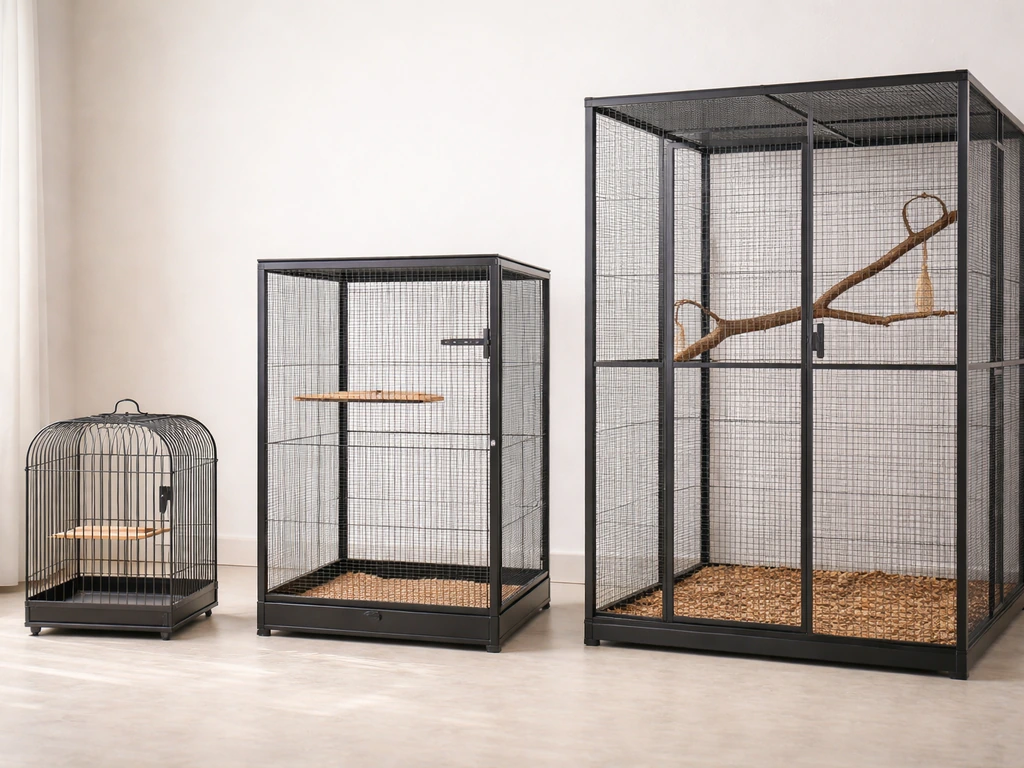
These three terms get used interchangeably online, which creates a lot of confusion for beginners. Here's how to think about them clearly.
A cage is the most basic option: a mesh or bar structure, typically small enough to sit on a table or stand, used to house one or a small number of birds day-to-day. It confines and protects but doesn't give birds meaningful flight space. A bird enclosure is a broader term that covers any housing structure for birds, from a simple cage to a custom-built room. An aviary sits at the larger end of that spectrum.
Wikipedia notes that an aviary is an enclosure designed to keep birds and provide room for movement and flight compared with a standard cage An aviary sits at the larger end of that spectrum. .
A what is a bird basket guide can help you understand how small, bowl-style enclosures compare to true aviaries that prioritize flight space. If you are comparing an aviary versus other setups, a bird enclosure is also a useful related option to understand before you decide what you need bird enclosure is a broader term.
It's specifically designed to give birds a larger living environment where they can fly, behave more naturally, and in many cases, share space with other birds. This kind of enclosure is often what people mean when they ask what a bird enclosure is called.
RSPCA Victoria puts it well: a well-designed aviary is 'the most satisfactory housing,' enabling birds 'freedom of movement and some flight as though still in the wild state.' That's the goal. If the bird can't stretch its wings and make a real flight path, it's a cage, not an aviary, regardless of what the product listing calls it.
What people actually mean by 'aviary bird'
An 'aviary bird' isn't a distinct species or category you'll find in a field guide. It just refers to a bird that is kept in an aviary-style setup rather than a standard household cage. The same zebra finch can be a 'cage bird' in a small wire cage on your desk or an 'aviary bird' if you keep it in a flight aviary in your backyard. The housing arrangement, not the species, is what the phrase is describing.
That said, certain species are far better suited to aviary life than others, and when someone says 'aviary birds' in a practical context, they usually mean social, active species like finches, canaries, budgerigars, and some parakeets that genuinely thrive with the extra space and companionship that aviary living provides. More on which birds to choose later.
The main types of aviaries
Not all aviaries look the same or serve the same purpose. Before you start planning, it helps to know which type fits your situation.
Indoor aviaries and flight cages
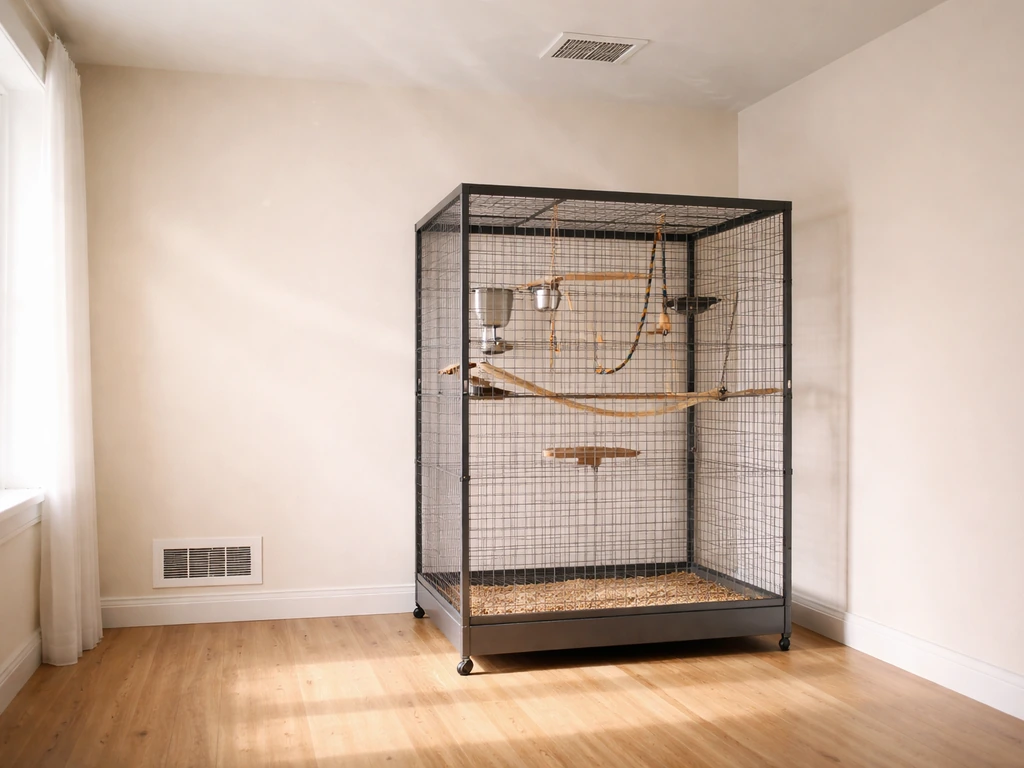
An indoor aviary is typically a large wire or mesh enclosure placed inside your home or a dedicated room. These are great if you want to give birds significantly more space than a standard cage without the weather and predator challenges of going outdoors. A flight-safe room, where windows are covered, ceiling fans are off, and other pets are excluded, also counts as an informal indoor aviary setup. These work especially well for parrots and cockatiels that benefit from daily out-of-cage time in a controlled space.
Outdoor aviaries
Outdoor aviaries are permanent or semi-permanent structures built in a garden or yard. They give birds access to natural light, fresh air, and a much larger footprint. The tradeoff is that you need to design seriously for weather protection, predator-proofing, and temperature regulation. A partially covered roof section is essential so birds can shelter from rain and direct sun, and the flooring needs careful thought since predators can dig under wire if you don't install mesh beneath the gravel or substrate.
Walk-in aviaries
Walk-in aviaries are large enough for a person to enter, which makes cleaning, feeding, and bird observation much more practical. They're the setup most people picture when they imagine a serious aviary. You'll need a safety entry system here: the standard recommendation is a two-door airlock system where both doors can't be opened simultaneously, each with its own lock. This prevents birds from slipping out past you when you enter.
Breeding aviaries
Breeding aviaries are designed specifically to encourage and support nesting and reproduction. They may be smaller than communal flight aviaries and are often used to house a single compatible pair. Nest boxes, specific perch placement, and privacy from other birds are key design priorities here. Communal or colony aviaries, by contrast, house multiple birds together for social enrichment rather than breeding outcomes, though some species will breed opportunistically in either setup.
Core design features you need to plan before you build
Size and flight room
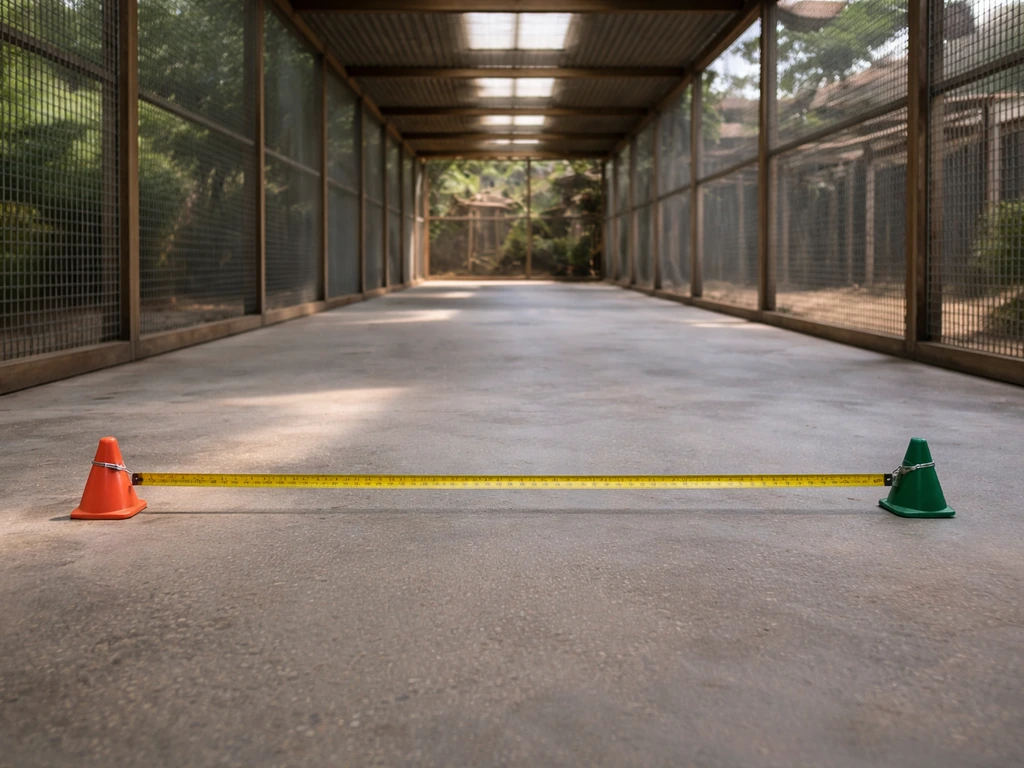
Bigger is almost always better, but you do need a minimum flight path that actually lets birds fly, not just flutter. Britannica describes aviaries ranging from about one metre on a side up to 30 metres long and 15 metres high for large walk-in flight structures. For a backyard finch aviary, you're realistically looking at something in the range of 2 to 3 metres long at minimum to give small birds a meaningful flight path. For parrots, you need considerably more space. The key measurement isn't just total volume, it's the longest unobstructed distance the bird can actually fly.
Airflow and ventilation
Ventilation matters more than most beginners realize. Poor air circulation causes moisture buildup, which leads to mold, respiratory issues, and pest problems. Outdoor aviaries benefit from natural airflow through mesh panels, but you still need a sheltered side that blocks wind without cutting off fresh air entirely. For indoor aviaries, you're responsible for managing the air quality actively. Feather dander, dust, and fecal particles accumulate quickly, so positioning matters and regular cleaning becomes even more important.
Mesh material and spacing
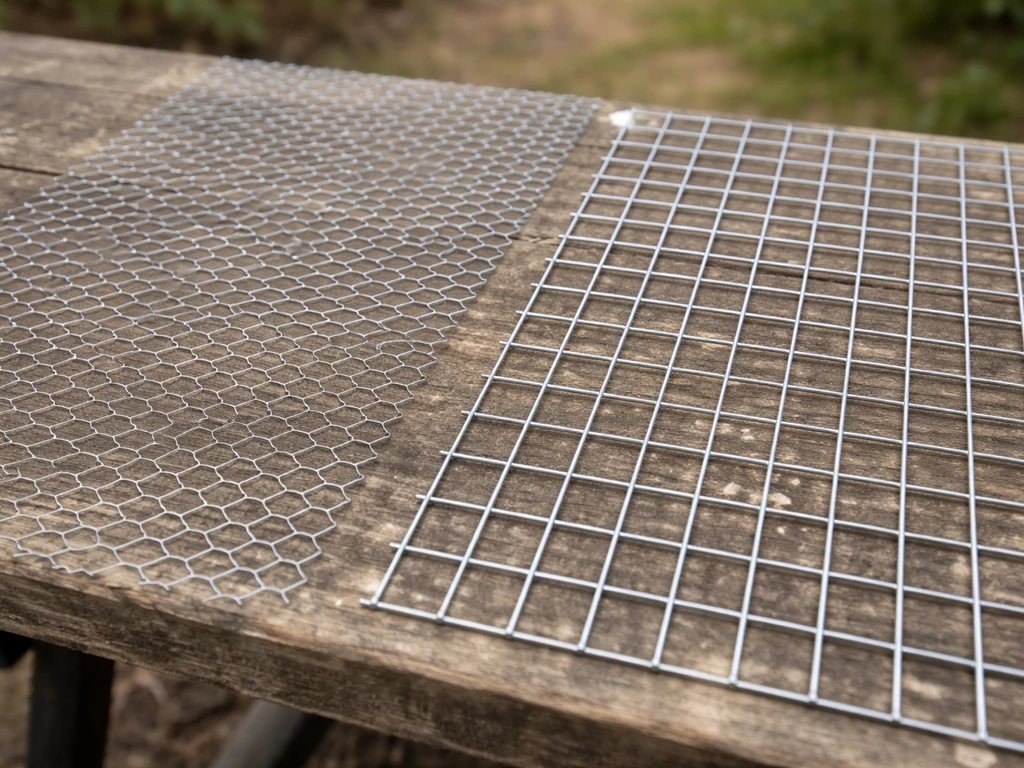
This is one of the areas where beginners make the most expensive mistakes. Galvanized wire is a common and cheap choice but it carries a real zinc poisoning risk: birds that chew on it, which many will, can ingest toxic levels of zinc. Rusted wire is also toxic. The Parrot Society UK and avian safety organizations consistently warn against galvanized hardware, especially for parrots and other hook-billed birds that actively gnaw on wire. Powder-coated or stainless steel mesh is the safer option, even if it costs more upfront. Mesh spacing also matters: gaps should be small enough that the bird's head cannot get through but large enough that feet can't get caught.
Predator and escape proofing
For outdoor aviaries, the threats come from all directions. Cats, rats, and birds of prey can all cause panic or direct harm. A double-door entry system (two doors spaced at least a couple of feet apart, each with its own lock) is the standard for walk-in outdoor aviaries and is highly recommended even for smaller setups. If you're using gravel flooring, install wire mesh of very small spacing underneath it to stop predators from digging in and birds from digging out. Note: galvanized wire can be a source of zinc poisoning in parrots, so avoid using galvanized materials in aviary construction (source: LafeberVet) LafeberVet — Heavy Metal Poisoning in Birds.
Lighting
Birds rely on light cycles for their health and mood. For indoor aviaries, you'll want lighting as close as possible to natural daylight spectrum. The RSPCA recommends placing perches at different distances from the lamp so birds can self-regulate how much light exposure they get. Outdoor aviaries naturally handle this better, though you'll still want to control how much direct sun hits the enclosure, especially in warmer months.
Essential equipment and daily setup
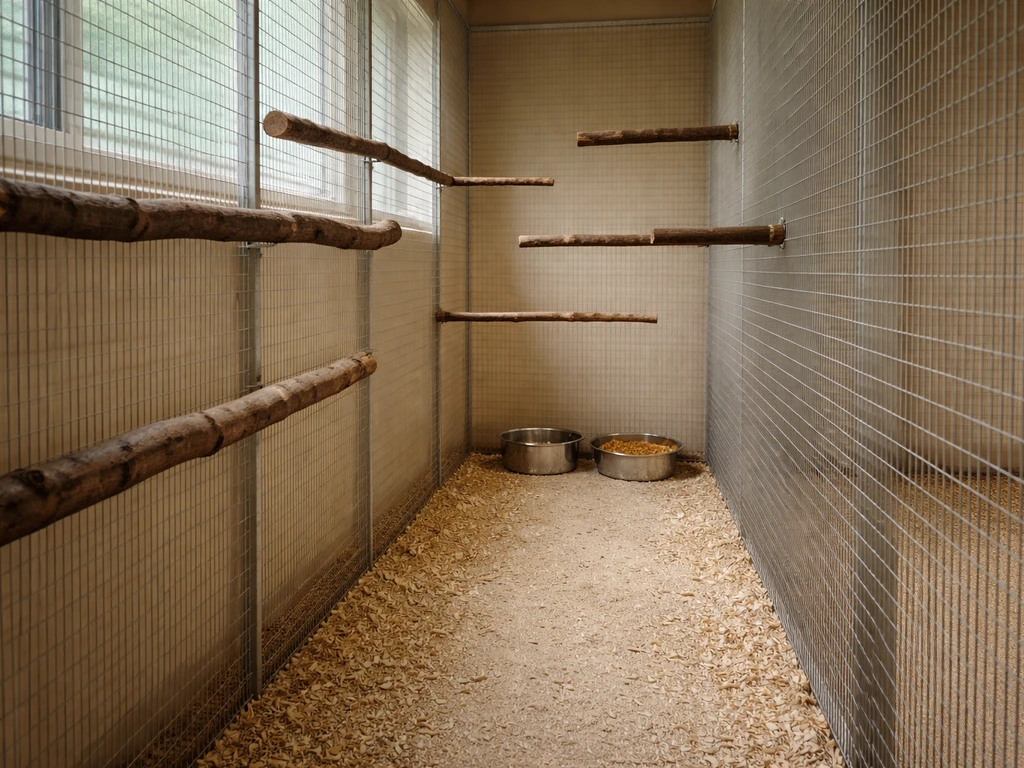
Getting the structure right is step one, but what goes inside matters just as much for your birds' wellbeing. If you are feeding small birds indoors or in an aviary, a bird suet basket is a handy way to offer nutrition safely.
- Perches: Use multiple perches at varying heights and diameters so birds exercise different foot muscles. Don't place perches directly above food or water dishes, because fecal contamination will happen constantly if you do. Also leave enough open space between perches so birds can actually move around freely.
- Food and water stations: Use multiple feeding and watering points. Aggression between birds tends to cluster around these spots, so the more stations you have, the more you reduce conflict. Avoid large 'hopper' feeders that get topped up rather than fully cleaned, as these attract pests and harbor bacteria.
- Enrichment and toys: Swings, foraging toys, chewable items, and safe natural branches all reduce boredom. Boredom in an aviary bird shows up as feather plucking, repetitive pacing, and aggression. Rotate enrichment items regularly to keep things interesting.
- Nesting boxes: Only add these if you intend to breed, or are housing species that need nesting cavities for security. Adding them unnecessarily in a communal aviary can trigger territorial behavior.
- Substrate and flooring: Choices include paper, sand, soil, or gravel depending on the setup. Each has cleaning and safety implications. Avoid anything toxic if ingested, and change or clean it regularly.
- Safe plants: Some natural plantings can be included in outdoor aviaries, but you must verify every plant is non-toxic to birds before adding it. Toxic plant exposure is a genuine risk.
- Cleaning supplies: Soap and water for daily cleaning of dishes and perches, with appropriate bird-safe disinfectants for deeper periodic cleans. Perches, water dishes, and the floor should be cleaned daily or near-daily.
Daily hygiene isn't optional. Dirt, feather dander, fecal matter, and food debris accumulate quickly across the floor, perches, bowls, and toys. A quick daily spot clean combined with a more thorough weekly session keeps disease risk down and keeps your birds in good condition.
Birds that work well in an aviary setup
Not every bird species suits communal aviary living. Some birds are territorial, some are pair-bonded and do better with just one companion, and some species don't mix safely with others. Here's a practical breakdown for beginners.
| Species | Aviary Style | Social Setup | Beginner-Friendly? |
|---|---|---|---|
| Zebra Finches | Indoor or outdoor flight aviary | Groups or pairs, warm and dry environment ideal | Yes, very easy |
| Budgerigars (Budgies) | Indoor or outdoor aviary | Pairs or small groups | Yes, great first aviary bird |
| Cockatiels | Indoor flight aviary or large cage | Pairs or small groups with space | Yes, with some handling |
| Canaries | Indoor or outdoor aviary | Solitary or same-sex groups (males can fight) | Yes, low-maintenance |
| Gouldian Finches | Warm, sheltered aviary | Mixed finch communities with care | Moderate, needs stable temps |
Finches are generally the easiest starting point for a first aviary. They're social, relatively low-maintenance, and genuinely thrive with the flight space an aviary provides. Budgies and cockatiels are excellent if you want birds that will also interact with you. Canaries are happy in aviary settings but males can be aggressive toward each other, so plan your social mix carefully. When housing mixed species together, the general rule is to introduce birds simultaneously rather than one at a time, and monitor closely during the first few days. Size and temperament compatibility matter more than most beginners expect.
Common beginner mistakes and how to avoid them
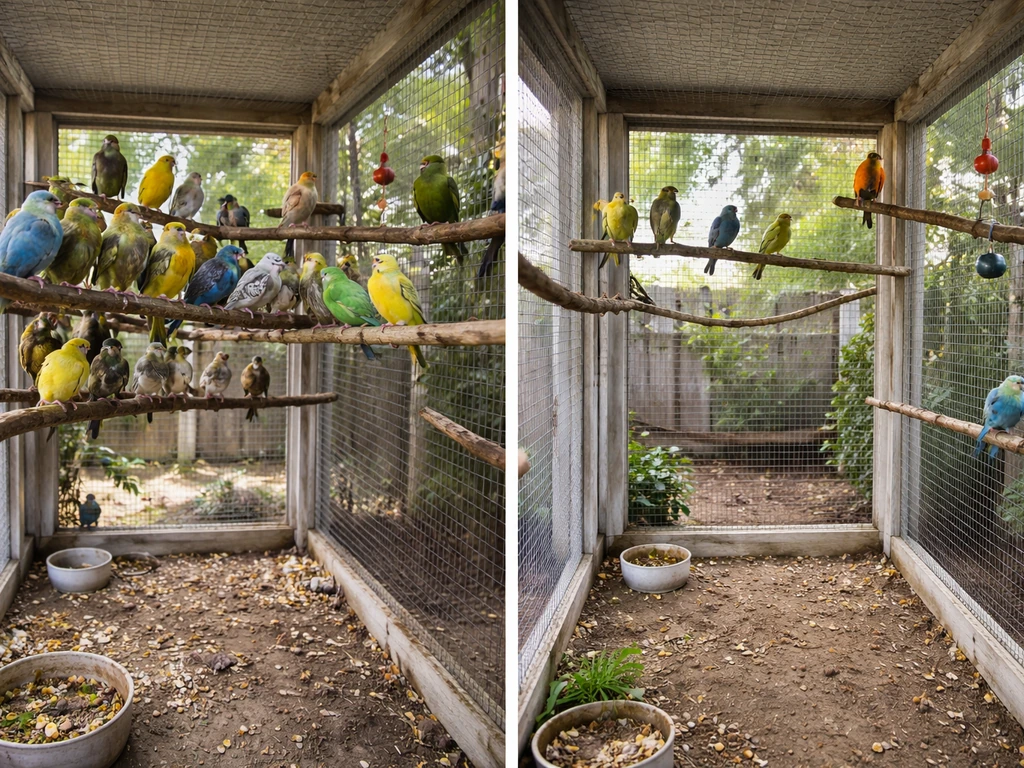
I'll be direct about the things that trip up first-time aviary owners most often, because most of these mistakes are completely avoidable with a bit of planning upfront.
- Overcrowding: Adding too many birds to the space is the single most common mistake. More birds means more aggression, more disease pressure, and more cleaning. Start with fewer birds than you think you need and expand slowly.
- Using galvanized or unsafe wire: Cheap galvanized mesh is everywhere and it looks fine, but for birds that chew, it's a zinc poisoning risk. Invest in powder-coated or stainless steel hardware from the start. It's worth the extra cost.
- Poor ventilation: Beginners often focus entirely on size and forget airflow. A large aviary with bad ventilation is still a health hazard. Make sure fresh air can move through the structure without creating drafts that chill the birds.
- Not enough enrichment: An aviary gives birds space, but space alone doesn't prevent boredom. Bare aviaries with just perches and food dishes produce stressed, destructive birds. Add foraging opportunities, varied perch types, and rotate toys regularly.
- Rushing the setup: Planning the right size, location, entry system, and flooring before building saves a lot of rework later. Measure your space carefully, set a realistic budget, and factor in ongoing costs like food, cleaning supplies, and veterinary care before you commit.
- Skipping the safety porch: For outdoor aviaries especially, a double-door airlock entry is not just a nice-to-have. Birds are faster than you think, and a single door is all it takes to lose one permanently.
- Ignoring the adjustment period: Birds need time to settle into a new aviary. Don't expect normal behavior immediately. Give them quiet time to explore and establish themselves before making further changes to the space.
How to start planning your aviary practically
Once you've decided an aviary is the right direction, here's a practical sequence for getting started without making expensive mistakes.
- Decide on indoor vs outdoor first: This determines almost everything else, from materials to predator-proofing needs to climate control requirements.
- Choose your bird species before finalizing the size: Different species have very different space and climate needs. A finch aviary and a parrot aviary are built quite differently.
- Measure and plan the location carefully: Consider shade, drainage, accessibility for cleaning, and distance from household hazards like kitchen fumes or air fresheners.
- Set a realistic budget: Include the structure, mesh, hardware, perches, feeders, substrate, enrichment, and ongoing monthly costs for food and vet care.
- Build or buy with safety in mind first: Escape-proof entry, safe mesh material, and secure latches are non-negotiable. Aesthetic upgrades can come later.
- Introduce birds gradually and monitor closely: Especially in a mixed-species setup, watch for aggression around food stations and high perches in the first week.
An aviary done right is genuinely one of the most rewarding ways to keep birds. Watching a flock of zebra finches use a full flight path, or a pair of budgies interact naturally with real space around them, is a completely different experience from a tabletop cage.
The planning upfront feels like a lot, but most of it is just thinking through the basics before you spend any money, and that thinking pays off quickly once your birds are settled and thriving. The term “liver bird building” is often used to describe a specific type of bird enclosure people associate with Liverpool.
A bird hook knife is sometimes used in crafts or small workshop projects related to carving and shaping, so it can come up alongside specialty bird-themed enclosures liver bird building.
FAQ
Is an “aviary bird” the same thing as a specific type of bird species?
No. The phrase describes how the bird is housed (in a flight setup) rather than a species category. A finch, budgie, or parrot can all be “aviary birds” if kept in a proper flight enclosure, or “cage birds” if kept in a smaller cage.
How can I tell if a product listing is really an aviary and not just a larger cage?
Look for an unobstructed flight path length, not just total size. If the bird cannot stretch wings and complete a real forward flight route without bumping into perches, the setup functions like a cage even if marketing calls it an aviary.
What is the minimum useful floor space and flight path for small backyard birds?
Total volume matters less than the longest unobstructed distance the bird can fly. For small birds, many setups aim for a couple of meters of usable flight length, but you should measure clear space between major obstacles (perches, nesting boxes, feeders), not just the outer dimensions.
Can I keep different bird species together in the same aviary?
Sometimes, but compatibility and introduction method matter. A practical approach is to introduce simultaneously, monitor closely for the first days, and choose species with similar activity levels and temperament, since stress or bullying can be immediate in mixed groups.
What bedding or substrate is safest for outdoor aviaries with gravel flooring?
If you use gravel or substrate that birds can dig into, you also need a predator-dig barrier. Install fine wire mesh underneath the substrate to stop predators from burrowing and to prevent birds from digging out.
Do I need an airlock entry system for a walk-in aviary every time?
For walk-in outdoor aviaries, it is highly recommended because escape risk is highest during entry and exit. A two-door airlock setup with separate locks helps prevent birds from slipping out when you step inside or open a door.
What’s the safest mesh material if birds chew or gnaw on wire?
Avoid galvanized wire and rusted hardware, since chewing can create zinc and other contamination risks. Prefer stainless steel or properly made powder-coated mesh, and verify mesh spacing is small enough that the head cannot pass through, while feet cannot get stuck.
How do I manage air quality in an indoor aviary?
Indoor setups require active cleaning and smart placement because fecal dust, feather dander, and food debris build up faster. Position the enclosure to support airflow, clean frequently (spot clean daily if feasible), and avoid drafts that make birds sit hunched without fresh air.
Is lighting important for indoor aviaries only, or outdoors too?
Lighting matters in both, but the risk looks different. Outdoors you cannot fully control natural light, so you need shelter from direct sun to prevent overheating, while indoors you should use light that matches the natural daylight spectrum and vary perch distances so birds self-regulate exposure.
How soon should I start daily care routines after moving birds into a new aviary?
Plan on immediate observation and consistent hygiene once the birds are settled, not “eventually.” Expect the first days to be the highest stress period, so watch feeding, perching, and interactions, and keep up spot cleaning to reduce buildup from the first week.
Can an aviary support breeding, or do I need a separate setup?
Both are possible, but breeding aviaries are designed to encourage nesting, privacy, and suitable perch and nest box placement. Communal flight aviaries focus more on social enrichment, and some species may breed opportunistically, but pair-specific control is usually better for reliable outcomes.