If your bird can swing, climb, and hang from toys without stumbling or losing grip, that's a genuinely good sign. Swinging, rocking, and hanging upside down are completely normal behaviors for most parrots, cockatiels, and budgies. Their zygodactyl feet (two toes forward, two toes back) are literally built for gripping, climbing, and swinging on branches and perches. The phrase only becomes a problem when your bird is struggling to swing, swinging involuntarily, or losing balance in a way that looks off. That distinction matters a lot, and this guide will help you figure out which situation you're actually dealing with and what to do about it today.
And Your Bird Can Swing: What It Means and What to Do
Marcus Chen
15 May 2026
What 'your bird can swing' usually means in real life
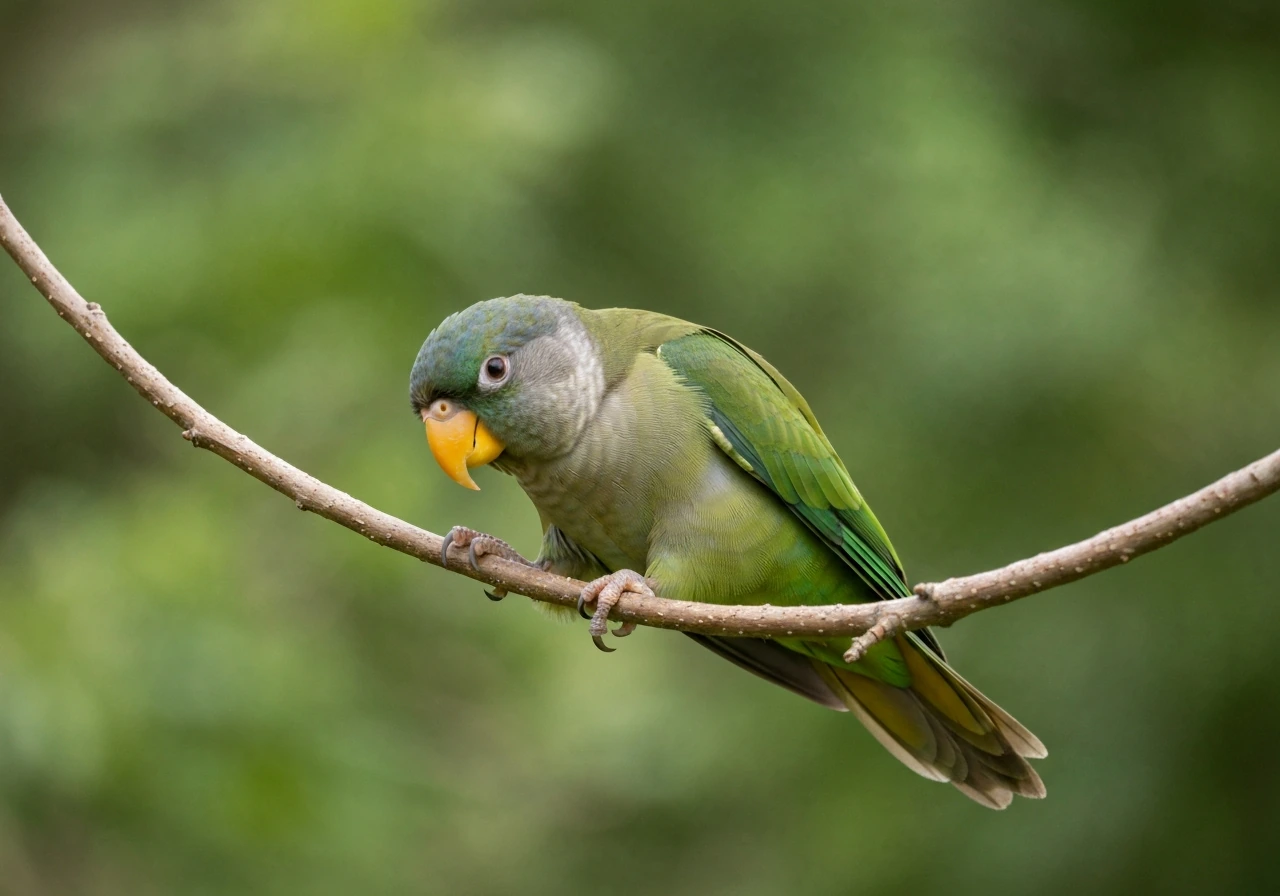
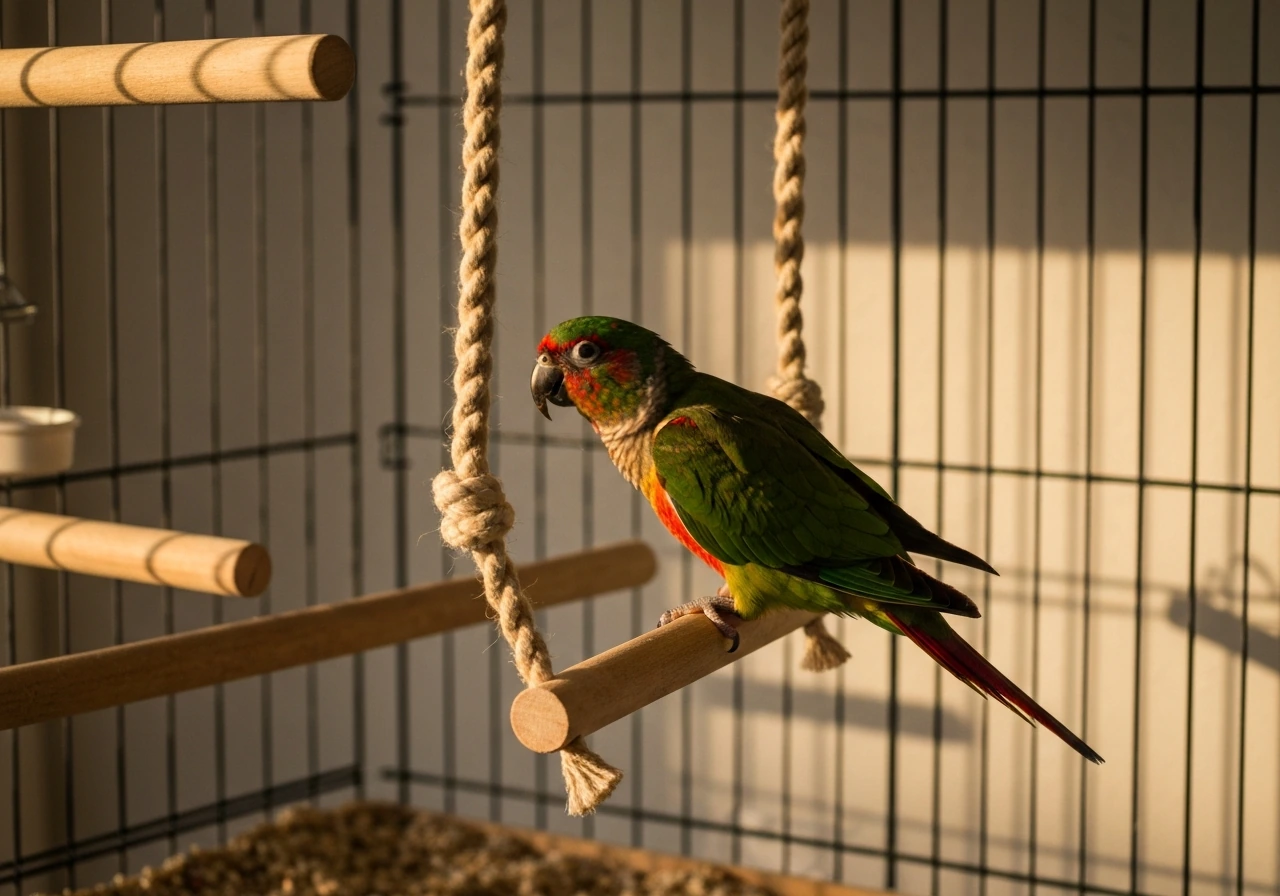
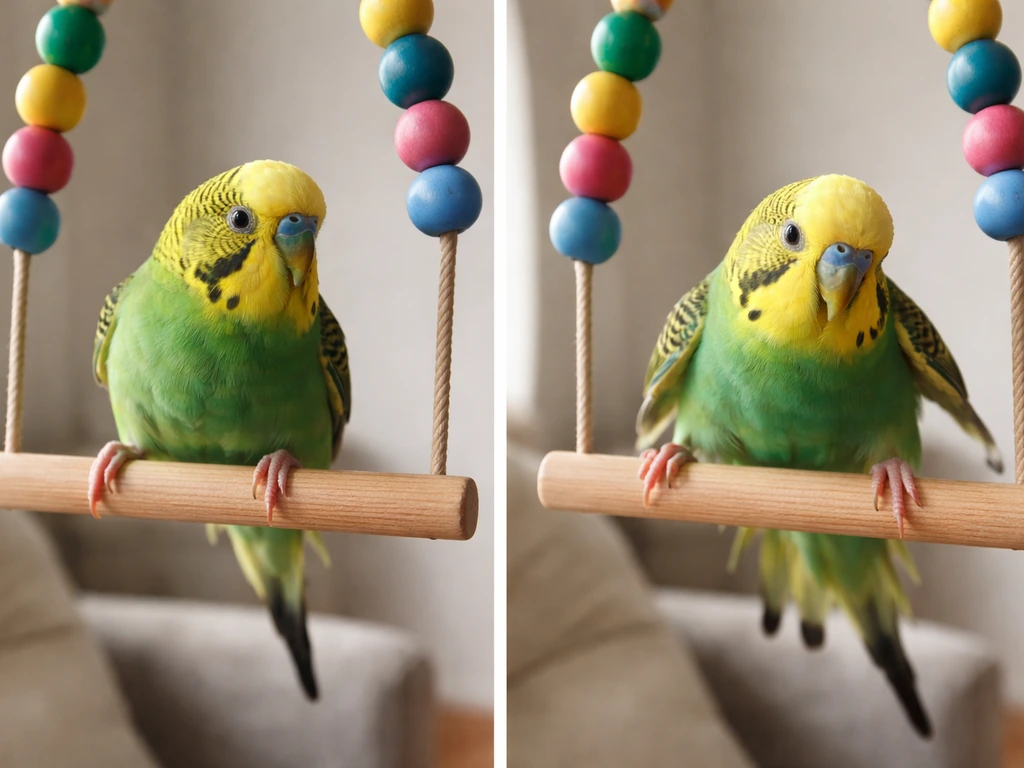
In most cases, a bird swinging is just a bird being a bird. Wild parrots actually use a locomotion style researchers have nicknamed 'beakiation,' where they touch a thin branch with their beak, swing their body sideways, and re-grip with their feet. It's a totally normal biomechanical move, not a sign something is wrong. In a home cage, this translates to your bird hanging from a rope perch, rocking on a swing toy, or climbing around the cage bars. Budgies regularly hang from suspended toys, and cockatiels love to scale ladders and observe their surroundings from the highest possible point. If your bird is doing any of this with control and confidence, you can relax.
The concern version of this phrase looks different. It's when a bird that used to grip and move confidently is now wobbling on the perch, tilting its head to one side, or actually falling. That's not playful swinging. That's a balance or neurological problem that needs attention. The good news is these two scenarios are pretty easy to tell apart once you know what to look for.
What's usually causing the swinging (or the struggling)
Normal causes: perches, toys, and play
Most playful swinging comes down to the cage setup. Rope perches are a big driver here. blank" rel="noopener noreferrer">Larger parrots especially get a lot of stimulation from rope and bungee perches that move when they grip them. Swings, orbit ladders, and climbing nets all encourage the kind of dynamic movement birds are wired for. If you also have pet rats, make sure any bird toys they might chew are safe, since not all materials and coatings are rat-friendly are bird toys safe for rats. This is a feature, not a bug. A bird that can climb, flap, and grip different surfaces throughout the day is healthier and less stressed than one sitting on a single wooden dowel all day.
Normal causes: bonding and handling behavior
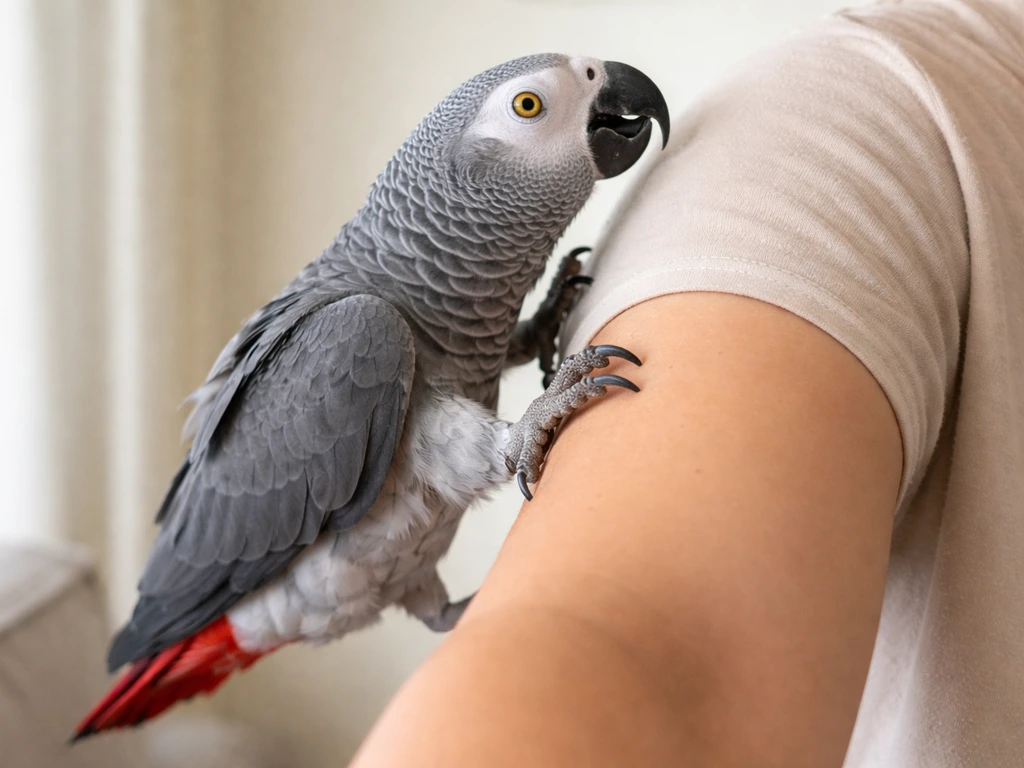
Sometimes the 'swinging' you're seeing is actually your bird trying to climb up your arm toward your shoulder during handling. African greys, for example, are natural climbers and will grip and pull themselves upward if given the chance. One practical tip: position your elbow lower than your hand when your bird is perched on your arm. This reduces the angle and makes climbing less tempting. It's not a problem behavior, just something to manage so it doesn't become a habit.
Problem causes: setup issues
An unstable cage setup can make normal swinging dangerous. In general, the safest bird hammocks are the ones that keep your bird from slipping, snagging, or falling. Perches placed directly above one another mean droppings land on lower perches, but they also create a situation where a bird that misses a grip falls straight down with nothing to catch itself on. Perches that are too smooth (plain wooden dowels or ceramic) reduce grip, especially if the bird's nails aren't well-maintained. Perches that are too narrow cause the front and back toes to overlap excessively, which strains the foot and makes gripping unreliable. Any of these setup problems can make otherwise normal swinging look like a balance issue.
Problem causes: health and injury
Balance problems in birds can come from a surprising range of sources: head trauma (from flying into a window or wall), inner or middle ear inflammation, heavy metal toxicity (lead and zinc are common culprits from cage hardware or toys), seizures, nutritional deficiencies, heat stress, or infections affecting the brain. Avian encephalomyelitis, for instance, can cause leg weakness and fine tremors of the head and neck that look a lot like a bird struggling to stay on a perch. These are not setup problems you can fix by rearranging toys.
How to tell normal swinging from a real problem
Watch your bird for five to ten minutes when it doesn't know you're staring. Normal swinging looks purposeful and controlled: the bird chooses to grip, rock, or hang, and it recovers its position easily. Problem swinging looks involuntary or effortful: the bird seems surprised by its own movement, struggles to re-grip, or falls and doesn't quickly correct. Here's a practical checklist to run through:
- Is the swinging happening on purpose, or does the bird look startled by its own loss of balance?
- Does the bird recover grip quickly and confidently, or does it scramble or fall?
- Is the head staying level, or is one side tilted consistently lower than the other (head tilt)?
- Are both feet gripping evenly, or is one foot weaker or not gripping at all?
- Is the bird sitting lower on the perch than usual, or spending time on the cage floor?
- Are there any tremors in the head or neck, even subtle fine ones?
- Is the bird walking in circles or falling repeatedly in one direction?
- Has there been any recent change in the bird's environment, diet, or handling that could explain a sudden change?
If your answers to the first two questions are 'yes, it's intentional' and 'yes, recovery is easy,' you're almost certainly watching normal play. If you're seeing any of the warning signs in the list, keep reading the next two sections carefully.
Immediate safety steps you can do today
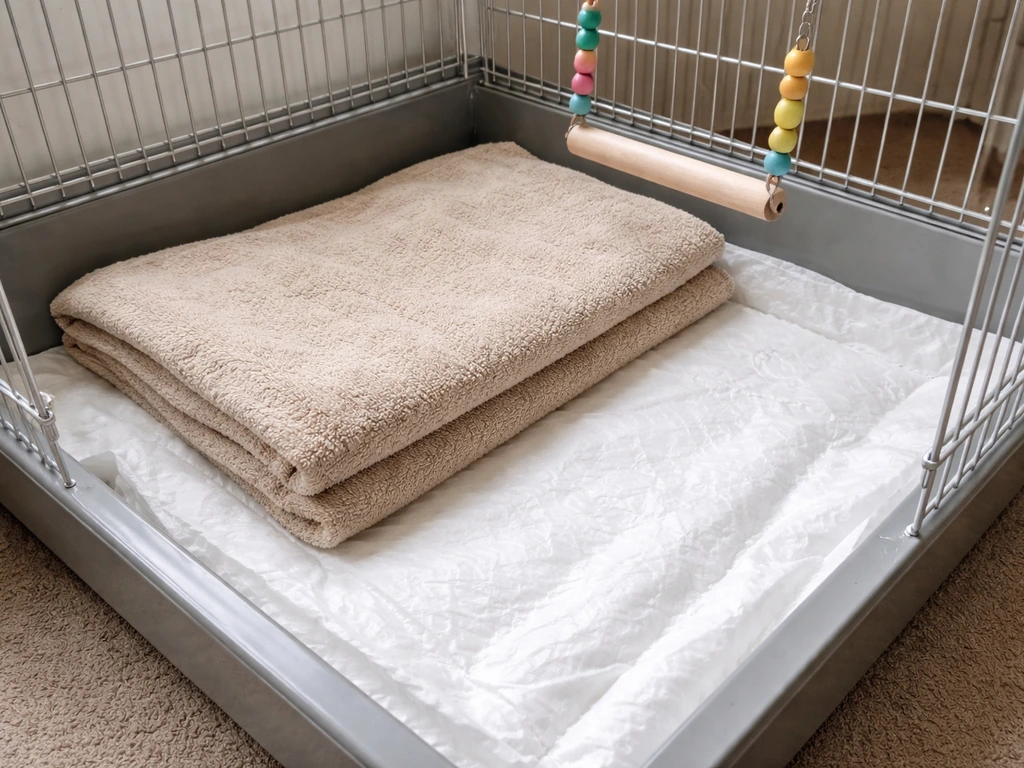
Whether the swinging looks normal or borderline, there are cage changes you can make right now that reduce fall risk and make the whole setup safer. These are worth doing regardless.
- Pad the cage bottom: Add a thick layer of paper, a soft mat, or a folded towel to the cage floor. If a bird does fall, this absorbs impact. This is especially important for baby birds and any bird showing any signs of wobbling.
- Check perch placement: Perches shouldn't be stacked directly above each other. Stagger them at an angle so the bird can negotiate between them safely, and so a falling bird has something to land on rather than dropping straight to the floor.
- Check perch diameter: Your bird's front and back toes shouldn't overlap more than a small amount when gripping. If they do, the perch is too thin. If the bird can't wrap its toes around at all, it's too thick. Match diameter to species: a budgie's perch and an African grey's perch are very different sizes.
- Vary perch texture and material: Use a mix of natural wood branches, rope perches, and one slightly textured perch (but avoid cement or stone as the only option, since abrasive materials can cause foot sores with extended use). Variety keeps foot muscles engaged and prevents pressure sores.
- Inspect all rope toys immediately: Look for loose strands, heavy fraying, or any loops large enough to trap a toe or a neck. A bird can grip and swing safely on a rope toy, but frayed rope is a serious entanglement hazard. Replace any rope toy that is heavily chewed or frayed.
- Don't overcrowd the cage: More perches and toys aren't always better. If the bird can't move freely between perches without hitting an obstacle, you've got too much in there. The RSPCA's guidance is simple: the bird should be able to move around freely.
- Remove smooth dowel-only perches: Plain round wooden dowels are fine as one option among several, but if that's all your bird has, it's not getting enough grip variation and its feet are under constant uniform pressure.
Red flags that mean go to an avian vet now
Birds are wired to hide illness. By the time you can clearly see something is wrong, the problem has often been building for a while. Don't wait and watch for days if you're seeing any of the following. Same-day or next-day avian vet contact is the right call.
- Head tilt where one side of the head is consistently held lower than the other (vestibular dysfunction until proven otherwise)
- Walking or falling in circles, or rolling to one side
- Nystagmus (eyes flickering or moving rapidly side to side)
- One foot noticeably weaker than the other, or complete inability to grip with one or both feet
- Fine tremors in the head or neck
- The bird sitting at the bottom of the cage rather than on a perch
- Open-mouth breathing or labored breathing alongside balance problems
- A drooped wing on one side
- Any history of the bird flying into a wall, window, or mirror in the past 24 to 48 hours
- Sudden severe change in balance in a bird that was fine yesterday
When you call or visit the vet, come prepared. Write down exactly what you observed, when it started, how long each episode lasted, and whether it's constant or comes and goes. Note any recent changes to the bird's diet, any new cage hardware or toys, any possible exposure to fumes (non-stick cookware, candles, cleaning products), and whether the bird has had access to anything metallic it could have chewed.
The vet will likely want to do a physical and neurological exam, and may recommend bloodwork and X-rays to rule out heavy metal toxicity, infection, and inner ear or brain disease. Institutions like Cornell's avian health program can help you locate a qualified avian specialist if your regular vet doesn't see birds.
A quick comparison: normal play vs. a problem worth acting on
| What you're seeing | Most likely explanation | What to do |
|---|---|---|
| Bird swings on toy, re-grips easily, looks engaged | Normal play behavior | Enjoy it. Make sure the toy is in good condition. |
| Bird rocks/hangs upside down, then rights itself | Normal budgie or parrot behavior | No action needed. Ensure perch placement is safe. |
| Bird slips on a perch occasionally, recovers quickly | Perch too smooth or wrong diameter | Add textured perches, check diameter fit |
| Bird tilts head consistently to one side | Possible vestibular dysfunction | Avian vet same day or next day |
| Bird falls and struggles to re-grip, keeps falling same direction | Possible neurological or inner ear issue | Avian vet same day |
| Bird sits on cage floor, puffed up, not perching | Illness (many possible causes) | Avian vet same day |
| Bird grips weakly with one foot | Possible injury or neurological deficit | Avian vet promptly |
| Rope toy fraying, bird tangled or stuck | Toy hazard | Remove toy immediately, replace it |
Long-term enrichment for safe swinging and climbing habits
Once you've confirmed your bird is healthy and your cage setup is solid, the goal is building an environment that actively encourages safe dynamic movement. Birds that can swing, climb, and grip different surfaces throughout the day have better foot health, better muscle tone, and less behavioral stress than birds sitting on a single perch all day.
Enrichment additions worth investing in
- A proper bird swing: Simple, effective, and most birds love them. Make sure it's sized for your bird and hung from a stable point at the top of the cage.
- Rope bungees and climbing nets: Great for larger parrots. Check weekly for fraying and replace at the first sign of heavy wear.
- Orbit ladders and platform perches: These give the bird a stable landing spot between climbing routes and are especially helpful for older birds or any bird recovering from a foot or balance issue.
- Natural wood branch perches: Irregular diameter along the length of the branch means the foot constantly micro-adjusts its grip, which is excellent for foot muscle health. Make sure any branches are from bird-safe wood species and haven't been treated with pesticides.
- Foraging toys at different cage heights: Placing foraging challenges at various levels motivates the bird to move between perches purposefully rather than just sitting in one spot.
Building safe habits through handling and training
Regular out-of-cage time on a stable play stand gives your bird a chance to practice climbing and moving in a supervised environment. If your bird is prone to climbing toward your shoulder, use consistent step-up training to redirect this energy into a controlled behavior. Positive reinforcement (small treat, calm praise) when the bird steps up and stays on your hand builds trust and makes handling sessions safer for both of you. Consistency here matters more than duration: ten minutes of calm, structured interaction daily does more good than an hour of chaotic free-roaming.
Playing bird sounds and other sensory enrichment
Environmental enrichment goes beyond physical toys. Playing appropriate audio for your bird can provide mental stimulation that reduces stress behaviors. Whether you're playing recorded bird sounds or music, the goal is engagement without overstimulation. Keep sessions varied and watch your bird's body language to see what it responds to positively. This pairs well with physical swinging and climbing enrichment as part of a complete daily routine.
Ongoing safety checks to make routine
- Inspect rope toys and swings weekly for fraying, loose strands, or loops that could trap a toe
- Check perch surfaces monthly for smoothing or cracking that reduces grip
- Trim nails regularly (or have your vet do it): overgrown nails catch on rope perches and increase fall risk
- Rotate toys every two to three weeks to keep the environment mentally stimulating
- Watch for any sudden change in how your bird moves or perches, especially after introducing a new toy or hardware
The bottom line is this: a bird that can swing is usually doing exactly what birds are meant to do. If you are also wondering whether you can keep a bird scooter in your house, the same safety checks apply to make sure your bird can move comfortably without falls or injuries a bird that can swing. Your job is to make sure the setup supports it safely, you know what genuinely abnormal looks like, and you don't wait around if something actually looks wrong. With the perch setup corrected, the right enrichment in place, and a clear picture of what red flags to watch for, you're in a much better position than most first-time owners.
FAQ
How can I tell if my bird’s swinging is normal play or a balance problem for sure?
Start by video recording a short clip (30 to 60 seconds) the next time it happens, ideally from the side. If the bird regains balance quickly and chooses when to swing, that points to normal play. If the bird looks startled, takes extra effort to re-grip, or keeps losing position, treat it as a symptom and contact an avian vet.
Is it ever normal for a bird to swing while resting or sleeping?
Yes, swinging can happen during sleep, but you should not see repeated falls, new head tilting, or frequent wobbling while awake. If the behavior is new, increasing, or you notice drooling, lethargy, or feather fluffing, those are not typical “rest mode” signs and warrant a vet check.
Do rope and bungee perches cause the swinging, and when should I remove them?
Rope perches can be fine for healthy, well-coordinated birds, but they should be stable and sized correctly. Avoid frayed rope, loose ends, and perches that sway more than your bird can control, and ensure the bottom of the cage has safe landing options like a properly secured hammock or low, grippy platforms.
What cage changes give the biggest safety improvement if I suspect the swinging is risky?
Check three things: perch surface (it should allow consistent toe purchase), perch diameter and spacing (too narrow or oddly spaced can strain the feet or create hard falls), and whether toys are creating a “dropped path” straight down. If you change only one item, prioritize the perch directly above the area where falls would land.
My bird swings or climbs toward my shoulder during handling, how do I prevent it without stressing it out?
If the bird swings due to climbing toward your shoulder, keep the elbow lower than the hand and also shorten the “temptation zone” by not holding your arm as a tall ladder. You can also use a consistent step-up perch or dowel instead of offering your shoulder directly during handling.
If my bird’s nails are a bit long, could that explain swinging, or should I still worry?
Do not treat wobbling as a “nails issue” only. Nail overgrowth can reduce grip, but involuntary swinging, head tilting, one-sided coordination problems, or repeated stumbling are more concerning for ear, brain, toxin, or seizure issues and should be assessed by an avian veterinarian.
What should I do if I suspect heavy metal exposure is causing the swinging?
Yes. Reduce exposure immediately by removing the potential source (chewed metal, contaminated toys, or suspect materials), improving ventilation, and switching to bird-safe cleaning products. Because heavy metals and some toxins can worsen after exposure, contact an avian vet promptly rather than waiting for symptoms to pass.
Does timing of the episodes (after food, after cleaning, after new toys) help narrow down the cause?
Look at the pattern. If episodes are triggered after eating, during medication, after cleaning fumes, or right after a new toy goes in, write down the exact timing. This helps the vet connect triggers to inner ear irritation, toxicity, seizure activity, or inflammatory causes.
How should I track my bird’s symptoms between vet visits so I can give useful information?
For ongoing monitoring, check behavior at least twice daily for a week and keep notes on footing confidence, head angle, falls, appetite, and droppings consistency. If you can, add weight tracking using a kitchen scale designed for small animals to detect subtle declines that often show up before obvious wobbling.
Should I add more toys right away, or wait until I know the swinging is normal?
You can usually start with enrichment that encourages controlled movement, like safe ladders, low platforms, and supervised play on a stable stand. Avoid introducing new dynamic items (heavy-duty swings, fast-moving toys, or anything that increases height) until you confirm the bird is stable and not having problem episodes.
Next Articles
Can You Keep a Bird Scooter in Your House? Indoor Care Tips
Yes only with the right indoor setup: safe cage placement, clean air, daily care, and enrichment for a pet bird.
Is It Good to Play Bird Sounds for Your Bird?
When and how to play bird sounds for pet birds, with pros, cons, safer settings, and signs to stop if stressed.
Does Playing Bird Sounds Attract Birds? A Practical Guide
When bird song playback attracts birds and when it backfires, with how to match calls, place speakers, and avoid habitua