The best pet bird for a beginner is a budgerigar (budgie) or a cockatiel. If you want a tiny, low-cost, relatively quiet bird that is still social and trainable, get a budgie. If you want something a bit larger, more interactive, and capable of mimicking speech and whistles, get a cockatiel. Those two species sit at the top of almost every avian vet's beginner list for good reasons: manageable size, forgiving temperament, moderate noise, and care requirements you can realistically meet without years of experience. If you want the best first time bird to buy, start by choosing between a budgie and a cockatiel based on how much handling time and noise you can realistically handle. Everything else in this guide helps you confirm that choice for your specific situation, set your bird up correctly from day one, and avoid the mistakes that send new owners to the emergency vet in month two. A pet bird for beginners is usually one that tolerates early mistakes and still stays manageable with consistent daily interaction.
Best Bird Pet for Beginners: Easiest Choices and Setup
Quick answer: top beginner pet bird picks
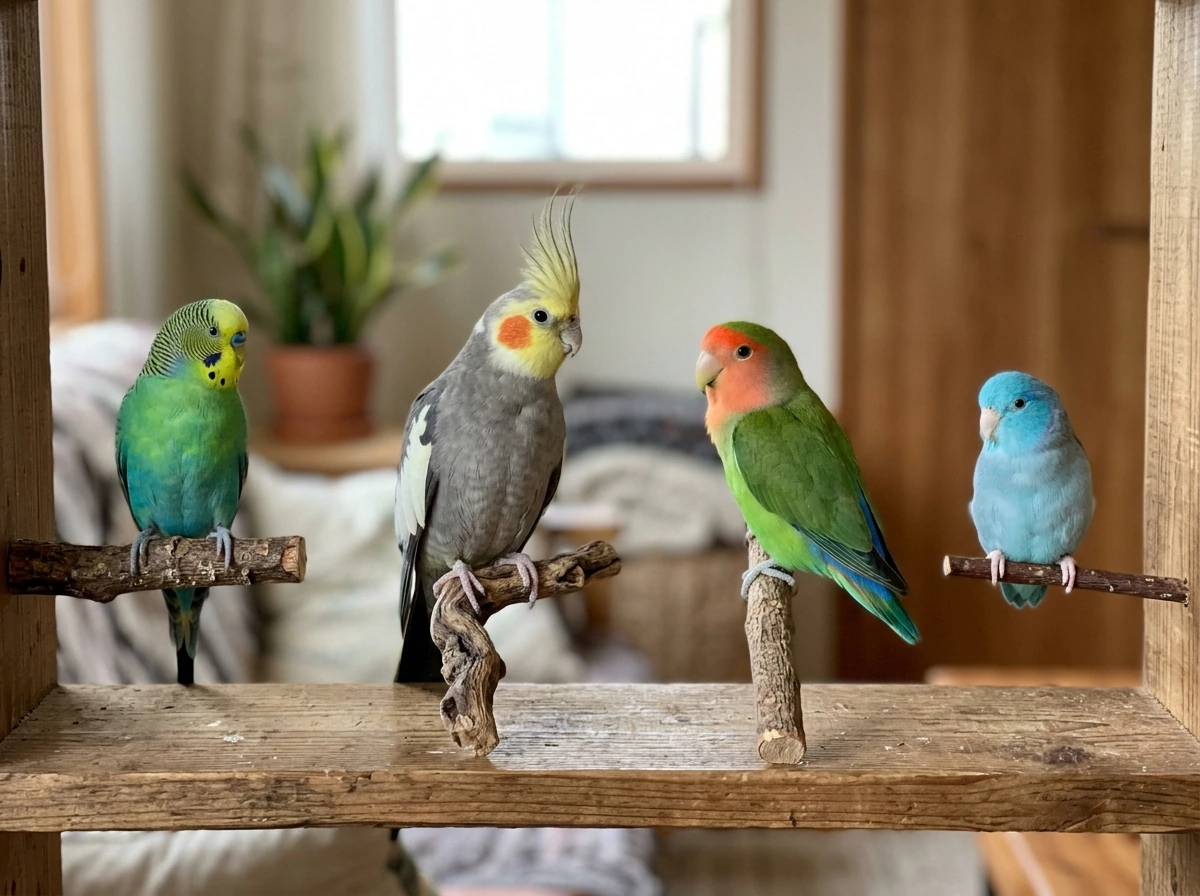
Here are the species I'd recommend to a first-time bird owner, ranked roughly from most to least forgiving. None of them are truly "low maintenance" (more on that myth later), but they are all genuinely manageable for someone starting fresh.
| Species | Size | Noise Level | Social Needs | Talking Ability | Lifespan (Captive) |
|---|---|---|---|---|---|
| Budgerigar (Budgie) | Small (~30g) | Low–Moderate | Moderate (pair or daily interaction) | Good for size | 7–15 years |
| Cockatiel | Medium (~90g) | Moderate | Moderate (bonds well singly) | Whistles, some words | 10–14 years |
| Canary | Small (~20g) | Moderate (males sing) | Low (hands-off) | Song only | 10–15 years |
| Lovebird | Small (~55g) | Moderate–High | High (needs pair or heavy interaction) | Limited | 10–15 years |
| Parrotlet | Small (~30g) | Low–Moderate | High (feisty if under-socialized) | Some words | 15–20 years |
Canaries are a great pick if you want a beautiful songbird you mostly watch and enjoy rather than handle. They do best on a pelleted diet formulated for canaries, with minimal seed and some fresh greens, and they don't require daily hands-on interaction, which suits people with limited time. Lovebirds and parrotlets are both charming but demand more from you socially and, in the case of parrotlets, can develop a sharp personality if under-handled. I'd save those two for after you have at least one bird under your belt.
Best birds by skill level and personality
What makes a bird actually beginner-friendly
A beginner-friendly bird isn't just "small and cheap." It's one that tolerates your inevitable early mistakes, doesn't have extreme enrichment demands you can't meet yet, and gives you clear feedback through normal behavior rather than sudden stress collapses. The traits that matter most are: forgiving temperament (recovers from a missed handling day without becoming aggressive), moderate social needs (bonds with you without requiring eight hours of attention), manageable noise (won't get you evicted or drive you crazy), diet simplicity (doesn't need elaborate fresh-food preparation multiple times a day to stay healthy), and a care learning curve that rewards rather than punishes beginner-level effort.
Budgies: the universal starting point
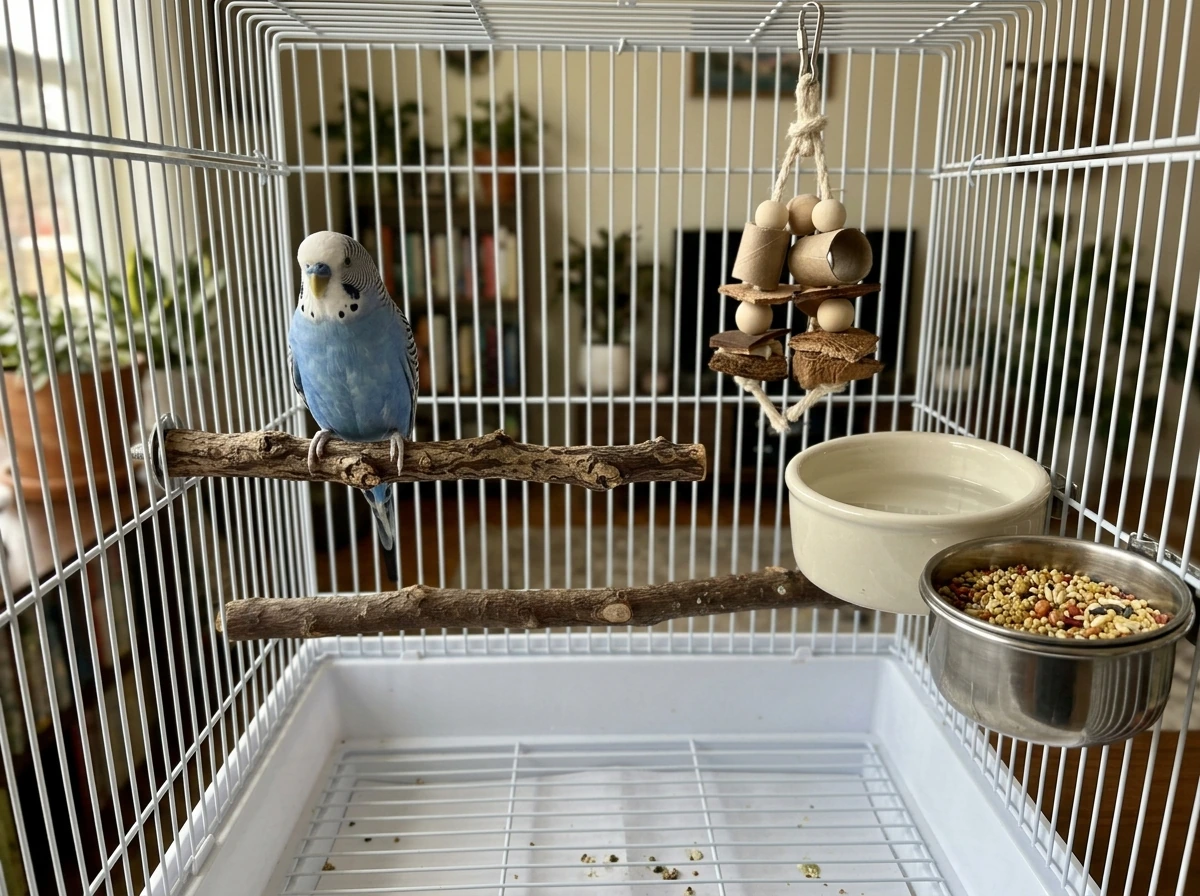
Budgies hit every beginner criterion. They're small enough that a proper cage fits comfortably in an apartment, quiet enough that you can have one in a shared living space, and social enough to be genuinely engaging without being demanding. A single budgie needs daily interaction to stay tame and happy, but you can keep a pair if your schedule is unpredictable, and they'll keep each other company. The tradeoff is that a bonded pair may be less interested in bonding with you, so if you want a hand-tame bird that steps up reliably, start with one bird and invest the daily time. Budgies can live 7 to 15 years in captivity, which is longer than most people expect from a "small cheap bird," so go in knowing this is a real commitment.
Cockatiels: the step-up option
Cockatiels are genuinely affectionate and tend to bond strongly with their primary person. Unlike lovebirds, a cockatiel kept singly can do well as long as you provide consistent daily interaction. They can learn to whistle tunes, mimic household sounds, and even pick up some words, which makes them entertaining without requiring the intense training investment of larger parrots. One thing to know: cockatiels are prone to "night frights," where they thrash in their cage if startled in the dark. A dim nightlight near their cage and a quiet sleeping location helps. Captive lifespan runs roughly 10 to 14 years.
Lovebirds: social but demanding
Lovebirds have an intense, monogamous-style bond. If kept alone, they need extensive human interaction every single day to stay mentally healthy and behaviorally stable. If kept in a pair, they bond to each other and may become less interested in you. That's not a dealbreaker, but it's a dynamic you should understand before you buy one. I'd recommend lovebirds to beginners who are home most of the day and genuinely want to be a bird's primary social companion, not as a "starter bird" you can leave to its own devices.
Easiest care essentials: housing, diet, daily routine
Cage setup basics
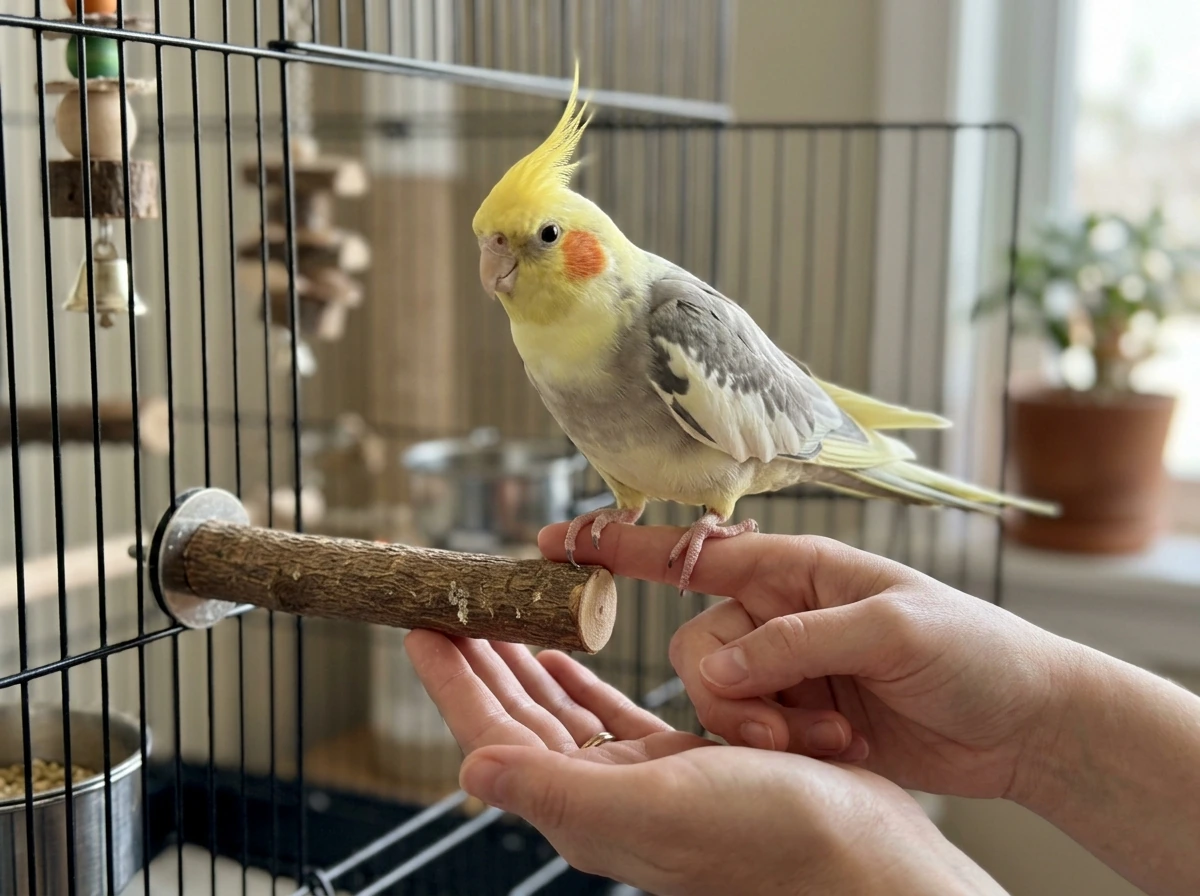
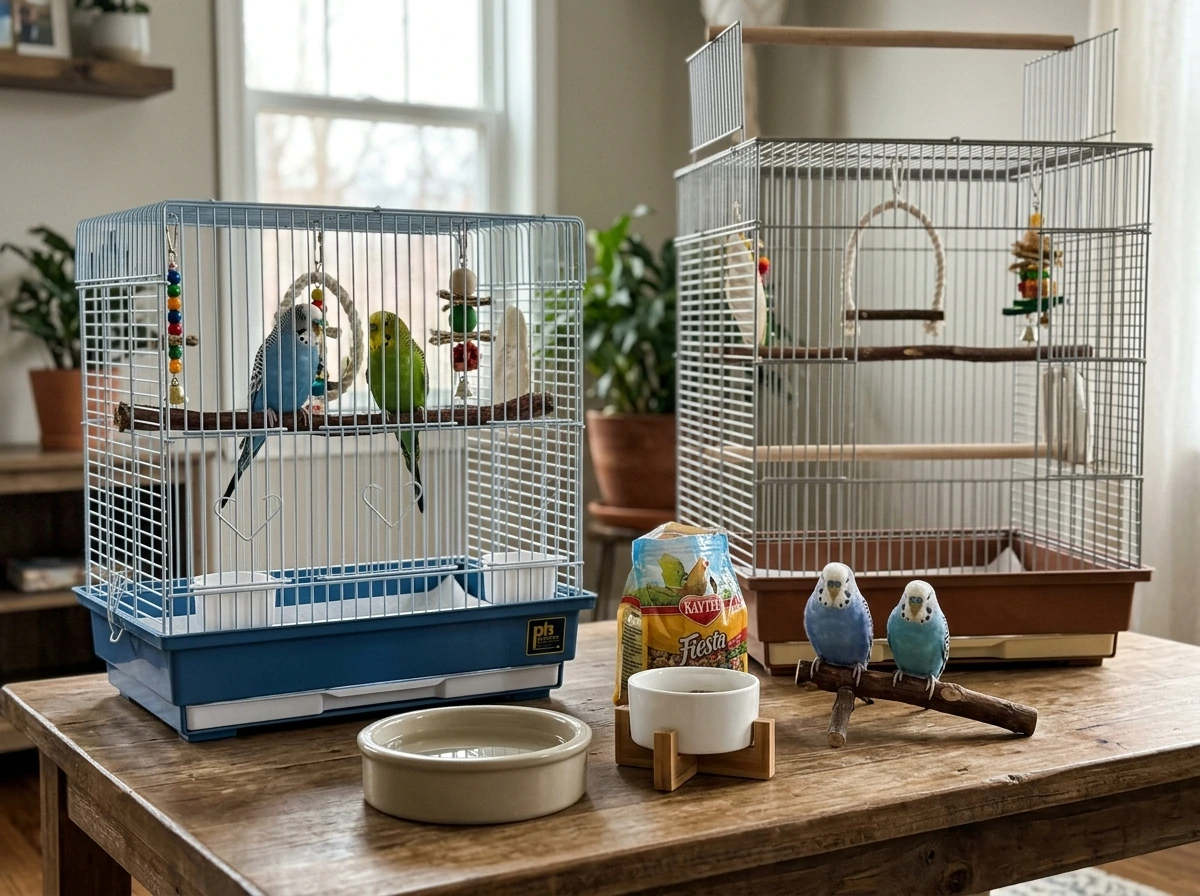
The minimum cage size for budgies, cockatiels, lovebirds, and parrotlets is 20 x 20 x 30 inches with 0.5-inch bar spacing, per Merck Veterinary Manual guidance. That is a minimum, not a target. Bigger is always better. Bar spacing matters for safety: bars too far apart let a small bird get its head stuck, and bars too close together are a foot-and-wing trap. Don't buy a decorative cage that looks pretty but has the wrong geometry. The cage should be wide enough for your bird to extend both wings fully without touching the sides.
Place the cage in a room where your family spends time (birds are social and need to feel part of the household), but never in the kitchen. The kitchen is the most dangerous room in the house for a bird. Cooking fumes, non-stick coatings on pans (Teflon and similar PTFE coatings), and steam can cause serious illness and death. This isn't a minor precaution. PTFE fumes are considered a major toxicity hazard by avian veterinarians and can kill a bird in minutes. Keep the cage away from drafts, direct air conditioning vents, and windows that get intense afternoon sun.
Inside the cage, provide at least three perches of varying diameter and texture so your bird's feet get exercise and don't develop pressure sores. Add foraging toys and rotate them weekly. A bored bird in a barren cage will develop stereotypical behaviors including feather plucking, which is hard to reverse once it starts.
What to feed your bird
The biggest diet mistake beginners make is feeding a mostly seed diet. Studies show that 63% of bird owners feed primarily seed mixes, which leads to obesity and nutritional deficiencies. Seeds are to birds what candy is to kids: they'll choose them enthusiastically, but it's not a complete diet. The current recommendation from board-certified avian veterinarians is that a formulated pellet diet should make up roughly 50 to 70% of a parrot's total diet. The rest comes from fresh vegetables, some fruit, and limited other whole foods.
If you're getting a bird that was raised on seeds (common with pet store birds), the switch to pellets needs to be gradual and methodical. Don't just swap the bowl one day. A conversion approach that tapers seed while increasing pellets over several weeks, while monitoring weight and droppings, is the right way to do it. Droppings may look different during the transition (softer, more brown-colored), which is normal. What's not normal is weight loss or refusal to eat anything. If that happens, pause and talk to an avian vet.
- Never feed avocado, chocolate, onion, garlic, rhubarb, or anything containing caffeine or alcohol. These are toxic to birds.
- Fresh greens like leafy vegetables are a great supplement. Offer them in small amounts and remove uneaten portions within a few hours.
- Fresh water daily, in a clean bowl or bottle. Don't let water sit for days.
- Formulated pellets give your bird consistent nutrition because the diet is homogenous; they can't selectively eat only the parts they like the way they can with a seed mix.
Daily routine expectations
Birds need 10 to 12 hours of sleep per night in a quiet, dark environment. Out-of-cage time should be at least a couple of hours daily, ideally more. During out-of-cage time, interact: talk, train, let your bird explore a bird-proofed space. After the first few weeks of settling in, you can start hand-taming and step-up training with budgies and cockatiels. Keep sessions short (5 to 10 minutes) and positive. Birds don't respond well to force, and a scared bird that's been grabbed repeatedly takes much longer to tame.
Common beginner mistakes and how to avoid them
I want to be direct here because these mistakes genuinely harm birds, and most of them are completely preventable.
- Treating the bird as low-maintenance. Birds need daily interaction, fresh food, clean water, and out-of-cage time. A bird left alone in a small cage with a seed bowl is not a pet being cared for, it's a bird being warehoused. That leads to feather destruction, screaming, and health problems.
- Feeding mostly seeds. Covered above, but it's the number one dietary mistake. Seed-heavy diets cause nutritional deficiencies and obesity. Transition to pellets as the base of the diet.
- Buying a cage that's too small. The minimum dimensions exist for a reason. A cage your bird can barely turn around in will cause physical and psychological stress.
- Using non-stick cookware near the bird. PTFE coatings on Teflon and similar pans release fumes when overheated that can kill a bird very quickly. Keep your bird permanently out of the kitchen, and if you cook with non-stick pans anywhere in a small home, upgrade to stainless steel or cast iron.
- Using sprays and aerosols near the bird. Hairspray, air fresheners, cleaning sprays, scented candles, and cigarette smoke are all respiratory hazards. Birds have highly sensitive respiratory systems and are harmed by fume exposures that humans barely notice.
- Skipping the avian vet visit. A bird that looks healthy can be hiding illness (birds mask symptoms until they're quite sick). Get a baseline wellness exam from an avian vet within the first few weeks. Find one before you bring the bird home.
- Expecting instant tameness. A newly purchased bird needs time to adjust. Pushing handling too soon creates a fearful bird. Let the bird settle for a week or two before actively training.
- Poor cage placement. Near windows that get direct sun, next to drafty vents, or in an isolated room are all bad choices. The bird should be where family life happens but not in an environment with temperature swings or fume risks.
Buying/choosing your bird: age, source, and health checks
Where to get your bird
Your best options are a reputable avian breeder or a bird rescue. A reputable breeder can tell you exactly how old the bird is, what it's been eating, and whether it's been handled. A rescue bird gives you the option to adopt an adult bird that may already be partially tamed, and you're giving a home to a bird that genuinely needs one. Pet stores are a common starting point, but ask questions: what is the bird eating, how old is it, has it been handled. Avoid birds that are obviously stressed, huddled at the bottom of the cage, or sold from visibly dirty or overcrowded conditions.
What age bird to choose
For budgies and cockatiels, young birds (weaned, around 8 to 16 weeks old) that have already been hand-raised or at least handled regularly are the easiest to tame. They adapt to new environments faster and form bonds more readily. That said, adult birds can absolutely bond with a new owner if you're patient and consistent. Don't rule out a rescue adult.
Health checks before you commit
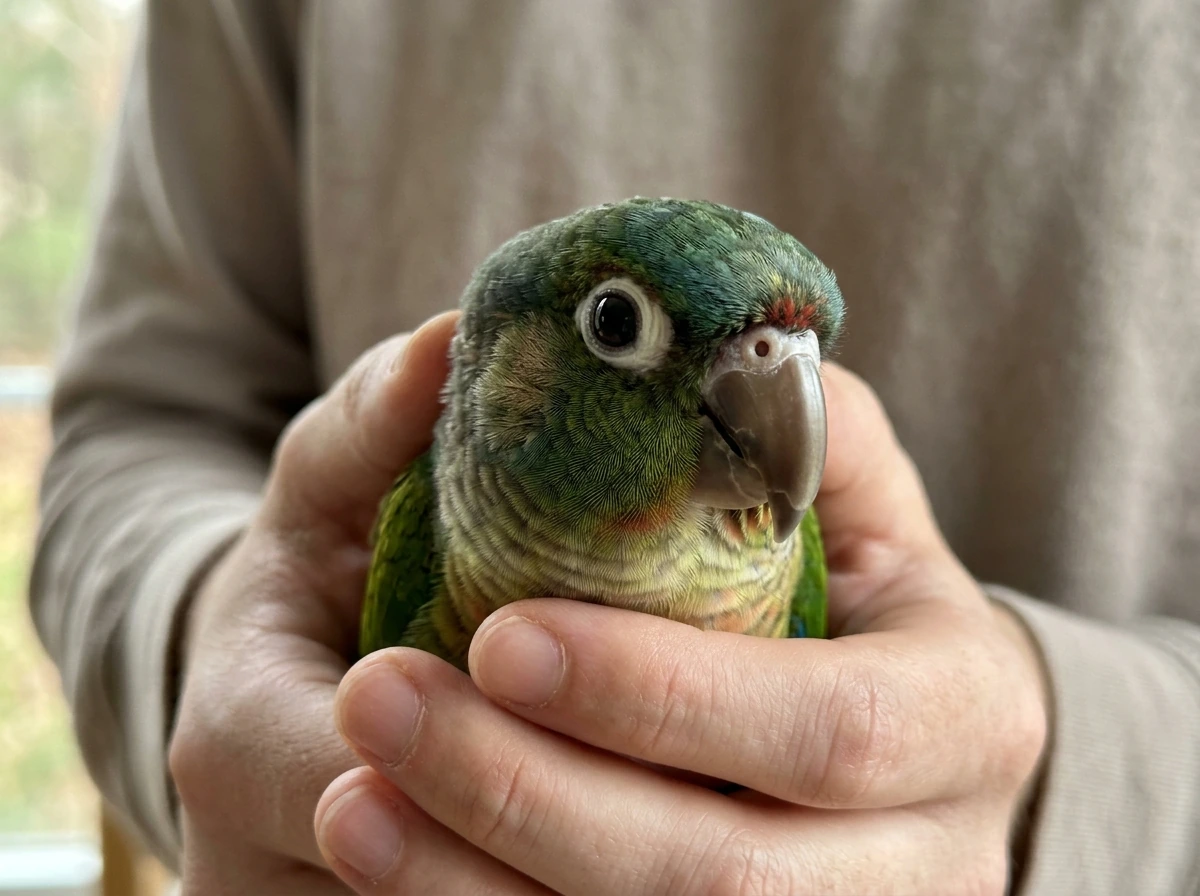
Before you bring a bird home, look for these signs of a healthy bird: bright, alert eyes with no discharge, clean nostrils, smooth feathers that lie flat (not ruffled unless the bird is resting), clean vent area with no pasted droppings, active movement and curiosity, and normal droppings (green/white, not red, tarry black, or pale yellow). Signs of illness include labored or open-mouth breathing, lethargy, tremors, poor plumage, and conjunctivitis. If a bird at a breeder or store shows any of those, walk away.
When you bring a new bird home, keep it separated from any existing birds for at least 30 days. This quarantine period protects your existing birds from potential disease the new bird might be carrying asymptomatically. During that time, get the new bird checked by an avian vet with fecal sampling and a physical exam. Only introduce the birds to shared space after a clean bill of health.
Cost, lifespan, space, noise, and time: setting real expectations
Upfront and ongoing costs
People get into birds thinking they're a cheap pet. They're not. A budgie or cockatiel itself might cost between $20 and $200 depending on the source, color, and whether it's hand-raised. The cage, perches, toys, and feeding setup will run $100 to $400 or more for a proper setup. Then there's the avian vet. A routine wellness exam can run anywhere from $50 to $150 or more depending on your location and what tests are included. Sick visits cost more. Birds hide illness until they're very sick, which means when they show symptoms they often need urgent care that costs hundreds of dollars. Budget for this. An annual exam is the baseline, not a luxury.
Lifespan
Budgies live roughly 7 to 15 years in captivity. Cockatiels live roughly 10 to 14 years. Canaries can live 10 to 15 years. Parrotlets, which seem tiny, can live 15 to 20 years. These are not short-term commitments. A cockatiel you get today may still be with you in your mid-30s, or your 50s. Think about that seriously before you buy.
Space requirements
A proper cage for a single budgie or cockatiel takes up meaningful floor or shelf space, roughly the footprint of a small end table at minimum. Add to that a dedicated out-of-cage play space where the bird can safely explore, and you need a bird-proofed area clear of ceiling fans, open windows, other pets, and toxic plants. An apartment can absolutely work, but you need to think through the layout.
Noise
Budgies produce a cheerful chatter that most people find tolerable, even pleasant. Cockatiels whistle and can be loud in bursts, especially when alarmed or calling for attention. Male canaries sing, which is the whole point of keeping one and is generally beautiful rather than disruptive. Lovebirds can be shrill. None of the beginner-friendly species are as loud as larger parrots like amazons or macaws, but "quiet bird" is still relative. If you're in a thin-walled apartment with noise restrictions, talk to neighbors before you commit.
Time commitment
Plan for 1 to 2 hours of active time daily for cage cleaning, feeding, fresh water, and out-of-cage interaction. That's on a normal day. When you add in vet visits, behavioral training during taming phases, or handling illness, it's more. Birds are not a set-it-and-forget-it pet. If your life regularly keeps you away from home for 12-plus hours at a stretch, either get a pair (so they have each other) or reconsider the timing. The worst outcome for a bird is chronic neglect masked by a full seed bowl.
So which bird should you actually get?
Here's the short version. If you meant falconry instead of pet bird ownership, you can still use the same beginner-friendly approach to choose the best bird for beginner falconry based on your experience and time. Get a budgie if you're new to birds, have limited space, want an affordable starting point, and are willing to put in daily handling time to keep it tame (Get a budgie if you're new to birds, have limited space, want an affordable starting point, and are willing to put in daily handling time to keep it tame (the best large bird for beginners)).). Get a cockatiel if you want a more interactive companion, have a bit more space, and are comfortable with moderate whistling noise. best large bird for beginners Get a canary if you want a mostly hands-off bird that you enjoy watching and listening to rather than handling. Hold off on lovebirds and parrotlets until you've had one bird for a year and understand what you're signing up for.
Before you bring any bird home, find an avian vet in your area, buy the right-sized cage, remove non-stick cookware from your kitchen or commit to keeping the bird permanently out of that room, and read up on the diet transition process. Those four steps alone will put you ahead of most new bird owners. For more on choosing between specific options, For more on choosing between specific options, the questions of what makes the easiest bird to care for and how to pick a bird that fits your lifestyle are worth exploring in depth before you finalize your decision.
FAQ
Is a budgie the best bird pet for beginners if I only want to handle it a little?
If handling is minimal, a canary is usually the better fit, because budgies generally need daily social time to stay tame. If you pick a budgie anyway, plan on short, consistent interaction sessions even if you do not do long training.
Can I get a single budgie or cockatiel and still keep it happy?
Yes, but the success depends on your schedule. A single budgie needs daily interaction to remain tame, while a single cockatiel can do well with consistent, predictable contact. If you are away most of the day, a pair may reduce loneliness but can also lower how much the bird bonds to you.
What is the biggest beginner mistake that leads to illness or emergency vet visits?
The most common preventable cause is unsafe kitchen exposure, especially non-stick PTFE fumes from overheated pans. Even occasional use can be dangerous, so remove the cookware or commit to never letting the bird enter that space.
How do I know if a budgie or cockatiel is “too young” or “too old” to buy as a beginner?
For easiest taming, aim for weaned birds that have already been handled regularly (often roughly 8 to 16 weeks). Older birds are not automatically a bad choice, but expect a longer trust-building period and ask the breeder or rescue about prior behavior with people.
Do I have to buy a pellet diet right away, or can I start with seed and switch later?
Starting with mostly seed usually creates a more difficult switch later and increases the risk of deficiency-related problems. If the bird is already on seeds, convert gradually to pellets while monitoring weight and droppings, and pause if the bird refuses to eat or shows weight loss.
How long should it take for a new bird to settle in before I start step-up training?
Give the bird time to decompress first, then begin with short, positive sessions after the initial settling period (often a couple of weeks). Forcing contact early can backfire, so focus on trust building, relaxed proximity, and calm handling.
What should I do if my cockatiel has night frights?
Keep the sleeping area stable, provide a dim nightlight, and reduce startling noises or sudden light changes. Also confirm the cage is placed away from drafts and windows with intense late-day sun, since irregular lighting can trigger panicked thrashing.
Is it safe to place a bird cage near a window or in direct sun?
Do not put the cage in direct afternoon sun or in spots with strong temperature swings, because birds overheat and can get stressed quickly. Choose a well-ventilated area that is draft-free, and keep windows closed during extreme weather or traffic noise.
How much out-of-cage time is enough for a beginner bird?
A couple of hours daily is a practical baseline for budgies and cockatiels, with more being better once your bird is steady in a bird-proofed space. If you cannot provide this reliably, consider a second bird or rethink the timing, because neglect often shows up as behavior problems.
My apartment has noise restrictions. Are budgies or cockatiels likely to be “too loud”?
Neither is as loud as large parrots, but “quiet” is relative. Budgies are typically cheerful chatter, while cockatiels can whistle and get loud in bursts when alarmed. If neighbors are strict, ask others in your building how complaints are handled and observe recordings or visit a breeder or rescue to gauge real-world noise.
What cage size guidance should I follow, and what is the common bar-spacing error?
Minimum dimensions are not targets, bigger is always better. The bar spacing is critical for safety, bars that are too wide can trap heads, and those too close together create a risk of foot-and-wing injuries, so verify bar spacing before buying any “pretty” cage.
Do I need a vet check even if the bird looks healthy in the store?
Yes. Birds can hide illness, so do a new-bird check with an avian vet and fecal sampling during quarantine. Do not rely only on how alert the bird seems or on normal droppings at the store.
How should quarantine work if I have other birds at home?
Keep the newcomer separated for at least 30 days and schedule a vet exam during that time. Only introduce shared air and shared space after the vet gives a clean bill of health, because birds can carry diseases without obvious symptoms.
Which beginner bird is easiest to bond with, budgie or cockatiel?
Both can bond strongly with the right routine, but cockatiels often show clear affection with consistent daily interaction. Budgies can bond deeply too, but a bonded pair may focus more on each other, so if you want reliable hand-tameness, start with one and invest daily time.
If I want the best bird pet for beginners, should I choose a rescue adult or a young bird?
For faster taming, a young weaned, already-handled bird is usually easiest. However, rescue adults can be a great choice if you are patient and can match their temperament, and rescues may provide history about handling and diet that pet stores often cannot.
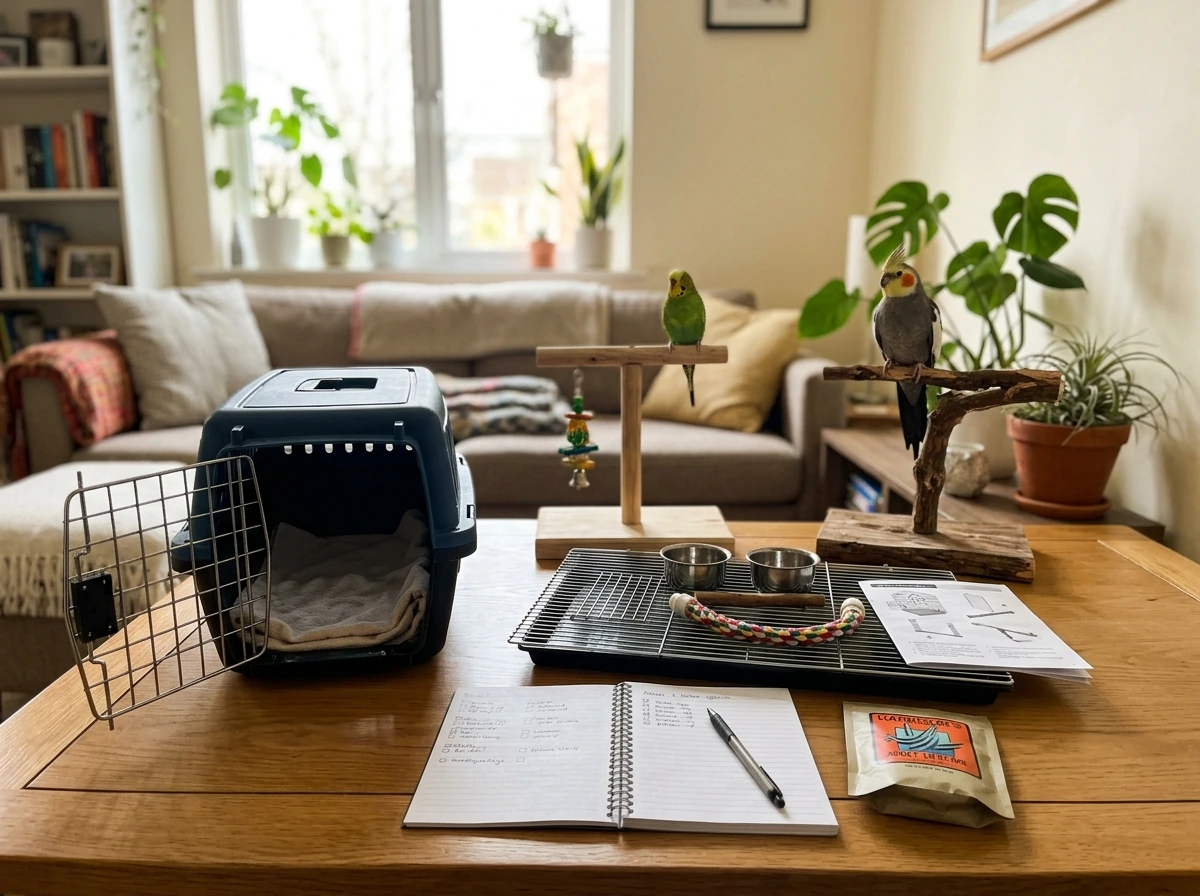
Pick the best first bird safely: beginner-friendly species, purchase checks, setup, care routine, and vet health tips.
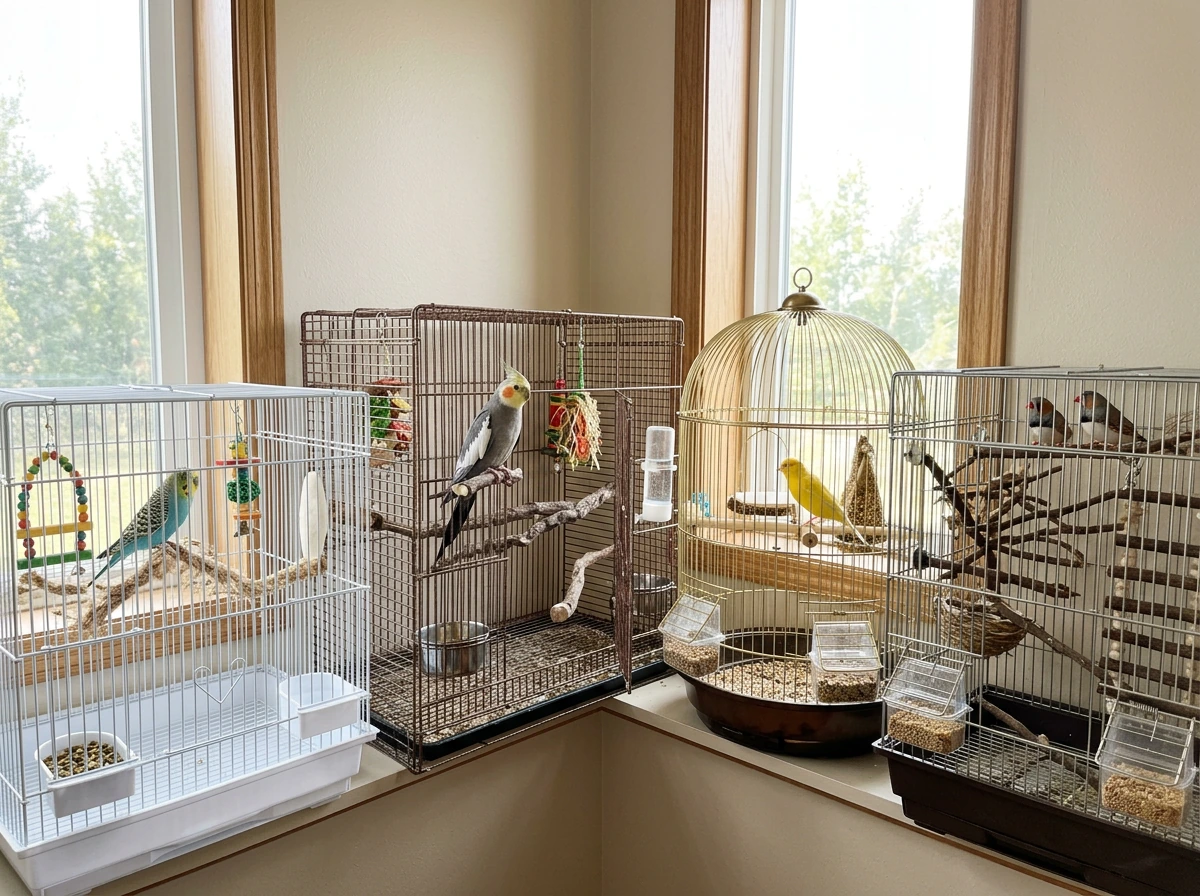
Best beginner pet birds ranked by easy care, setup, routine, temperament, mess, noise, and common mistakes to avoid.
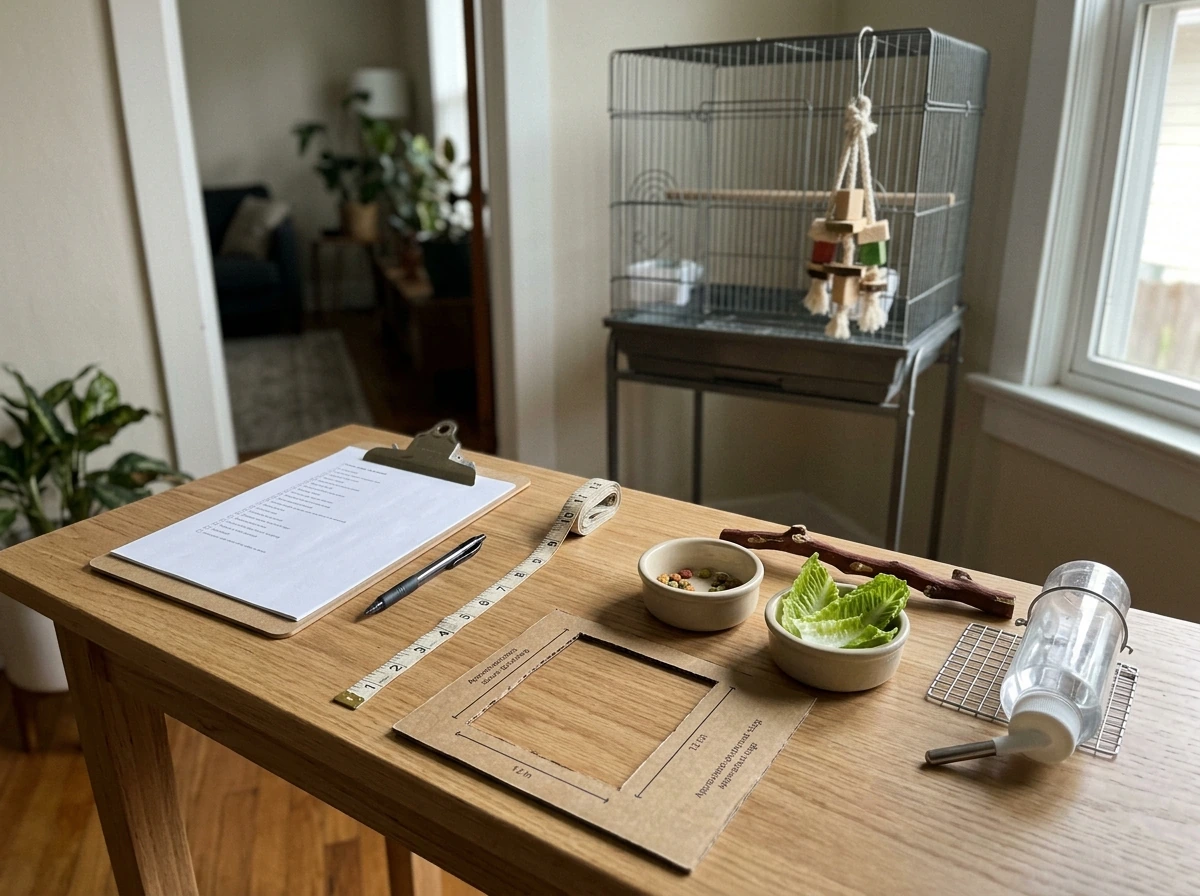
Step-by-step checklist to choose a bird: pick the right species for your lifestyle, budget, space, and health.