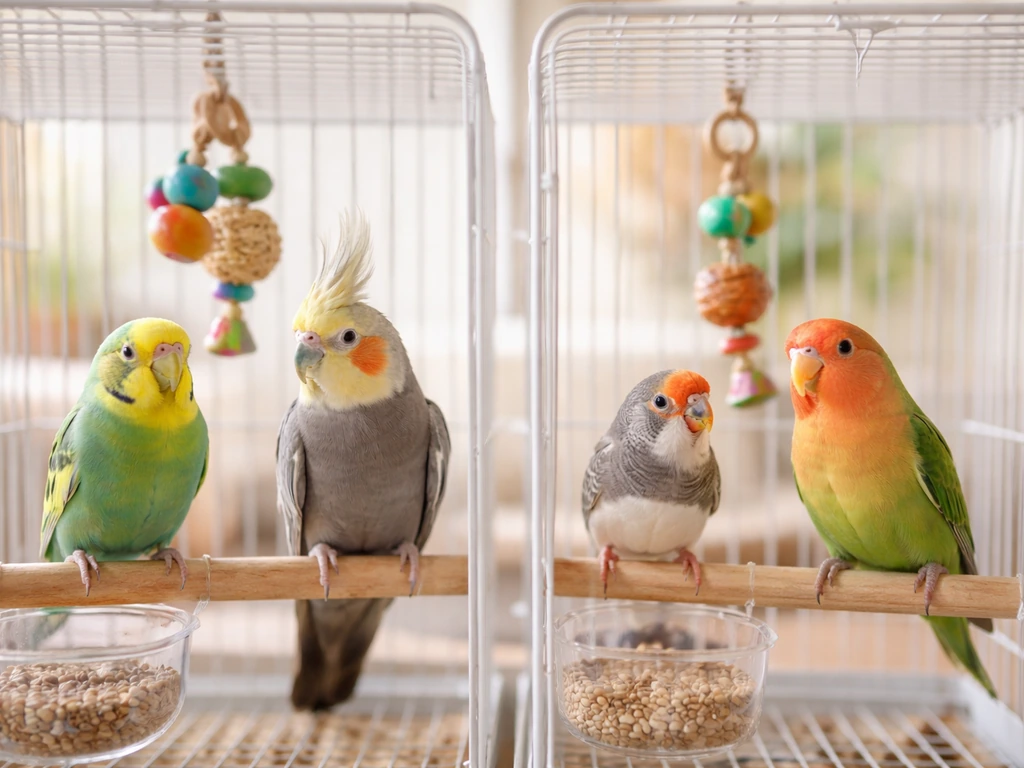
The best house bird pets for most beginners are budgies (budgerigars) and cockatiels. They're manageable in size, relatively quiet compared to larger parrots, genuinely affectionate when socialized well, and they fit comfortably in apartments and houses alike. That said, 'best' is personal. A retired person with hours to spend daily has different needs than a busy professional who wants a bird that's content with less hands-on time.
Best House Bird Pets: Beginner Picks, Setup, Care Checklist
Marcus Chen
19 May 2026
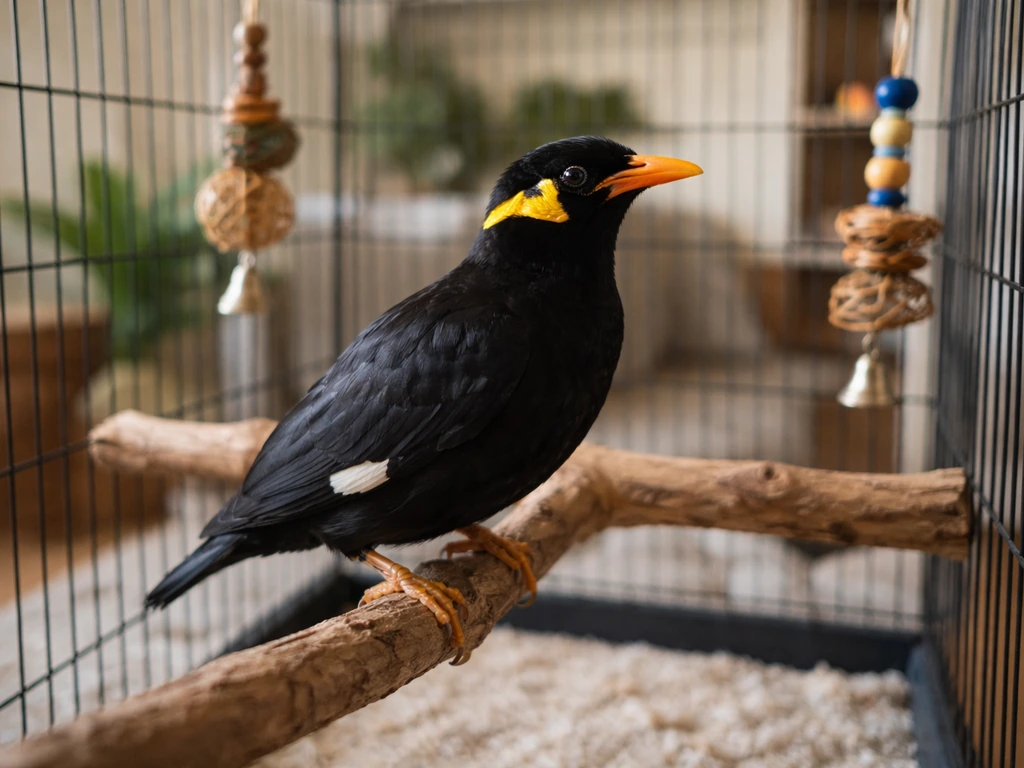
This guide will help you figure out which bird actually fits your life, what to buy before bringing one home, and what your daily routine will realistically look like. Myna birds can make interesting pets, but you should research their noise level, diet, and training needs first before deciding if one is a good home fit is myna bird good for home.
What 'best' actually means for your home and lifestyle
Before you fall in love with a species online, be honest about a few things. How much noise can you tolerate? How much mess? How many hours per day can you actually commit to interacting with a bird? These aren't small questions. A cockatoo that screams for two hours when it's bored will absolutely destroy your sanity and your relationship with your neighbors. On the other hand, a pair of budgies quietly chattering to each other can be background noise you barely notice.
There's also the legal side to consider. Many local ordinances restrict certain birds by noise level, species, or public health rules, so it's worth a quick check with your city or rental agreement before you commit. The 'best' bird is the one that's legal where you live, suits your noise tolerance, fits your budget, and gets the daily care and social time it needs to stay healthy and happy.
Here's a quick framework for thinking about fit. Noise tolerance and time are your two biggest filters. If you have low noise tolerance or live in a thin-walled apartment, start small. If you want the best small bird pets, focus on the species that match your noise tolerance and daily time commitment start small. If you have limited time for daily interaction, consider getting two birds of the same species so they keep each other company. Budget matters too: food and a cage are just the start. Annual avian vet visits are part of responsible ownership, and those add up. Go in with your eyes open.
The top beginner-friendly bird species
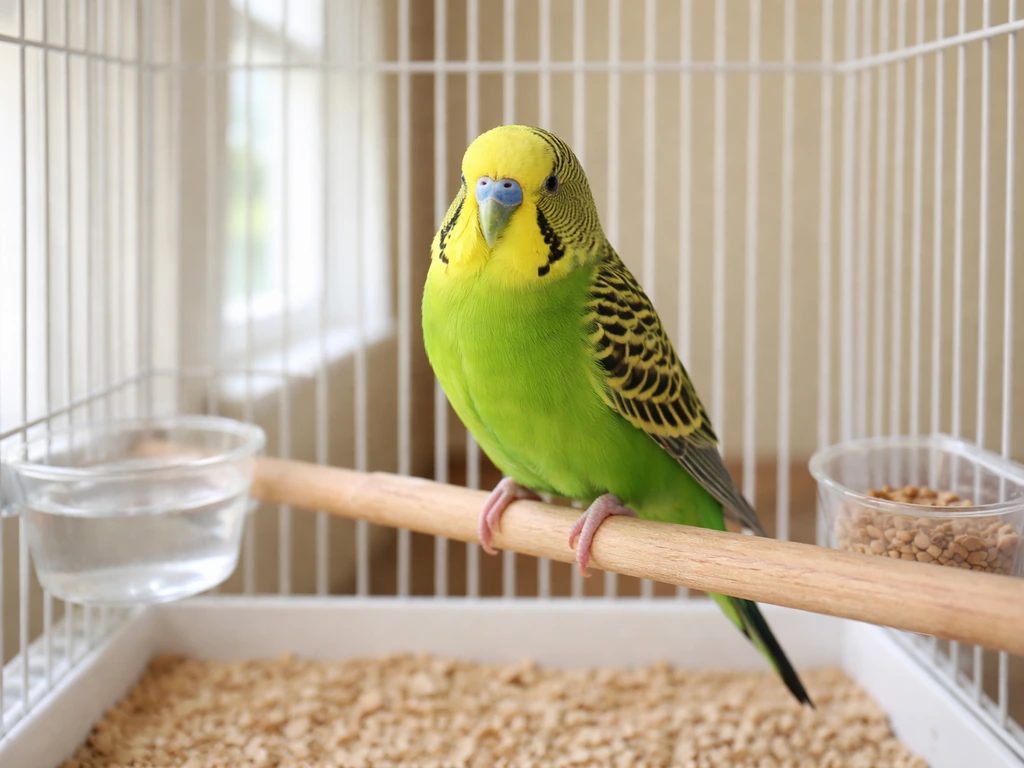
These are the species I'd actually recommend to someone setting up their first bird home today. I've kept this list short on purpose. There are dozens of species out there, but these five have the best track record for beginner success, indoor living, and genuine pet-quality bonds.
Budgerigar (budgie)
Budgies are the most popular pet bird in the world for a reason. They're small, colorful, surprisingly smart, and some individuals even learn to mimic words. They live roughly 10 to 12 years with proper care, though 6 to 12 years is the typical range depending on diet and genetics. They're not silent but their chatter is soft and musical rather than piercing.
Mess is moderate: seed hulls and feather dust are the main culprits. The honest downside is that they need social interaction daily and can become withdrawn or develop stress behaviors if left alone too long. A single budgie that gets handled regularly can form a strong bond with you. A pair will entertain themselves more but may be slightly less focused on you.
Cockatiel
Cockatiels are the sweet spot between small birds and larger parrots. They're gentle, they whistle beautifully, and they genuinely seem to enjoy human company. With good care they can live up to 25 years, which is a serious long-term commitment to factor in. They produce a fine white powder dust from their feathers (called dander), which is something to think about if anyone in your home has asthma or bird allergies. Their noise level is moderate: males especially love to whistle and will do it frequently, but it's melodic rather than harsh. They're forgiving of beginner mistakes and tend not to bite hard. For most first-time owners, a cockatiel is an excellent choice.
Lovebird
Lovebirds are small, vivid, and full of personality. They're bold for their size and can be very affectionate with their person when hand-raised and socialized early. The challenge is that they can also be feisty, territorial, and nippy if not handled consistently. They're not the best choice if you want a bird you can occasionally neglect and pick back up. They need regular, daily interaction to stay tame. Noise-wise, they're louder than budgies but not as loud as medium or large parrots. Cage requirements are similar to budgies: a minimum of 20x20x30 inches with half-inch bar spacing.
Parrotlet
Parrotlets are the smallest of the parrot family and pack an enormous personality into a tiny body. They're quiet enough for apartment living, curious, and bond tightly with their owner. The flip side is they can be one-person birds who are suspicious of strangers, and they need daily handling to stay tame. They're a great fit for someone who wants a hands-on bird and can commit to consistent daily time. Their minimum cage size is also in the 20x20x30 inch range, same as budgies and lovebirds.
Canary
If you want a bird that's beautiful to watch and listen to but don't have time for intensive handling, a canary is your answer. Male canaries sing, and that song is genuinely pleasant to live with. They don't require the daily out-of-cage social time that parrots do and are content in a well-appointed cage. The trade-off is they're not cuddly. Most canaries don't want to be held. They're birds to observe and enjoy from a slight distance, not to perch on your shoulder. For a low-maintenance, beautiful house bird, they're hard to beat.
| Species | Noise Level | Mess Level | Lifespan | Social Needs | Best For |
|---|---|---|---|---|---|
| Budgie | Low-moderate | Moderate (seed hulls, dust) | 10–12 years | High (daily handling) | Most beginners |
| Cockatiel | Moderate (whistles) | High (feather dust) | Up to 25 years | High (daily handling) | Those wanting a long-term bond |
| Lovebird | Moderate-high | Moderate | 10–15 years | Very high (daily taming) | Experienced beginners with time |
| Parrotlet | Low-moderate | Low-moderate | 15–20 years | Very high (daily handling) | Apartment owners wanting a parrot |
| Canary | Low-moderate (singing) | Low | 10–15 years | Low (observation bird) | Busy owners, low-handling preference |
Setting up the cage: size, placement, and safety
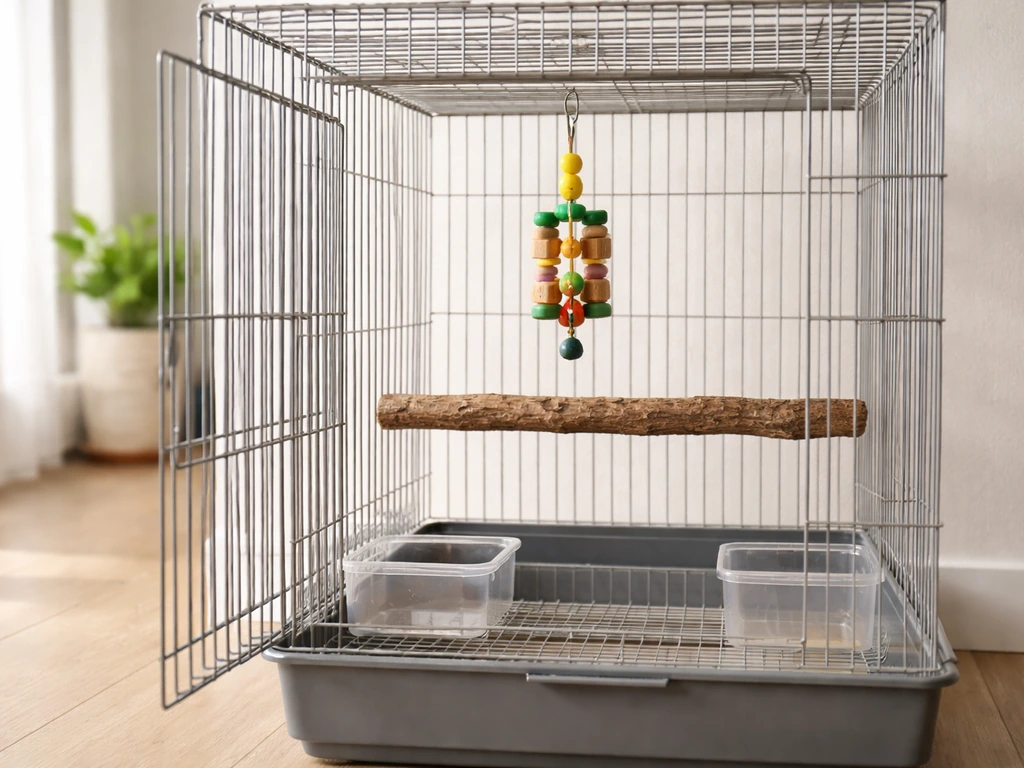
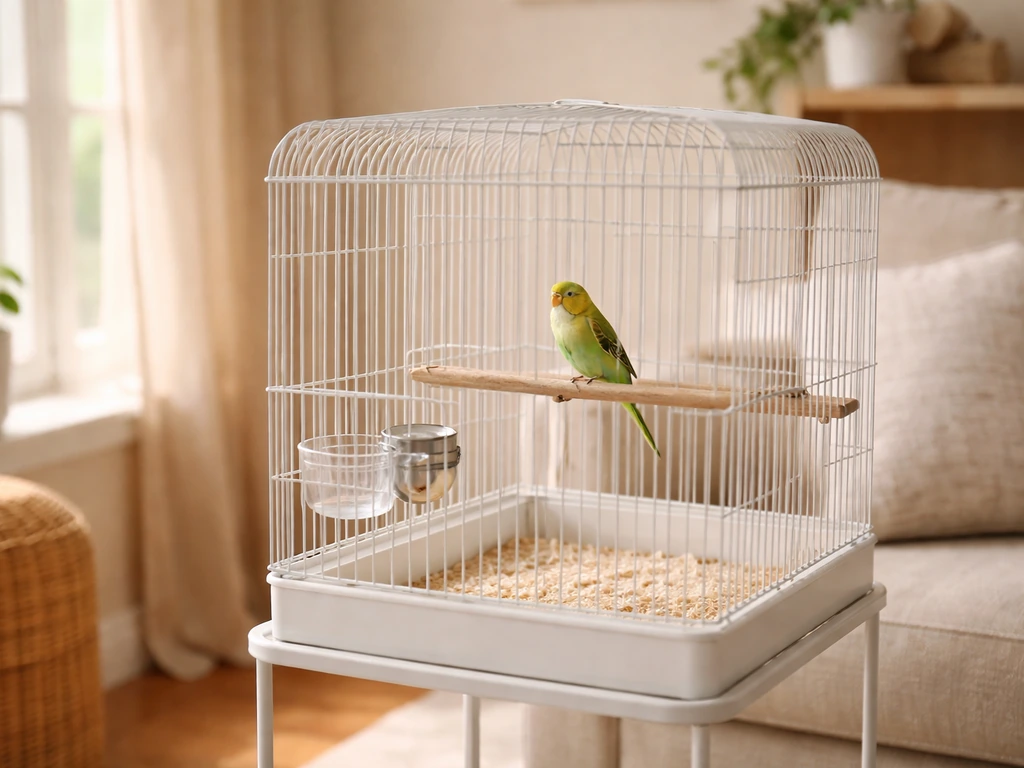
Cage size is where beginners almost always underestimate. The minimum for a budgie, cockatiel, lovebird, or parrotlet is 20x20x30 inches with bar spacing no wider than half an inch. But that's the floor, not the goal. The Merck Veterinary Manual puts it well: your bird should have at least 1.5 times its wingspan in every direction just to stretch and move naturally. Bigger is always better. If you can only afford a minimum-size cage, prioritize buying the largest one you can stretch to.
Bar spacing matters more than people realize. Bars too wide apart allow a bird to get its head stuck, which is dangerous. Too narrow and the bird can't grip properly. Half-inch spacing works well for smaller species. For larger birds like conures or cockatiels, three-quarter inch spacing is appropriate.
Where you put the cage matters as much as the cage itself. Put it at eye level or slightly below, against a wall for security (birds feel exposed when surrounded on all sides), but away from drafts, direct sunlight for extended periods, and most importantly, away from the kitchen. The kitchen is genuinely the most dangerous room in the house for birds, and I'll explain why in the air quality section below.
- Place the cage in a room where the family spends time so the bird feels included
- Avoid windows that get direct afternoon sun, which can overheat small birds
- Keep away from vents, air conditioners, and exterior doors that cause cold drafts
- Never place the cage in or near the kitchen
- Make sure the cage is stable and won't tip if bumped
- Check that the latch is secure enough that your bird can't work it open
Your daily care routine
Daily bird care isn't complicated once you build the habit, but it does need to happen every single day. Birds are prey animals and they hide illness well. A daily routine means you'll notice changes early, which genuinely saves lives.
Feeding and water
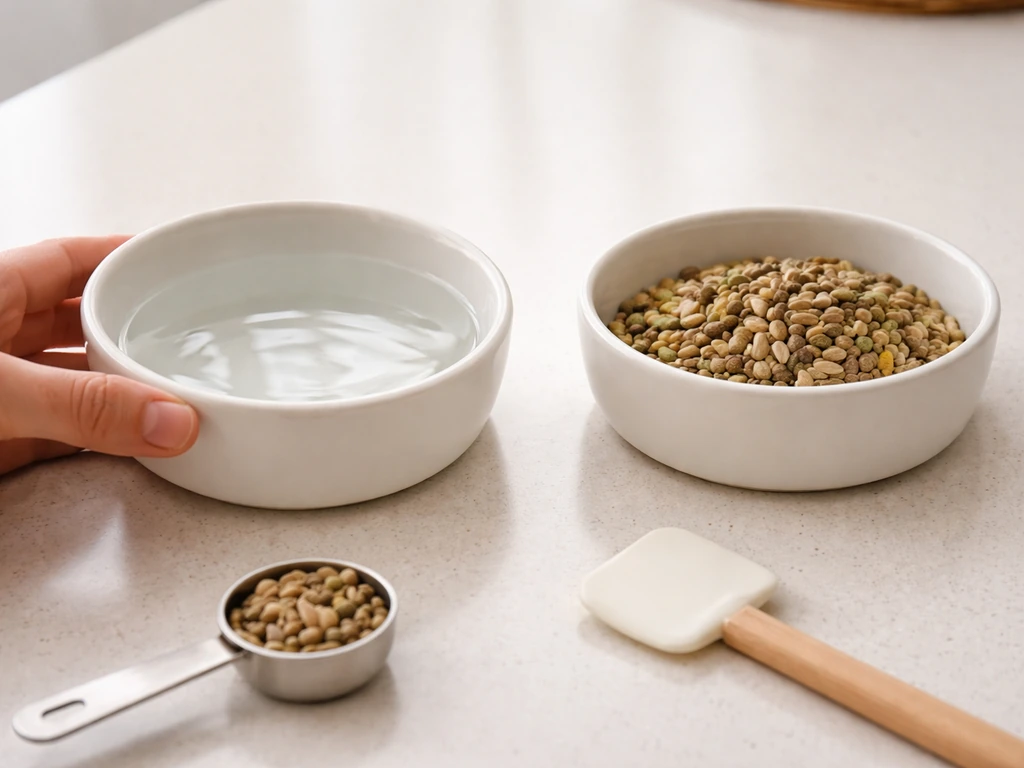
Fresh water every single day, no exceptions. Bacteria build up fast in a water dish at room temperature. Swap it out completely, don't just top it up. For food, most beginners start with seed mixes, but a pellet-based diet supplemented with fresh vegetables is far better for long-term health. Seeds are like junk food: birds love them and will eat them preferentially, but an all-seed diet leads to nutritional deficiencies over time. Introduce pellets gradually and offer fresh greens like kale, romaine, or carrot slices several times a week.
Cleaning schedule
The CDC recommends cleaning food and water bowls daily, and I'd say that's non-negotiable. The cage floor liner should be changed daily or at minimum every two days. Spot clean the cage bars and perches as needed. Then do a full scrub-down of the entire cage, including the bars, perches, and all accessories, once or twice a month using hot water and a non-toxic, bird-safe disinfectant. When you're cleaning up dried droppings, wet the surface with water or disinfectant first before wiping. This reduces the risk of inhaling dried fecal particles, which matters for both your health and psittacosis prevention.
Daily health monitoring
Every morning, take thirty seconds to just look at your bird. Is it alert and active? Are its feathers smooth and held close to its body (puffed feathers can indicate illness or cold)? Is it eating?
Is the droppings consistency normal for that bird? Weight loss is one of the earliest and most reliable signs of disease in birds, but you often can't see it until it's advanced. This is why the Association of Avian Veterinarians recommends establishing a baseline weight early. A small digital kitchen scale makes it easy to weigh your bird weekly.
A sudden drop of even a few grams in a small bird is worth a vet call. Annual exams with an avian vet are also the standard of care, not optional extras.
Enrichment, social time, and preventing boredom
This is where a lot of beginners underinvest, and it's also where a lot of behavior problems start. Birds are intelligent animals. A bored bird in a bare cage will find ways to entertain itself that you won't like: excessive screaming, feather plucking, repetitive pacing. The cage is a safe home base, not where the bird should spend all its waking hours.
The RSPCA recommends birds spend at least six hours per day outside their cage, interacting with you and engaging with toys and activities. That number surprises most beginners. If that sounds like too much, a companion bird of the same species helps enormously because they entertain each other, but it doesn't replace interaction with you entirely.
Inside the cage, provide multiple perches of different diameters and textures (this keeps feet healthy), foraging toys where the bird has to work to get food, and rotating toys so there's something new to investigate regularly. Outside the cage, supervised free flight in a safe room is ideal. Training sessions, even just five to ten minutes of target training or step-up practice, provide mental stimulation and strengthen your bond.
Feather plucking is one of the saddest outcomes of inadequate enrichment and social time. Once it starts, it can become habitual even after the underlying cause is addressed. If you notice your bird pulling or chewing its feathers, first rule out medical causes with an avian vet visit, then look hard at whether its environment is stimulating enough and whether it's getting sufficient social time. Environmental modifications, more toys, more out-of-cage time, and more predictable daily interaction are the core interventions after medical issues are excluded.
Common beginner mistakes and what things actually cost
The biggest mistake I see is buying the cheapest cage available. A cage that's too small or poorly constructed creates stress and safety hazards. Buy the largest cage your budget and space allow, from the start. Upgrading later means buying twice.
The second mistake is skipping the avian vet. General practice vets often have limited bird training. An avian-specialist vet can catch problems early, give you a diet and care plan tailored to your species, and establish a health baseline. Your first appointment should happen within a few weeks of bringing a new bird home.
On costs: factor in the cage (anywhere from $80 to $300 or more for a quality setup), the bird itself ($20 to $200+ depending on species and source), ongoing food, annual vet visits ($75 to $200 per exam depending on your location and what's included), and toys and accessories. Cockatiels and budgies are among the more affordable birds to own. Larger parrots cost significantly more upfront and in ongoing care. A realistic monthly budget for a budgie or cockatiel is $30 to $60 for consumables, plus veterinary costs averaged annually.
- Buying a cage that's too small and having to replace it
- Feeding an all-seed diet and skipping vegetables and pellets
- Skipping annual avian vet check-ups because the bird 'seems fine'
- Not bird-proofing the room before out-of-cage time (ceiling fans, open windows, toxic plants)
- Keeping the cage in the kitchen near cooking fumes
- Getting one bird of a highly social species and then not having time to interact with it daily
- Underestimating the lifespan commitment, especially with cockatiels
Air quality and environmental dangers inside your home
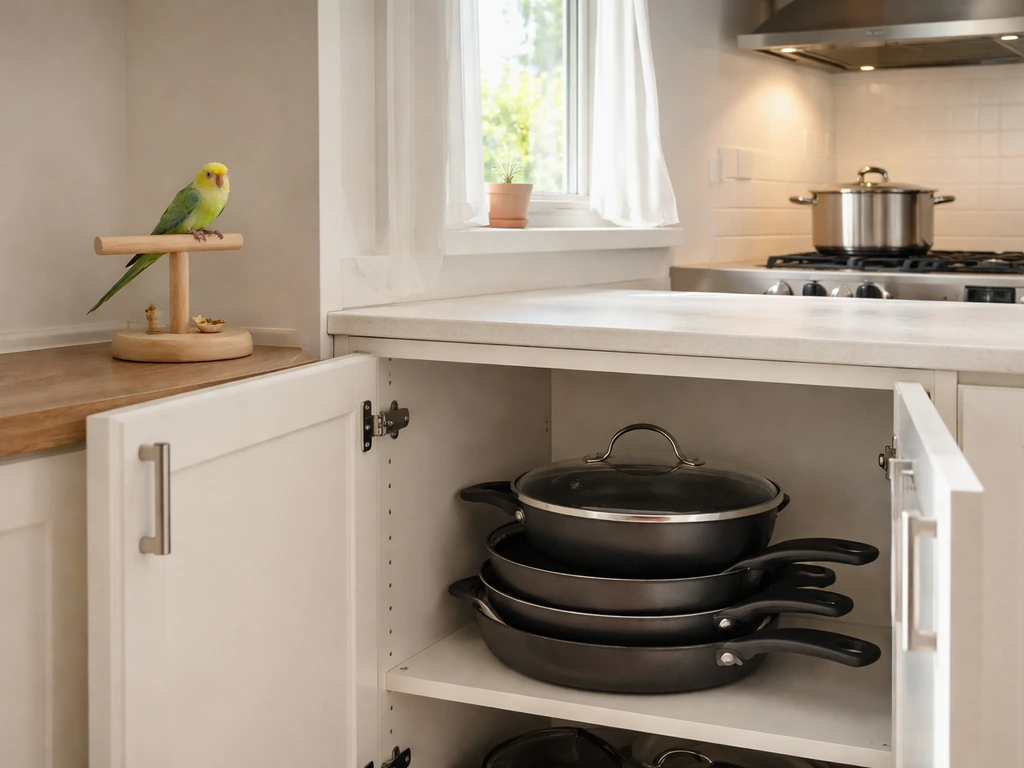
This section could save your bird's life, so read it carefully. Birds have extraordinarily sensitive respiratory systems, and your house is full of things that are harmless to you but can be rapidly fatal to them.
Non-stick cookware is the single biggest household danger. Aerosol and fume poisoning is a known risk in birds, and PetMD notes that PTFE (Teflon) and related fluoropolymer coatings, when overheated, can be a cause non-stick cookware is the single biggest household danger.
Fumes from overheated PTFE (Teflon) and similar fluoropolymer coatings can kill a bird within minutes, even in another room of the house. This isn't a theoretical risk. Birds have died from a pan left on a high burner in the kitchen while they were in a cage in an adjacent room.
If you have non-stick cookware, either replace it with stainless steel, cast iron, or ceramic alternatives, or make absolutely sure your bird's cage is as far from the kitchen as possible and the kitchen is well-ventilated. I'd personally replace the cookware.
Beyond cookware, watch out for: scented candles and air fresheners (including plug-ins and aerosol sprays), cigarette and vaping smoke, cleaning product fumes especially bleach and ammonia, paint and varnish fumes, and self-cleaning oven cycles, which release fumes at extremely high temperatures. Any aerosol used in or near a room where your bird lives is a potential hazard.
When cleaning the cage itself, choose unscented, bird-safe cleaners and rinse thoroughly before putting your bird back. Ventilate the room after cleaning. The same goes for any room cleaning you do near the cage. If you're painting a room, move the bird to the opposite end of the house and wait until the smell is completely gone before bringing them back.
- Replace non-stick (PTFE/Teflon) cookware with stainless steel, cast iron, or ceramic
- Never use aerosol sprays, scented candles, or plug-in air fresheners near your bird
- Don't smoke or vape in any room your bird lives in or passes through
- Avoid self-cleaning oven cycles unless your bird is completely separated from the kitchen area
- Use unscented, bird-safe disinfectants when cleaning the cage
- Ventilate any room after cleaning before returning the bird
Your next steps: how to shortlist a species and get ready
If you're still deciding between species, use this process: start with noise tolerance and daily time commitment. If you live in a small apartment and work long hours, a pair of budgies or a canary is your best bet. If you want the best bird pets for apartment life, focus on manageable noise, low-to-moderate mess, and daily care you can realistically maintain.
If you want the best bird for a home pet setup when space and time are limited, budgies and canaries are strong starting points best bird for home pet. If you're home regularly and want a hands-on companion, a cockatiel is hard to beat. If you want something compact and parrot-like, a parrotlet fits that role. If you want information on birds suited specifically to seniors or apartment dwellers, those situations have some specific differences worth digging into separately.
If you're specifically shopping for the best bird pets for seniors, look for species with manageable noise, simple care needs, and a predictable daily routine that still provides companionship.
Once you've chosen a species, do these things before the bird comes home. Buy the cage first and set it up fully, including perches, a water dish, food dish, and at least two or three toys. Identify an avian vet in your area and book an introductory appointment for within the first two weeks of ownership. Remove or relocate any non-stick cookware. Check your cleaning supplies and swap in unscented alternatives. Bird-proof the room where your bird will spend out-of-cage time: cover mirrors, close windows, turn off ceiling fans, and remove toxic houseplants.
The last thing I'd say is this: birds are better pets than most people expect, and more demanding than most people plan for. The ones who thrive in captivity are the ones whose owners went in prepared. You're already doing that part right by researching before buying. Set up the environment properly, commit to the daily routine, get to an avian vet annually, and you'll have a genuinely rewarding companion animal for many years. If you are wondering whether a dove is a good bird for a home, it helps to compare its care needs and temperament with the setup and daily time you can realistically provide is dove bird good for home.
FAQ
Should I get one bird or two (for budgies, cockatiels, lovebirds, or parrotlets)?
If you work long hours or cannot spend time daily, a same-species companion can prevent loneliness and reduce stress behaviors. That said, pairing does not eliminate the need for human interaction, aim for daily handling, training, and at least several hours of total out-of-cage time split across the day. Also note that bonded pairs may become less interested in you, which matters if your goal is a cuddly “one-on-one” pet.
Are budgies always quiet, and what noise should I actually expect?
Budgies are often softer than larger parrots, but they are not silent. Expect morning chirping, chatter when they want attention, and occasional squabbles if the flock or pair relationship is new. If you live in very thin-walled housing, consider placing the cage in the least shared room and use consistent routines (lights, feeding, and sleep) to reduce “wake-and-yell” behavior.
Cockatiels produce dander, what if my household has asthma or bird allergies?
Dander and feather dust can worsen symptoms even if the bird seems healthy. The safest approach is to involve the person with symptoms early by spending time near the species (or an aviary setting) and monitor reaction, then discuss a plan with an allergist if needed. If you proceed, strengthen cleaning habits, use good ventilation, and avoid placing the cage in bedrooms where you sleep.
What is the safest way to introduce pellets without causing issues?
Don’t switch abruptly. Start by mixing pellets into the seed or seed mix and gradually increase pellet percentage over 2 to 4 weeks, while offering fresh vegetables several times weekly. Watch droppings, appetite, and body weight during the transition, and if the bird stops eating for more than a short window, contact an avian vet rather than forcing food.
How do I know if cage size is truly adequate, not just the “minimum”?
Minimum dimensions are a starting point, your bird should be able to fully spread its wings and move naturally in more than one direction. A practical test is whether it can do at least a few wing stretches without touching bars or walls, and whether you can place multiple perches at different heights without blocking movement. If you cannot, upgrading the cage usually prevents stress-related behaviors.
Do I need to weigh my bird weekly, and what counts as an emergency?
Weekly baseline weighing is useful because many illnesses show weight loss before other obvious signs. A sudden drop of a few grams in a small bird, or a continued downward trend over 2 weigh-ins, warrants an avian vet call. Also treat sudden changes in droppings, lethargy, or breathing posture as urgent even if weight looks normal.
What daily out-of-cage time is realistic if I’m busy, and can training replace it?
Training helps mental stimulation, but it does not replace time outside the cage. A bird still needs space to move, explore, and experience safe social interaction. If 6 hours sounds impossible, aim for multiple shorter sessions across the day (morning, afternoon, evening) rather than one long block, and use foraging and supervised “flight time” in a bird-proofed room.
My bird is feather plucking, how do I troubleshoot without guessing?
First, rule out medical causes with an avian vet visit, because itching, pain, and illness can drive the behavior. Then evaluate environment: lack of social time, too few toys, repetitive boredom, and limited perch variety are common triggers. After changes, give the plan time, feather plucking can become habitual, and consistent enrichment plus better routines usually work better than frequent, random toy swaps.
Is it safe to use air fresheners, incense, or scented cleaners near the cage?
Avoid scented products and aerosolizing anything in rooms where the bird spends time. Even when you cannot smell fumes strongly, birds can be more sensitive. Use unscented, bird-safe cleaners, ventilate after cleaning, and wait until odors are fully gone before allowing the bird back near the area.
How should I clean food and water dishes if my bird is messy?
If your bird splashes, drops food into the bowl, or drinks aggressively, daily full washing becomes even more important. Don’t just rinse, scrub and replace water completely every day, and consider separate bowls for fresh foods to reduce cross-contamination. If you see persistent residue or biofilm, switch to a more thorough cleaning routine and check that the dish materials are easy to scrub fully.
What should I do the first week after bringing a bird home to prevent stress?
Plan for a calm settling period. Keep the room routine consistent (similar wake and sleep times), minimize handling to brief, gentle sessions, and focus on feeding, hydration, and observing appetite and droppings. Avoid big changes like moving cages repeatedly or adding lots of new toys at once, and book the first avian vet check within the first two weeks as planned.
Can I place the cage in the bedroom or near a window for natural light?
Natural light is helpful, but bedrooms can be risky if the person with allergies sleeps there, and windows can create drafts and temperature swings. Avoid direct, prolonged sun exposure that can overheat the cage, and keep the cage out of draft paths. If you use blinds or curtains, ensure the bird still has a stable temperature and a protected, secure feel against one side.
What common mistake leads to injury around cages and perches?
Most injuries come from unsafe bar spacing, unstable perch placement, and slippery or worn perches that force poor foot posture. Verify bar spacing matches the species needs, add perches of different diameters, and inspect perches regularly for sharp edges or cracks. Also ensure toys and accessories are securely attached so they cannot fall during normal activity.