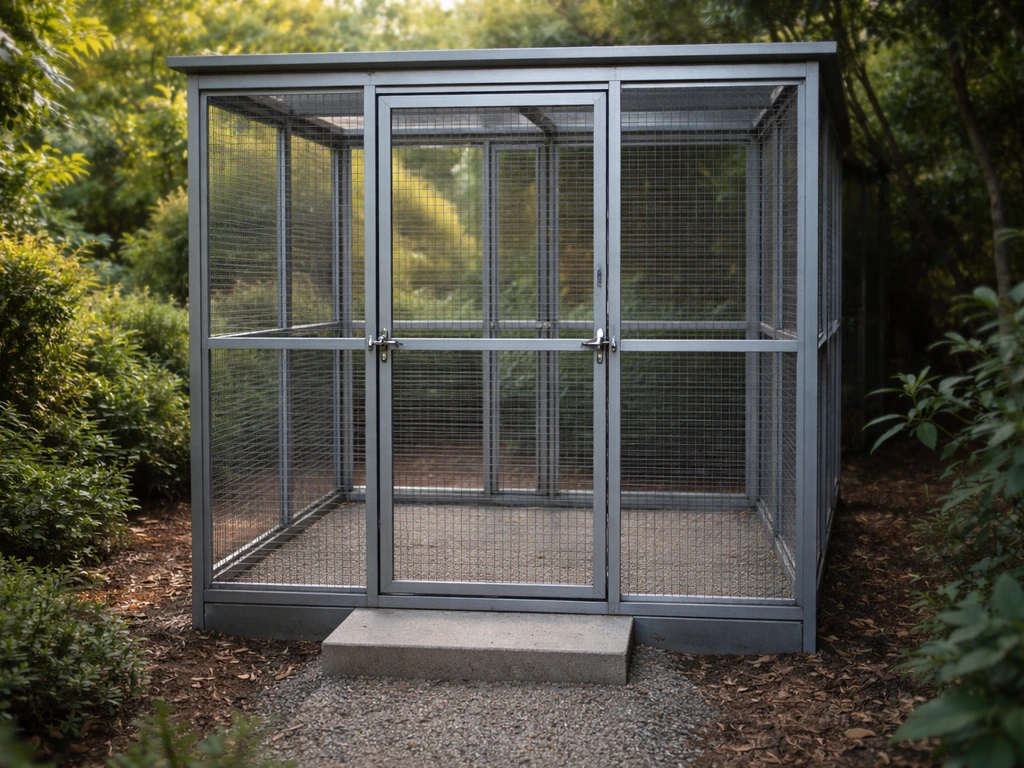
A bird aviary with a safety door uses a two-door vestibule system, sometimes called a safety porch or double-entry, so there is always at least one closed door between your birds and the outside world whenever you enter or exit. It is the single most important structural feature in any aviary, and if yours does not have it, an escape is almost inevitable eventually, even with well-trained birds.
Bird Aviary With Safety Door: Setup and Troubleshooting Guide
Marcus Chen
21 May 2026
What a safety door actually is and why it matters so much
The term 'safety door' in an aviary context does not just mean a sturdy lock on the front panel. It refers to a double-door system where you pass through two separate doors to reach the birds, with a small enclosed space (the vestibule, safety porch, or passageway) between them. The rule that governs the whole system is simple: the exterior door must never be opened before the interior door is fully closed and latched. That one rule is what prevents escapes.
The Carolina Raptor Center's caretaker protocol puts it plainly: at least one set of doors must be latched shut at all times during entry and exit, and when you are fully inside or fully outside, both doors should be latched. BirdNET's 2023 guidelines reinforce this, stating explicitly that the exterior door must not be opened before the interior door is closed. Even the calmest, most hand-tamed parrot can be startled into a panicked bolt by something as minor as a dog barking outside or a bag shifting on your shoulder. The double-door system means that momentary panic does not become a lost bird.
Squawk Shop, which works with parrot owners on large walk-in builds, calls the safety porch a 'non-negotiable' feature. I'd agree. Every other feature in this guide is about optimization. This one is about whether your bird comes home at night.
Door features that actually matter
Once you understand the double-door concept, the next question is what each individual door needs to do its job well. Here is what to look for and why.
Latch and lock placement
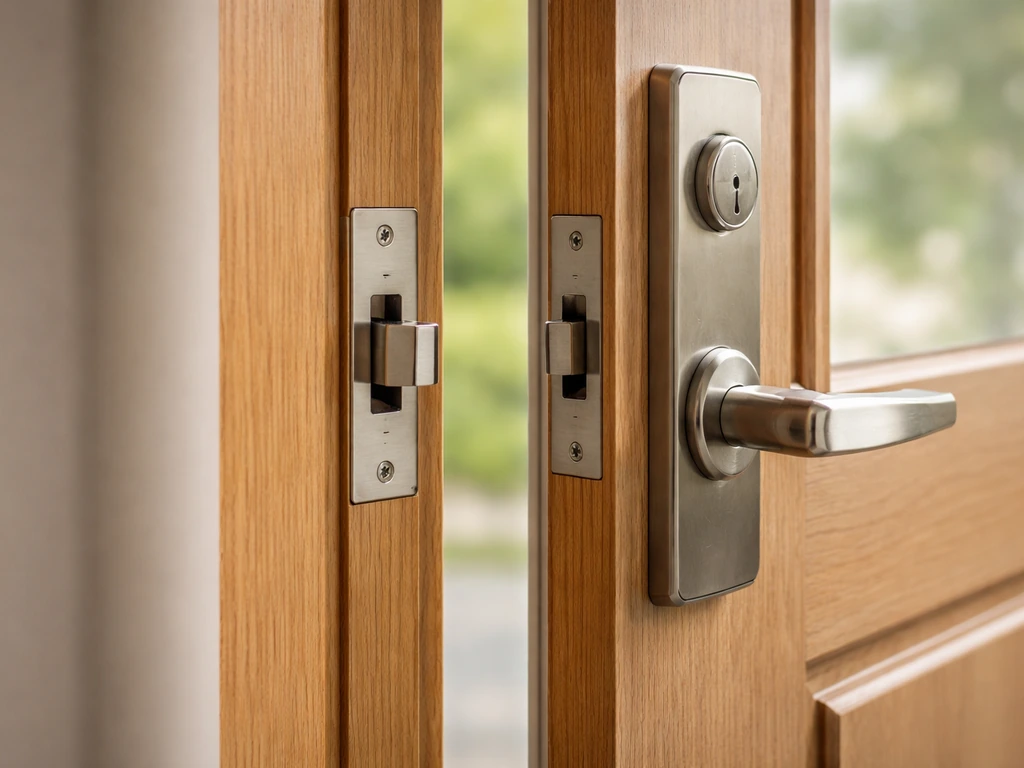
The external door of the safety passageway should have a latch on both the inside and the outside. That guidance comes from the United Bird Societies of South Australia, and the reason is practical: you need to be able to secure the door whether you are entering or leaving. The Carolina Raptor Center notes that latches are typically positioned near the door handle on both sides, and that doors with any warping or gaps should get a second latch to close off the space a predator could exploit. If a raccoon, rat, or neighborhood cat can get a paw through a gap, you need more than one point of contact to hold that door tight.
Gap sealing and predator resistance
Gaps are where most aviary doors fail long-term. Wood warps, metal frames shift slightly with temperature changes, and what started as a flush-fitting door develops a finger-width gap within a year or two. Smaller birds like finches and canaries can squeeze through surprisingly tight spaces, and predators can reach through gaps that look too small to matter. Check that the door frame uses weatherstripping or a rubber seal along the full perimeter. For outdoor aviaries, galvanized or powder-coated steel frames resist warping far better than wood over time.
Ventilation-safe design
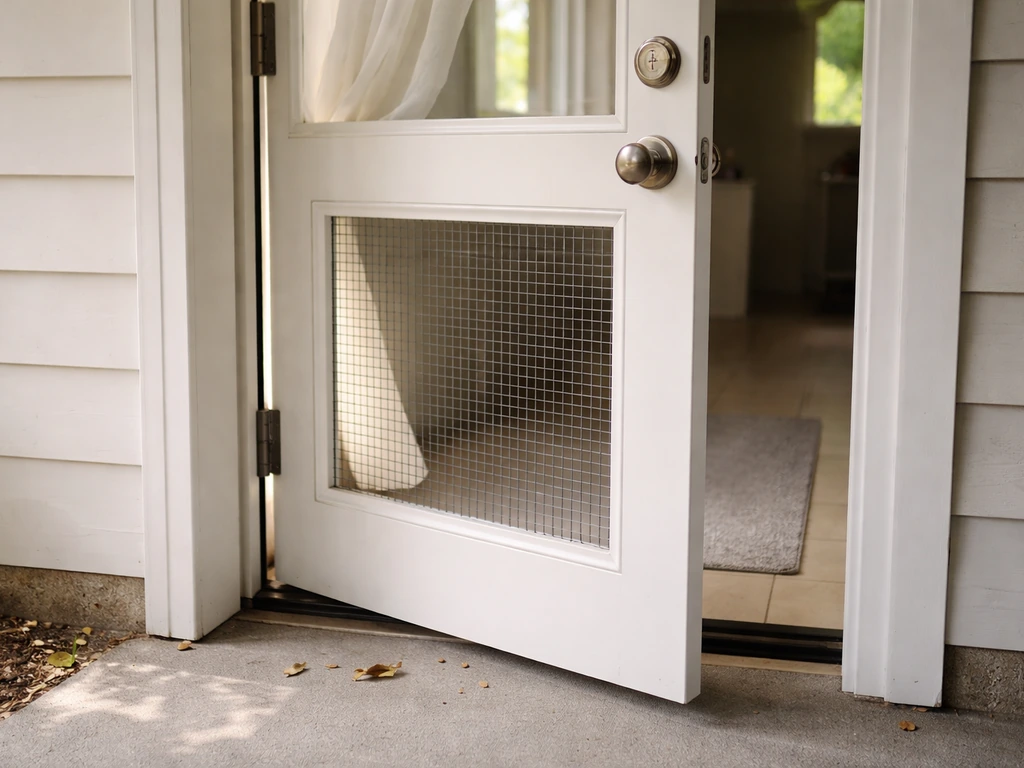
If your door panel is solid, opening it creates a sudden rush of air that can startle birds and carry in outdoor debris, cold drafts, or smoke. A door with a mesh insert gives you airflow control without a blast of outside air when you open it. Finch Aviary design guidance recommends positioning mesh ventilation panels at least midway up from the floor, where debris accumulates least, which applies to door-panel mesh as well. If ventilation near the floor is unavoidable, adding a solid kickplate at the base of the door keeps bedding and debris from blowing in and reduces drafts at ground level where small birds spend time.
Wire and mesh thickness
The mesh on the door must be the right gauge for the birds you keep. Correct opening size is not enough on its own. Birdline Parrot Rescue specifically flags that wire thickness must be durable enough to prevent escape and resist chewing for the bird sizes being housed. A cockatiel can work at light chicken wire until it creates an opening. Use welded mesh with appropriate gauge: 16-gauge minimum for small parrots, heavier for large parrots like amazons or macaws.
One-way or self-closing options
Self-closing spring hinges on the outer door are worth considering for busy setups. They ensure the door closes even if your hands are full of feed bowls. Some prefabricated safety entrances, like the module described by Wingz Store, are built as a single double-door unit specifically designed to prevent direct flight from the aviary to open air. If you are buying a pre-built aviary, look for that kind of integrated vestibule rather than retrofitting one later.
Sizing and placement for beginner bird setups
The vestibule between the two doors needs to be large enough for a person to step fully inside, close the door behind them, and then open the interior door without rushing. The Hagen Avicultural Research Institute recommends at least a couple of feet of separation between the two doors. In practice, that means the vestibule should be deep enough that you can stand comfortably inside with the door behind you closed before you reach for the handle of the inner door. If the vestibule is too shallow, you will be tempted to push the inner door before the outer one is latched, which defeats the entire system.
For door height, a standard 6-foot clearance works for most adult owners, but if you are building a walk-in aviary for larger parrots, go taller. Macaws and large cockatoos can fly low past your head during entry, so more vertical space in the vestibule gives you more reaction room. For tabletop or smaller flight cages housing finches or canaries, the 'safety door' principle still applies, but it is often implemented as a small access panel with a two-step latch sequence rather than a full walk-in vestibule.
Placement matters too. The United Bird Societies of South Australia require that aviary doors must open into a service passageway or confined space, not directly into an unrestricted open area. This means if you are designing from scratch, the safety porch should face toward a fenced yard, an indoor bird room, or at minimum a walled alcove, not directly onto an open driveway or garden path where a bird escaping the vestibule still has nowhere to land safely.
Perch placement near the door matters more than most beginners realize. Northwest Bird Shelter housing guidance recommends at least 4 inches of perch space per small bird and appropriate perch placement throughout the enclosure. Avoid placing perches immediately beside or above the interior door. Birds that perch near the door are the first ones to fly toward the opening when you enter, increasing escape risk significantly. Redirect perch placement to the far end of the aviary from the door.
How to install and test the safety door system before trusting it
Whether you are installing a pre-built module or building from scratch, the testing phase is non-negotiable. Here is a reliable sequence to follow.
- Install both doors and check that each one swings fully closed on its own without being pulled. Sagging hinges will prevent a flush seal. Adjust hinge positions or add a third hinge on heavier doors before the birds go in.
- Test the latch on each door independently. Latches should catch on the first push without needing to wiggle or lift the door. If you need to manipulate the door to get the latch to engage, it will fail under normal daily use.
- Check for gaps all the way around both door frames. Run your hand along the full perimeter with the door closed. You should feel no airflow. Any gap bigger than 6mm is a risk for small birds and must be sealed.
- Simulate a full entry sequence without birds: open the outer door, step in, close and latch it behind you, then open the inner door. Do this 10 times at normal pace. If you feel any temptation to rush or skip the latch step, the vestibule spacing is too tight or the latch is too stiff.
- Check the outward swing direction of each door. Interior doors should ideally swing into the main aviary space, not back into the vestibule, so a bird flying toward the doorway is less likely to be hit by the door as you enter.
- With birds inside, observe for 15 to 20 minutes from outside before doing the first full entry. Note where birds perch and which ones move toward the door area when you approach. This tells you which birds need the most attention during entries.
Using the safety door in daily routines without stressing the birds
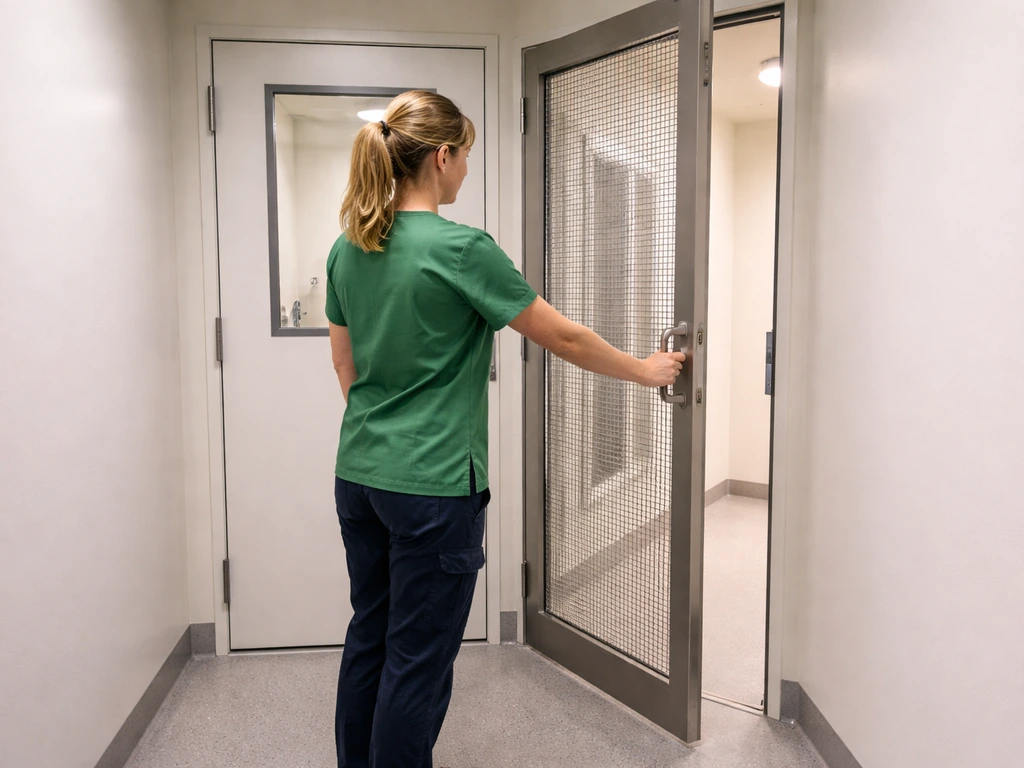
The double-door protocol is only effective if you follow it consistently, every single time, including when you are tired, in a hurry, or convinced the birds are calm. Somners' aviary guidance makes the point well: one badly timed entry, whether you open the wrong door first or a bird startles at the hinge side, is all it takes. Build the habit before you need it.
The correct daily sequence is: approach calmly, open the outer door and step in, close and latch it behind you before doing anything else, then open the inner door. When leaving, pull the inner door closed and latch it, then open the outer door and exit, latching that behind you. Both doors should be latched whenever you are fully inside or fully outside.
Birds that are new to an aviary are most likely to startle at doorway movement. Move slowly and talk quietly as you approach. Avoid carrying large or noisy objects through the door during the first week. Finch Aviary design advice suggests that misting and handling schedules near the door can be adjusted so birds are less likely to cluster at the entry point at feeding time. Feed birds at stations placed away from the door, and do water changes at a consistent time so birds learn not to associate door movement with disruption.
For maintenance tasks like swapping food bowls or spot-cleaning near the floor, a low-access service door or hatch on the outer wall of the vestibule can be worth adding. Finch Aviary specifically recommends this kind of down-low utility panel to reduce how often you need to do full entry sequences for minor daily tasks, which reduces stress on the birds significantly over time.
Common problems and fast fixes
| Problem | Likely Cause | Quick Fix |
|---|---|---|
| Door not sealing flush | Warped frame or sagging hinge | Add a third hinge or adjust existing hinge position; apply weatherstripping to frame perimeter |
| Latch not catching reliably | Strike plate misaligned or latch worn | Reposition the strike plate; replace the latch mechanism if it is more than 2 years old |
| Birds bolting at the door when you enter | Perches too close to the interior door | Move perches to the far end of the aviary; approach more slowly and announce your presence verbally |
| Draft blowing through when outer door opens | No baffle or mesh panel in vestibule; gap under door | Add a door sweep to the bottom of the outer door; install a mesh insert to diffuse airflow |
| Gaps visible around door edge | Wood warping or frame movement | Apply foam or rubber door seal; for persistent gaps, add a secondary latch at the gap point |
| Predator accessing the vestibule overnight | Outer latch only on one side; latch too simple | Add an inside latch as well as the outside one; use a padlock on the outer door at night |
| Birds associating door movement with stress | Unpredictable entry times and noisy approaches | Standardize entry times; use a consistent verbal cue before opening; approach slowly every time |
Keeping the door reliable long-term
A safety door that works perfectly on day one can become a liability within a year if you do not check it regularly. BudgieBliss recommends weekly and monthly maintenance that includes inspecting mesh, latches, and structural components for rust, holes, and weaknesses. Oak Creek Aviaries uses a quarterly service cadence as their standard interval for full aviary security checks, which is a reasonable minimum. In practice, I do a quick latch and frame check every week when I clean the aviary, and a more thorough inspection every three months.
What to check and how often
- Weekly: test each latch by pushing firmly in all directions; look for new rust spots on hinges and hardware; check for any gaps at the door perimeter by looking for light around the frame
- Monthly: inspect the full mesh panel on both doors for any bent wires, small holes, or signs of chewing; tighten any loose screws on hinges, latch plates, and frame corners
- Quarterly: fully open and close each door several times and listen for unusual sounds, check for sagging or misalignment, and look at the frame base for rot or corrosion if the aviary is outdoors
- After any storm or extreme weather: check for frame warping, debris jammed in the latch mechanism, and confirm the door seals properly before returning birds if they were moved
Cleaning around the door without compromising air quality
When you do deep cleaning that involves disinfectants or sprays near the door, BudgieBliss specifically recommends fully ventilating the aviary before returning birds. Cleaning products that linger near the vestibule or door frame can cause respiratory issues, especially in small birds like finches and canaries. After cleaning the door and frame, leave both doors open for at least 30 minutes before birds re-enter. This connects to a broader point about air quality near aviary entrances: the safety door controls biological security, but what comes through the air when you open it matters too.
Hardware replacements to plan for
Spring-loaded latches and self-closing hinges have a working lifespan. Budget to replace latches every two to three years on a daily-use aviary door, and inspect self-closing spring hinges annually for tension loss. A spring that no longer pulls the door fully closed is one of the most common causes of accidental escapes in setups that were working fine for months. Replace it before it fails, not after.
Your next steps before you do anything else
If you are setting up a new aviary, measure the space before buying any door hardware. If you are comparing options, you can estimate how much is a bird aviary by looking at your desired size, materials, and whether you need to add a full safety-vestibule setup. You need enough depth for a vestibule that lets you fully enter and close the outer door before reaching the inner one.
Two feet is the working minimum; three to four feet is much more comfortable and safer in practice. If you are retrofitting an existing aviary that has only one door, your first purchase should be the framing and hardware to add a vestibule, not a fancier latch on what you already have.
If you are buying a pre-built aviary, check whether a safety entrance module is included or available as an add-on before you buy. A well-designed aviary without a safety door is harder to retrofit than building the system in from the start. Once your safety entrance is sorted, you can pair it with the best bird attracting plants to encourage comfortable, natural foraging close to the enclosure.
Once your door system is installed, run through the full entry and exit sequence ten times before your birds go in. That repetition is what makes the habit automatic when you are tired or distracted. The best safety door in the world only works if you use it correctly every time. Choosing the right aviary design and thinking through what to put inside it will matter more once you know the entry system is solid.
To help your birds feel secure and thrive, pair your safety door setup with the best plants for bird aviary environments Choosing the right aviary design. To get the overall setup right, use these best bird aviary designs as your starting point for layout, security features, and airflow.
Once you have the safety door system in place, the next step is deciding what to put in a bird aviary so your birds stay secure and comfortable day to day. If you are planning plants inside the aviary, check which options are safe for birds before you add anything to the enclosure what plants are safe in a bird aviary.
If you want the best bird aviary, start with a safety door setup and then match the size, ventilation, and mesh to the species you keep Choosing the right aviary design.
- Confirm your aviary has two separate doors with a vestibule between them, not just one reinforced door
- Each door must have a latch accessible from both inside and outside
- Check for gaps around the full door perimeter before birds go in
- Move perches away from the interior door to reduce escape risk at entry
- Follow the latch-behind-you rule every single time, no exceptions
- Inspect latches, mesh, and frame alignment weekly; do a full structural check every three months
- Replace spring hinges and latches on a schedule, not when they visibly fail
FAQ
What should I do if my safety door still leaves a small gap after installation?
If you notice a latch that does not fully seat, do not “test” it with the birds inside. Secure the door first, then check the latch engagement with the door pulled closed by hand, and verify you cannot leave a visible gap at any point on the perimeter. If the door sits flush in the morning but loosens later, temperature-related frame shift is likely and you may need the additional latch and improved weatherstripping mentioned in the article.
Can I open both vestibule doors at the same time for a quick check if I’m careful?
A safety-vestibule system is designed so birds cannot access open air from either moment of entry or exit, but your airflow can still be risky. During cleaning or troubleshooting, keep the vestibule doors closed except for the minimum time needed, and avoid opening both doors at once even briefly. Also pause spray use near the vestibule, because residue and fumes can linger in the entry space even if the biological security is intact.
I’m retrofitting a one-door aviary, what’s the most common design mistake that ruins the safety-door benefit?
For a retrofitted aviary, the biggest failure mode is building a vestibule that is too shallow for calm movement. Measure for the ability to step fully inside, close and latch the outer door, then reach the inner door without turning sideways or rushing. If you cannot do that comfortably, add depth rather than upgrading latches alone, because the article notes the system fails when people are tempted to reach for the inner door early.
My birds rush to the door every time I enter, how can I reduce escape risk during feeding or cleaning?
Some birds learn the routine and may wait near the inner door, others surge toward the movement as soon as you approach. If you see door clustering, temporarily change your workflow: feed and handle at stations away from the vestibule, reduce carrying noise during the entry period, and consider adding a brief “pre-entry pause” (a few quiet minutes) so the birds settle before any door opens. This uses the article’s doorway-avoidance and routine-consistency guidance, but applied directly to clustering behavior.
Does the safety-door concept work the same way for small cages or access hatches instead of a walk-in vestibule?
Yes, but treat it as a different tool. If you use a small access hatch rather than a walk-in vestibule, your control depends on having a two-step latch sequence that prevents direct access to open air when you open the panel. For very small birds, also re-check mesh gauge and opening size, because the article highlights how easily finches and canaries can squeeze through tight gaps.
How often should I check self-closing hinges and latches to prevent accidental escapes?
Do not rely on self-closing hinges alone for security. Spring hinges and latches wear with daily use, so if the door does not pull fully closed with consistent force, replace or adjust it before using the system again. The article’s lifespan guidance suggests annual inspection of spring hinges and periodic latch replacement, especially if you use the aviary frequently.
How long should I wait before letting birds back into the aviary after using cleaners near the safety door?
Timing matters during the first week and after major maintenance. After deep cleaning with disinfectants or sprays, ventilate and only reintroduce birds after the air has cleared near the vestibule and door frame. The article recommends leaving both doors open for at least 30 minutes before birds re-enter, and you should extend that if you smell strong product odors when you check.
Where should I place perches near a vestibule so I’m not unintentionally increasing escape risk?
Positioning perches is a practical escape-prevention step. Avoid perches immediately beside or above the interior door, because birds that hold near that spot are the first to launch toward the opening during entry. Instead, redirect perch placement toward the far end of the aviary and ensure enough perch space for each bird so they do not choose “door-side” spots during the transition.
How do I know whether my door sealing is strong enough against small predators and pests?
If a predator could reach through a paw-sized gap, that is exactly the scenario your doors should be engineered to resist. Add or upgrade seals and consider adding a second latch where the frame cannot maintain full contact, especially if you see finger-width gaps over time. The article also points out that warping and temperature changes can widen gaps, so recheck after seasonal shifts.
How can I test my safety-door routine so I don’t accidentally break the order when I’m busy?
Run repeated practice with calm, consistent movement while the aviary is empty. Ten full entry-exit repetitions can make the habit automatic, but you should also practice the “wrong pressure” scenario, for example hands full of bowls or bags, to confirm hinges and latches still function as expected. If you cannot reliably latch without thinking during that exercise, adjust hinge behavior or improve handle/latch access.