
Whether you need a permit to collect bird feathers depends almost entirely on two things: the species the feather came from, and where you live. In the US, the UK, Canada, and Australia, simply picking up a feather from a protected wild bird (even a shed feather off the ground) can be illegal without the right authorization. Most hobby collectors don't realize this until they're already in trouble. The good news is that the permit process is navigable, and there are completely legal alternatives if a formal permit isn't realistic for your situation.
Permit to Collect Bird Feathers: Legal Steps and Safety Guide

Marcus Chen
13 Jun 2026
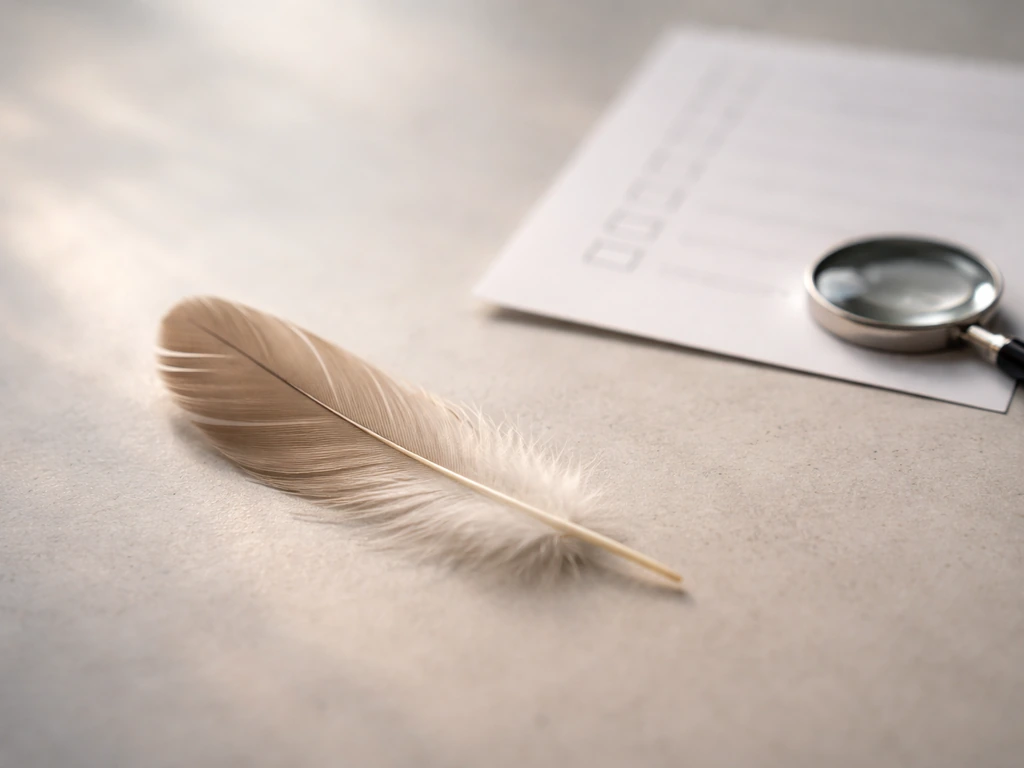
What "collecting feathers" actually means (and when permits kick in)
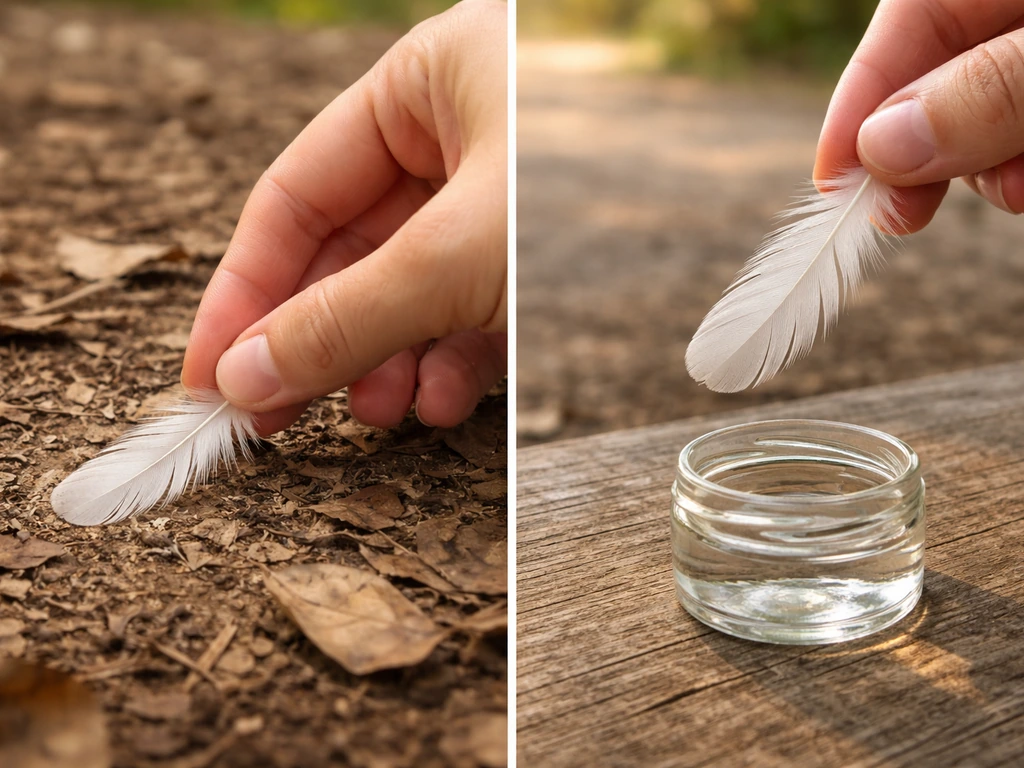
This matters more than most people think, because the law treats very different activities under the same umbrella. "Collecting" can mean finding a shed feather during a morning walk, plucking a feather from a bird you legally hunted, keeping decorative feathers for crafts, or conducting scientific field research. Each situation may carry a completely different legal status.
In the US, the Migratory Bird Treaty Act (MBTA) defines "take" to include "collect," and "possession" extends to any object made from or containing migratory bird parts, including feathers. That means a craft project using a wild robin feather you found in your backyard is technically covered. The US Fish and Wildlife Service (USFWS) is explicit: possession of feathers and other parts of native North American migratory birds without a permit is prohibited. The same logic applies in Canada under the Migratory Birds Regulations 2022, in the UK under the Wildlife and Countryside Act 1981, and in Australia under the EPBC Act for listed species.
There is a meaningful carve-out in US law worth knowing: under 50 CFR 20.92, you can legally possess and transport the feathers and skins of lawfully taken migratory game birds (think waterfowl from a licensed hunt) for personal use. And under 50 CFR 21.4, feathers from birds that were lawfully acquired before federal protection was extended to that species can be possessed and transported (but not sold, imported, or exported). So the activity and the source of the feather both matter. The simple version: if you didn't hunt it legally or buy it from a licensed commercial source, and it came from a protected wild bird, assume you need a permit or should leave it alone.
First step: figure out if your bird species is protected
Before you touch anything, identify the feather or the bird it came from. This is non-negotiable. A peacock feather from a farmed bird is a completely different legal situation from a red-tailed hawk feather found on a trail. Species identification is the foundation of every other decision you'll make.
For US-based readers, the USFWS Feather Atlas is genuinely useful for identifying feathers by shape, pattern, and species. Once you have a species ID, check whether it's listed as a migratory bird under the MBTA (almost all native wild birds are), a raptor protected under the Bald and Golden Eagle Protection Act, or a threatened/endangered species under the Endangered Species Act. Any of those layers can add requirements. CITES also applies if you're crossing international borders with feathers.
Outside the US, check your national and regional wildlife authority databases. In the UK, the Wildlife and Countryside Act 1981 covers virtually all wild birds, with Schedule 1 offering extra protection to rare species. Canada's federal and provincial protections can overlap, so check both. In Australia, the EPBC Act governs listed threatened species, but state and territory laws add another layer. The key question in every jurisdiction is the same: is this species listed as protected, and does that protection extend to parts and feathers?
How to find the right authority and the actual permit pathway
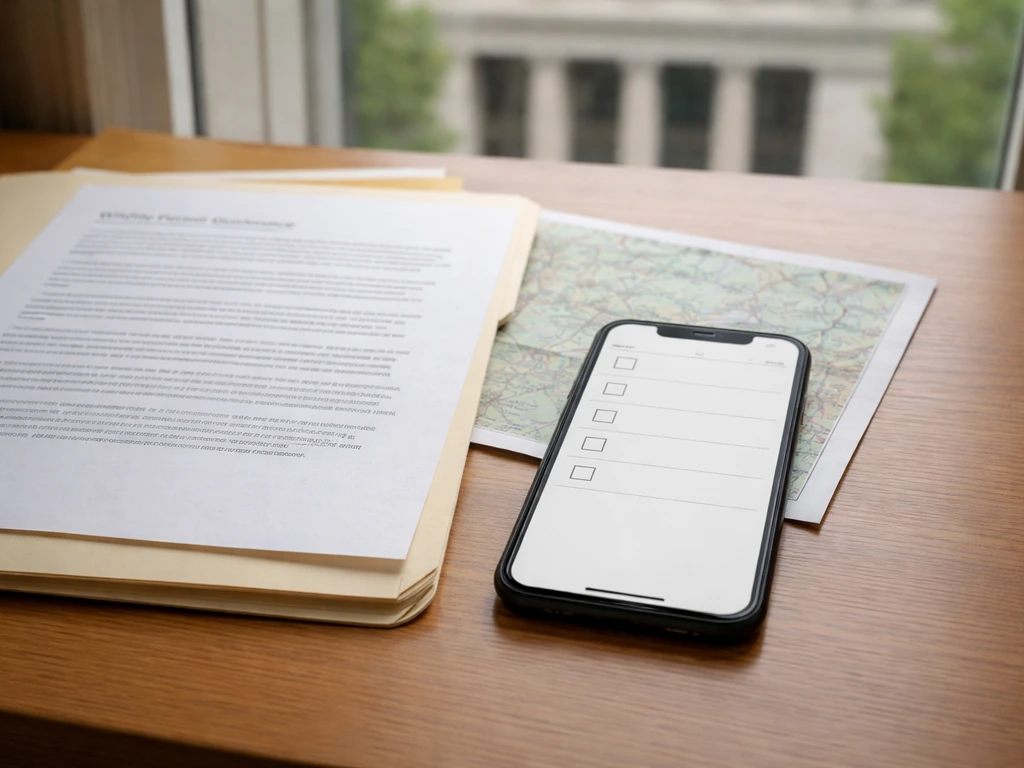
The agency you contact depends on your country and sometimes your state or province. Don't guess, and don't rely on what someone told you on a forum. Go to the source.
| Country | Primary Authority | Relevant Permit/Law |
|---|---|---|
| United States | US Fish and Wildlife Service (USFWS), Regional Migratory Bird Permit Office | MBTA Scientific Collecting Permit (3-200-7); Eagle Scientific Collecting for eagles |
| Canada | Environment and Climate Change Canada (ECCC), Canadian Wildlife Service | Migratory Birds Regulations 2022; provincial permits may also apply |
| United Kingdom | Natural England (England), NatureScot (Scotland), Natural Resources Wales | Wildlife and Countryside Act 1981 licence; general licences like GL17 for sale |
| Australia | DCCEEW (federal); state environment departments | EPBC Act permit; state wildlife licences for possession/collection |
In the US, the specific permit for most feather-related scientific or educational collection is the Migratory Bird Scientific Collecting permit (form 3-200-7), administered through USFWS Regional Offices. For scientific or educational purposes, the Migratory Bird Scientific Collecting permit (3-200-7) can authorize collection, transport, and possession of migratory birds and their parts, including feathers Migratory Bird Scientific Collecting permit (form 3-200-7).
If eagles are involved (bald or golden), a separate Eagle Scientific Collecting authorization is required. For hobby collectors, craft artists, or educators who don't qualify for a scientific permit, the honest answer from USFWS is usually: you can't legally collect protected feathers for those purposes, and you need to use legally sourced alternatives instead. Contact your regional USFWS Migratory Bird Permit Office directly, because policies and exceptions can shift.
In the UK, Natural England and NatureScot issue species-specific licences for activities involving protected birds or their parts. General licence GL17 covers the sale of dead wild birds and parts, but it comes with documentation requirements and annual reporting obligations. NatureScot's GL11/2021 covers selling feathers and parts of captive-bred or legally taken birds. The point is: even in the UK, you need to match your specific activity to the correct licence type. Start by contacting Natural England or the equivalent body in your nation.
What a permit application typically requires
Permit requirements vary by country and permit type, but there's a consistent core set of information that almost every wildlife authority will ask for. Knowing this upfront saves a lot of back-and-forth.
- Your identity and contact information, plus any institutional affiliation (museum, university, wildlife rehab center, etc.)
- Species identification: the exact species you intend to collect from, not just "birds" generally
- Purpose of collection: scientific research, education, rehabilitation, cultural use (some Indigenous nations have separate feather repository access in the US), or another recognized purpose
- Method of collection: how you'll acquire feathers (field collection, captive birds, salvage of dead birds, etc.)
- Quantities and dates: estimated number of feathers or specimens, and the time period of the activity
- Location: specific geographic area where collection will occur
- Storage and security plan: how you'll store specimens and prevent unauthorized access or transfer
- Qualifications: relevant experience, training, or institutional oversight (especially for scientific permits)
- Prior permit history: any previous wildlife permits you've held
Some permits, particularly for eagles or endangered species, may also require an in-person inspection of your storage facilities before approval. Be prepared for that possibility. In the UK, licences specify the species, circumstances, authorized methods, and validity period, so your application needs to be specific enough to match those parameters. Vague applications get rejected or delayed.
Costs, timelines, and what happens after you're approved
Processing times and fees vary significantly. In the US, USFWS migratory bird permits typically take 60 to 90 days to process from a complete application, though complex cases take longer. Some state-level permits move faster. In the UK, Natural England aims for 30 working days on most licence applications, but that's a target, not a guarantee. Budget time accordingly and don't start collecting while your application is pending.
On fees: many USFWS permits are low-cost or free for non-commercial purposes, but commercial or trade-related permits may carry fees. UK licence fees vary by activity type. Check the current fee schedule directly with the issuing authority, since these change and secondhand information goes stale fast.
Once approved, compliance is ongoing. Most permits require detailed recordkeeping: log the date, location, species, quantity, and condition of every feather or specimen collected. Some require periodic reports back to the issuing authority. In the UK, GL17 includes annual reporting requirements for certain sales. Permits are also tied to specific purposes, so using a scientific collecting permit for decorative craft projects isn't legal, even if you technically have a permit. The authorization has to match what you're actually doing.
Keep all permit documentation accessible whenever you're transporting or displaying your collection. Enforcement officers can ask to see it, and "my permit is at home" isn't a defense.
Safe, ethical handling of feathers you find
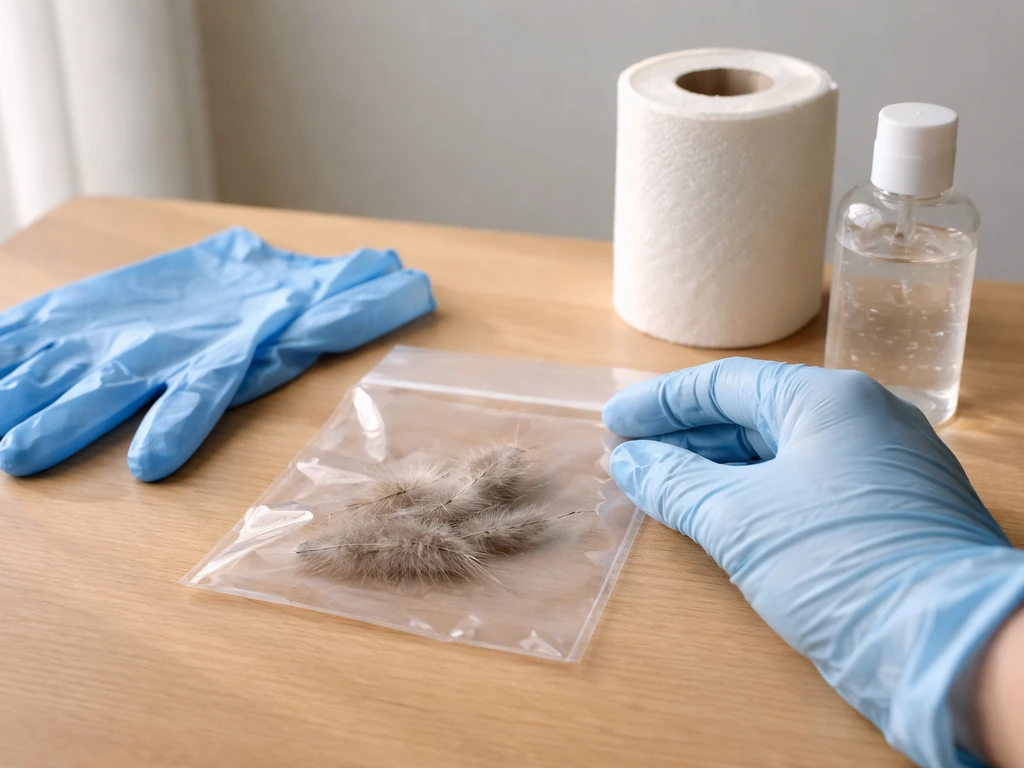
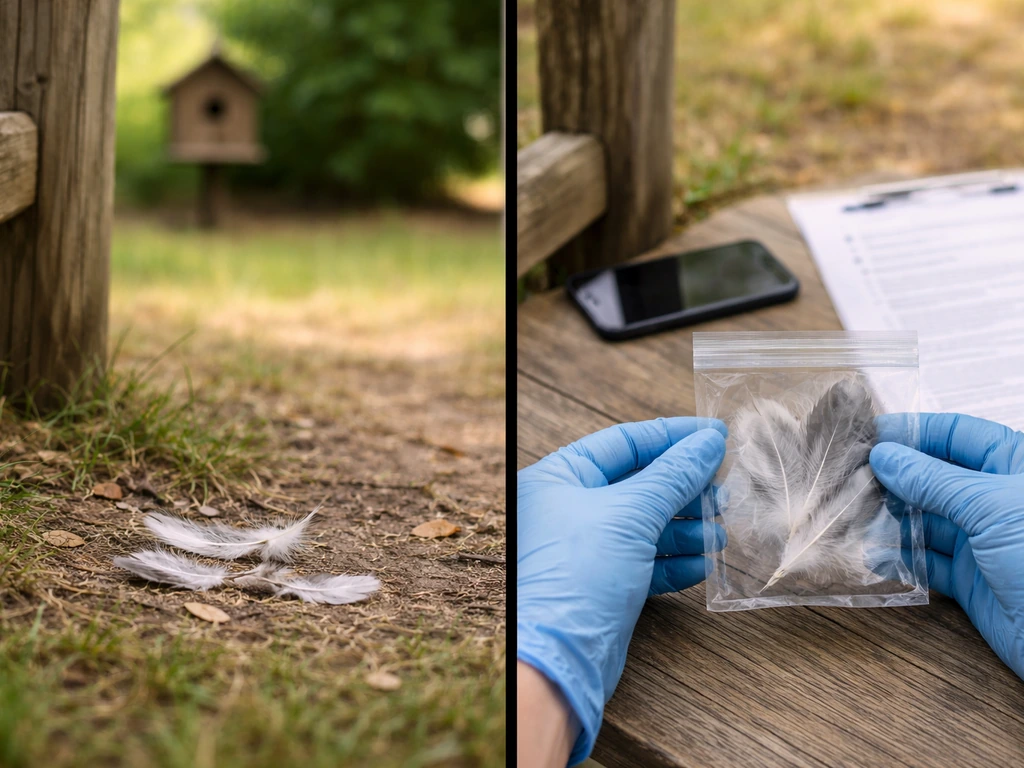
Even if you're in a situation where possession is legal (say, a legally hunted game bird's feathers), handling found feathers carelessly is a real health risk. Wild feathers can carry external parasites like feather lice and mites, fungal spores, bacteria, and pathogens including avian influenza strains. This isn't a theoretical risk, especially if you're also a bird owner. Bringing contaminated feathers into your home puts your pet birds at serious risk.
- Wear disposable gloves when handling any found feather from a wild bird
- Place feathers immediately into a sealed plastic bag to contain any parasites
- Freeze feathers at -20°C (-4°F) for at least 72 hours to kill most parasites and many pathogens
- After freezing, you can carefully clean feathers with a dilute isopropyl alcohol solution and allow them to air dry completely
- Store cleaned feathers in sealed, labeled containers away from your pet birds' living areas
- Never bring feathers from unknown or sick-looking birds into the same space as your pet birds without full quarantine procedures
There's also an ethical dimension specific to bird lovers. Disturbing roosting or nesting birds to collect shed feathers can stress animals, disrupt breeding behavior, and even cause nest abandonment. Even if you're just watching from a distance, repeatedly approaching the same nest site has measurable effects on bird stress levels. The best approach: if you happen upon a feather on a trail or in a park, note the location, photograph it, and research legality before picking it up. Don't make a habit of visiting specific sites specifically to collect.
Legal alternatives when a permit isn't realistic
For most hobbyists, craft enthusiasts, and beginner bird owners who want feathers for enrichment, art, or display, a formal permit is either unavailable (because the purpose doesn't qualify) or more effort than it's worth. That's okay, because there are genuinely good legal alternatives.
- Legally farmed and commercially processed feathers: Ostrich, emu, peacock (farmed), turkey, guinea fowl, and goose feathers are widely available from craft suppliers and are not subject to wild bird protection laws. These are sold in bulk at craft stores and online retailers.
- Pheasant and partridge feathers from licensed game suppliers: In many countries, these can be legally purchased from permitted game dealers or fly-tying suppliers.
- Molted feathers from your own pet birds: If you keep parrots, cockatiels, or other domestically kept birds, their molted feathers are yours to keep and use. This is one of the cleanest legal sources for bird owners.
- Feathers from permitted educational suppliers: Some wildlife education organizations and nature centers sell or donate legally salvaged feathers from dead birds received through wildlife rehab programs. Check with your local Audubon chapter or wildlife center.
- Pre-made feather products: For craft and enrichment purposes, commercially manufactured feather toys and decorations are made from legal sources and are readily available.
- Museum and university programs: If your interest is scientific or educational, some institutions allow supervised access to specimen collections rather than requiring you to collect independently.
If you're interested in questions like what you can legally pick up, what you're allowed to keep from different species, or even what types of feathers are used in traditional quill pens, those are related threads worth exploring separately, each with their own nuances around legality and species. Many people ask what pens are made from bird feathers, but the legal sourcing matters just as much as the materials. If you want to know what bird feathers you can keep for crafts or display, start by matching the species to your local protections before you decide what’s allowed what you can legally pick up.
Your action plan for today
If you found a feather recently, or you've been collecting and you're now not sure whether you're on the right side of the law, here's what to do right now. You may also want to read can you collect bird feathers before you decide what to do next.
- Stop collecting until you have clarity. Don't pick up more feathers while your legal status is unclear.
- Photograph any feathers you already have, and note where and when you found each one.
- Identify the species as precisely as possible. Use the USFWS Feather Atlas (US), the RSPB or Natural England resources (UK), or your regional wildlife authority's identification tools.
- Look up whether that species is listed as protected in your country and state/province. Your national wildlife authority website is the primary source.
- Contact your regional wildlife authority directly. In the US, that's the USFWS Regional Migratory Bird Permit Office for your region. In the UK, it's Natural England, NatureScot, or Natural Resources Wales. In Canada, it's Environment and Climate Change Canada. In Australia, it's DCCEEW plus your state environment department. Explain exactly what you have and what you want to do with it, and ask them directly what your options are.
- If a permit is available for your purpose, request the correct application form and start gathering your documentation.
- If no permit pathway applies to your situation, identify a legal alternative source for the feathers you need.
Common mistakes that get people into trouble
- Assuming shed feathers are always legal to pick up. They're not. The prohibition is on possession, not just active collection from a live bird.
- Thinking backyard birds don't count. Common birds like robins, sparrows, and blue jays are fully protected under the MBTA in the US.
- Using a permit for a different purpose than stated. A scientific collecting permit doesn't cover craft projects.
- Not keeping records. Even with a valid permit, failing to log what you collected is a compliance violation.
- Buying feathers from unverified online sellers. If the seller can't document legal source, you're potentially buying illegally taken feathers, which makes your possession illegal too.
- Forgetting state or provincial laws. Federal permits don't automatically satisfy state-level requirements, and some states have stricter rules.
- Mixing legally and illegally sourced feathers in the same storage. Once they're mixed and unlabeled, you can't prove which is which.
FAQ
If I find a feather on the ground, do I still need a permit to keep it?
In many places, yes. “Take” and “possession” rules often cover shed feathers from protected wild birds, even when you did not disturb the bird. The deciding factors are the feather’s species and whether it is protected in your jurisdiction, not whether you picked it up from the ground.
What counts as “collecting” versus “finding,” and how does that affect legality?
Legally, collecting can include keeping a found feather, plucking or removing feathers from a bird (including harvested game), collecting for craft or display, and removing feathers for research or education. If your actions go beyond passive pickup, or if you remove feathers from living or actively nesting birds, risk and requirements rise sharply.
Does the permit cover selling or trading feathers, or only personal use?
Most permits restrict use to the purpose stated in the authorization. A scientific or educational permit typically does not allow decorative sale or trade, and some jurisdictions treat “commercial” activity as a separate category with different rules. Check the permit conditions for allowed disposition, not just permission to possess.
Can I use feathers from birds I legally hunted, as long as I kept the permit for the hunt?
Often, yes for possession and transport, but only if the birds were lawfully taken and the species fits the specific carve-outs in your country. You still need to follow limits on what you can do next, such as whether the feathers may be kept only for personal use versus being sold, exported, or imported.
What if the feather is from a protected raptor, like an eagle or hawk?
Raptors are commonly subject to extra layers of protection beyond general “migratory bird” rules. In the US, eagles have separate authorization requirements in addition to other migratory-bird considerations. The safest approach is to pause, identify the species, and confirm whether an additional species-specific authorization is required.
Are feathers from captive birds allowed?
They can be, but the legal status depends on how the bird was obtained and whether the feathers count as “wild” parts under local law. Some regions allow sale or possession when birds are captive-bred or legally sourced, but you may need documentation showing lawful origin. If you cannot prove origin, assume restrictions apply.
Can I transport feathers across state, provincial, or national borders?
Not safely without checking rules on both the departure and destination sides, and whether the species is subject to international controls. Even when possession is legal locally, cross-border transport can trigger additional requirements (for example, import and export rules). Keep permit documentation with you and be ready to show it.
If I already collected feathers before I knew the rules, what should I do now?
Do not destroy or “offload” the collection without understanding your jurisdiction’s enforcement approach. Instead, identify the species, gather any proof of origin (hunts, purchases, or documentation), and contact the relevant wildlife authority to ask how they want pre-existing items handled. The right answer depends heavily on species and quantity.
How do I identify the species correctly enough to make a legal decision?
Use reliable visual comparisons (shape, vane pattern, size, and coloration) and cross-check with a feather identification resource, not just “guessing” from a quick image match. If identification remains uncertain, treat the feather as potentially protected and avoid further handling or any intended sale until confirmed.
Do permits require records only for scientific collections, or also for craft and hobby use?
Records requirements vary, but many permits and licenses include accountability obligations. Even when you are only authorized to possess, you may need to log date, location, species, and quantity, and keep documentation available for inspection. If your permit has conditions, follow them even for low-activity situations.
What happens if I apply for a permit but start collecting while the application is pending?
In many cases, collecting during the pending period is not covered by the future approval and can create separate legal exposure. Wait until the authority confirms authorization or issues a written approval number. If you already collected, disclose that fact when you ask the agency how to proceed.
Are there health and biosecurity precautions I should take when handling found or collected feathers?
Yes. Feathers can carry mites, lice, fungal spores, and bacteria, and they may be risky around existing pet birds. Keep feathers contained, minimize dust generation, and clean hands and surfaces after handling. If you have birds at home, consider avoiding bringing found feathers inside unless you have a safe handling and quarantine routine.
Is it ethical or legal to revisit the same site to collect “more shed feathers”?
Legality depends on what you do, but repeated site visits can still cause harm by stressing nesting or roosting birds, even when you are not directly taking from the bird. The safer practice is to avoid targeting nests or roosts, document passively (photo and location), and only collect if it is legal and does not involve disturbing birds.
What are the fastest practical steps I can take if I’m unsure whether I’m allowed to keep a specific feather?
First, identify the species (or narrow the possibilities). Next, check your local authority rules for that species’ protection status. Finally, contact the issuing office and describe your exact scenario (purpose, whether it was found or obtained, quantity, and where it came from). This beats relying on forums, because exceptions and thresholds vary by jurisdiction.
Next Article
What Pens Are Made From Bird Feathers and How to Choose One
Learn which pens use real bird quills, how to spot true feather construction, and how to choose ethically sourced pens.