
Bird sand is most commonly used as a cage-floor substrate, placed at the bottom of a bird's enclosure to absorb moisture, control odor, and give birds a natural surface to walk on. Some products double as bathing sand or digestive grit, which is where a lot of beginners get confused. The short version: if you're setting up a cage for the first time, bird sand can work as a bottom layer, but it's not the right choice for every bird, and picking the wrong type can cause real respiratory or digestive problems. Here's how to make sense of it.
What Is Bird Sand Used for and How to Use It Safely

Marcus Chen
21 May 2026
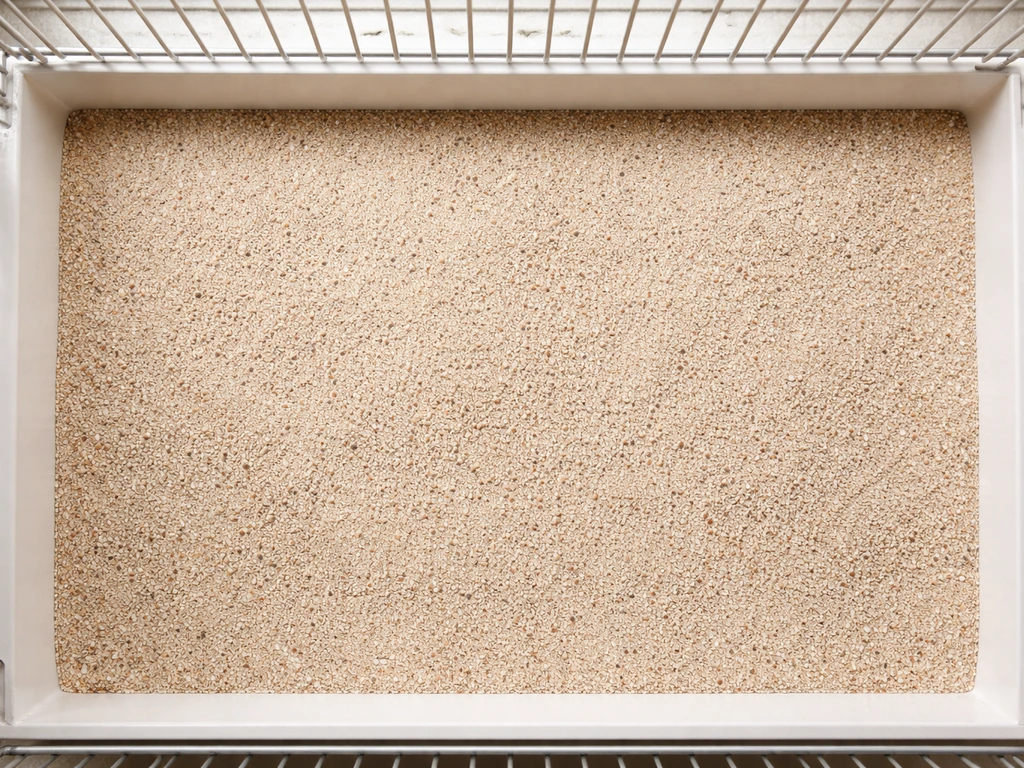
What people actually mean when they say "bird sand"
The term gets used loosely and covers a few different products. Most of the time, when someone searches for bird sand, they mean one of three things: a cage-floor substrate (an absorbent bottom layer for hygiene and foot comfort), a bathing or dust-bath sand for species that groom themselves in dry material, or a digestive grit that helps birds break down hard food in their gizzard. Retailers often blur these categories, and some products are legitimately sold as multi-use, which makes the confusion understandable. The key is knowing which use you actually need before you buy anything.
What bird sand does inside a cage
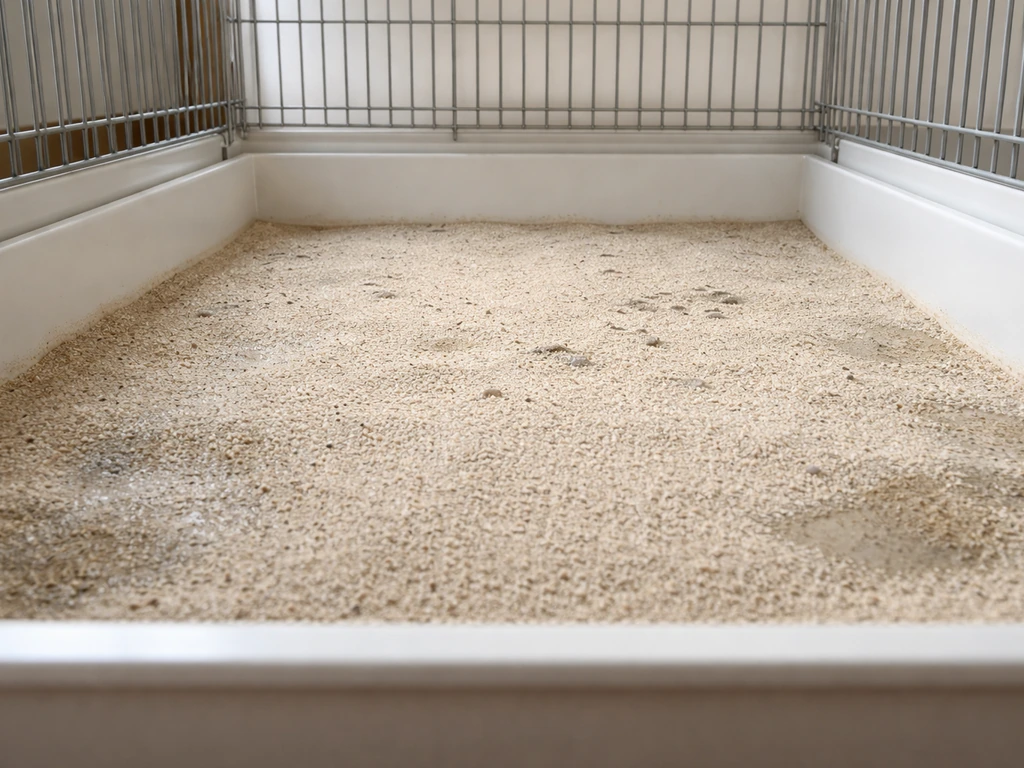
As a cage substrate, bird sand sits on the floor or in a tray at the bottom of the enclosure. It absorbs droppings and spilled water, reduces odor between cleanings, and gives birds something textured to stand on. For birds that spend time on the floor of their enclosure, it can also provide mild foot stimulation, which is more comfortable than standing on a bare plastic tray all day.
Some brands, like Happy Pet's "The Bird House" Premium Bird Sand, specifically recommend a bottom-layer approach where you pour a layer into the cage tray, sift it regularly to remove soiled material, and replace it fully once a week. That kind of routine keeps odors manageable and gives you a clean surface without needing to scrub the tray every single day. That said, it works best when the tray is deep enough to hold a proper layer and when the bird isn't constantly flicking it onto everything.
A genuinely useful side benefit: loose substrate like sand makes it harder to monitor droppings compared to a flat paper liner. If you're dealing with a new or sick bird and you need to watch stool consistency closely, sand isn't the right substrate for that period. Paper makes it much easier to see what's normal and what isn't.
Bathing sand vs cage sand: these are not the same thing
This is one of the most common mix-ups. Bathing sand, sometimes called dust bath sand, is used specifically for birds that groom themselves by rolling or fluffing in fine dry material. Bathing sand is sometimes called dust bath sand, but it is used for dust-bathing behavior rather than as the cage-floor litter. Think chinchilla sand but designed for birds. It's usually an extremely fine, dry powder or very fine grain meant to coat feathers, strip excess oil, and absorb debris. Species like quail, finches, and certain softbills use this type of bathing behavior naturally.
Cage substrate sand is coarser, more absorbent, and intended to sit in a tray for days at a time. It's not ideal to use cage substrate as bathing sand, because the particle size and composition are different. Using a dusty, ultra-fine bathing sand as a full cage substrate is also a problem because loose fine dust sitting in a closed cage is a respiratory irritant, especially in small spaces or poorly ventilated rooms.
| Feature | Cage Sand (Substrate) | Bathing Sand |
|---|---|---|
| Primary purpose | Floor covering, odor/moisture absorption | Feather grooming, oil/debris removal |
| Particle size | Coarser, granular | Very fine, almost powdery |
| Where it goes | Cage tray, bottom layer | Separate shallow bath dish or tray |
| How long it stays | Days at a time, sifted regularly | Replaced after each bathing session |
| Who uses it | Most caged birds benefit from substrate | Dust-bathing species: quail, some finches, softbills |
| Main safety risk | Ingestion, respiratory irritation if too fine | Respiratory dust if used as cage floor material |
How to pick bird sand that won't hurt your bird
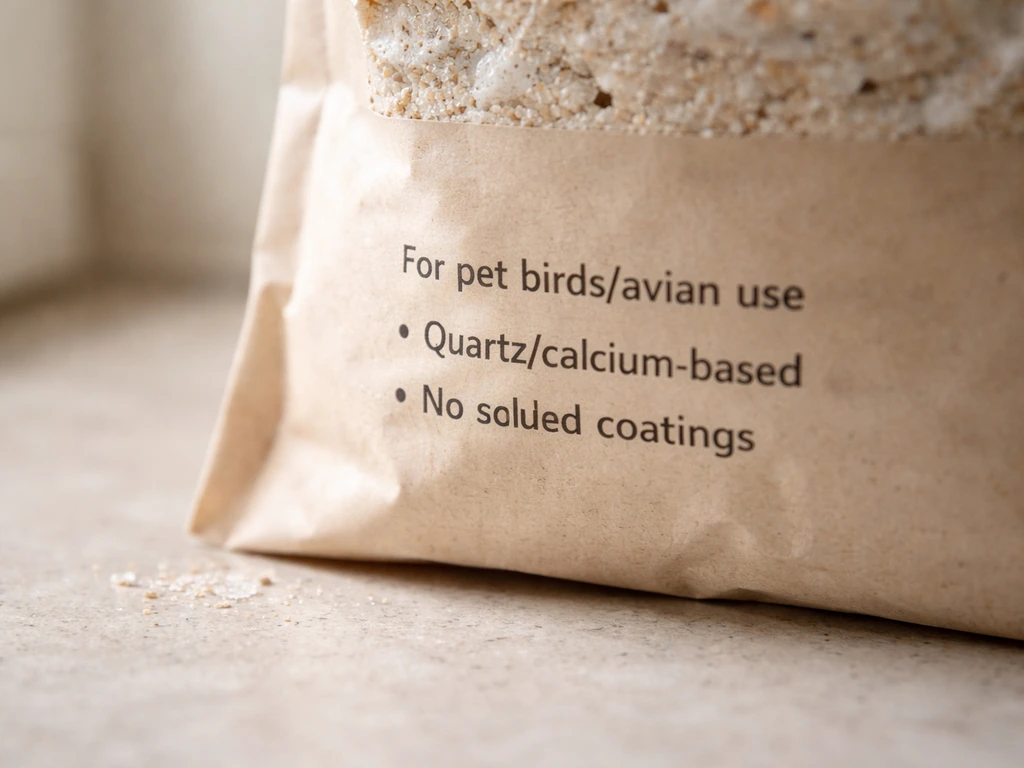
The labeling on bird sand products is not always honest about what's in them. Here's what to look for and what to walk away from.
What to look for
- Products specifically labeled for pet birds or avian use, not general reptile or small animal substrate
- Natural, untreated quartz or calcium-based sand without added coatings
- Appropriately sized particles for your intended use: coarser for cage substrate, ultra-fine only for bathing sand used in a separate dish
- Dust-controlled or low-dust formulations, especially if your bird is kept indoors in a small room
- No added fragrances, dyes, or essential oils — birds have extremely sensitive respiratory systems and scented products can cause real harm
- Brands that publish ingredient lists or have verifiable avian-safe certifications
What to avoid
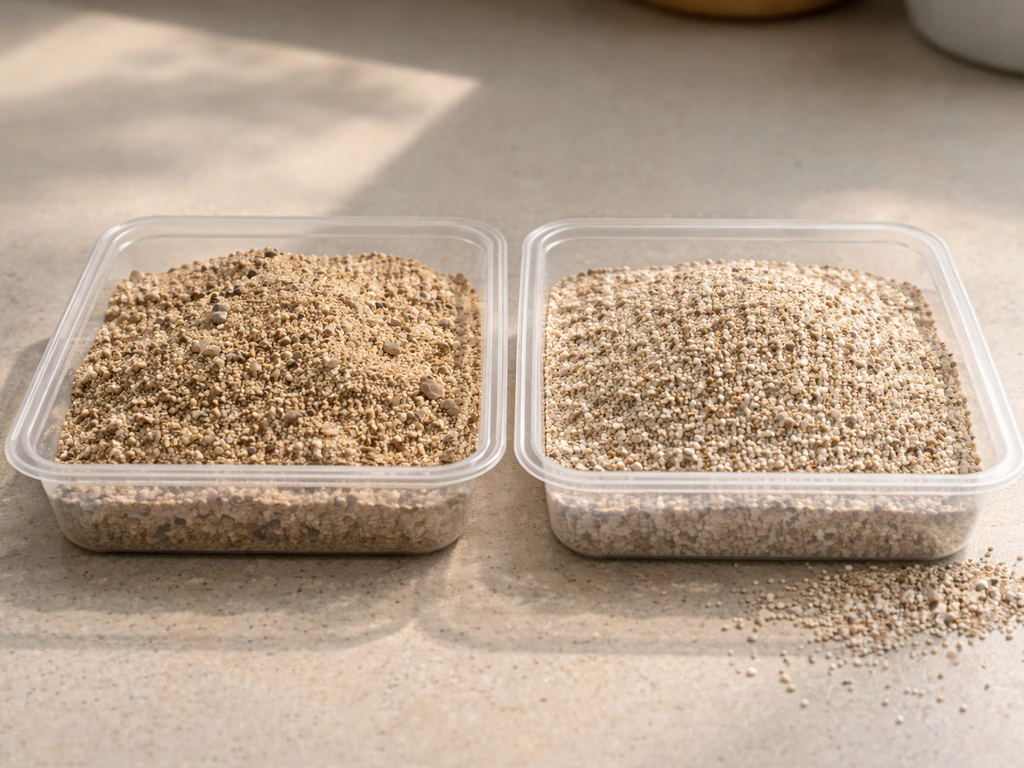
- Construction sand, play sand, or landscaping sand — these are not processed or tested for animal safety and can contain silica dust, chemical treatments, or contamination
- Products with kiln dust or excessive fine particle content that creates airborne dust in an enclosed space
- Any sand labeled "with grit" unless you've confirmed your species actually needs supplemental grit (more on that below)
- Products with added minerals, salt, or synthetic coatings not intended for animal ingestion
- Sandbox sand repurposed as a "budget" bird substrate — I've seen this recommended online and it's not a safe shortcut
The grit question
Some bird sand products also function as digestive grit, meaning small insoluble particles that sit in the gizzard to help grind hard seeds. SHOWMASTER Bird Sand is sold as bird sand for cage use, and can be used as cage substrate rather than just bathing sand [digestive grit](https://www. beaksandfeathers. com.
au/product/showmaster-bird-sand-1-5kg/). This is genuinely useful for certain species like pigeons, doves, and some finches that eat whole seeds with intact husks. However, parrots and hookbills hull their seeds before swallowing, so they don't need insoluble grit and can actually overeat it if it's sitting loose on the cage floor, which causes impactions. If your bird is a parrot, budgie, cockatiel, or conure, choose a sand product that is clearly labeled as substrate only, not a combined sand-and-grit product.
How to use bird sand correctly and keep it clean
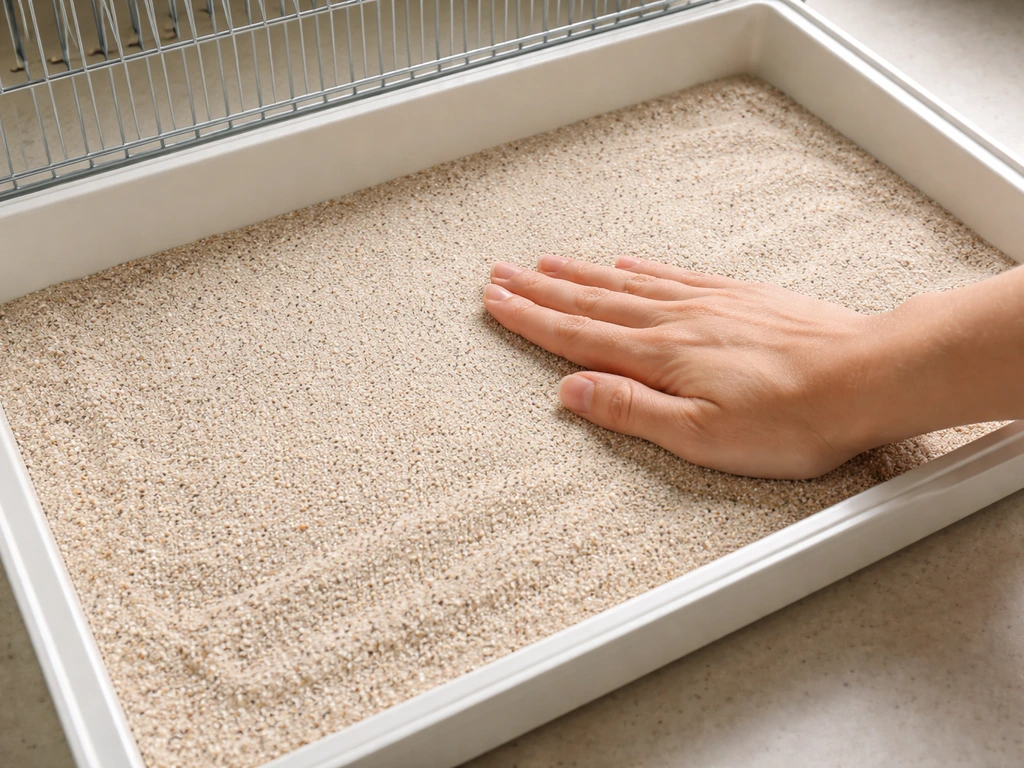
Getting the layer depth right matters more than most beginners expect. Too thin and it doesn't absorb properly. Too deep and birds can burrow into it and ingest large amounts, or it creates a warm, moist layer at the bottom where bacteria can grow.
- Pour a layer roughly 1 to 2 cm deep into a clean, dry cage tray. That's usually enough to absorb droppings without becoming a sandpit.
- For bathing sand, use a separate shallow dish (like a terracotta dish or a purpose-built bird bath tray) and fill it no deeper than about 2 to 3 cm so the bird can roll comfortably without throwing sand everywhere.
- Sift the cage substrate layer every 2 to 3 days using a fine sieve or mesh scoop to remove droppings and wet clumps. This extends the useful life of the layer and keeps odors down.
- Do a full replacement of cage substrate sand once a week, or sooner if the tray smells, looks damp throughout, or the bird has been ill.
- Wash and fully dry the tray before adding fresh sand. Wet trays under a fresh sand layer create exactly the bacterial environment you're trying to avoid.
- For bathing sand, remove and replace after each use. It gets contaminated quickly and should not be left in the cage for more than a few hours at a time.
- Keep the cage in a well-ventilated room and monitor for any signs of respiratory irritation in your bird: tail-bobbing at rest, clicking sounds, labored breathing. If those appear, remove the substrate immediately and consult an avian vet.
Which birds and enclosures get the most out of bird sand
Bird sand makes the most sense for species that naturally spend time on the ground or have behaviors that benefit from a loose substrate. It works least well for arboreal species that rarely touch the cage floor, where a simple paper liner is more practical and much safer to monitor.
Best fits for cage substrate sand
- Finches and canaries in larger flight cages, especially when kept in groups
- Doves and pigeons, which forage on the floor naturally and benefit from a natural-feeling surface
- Quail kept in aviary or outdoor enclosure setups
- Softbills and ground-feeding species in mixed aviaries
Best fits for bathing sand
- Quail (especially Japanese quail), which dust-bathe intensively and need a regular sand dish
- Some finch species that appreciate occasional dry bathing options
- Any bird showing natural dust-bathing behaviors in captivity
Species where paper liners are a better call
For parrots, budgies, cockatiels, conures, lovebirds, and most hookbills kept in standard wire cages, avian vets and organizations like VCA consistently recommend plain paper liners (newspaper, unbleached paper towels, or purpose-made paper cage liners) over loose substrates. The reasons are practical: paper lets you see droppings clearly, it's easy to change daily, it doesn't create dust, there's no ingestion risk, and it costs almost nothing. For these birds, sand is not necessary and adds more risk than benefit. Keeping this simple is not settling for second-best, it's genuinely the smarter approach for a beginner.
How sand compares to other substrate options
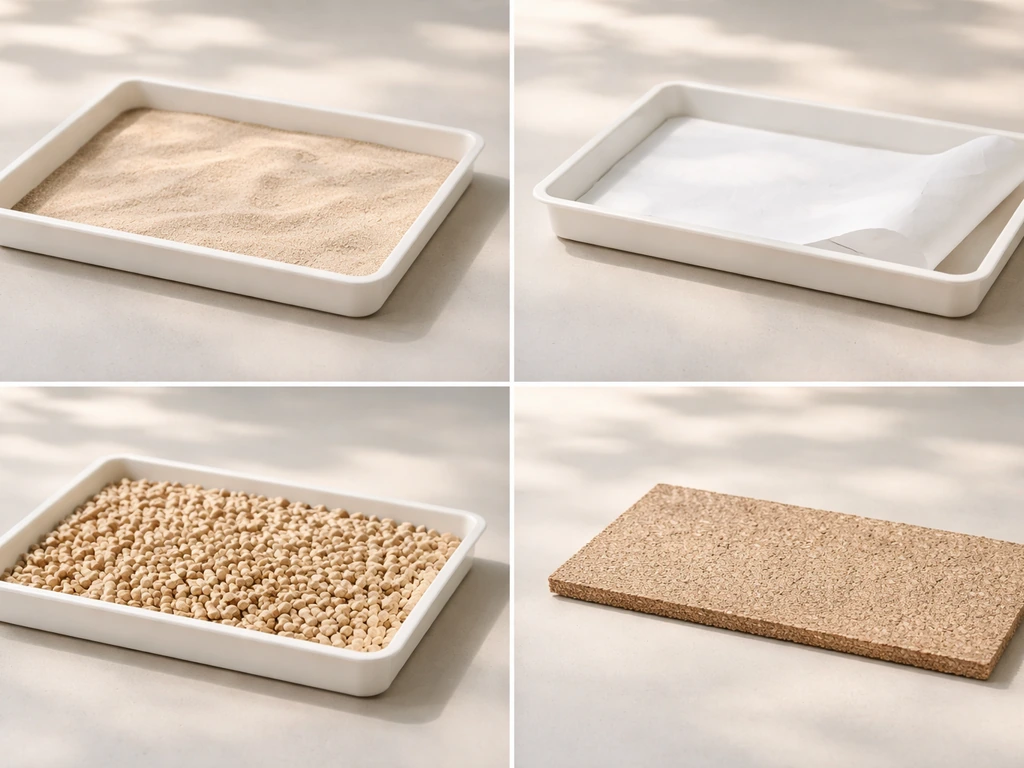
If you're weighing your substrate options broadly, it helps to know where sand sits relative to other common choices. Paper liners win on hygiene monitoring and safety. Pellet-based litters (compressed paper or wood pellets) offer good odor absorption and are safer than sand for parrots that might ingest substrate. Sand sits in the middle: more natural-feeling and better for ground-foraging species, but requiring more active maintenance and careful product selection.
If you're also curious about what are bird feet made of and how that affects comfort on different surfaces, the kind of substrate you choose can matter for ground-feeding birds. Gravel, which is sometimes confused with sand, is a different product with different particle sizes and is discussed in more detail separately.
The bottom line is that no single substrate is right for all birds, and matching the substrate to the species and enclosure type matters more than picking the "best" product in isolation. If you want the best bird bedding for your setup, focus on the right type for your species, plus safe labeling and easy cleaning.
Quick-reference checklist before you buy
- Identify whether you need cage substrate sand, bathing sand, or digestive grit — they're different products with different applications
- Check that the product is specifically labeled for avian use, not repurposed from another animal category
- Confirm no added fragrances, dyes, oils, or chemical treatments
- If your bird is a parrot or hookbill, opt for paper liner instead and skip sand as a substrate
- If your bird is a dove, finch, quail, or ground-feeding species, bird sand as substrate or bathing sand can be a good fit
- Plan to sift the cage substrate every 2 to 3 days and replace fully once a week
- Keep bathing sand in a separate dish and replace it after every use
- Watch your bird for any respiratory symptoms and remove the substrate immediately if they appear
FAQ
What is bird sand used for if I see “multi-use” on the label?
Multi-use usually means it can be used as cage substrate, and sometimes also as dust-bath material or grit. Treat it as cage substrate first, unless the package clearly states a dust-bath use with the specific “fine and dry for rolling” instruction. If the product includes digestive grit, do not use it for parrots or any bird that crushes seeds before swallowing, unless a vet specifically told you to.
Can I use bird sand as a permanent substrate without daily maintenance?
Yes for many ground-feeding birds, but not as a “set and forget” option. You still need to sift or remove visible soiled spots regularly (often daily or every other day), and fully replace the layer on a schedule (commonly weekly for standard setups). If droppings start building up or odor increases, the layer is too dirty, too deep, or the enclosure is not ventilated enough.
How deep should bird sand be in the tray?
Aim for a thin-to-moderate layer that absorbs spills without letting birds burrow. A practical approach is to start shallow, then adjust based on your bird’s behavior. If you notice the bottom staying damp, the layer is likely too thick or too frequently contaminated, which increases the risk of bacterial growth.
Why does bird sand seem dusty or irritating when I add it?
Dust problems usually come from using a product that is too fine for cage litter, shaking out the bag too aggressively, or having poor ventilation. Choose sand that is intended for cage substrate, add it gently, and avoid overly dusty options. If your bird coughs, sneezes repeatedly, or you notice cloudy air in the room, switch substrates immediately.
Is bird sand safe for baby birds or sick birds?
Often not as a first choice. If you need to closely monitor droppings consistency, paper liners are usually easier and safer because you can see normal versus abnormal stool right away. For chicks or birds recovering from illness, ask an avian vet about substrate requirements, since digestion and respiratory sensitivity can change during recovery.
Can bird sand replace paper liners for parrots and budgies?
In most standard wire-cage setups, it is generally not the safer swap. Paper liners reduce dust, allow clear stool monitoring, and eliminate ingestion risk from loose substrate. If you are determined to use a loose substrate for enrichment, consult an avian vet first and avoid any product that contains grit.
What’s the difference between bird sand, dust-bath sand, and gravel if they look similar in a store?
Bird sand for cages is usually coarser and absorbent, designed to sit under the bird. Dust-bath sand is meant to coat feathers, is extremely fine, and is used in a separate bathing container. Gravel has different particle shapes and sizes, so mixing it up with sand changes traction, cleanliness, and the risk of ingestion or irritation.
How do I tell whether a “bird sand” product contains digestive grit?
Check for terms like “grit,” “digestive,” “gizzard,” or “insoluble particles,” and verify whether it is explicitly labeled as substrate only. If it is described as grit or a combined sand-and-grit product, avoid it for parrots and hookbills that crush seeds before swallowing.
What should I do if my bird is eating the sand?
Some nibbling can happen, but consistent ingestion is a red flag, especially for birds that should not need grit. Remove or switch substrate, stop using any product containing grit, and monitor for changes in droppings, reduced appetite, or lethargy. If symptoms persist, contact an avian vet.
How can I keep odor under control with bird sand?
Odor usually improves when you remove soiled spots promptly, maintain an appropriate layer depth, and replace the substrate on schedule. Also consider whether the cage tray is deep enough for absorption but not so deep that it stays damp. If odor remains strong despite regular cleaning, reassess ventilation and whether the substrate type matches your bird’s droppings volume.