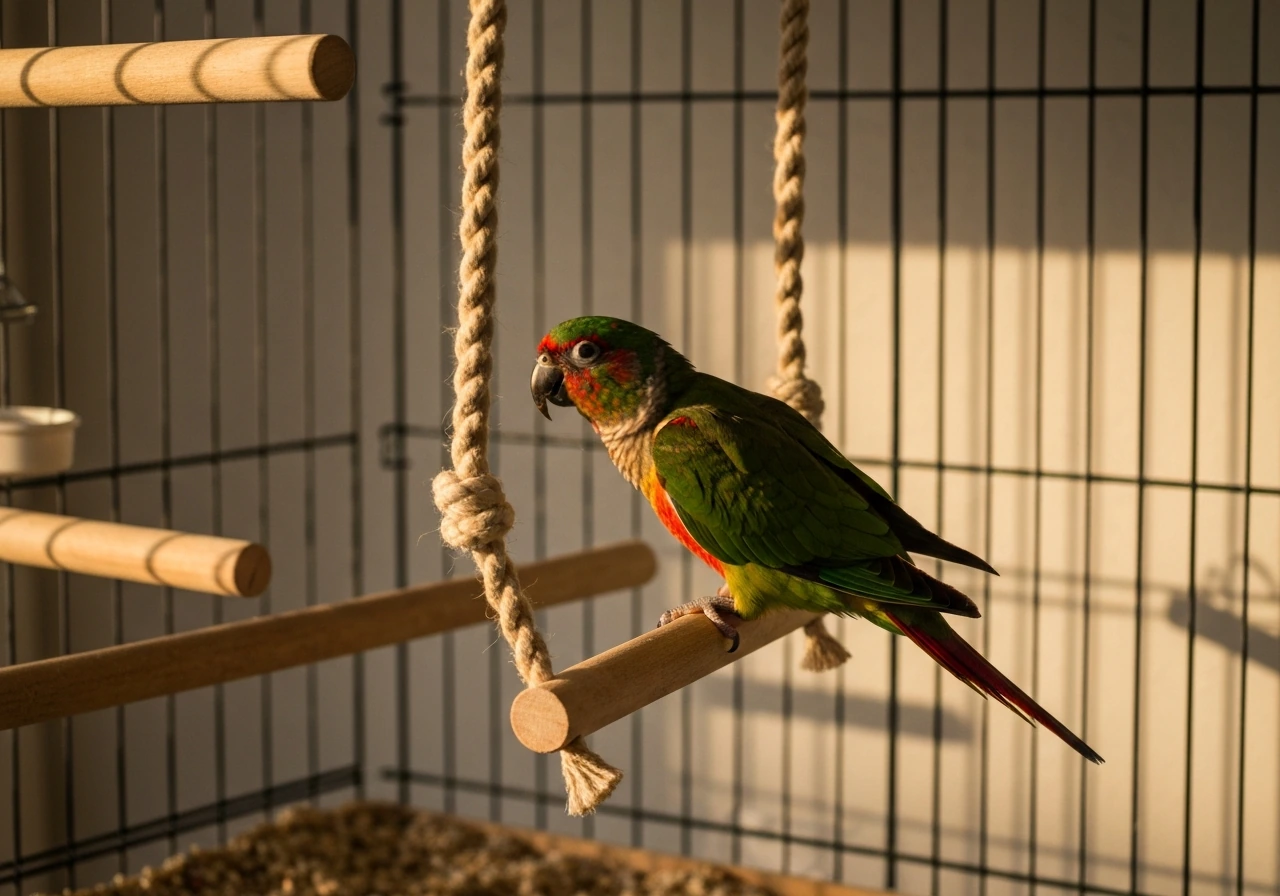
Some bird toys are fine for rats, but plenty are genuinely dangerous, and the difference usually comes down to materials and construction rather than whether a toy is labeled "non-toxic" or "bird-safe." Rats chew everything, ingest fragments, and get tangled in loose fibers in ways birds typically don't, so a toy that passes muster in a parrot's cage can become a hazard the moment a rat gets hold of it. The short version: plain untreated wood, cardboard, and simple foraging items are generally safe; rope, plastic, painted or coated pieces, metal bells, and anything with adhesive are all risk categories you need to evaluate one by one before handing them over.
Are Bird Toys Safe for Rats? A Practical Safety Checklist

Marcus Chen
22 May 2026
What "safe" actually depends on
The core issue is that bird toys are designed around bird behavior: parrots nibble, toss, and foot-hold items. They rarely sustain a prolonged chewing assault on a single point. Rats do exactly that. A rat will work on one spot methodically until it either gets bored or destroys the object entirely, swallowing fragments the whole time. So when you ask whether a bird toy is safe for rats, you're really asking three separate questions: Is the material safe if ingested in small amounts? Is the construction safe under aggressive chewing (no sharp edges, no parts that become choking hazards)? And is the design safe to interact with physically (no entanglement, no spaces to get a foot or head stuck)? A toy needs to pass all three to be worth using.
Another thing that trips people up is the phrase "non-toxic" on a bird-toy label. That designation is written for birds, not small mammals. A dye or coating that won't harm a bird if briefly contacted can still be a problem for a rat who gnaws it off in quantity over an hour. Treat "non-toxic" as a starting point for research, not a final answer.
Hazard checklist: bird-toy materials that can hurt rats
Go through this list before putting any bird toy in a rat's space. If a toy contains one of these elements, it either needs the risky component removed or it stays out entirely.
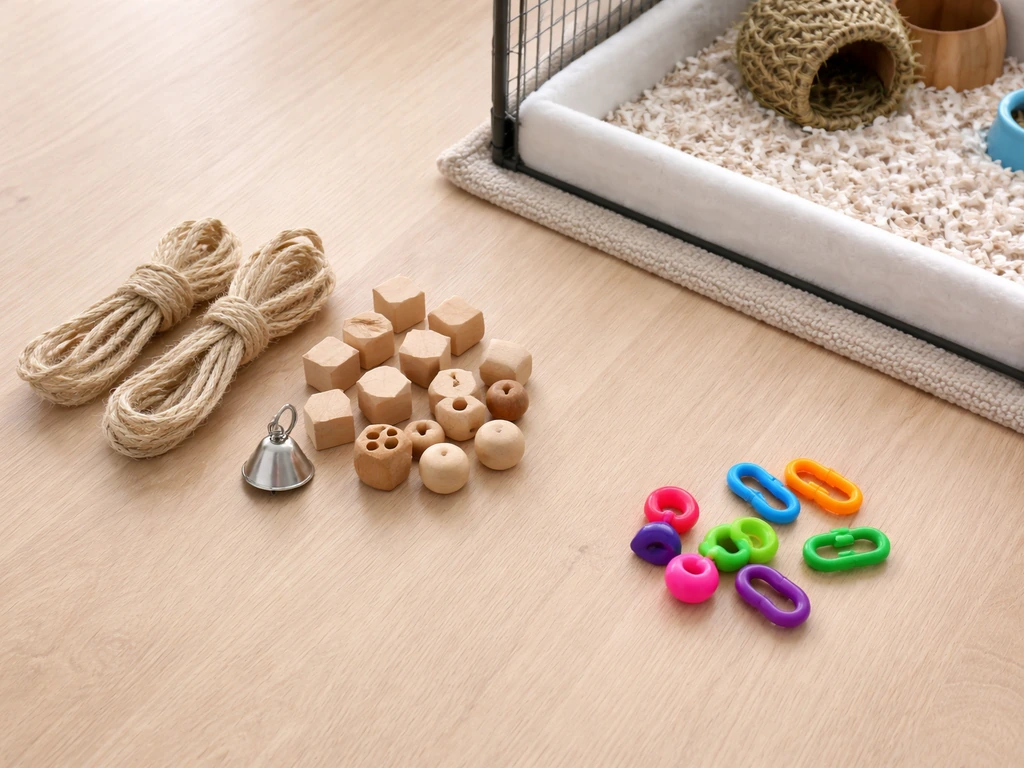
- Rope and cotton thread: unraveled or frayed strands can wrap around a rat's toes, legs, or neck and cut off circulation. Remove any rope toy the moment it starts to shred.
- Plastic components: rats chew through plastic quickly and swallow fragments that can cause choking or intestinal obstruction. Any plastic piece a rat can get its teeth into is a removal candidate.
- Painted or coated wood: paint can leach lead or other heavy metals when gnawed. Lead poisoning in small mammals is documented and serious; gnawing on lead-painted wood is a known exposure route.
- Bells (especially small open bells): small bells can trap a rat's claw or tongue, and the metal used in cheap bird-toy bells is often not tested for heavy metal leaching under the kind of chewing rats apply.
- Adhesives and glue joints: cyanoacrylate (super glue) and similar adhesives used to hold toy components together are a poisoning concern if chewed and swallowed in meaningful amounts.
- Treated or aromatic wood: cedar and pine contain aromatic oils that irritate the respiratory tract and can be harmful when a rat chews the wood and ingests those compounds.
- Wire, mesh, and staples: sharp cut ends of wire can injure the mouth or feet; spacing that seems fine for a bird's foot can trap a rat's smaller toes or nails.
- Scented or "enrichment-scented" toys: any toy marketed as scented or infused with essential oils is a hard pass. Essential oils are toxic to small mammals at relatively low exposure levels.
- Soft or hollow plastic parts: even if a rat can't immediately chew through a piece, thin or hollow plastic can crack under stress into sharp shards.
Ingestion vs. chewing: dyes, plastics, coatings, glue, and strings
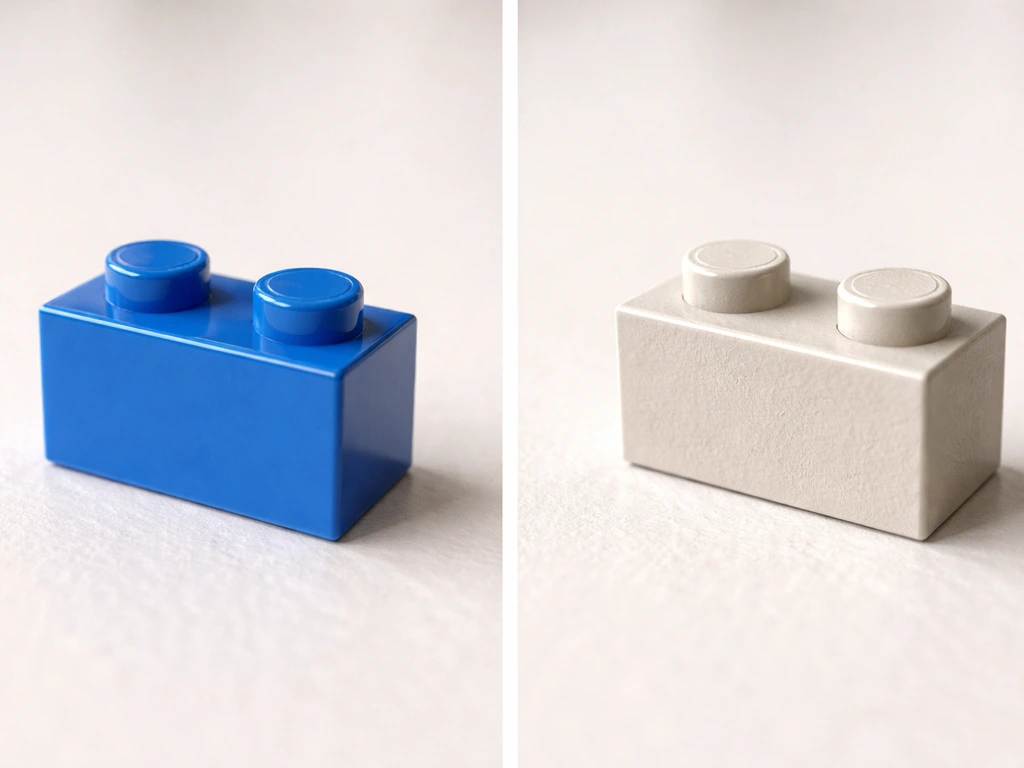
There are two separate risk pathways here and it helps to think about them separately. The first is topical or surface exposure: a rat mouths a toy, picks up dye or coating residue, and swallows small amounts over time. The second is structural ingestion: the rat physically breaks off a chunk and eats it. Both matter, but the structural risk is more immediately dangerous.
Dyes on bird toys can be food-grade or industrial, and the labeling usually doesn't tell you which. If a toy bleeds color when wet, treat it as suspect. Acrylic paint and varnish coatings used on decorative wooden toys are the same concern, they're designed for surface durability, not for being consumed. Coatings don't need to be dramatically toxic to cause problems; they just need to accumulate to a level where a rat's smaller body mass makes the dose significant.
Plastic ingestion is the most cut-and-dried risk. Chewed plastic fragments can cause intestinal obstruction, and there's no treatment you can apply at home for that. The same applies to rope and string: a loose strand that a rat bites free and swallows is a linear foreign body risk, and a strand that stays attached but wraps around a limb is a tourniquet risk. Rope toys fail in both directions for rats. Glue joints are often overlooked, but if a toy is held together with adhesive and the rat targets that seam, you're now dealing with cyanoacrylate or epoxy entering the digestive tract, which is a poison-control-level concern.
Toxicity pitfalls: paint, rust, leaching metals, essential oils, and treated wood
The metallic component risk in bird toys is underappreciated. Cheap bells and clasps are often made from zinc- or lead-containing alloys that weren't tested under sustained chewing conditions. The ASTM F963 toy safety standards that apply to children's toys set strict limits on soluble heavy metals like cadmium and lead in small parts, but bird toys are not required to meet those standards. The CPSC emphasizes that applicable toy safety guidance such as ASTM F963 includes limits for soluble heavy metals like cadmium and lead in small parts. That gap matters a lot when you're handing a toy to a rat who will immediately start gnawing the hardware.
Rust is a related problem. A bird toy stored in a humid environment develops rust on wire and metal fittings, and while rust itself isn't acutely toxic, it can harbor bacteria and make the metal surface rougher and more likely to cause cuts that then get infected. Discard any toy with visible rust before it gets near a rat.
Treated wood is a category that surprises a lot of people. "Natural wood" on a bird-toy label doesn't automatically mean untreated. Preservatives, pesticides, and kiln treatments all exist, and none of those are rat-safe. Beyond treatments, the wood species itself matters: pine and cedar contain aromatic oils that are well-documented irritants for small mammals' airways, and when a rat chews those woods it's ingesting those oils in a concentrated form. Stick to wood species explicitly listed as safe for small animals, like apple, willow, or birch, and only if you can confirm they're untreated.
Essential oils in any form are a hard stop for rats. Some bird toys are marketed as "naturally scented" or include dried botanicals infused with plant oils. What's a gentle sensory enrichment item for a parrot can be a toxicity risk for a rat, whose smaller body processes those compounds very differently.
Design and hygiene: size, bar spacing, snag hazards, and cleaning
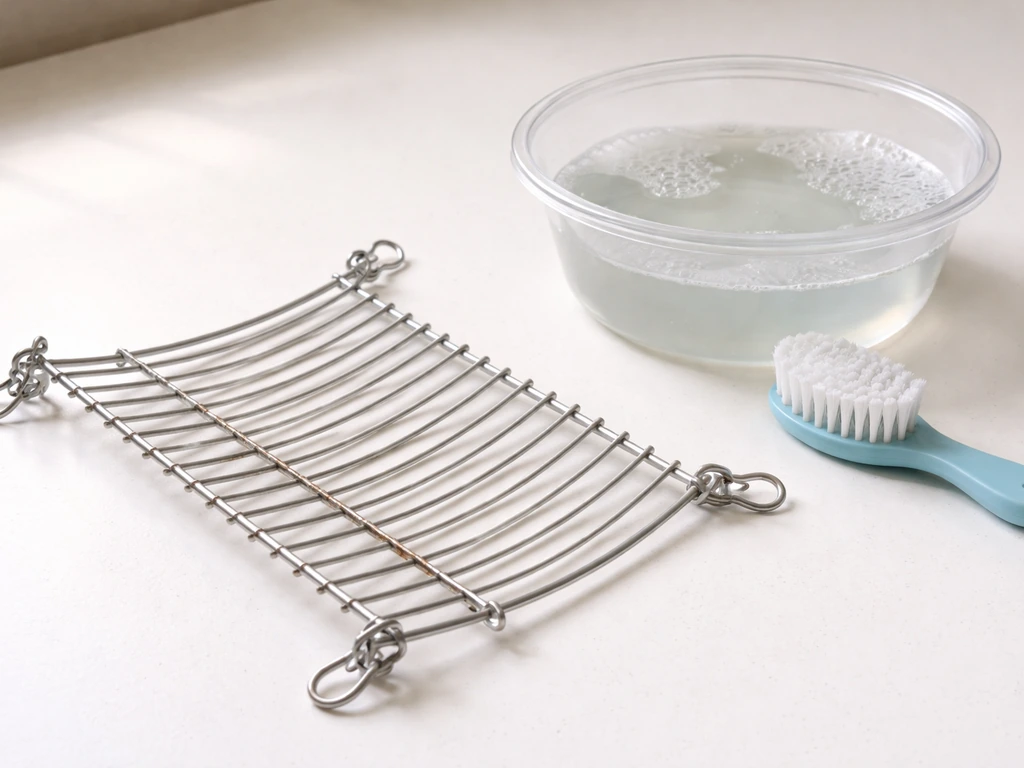
Physical design is where a lot of bird toys quietly fail for rats. If you are considering bird hammocks for a rat, treat them like any other chew and entanglement risk and verify the material, stitching, and gaps are truly rat-safe are bird hammocks safe. Many bird toys are scaled for birds, which means openings, loops, and bar spacing are sized for bird feet and beaks, not rat bodies. A rat can get a foot, claw, or even its head through a gap that looks too small to matter at a glance. Check every opening on a toy and ask whether a rat's foot could slip through and get stuck. The entanglement risk from strings and loops is the same issue: something that hangs loosely and harmlessly for a bird becomes a snare when a rat starts crawling through and around it.
Hygiene degrades fast once a rat starts seriously chewing a toy. Gnawed wood, frayed rope, and cracked plastic all create crevices that trap moisture and food debris, which then harbor bacteria. A bird toy that looked clean a week ago can become a bacterial reservoir after a rat has worked on it. Inspect chew toys every few days and replace them as soon as the surface is significantly damaged.
For cleaning the toys that do pass your safety check, the CDC recommends washing first with soap and water to remove debris, then disinfecting with a diluted bleach solution: about 2 oz (1/4 cup) of bleach per gallon of water. Rinse very thoroughly after disinfecting and allow the toy to dry completely before returning it to the cage. Chemical residue from disinfectants is its own hazard, so the rinse step is not optional. Wisconsin DHS guidance suggests a 1:10 bleach-to-water ratio (one part bleach, ten parts water) applied for at least 5 minutes as an alternative dilution for pet item disinfection.
Better options: rat-specific toys and enrichment that actually works
Here's the honest truth: rats don't need bird toys. If you are thinking about keeping a bird scooter in your house, you can apply the same safety mindset and prioritize rodent-safe items instead. Some people wonder whether playing bird sounds attracts birds, but for rats the safer approach is still to stick to rat-specific enrichment does playing bird sounds attract birds. They need chewing, foraging, climbing, and hiding opportunities, and you can provide all of those with items purpose-built for rodents or simple household materials that are already known to be safe. If you want your bird to stay entertained, look for toys designed for birds and supervise the interaction, since what’s safe for rats is not automatically safe for them and your bird can swing.
- Cardboard tubes (toilet paper rolls, paper towel rolls): universally recommended by rat care experts and research institutions. Safe to chew, free, easy to replace daily.
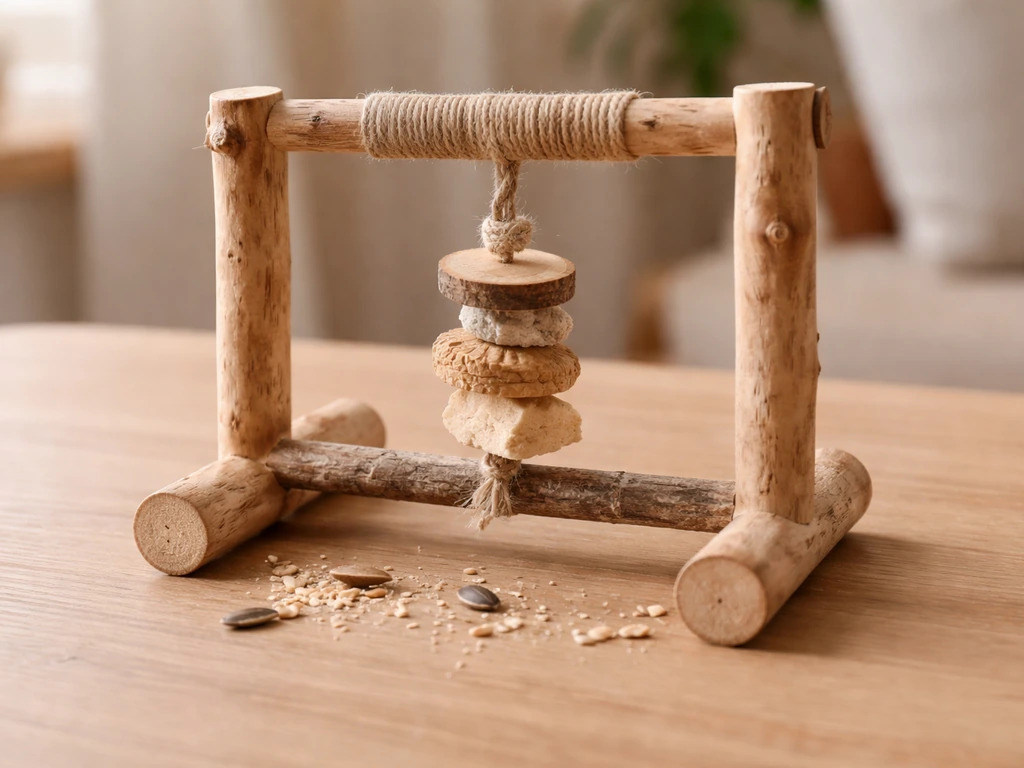
- Untreated wood chew sticks (apple, willow, birch): satisfies gnawing drive without the toxicity concerns of treated or aromatic species. Confirm they're pesticide-free.
- Grass hay: provides nesting material and light chewing enrichment without any of the hazard categories above.
- Polycarbonate or hard plastic huts and tunnels (from rat-specific product lines): these are tested for rodent use; the difference matters compared to random plastic components on bird toys.
- Dig boxes filled with shredded paper or chemical-free soil: foraging enrichment that uses natural rat behavior.
- Hammocks from fleece (without loose strings or frays): rat-specific hammocks made from fleece are a tested, popular option. Since hammocks for birds involve similar entanglement questions, the same inspection logic applies: check for fraying regularly.
- Commercial rat chew toys (wood blocks, loofah, seagrass): sold for small animals and held to different material standards than bird toys.
- Paper-based foraging toys: hide treats inside folded paper or small cardboard boxes. No hardware, no coating, no hazard.
Research facility enrichment programs for rats consistently approve cardboard tubes, chew sticks, and nesting materials as baseline items. If it's good enough for institutional rat care, it's a solid baseline for a pet rat too.
How to actually test a toy today and when to pull it
If you want to trial a specific bird toy for a rat right now, here's a practical sequence that catches most of the common problems before they become emergencies.
- Identify every material: wood, metal, plastic, rope, paint, adhesive, dye. Look for labels or look up the product by name. If you can't identify a material, it doesn't go in the cage.
- Remove all rope, string, and loose fiber components. These fail the entanglement and ingestion tests regardless of other factors.
- Remove all metal hardware: bells, clasps, chains, wire links. Unless you can verify the alloy is lead- and zinc-free and tested for rodent use, these are out.
- Check for painted or coated surfaces. If the wood has any color or sheen beyond natural wood tone, remove the paint if possible or discard the toy.
- Assess size and openings: every hole or loop should be either too small for a rat's foot to enter or large enough that nothing can get trapped.
- Clean and dry the toy using the soap-then-bleach-solution method before first use.
- Introduce the toy supervised for the first several days. Watch for aggressive chewing at any single point, swallowing of fragments, signs of distress, lethargy, soft stool, or diarrhea.
- Pull the toy immediately if you see: fraying, cracking, splintering, any sign of paint or coating coming off, the rat chewing at glue seams, or any behavioral change like lethargy or diarrhea after introduction.
- Replace at the first sign of significant chew damage even if the rat seems fine. Damaged surfaces harbor bacteria and create new ingestion risks daily.
The clearest signal to stop using a toy is visible structural damage from chewing. Diarrhea or lethargy that starts within 24 to 48 hours of a new toy appearing is a vet call, not a wait-and-see situation. Rats are small enough that toxic exposures escalate quickly, so if something seems off, remove the toy first and ask questions after.
Realistically, most bird toys won't survive this checklist, and that's fine. The goal isn't to repurpose bird toys at all costs; it's to give your rat genuine enrichment safely. A toilet paper roll and a willow chew stick cost almost nothing, require zero safety research, and keep a rat busy just as effectively as a $15 parrot toy. Save the bird toys for the bird.
| Material/Component | Risk for Rats | Verdict |
|---|---|---|
| Untreated natural wood (apple, willow, birch) | Low if confirmed pesticide-free | Generally safe |
| Treated, painted, or varnished wood | Lead/heavy metal leaching, coating ingestion | Avoid |
| Pine or cedar wood | Aromatic oil irritation and toxicity when chewed | Avoid |
| Rope or cotton thread | Entanglement, linear foreign body ingestion | Avoid |
| Plastic components (any) | Choking, intestinal obstruction from fragments | Avoid unless rat-tested polycarbonate |
| Metal bells and hardware | Heavy metal leaching (lead, zinc), claw/tongue entrapment | Avoid |
| Dyed or colored surfaces | Dye ingestion risk; depends on dye type | Avoid unless food-grade dye confirmed |
| Adhesive/glue joints | Cyanoacrylate or epoxy ingestion if seams chewed | Avoid |
| Scented or essential-oil-infused items | Respiratory irritation, systemic toxicity | Avoid |
| Cardboard tubes | None significant | Safe, recommended |
| Untreated grass hay | None significant | Safe, recommended |
FAQ
How can I safely test a bird toy with a rat before it goes into the main cage?
Use a dedicated rat trial container for the first 30 to 60 minutes, then remove it to check for fresh chewing fragments, frayed fibers, exposed seams, or any color transfer. If you see newly shed pieces (especially plastic, dyed dust, or rope ends), replace the toy instead of “watching longer,” since the highest-risk exposures usually happen during the rat’s first chewing session.
Can I let a rat use a bird toy made of wood if the packaging just says “natural wood”?
Yes, but only if the wood is confirmed untreated and you inspect it often. Even small amounts of preservative treated on the surface can re-liberate residue when chewed, and pine or cedar oils can be irritating. If you cannot confirm the treatment status from the manufacturer or labeling, treat it as unsafe and choose a known rodent-safe wood chew instead.
What symptoms mean I should remove the toy and call a vet right away?
Immediately. If the rat starts acting hunched, has reduced appetite, shows diarrhea, vomits, or becomes unusually lethargic within 24 to 48 hours of the toy introduction, remove the toy right away and contact a vet. For suspected plastic or adhesive exposure, you should not wait for symptoms to progress, because obstruction and toxic ingestion can worsen quickly in small animals.
If a bird toy is labeled “non-toxic,” is it still safe for rats?
Avoid it. A “non-toxic for birds” claim does not account for repeated, long chewing and higher dose per body weight in rats, and coatings can keep accumulating residue after initial contact. If the toy has any paint, varnish, glitter, decorative sealant, or scented additives, assume it is unsafe unless you can confirm it is explicitly made for rodent chewing.
Can I clean and reuse a bird toy that my rat already chewed?
Not recommended. If you must reuse, clean it first to remove debris, then disinfect and rinse thoroughly, and allow full drying before returning it to the cage. Still, discard any toy that becomes rough, cracked, or has persistent odor or sticky residue, since damaged surfaces can keep trapping bacteria even after disinfection.
Why do bird toys with loops or openings sometimes become dangerous for rats?
Yes, and it is a common mistake. If a bird toy has loops, strings, or gaps, a rat can get a foot or tail caught even when the opening looks small. Do a “rat-fit” check by comparing the largest opening to the rat’s head and shoulder width, then remove the toy if you can imagine a foot getting stuck while climbing through.
Are bird foraging toys safe for rats, and what design features should I avoid?
Foraging-style items are often safer, but only when they are one-piece, simple, and made from untreated, chewable materials. Avoid anything that hides filler inside fabric, has glued closures, or uses elastic bands to secure parts. If you see adhesive seams or removable inserts, keep it out.
What makes bells or metal parts risky in bird toys for rats?
Bells and metal parts are a bigger risk than many people expect. Even if the metal itself seems harmless, the rat may gnaw and ingest tiny hardware fragments, or chew off a metal-plastic junction that can cause intestinal problems. Choose toys without metal hardware, or supervise and remove at the first sign of chewing at any metal point.
Is rust on a bird toy a serious issue for rats?
Yes, and it changes the risk profile. Rusty fittings can create rough, irritating surfaces that increase the chance of cuts, and that skin damage can become infected. If there is any visible rust on wire, clasps, or fasteners, discard the toy rather than trying to scrape or “spot clean” it.
What should I do if a bird toy says it uses a specific wood species, but I’m not sure it is untreated?
Yes. Wood species matter, and even “safe wood” can be risky if it is treated, chemically stained, or sourced from aromatic resins. If the label does not explicitly state it is untreated and safe for small mammals, do not use it, and choose common rat-safe chews like willow or apple instead.
Next Article
And Your Bird Can Swing: What It Means and What to Do
Learn why your bird may swing, how to tell normal play from balance or discomfort, and what to fix today.