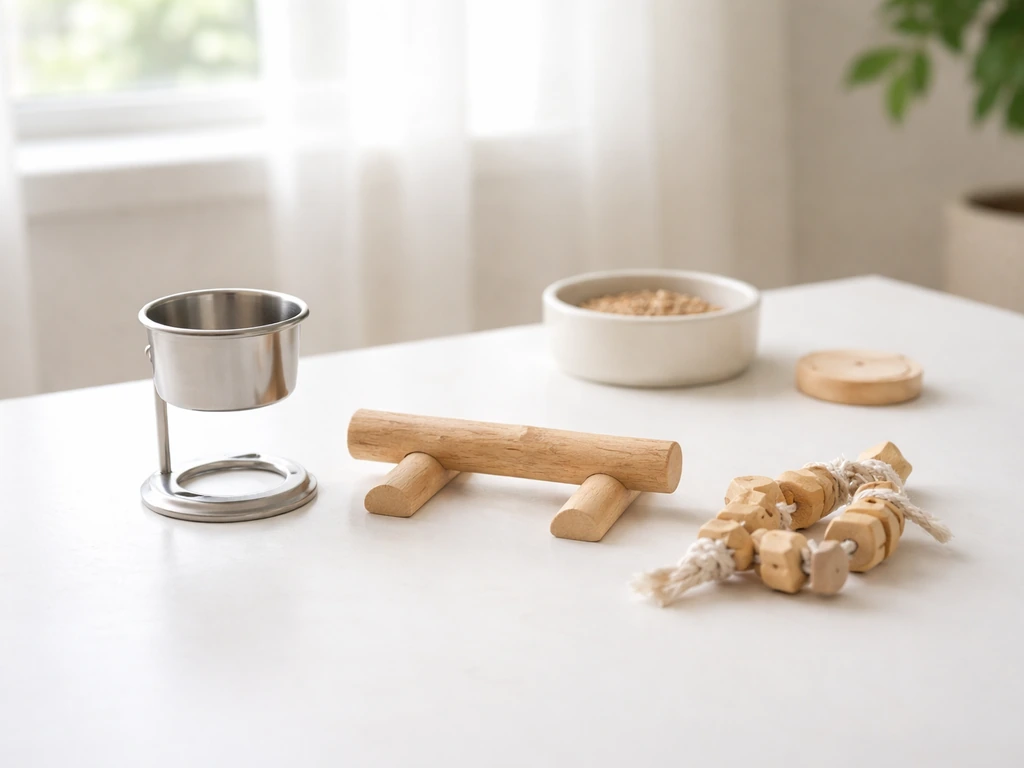
A kadai in pet bird care refers to using a small, deep, circular bowl (borrowing the shape of the traditional Indian cooking vessel by the same name) as a feeding, foraging, or enrichment vessel inside your bird's cage. Think of it as a wide, stable, open-topped cup that you fill with food, foraging material, or water in a way that encourages your bird to dig, search, and work for its meal. The benefits are real but only if you choose the right material, keep it clean, and introduce it in a way that doesn't stress your bird out.
Kadai Bird Benefits: Safe Daily Feeding and Foraging Tips

Marcus Chen
16 Jun 2026
What "kadai" actually means in a bird care context
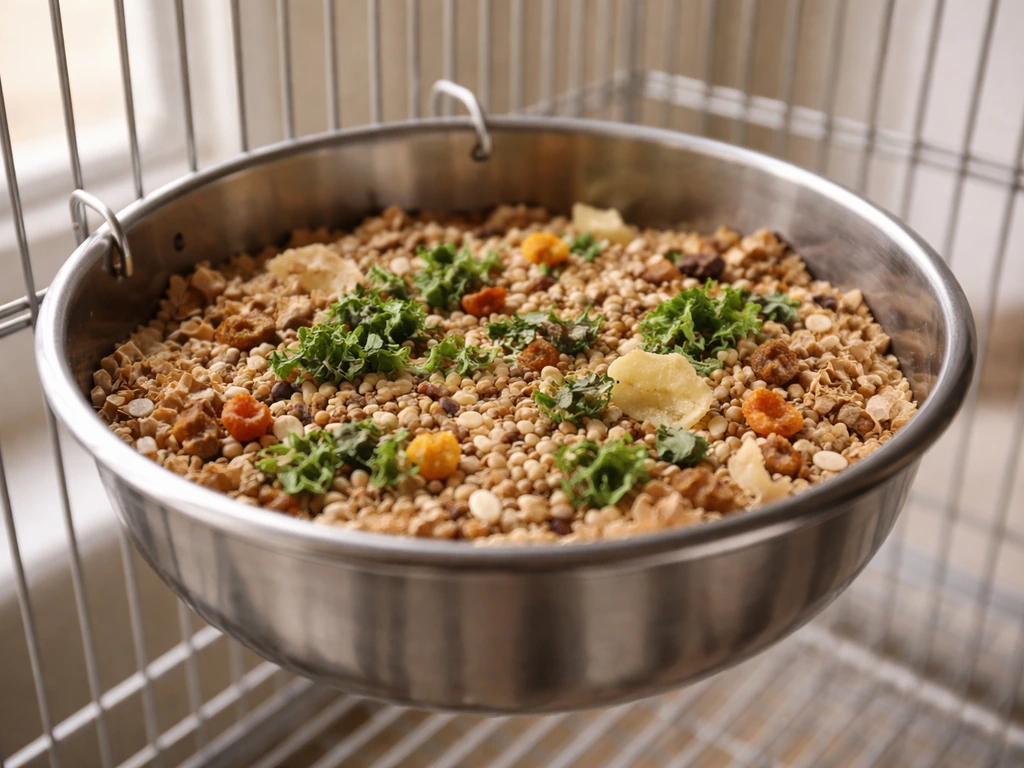
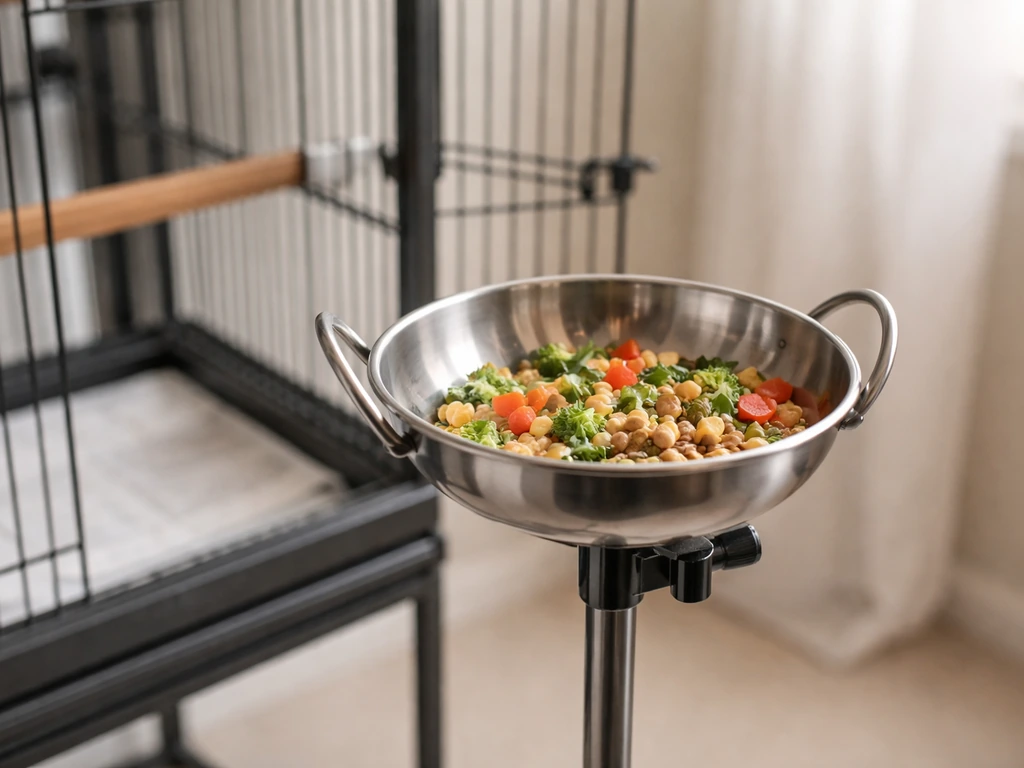
The word kadai (also spelled karahi, kadhai, or kadahi) originally describes a thick, deep, circular cooking vessel used across the Indian subcontinent, traditionally made from cast iron and shaped similarly to a wok. In pet bird care, the term has been adopted informally to describe any small, deep, open bowl used as a dedicated feeding or foraging station inside or attached to a cage. It's not a trademarked product category, so you won't always find it labeled that way in a pet store. What you're looking for is the functional shape: deep enough to hold substrate or layered food, wide enough for a small bird to step in and forage, and stable enough not to tip.
The reason this shape works well in bird care is the same reason it works in a kitchen: the depth keeps contents contained, the circular form doesn't have sharp corners, and the open top gives the bird full visual access so it doesn't feel trapped. If you've ever watched a bird scatter every seed out of a shallow dish in about 30 seconds, the kadai-style depth is the fix for that.
Real benefits for beginner pet birds
The honest answer is that the benefits of using a kadai-style vessel come almost entirely from encouraging natural foraging behavior, and foraging is one of the most underrated things you can do for a bird's mental health. In the wild, birds spend the majority of their waking hours searching for food. In a cage with a standard flat dish, that entire behavioral drive gets compressed into a few bored seconds of eating. A kadai changes that equation.
Foraging and enrichment
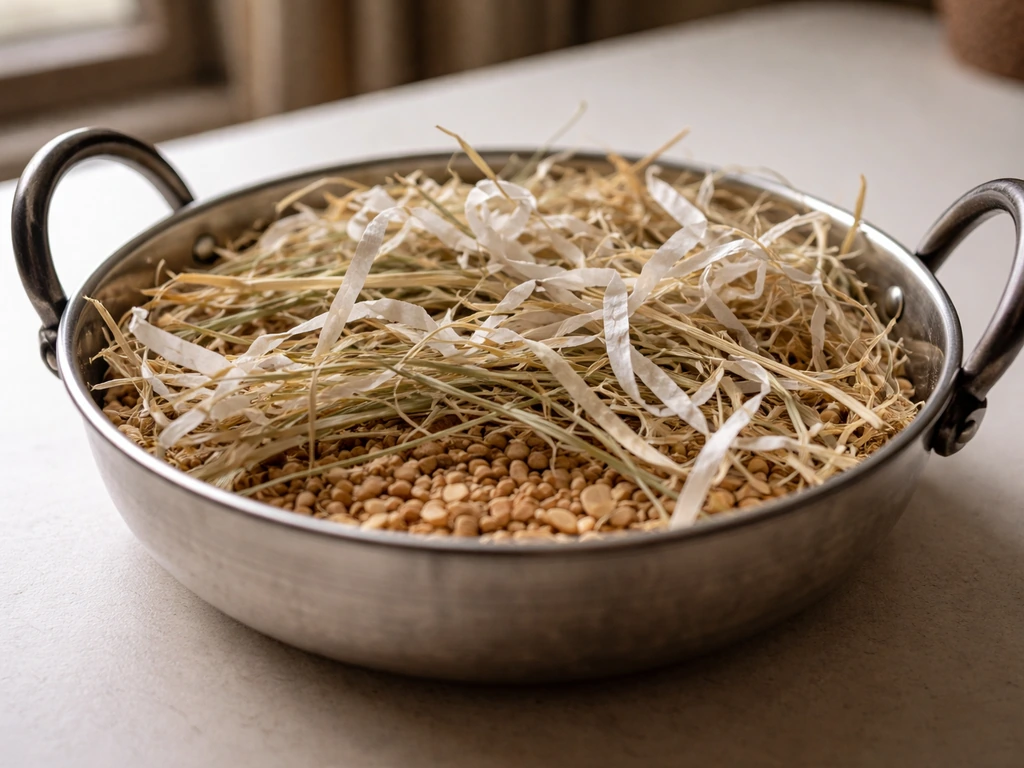
Filling a kadai with a mix of foraging substrate (shredded paper, crinkled hay, or safe dried leaves) layered over seed, pellets, or treats gives your bird something to dig through and problem-solve. Avian enrichment guidance consistently emphasizes varying where and how food is offered, and building in some uncertainty so the bird has to search rather than just eat. A kadai does exactly that without requiring you to buy expensive puzzle toys. If you are looking for something similar, a pie bird alternative can also help you encourage natural digging and problem-solving. You can also partially cover it with a flat piece of untreated wood or a folded paper cup to add another layer of challenge.
Feeding and food presentation
The depth of a kadai-style bowl reduces scatter waste significantly. For species like budgies, cockatiels, and lovebirds that tend to fling food around, a deeper vessel keeps the majority of the meal inside the bowl. Some bird feeding cups are specifically designed with a deep cup shape and a clamp mount to prevent tipping, which is effectively the kadai principle applied to commercial bird feeders. Less scatter also means less spoiled food sitting at the cage floor, which matters a lot for hygiene.
Supporting a better daily routine
From a routine standpoint, having a dedicated kadai-style foraging bowl creates a clear feeding ritual that birds actually seem to anticipate. You set it up in the morning with the day's foraging content, and your bird has a structured activity. For beginner owners, it also makes it easier to track how much the bird is eating, since most of the food stays in one place. This matters more than people realize: much of the disease risk in caged birds traces back to malnutrition and stress, and a foraging-focused feeding routine addresses both.
How to use a kadai safely with your bird
Which species is it suitable for?
Kadai-style foraging bowls work best for small to medium birds: budgies, cockatiels, lovebirds, conures, and similarly sized parrots. For very small birds like finches or canaries, the bowl depth can actually be a problem because they may not want to step down into it. For large parrots like macaws or cockatoos, a small kadai won't hold enough volume to be useful, though a scaled-up version absolutely can. The key fit question is: can the bird comfortably step into or reach into the bowl and explore without feeling confined or stuck?
Cage placement
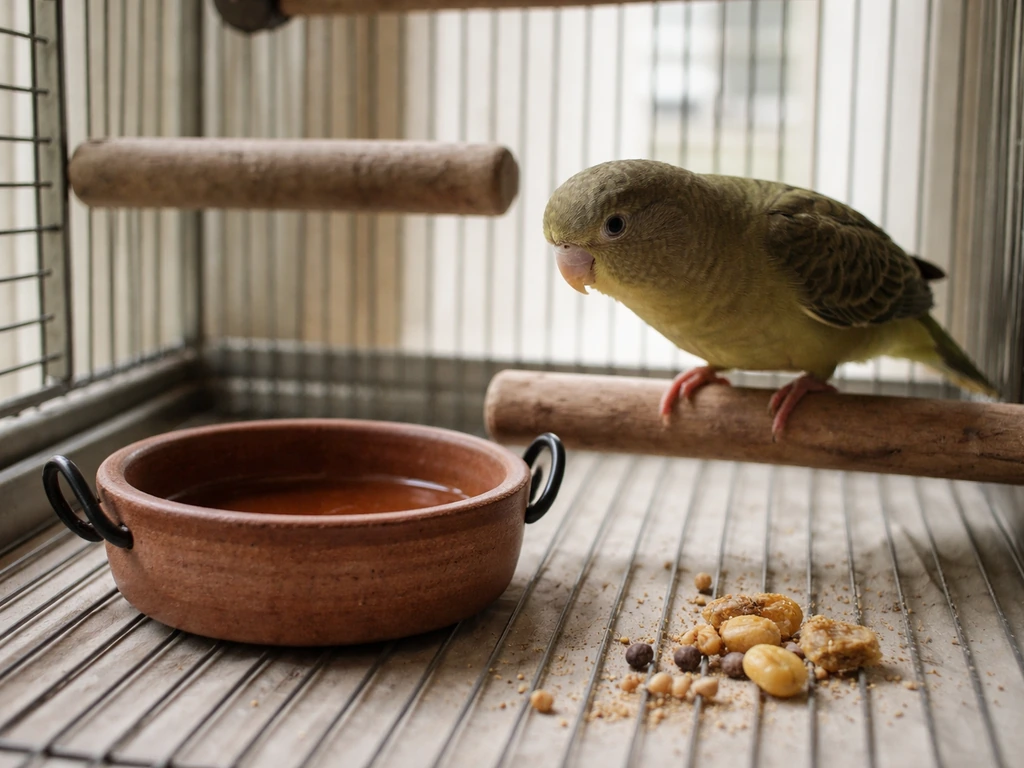
Placement matters more than most beginners expect. Position the kadai at a perch-accessible height, not on the cage floor if you can help it, since floor placement can increase exposure to droppings and contamination. Mid-cage height on a horizontal bar, where your bird can land nearby and then step in, is the sweet spot. Cage location relative to windows and drafts also affects engagement: birds are more exploratory in a well-lit, draft-free spot. A kadai positioned near a window with natural light (but not in direct hot sun) tends to get more use.
Introducing it without stress
Don't just drop a new vessel into the cage and expect your bird to immediately use it. Many birds are neophobic, meaning new objects trigger wariness, not curiosity. Start by placing the kadai near the cage outside the bars for a day or two so the bird can see and get comfortable with it. Then introduce it inside the cage with familiar food visible at the top, not buried yet. Over several days, gradually layer more substrate over the food so the bird has to dig a little more each time. Rushing this process is the most common beginner mistake and it results in a bird that ignores the bowl entirely.
Choosing the right kadai: materials, size, and where to source one
Material is the most critical decision here, and it's also where the most risk lives. Here's a straightforward breakdown of what to look for and what to avoid:
| Material | Safety for Birds | Notes |
|---|---|---|
| Stainless steel | Best choice | Non-porous, easy to sanitize, no toxic leaching, dishwasher-safe |
| Food-grade ceramic (uncracked) | Good | Heavy and stable, but check for lead-free glaze; replace if chipped |
| Plain cast iron (unseasoned) | Use with caution | The traditional kadai material; rust and seasoning oils can be problematic near birds |
| Galvanized metal | Avoid | Can leach zinc, which is toxic to birds |
| Non-stick / PTFE coated | Avoid completely | Heated PTFE releases fumes that cause fatal respiratory distress in birds |
| Painted metal (unknown paint) | Avoid | Risk of lead and other toxins from paint flaking |
The PTFE issue deserves extra emphasis. Teflon and similar non-stick coatings release toxic particles when overheated, and birds are uniquely sensitive to airborne toxins due to their highly efficient respiratory systems. Even if the kadai never touches heat directly, a non-stick coated bowl near a kitchen carries risk. Stainless steel is the material I'd always recommend first for any bird feeding vessel, kadai-style or otherwise.
For size, a 3 to 5 inch diameter bowl works well for budgies and cockatiels. A conure or small parrot benefits from something closer to 5 to 7 inches. The depth should be at least 2 inches to enable actual foraging layering, but not so deep that a small bird would have trouble seeing or reaching the bottom. Many standard small stainless steel prep bowls from kitchen supply stores fit this description perfectly and cost very little. Look for seamless construction with no sharp interior edges.
You can source these from pet supply retailers (look for stainless steel bird feeding cups with clamp mounts), kitchen supply stores, or online. If you go the kitchen supply route, verify it's 18/8 or 304 food-grade stainless steel with no coating. Avoid anything marketed as non-stick, enamel-coated with unknown paint, or with decorative finishes you can't confirm are food-safe.
Cleaning and hygiene: the routine that actually protects your bird
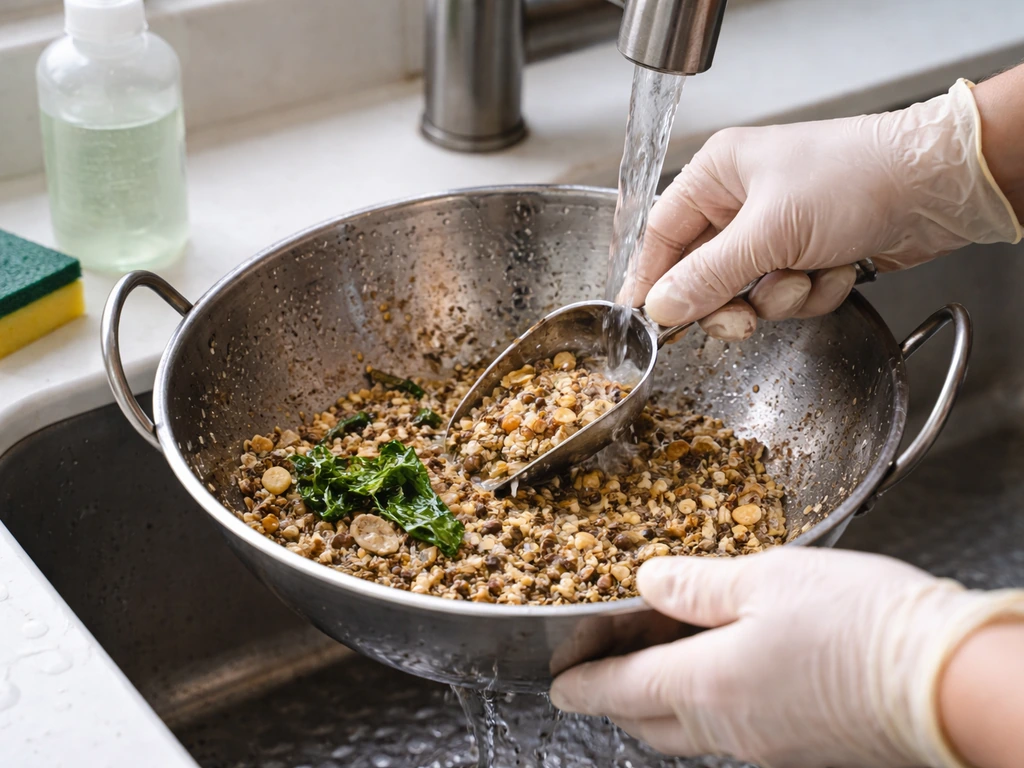
Here's where a lot of people undercut the benefits they're trying to get. A foraging bowl full of substrate and organic food material is a biofilm and mold factory if it's not cleaned properly and consistently. I've seen bowls develop a slick, slimy film on the interior after just 24 hours, especially in humid conditions, and that biofilm carries bacterial risk. The cleaning routine for a kadai used as a foraging vessel is more involved than for a plain water bowl.
- Daily: Remove all foraging substrate and any uneaten food. Rinse the bowl with hot water, then wash with plain dish soap using a dedicated brush that reaches the bottom and any crevices. Rinse thoroughly until no soap residue remains. Let it air dry completely before refilling. Corners and the bottom interior are the highest-risk spots for bacterial buildup, so scrub those areas specifically.
- Every few days: After the soap wash, disinfect with a diluted bleach solution (roughly 1 part bleach to 32 parts water is a common household recommendation for food-contact surfaces). Let the solution sit in and on the bowl for about 5 minutes, then rinse thoroughly with clean water and allow to dry completely before use.
- Weekly: If your bowl is dishwasher-safe stainless steel, run it through a full hot dishwasher cycle. The high heat aids disinfection in a way that hand washing alone doesn't always achieve.
- Never: Use ammonia-based cleaners, oven cleaners, or strong chemical disinfectants in an area where your bird is present. Even residue from these products is harmful, and the fumes are dangerous to birds. Always rinse off any disinfectant completely and ensure the bowl is dry before returning it to the cage.
One practical tip: rotate between two bowls so you always have a clean, dry one ready. This prevents the temptation to put a still-damp bowl back into the cage, which encourages mold growth in the foraging substrate.
Downsides and situations where you should skip it
Not every bird or situation is a good match for a kadai-style foraging setup. Here are the honest scenarios where you should either hold off or skip it entirely:
- Your bird is currently sick or stressed: Introducing any enrichment change to an unwell bird adds stress at the worst possible time. Address illness first, and save enrichment changes for when the bird is stable. This applies especially if your avian vet has flagged nutrition or health concerns.
- You can't commit to daily cleaning: An uncleaned foraging bowl is worse than no foraging bowl. The organic substrate accelerates bacterial and mold growth. If your schedule doesn't allow daily washing, use a plain food dish instead.
- Your bird has a specific medicated or restricted diet: Some birds on vet-prescribed diets shouldn't be eating foraged treats or supplemental food items hidden in substrate. Check with your avian vet before changing how food is presented.
- The species is a finch, canary, or very small bird: The depth that makes a kadai useful for parrots can be intimidating or impractical for tiny birds that don't typically step into vessels to forage.
- You can't verify the material is non-toxic: If you're not sure whether a bowl is galvanized, painted with unknown paint, or coated in any way, don't use it. The risk of heavy metal toxicity (zinc, lead) or PTFE fume exposure is not worth it.
- You're using it near a kitchen: Even non-coated vessels placed near a cooking area expose birds to airborne risks from other non-stick pans being heated. Cage placement in or adjacent to kitchens is generally something to reconsider regardless of what vessel you're using.
What to watch for once you've introduced it
The goal is for the kadai to visibly improve your bird's daily engagement and routine without introducing new stress or health problems. Here's how to tell if it's working and what to do if it isn't.
Signs it's going well
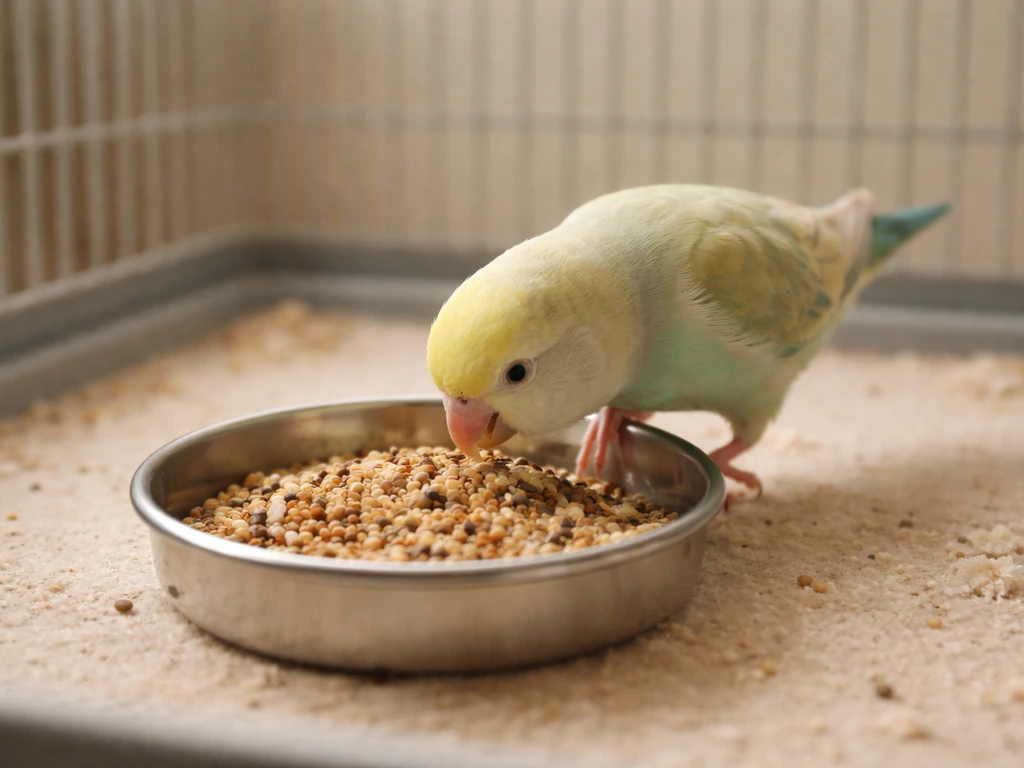
- Your bird approaches the kadai with curiosity, not alarm. You'll see it investigating, digging, and returning to the bowl multiple times.
- You notice less scatter waste on the cage floor around the feeding area.
- The bird's droppings remain normal (firm, well-formed, with the expected coloration for its diet). Any sudden changes in droppings after a dietary change warrant a call to your avian vet.
- The bird's activity level and vocalization stay consistent or improve. A more engaged bird is typically a less stressed bird.
- Food consumption is trackable and consistent. You can see what's being eaten versus ignored, which helps you adjust the foraging content.
Signs to reassess
- The bird is actively avoiding the bowl after a week of gradual introduction. Go back to basics: put only familiar food in it with no substrate for a few days.
- You notice any respiratory changes, lethargy, or changes in droppings. These are signals to contact your avian vet before continuing any new routine changes.
- The substrate is clumping, smelling, or showing any visible mold. Increase cleaning frequency immediately, or eliminate substrate and use only dry food in the bowl.
- Your bird is losing weight or eating significantly less. This can happen if the foraging challenge level is too high too fast. Make the food easier to find while the bird builds confidence.
If you're ever unsure whether a behavioral or physical change is related to the new setup, the right call is always to consult an avian veterinarian. Merck’s Management of Pet Birds recommends health-focused monitoring and cautioning that for veterinary cases or illness you should address the illness before starting behavior change programs like enrichment transitions address the illness before starting change programs.
They can help you distinguish normal adjustment behavior from a genuine health concern. Enrichment changes are meant to support your bird's wellbeing, and a quick vet check is always worth the peace of mind when something looks off. If you're also exploring other ways to support your bird's day-to-day calm and nutrition alongside foraging enrichment, looking into calming supplements designed specifically for birds is a natural next step that pairs well with the foraging routine you're building.
If you want an extra layer of support, look for the best bird calming supplement options that are formulated for avian safety.
The bottom line: a kadai-style foraging bowl is a genuinely useful, low-cost addition to your bird's daily care when you choose the right material (stainless steel), introduce it slowly, and keep it clean. The benefits are real, but they depend entirely on consistent hygiene and a sensible introduction. Drinking bird exercise benefits can complement enrichment routines like foraging by adding gentle, engaging movement to a bird's day. Get those two things right and it becomes one of the simplest enrichment upgrades you can make for a beginner bird setup. A pie bird is a separate, passive cooking-time tool, so it helps to understand what it does before deciding whether you need one enrichment upgrades.
FAQ
How often should I clean a kadai-style foraging bowl, and what’s the safest cleaning method?
Clean it at least once per day, and remove any damp substrate promptly. Wash with hot water and a dedicated, bird-safe brush, then rinse thoroughly and dry completely before refilling. If you notice a slick film, switch to more frequent cleaning (or a second bowl rotation) rather than just adding fresh substrate on top of old material.
Can I use a kadai-style bowl for water instead of only foraging?
It’s possible, but it usually increases mess because birds will drop food and substrate into it. If you use it for water, choose stainless steel, keep it small and easy to dump, and replace the water more frequently (several times daily if your bird is messy). For most birds, a dedicated water cup stays cleaner and reduces hygiene risk.
What substrate can I put over seed or pellets, and what should I avoid?
Use simple, dry, untreated materials such as shredded paper, crinkled hay, or safe dried leaves that are meant for foraging (avoid anything with added oils, fragrances, or dyes). Skip anything that can mold quickly when damp (sweet breads, moist compost-like materials) and avoid wood or paper products of unknown treatment or ink.
My bird is pushing the food out of the kadai. Is that still a “benefit” or a problem?
Scatter can be normal for many species, especially with the first few days of training. If your bird is flinging most of it onto the floor, try reducing substrate depth and keep the food layer visible at the start of the day. If scatter is paired with low food intake, reluctance to engage, or weight change, treat it as a sign the setup or food mix needs adjustment.
How long does it usually take for a bird to start using the kadai-style bowl?
Many birds try it within several days, but some take a couple of weeks, especially if they are cautious or just moved cages. The key is slow exposure: let the bird see it first outside the bars, then start with familiar food on top before you add deeper layering. Don’t keep changing the vessel every few days, as that can reset neophobia.
Can I use a non-stick or coated bowl if it’s never heated?
It’s not recommended. Birds are sensitive to airborne particles, and non-stick coatings can release fumes or dust even without cooking. Use food-grade stainless steel with no coating, and if the bowl has decorative finishes you cannot confirm as bird-safe, assume it’s not appropriate for a foraging station.
What size and depth should I choose if I’m not sure of my bird’s comfort level?
Pick a bowl where your bird can comfortably step in or reach the bottom without getting stuck or feeling trapped. As a quick decision rule, depth should support actual digging (at least about 2 inches), but the bird should still be able to see the top opening and access the food layer. If your bird refuses to use it, try a slightly shallower or wider option rather than forcing it.
Where is the best placement in the cage, and how do I prevent contamination?
Place it at a perch-accessible height on or near a horizontal bar so the bird can land nearby and step in. Avoid floor placement whenever possible, since it increases contact with droppings and spoiled food. Also keep it away from direct drafts and strong sunlight hotspots, which can reduce comfort and engagement.
Is it okay to “top off” the kadai during the day instead of replacing it completely?
For clean hygiene, avoid topping off a bioactive mix that has already gotten damp or soiled. Instead, remove the old contents, wash, dry, and then refill with fresh substrate and food. If you must do an emergency partial refill, do it briefly and plan a full swap at the next cleaning window.
What if my bird shows stress, aggression, or breathing changes after introducing the kadai?
Stop and observe closely. Neophobia and minor avoidance can be normal, but persistent stress behaviors, panting, open-mouth breathing, or sudden lethargy is a reason to halt the setup and contact an avian veterinarian. Stress can also come from placement (too close to drafts or high-traffic areas) or from material odors, so check the bowl and location immediately.
Next Article
Pie Bird Alternative: Safe Beginner Options to Buy Today
Find safe pie bird alternatives: beginner feeder, perch, toy and DIY options with setup, safety checks, and tips.