A drinking bird toy can work as a low-key visual enrichment tool for some pet birds, but it's not a fitness device, it's not a foraging toy, and it's not appropriate for every bird or situation. The realistic benefits are limited to novelty stimulation and mild behavioral engagement. The risks, especially chewing hazards and stress from an unpredictable wobbling object, are real and worth knowing before you place one in front of your cockatiel or conure.
Drinking Bird Exercise Benefits: Safe Beginner Guide
Marcus Chen
27 May 2026
What a drinking bird toy actually is and how people use it
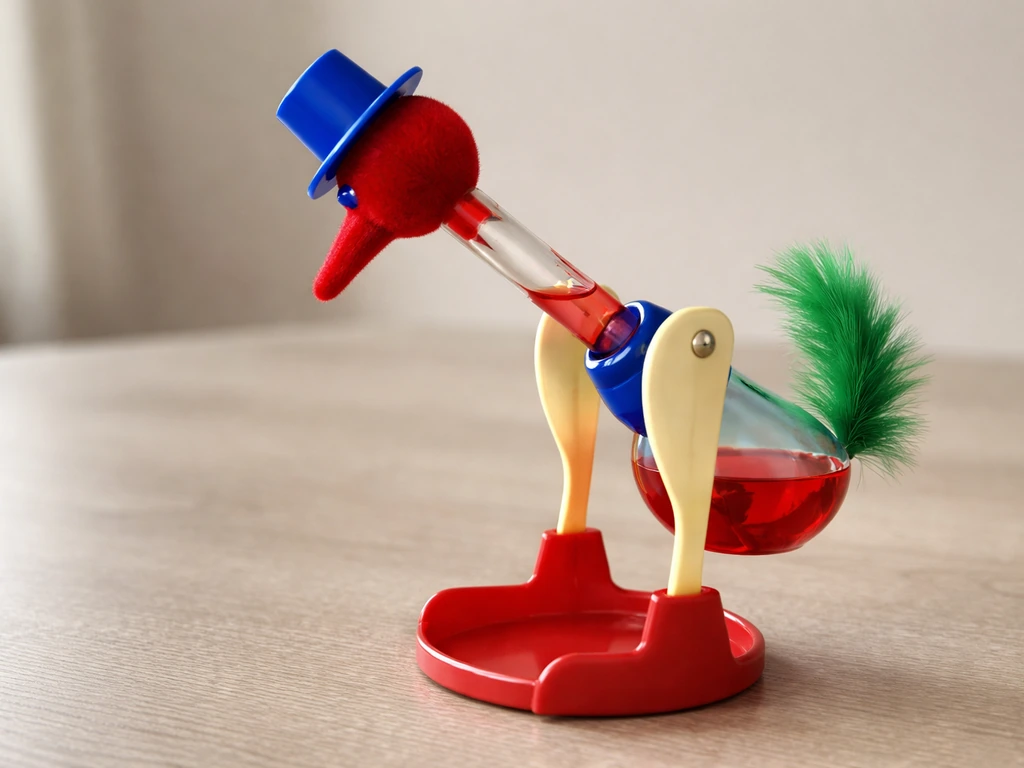
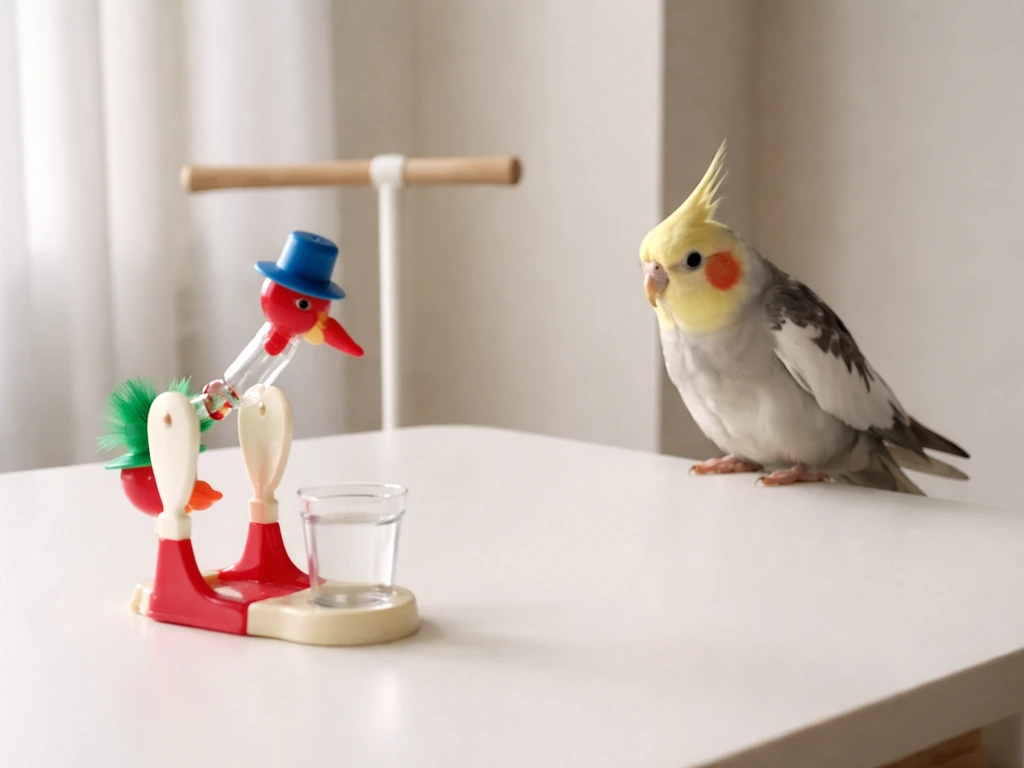
The classic 'drinking bird' (sometimes called a dunking bird) is a novelty science toy, not a purpose-built pet product. It works through a heat-engine principle: you wet the felt-covered beak and head, and evaporative cooling causes the fluid inside the toy's glass body to shift, making it rock forward and 'dip' repeatedly into a glass of water placed in front of it. It keeps going as long as the evaporation cycle is maintained. That rocking, bobbing motion is what catches people's attention and leads them to wonder whether it could entertain a bored bird.
Pet owners typically use it in one of two ways: they place it on a table or play-gym surface where the bird can watch it move, or they put it near the cage as a visual novelty. A smaller number try to place it inside the cage as a companion object. None of these are 'official' use cases. The toy was designed for human entertainment and physics demonstrations, which is exactly why it comes with some real caveats for bird owners.
Who it's actually good for (and who should skip it entirely)
If your bird is curious, confident, and doesn't immediately try to chew everything in sight, a supervised session watching a drinking bird toy can provide genuine novelty stimulation. Birds that tend to engage well include adult cockatiels, budgies, and larger parrots that have already been desensitized to moving objects. Confident birds who enjoy watching movement, like some lovebirds or curious African greys, may find the repetitive bobbing genuinely interesting for short periods.
That said, there's a longer list of birds who are better off without it. Avoid this toy entirely with birds that chew aggressively, birds that are already stressed or easily startled, very young birds still building confidence with new stimuli, and any bird with a known tendency to ingest foreign materials.
Vetstreet notes that birds can ingest heavy metals by chewing or licking household objects and toys, so even small novelty items can pose a metal-toxicity risk if they are chewed over time known tendency to ingest foreign materials. Birds recovering from illness or that have a history of digestive issues are also poor candidates.
The toy is made of glass, metal, and a working fluid not designed for animal contact, so the margin for error is narrow.
| Bird type/situation | Suitable for drinking bird toy? | Why |
|---|---|---|
| Curious, confident adult budgie or cockatiel | Yes, with supervision | Likely to observe without chewing; low stress response |
| Aggressive chewer (many conures, macaws) | No | Risk of biting and ingesting glass, metal, or internal fluid |
| Easily startled or anxious bird | No | Unpredictable wobbling motion can trigger fear response |
| Young or newly rehomed bird | No | Still building confidence; novelty stress outweighs benefit |
| Bird recovering from illness | No | Stress and ingestion risk during a vulnerable period |
| Calm, foraging-motivated parrot | Maybe, supervised only | Can serve as visual enrichment; watch for chewing attempts |
The real, realistic benefits you can expect
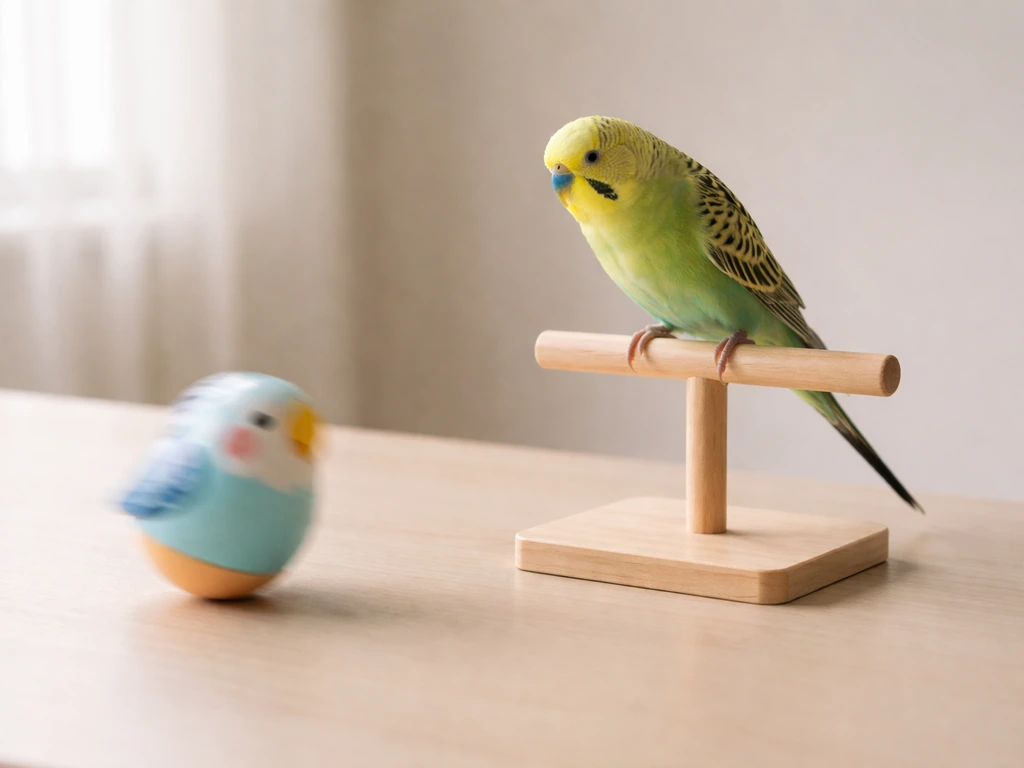
Let's be honest about what this toy can and can't do. It is not going to give your bird meaningful physical exercise. It's not going to replace foraging enrichment, social interaction, or out-of-cage time. What it can do is provide short-term visual novelty and mild behavioral engagement. Many bird owners choose a drinking bird for the kadai bird benefits they expect from brief entertainment and engagement. Those things matter. Pet birds need daily psychological stimulation, and boredom is a genuine welfare problem that leads to feather-destructive behavior and other stress responses.
- Visual stimulation: The repetitive bobbing motion gives observant birds something unpredictable to watch, which is more engaging than a static object
- Behavioral activation: Some birds will bob, chirp, or vocalize in response to a moving object, which counts as low-level social and cognitive engagement
- Novelty effect: Rotating new items into a bird's environment reduces habituated boredom, and this toy is one more option in that rotation
- Owner engagement: Watching how your bird responds tells you a lot about their temperament and confidence level, which is genuinely useful information for a new bird owner
What you should not expect: weight management, meaningful physical activity, or anything approaching the foraging stimulation that wild birds get by spending a large portion of their day searching for food. Research consistently shows that foraging-based enrichment, where the bird has to work to obtain food, delivers far deeper behavioral benefits than passive novelty. Parrots.orgs Toy Box PDF similarly emphasizes providing fun foraging opportunities (food items for fun foraging) as an enrichment approach rather than relying on novelty motion alone foraging-based enrichment where the bird has to work to obtain food delivers deeper behavioral benefits than passive novelty. A drinking bird toy is a short-duration curiosity item, not a behavioral intervention.
The risks and downsides you need to know first
This is where I'd push back on anyone who's treating a drinking bird toy as a casual, low-stakes enrichment item. It comes with a specific set of hazards that matter more for birds than they would for, say, a cat watching the toy from across the room.
- Chewing and ingestion risk: The toy contains glass tubes, metal parts, and a working fluid (historically some versions used flammable or toxic liquids). There are no quality controls or safety regulations specific to bird toys in general, and a toy made for human novelty is even less regulated. If your bird bites it, you have a serious problem
- Heavy metal exposure: Pet birds can develop metal toxicosis from chewing or licking objects containing zinc, lead, or other metals. Even brief contact with the wrong hardware component is enough to be dangerous over time
- Water contact and hygiene: The setup involves water, and water sources near birds need to be kept clean and controlled. A contaminated or spilled water glass next to a bird creates both a hygiene risk and a drowning hazard for smaller birds
- Stress and overstimulation: An unpredictably wobbling object placed too close can frighten a bird, especially one that's still settling into your home. Chronic low-level stress is just as harmful as acute fear responses
- Tipping and impact: If a bird lands on or near the toy and knocks it over, a glass toy can break, creating sharp fragments in or near the bird's space
- Crop and intestinal obstruction: If any part of the toy is chewed and swallowed, there is a real risk of impaction, which is a veterinary emergency
The most common mistake I see beginners make is assuming that if a toy looks harmless and fun to a human, it's fine for a bird. Birds investigate with their beaks, and a beak is a far more destructive tool than a human hand. If the toy isn't explicitly certified as bird-safe, treat it with extra caution.
How to set it up and use it safely, step by step
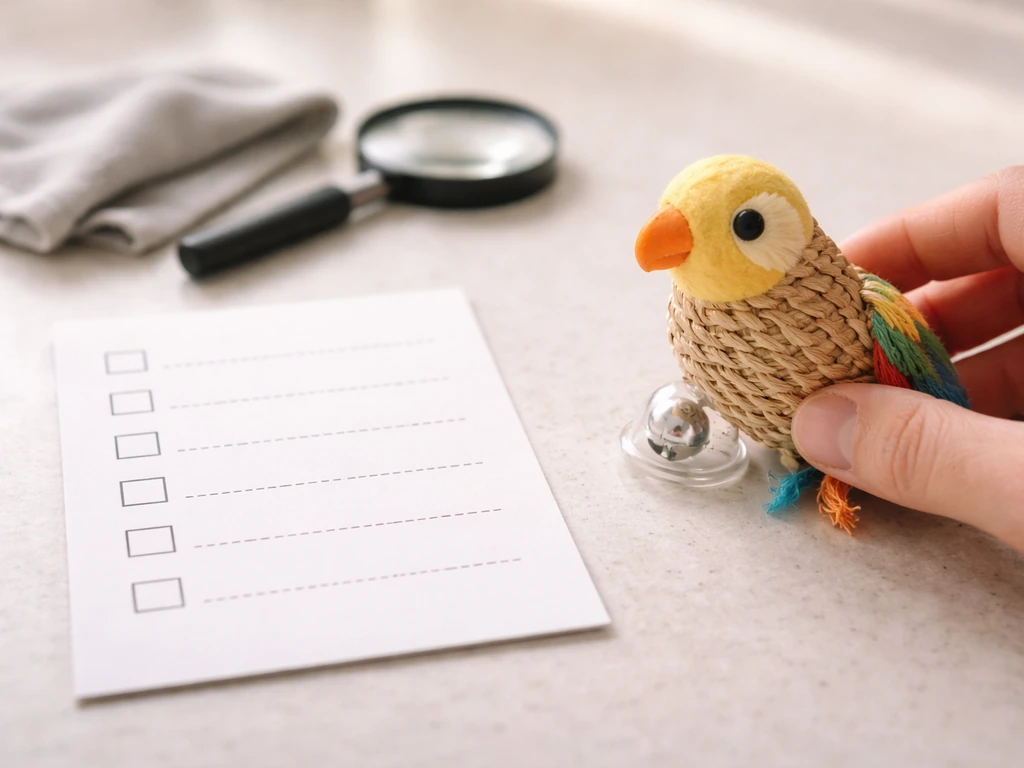
If you've assessed your bird's temperament and blank" rel="noopener noreferrer">decided to try this as a supervised novelty experience, here's how to do it with the lowest possible risk.
- Inspect the toy before use: Check for any cracked glass, loose metal parts, exposed hardware, or flaking paint. If anything looks worn or questionable, don't use it near a bird. Period
- Keep it outside the cage: Place the toy on a stable surface where your bird can observe it but cannot physically reach it. Never put this toy inside the enclosure unsupervised
- Introduce it gradually: Don't place a wobbling object directly in front of a bird that hasn't seen it before. Start by letting the bird see it from a distance while it's still (not yet set in motion). Over a few sessions, let it start wobbling while the bird watches from a comfortable distance
- Sit with your bird: Be present for the entire interaction. Watch your body language cues like feathers fluffed, tail pumping, moving away, or vocalizing in distress that indicate the bird is stressed rather than engaged
- Set it up away from the water glass: The toy needs a glass of water nearby to function, but keep the water secured in a position your bird cannot access or tip. Use a small, heavy container that can't be knocked over
- Limit session length: Five to ten minutes is plenty. Novelty wears off quickly and extended exposure to a stressful or overstimulating object does more harm than good
- Clean everything after use: Wipe down any surface the toy touched. Don't allow water from the toy's setup to sit in your bird's environment
- Remove it the moment your bird tries to bite it: One bite attempt means the session is over and the toy is retired from use around that bird. No exceptions
Better enrichment alternatives for beginner bird owners
If you're reading this because your bird seems bored or under-stimulated, a drinking bird toy is probably not your best first move. If you are looking for a calming option, a best bird calming supplement should be chosen based on your bird’s species, age, and any existing health conditions.
If you are wondering whether is a pie bird necessary, it usually comes down to choosing safer, more proven enrichment options first a drinking bird toy is probably not your best first move. The alternatives below are safer, more effective, and better supported by avian behavioral science. Wild birds reportedly spend the vast majority of their active day foraging, and captive birds are wired for that same drive. Meeting that drive is where enrichment actually delivers results.
- Foraging toys: Hide pellets or small treats inside shreddable paper, cardboard rolls, or purpose-built foraging puzzles. These require the bird to work for food, which activates species-typical behavior and reduces boredom far more effectively than watching a wobbling toy
- Rotation schedule: Swap toys in and out of the cage every few days. Many avian vets recommend rotating items daily or weekly to maintain novelty. The specific toy matters less than the rotation habit
- Shreddable and chewable toys: Untreated wood blocks, bird-safe paper, and palm fiber toys satisfy the beak-use drive safely. These are far better for active chewers than any glass or metal novelty item
- Out-of-cage time with a play-gym: Supervised time on a dedicated play-gym gives birds physical activity, environmental variety, and social interaction with you. This is irreplaceable for most pet bird species
- Mirror or bird-safe reflective toys: For single birds (though there are caveats about mirror use with some species), a reflective toy can provide social stimulation without the hazards of a glass physics toy
- Calming supplements: If your bird's restlessness is tied to anxiety rather than boredom, a vet-recommended calming supplement may be worth discussing with your avian vet alongside enrichment changes
- Training sessions: Short daily training sessions using positive reinforcement (targeting, step-up, trick training) are among the most powerful enrichment tools available to bird owners. Five minutes of active training does more for a bird's behavioral health than most passive toy interactions
The bottom line is that a drinking bird toy is a novelty science object pressed into service as bird enrichment, and it shows. It can be used briefly and safely with the right bird under close supervision, but it sits near the bottom of the enrichment priority list. Foraging toys, regular out-of-cage interaction, and a solid toy-rotation habit will do far more for your bird's daily wellbeing.
If you want a pie bird alternative, prioritize foraging toys and a reliable toy-rotation routine instead of leaning on a novelty wobbling object Foraging toys, regular out-of-cage interaction, and a solid toy-rotation habit. Start there, and add novelty items like this only once you know your bird's temperament well enough to predict how they'll respond.
FAQ
Do drinking bird exercise benefits include weight loss or real physical training?
No. Any rocking movement is passive viewing, not true exercise. If you want to support weight management, focus on diet, daily flight or climbing time, and foraging tasks, since those drive energy use and activity more reliably than a wobbling toy.
How long can I safely let my bird watch or interact with a drinking bird?
Keep it short and time-boxed, such as a few minutes at first, under direct supervision. Stop immediately if your bird leans in repeatedly to chew, shows sudden startle behavior, or the toy begins to cause persistent frantic hopping or vocal distress.
Is it okay to place the drinking bird inside the cage?
Generally it is higher risk inside the cage because your bird can reach and mouth the toy more easily, and the wobble becomes less avoidable. If you try it at all, place it on a stable, out-of-reach surface outside or at the edge of the play area, and never leave it unattended.
What should I do if my bird chews the beak or tries to ingest parts?
Remove the toy right away and inspect your bird’s mouth and crop area. If you suspect any ingestion of glass, metal, felt, or the working fluid, contact an avian veterinarian promptly, since foreign material can cause urgent gut or breathing issues.
Can a drinking bird be used for a stressed or easily startled bird?
It is usually a bad match. The motion is unpredictable from the bird’s perspective, which can worsen fear-based behaviors. If your bird is already stressed, start with slower, consistent enrichment (like foraging routines) rather than a moving novelty item.
Are there species or age groups where this is more likely to be unsafe?
Yes. Young birds who are still building confidence, any bird that has a history of chewing foreign objects, and birds recovering from illness or with digestive issues are higher risk. Even generally calm species can start chewing once the novelty becomes a target.
What is the safest setup if I decide to try it once?
Choose a sturdy base surface that cannot tip, ensure the bird cannot access the glass body or base, and use a dedicated session without other distractions that encourage grabbing. Also keep it away from foot traffic where knocks could create sharp breakage risk.
How do I clean or maintain the toy to reduce hazards?
Empty and dry it between sessions and do not reuse water from prior runs that may have residue. If any part looks cracked, cloudy, loose, or the felt is deteriorated, stop using it. Avoid letting any external fluid or residue contact the bird’s beak during refilling or handling.
What are better alternatives if I want enrichment, not just novelty?
Use foraging-based toys (seed or pellet puzzles, paper shredding, safe-dowel climbing setups, and controlled spray millet stations) and rotate toys regularly. Those create longer engagement because the bird has to work, which aligns more closely with how captive birds meet their foraging drive.
How can I tell whether boredom is the real issue, or something else?
If you see feather destructive behavior, persistent screaming, or appetite changes, do not assume boredom alone. Evaluate sleep schedule, diet balance, social needs, and any signs of illness, and consider an avian vet check before changing enrichment tools.
Next Article
Garden Bird Checklist: Wild Species, IDs, and Tracking Tips
Ready-to-use wild garden bird checklist with IDs, field marks, tracking tips, and a bird station setup for beginners.