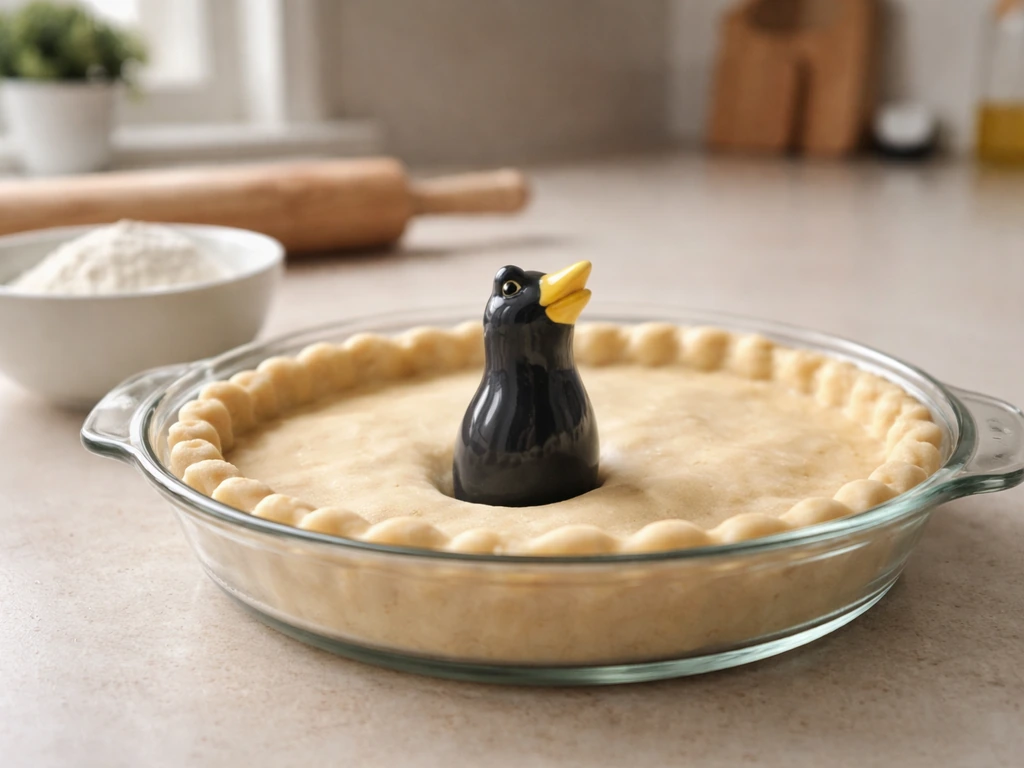
If you searched 'pie bird alternative' hoping to find a substitute for a pet-bird product, here's the honest truth: a pie bird is actually a baking tool, not a bird-care item. It's a hollow ceramic steam vent you place in the center of a pie to stop the filling from boiling over. It has nothing to do with pet birds.
Pie Bird Alternative: Safe Beginner Options to Buy Today

Marcus Chen
15 Jun 2026
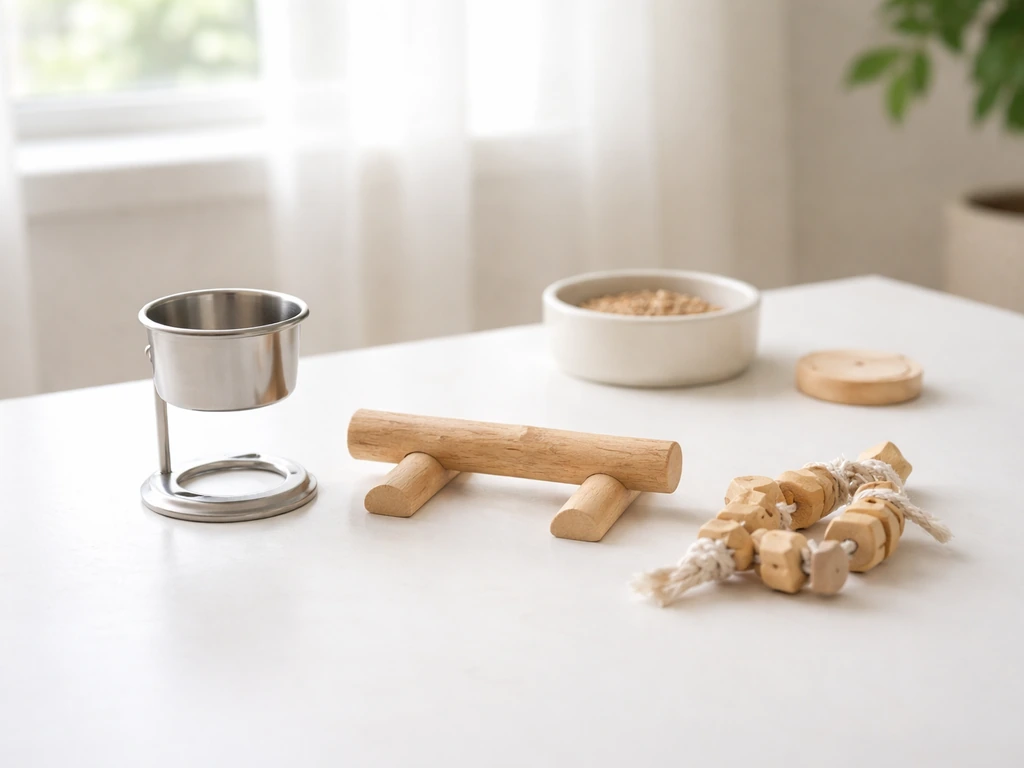
But if you landed here because you're looking for a safe, practical substitute for a specific bird accessory, feeder, perch, or enrichment toy, you're in exactly the right place. This guide covers all the most likely things someone searching for a 'pie bird alternative' actually needs, so you can figure out which one applies to your situation and get set up today.
What 'pie bird' actually means (and why it matters for pet owners)
The blank" rel="noopener noreferrer">pie bird is a functional ceramic device, usually shaped like a small bird with its beak poking through the top crust of a pie. It acts as a chimney: steam vents out through the hollow center instead of cracking or bubbling the crust. Lee Valley describes it as a pie vent or pie chimney, and antique versions are sometimes sold as collectibles. When people encounter one at a thrift store or estate sale, they often mistake it for a decorative bird figurine or even some kind of feeder, which is exactly how the confusion starts.
In the pet-bird world, 'pie bird' doesn't correspond to any standard product name. So if you're a first-time bird owner who searched this phrase, you're probably looking for one of a few different things: a small foraging toy, a water or seed dispenser, a ceramic or wooden perch, or a DIY enrichment setup you saw online with no clear brand name attached. If you are wondering whether a pie bird is necessary, the quick answer is that most birds do just fine with the same category of safer, purpose-made accessories is a pie bird necessary. The good news is that all of those have excellent alternatives, and I'll walk through each one.
What to look for in a safe, beginner-friendly substitute
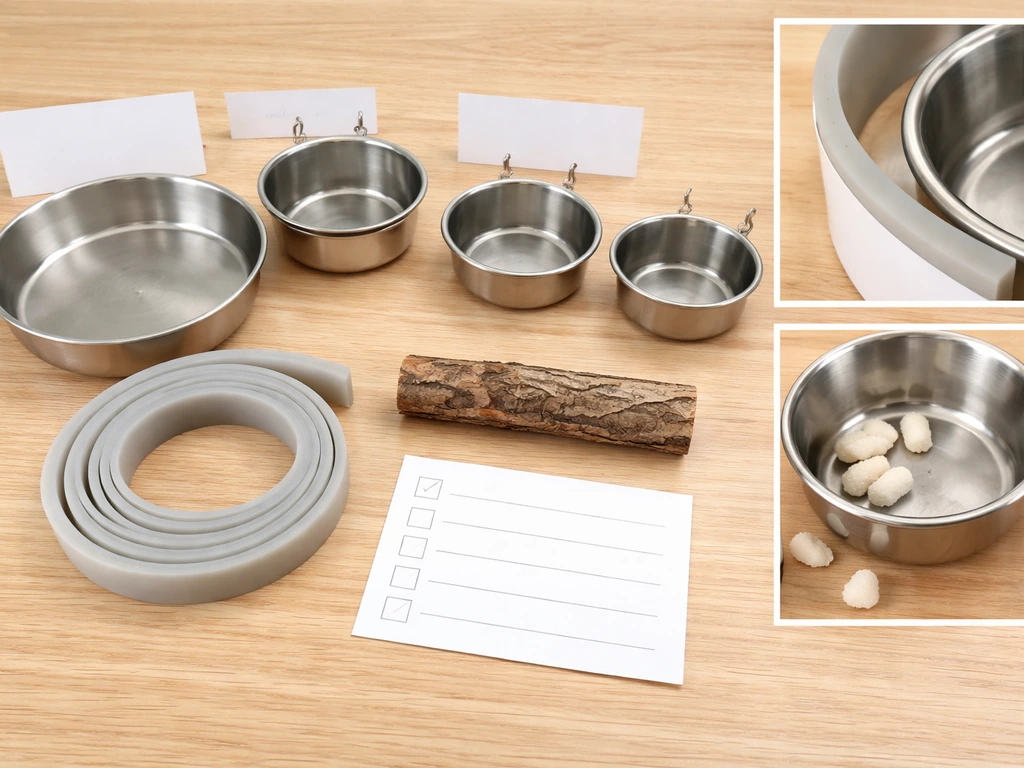
Before you buy or build anything, there are a few non-negotiable criteria. I wish someone had handed me this checklist before I made a few early mistakes with my first cockatiel.
- Materials: stainless steel, food-grade silicone, untreated natural wood, or lead-free unglazed ceramic are safe. Avoid zinc-plated metals, soft plastics birds can splinter off, or any item with paint that isn't confirmed bird-safe.
- Chew and ingest risk: small birds like budgies and lovebirds will chew everything. Any item with small detachable parts, glued-on beads, or thin wire loops is a choking hazard.
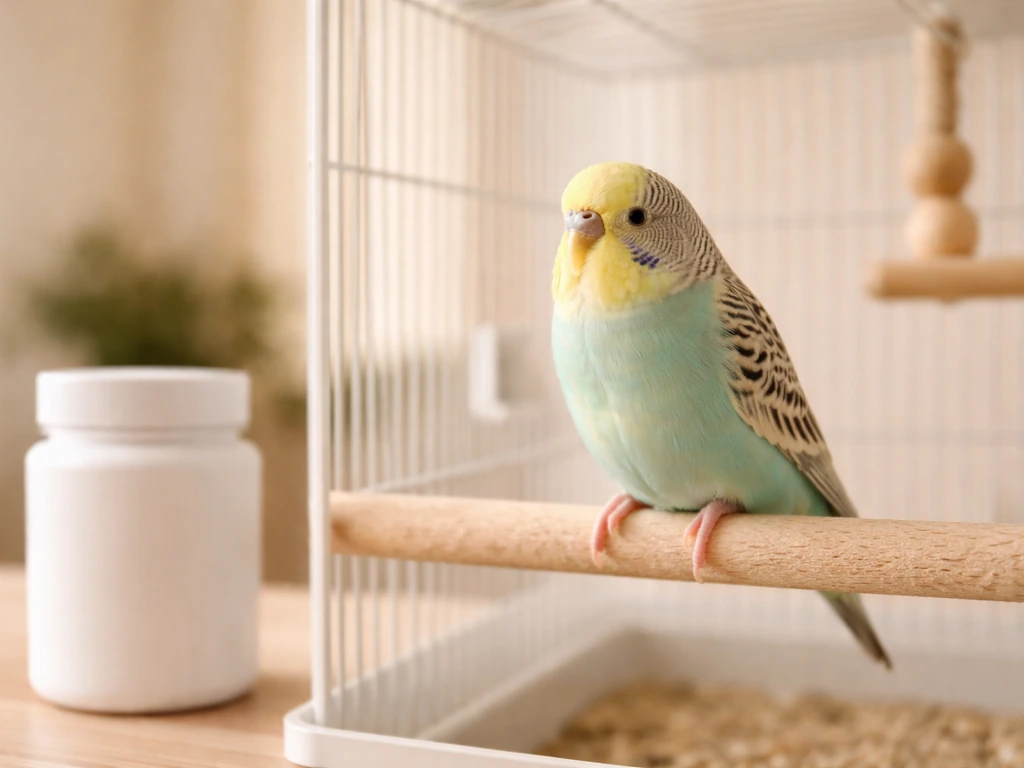
- Cage compatibility: measure your cage bar spacing before you buy. Standard budgie/parakeet cages have 1/2-inch spacing; cockatiels typically need 5/8-inch spacing. An accessory designed for a larger bar gap will hang loosely and become a pinch trap.
- Placement height: foraging toys and feeders should be positioned at roughly the same height as your bird's natural perching zone, not on the cage floor where contamination risk is highest.
- Cleaning: any feeder or water item needs to be dishwasher-safe or easy to scrub with a bottle brush. Rough ceramic interiors harbor bacteria fast.
- Price and durability: beginner birds go through toys quickly. Spending 30 dollars on a single enrichment piece that gets destroyed in a week is a bad strategy. Modular or refillable setups offer better long-term value.
The best pie bird alternatives by category
Because 'pie bird alternative' could map to several different pet-bird needs, I've organized alternatives by category. Read through each one and you'll quickly recognize which fits your situation.
Foraging and enrichment toys
If you were looking for a hollow, bird-shaped object to put treats inside (something that mimics the hollow-chamber concept of a pie bird), a foraging toy is the right category. These come in acrylic or untreated wood and have chambers or doors your bird learns to open for a treat reward. Brands like Super Bird Creations and Bonka Bird Toys make beginner-appropriate versions in small sizes for budgies, parakeets, and cockatiels. Look for ones with a single-step opening mechanism if your bird is new to foraging. Start with the treat visible, then gradually make it harder to access over a week or two.
Water and seed dispensers (feeders)
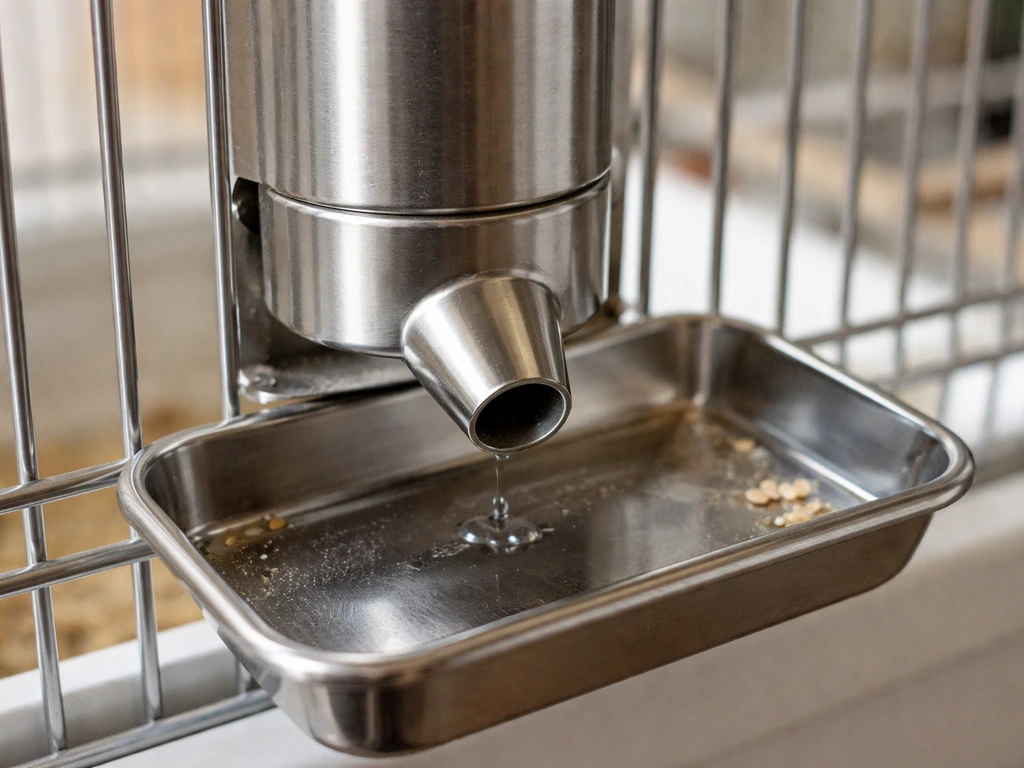
If the 'pie bird' you saw referenced was a water or seed dispenser with a narrow spout or vent-style opening, the practical alternative is a gravity-fed tube feeder or a stainless steel cup with a hopper. For finches and canaries, tube-style feeders with a narrow feed port minimize seed scatter and waste. For cockatiels and lovebirds, stainless steel open cups with clip-on cage attachments are the most hygienic option because they're fully removable for daily washing. Avoid plastic tube feeders with narrow internal diameters if you can't get a brush into the entire length, because mold grows fast in hard-to-reach corners.
Perches with a unique shape or texture
Some searches for 'pie bird' alternatives come from people who saw a ceramic or uniquely shaped perch that they can't identify. Natural wood perches cut from bird-safe trees like manzanita, dragonwood, or java wood are the closest practical equivalent. They come in irregular diameters and textures that keep your bird's feet exercised and beak occupied.
If you want an easy way to add more gentle physical stimulation, the drinking bird exercise benefits routine can be a helpful example to look into. Manzanita is especially durable and easy to wipe clean. Avoid sandpaper-covered perches entirely: they cause foot sores and are one of the most common beginner mistakes I see. A good perch variety pack from a brand like Polly's Pet Products gives you several shapes and diameters to rotate.
Vintage Pie Birds Are Functional, Whimsical Collectibles - Antique Trader notes that antique Trader notes that pie birds are functional pie vent/whistle devices and discusses how some sellers misprice them as “vintage,” implying confusion in the marketplace.
DIY foraging and enrichment setups
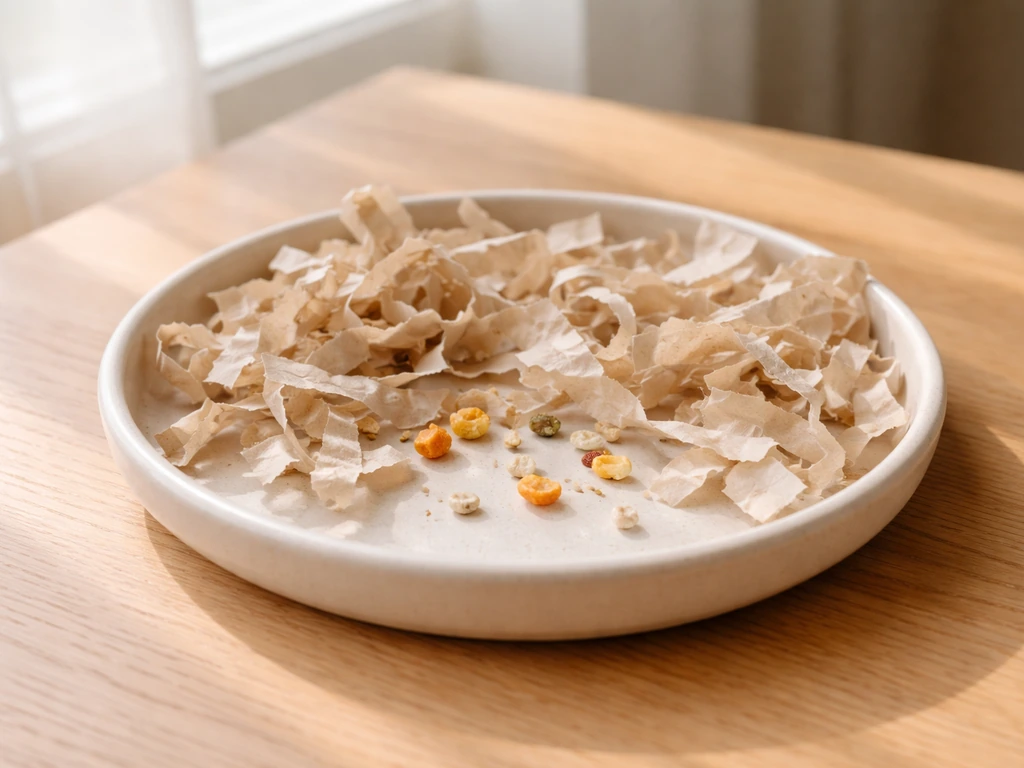
If you want to replicate something you saw online without buying a specific product, a DIY foraging setup works just as well for most beginner birds. Fold a small piece of plain unbleached paper around a treat, skewer it through the cage bars, and let your bird rip it apart. Or thread plain wooden beads and untreated cork pieces onto a stainless steel skewer as a reusable foraging kabob. The key rule for any DIY item: no glue, no synthetic dyes, no soft metals, and nothing small enough to swallow whole. I use a 'would I put this in a toddler's toy box' test as a rough safety filter, and it's worked well.
How to choose the right alternative for your bird and cage
The right alternative depends heavily on your bird species and your current cage setup. Here's a quick comparison to help you match category to bird.
| Bird Species | Best Alternative Category | Key Consideration |
|---|---|---|
| Budgie / Parakeet | Foraging toy or DIY paper wrap | Small size; must have no parts under 1cm diameter |
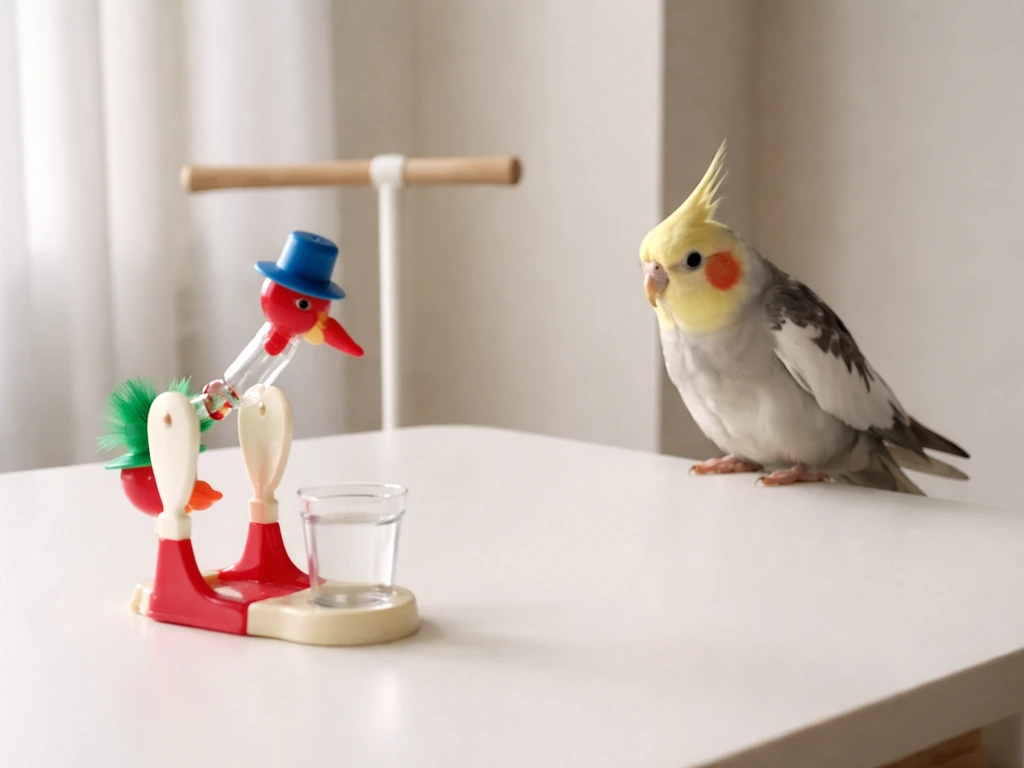
| Cockatiel | Natural wood perch + foraging toy | Needs varied perch diameter for foot health; loves chewing cork |
| Lovebird | Stainless steel feeder cup + foraging toy | Aggressive chewer; avoid any soft plastic or thin acrylic |
| Finch / Canary | Tube-style seed feeder + swing perch | Prefers flight space over interaction toys; keep accessories minimal |
| Conure (beginner species) | Larger foraging toy + java wood perch | High activity level; needs durable materials rated for medium birds |
Cage size matters too. If your cage is on the smaller side (under 18 inches wide), adding multiple accessories will crowd your bird's flight path. In that case, prioritize one perch and one feeder over a full enrichment setup. You can always scale up when you upgrade the cage.
How to set up and introduce your alternative today
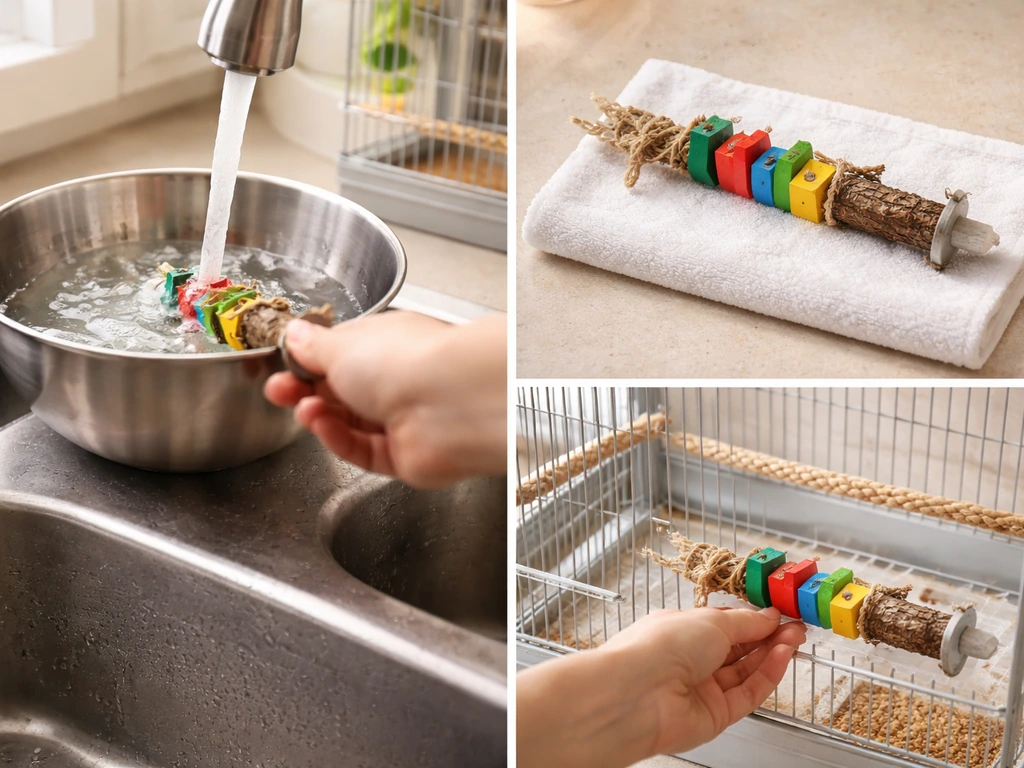
New items in a bird's cage can trigger wariness or outright fear, especially in nervous species like cockatiels and finches. Rushing the introduction is the most common mistake. Here's the process I follow every time I add something new.
- Wash the item first: rinse with hot water and a drop of unscented dish soap, then rinse thoroughly. Let it air dry completely. Even brand-new items can carry manufacturing residues.
- Place it near the cage, not inside it, for 24 hours. Set it on top of or next to the cage so your bird can observe it without being trapped near it. This removes the startle response.
- Move it inside the cage at the lowest-threat position: the bottom perch level or clipped to a lower bar. Don't hang a new toy at the primary perch level right away.
- Add a food motivator: press a small piece of millet or a favorite treat into or onto the new item. This builds a positive association before your bird has to 'decide' to investigate.
- Watch for 15 minutes after introduction. Normal behavior is cautious inspection, head-tilting, and slow approach. Red flags are persistent alarm calls, feather-puffing for more than a few minutes, or refusal to come off the far side of the cage.
- Move the item to the primary perch zone after two to three days of comfortable interaction. Shift it upward in small increments rather than one big move.
- Remove and discard any paper or soft-material components after 48 hours even if unused, to avoid bacterial buildup.
Cleaning, maintenance, and air quality
Hygiene is not optional with bird accessories, and it directly affects your bird's respiratory health. If you are still seeing stress after switching accessories, consider a bird-calming supplement that is specifically designed for safe use in pet birds best bird calming supplement. Birds have extremely sensitive respiratory systems, which is why I always flag air quality as part of any cage accessory decision. Non-stick coatings, synthetic dyes, and certain plastics can off-gas compounds that are genuinely dangerous in an enclosed room. Stick to materials you can clean without harsh chemical sprays near the cage.
- Stainless steel feeders and cups: dishwasher-safe or scrub daily with hot water and unscented soap. Rinse completely. Air dry before returning to the cage.
- Wood perches and foraging items: wipe down with a damp cloth every two to three days. Replace any piece that has visible mold, deep bite grooves, or soft spots. Most natural wood perches last two to six months depending on the bird's chewing intensity.
- Ceramic or acrylic pieces: inspect weekly for chips or cracks. A cracked ceramic edge is a cut hazard. A cracked acrylic piece can splinter into sharp shards.
- DIY paper and cork items: single-use or replace every 48 hours. Don't reuse anything that has been chewed, wet, or soiled.
- Full cage clean: every seven to ten days, remove all accessories and wipe them down before returning them. Rotating which toys are in the cage at any given time also maintains novelty and keeps your bird mentally active.
One practical tip: keep a second set of feeder cups so you can swap them out daily without waiting for the first set to dry. This is especially important in humid climates where wet feeders sitting in the cage for 20 minutes can start growing bacteria.
What to do if your bird ignores it or reacts badly
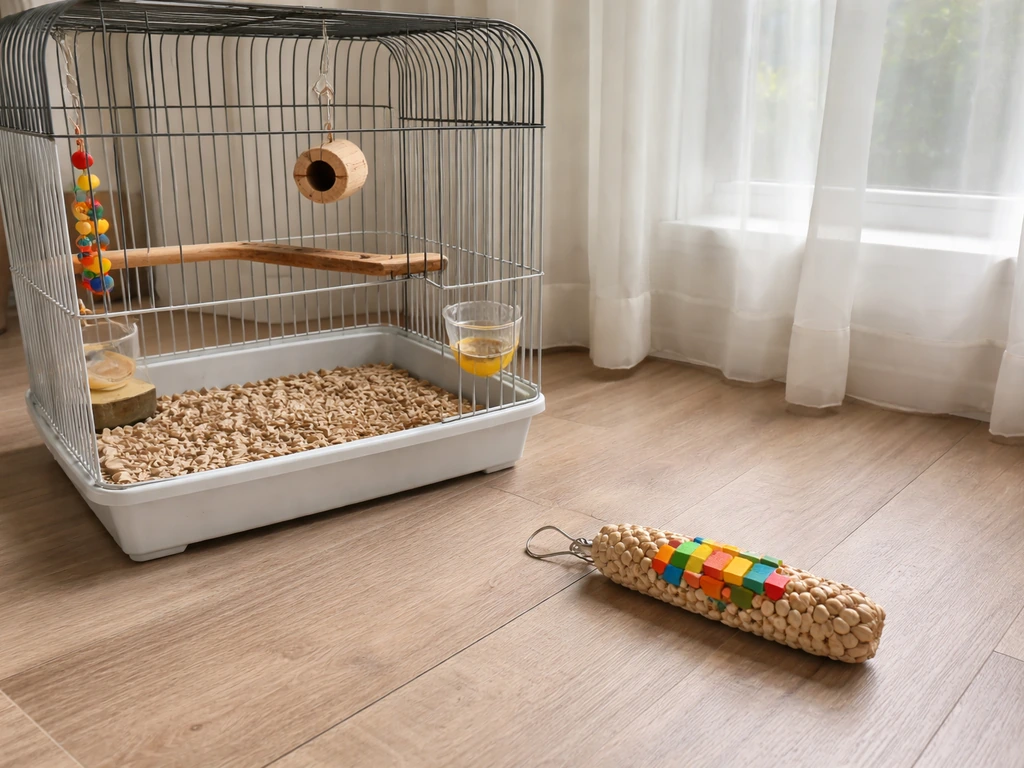
Not every bird takes to a new item, and that's completely normal. Here's how to troubleshoot without stressing your bird out further.
If your bird completely ignores it
Give it at least five to seven days before deciding the item is a failure. Birds explore on their own timeline. If a week passes with zero interaction, try repositioning the item closer to the primary perching spot, refreshing the food motivator, or temporarily removing one other toy so the new item gets more of the bird's visual attention.
Some birds also respond better to items they've seen you handle: hold the toy outside the cage and interact with it yourself for a minute or two before placing it inside. It sounds silly, but it genuinely works with social species like cockatiels and lovebirds. [Pie bird](https://en. wikipedia.
org/wiki/Pie_bird) notes that a “pie bird” (also called a pie vent/whistle/chimney/funnel) is a hollow ceramic device used in baking to vent steam from the center of a pie—typically shaped like a bird with the head out of the crust.
If your bird reacts with fear or aggression
Remove the item immediately if your bird is alarm-calling continuously, refusing to leave the cage corner, or attacking the item aggressively in a way that looks panicked rather than playful. Restart the outside-the-cage introduction process and extend the observation period to three to five days. Some birds are particularly sensitive to items with bright colors or reflective surfaces. Try a more neutral-colored version of the same accessory type. If fear reactions are happening with multiple new items, that can be a broader stress signal worth monitoring with the help of an avian vet.
If your bird chews the item faster than expected
Heavy chewing is normal and healthy, but if your bird is consuming material rather than just shredding it, that's a problem. Ingesting wood chips, cork dust, or acrylic shards can cause crop or digestive issues. If you notice your bird swallowing rather than just dropping chewed pieces, switch to a harder, larger-format chew item they can't break into ingestible pieces, or move to a foraging toy where the edible reward is the only thing they can actually consume. Keep an eye on droppings for the next 24 hours after any heavy chewing session. If droppings look unusual (very watery, discolored, or absent), contact an avian vet.
The bottom line: there's no single product called a 'pie bird' in the pet-bird world, but the underlying need is real. Whether you need a foraging toy, a better feeder, a safer perch, or a quick DIY enrichment option, the alternatives above will cover all the most likely scenarios. Start with one item, introduce it slowly, keep it clean, and watch how your bird responds. That's the whole process, and it works.
FAQ
What do I search for if I’m trying to replace a pie bird for pie baking, not for my bird?
If you meant the ceramic pie steam vent, use terms like “pie vent,” “pie chimney,” or “pie bird steam vent.” “Pie bird” is often used as the product name for baking, but it can’t be relied on for pet-bird accessories because there is no standard bird product with that name.
My “pie bird” photo looks like a decorative figurine. How can I tell if it’s actually a steam vent?
A true pie steam vent is hollow at the top and down the center (steam exits through the hollow). Decorative bird figurines are usually solid all the way through. If the inside is not hollow, it is not performing the same function, and it should not be repurposed for any pet-bird use.
Can I safely use a pie bird-like ceramic object inside a bird cage as a perch or enrichment?
Only if the item is specifically bird-safe and you can fully clean it, it has no glaze that can chip easily, and it has no sharp edges. Most random ceramics and antique collectibles are not made for chewing, so a better option is purpose-made perches, foraging toys, or natural wood treated only with bird-safe methods.
What’s the fastest way to decide which category I need, foraging toy vs feeder vs perch?
Start with what problem you were trying to solve: foraging means you want learned interaction and treat access, feeders mean daily food access with minimal waste, and perches mean foot and beak engagement with safe chewing. If your goal was “a hollow thing like the pie bird,” that maps most closely to foraging toys rather than water or seed bowls.
How do I prevent seed or pellets from getting everywhere with a tube-style feeder?
Choose feeders designed with a narrow feed port for the species and place the feeder so dropping is directed into the cage floor area you already clean. If your bird is a heavy scatterer, switch temporarily to an open stainless cup hopper that you can keep perfectly clean, then reassess.
Are gravity-fed feeders always better than cups?
Not necessarily. Gravity-fed tube systems work well for species that do fine with narrow ports, but cups are often easier to clean thoroughly every day. If you cannot brush every inside surface of a tube, cups are usually the safer, more hygienic choice for beginners.
How often should I wash bird feeders when using the “second set of cups” tip?
Aim for daily washing of anything wet or in direct contact with food, including hopper cups. Swapping in a second set helps you clean one set fully, dry it, then use the next one, which reduces bacterial growth from leftover moisture in warm, humid homes.
What’s a good “introduction schedule” for new items if my bird is fearful?
Use a staged approach: introduce one new item at a time, start with the item in a familiar location near the main perch, then adjust position only after 5 to 7 days if there is no engagement. If there is fear, extend the observation window and keep the item neutral-colored or less reflective rather than adding more toys.
My bird won’t touch a new foraging toy. Should I keep trying or remove it?
Give it time first. If there is no interaction after about five to seven days, reposition it closer to where the bird already spends time, and refresh the motivator with an easy-to-reach treat. If your bird shows panic behaviors like repeated alarm calling, cornering, or aggressive, fearful attack, remove it and restart outside-the-cage exposure.
Are sandpaper-covered or abrasive perches ever acceptable if they “wear down nails”?
They are a common beginner mistake because they can cause foot sores and discomfort. Use sandpaper-free, naturally textured wood perches and rotate sizes to manage nail and foot wear more safely.
How can I make DIY foraging setups safer than the version I saw online?
Stick to untreated, plain materials for any part the bird can chew, avoid glues and synthetic dyes, and use hard-to-ingest formats so nothing can be swallowed whole. Also confirm you can remove everything that becomes loose or frays, and supervise until you know how your bird handles the item.
If my bird is chewing hard, how do I tell “healthy shredding” from a problem?
Healthy shredding usually produces dropped, shredded pieces without the bird swallowing larger fragments. If you see swallowing of wood chips, cork dust, or brittle fragments, switch to a foraging format where the only intended “consumable” is the treat reward, and watch droppings over the next 24 hours.
What should I do about air quality and off-gassing when I add new accessories?
Avoid adding items that require chemical coatings or harsh cleaners near the cage, and skip non-stick coated cookware and strongly scented sprays in the same room. Choose materials you can wash with mild, bird-safe methods so fumes are not being trapped in the enclosure environment.